
There’s a moment in mid April when Amsterdam stops you in your tracks.
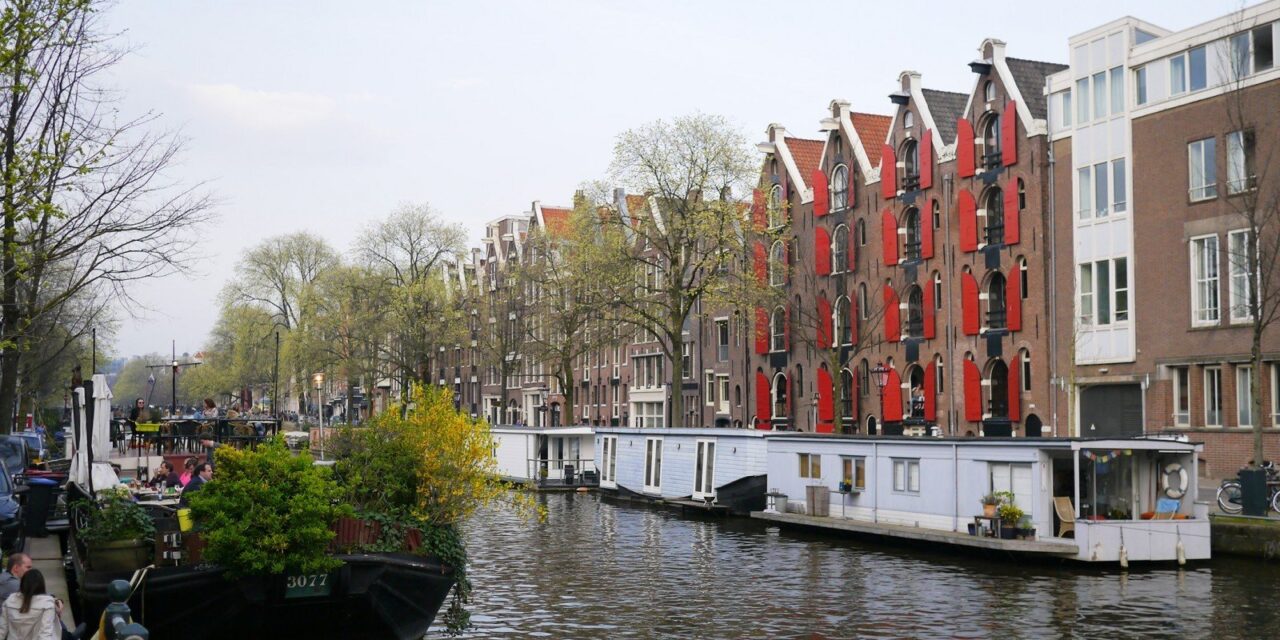
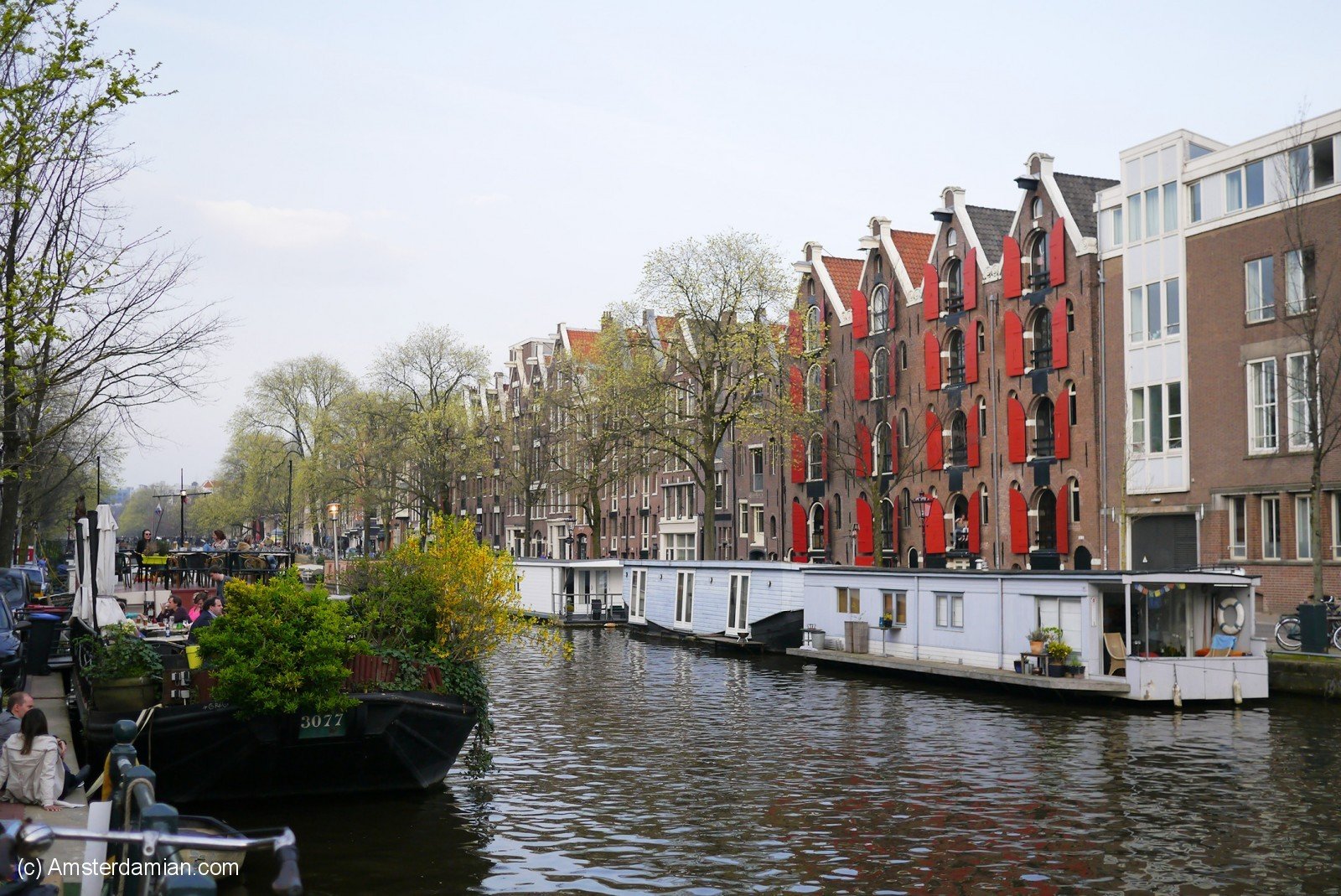
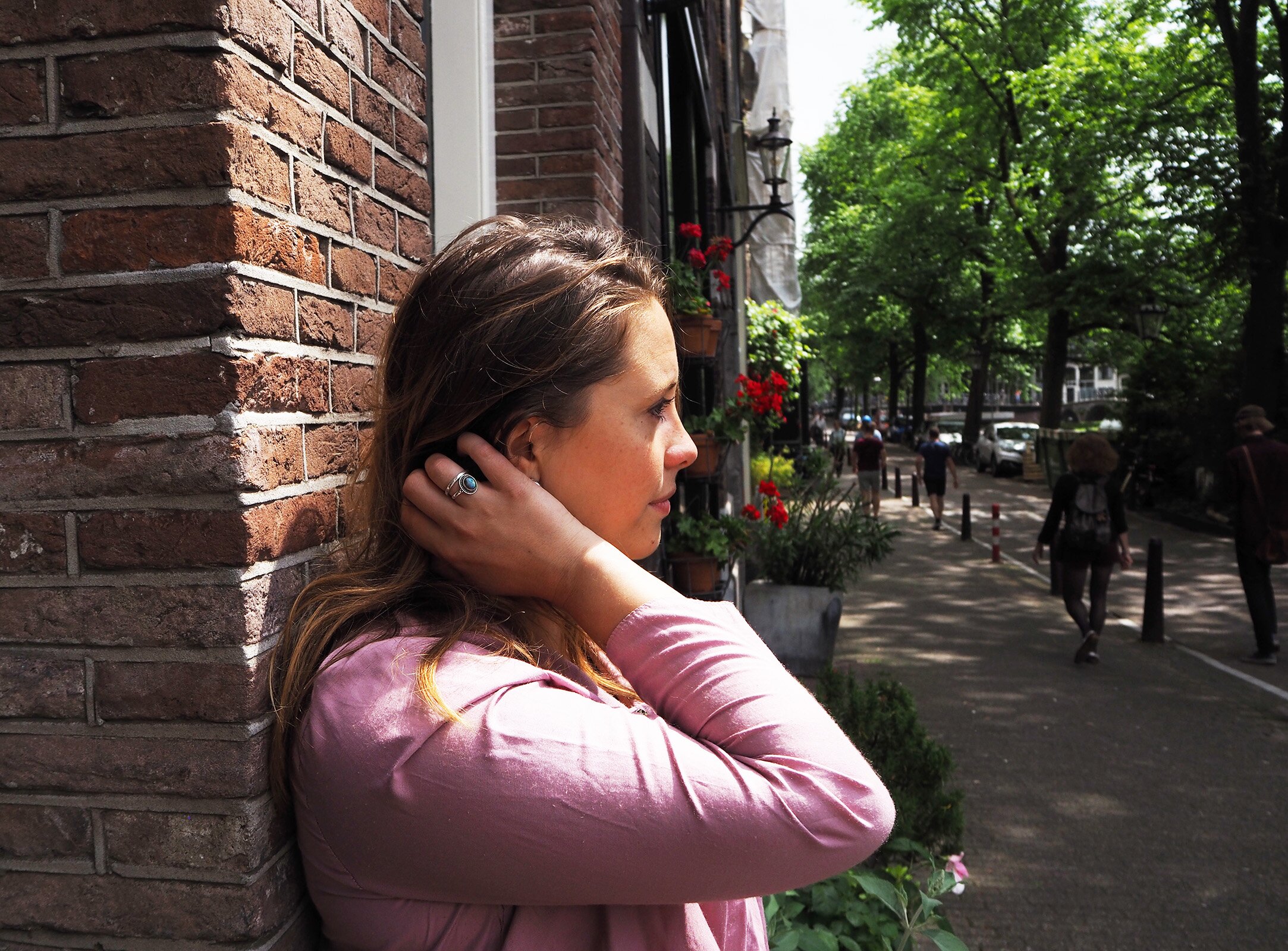
You might be cycling along the Prinsengracht, or sitting outside a café in the Jordaan. The light is doing something extraordinary: that soft, low-hanging Dutch light that painters have been chasing for centuries, bouncing off the canal water and catching the wisteria creeping up the gabled houses or the fresh green of the trees. The parks are full of people who have been waiting since November for this moment. Someone nearby is seeing this for the first time. There’s laughter spilling out of a terraced bar. And everywhere, in window boxes, on bridges, on the sidewalks in pots, in the street markets, in the parks, there are flowers.
Spring in Amsterdam is one of the most joyful things this city has to offer. It’s the season when the tulip postcard cliché becomes reality and the city comes alive again after the grey of winter. Spring brings the most of bank holidays too, and festival season is starting. It’s the time to have lunch on a sunny terrace, picnics in parks and sometimes take the jacket off while you’re walking.
This guide covers everything you need to make the most of Amsterdam in spring, from the events you need to know about to the hidden spots the guidebooks tend to skip.
Content:
Spring Day Trips from Amsterdam
The Season at a Glance
Spring in Amsterdam starts in March and it evolves noticeably from week to week. Early spring feels like winter throwing its last tricks, brighter days punctuated by sudden rain, mornings that are still very cold and windy. Slowly, towards the end of March, the trees begin to fill with green leaves, and a few flowers start opening here and there. In April, almost over night, everything is green and colourful, while the weather keeps changing its mind. By May, you’re looking at lovely conditions and evenings long enough to sit outside until 9pm. June brings summer-like temperatures and the longest days which allows us to spend more time outside.
For this article, I will consider the meteorological spring as well as the astronomical one, so we will discuss spring in Amsterdam, from the first crocuses in March through the long golden evenings of early June.
Weather, honestly
The Dutch have a saying: “April doet wat hij wil” — April does what it wants. You can get a gloriously warm afternoon followed by an icy shower and then sunshine again, all in the same day. March averages around 8–10°C, April climbs to about 12°C, and May settles into a more reliable 16°C range (but you can also have 20 degrees some days or less than 16, so… it’s complicated).
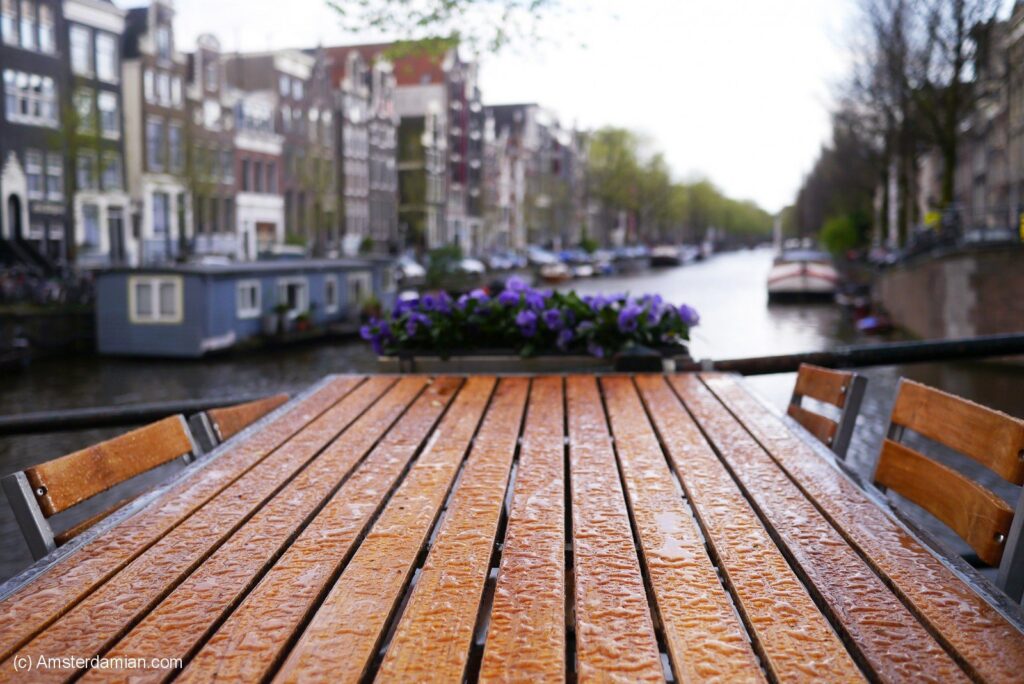
The good news: April actually gets less rainfall than you’d expect for a spring month, with only around 12 rainy days spread across the month. The less good news: those showers can appear without much warning. Pack a compact rain jacket and don’t let it stop you. It would be very helpful to install the Buienalarm app, an essential app if you live in the Netherlands. It tells you when it will rain, and it’s very accurate most of the times.
💡 What to pack: Layers are essential. A waterproof jacket, a couple of light knits, comfortable walking shoes that can handle damp conditions, and at least one outfit that can go from daytime sightseeing to a decent dinner. Leave the flip flops for May at the earliest. Some scarves and a hat might be of great help, especially if you’re coming from a warm country.
Crowds & costs
Spring is peak season in Amsterdam. April in particular draws visitors from all over the world for tulip season and King’s Day, and prices reflect that. Hotel rates can jump up to 20% compared to March, so if you have any flexibility, booking in late March or early May gives you the best of the season without the full peak-season premium. That said, even at its busiest, Amsterdam is navigable if you plan ahead. You could also look for accommodation outside Amsterdam, in the surrounding cities.
Who is spring best for?
Honestly, everyone, but it’s particularly magical for first-time visitors who want the full Dutch postcard experience, couples looking for a romantic city break, and anyone who’s been meaning to “finally see Keukenhof.” It’s also for culture lovers, since Amsterdam’s museum and arts calendar is at its liveliest in spring.
Quick verdict: Spring Amsterdam is romantic, colourful, and absolutely worth the occasional shower.
Top Events & Festivals
Spring is Amsterdam’s most event-packed season. Here’s your roadmap to the highlights.
Can’t-Miss
Cherry blossom time
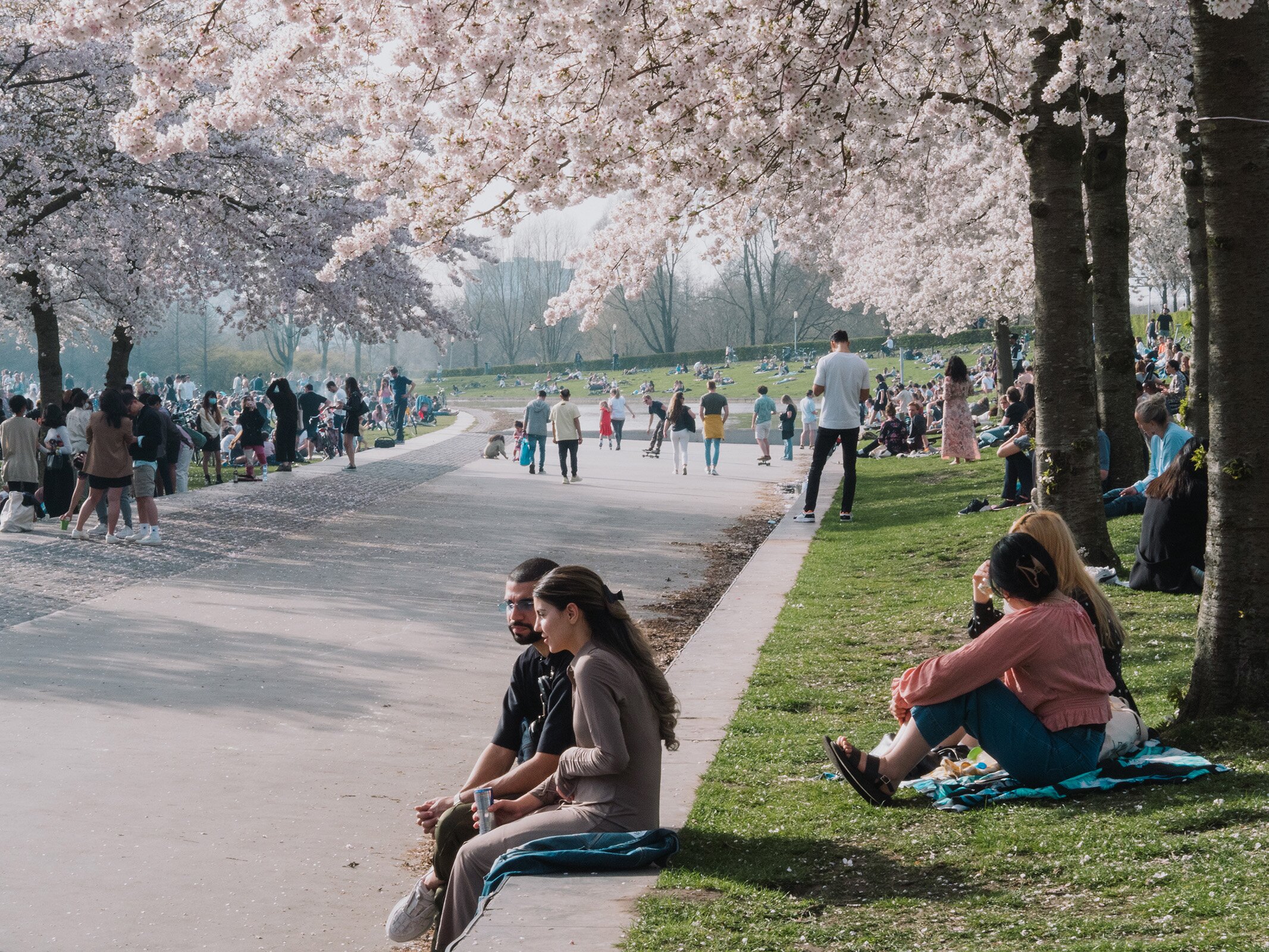
At the end of March, beginning of April (depending on the weather), the cherry trees start blooming. The best place in the city to enjoy this wonderful moment is Westerpark, where there’s a small cherry tree orchard. Also, close by there are a few magnolias, which start blooming around the same time and offer a beautiful display. People go to the park to sit under the trees, have a picnic or a barbecue, read, take photos. For a larger cherry tree orchard, go to Amsterdamse Bos, a forest outside the city in Amstelveen. Here, there is a Cherry Blossom Festival held each year, and the orchard draws a big crowd. For a quieter time, go early in the morning.
Amsterdam Tulp Festival (entire month of April)
The Amsterdam Tulp Festival (Tulip Festival) transforms the city itself into one big flower garden, with tulips displayed across multiple locations: parks, squares, courtyards, rooftop gardens, canal bridges and public spaces throughout the city.
The best part is that it’s entirely free to explore. Pick up a map from the festival’s website, rent a bike if you’d like (or dare), and spend a morning hopping between locations.
King’s Day / Koningsdag (27 April)
King’s Day is something special to witness, if you like parties and crowds. Every year on the 27th of April, the entire Netherlands celebrates the King’s birthday, and Amsterdam does so with characteristic exuberance: the whole city turns orange (clothing, face paint, flags, beer, bicycles, dog scarves), the canals fill with boats, and every street and park becomes a flea market, open-air party, or pop-up stage. The flea market element is one of the best things about it. In the morning, Amsterdammers set up stalls on their doorsteps and sell everything from clothes and old vinyl to home-baked cakes and children’s toys. Kids try to make some money by selling old toys or showcasing their artistic talents, and adults try to get rid of any old item in the house, with some money in return. To find some cheap treasures, go in the morning. There are live music stages in nearly every neighbourhood, and a carnival atmosphere that runs well into the night.
Practical tip: Wear orange. Book accommodation months in advance if you’re visiting specifically for this date, and arrive the evening before (King’s Night) to catch the live music that kicks off the celebrations. Arrive early to the Jordaan and Vondelpark areas for the best street flea markets.
Liberation Day / Bevrijdingsdag (5 May)
Amsterdam marks the anniversary of the Netherlands’ liberation from German occupation in 1945 with a day of free concerts, festivals, and reflection. There are a few free concert stages across the city, combined with a more thoughtful atmosphere that gives the day real emotional weight. The Liberation Day comes after 4 May, Remembrance Day, which commemorates Dutch victims of war and violence. In Amsterdam, the main ceremony takes place on Dam Square and includes two minutes of silence at 8 p.m. The atmosphere is solemn, and much of the city comes to a standstill.
Also Worth Your Time
Bloemencorso Bollenstreek — The Flower Parade (18 April 2026)
Once a year, a parade of enormous floats, decorated entirely with fresh flowers, travels a 42-kilometre route through the tulip region, passing through Keukenhof and ending in Haarlem. You can watch the parade along the route which passes through Noordwijk, Lisse, Hillegom, and Heemstede before reaching Haarlem.
Keukenhof Gardens — 19 March – 10 May, in Lisse
Not in Amsterdam, but definitely worth a visit. Keukenhof is one of the main spring attractions in the Netherlands, and people are coming from all over the world to see these gardens. You can get there by public transport or book an organised tour for more convenience.
→ Keukenhof guide: Keukenhof Gardens: Complete Visitor Guide (2026)

Tulip fields
Visit the tulip fields and the tulip gardens (where you can book a photo shoot or pick your own tulips). Spring is the best for visiting the famous tulip fields. They are not in Amsterdam, but a day trip to one of the tulip areas is totally worth it. Most of these fields are working farms and can only be admired from the roadside, but tulip gardens invite visitors to step closer: to wander along paths between the flowers, arrange a photo shoot among the blooms, or even pick a small bouquet to take home as a reminder of spring.
→ Read here the guide to visiting the tulip fields: Where to See Tulip Fields in the Netherlands: A Complete Guide (2026)
CinemAsia Film Festival — 8 – 12 April at EYE, Studio/K, Rialto de Pijp
CinemAsia is dedicated to Asian cinema and Asian-European storytelling. The festival screens films from across Asia as well as works by diaspora filmmakers, often accompanied by talks and cultural events. It plays an important role in highlighting underrepresented voices within Amsterdam’s film landscape.
Amsterdam Coffee Festival (16–18 April 2026)
Three days, dozens of Amsterdam’s best roasters and baristas, and more single-origin espresso than you can reasonably drink in a weekend. The Amsterdam Coffee Festival is a well-established fixture on the city’s food calendar, with workshops, tastings, latte art competitions, and guest roasters from around the world.
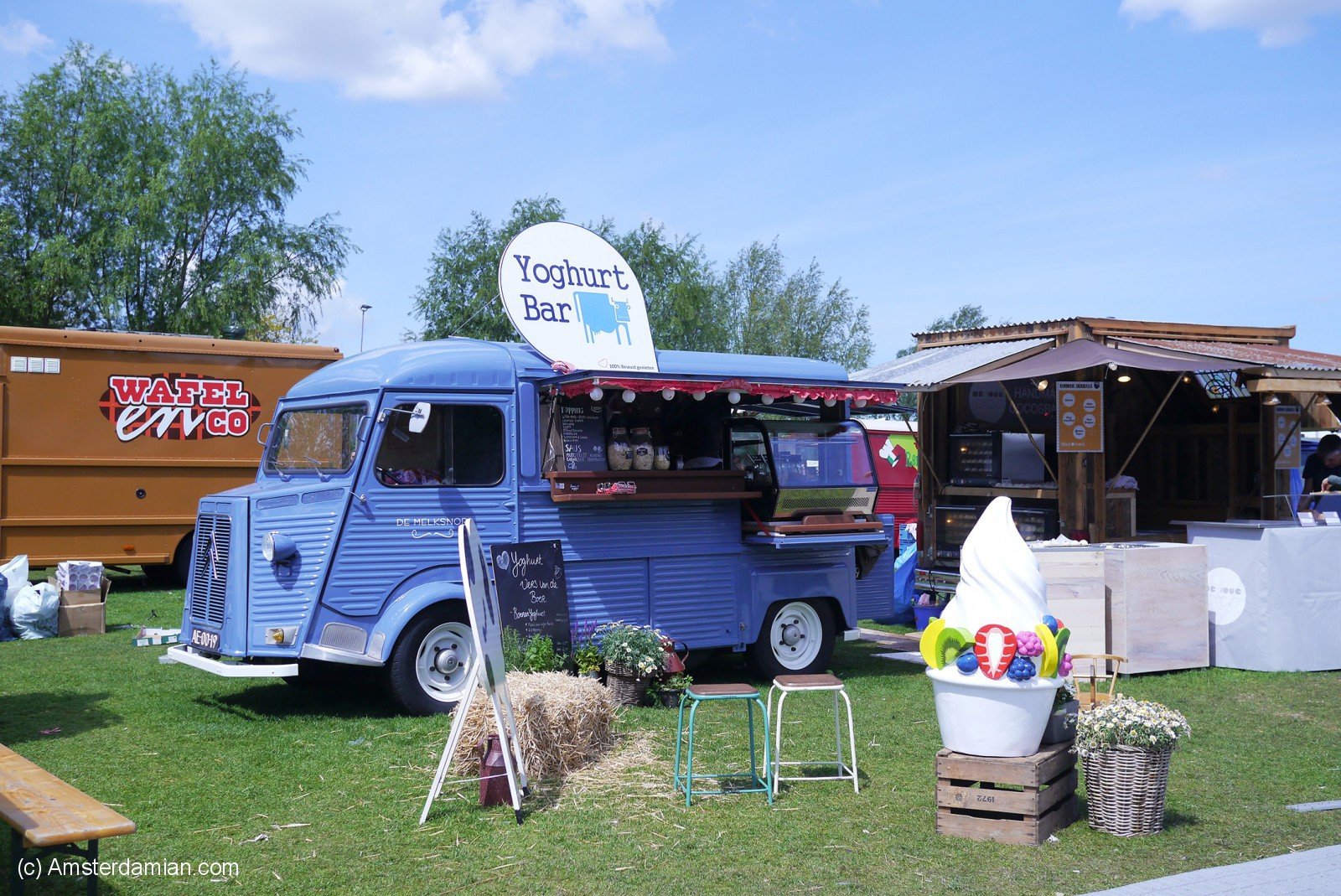
Rollende Keukens – a food truck festival in May (13-17) in Westerpark. For several days, the park fills with mobile kitchens, long communal tables, and live music. Many locals treat it as a casual outdoor gathering rather than a formal event.
Open Garden Days (Open Tuinen Dagen), usually third weekend of June (19-21 June in 2026). Private canal house gardens open to the public, offering the opportunity to see gardens that are usually closed to the public. Some gardens also host concerts, adding music to the experience as you wander through them.
Vondelpark Open Air Theatre. It starts in May and goes all throughout the summer, until September. It hosts free performances including music, dance, and theatre. Events take place in an informal setting and are popular with locals who combine them with picnics or evening walks.
→ Read about events in Amsterdam in 2026: What to Do in Amsterdam in 2026
Time to get outdoors
This is the best thing you can do in Amsterdam in spring: spend time outdoors. Especially when it’s sunny. I’d even go so far as to say you should skip a planned museum visit if it’s sunny. The city itself is a big museum and the vibes of a sunny day in Amsterdam are something special that everyone should experience.
Drinks or lunch on a terrace
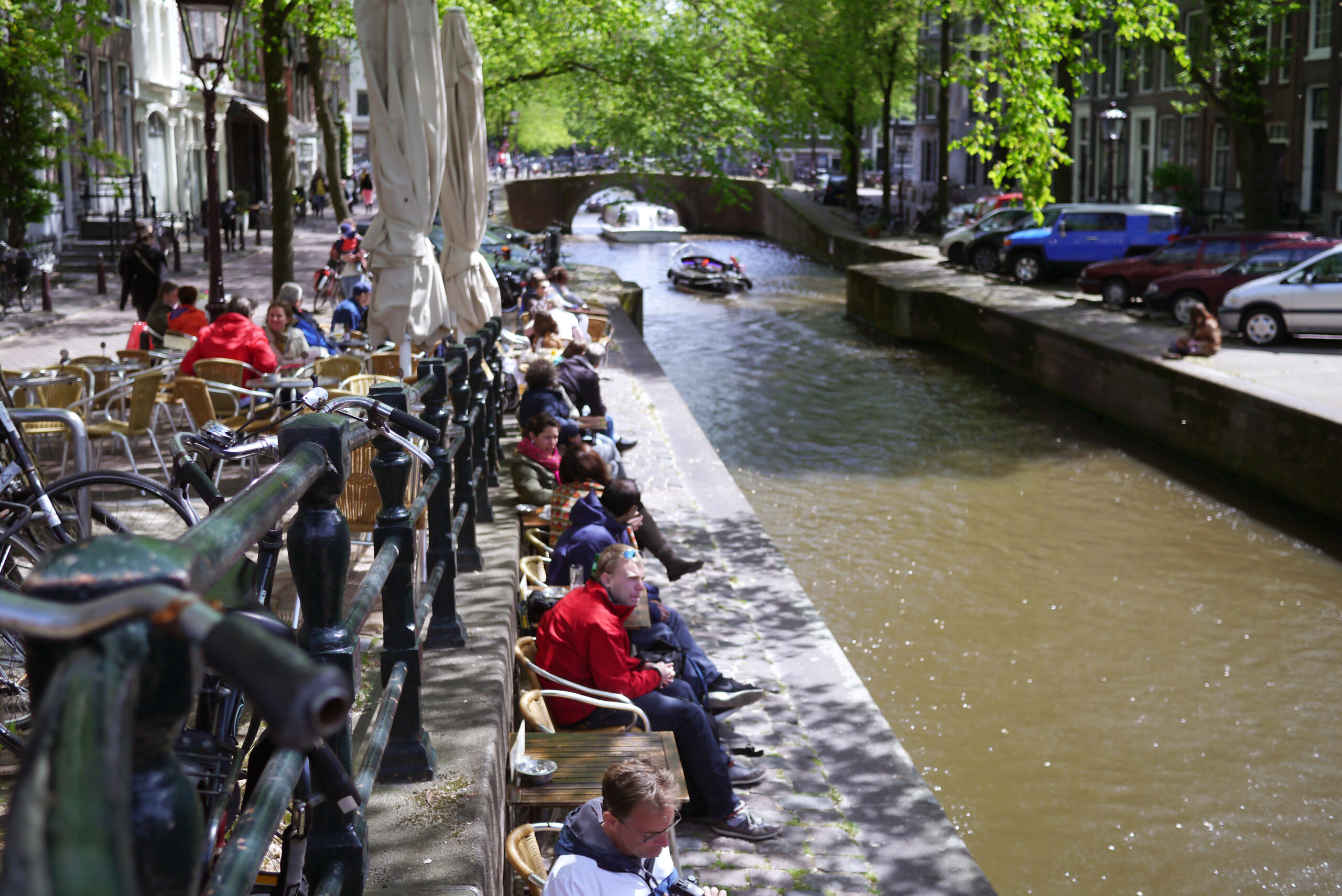
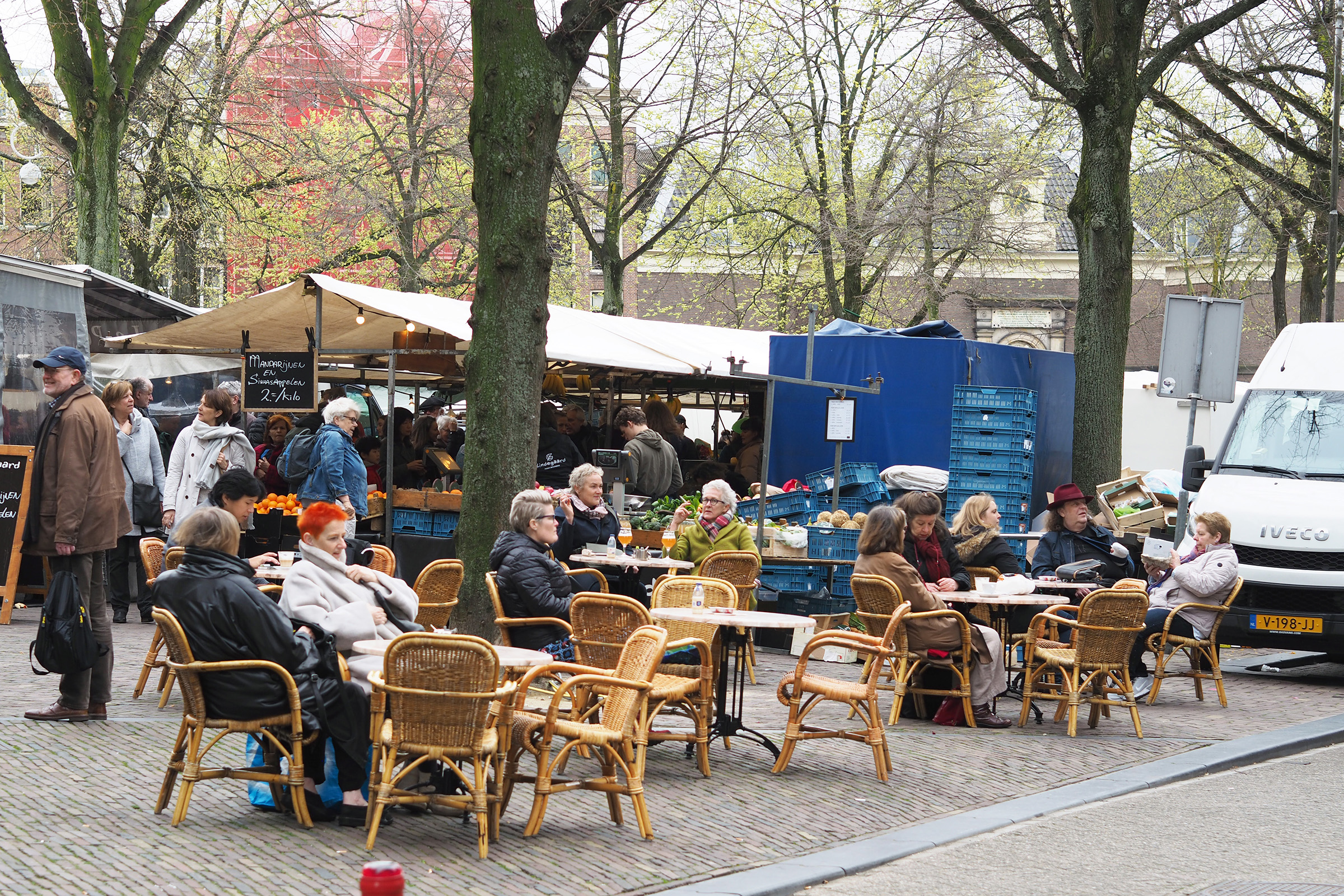
While some days are still cold and rainy, there are beautiful days when everyone goes out to enjoy the sun. Open-air restaurants are popular and it’s hard to find a spot in the sun. You can also grab something to-go and eat on a bench on the canal side or in a park. You will see people bringing chairs out from the house to sit in front of the building, sometimes setting a table for lunch or dinner, while soaking up the sun. When you don’t have a garden, the sidewalk will do just fine in Amsterdam.
Some of my favourite terraces: De Plantage, Dignita Hoftuin, Loetje aan ‘t IJ, Pllek, Spanjer en van Twist on a canal side, or De Ysbreeker and Bam Boa on the Amstel.
Parks worth lingering in
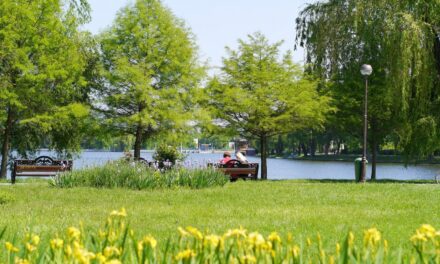
Vondelpark is the best known park, where locals and tourists enjoy a bit of nature. Bring a picnic blanket, pick up some cheese and bread from a nearby shop, and claim a patch of grass. The park fills with dogs, children, students with guitars, and locals who’ve been cooped up all winter and are visibly delighted to be in the sun. But there are other parks that are beautiful and less crowded, like Rembrandtpark, Sloterplas, Westerpark, Oosterpark and Frankendael.
For something a little less busy, head to the Amsterdamse Bos – Amsterdam’s forest park, three times the size of Central Park. You can rent a canoe and paddle the park’s waterways, or just walk the trails and enjoy the silence. Or visit the Meerzicht Farm where you can see animals and eat really good Dutch pancakes.
Another lovely place to visit in spring is Hortus Botanicus, one of the oldest botanical gardens in the world, located in the Plantage neighbourhood. It’s genuinely beautiful in spring, with early blooms filling the outdoor beds and the butterfly house in full swing. It’s small enough to do in an hour, but peaceful enough that you’ll probably want to stay longer.
On the canals
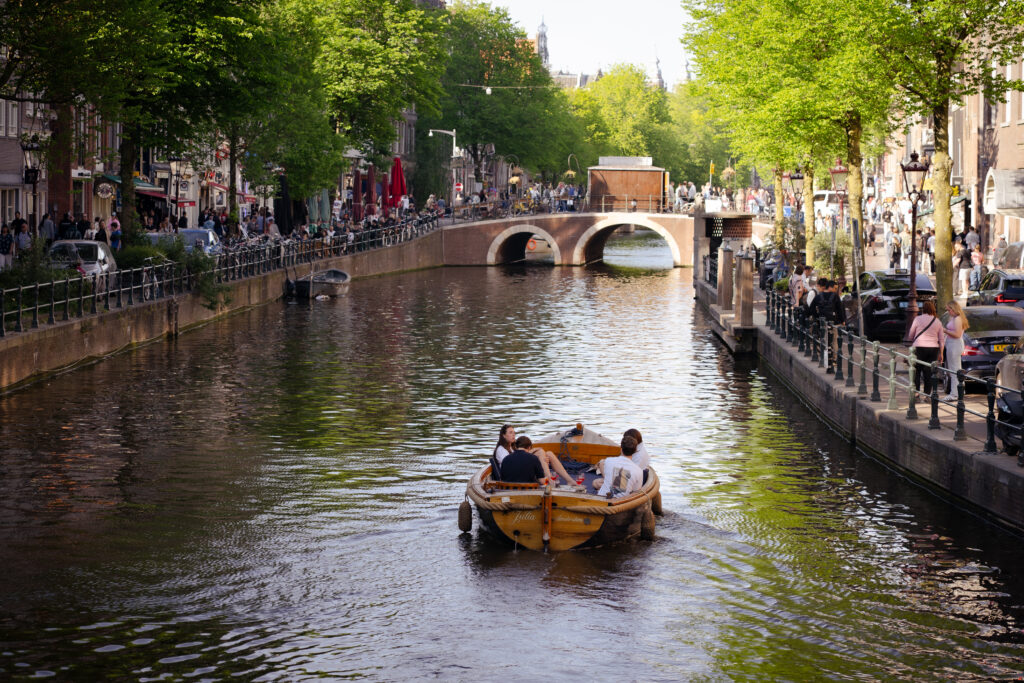
Renting a small self-drive motorboat is one of the great Amsterdam experiences, and spring is an a good time to do it. The weather is bearable, the canals aren’t yet congested with summer traffic, and the views from the water of the city in bloom are extraordinary. There are several rental spots in the city. No licence required, and most boats fit 4–8 people. You can also rent a boat with a skipper or get a ticket on one of the big canal cruise boats, if you feel more comfortable in those.
If you’d rather work for it, stand-up paddleboarding (SUP) is a fun way to see the canals from a different angle. Early mornings on weekdays are quiet, and you’ll have stretches of water entirely to yourself.
💡 Canal tip: The IJ ferry crossing to Amsterdam-Noord is free for pedestrians and cyclists, runs 24/7, and offers spectacular views of the city skyline. It’s one of the best free moments in Amsterdam.
Spring markets
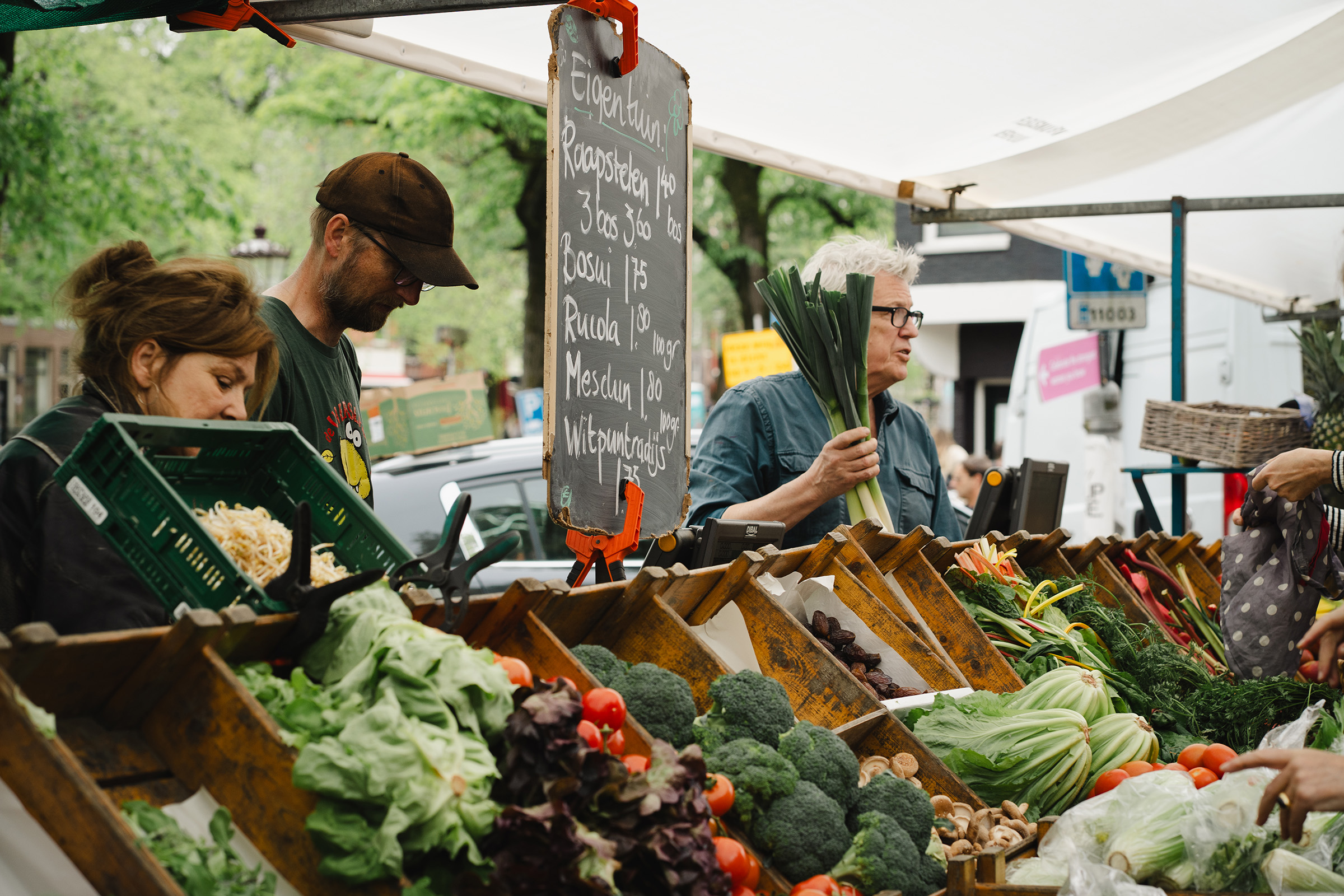
Amsterdam’s market scene is year-round, but spring brings particular energy to a few key spots. The Noordermarkt in the Jordaan runs a Saturday organic farmers’ market where you’ll find the first white asparagus of the season, Dutch strawberries, fresh bread, and artisan cheeses among the Jordaan’s photogenic streets. The same square hosts a flea market on Monday mornings.
The Albert Cuypmarkt in De Pijp is the city’s largest and liveliest street market, with over 300 stalls stretching down a long boulevard, selling everything from herring rolls and stroopwafels to fabrics, flowers, and fresh produce. It’s busy, colourful, and a great people-watching spot.
Pure Markt, in Frankendael Park or Amstelpark, once or twice a month, is one of my favourite markets. It’s a mix of food and artisan and designer products, with 70% of the stalls being food-related. A great place to spend a Sunday with friends or family.
→ Read more about Organic and Farmers Markets in Amsterdam here.
Cycling
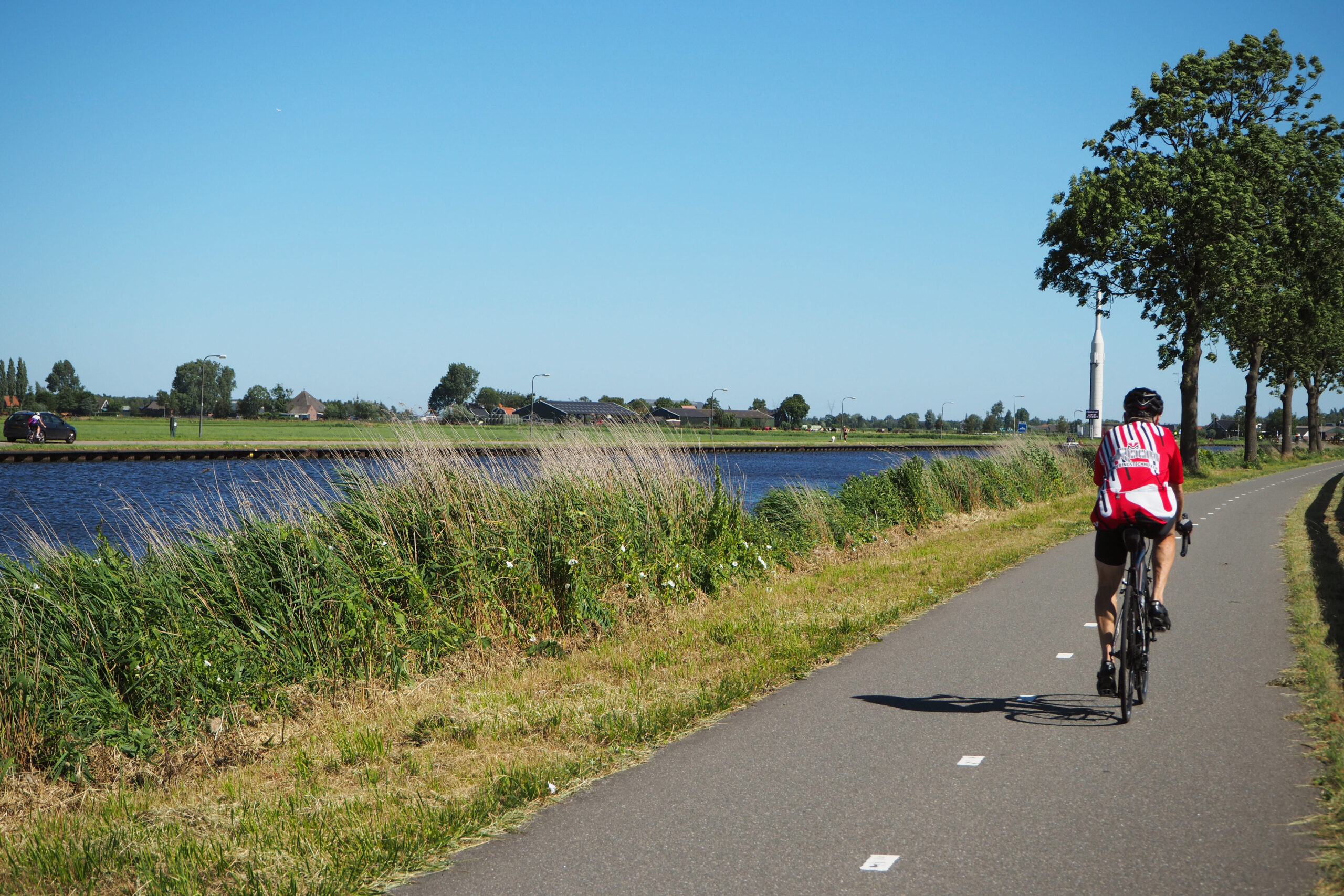
You cannot really understand Amsterdam without getting on a bike, and spring is one of the best times to do it. Hire a bike from one of the reputable rental spots (avoid the very cheapest options, which tend to have poor brakes) and just explore. I would recommend you do this only if you are very confident cycling. While there are dedicated bike paths around the city and outside of it, the bike traffic in Amsterdam tends to be a bit crazy for non-Amsterdammers. Be careful if you decide to do it, make sure to signal every direction change and watch out for the hurried locals.
For a proper spring ride, outside the city, I have two favourite routes. Head north via the free IJ ferry towards Waterland, a flat, beautiful cycle through polders, windmills, and tiny villages that feels nothing like a capital city, yet is 30 minutes from Central Station. Or head south along the Amstel river, towards Ouderkerk aan de Amstel.
Rose Hunting
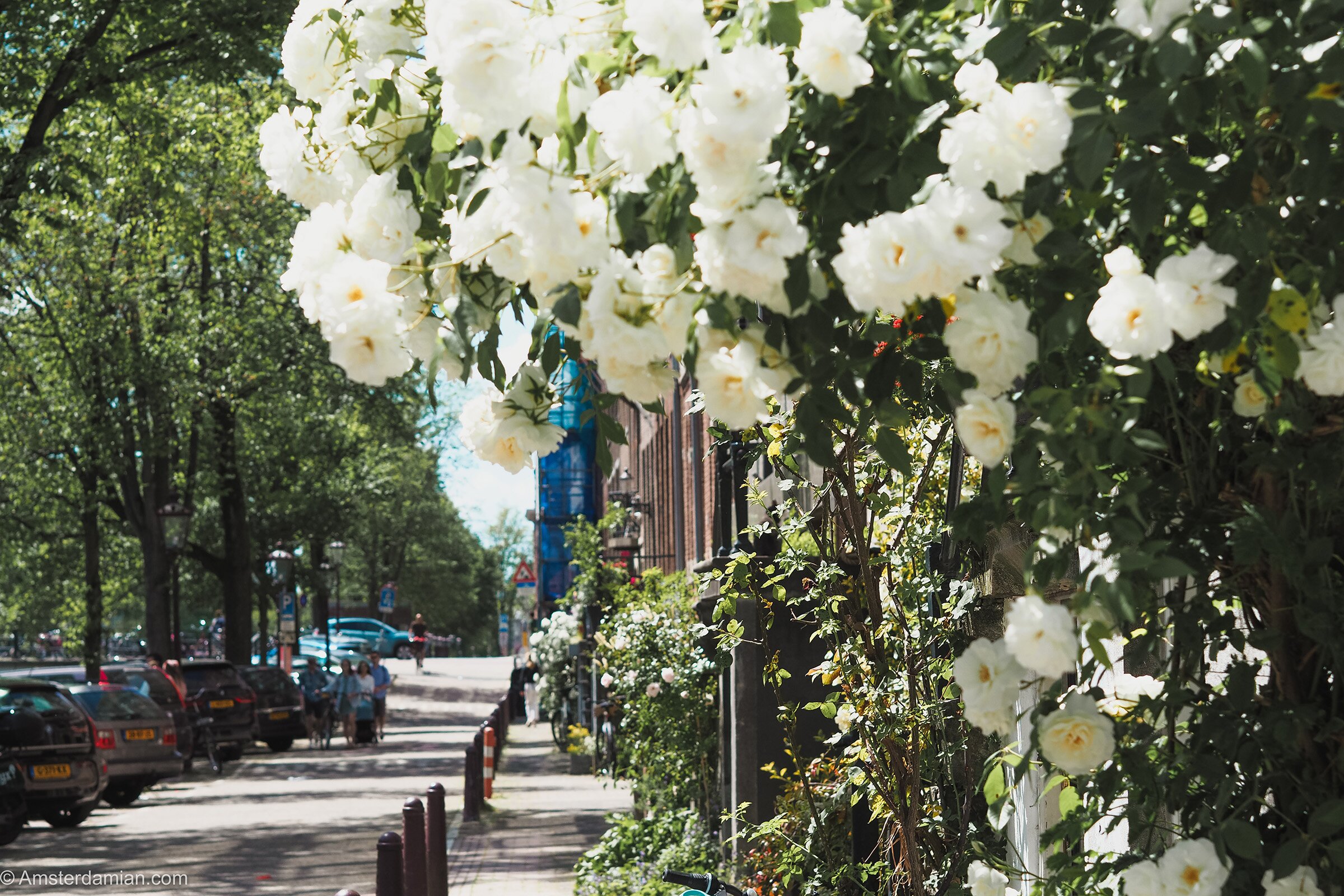
In June, Amsterdam becomes a city of roses. It’s the time when roses bloom everywhere, from pots to gardens, to climbing roses on the old facades and bushes alongside roads. One of my favourite activities is to go rose hunting with friends. The best roses are in Oud-Zuid and Jordaan neighbourhoods, but you can find beautiful displays also on streets like Entrepotdok and Weesperzijde.
Culture & Indoor Amsterdam
When the showers arrive (and they will), Amsterdam has world-class culture waiting for you. Here’s a practical guide to making the most of it.
The big three, and how to do them right
Rijksmuseum is essential for anyone who wants to understand Dutch art and history. Inside the grand 19th-century building, more than 800 years of history unfold through paintings, decorative arts, and historical objects. Even if you’re not planning a deep dive into art history, it’s worth coming to see works by artists like Rembrandt van Rijn and Johannes Vermeer, and to experience the scale and atmosphere of the museum itself. Book a timed entry slot online in advance, go early (doors open at 9am), and don’t try to see everything in one visit.
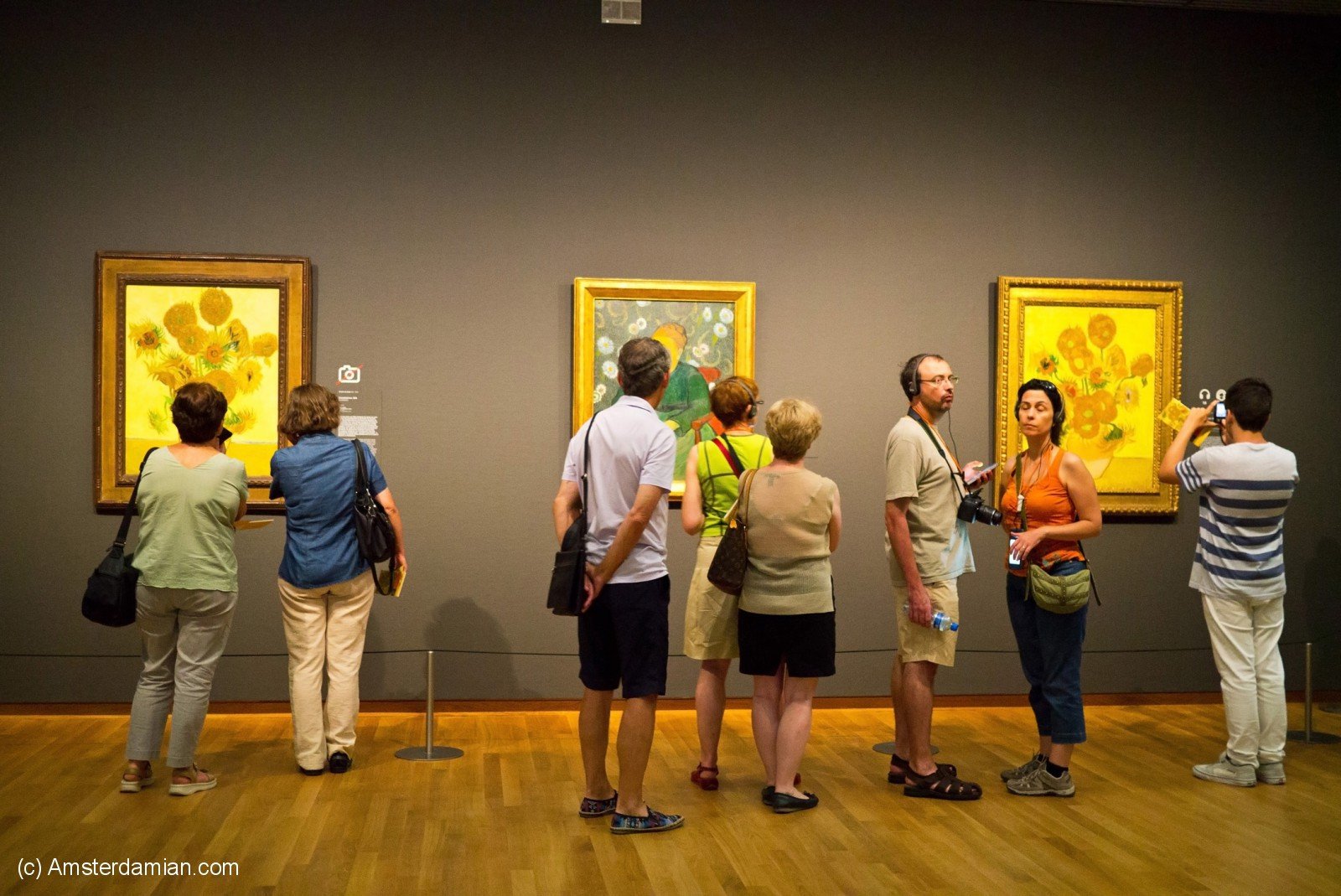
Van Gogh Museum is one of the most visited museums in Europe, which means without planning, it can feel like you’re shuffling through a crowd. The museum tells the story of the life and work of Vincent van Gogh through the world’s largest collection of his paintings, drawings, and letters, alongside works by artists who influenced him or were inspired by him. Book your ticket a few weeks in advance and pick the first slot of the day. In the quieter first hour, the museum feels more intimate and the experience is completely different.
Anne Frank House is a deeply moving and important visit. It books out months in advance! Check the website as soon as you know your travel dates, because this is non-negotiable to sort early. The experience is quiet, sober, and unforgettable.
Beyond the big names
Amsterdam’s smaller museums are some of its best-kept secrets, and they’re almost always less crowded.
Foam Photography Museum on Keizersgracht is one of the finest photography galleries in Europe, housed across a series of connected canal houses. It’s intimate, consistently well-curated, and offers free guided tours on Saturday morning. Huis Marseille is another beautiful photography museum with a great garden where you can stop by for a drink after your visit.
STRAAT Museum in Amsterdam-Noord is a warehouse entirely dedicated to street art and murals, with work from over 150 international artists. It’s an unusual and genuinely impressive space. Take the free IJ ferry and make an afternoon of it.
H’ART Museum on the Amstel (formerly the Hermitage Amsterdam, now reinvented with its own identity) has interesting rotating exhibitions all the time. The building itself, a former elderly care complex on a prime waterfront location, is worth seeing.
Wereldmuseum in Amsterdam Oost is a seriously underrated museum of world cultures. It’s visually spectacular, genuinely engaging, and almost always quiet. If you have even a slight interest in anthropology or global history, put it on your list.
→ Read here about the museums in Amsterdam: Amsterdam Museums Guide.
Also this spring
Amsterdam Art Week (typically April) connects galleries, project spaces, and museums across the city with exhibitions, artist talks, and open studios. It’s a great way to explore the contemporary art scene beyond the established institutions.
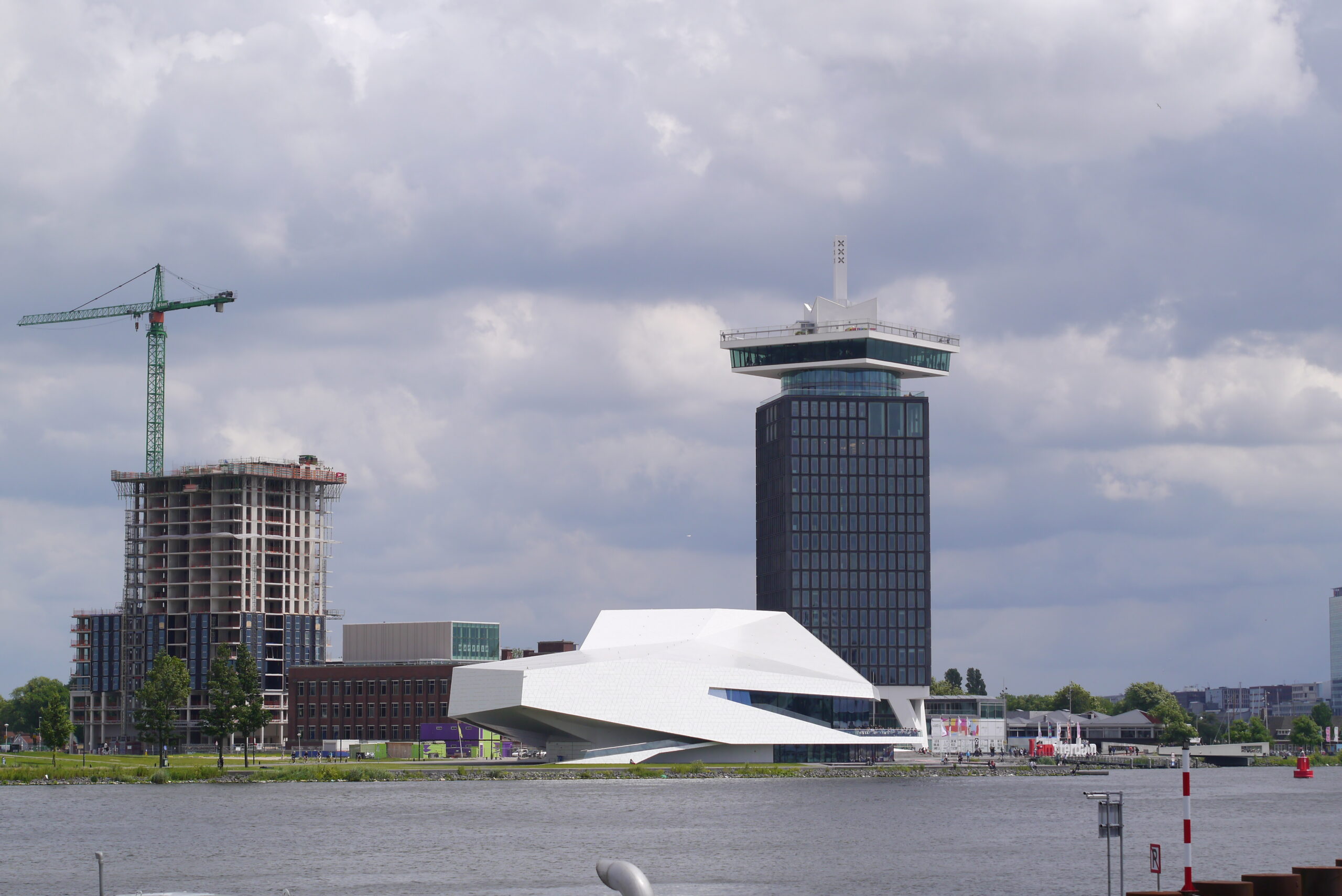
☔ Rainy day pick: Cross the river to the EYE Filmmuseum in Amsterdam-Noord. Entry to the building is free (exhibitions and screenings are ticketed), the architecture is spectacular, the café has one of the best terraces in Amsterdam on a good day, and the film programme is genuinely eclectic. It’s 10 minutes from Central Station via the free ferry.
Food & Drink
Dutch food has a complicated reputation, and spring is the season that does most to rescue it. Two things arrive in spring that Amsterdammers genuinely get excited about, and both are worth going out of your way for.
Eat this now: white asparagus
From late March through to June, white asparagus – het witte goud (white gold), takes over the menus of Amsterdam’s cafés and restaurants. This is the same vegetable as the green kind, but grown underground to keep it white, which makes it sweeter, juicier, and considerably more prized. It’s a seasonal obsession in the Netherlands, and when it’s good, it’s exceptional.
The classic preparation is simple and delicious: steamed, served with chopped hard-boiled eggs, thin slices of ham, melted butter, and a grating of nutmeg. You’ll find it on the blackboards of most Dutch restaurants from April onwards, and at the Saturday farmers’ market at Noordermarkt, where you can buy it fresh, straight from local growers.

And this: the beginning of herring season
Hollandse Nieuwe, the first fresh catch of young, lightly-cured herring, peaks from mid-May through June, which means the very end of spring is when you want to be eating it. You’ll know the season has properly started when the herring carts appear with flags flying. The Amsterdam way to eat it: stand at the stall, hold the fish by the tail, tip your head back, and lower it in. Topped with raw onion and pickles. If that’s a step too far, broodje haring ( herring on a soft white roll) is just as authentic and considerably less theatrical.
Stubbe’s Haring on the Singel (a short walk from Central Station) has been doing this for over a century and is genuinely the best in the city. Frens Haringhandel near the Bloemenmarkt is the other classic.
→ Read more about what to eat in Amsterdam: A Taste of Amsterdam: Discover the City Through Its Food
Where to eat
There are way too many places to mention in just one article, but I’ll give you a few ideas.
De Kas is one of Amsterdam’s most special restaurants: a 1920s greenhouse in Frankendael Park, East Amsterdam, where almost everything on the plate is grown in the surrounding gardens or sourced from local farms. The menu changes based on what’s available in the season. Book well in advance; it fills up. Lunch is more affordable than dinner and just as good.
Foodhallen is an indoor food market in a converted tram depot in the West, with around 33 stands covering everything from Vietnamese food to Dutch kroketten to natural wines. It’s ideal for groups with different appetites and brilliant on a rainy spring evening. Gets busy from 7pm onwards.
For breakfast or brunch, Bakers & Roasters in De Pijp (the neighbourhood that takes brunch the most seriously in the city) is excellent, with a New Zealand and Brazilian influence on the menu and a loyal local following. Coffee & Coconuts is also among my favourites, together with Bloem Cafe.

Where and what to drink
Spring is when Amsterdam’s terras (terrace) culture properly wakes up. The moment there’s a hint of sun, chairs appear on canal bridges, café fronts fold open, and the city seems to collectively move outside with a glass of something cold. The Jordaan and De Pijp are the best neighbourhoods for this. Wander and follow the sun. There are multiple specialty coffee shops in the city for coffee lovers, and a great selection of beers in any bar you visit.
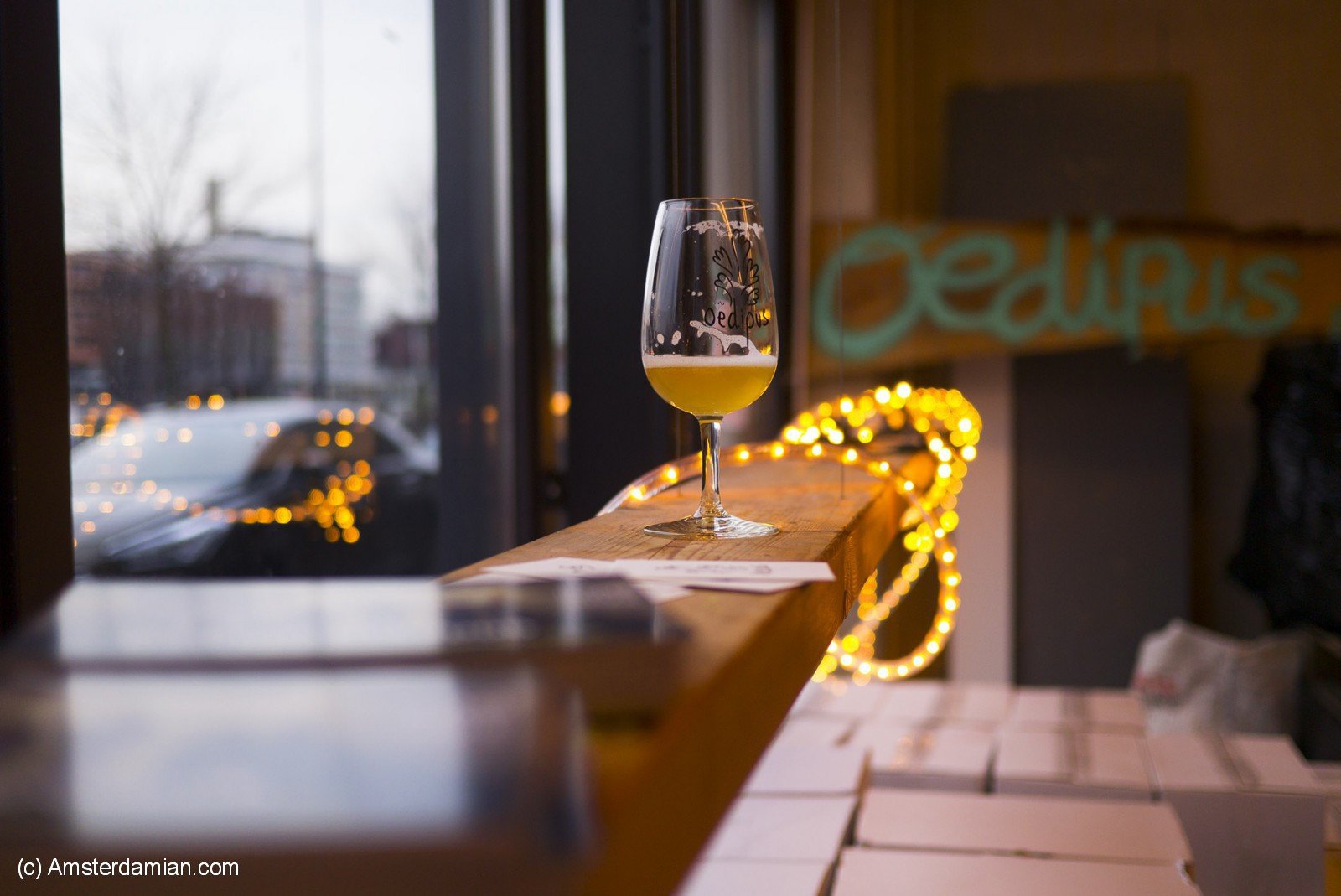
Try the local, artisanal beers, which can also be found in the non-alcoholic version: Brouwerij ‘t IJ, Brouwerij De Prael, Butcher’s Tears, Oedipus, Texels.
For something more deliberately cosy, a bruine kroeg (brown café) is the Dutch answer to the pub: dark wood, low ceilings, local beer, and a warmth that’s particularly welcome when April showers catch you off-guard. Café ‘t Smalle on the Egelantiersgracht in the Jordaan is one of the oldest and most beautiful, with a small floating terrace that’s very sought-after on warm days.
💡 Local tip: Most Dutch supermarkets (Albert Heijn, Jumbo) stock excellent local craft beers; brands like Brouwerij ‘t IJ (brewed in a windmill in the East of the city, with a taproom worth visiting) and Oedipus Brewing are genuinely good and far cheaper than in bars.
Neighbourhood Spotlight
Amsterdam is a city of villages, and each neighbourhood has its own personality. Here are three that really come into their own in spring.
Jordaan: the postcard come to life
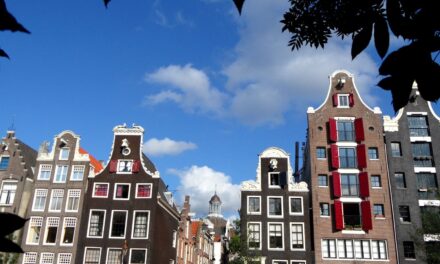
If Amsterdam has a heartbeat, it’s probably somewhere in the Jordaan. This former working-class district west of the canal ring is now a mix of narrow lanes, independent galleries, flower-filled pots on the sidewalks, and some of the city’s best cafés. In spring, the whole neighbourhood blooms, literally. This neighbourhood’s crowd is a mix of locals and tourists, and it’s the best place in the city centre where you can meet real Amsterdammers.
Start a Jordaan morning at the Noordermarkt, where the Saturday organic market is one of the best in the city. Pick up white asparagus, artisan cheese, and fresh bread and wander further. Stop for coffee at Café Winkel 43, which is said to have the best apple pie in town. In the evening, head to Café ‘t Smalle on Egelantiersgracht for a jenever (Dutch gin) and a seat on their floating canal terrace if you can get one.
Plantage: green, quiet, and underrated
Just east of the city centre, Plantage is where Amsterdam slows down. The tree-lined streets were designed as a garden district in the 17th century, and they still feel that way: wide, quiet, and very walkable. In spring, when the chestnuts along the avenues start to flower and Hortus Botanicus is at its most beautiful, this neighbourhood is genuinely one of the loveliest corners of the city.
Spend a morning here at the Hortus Botanicus, or just walk around the neighbourhood, not missing Entrepotdok, a beautiful street lined up with former warehouses transformed into modern homes. Visit the Artis Zoo, or the Jewish Historical Museum and the Portuguese Synagogue next door (both are remarkable and consistently less visited than they deserve to be). End at the Waterlooplein Market, Amsterdam’s oldest flea market, for vintage finds and general browsing.
De Pijp: brunch, buzz, and the Albert Cuypmarkt
South of the centre, De Pijp has the energy of a neighbourhood that knows it’s having its moment: young, diverse, full of cafés and restaurants, with streets lined with bikes and plant pots spilling onto the pavement. Spring is when Sarphatipark, the small green square at the neighbourhood’s heart, fills up with locals on picnic blankets, and the brunch restaurants on Ferdinand Bolstraat and the streets around it hit their stride.
The Albert Cuypmarkt (the longest street market in the Netherlands) runs every Monday to Saturday and is worth at least an hour of your time. Buy a stroopwafel made fresh on the griddle, some Dutch cheese, and a bag of tulip bulbs to take home. For brunch, Bakers & Roasters and Little Collins both consistently hit the spot.
Spring Day Trips from Amsterdam
Spring is arguably the best season to leave Amsterdam for a few hours, because the Dutch countryside at this time of year is spectacular. Here are a few trips worth making.
Haarlem: small city, big charm
Haarlem is only 20 minutes by train from Amsterdam Centraal but feels like a different world: quieter, smaller, with a beautiful main square (the Grote Markt), a stunning medieval church (the Grote Kerk), and excellent independent restaurants and shops. It pairs naturally with Keukenhof; you can spend the morning in the gardens, then take the bus back to Haarlem for lunch and an afternoon wander. On the way back, the Frans Hals Museum is small but world-class.
Travel time: 15–20 minutes by train (direct). Trains every 10–15 minutes.
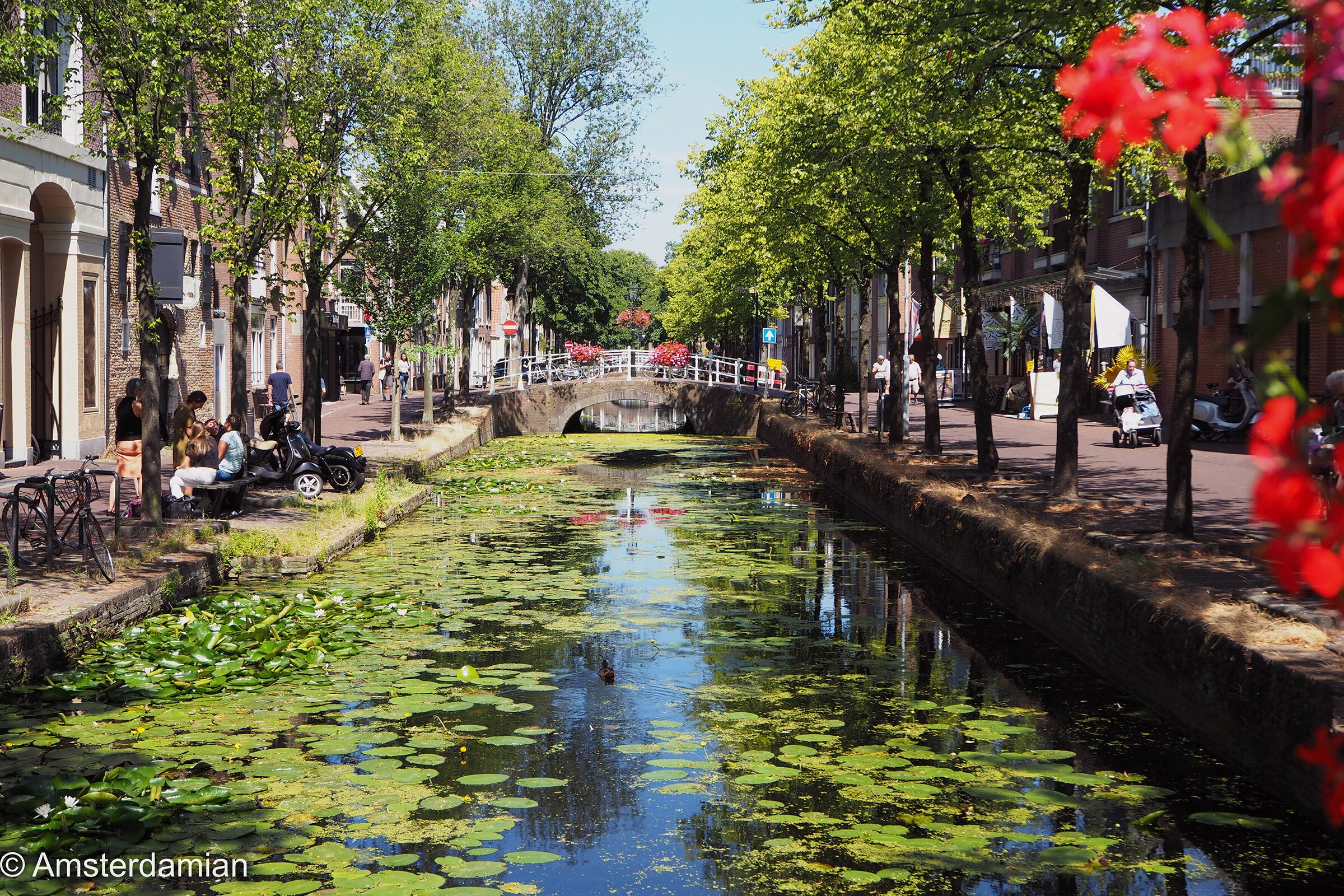
Delft: Vermeer’s city
If you want beautiful, historic, and refreshingly un-touristy, head to Delft. It has everything Amsterdam has – canals, gabled houses, a gorgeous market square, in a fraction of the size, with a fraction of the crowds. In spring, the city is peaceful and very photogenic. Visit the Nieuwe Kerk (where the Dutch royal family is buried), tour one of the original Delftware pottery factories, and spend an hour at the Vermeer Centrum before taking the 15-minute train to The Hague for the afternoon.
Travel time: ~1 hour by direct train. Combine with The Hague’s Mauritshuis gallery for a full day.
Warmond: real Dutch life
If you’re in the mood to visit a village instead, Warmond, close to Leiden, is a great option. It’s not in the tourist circuit and it gives you a taste of the real Dutch life. Start with a visit to the Huys te Warmont country estate, in the forest-park next to the village, then visit the Oude Toren (Old Towers) and the church ruins. After that, head to the Koudenhoorn island for a bit of nature. You can book a boat ride if you’d like, and, for lunch or coffee, check out the Old School cafe.
Travel time: ~ 50 minutes by train (not direct; you need to reach the Sassenheim train station and walk or take the local taxi from there).
Cheese Markets
Spring is when the cheese market season is starting. You can visit Alkmaar or Edam to see the weekly cheese markets (Fridays in Alkmaar and Wednesdays in Edam). There is a cheese market, more traditional and less touristy in Woerden, on Saturdays.
Beach trips
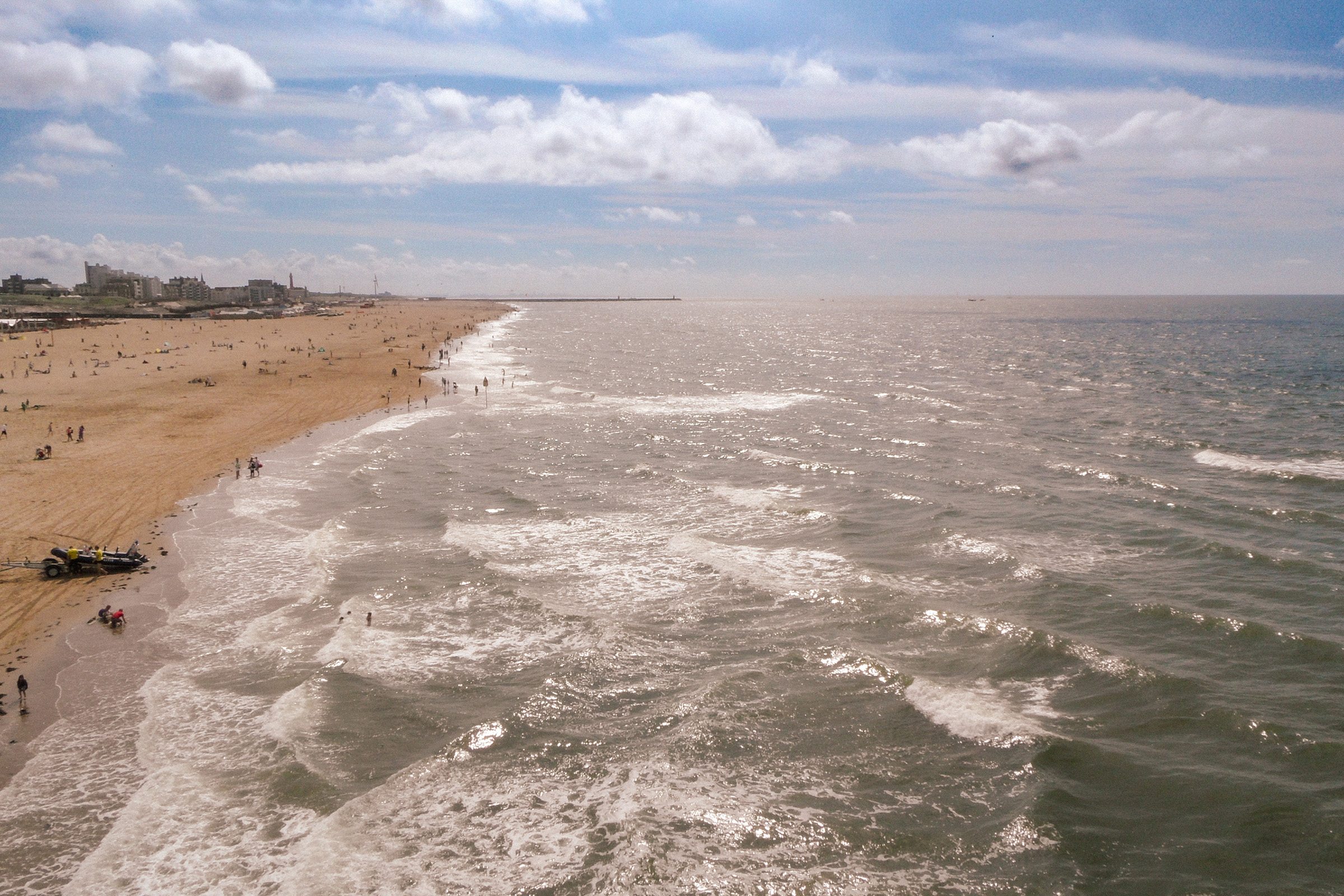
It’s not warm enough to sunbathe or swin in the sea, but the beaches are amazing in any season. Check out any of the beaches along the North Holland province, like Egmond aan Zee or Petten aan Zee, or Scheveningen more to the south, and go for a long walk. Try a fresh fish sandwich while you’re there too.
Hidden Gems & Local Tips
The Begijnhof is one of Amsterdam’s most quietly extraordinary places: a hidden medieval courtyard, completely enclosed, in the middle of the Spui area. Hidden behind an unmarked wooden door, it opens onto a garden of perfectly kept lawn surrounded by some of the oldest houses in the city. In spring, the garden is blooming and the contrast between the busy shopping streets outside and the silence inside is remarkable. It’s free to enter and almost no one lingers long enough to soak it in.
The Rijksmuseum garden is another one. The museum’s outdoor garden is free to enter, open to everyone, and in spring is planted with tulips and other seasonal blooms. It’s free to enter.
Volkstuinen are popular in Amsterdam. A volkstuin is an allotment or a community garden, where individuals grow fruits and vegetables, flowers and trees. You can walk around the alleys and admire the gardens and the tiny houses, but you may not enter the gardens. Check out the ones in Westerpark and Frankendael Park.
NEMO rooftop square: the NEMO Museum has a brand new green area on the roof, where you can have a drink and a bite while enjoying lovely views over Amsterdam.
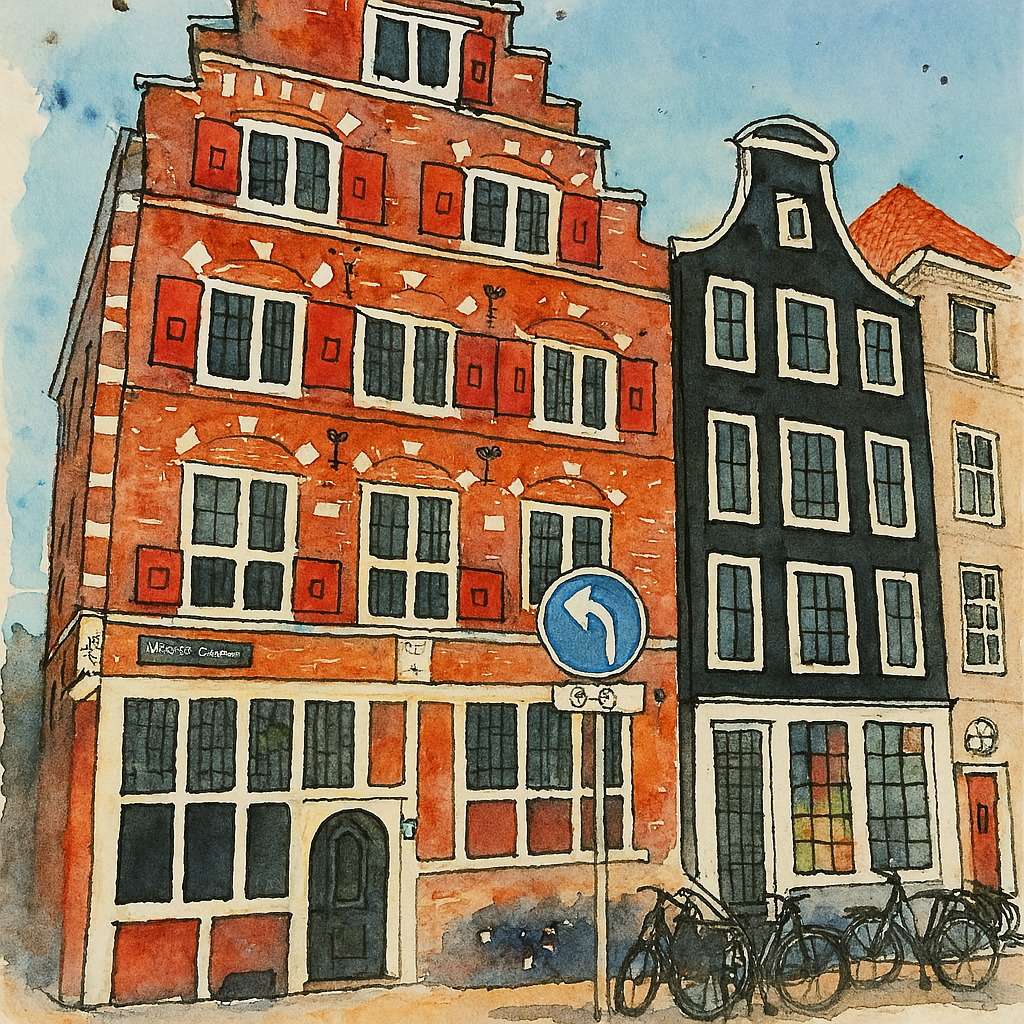
Western Islands (Westelijke Eilanden). This is a quiet escape from the busy city life right in the middle of the city, just a stone’s throw from Central Station. The prettiest of the three is Prinseneiland, but stroll from one island to another to admire every hidden garden, wooden bridge, boat and the houses with red shutters. I love the cobbled streets and the many quiet spots near the water. I always make sure to pass by the petting zoo on Bickersgracht and the palm garden on Prinseneiland.
Oude Houthaven – when you are in the area above, check out also the old harbour of Amsterdam. It’s a quiet area where you can have a walk and admire the boats.
Urban foraging session. Learn how to identify edible plants around you, in the city, and how to ethically forage and prepare them. Lynn, the modern witch from Urban Herbology organises frequent urban foraging walks, and you can join her for a one of a kind experience.
→ Read here about Amsterdam’s green spaces: Amsterdam Gardens.

Practical Guide
Getting to Amsterdam
Schiphol Airport is one of Europe’s best-connected airports, with direct flights from most major cities. From the airport to Amsterdam Centraal Station, take the train. It’s €5.50, takes 15–20 minutes, and runs around the clock. Don’t pay for a taxi unless you have a lot of luggage and no patience.
Getting around the city
The simplest option for tourists in 2026 is Ovpay: tap in and out of trams, buses, and the metro with your contactless bank card or phone, exactly as you would in any other city. If you’re staying for 3+ days, a GVB multi-day pass (€21.50 for 3 days, €27.50 for 4 days) covers unlimited city transport.
Planning your trip to Amsterdam in spring? Check these:
I amsterdam City Card: 100+ Museums, Sightseeing + Public Transport
How to Explore Amsterdam. The Best City Passes for Tourists and Locals
Amsterdam: Anne Frank & Jewish Quarter Guided Tour
Canal Cruise from Central Station
Van Gogh Museum + Rijksmuseum Guided Tour
Amsterdam in spring is one of those rare travel experiences that genuinely lives up to what you imagine it will be, and then goes a step further. The flowers are real. The canals are that beautiful. King’s Day is that joyful. And the city, for all its tourist-season bustle, still has enough quiet corners, neighbourhood rhythms, and local warmth to feel like somewhere you’re actually discovering rather than just visiting.
Stay tuned for more and follow Amsterdamian on Instagram and Facebook for more stories about life in the Netherlands. Please share this post if you liked it!
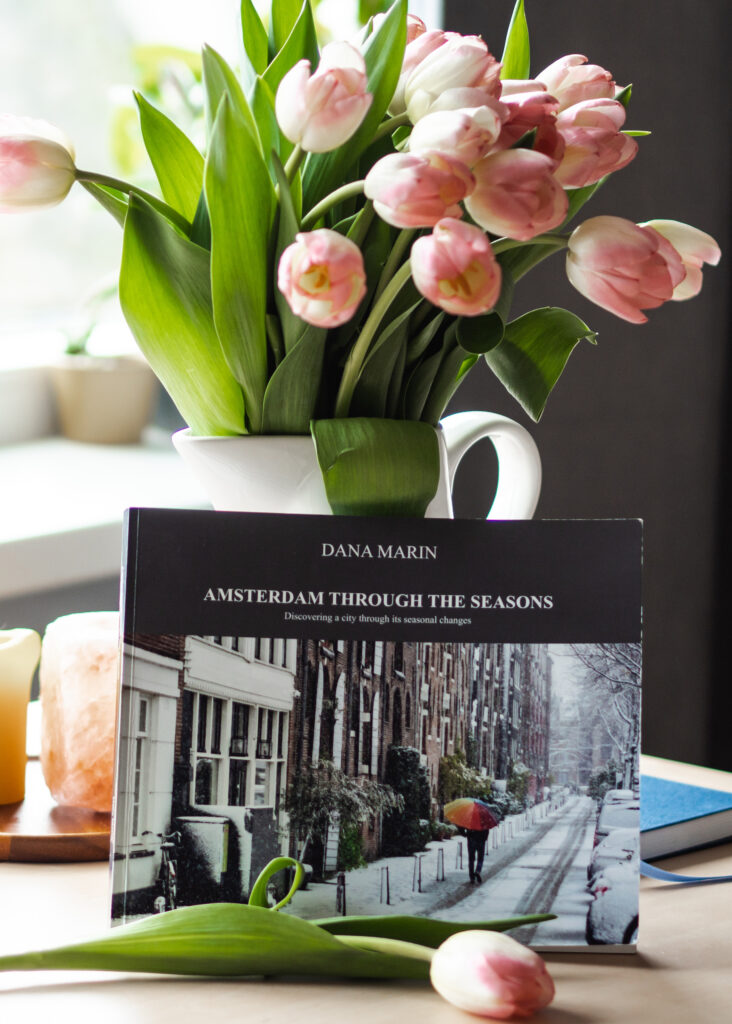
Check out my photo book: Amsterdam Through the Seasons!
Love what you’re reading? Support my work with a small donation.






Trackbacks/Pingbacks