A local-leaning guide to the canals, the cafés, the quiet corners and the must-see classics.
You’ve landed in Amsterdam. The canals are doing their thing, reflecting the clouds and the gingerbread houses, dividing the city into neat half-moons, hiding tiny bars behind their bridges. There are bicycles everywhere. Someone, somewhere, is already eating herring straight from a paper tray. Welcome.
If it’s your first time here, the temptation is to charge through the big-ticket sights with a checklist in hand. My advice would be not to do that, but I know how difficult it is when you only have a few days in a place and you’re excited to see it all. Amsterdam is a city that rewards slowness, curiosity, and a willingness to get a little lost. The best moments tend to happen between the famous ones: a quiet courtyard hidden behind a brown door, a café terrace you didn’t plan to find, a bridge where the light falls just right. And you might encounter these moments, if you allow yourself to slow down at least a little bit.
I get this question a lot: What not to miss in Amsterdam? What are the things I absolutely must do and see? And it’s hard for me to answer, as there are so many types of tourists with so many varied interests.
So I’ve pulled together 30 things first-timers really shouldn’t miss, and tried to offer options and alternatives. They are not meant for you to fit them all in three days. They are meant for you to pick the ones that appeal to you.
Let’s go!
Part 1: Get your bearings — the canals and the city
1. Walk along the Grachtengordel (the Canal Belt)
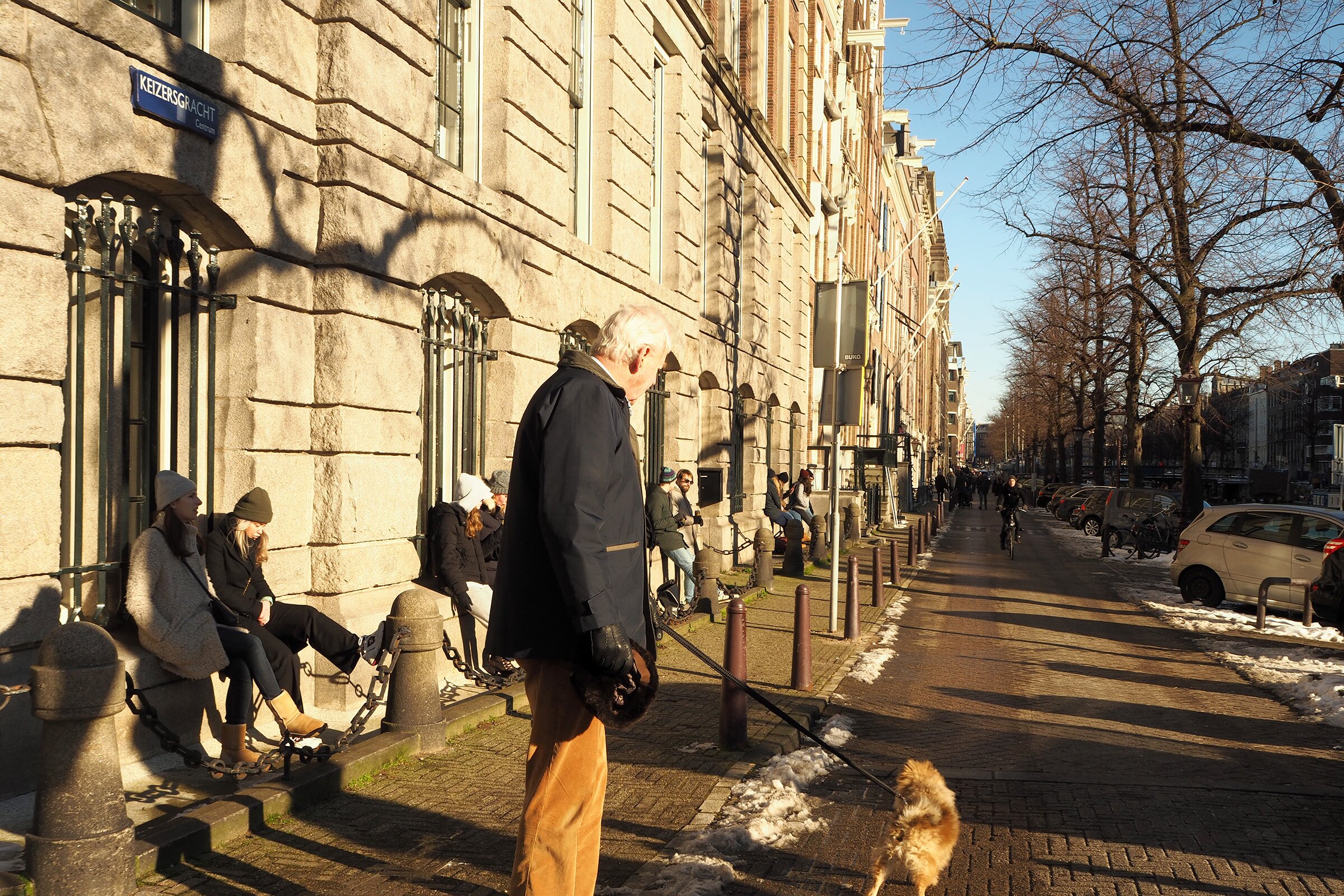
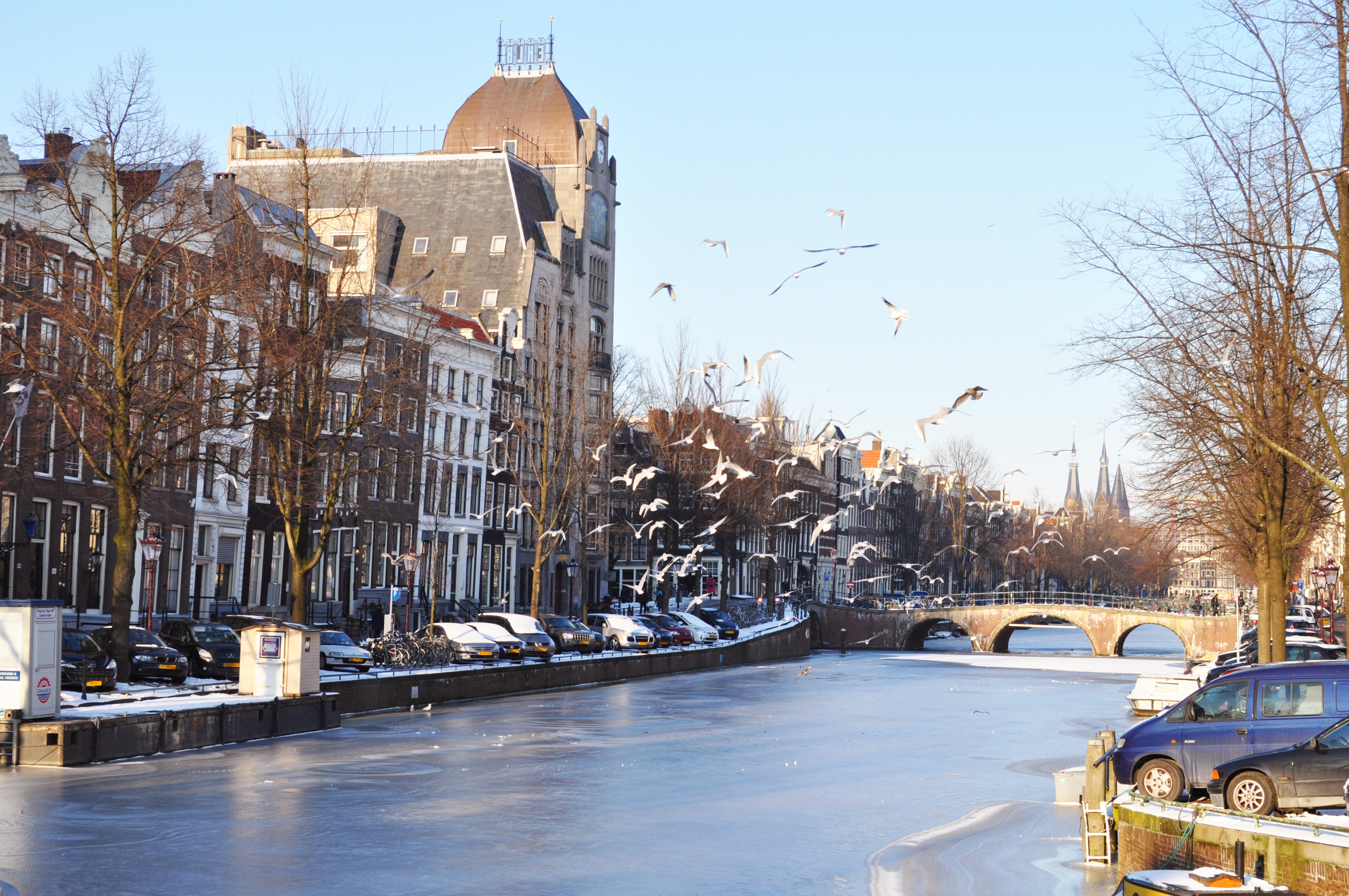
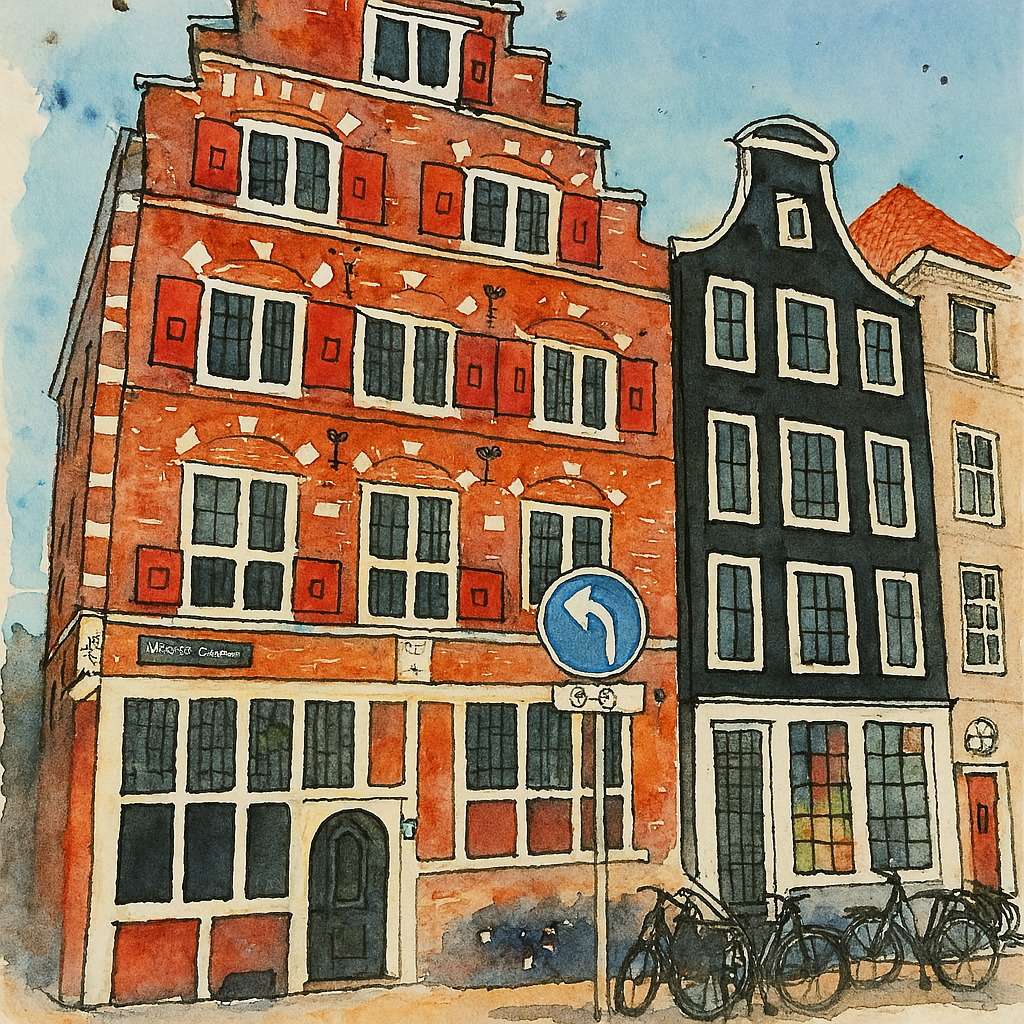
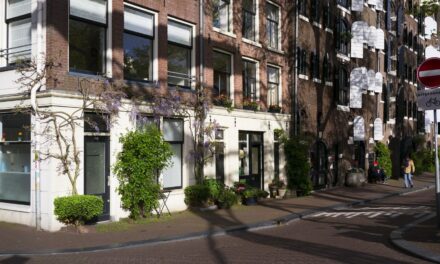
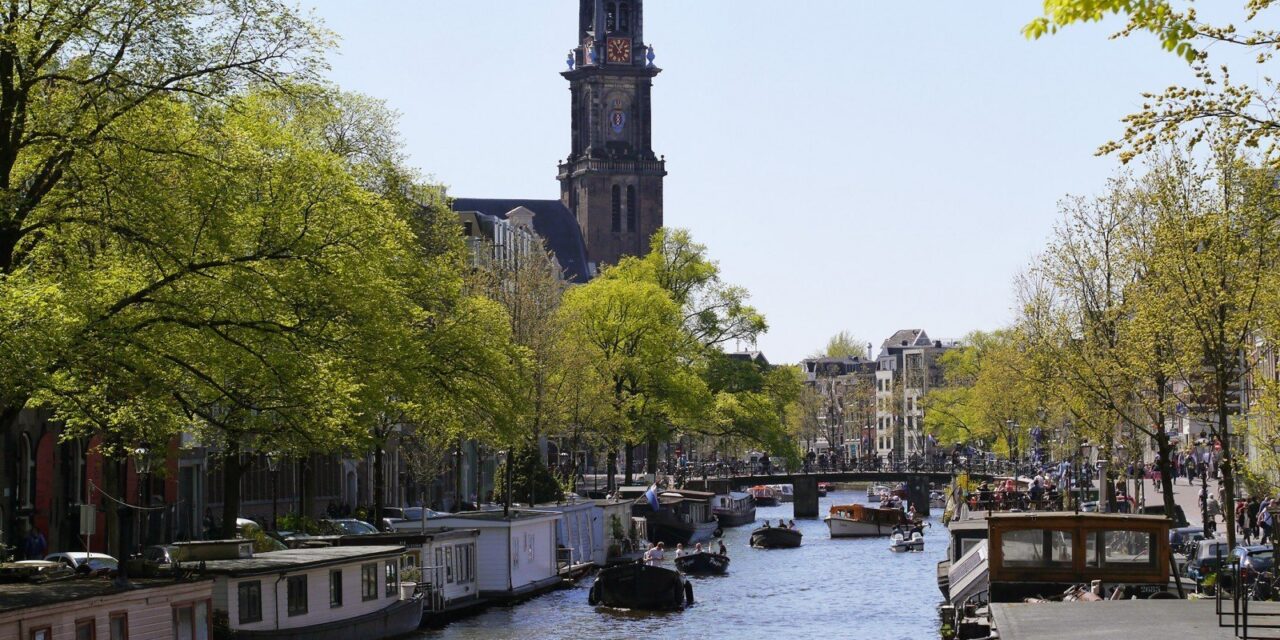
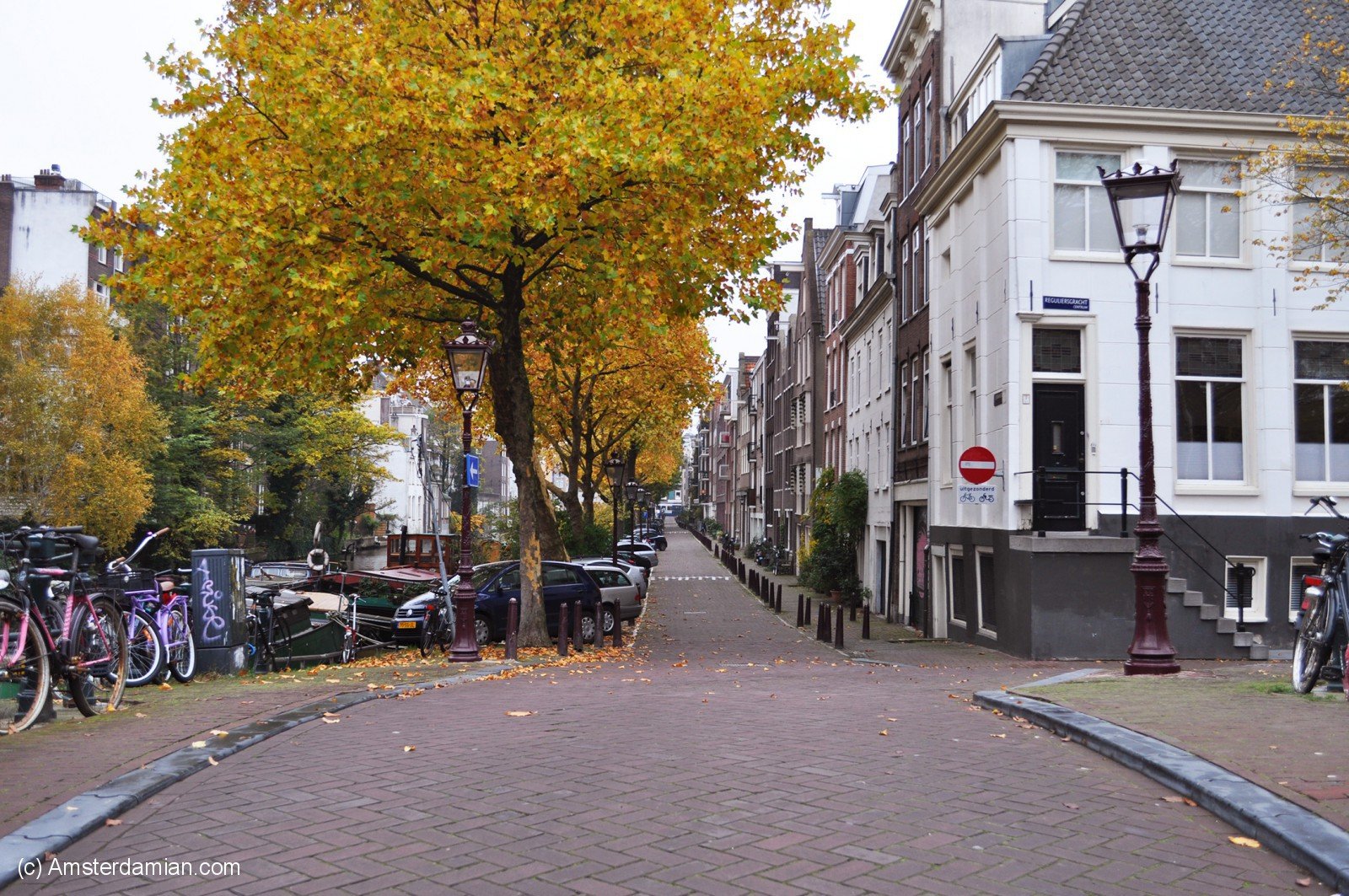
This is where I’d start, every time. Even if you have only a few hours in the city. The Grachtengordel, the horseshoe of 17th-century canals that wraps around the old city, has been a UNESCO World Heritage Site since 2010, and walking along its three main waterways (Herengracht, Keizersgracht, Prinsengracht) is the truest introduction to Amsterdam there is. Skinny gabled houses lean ever so slightly forwards. Houseboats bob. The Westerkerk tower overlooks all of it. There’s no specific route, but you could start at Brouwersgracht, drift south, look up at the gables, peek down side streets, look through the big windows of the canal houses to get a glimpse of the life here.
2. Take a canal cruise — yes, even though it’s touristy
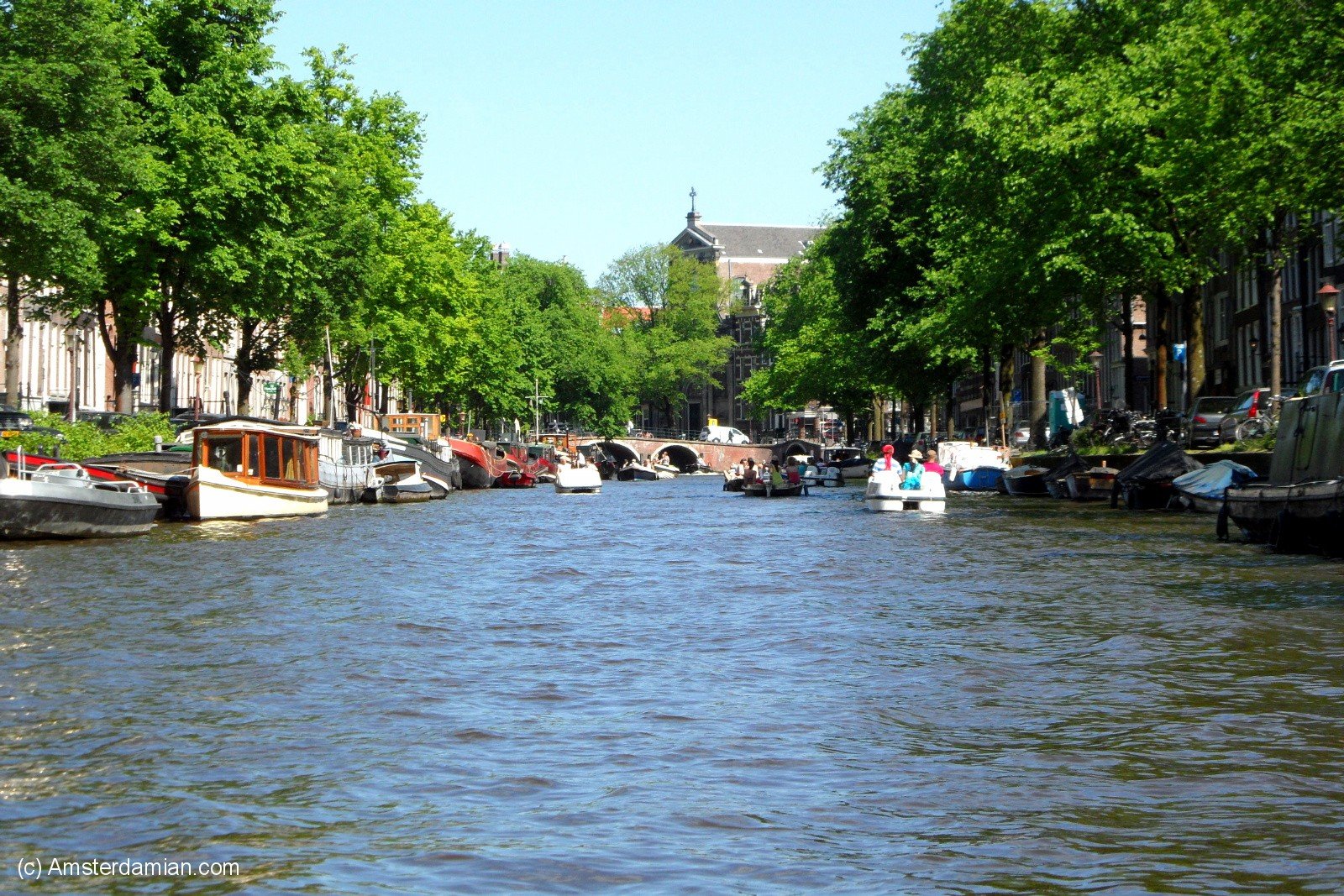
The canal cruise has a reputation as the most tourist-y thing you can do, and locals will roll their eyes if you bring it up. But here’s the truth: Amsterdam was built to be seen from the water, and you simply see different things from a boat. The way the bridges line up; the cats sunbathing on houseboat decks; the birds surrounding your boat; those impossibly narrow houses. The same locals who roll their eyes jump on their boat every chance they get, so get on that cruise boat. If you can, skip the big covered boats and take a small open one — Pure Boats and Ecoboats are my favourites. Alternatives: canal bikes, SUP.
3. Get lost in the Jordaan
If the Grachtengordel is the spine of central Amsterdam, the Jordaan is its beating heart. Once a working-class district, today it’s all narrow streets, sidewalk gardens, brown cafés, and old-school Dutch romance. There’s no must-see here; the whole neighbourhood is the must-see. Walk along Egelantiersgracht, find the Westerkerk, wander to the Noordermarkt on a Saturday morning for the farmer’s market, eat an apple tart at Winkel 43 (it’s famously good for a reason). The Jordaan is so romantic and has an unbelievable feel of local life right in the middle of the tourist area. After 15 years in Amsterdam, is still my favourite place to go for a stroll.

4. Wander De Negen Straatjes (Nine Streets)
The Nine Streets are a grid of nine connecting lanes that bridge the canal belt between Singel and Prinsengracht, and is the city’s most charming shopping district. You’ll find independent designers, vintage shops, cheese mongers, a pancake place or three, and a lot of people peering through windows. Walk it slowly. Pop into a kaaswinkel for cheese, hunt down a vintage find, or stop for coffee at one of the canalside cafés.
5. Cross the IJ to Amsterdam Noord
Take the free ferry behind Central Station. It runs every few minutes and drops you in what used to be the city’s industrial backwater. Today, Amsterdam Noord is the side of the city locals send you to when they want you to see “the hip Amsterdam.” You can either go to the western side, the NDSM-werf, a former shipyard that has become a maze of street art, repurposed warehouses, artists residences, and floating restaurants, or to the eastern side, where you’ve got the Eye Filmmuseum (with its swooping white façade) and the A’DAM Lookout (where you can swing above the city).
6. Visit a neighbourhood, other than the city centre
If you are the kind of person who wants to see more local life, but not stray very far from the centre, check out these neighbourhoods: De Pijp, Oud-Zuid, De Plantage, Zeeburg. I also love the Prinseneiland area, with the nearby Westerdock and IJDock, where I take all my guests for a walk. You can spend a few hours in all these places, walking around, eating something good, maybe shopping.
7. Walk along the Amstel River
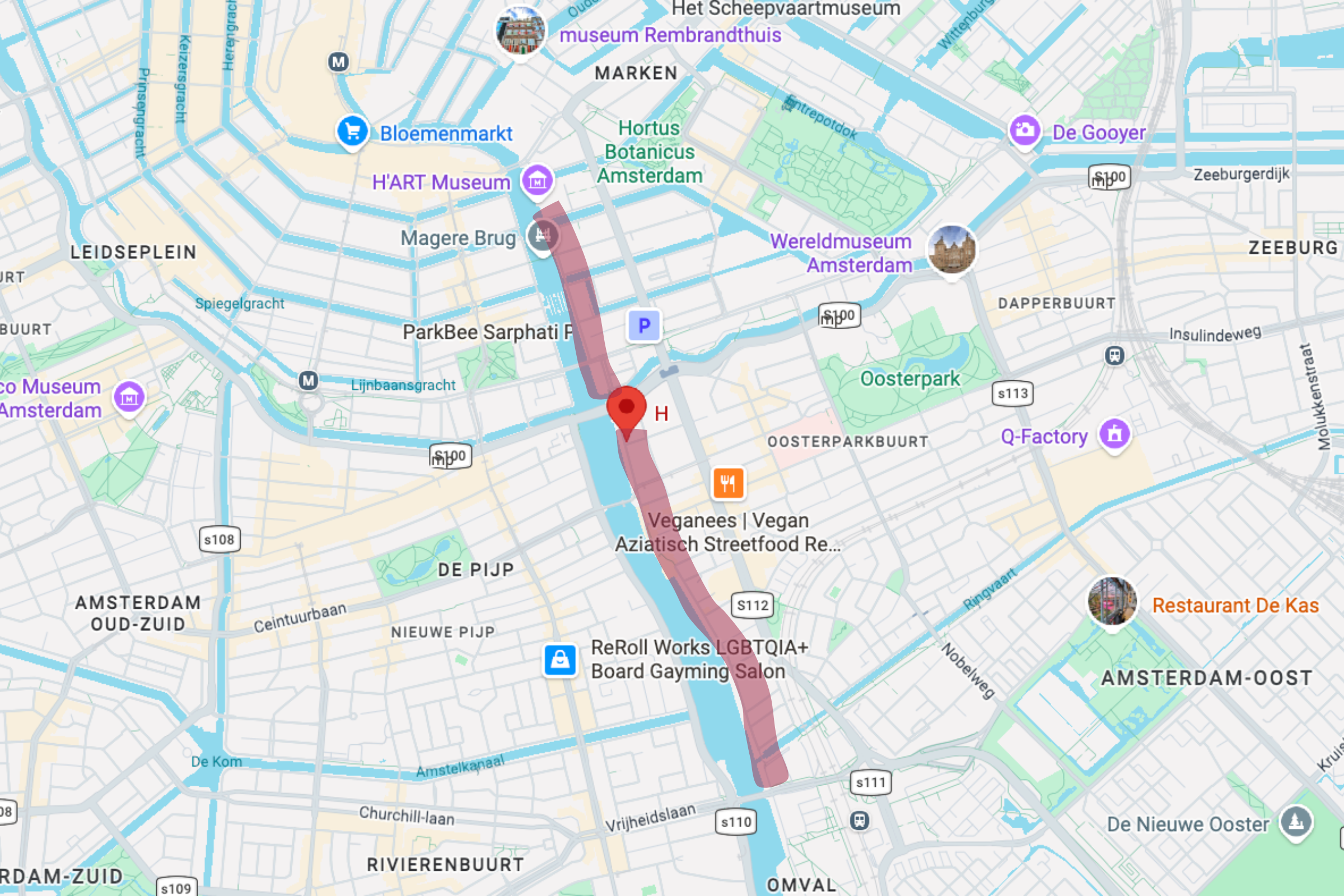
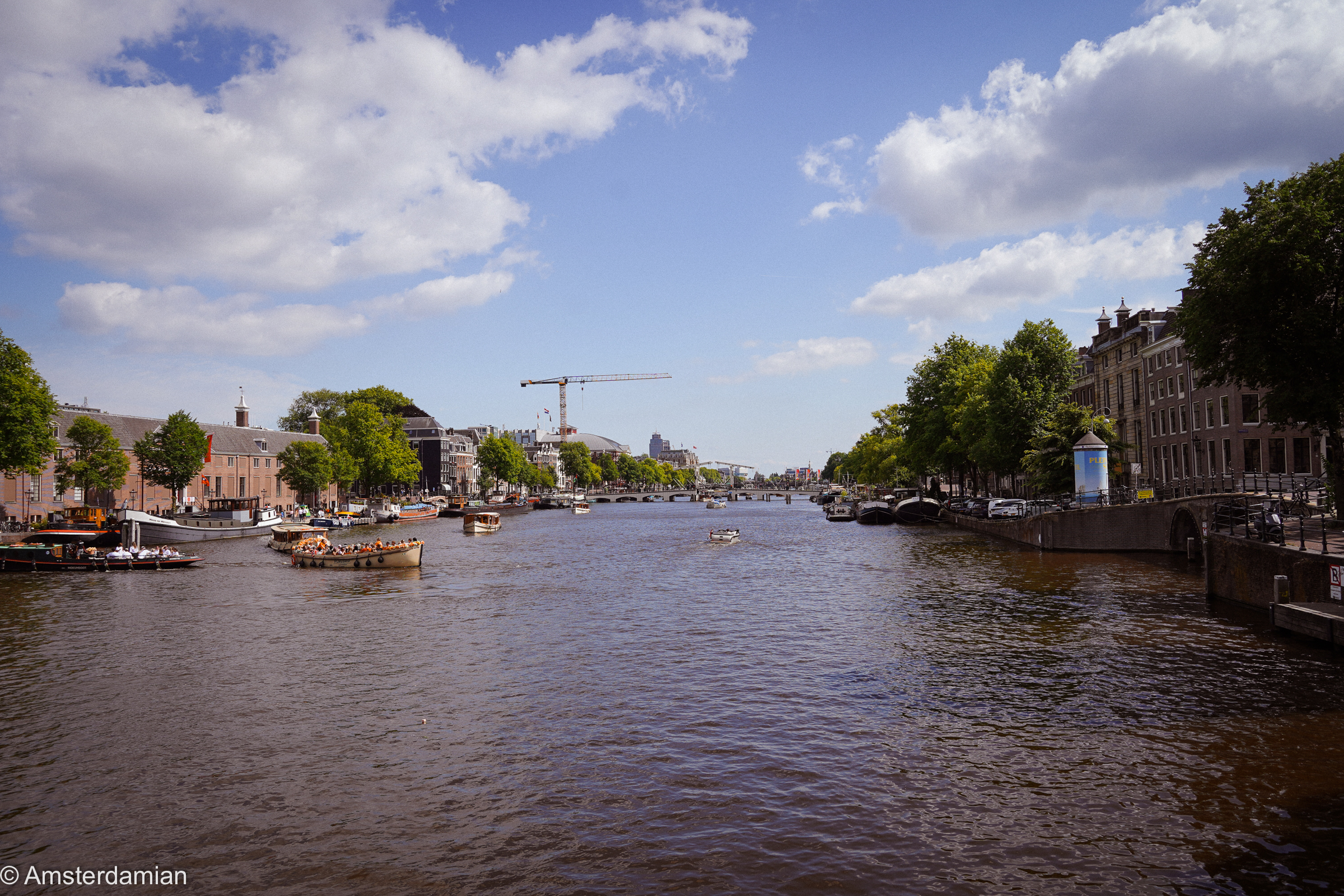
The Amstel River crosses the city and it’s truly picturesque. House boats are parked along the way, many with cute gardens in front of them, and restaurants that offer a view over the water invite visitors You can start your walk at Blauwbrug, a bridge close to Rembrandtplein, and walk towards the Skinny Bridge (Magere Brug), an iconic bridge worth seeing. Or walk the Weesperzijde, from the InterContinental Amstel Hotel all the way to Berlagebrug. This is one of my favourite area for a walk or to go on a summer day to watch the sunset.
Part 2: Museums and culture
8. Visit a museum
Amsterdam has more museums per square mile than almost any city its size, so you have plenty to choose from. It’s hard to choose which one to visit, and my advice is to pick one or two based on your preferences. Depending on how much time you have, and how big of a museum fan you are, you can get an Iamsterdam card and visit as many as possible.
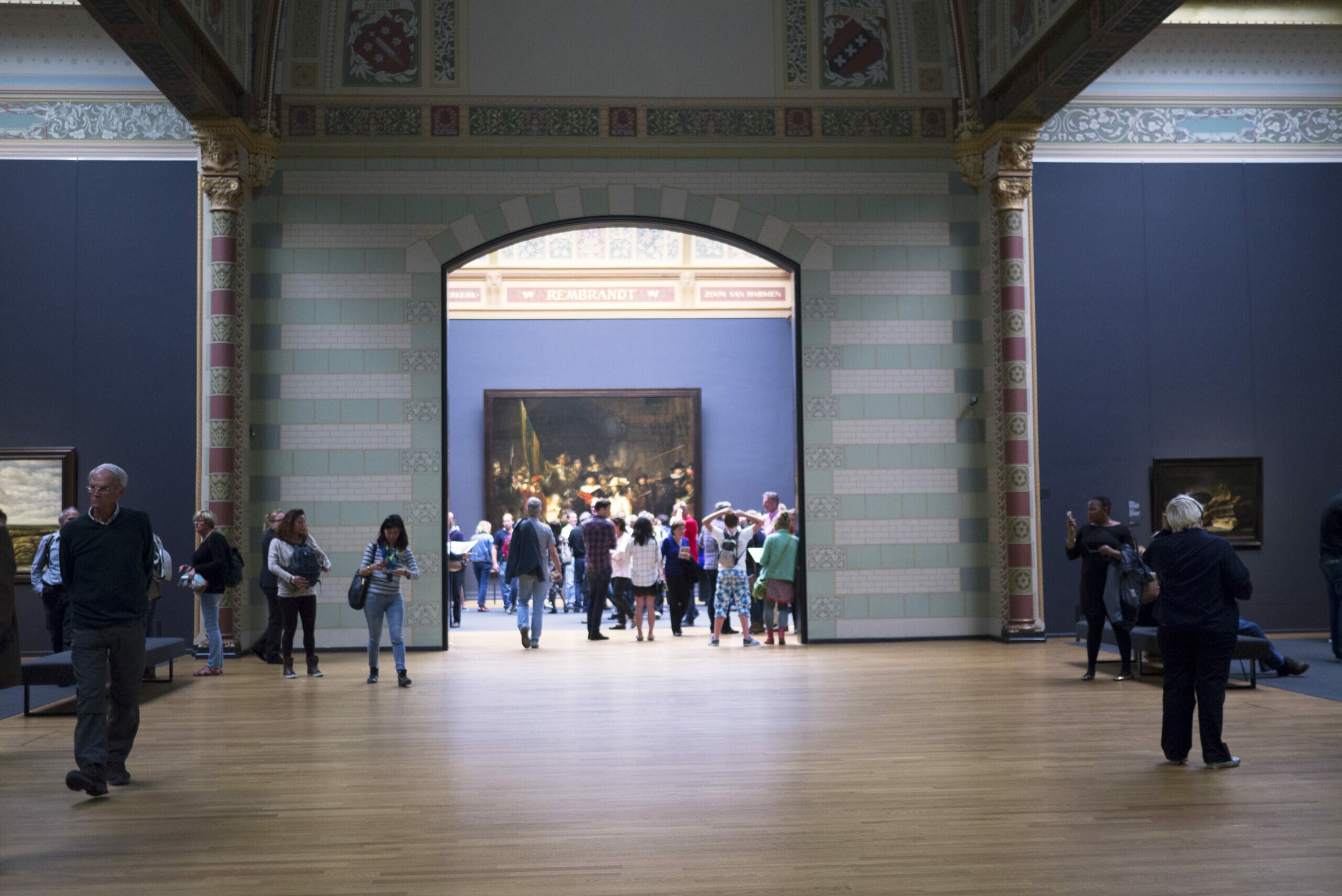
Some of the big museums are located close together at Museumplein. This is where you’ll find The Rijksmuseum, which is where you can see the classics and learn some Dutch history. Then there’s the Van Gogh Museum, where you should go if you love Van Gogh (and make sure to book your tickets in advance as they are sold out quickly). Also here is the Stedelijk Museum, for modern and contemporary art.
Anne Frank House. This is the “secret annexe” where Anne and her family hid from the Nazis. It’s a hard one to visit as it’s loaded with a very emotional story. Also needs to be booked way in advance.
Other museums I would not skip if I were interested in their particular theme (or had a lot of time to spend in Amsterdam):
World cultures, Suriname history: Wereldmuseum and Suriname Museum with The Black Archives.
Street art and pop: the Moco Museum(Banksy, Basquiat, Kaws).
Cinema and design: the Eye Filmmuseum across the IJ. Gorgeous building, brilliant exhibitions.
For kids and curious adults: NEMO Science Museum, with that famous green sloping roof you can walk up.
Maritime history: Het Scheepvaartmuseum, where you can climb aboard a replica 18th-century VOC ship.
World War 2: Verzetsmuseum (Dutch Resistance Museum), Holocaustmuseum, Jewish Museum.
Quirky and small: the Houseboat Museum, the Cat Cabinet (Kattenkabinet) on Herengracht, or the Embassy of the Free Mind on Keizersgracht for esoterica, the Art Zoo Museum for a special experience.
↪ Find the full list of museums here: Amsterdam Museums Guide: A Complete Overview of All Museums in Amsterdam.
↪ Official Van Gogh Guided Museum Tour
9. Hear live music at a Dutch institution
The Concertgebouw on Museumplein has acoustics that musicians worldwide consider among the best on Earth, and there are free lunch concerts every Wednesday at 12:30 (but you need to book in advance). Paradiso, a converted 19th-century church just off Leidseplein, has hosted everyone from the Rolling Stones to contemporary headliners and remains the city’s emotional core for live music. Melkweg next door is its scruffier, more adventurous cousin. For something grander, the Royal Theatre Carré along the Amstel does ballet, cabaret, and big-name international shows. Whatever your taste, something is happening tonight.
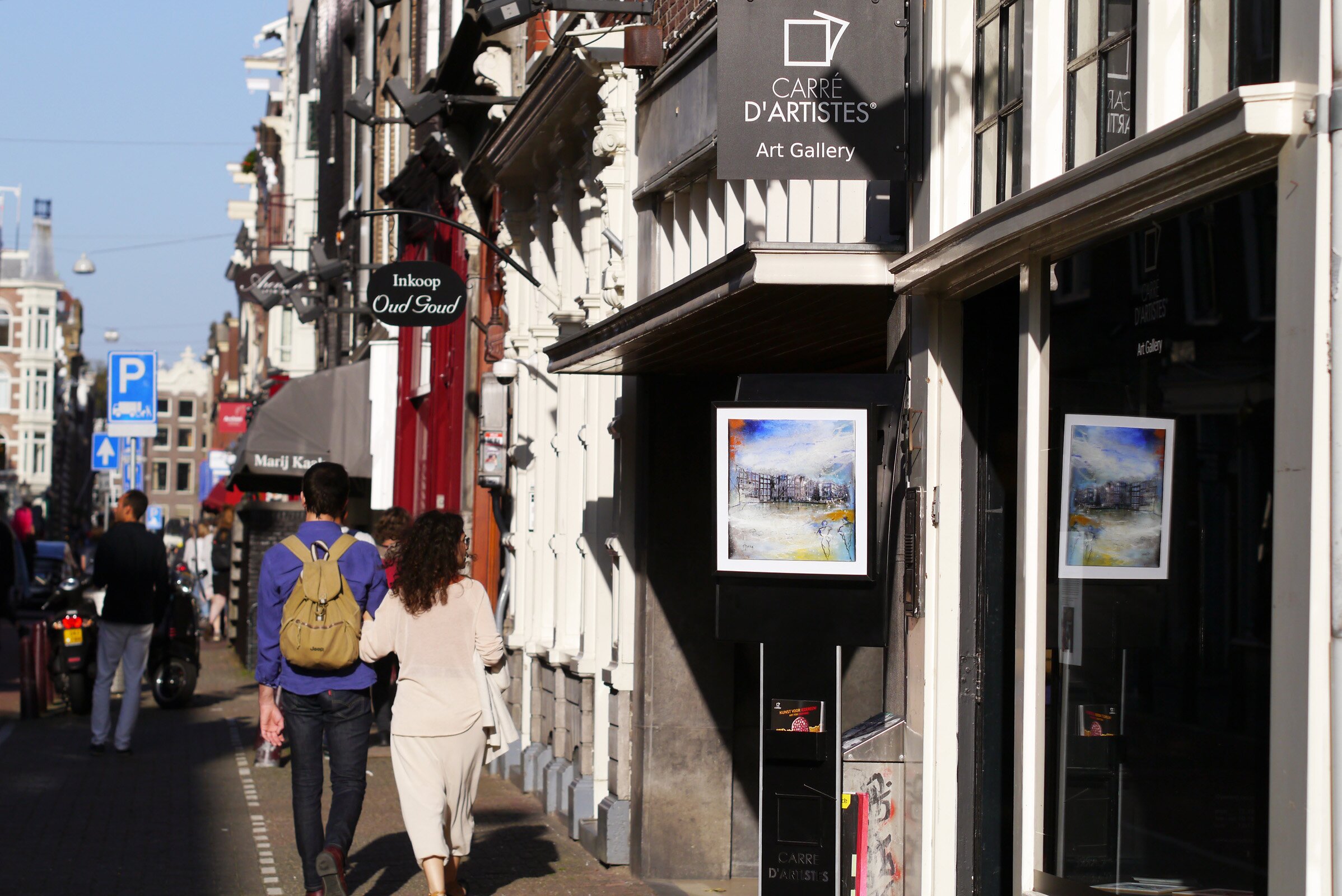
10. Browse the art galleries
There are many art galleries spread around the city, and you’ll probably find most of them in the Jordaan and the Spiegelkwartier (close to Museumplein). If you love art, hunting for the independent galleries in Amsterdam will be a treat.
11. Attend an open-air event in the summer
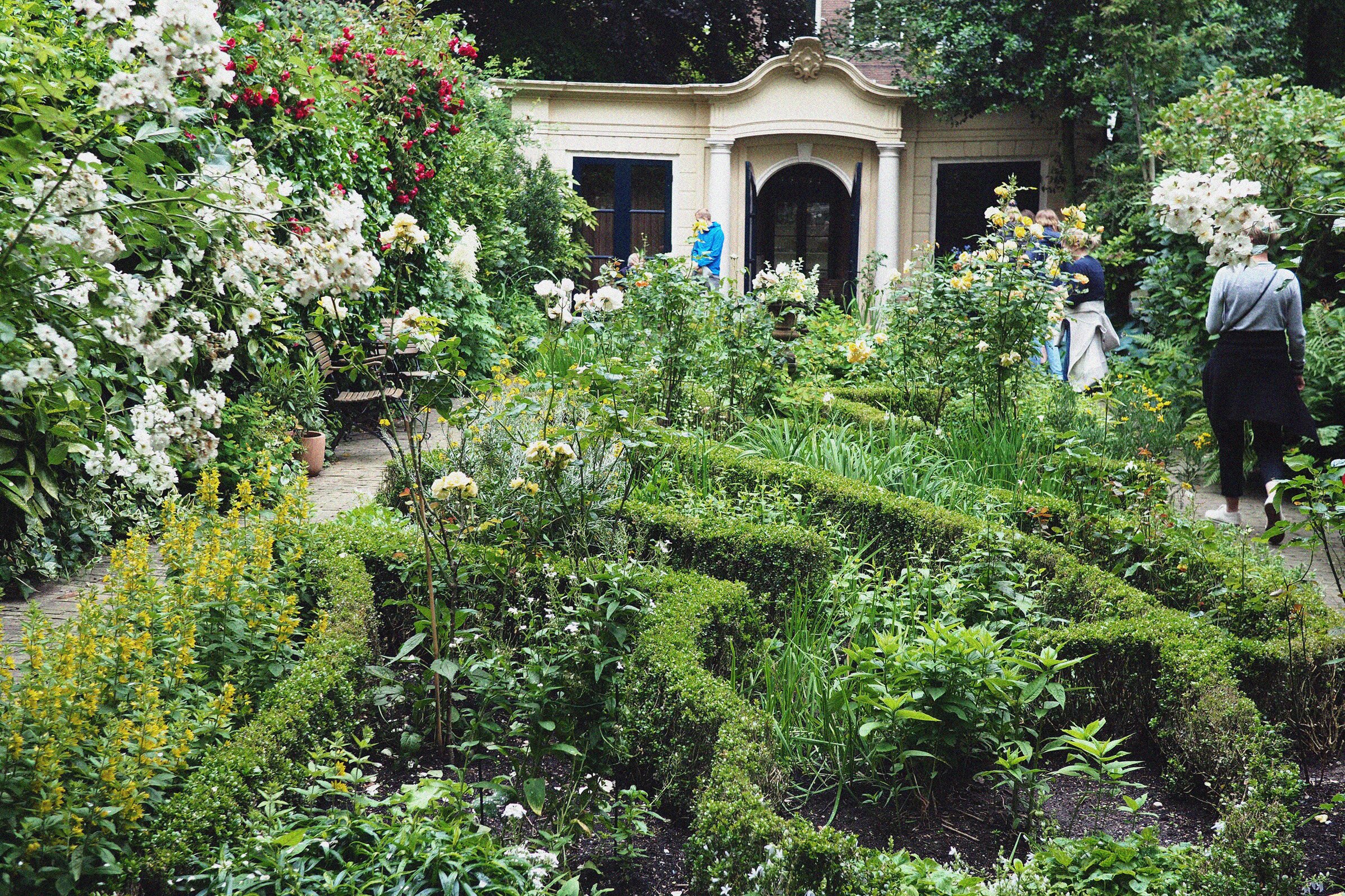
There are a few lovely events in the summer that you can attend and feel like a local. Consider the Open Garden Days (see hidden gardens in the city centre), Grachten Festival (music on the canals), music and cinema in the courtyard of Amsterdam Museum, Pluck de Nacht (open-air cinema).
Subscribe to our newsletter!
Part 3: Eat, drink, and linger
12. Spend an evening in a brown café (bruin café)
The bruin café is named for the dark, nicotine-stained wood that once defined them, and is a must experience in Amsterdam. They’re cosy, low-ceilinged, candlelit, and built for evenings with friends. Order a Dutch beer (a biertje) or a jenever (Dutch gin) and stay a while. Café Hoppe on Spui has been pouring since 1670. Café Chris in the Jordaan is even older (1624). Café Papeneiland, on the corner of Prinsengracht and Brouwersgracht, looks like the ideal of a Dutch café and is the place to eat appeltaart with whipped cream after dinner.
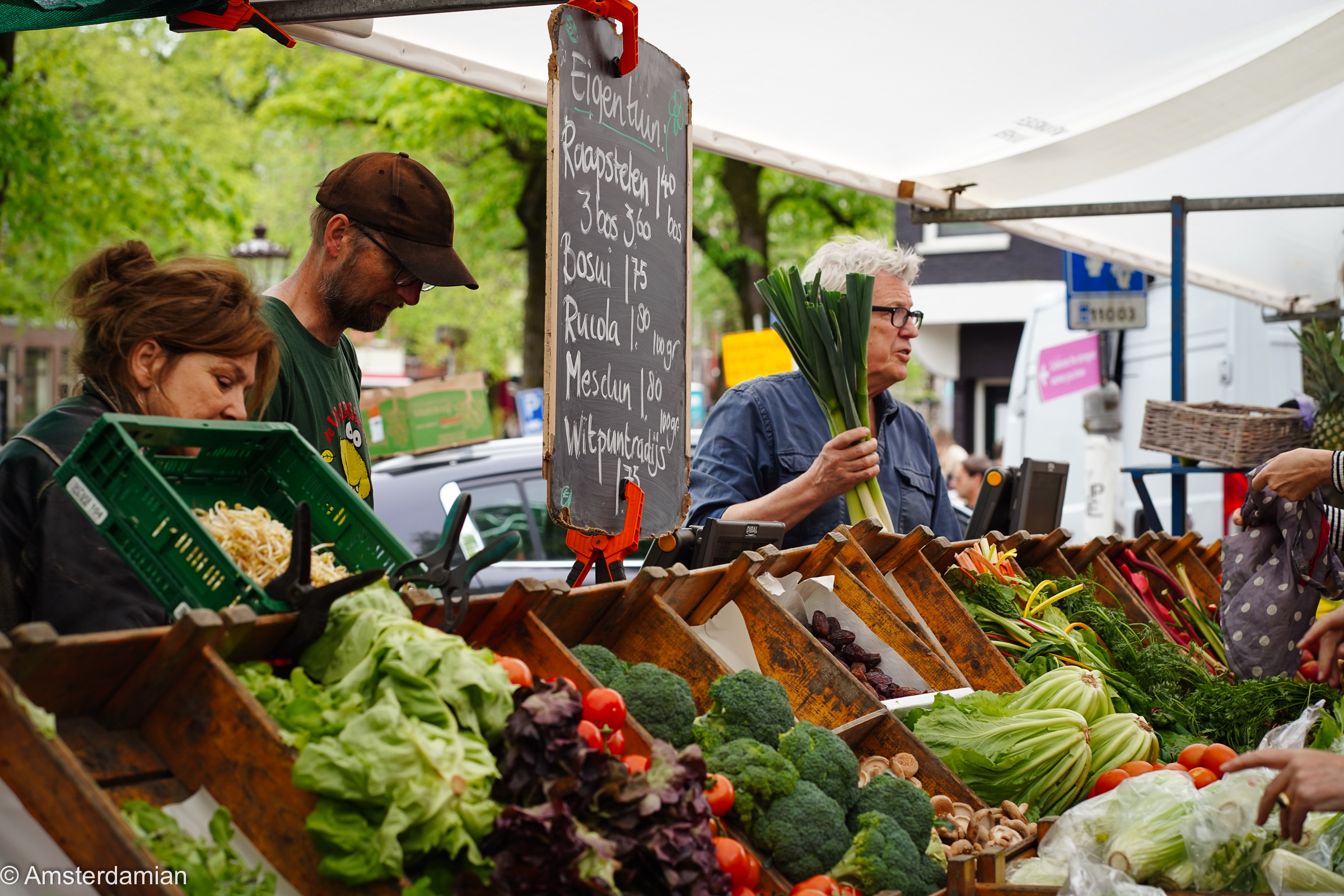
13. Visit a market
Dutch people love their weekly markets. They are not what you would find in France or in Spain, at least not in the fresh fruit and veggies department, but they have their charm nonetheless (and as a tourist, you’re not here to buy ingredients for your dinner).
The Albert Cuypmarkt, running through its central street six days a week, is the largest daily open-air market in the Netherlands. Wander past the cheese stacks, the flower stalls, the syrup-waffle iron and the stroopwafel queues. After, walk to Sarphatipark for a sit-down, or duck into one of De Pijp’s hundreds of small bars and restaurants.
If you happen to be in Amsterdam for a Saturday, pass by the Noordermarkt, close to the Jordaan. Grab something to eat, sit down and do some people watching. This is definitely my favourite. Alternatives: Best Organic and Farmers Markets in Amsterdam.
14. Try haring (raw herring, the Amsterdam way)
This is the one most tourists chicken out of, but maybe you are brave enough. You’ll find it at little stands all over town (look for haringhandel). The proper Amsterdam way is to grab the tail, tilt your head back, and lower the fish into your mouth. I’ve not done it, as I’m a vegetarian, but I’ve heard it’s not as fishy as you think. New season’s herring (Hollandse Nieuwe) arrives in early summer and is the best of the best.
Alternative: if you don’t dare going for the raw fish, have a cod sandwich or other cooked fish.
15. Eat a stroopwafel fresh off the iron
The stroopwafel is something you might love or hate, but you should try it anyway. They’re good from the supermarket. They are much better fresh off the iron, when the syrup is still warm and the edges are crisp. Go to the Albert Cuypmarkt in De Pijp, find the stall with the queue, and don’t talk to anyone for the first 30 seconds after you take a bite. There’s also a much-loved stand at the Noordermarkt on Saturdays. Warning: this is very sweet, so if you don’t like the extra sweet things, maybe try poffertjes, pancakes or a waffle instead.

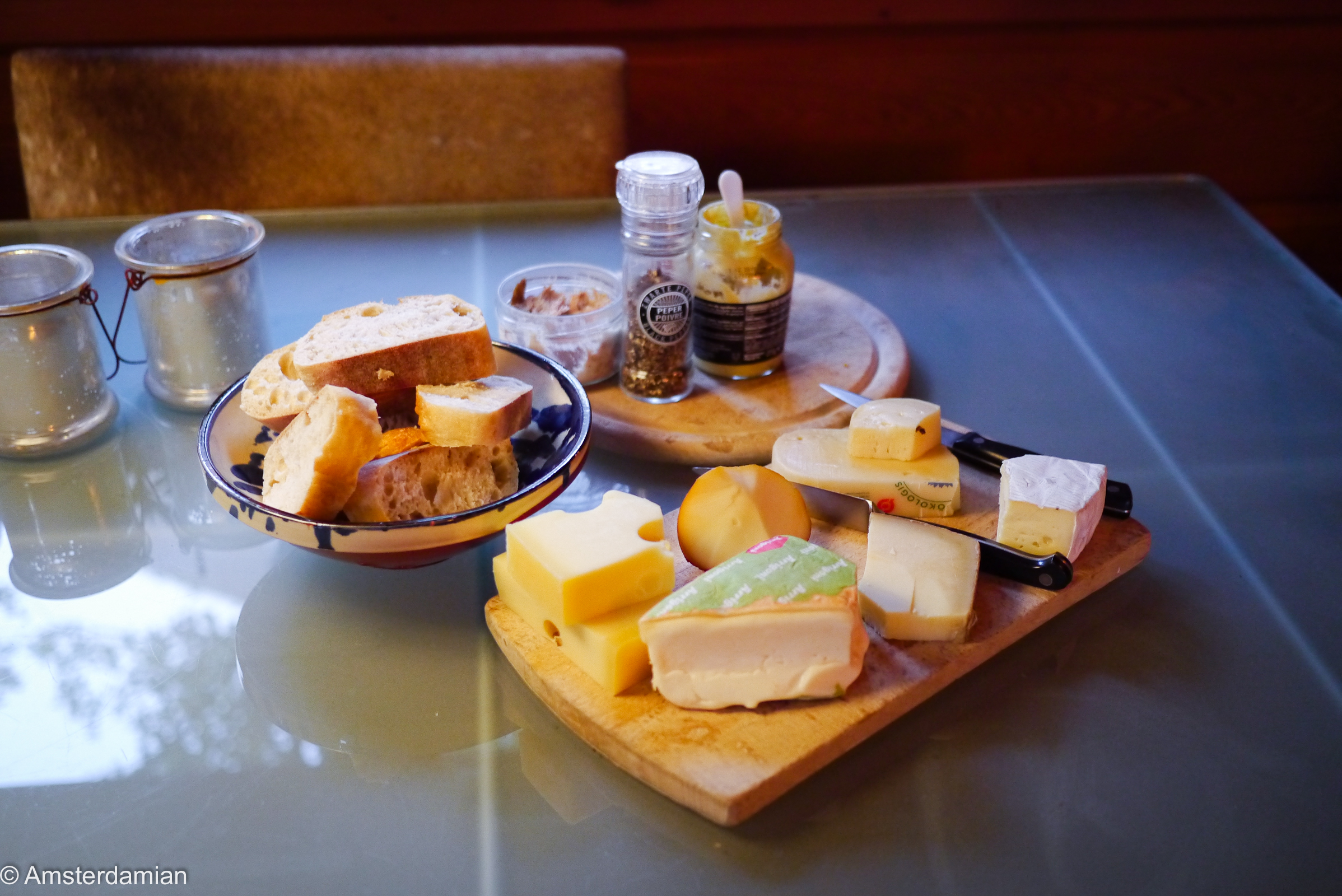
16. Try the Dutch cheese
You can find various cheeses and cheese dishes in the restaurants, but I urge you to find a cheese shop and sample some Dutch cheese, buy a few to take home. The easiest to carry is the one shaped in round balls covered in wax and you can find it in various flavours. For example, I like the cheese with nettles, the one with mustard seeds and the spicy pepper one. Don’t be shy and ask the shop staff to explain a bit about the cheese, to know what to buy. I prefer the old cheese (in a shop in Alkmaar I found a cheese that was 19 years old!), usually eaten with mustard, chutneys or fruit, but you have a big variety to choose from. A few good cheese shops: Henry Willig, Fromagerie Kef, Bourgondisch Lifestyle, Eriks Delicatessen, De Kaaskamer, Kaasland Haarlemmerdijk, Old Amsterdam Cheese Store. You will find great cheese at the Noordermarkt (or any other market) as well, on Saturdays.
17. Order bitterballen with a beer
This is clearly the unofficial national snack. Bitterballen are crisp, golf-ball-sized fried croquettes filled with a deep, savoury paste. They can be filled with meat or vegetarian/vegan options. Watch out as they are dangerously hot for the first three minutes. They are best eaten with hot Dutch mustard and a cold beer. You’ll find them in every café. Local tip: bite a small hole in the side first to let the steam out, otherwise the inside will scald you. They’re traditionally a borrel snack, eaten in the late afternoon with drinks, and there’s no better introduction to Dutch hospitality.
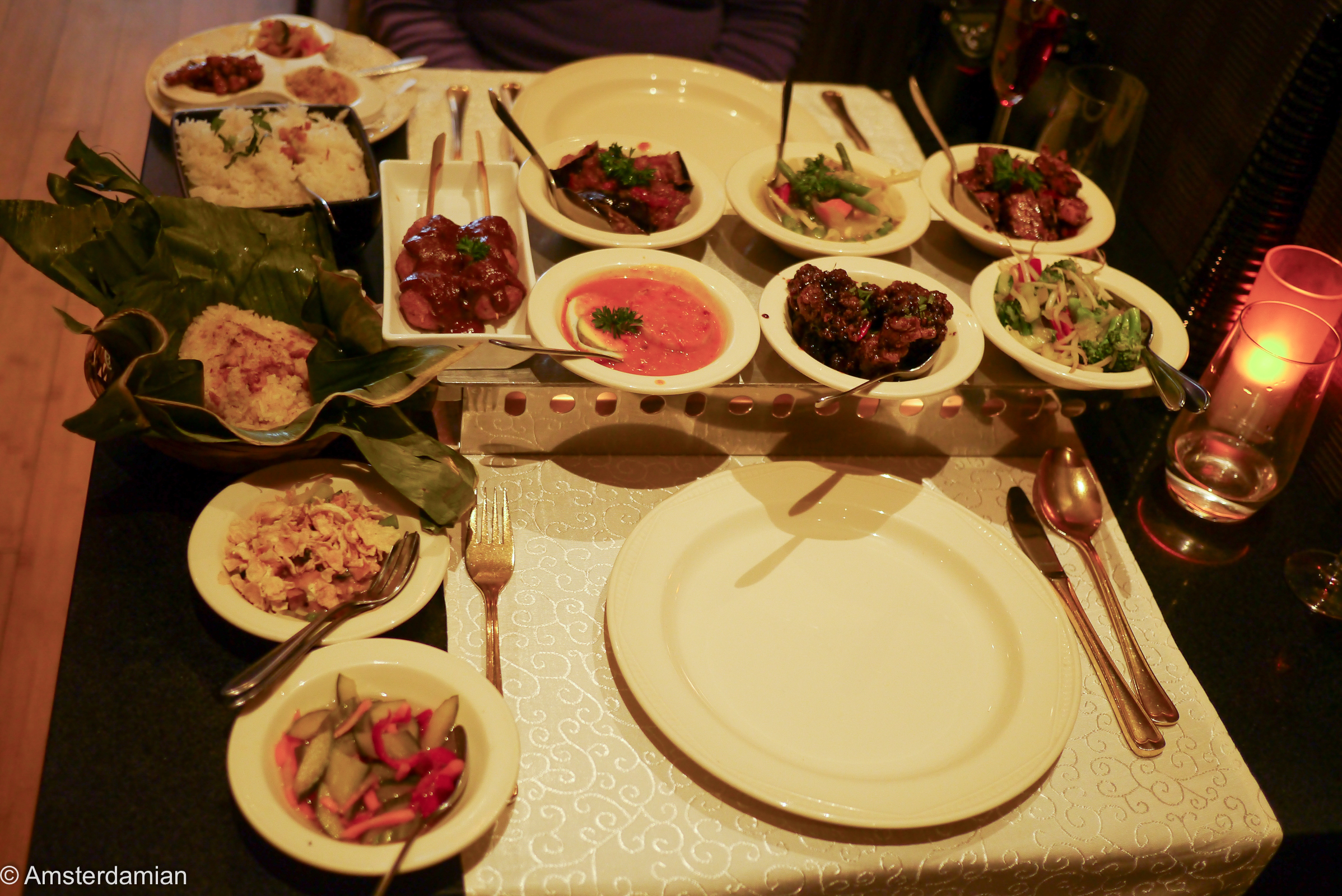
18. Sit down for an Indonesian rijsttafel
This one’s a relic of colonial history reinterpreted into something delicious. Rijsttafel (literally “rice table”) is an Indonesian-Dutch tradition where you order multiple small dishes to share, all served around a mound of rice. It’s a feast in the proper sense of the word, and my favourite food in the netherlands. Vegetarian options are available everywhere. Go to Long Pura, Tempo Doeloe in the canal ring, or Restaurant Blauw near Vondelpark. Wear elasticated trousers.
19. Discover Dutch coffee culture (and what a “coffeeshop” is not)
A quick semantic note that saves a lot of confusion: a “coffeeshop” in Amsterdam, in the legal sense, sells cannabis. A “café” sells coffee, beer, and food.
Dutch coffee culture itself is wonderful. There’s a particular fondness for koffie verkeerd (similar to a latte, literally “wrong coffee”), strong filter coffee, and an inexplicable national love for an accompanying speculaas biscuit. There are many specialty coffee spots around the city, and everyone has their favourites. To mention only a few: Espressofabriek (in Westerpark), Lot Sixty One, Back to Black, Kafenion, Scandinavian Embassy, Coffee & Coconuts.
↪ Read more about food in Amsterdam: A Taste of Amsterdam: Discover the City Through Its Food
Part 4: Hidden corners and iconic spots
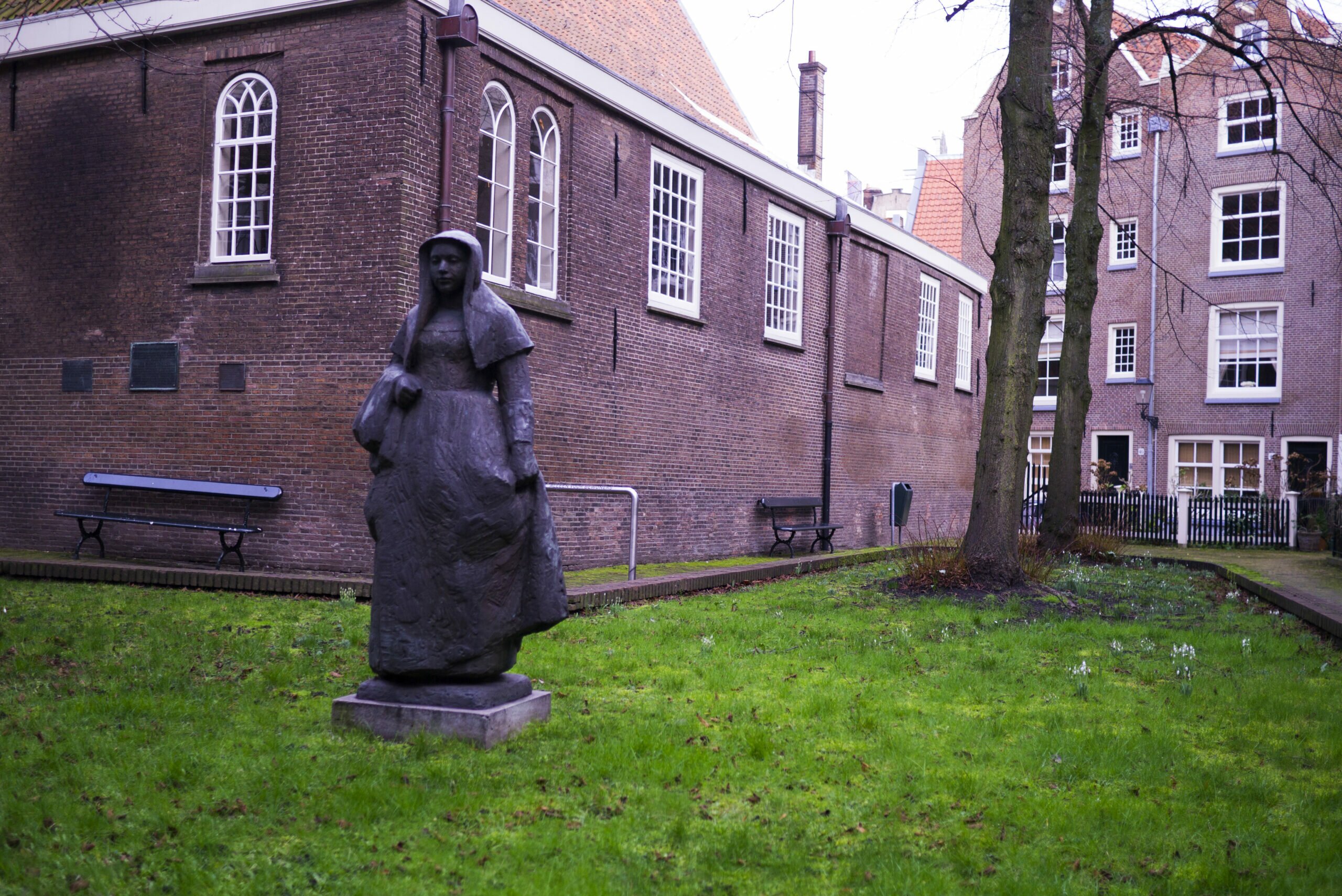
20. Find the Begijnhof
A few steps from the noise of Spui, behind a low wooden door, is one of Amsterdam’s quietest secrets (well, not so secret, as every walking tour brings you there). The Begijnhof is a 14th-century courtyard founded for the Beguines — lay Catholic women who lived in religious community without taking formal vows. Inside, you’ll find the oldest surviving wooden house in Amsterdam (Het Houten Huys, built around 1528), a tiny English Reformed church, and a small Catholic chapel. Voices drop to a whisper as you enter. It’s free to visit. Be respectful as people still live here.
21. Discover a hofje (a tucked-away courtyard garden)
The Begijnhof is the most famous hofje, but Amsterdam has dozens of them: small courtyards built between the 14th and 18th centuries as charitable housing for elderly women and the poor. Most are hidden behind unmarked doors in residential buildings, and most are still private homes, but some open to respectful visitors during the day. The Karthuizerhof in the Jordaan and the Sint Andrieshofje on Egelantiersgracht are both worth seeking out. Push the door gently. Keep your voice down.
22. Walk through the Red Light District — with curiosity, not gawk
De Wallen, or the Red Light District, is one of Amsterdam’s oldest neighbourhoods, and one of its most misunderstood. The narrow medieval streets wrap around the Oude Kerk, the city’s oldest building. Sex work is legal and regulated in the Netherlands, and walking through De Wallen as a visitor is fine, but a few rules apply. Do not photograph the women in the windows and do not stand and stare. Approach it with the same respect you’d bring to any neighbourhood, and you’ll see a place that’s far more historic and complicated than the headlines suggest. There are people living here, families with children as well (and you’ll find a day care right next to the red windows behind Oude Kerk). There are many artists living here and organising various cultural events, and the streets are peppered with interesting shops and bars.
23. An afternoon in Vondelpark
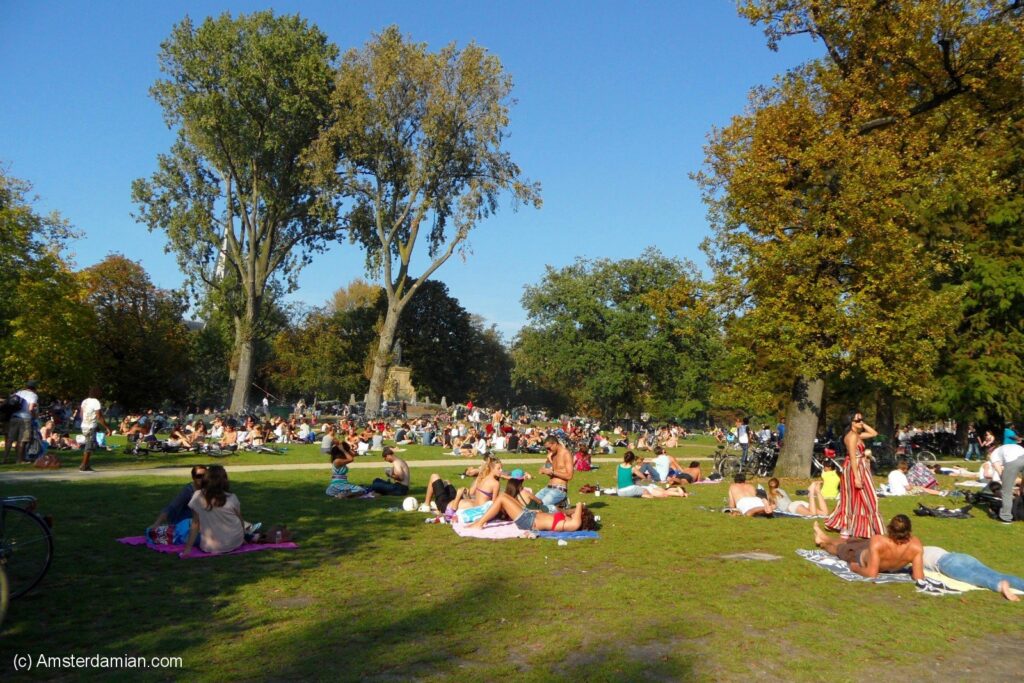
Amsterdam’s biggest central park is its outdoor living room. On any sunny weekend afternoon, Vondelpark is full of joggers, picnickers, families, kids in the playground, and the occasional outdoor concert. There’s an open-air theatre (Openluchttheater) in summer with free performances. Het Blauwe Theehuis in the middle is a 1930s landmark and a lovely place for a beer in the sun. Bring a book or a baguette and don’t plan anything else for two hours. Alternative: if you want something less crowded (although on a sunny day every park in Amsterdam is packed), try Westerpark, Erasmuspark or Flevopark.
24. Dam Square and the Royal Palace
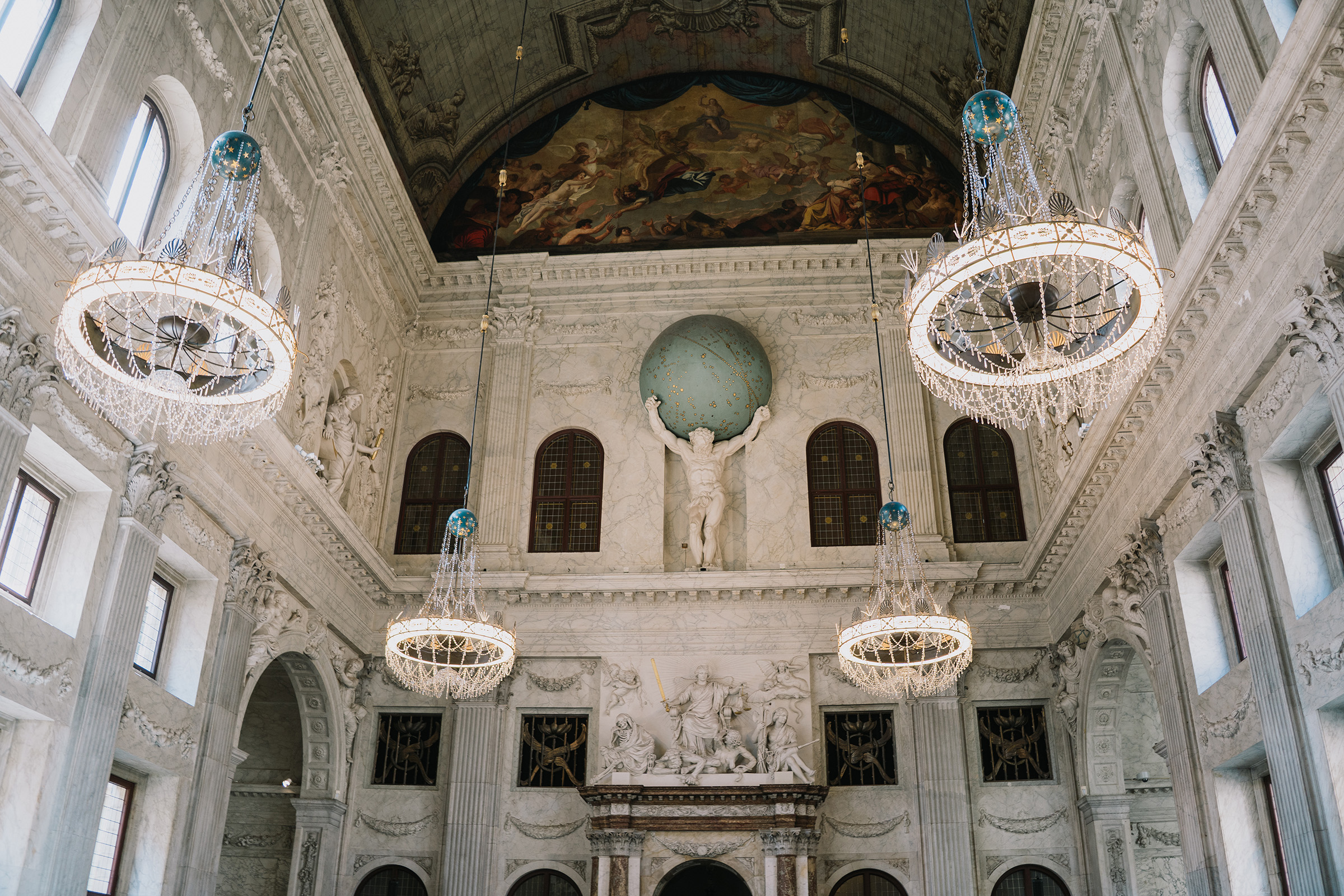
Yes, Dam Square is busy and yes, the pigeons are indeed too many. You should still come, briefly, because the square is the historic heart of Amsterdam, the spot where the original dam in the Amstel river gave the city its name. The Royal Palace on the western side was built as the city hall in the 17th century, when Amsterdam was the wealthiest port in the world. Step inside if you can as the building is very beautiful and it’s full of history. Across the square stands the Nieuwe Kerk, where Dutch monarchs are inaugurated and which houses exhibitions regularly (like the World Press Photo for example).
25. Browse the Bloemenmarkt
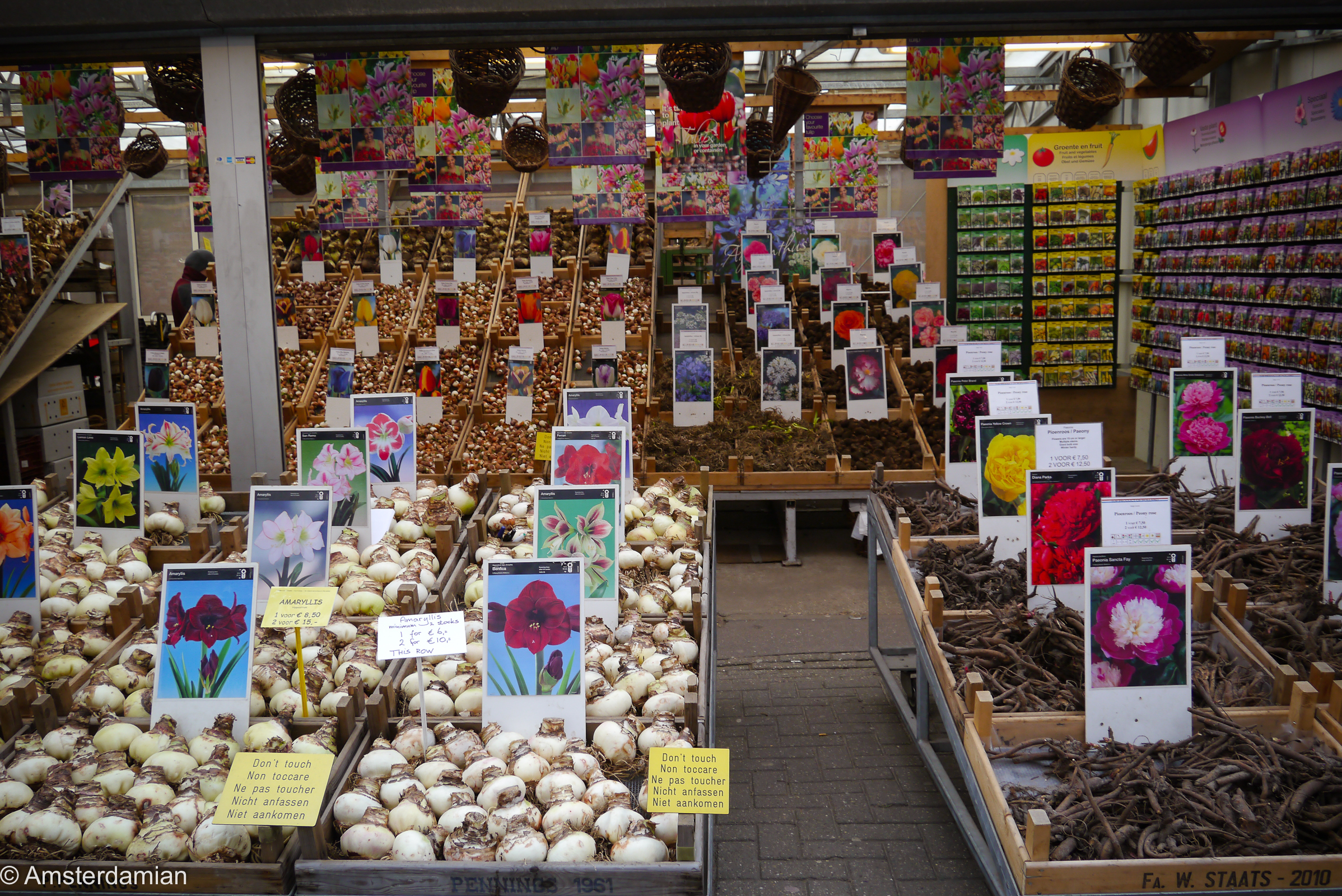
The Bloemenmarkt on the Singel has long been billed as the world’s only floating flower market, and although it leans firmly tourist-y these days, it’s worth a wander. What you will find here: tulip bulbs and all kinds of bulbs piled crates, dry flowers hanging from the ceiling, wooden tulip souvenirs, seeds you can take home if your country allows it. Visit even in winter, when the famous fields outside the city are dormant, as this is where you’ll see proper tulips before April.
26. Visit a windmill and have a beer at Molen De Gooyer
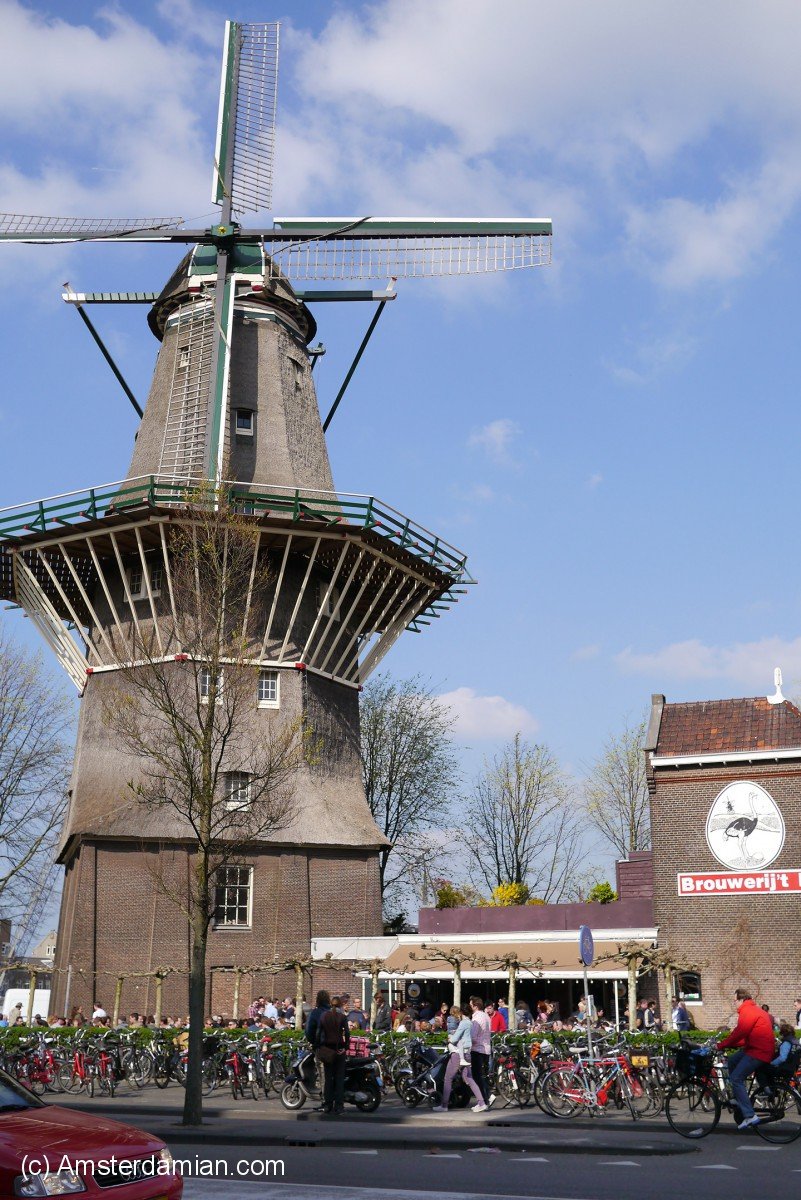
Yes, Amsterdam has a few windmills and even the locals don’t know about all of them. The easiest one to visit is Molen De Gooyer in the eastern Plantage neighbourhood, a 17th-century wooden mill, the tallest in the country. Brouwerij ‘t IJ, built right next door, is the city’s most beloved independent brewery. Order a tasting flight and sit outside under the sails. On a sunny day, there is no better place in Amsterdam. You can also book a tour of the brewery if you want.
27. Cross the Magere Brug at dusk
The Magere Brug (the “Skinny Bridge”) is a narrow wooden drawbridge across the Amstel river, just south of the city centre. It’s been there since the 17th century in some form, and at night it glows with hundreds of little bulbs strung along its frame. Go there at sunset and pose for the mandatory photo. Walk across it (watch out for the bikes), then stand at the middle and look downriver towards the H’Art Museum building: the view is almost theatrically beautiful, and most tourists miss it because they came at the wrong time of day. Alternative: if you can’t be there at dusk, any other time of the day is still fine.
28. Take a walking tour early in your trip
Amsterdam is beautiful on the surface, but it becomes far more interesting once you understand what you’re looking at. Why the houses lean forward, how the canals were planned, why certain churches matter, how trade shaped the city, and what really happened in neighbourhoods like the Jordaan or De Wallen. A good walking tour turns pretty streets into stories.
Try to do one on your first day. General historic centre tours are useful, but themed tours can be even better: Jewish history, resistance history, women’s history, LGBTQ+ Amsterdam, architecture, or alternative neighbourhoods. After that, the rest of the city makes more sense.
Part 5: Go beyond the city
29. Take a day trip — pick one that suits you
Amsterdam is an excelent base for exploring the rest of the Netherlands. The Dutch rail network is fast and efficient (although locals like to complain about it with every chance they get). Pick one day-trip and go:
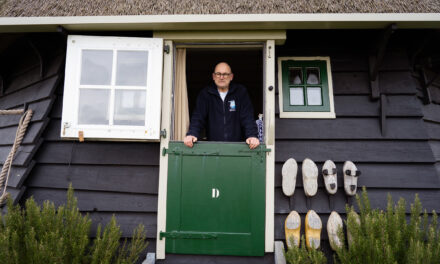
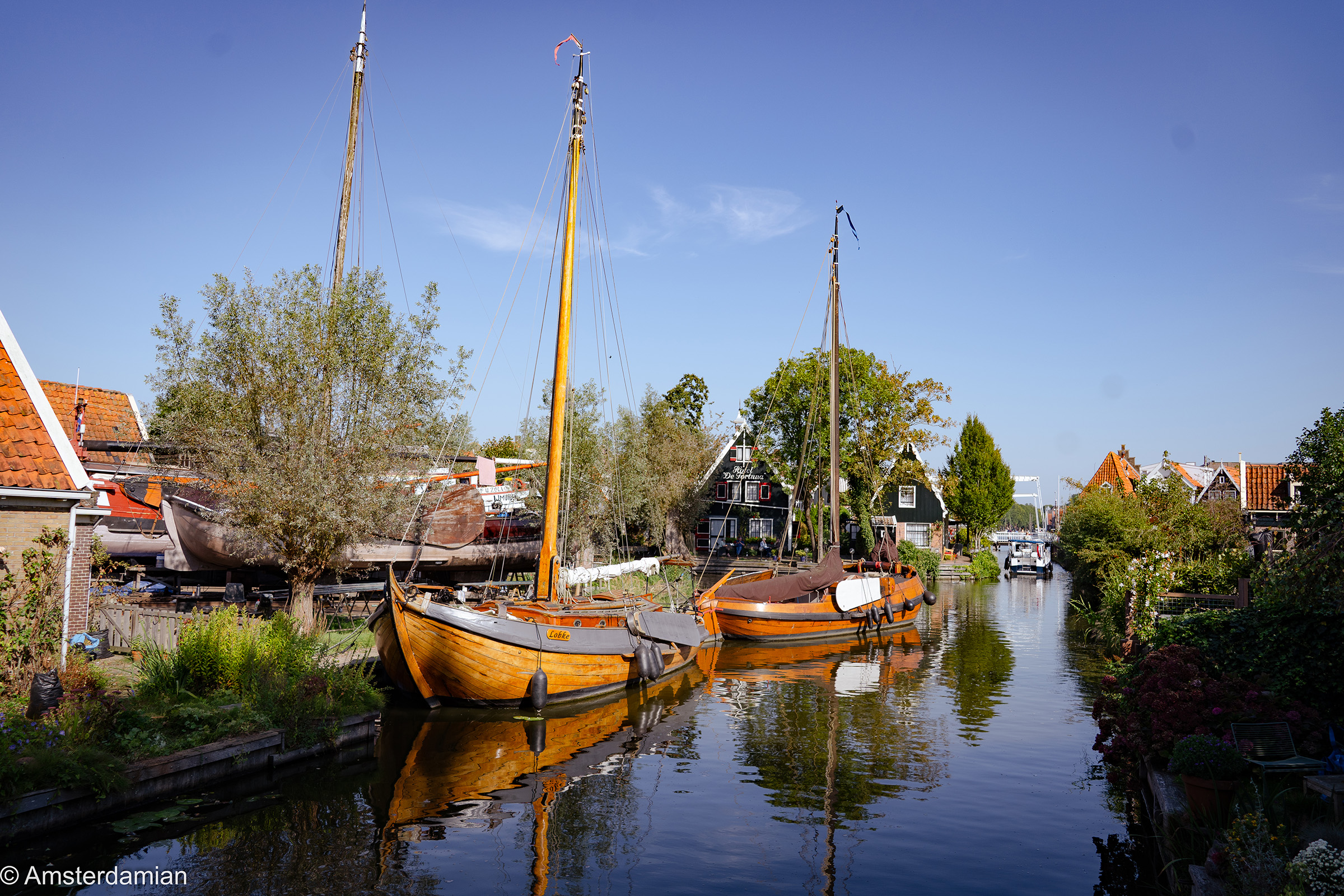
- Volendam, Marken, Edam or Monnickendam (under an hour by bus). These former fishing villages are, in my opinion, the most rewarding day trips for a first-timer to this country. While Volendam is overcrowded, is a place where you can still see locals wearing the traditional Dutch costume, and you can take a ferry across the lake to Marken, which is the cutest Dutch village ever. Edam and Monnickendam are equally picturesque, and much less crowded. Edam is hosting a cheese market as well, every Wednesday in the summer months.
- Zaanse Schans (around 20 minutes by train). The famous windmill village, restored and preserved, where you can watch a clog-maker at work and tour working windmills. Touristy but lovely nonetheless. It’s the place where you can see many windmills in a row and learn a lot about this Dutch industry. Alternative: Kinderdijk, close to Rotterdam, not so easy to reach from Amsterdam but less touristy.
- Haarlem (about 15 minutes by train). This is a smaller, prettier-than-Amsterdam city with a stunning central square, the Frans Hals Museum, and the medieval Grote Kerk. My personal favourite for a half-day.
- Utrecht (about 30 minutes by train). Amsterdam’s smaller sibling, with sunken canal wharves that have been turned into bars and cafés. Climb the Domtoren, the tallest church tower in the Netherlands, on a guided tour.
- Giethoorn (around 2 hours by train and bus). The “Venice of the North,” a tiny village without roads where you get around by boat. Beautiful, and very busy in summer.
- Keukenhof (mid-March to mid-May only). The world’s largest tulip garden, just outside Lisse. Bookable; combine with the surrounding bulb fields for the full effect. Very tourist-y but certainly worth it!
- Walibi World. One of the Netherlands’ best day trips for thrill-seekers. Located in Biddinghuizen, around 1 hour from Amsterdam by car, the park is packed with roller coasters and adrenaline rides, including fan favourites like Goliath and the new YOY double coaster. It’s a really fun day-trip (take the whole day for it).
Part 6: Seasonal moments
30. Catch a seasonal moment
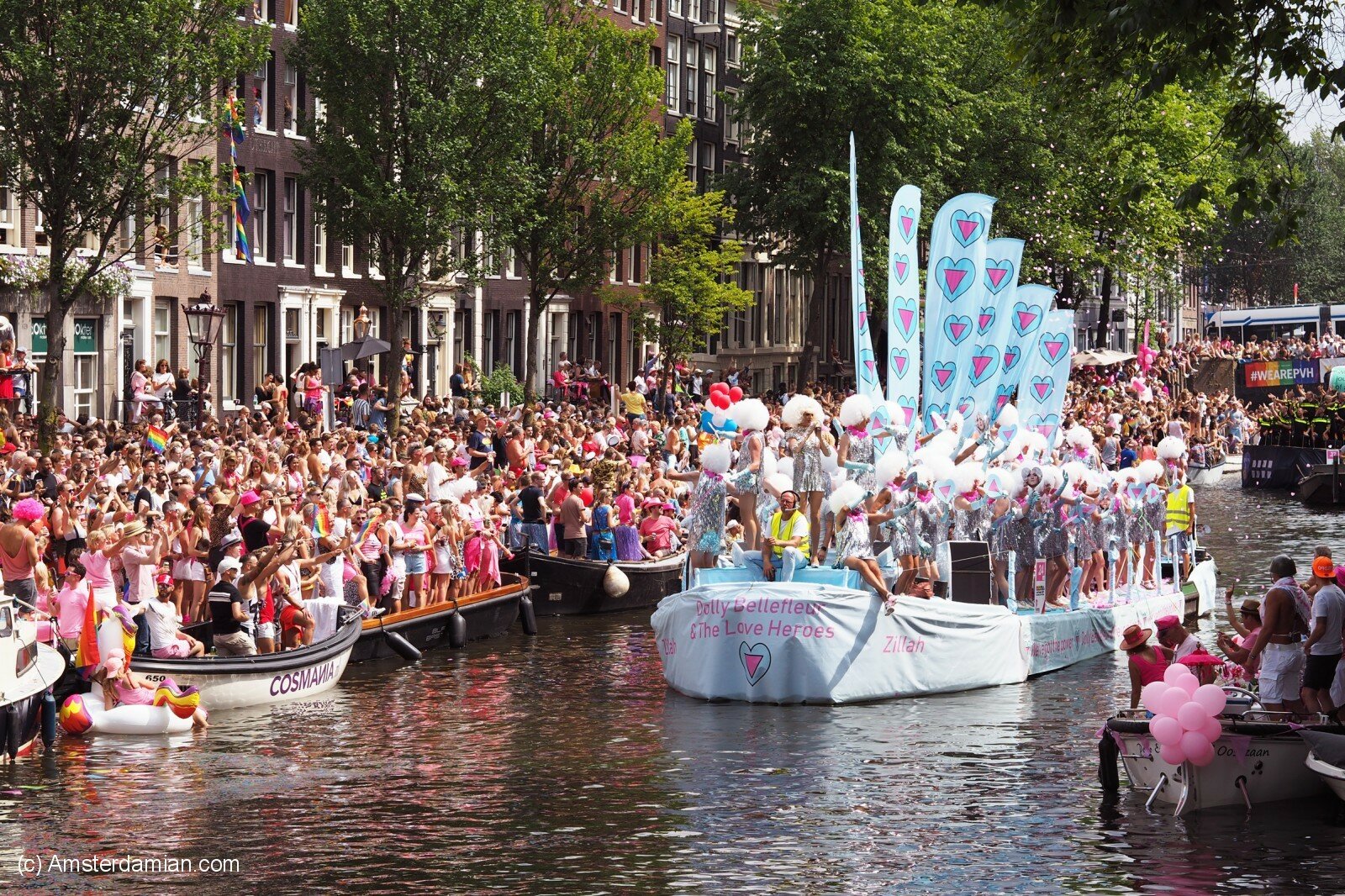
Amsterdam wears every season differently, and the year is dotted with moments worth planning around. King’s Day (27 April) is the country’s biggest celebration, when the whole city turns orange, every canal fills with boats, and the streets become an enormous open-air free market. Amsterdam Pride (late July to early August) culminates in the canal parade, where boats sail through the Prinsengracht. The Amsterdam Light Festival (late November to mid-January) strings the canals with illuminated artworks. Open Garden Days (a weekend in June) open the private gardens hidden behind canal house façades to the public, and it’s magical. Check the dates if you can travel flexibly.
How much time to spend in Amsterdam? Three days is barely enough for the highlights, and five days is enough to fall a little in love. A week, and you might start fantasising about moving here, like I did. However long you’ve got, leave room in your plans for the city to surprise you.
Have I missed something you can’t imagine a first visit without? Tell me in the comments. I’m always taking notes.
✷ This post contains affiliate links. If you purchase I receive a small commission at no cost to you.
More things to do in Amsterdam:
● The Best Non-Mainstream Things to Do in Amsterdam
● Things to Do in Amsterdam, Recommended by Locals
● Amsterdam in Spring: What to Do From March to June
● Amsterdam for Photographers and Photography Lovers
● Amsterdam for Tarot & Mystical Explorers
Stay tuned for more and follow Amsterdamian on Instagram and Facebook for more stories about life in the Netherlands, written by a real local, updated constantly.
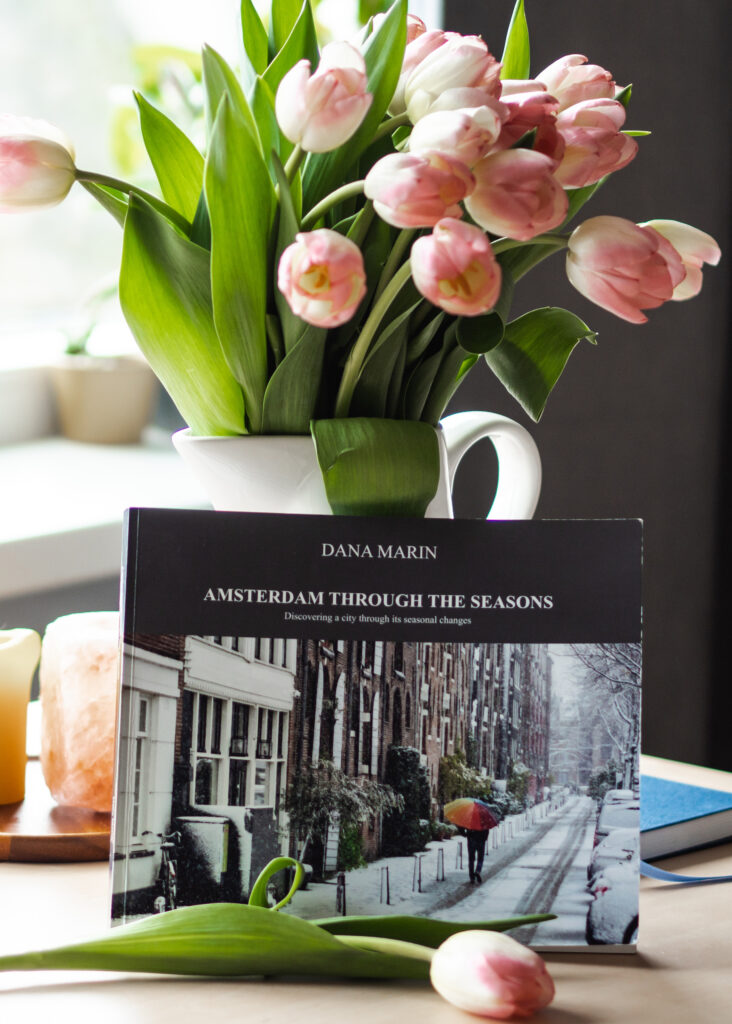
Check out my photo book: Amsterdam Through the Seasons!
Love what you’re reading? Support my work with a small donation.
And share this post if you liked it!