Bones. They sit inside us our whole life, hidden beneath layers of skin and flesh, and, if we’re lucky, we see them only on X-rays. They come into view only when everything around them has disappeared.
A bone is the most honest thing a body leaves behind. It’s just structure, stripped of everything that once made it alive, and yet, when we stand before one, we don’t feel absence. We feel presence, and something insists on being recognised.
Humans have felt this for thousands of years. We’ve placed bones in altars, encased them in gold, built cathedrals above them. We did it because of how they made us feel, connected to the creature that once lived, or to something greater than ourselves. Through the bones of saints, people felt closer to God. Through any bone, we feel closer to life itself, including our own.
Now what’s with this rather creepy intro, you ask?
I’ve just seen the new exhibition at the Art Zoo Museum and I listened to a rather thought provoking presentation. At the press preview of RELICS, which is the first temporary exhibition of Art Zoo Museum, Peter van Duinen, Director of Vrije Academie, traced this thread from the catacombs of Rome to a 17th century canal house on the Herengracht.
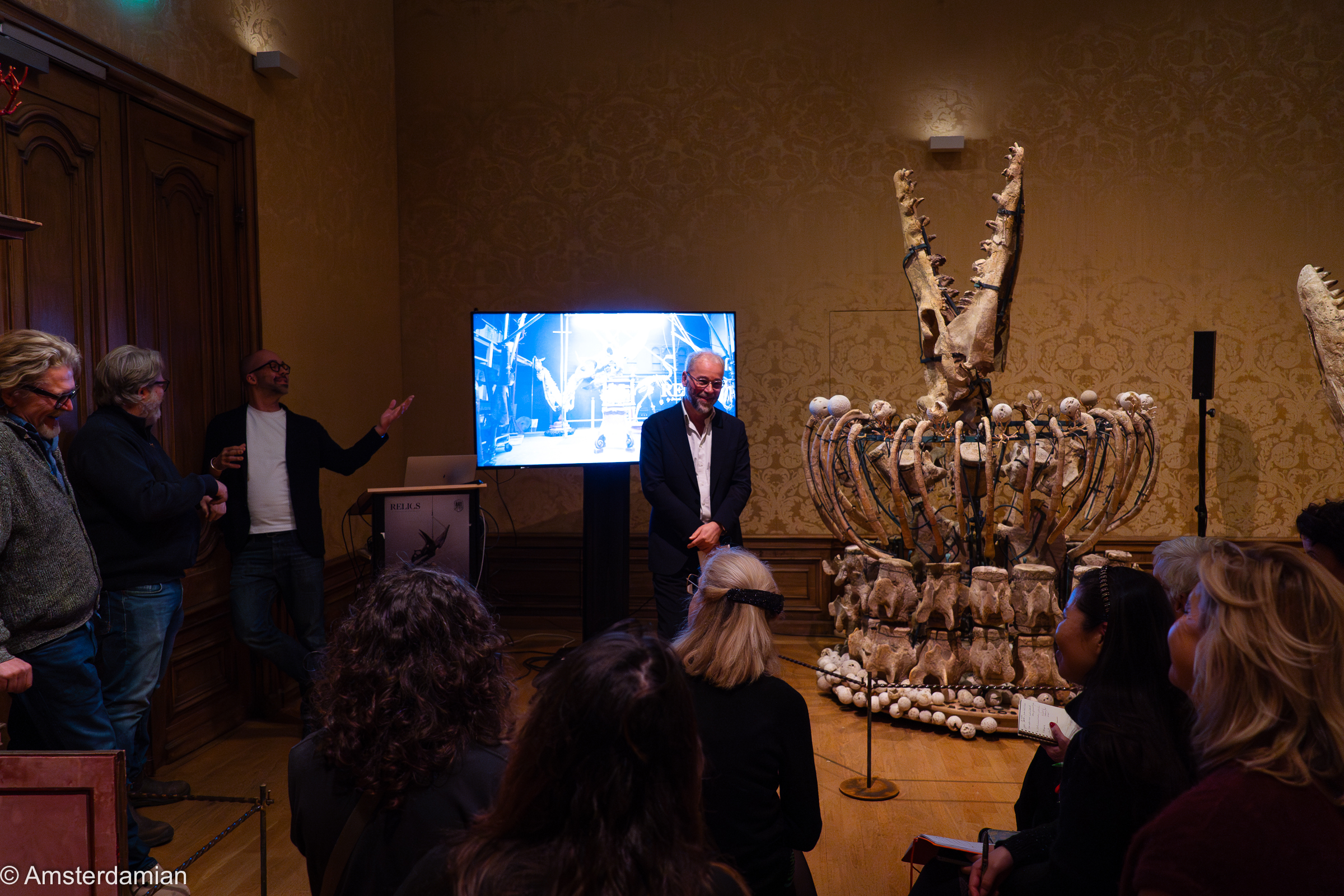
” Bone can become carrier of meaning, of connection with out humanity, with our mortality as well. For years people wanted to see the bones of saints in order to become closer to them, closer to God.[…] That impulse never disappeared, it only moved on, from the church, to the museum, from the saints, to the animals. 2000 years ago, early Christians in Rome decided that a bone deserved reverence. 600 years ago, a goldsmith in Tuscany built a rock crystal around the tooth of Mary Magdalene. This century, Damien Hirst gilded a mammoth in Miami. And today, in a 17th century canal house in Amsterdam. Jaap Sinke and Ferry van Tongeren are doing exactly the same thing. For creatures that lived before there were humans.
I invite you to walk around through this room. The way a medieval pilgrim walked through a cathedral. Because the bone is the connection. Between us and Mary Magdalene. Between us and the mammoth in Miami. Between us and the creature standing around you here. Between 67 million years ago.”
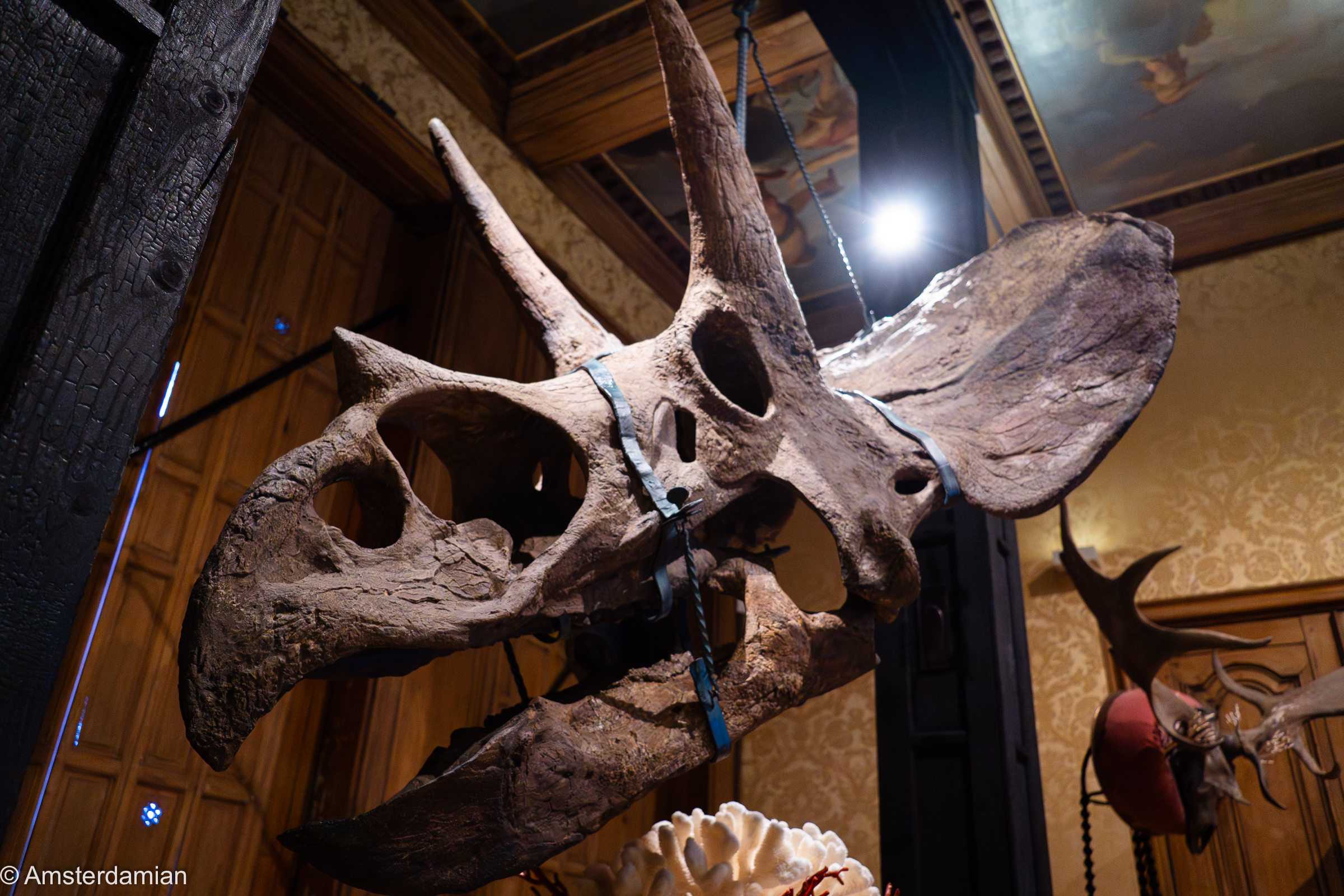
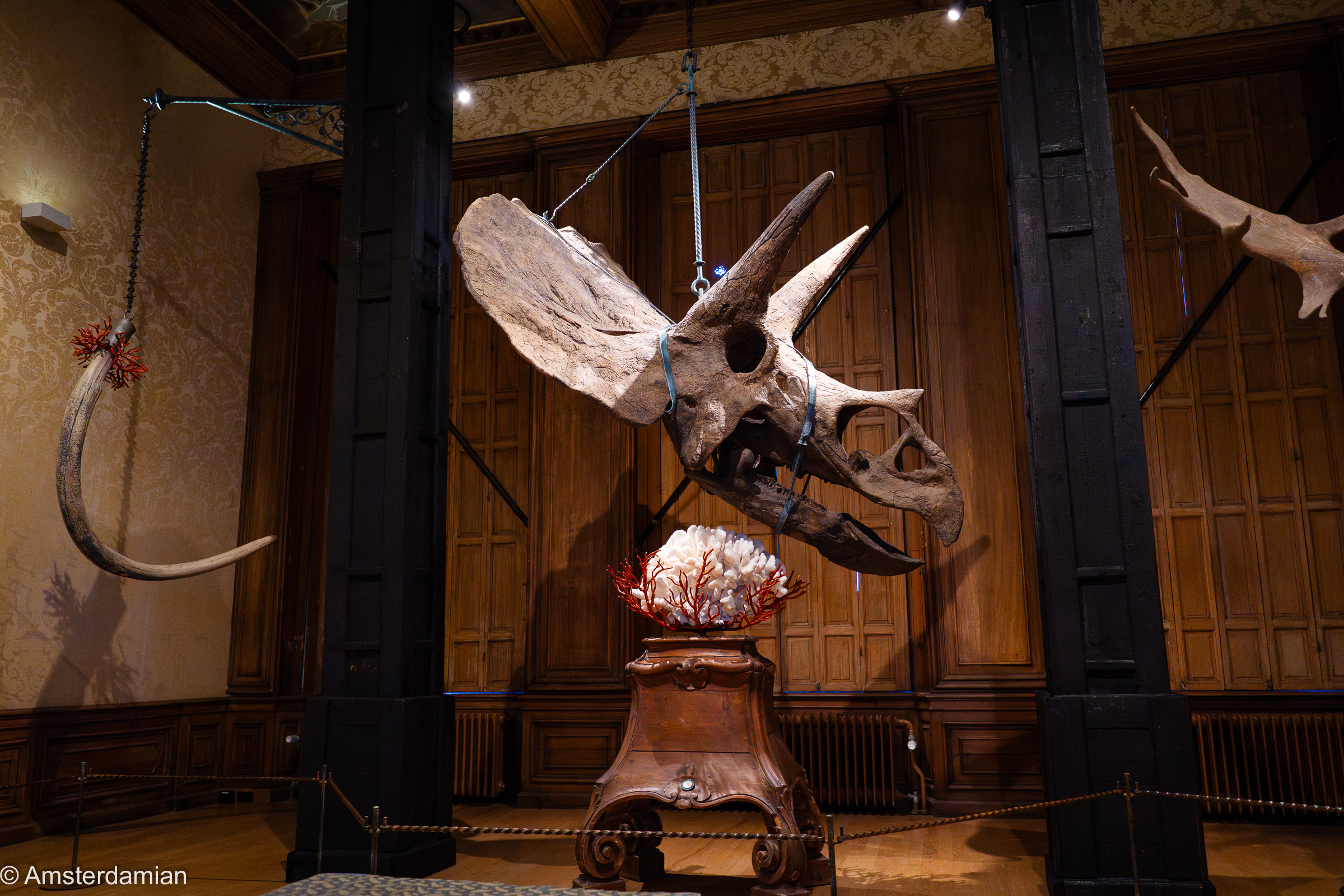
And, standing in a room full of fossils that are million years old, face to face with a giant skull hanging from a beam, I felt exactly that: a startling closeness to something from very far away.
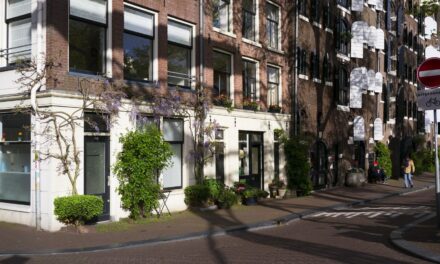
Art Zoo Museum opened on the Herengracht in June 2025, in a monumental 17th-century canal house: De Cromhouthuizen. It’s a private museum and it was established on the initiative of the Vrije Academie, in collaboration with the artist collective Darwin, Sinke & Van Tongeren. The artists built here a world where taxidermy becomes something closer to theatre. They quickly got a lot of attention, and, this year, TIME added the museum on their annual World’s Greatest Places list.
Who are the artists? Since 2013, Ferry van Tongeren and Jaap Sinke started collaborating under the name: Darwin, Sinke & van Tongeren. Placing the name of Charles Darwin before their own is a tribute to the great naturalist and geologist.
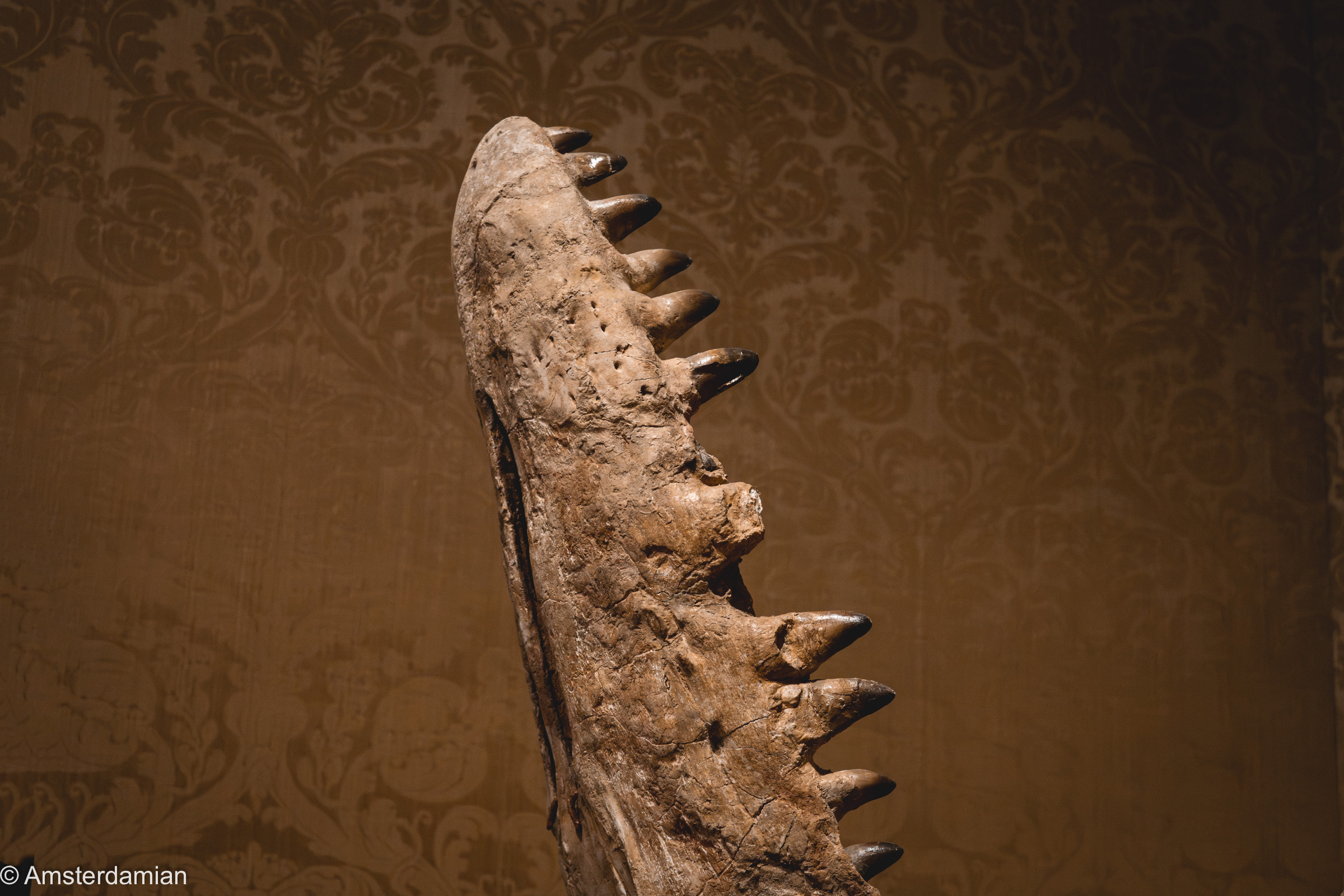
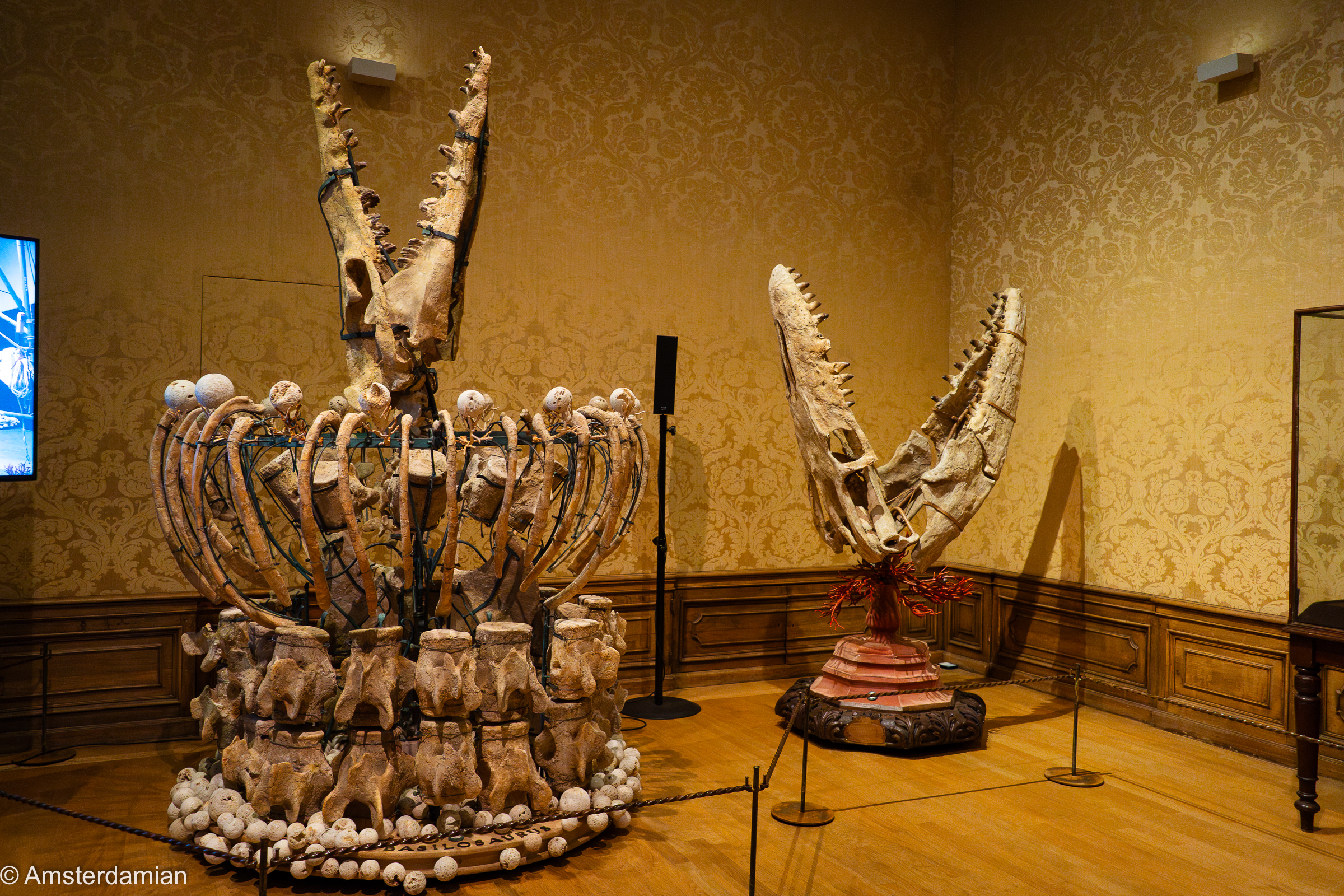
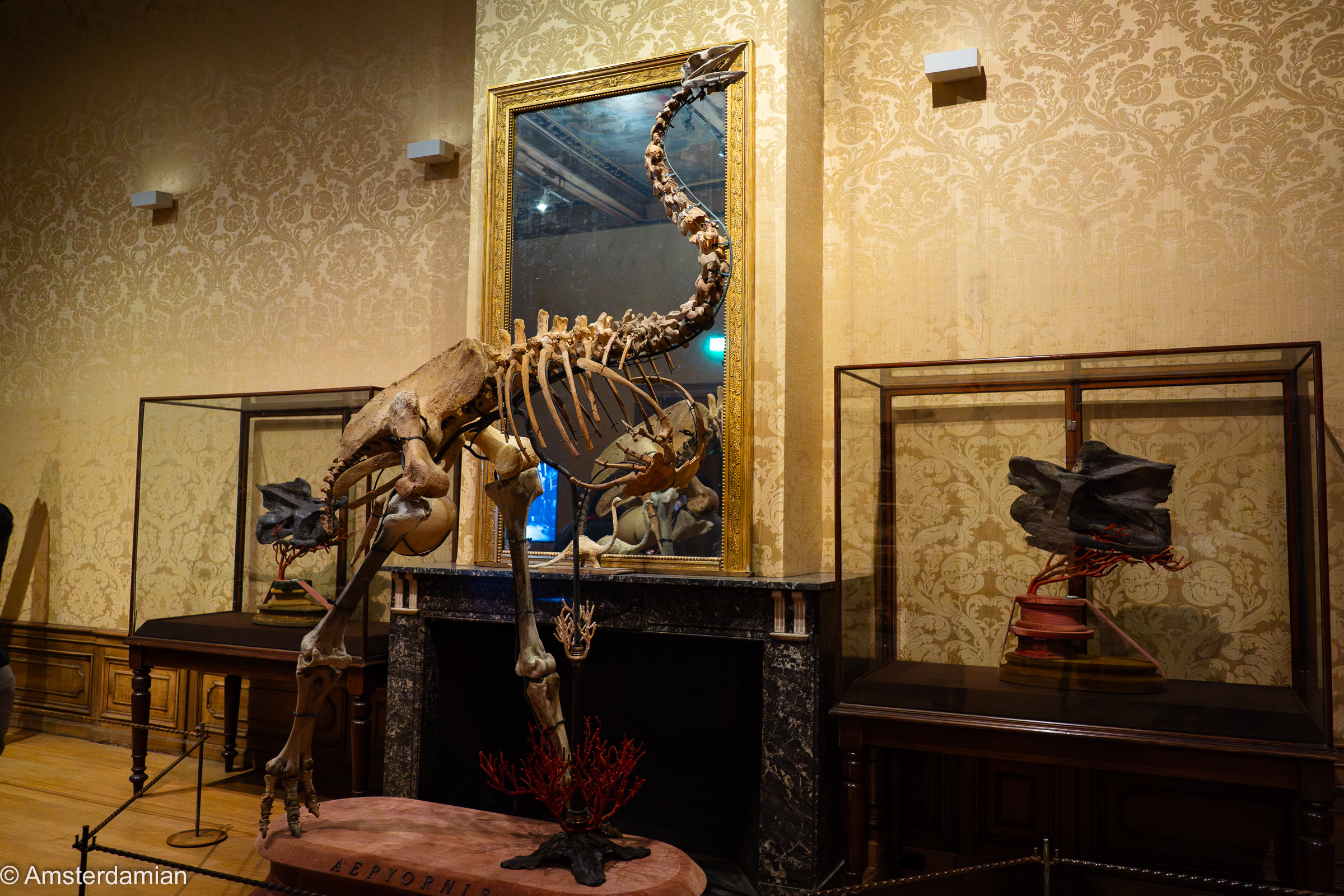
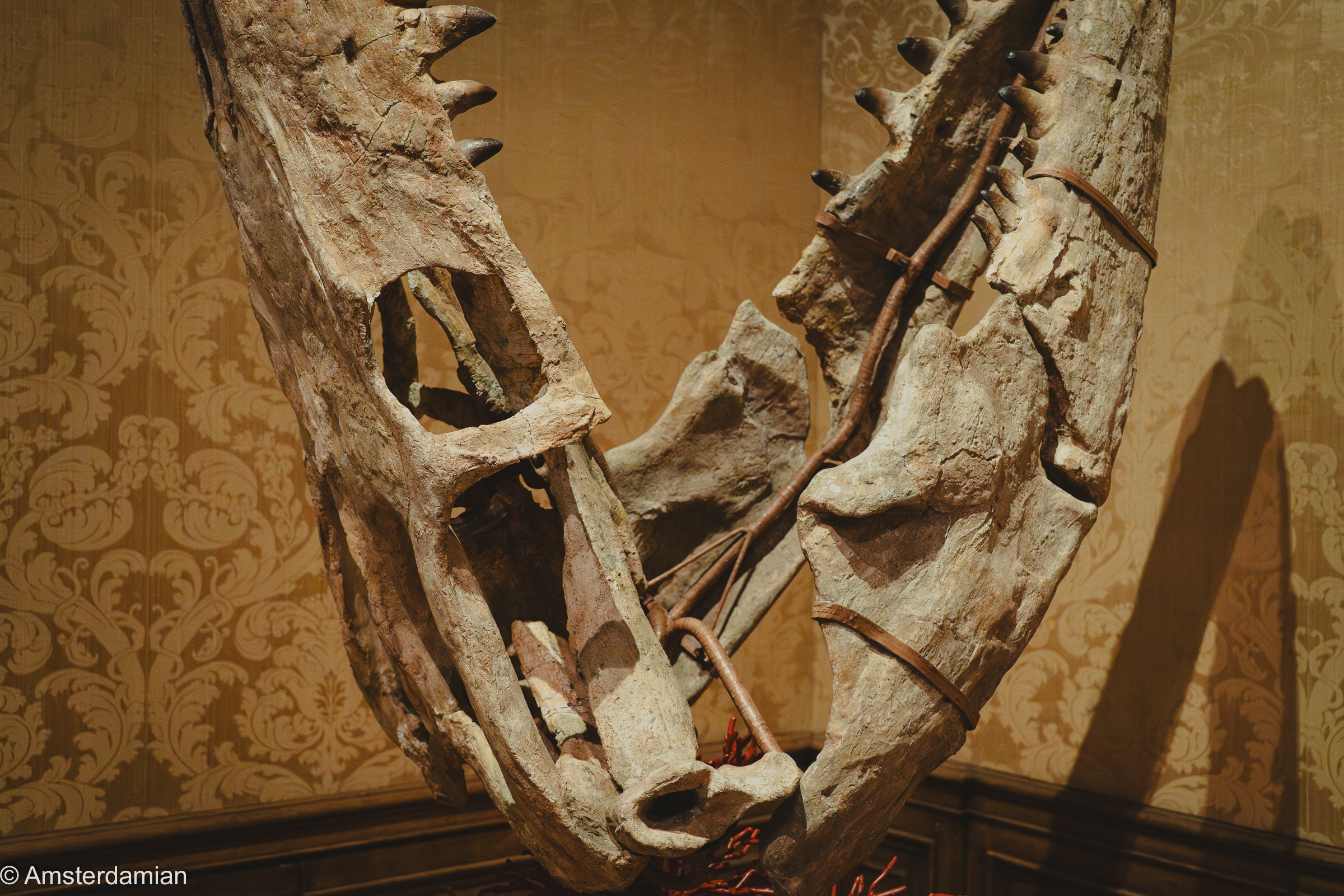
RELICS is Art Zoo’s first temporary exhibition and the result of over a decade of work by artists together with curator and dinosaur expert Iacopo Briano. Giant fossils that are tens of millions of years old were transformed into contemporary sculptures. They are not displayed as study objects or scientific curiosities, but as artworks.
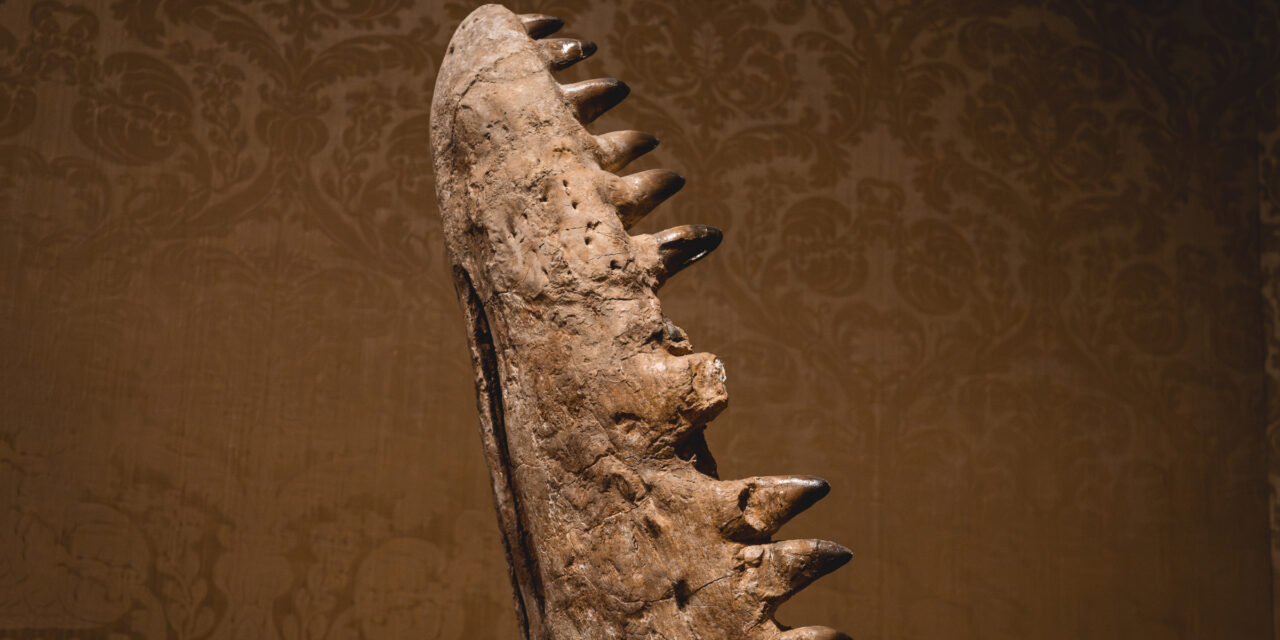
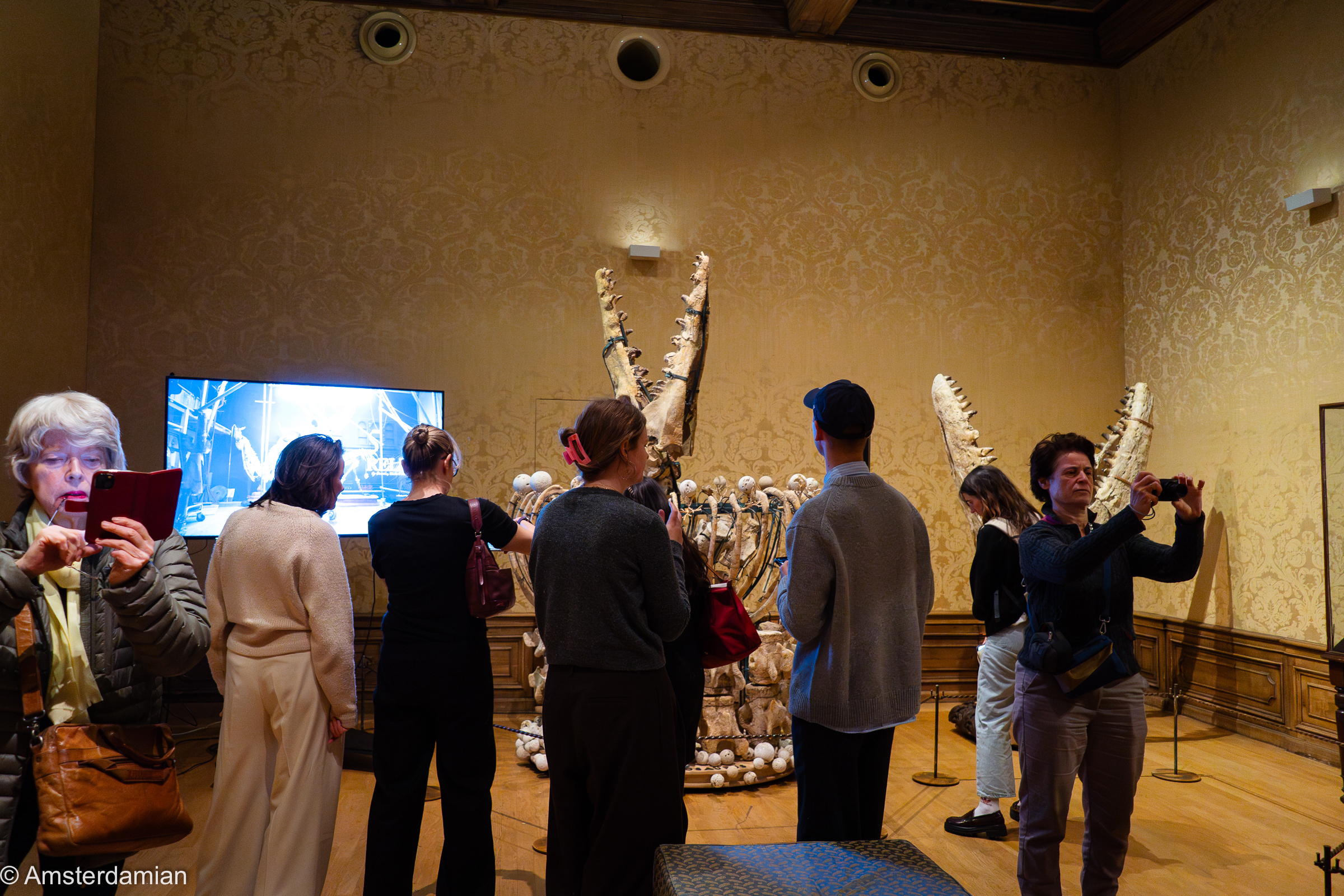
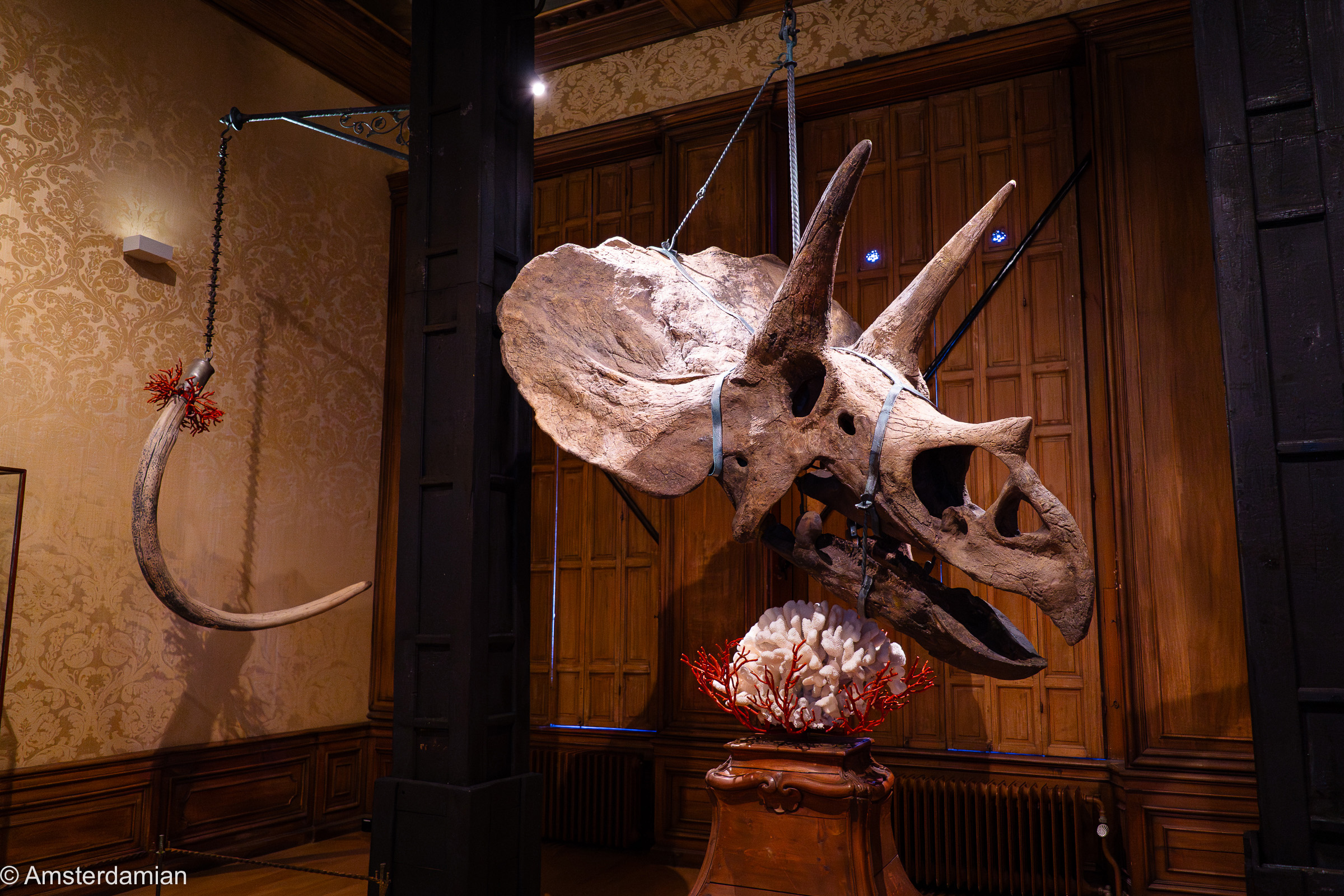
The collection includes a Basilosaurus that is 45 million years old, a Mosasaurus from 70 million years ago and a Triceratops skull, 67 million years old, which immediately draws all the attention in the room. Some of them are displayed in a simple way, others combined in intricate art pieces. The fossils were discovered and prepared under the direction of Paleontology Institute ZOIC and collection curator Iacopo Briano, who gave the artists complete freedom. “RELICS is not about scientific reconstruction,” Briano has said. “It is a matter of beauty.“
Under a beautifully painted ceiling (by Jacob de Wit) that beauty takes a form I was very curious to see. Seeing soft velvet against fossilised bone and raw steel frameworks is quite spectacular. The sculptures seem ancient and contemporary at once as if Darwin, Sinke & van Tongeren built their own version of those medieval reliquaries. They make you want to step closer, to have a moment with a being who lived so long ago that you can barely imagine. And I guess that’s just what happens, in that dimly lit room, just one fleeting moment before the next visitor takes your place.
RELICS opens to the public on April 17th, 2026 and runs through November.
Art Zoo Museum — Herengracht 368, Amsterdam. Open daily 10:00–17:00. Tickets: €17,50. artzoo.com
If you’re building a museum day around it, my guide to Amsterdam in spring has plenty more ideas for the season.
↪ You might be interested in these autumn exhibitions as well: Upcoming Exhibitions and Art Events This Autumn – Amsterdam and Beyond
Stay tuned for more and follow Amsterdamian on Instagram and Facebook for more stories about life in the Netherlands, written by a real local, updated constantly.
Check out my photo book: Amsterdam Through the Seasons!
Love what you’re reading? Support my work with a small donation.
And share this post if you liked it!