
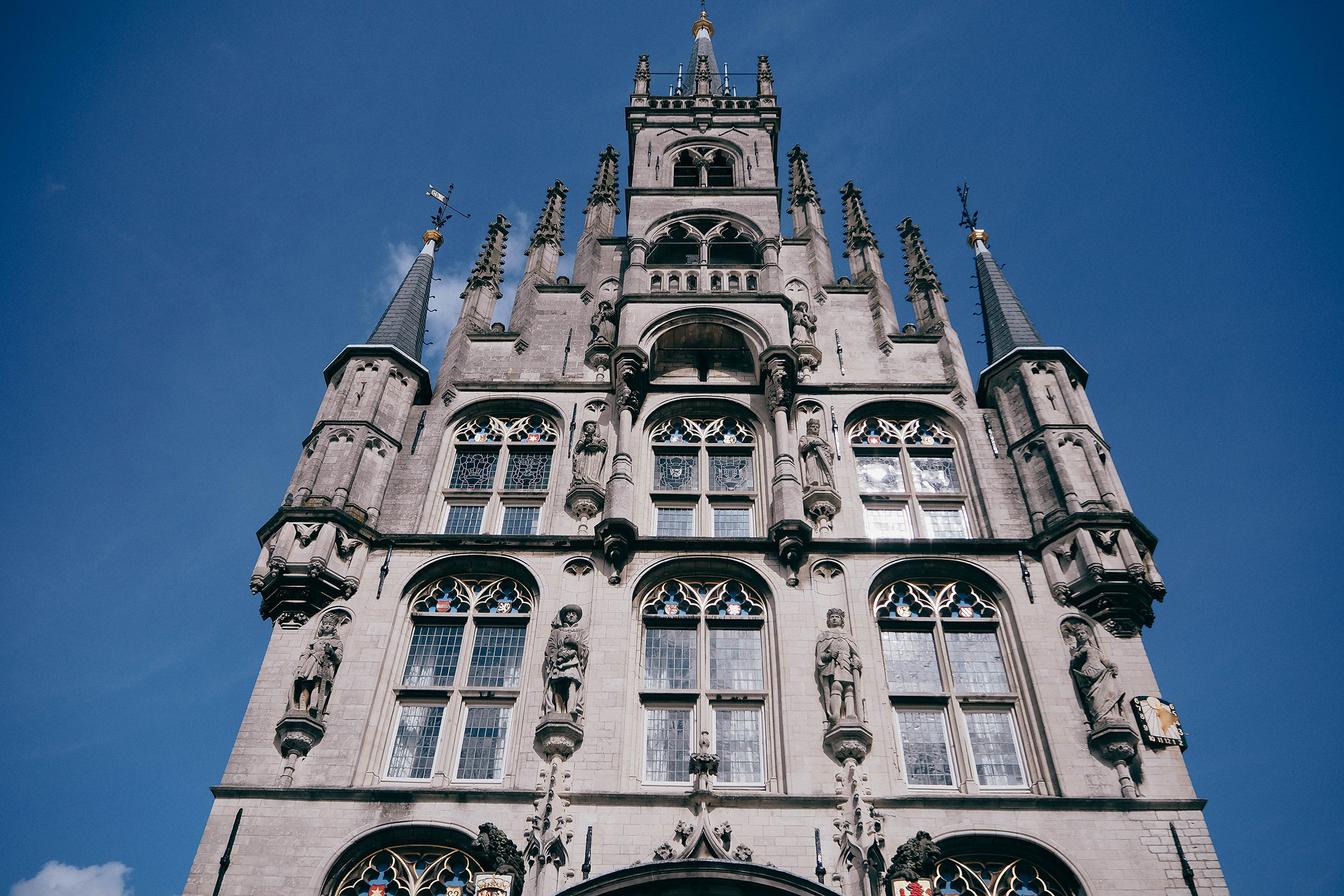
Amsterdam has quite a few special cinemas, but none of them is as beautiful as Tuschinski. Located on a busy street where you might miss it if you pay more attention to the trams than your surroundings, there’s a building that makes people stop mid-step and tilt their heads back when they notice it. It’s a surprising view among all the flickering lights from the surrounding shops. It has twin towers and an ornate façade that seems to belong to a cathedral rather than a place where you go for a date and can buy popcorn. This is a cinema, and it is widely considered one of the most beautiful in Europe.
A dream that started in Rotterdam
Abraham Tuschinski was a Polish Jewish immigrant on his way to the United States when he arrived in Rotterdam in 1904, which at the time served as the gateway to America. For various reasons, he never left the city. Instead, he settled there and started working as a tailor, while he was also spending his spare time helping other Polish immigrants find their footing in this new home.
His real passion, though, was film. Tuschinski dreamt of making the cinema experience special, wanting to build more luxurious places for regular people to enjoy movies. He believed that cinema should be something extraordinary, something worth dressing up for, and available to the masses. He opened his first theatre in Rotterdam, and, from there, he built a small cinema empire together with his brothers-in-law. But his ambition kept growing, and eventually his sights landed on Amsterdam, where he bought a piece of land in Duvelshoek, a run-down slum near the Munt. He had a specific vision in mind: to turn it into, in the words of his biographer Henk Van Gelder, “an oasis of luxury and pleasure, accessible to everyone.”
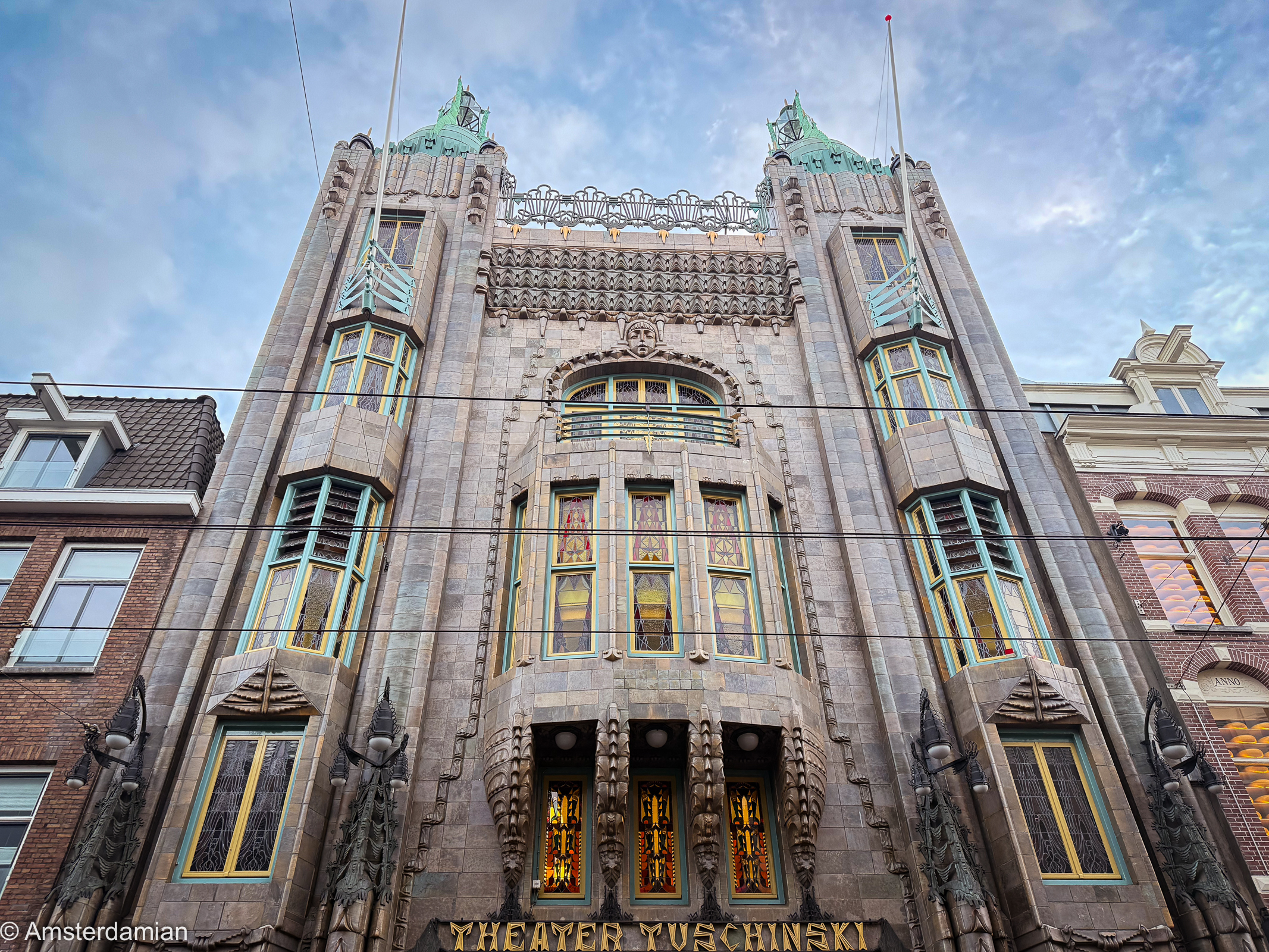
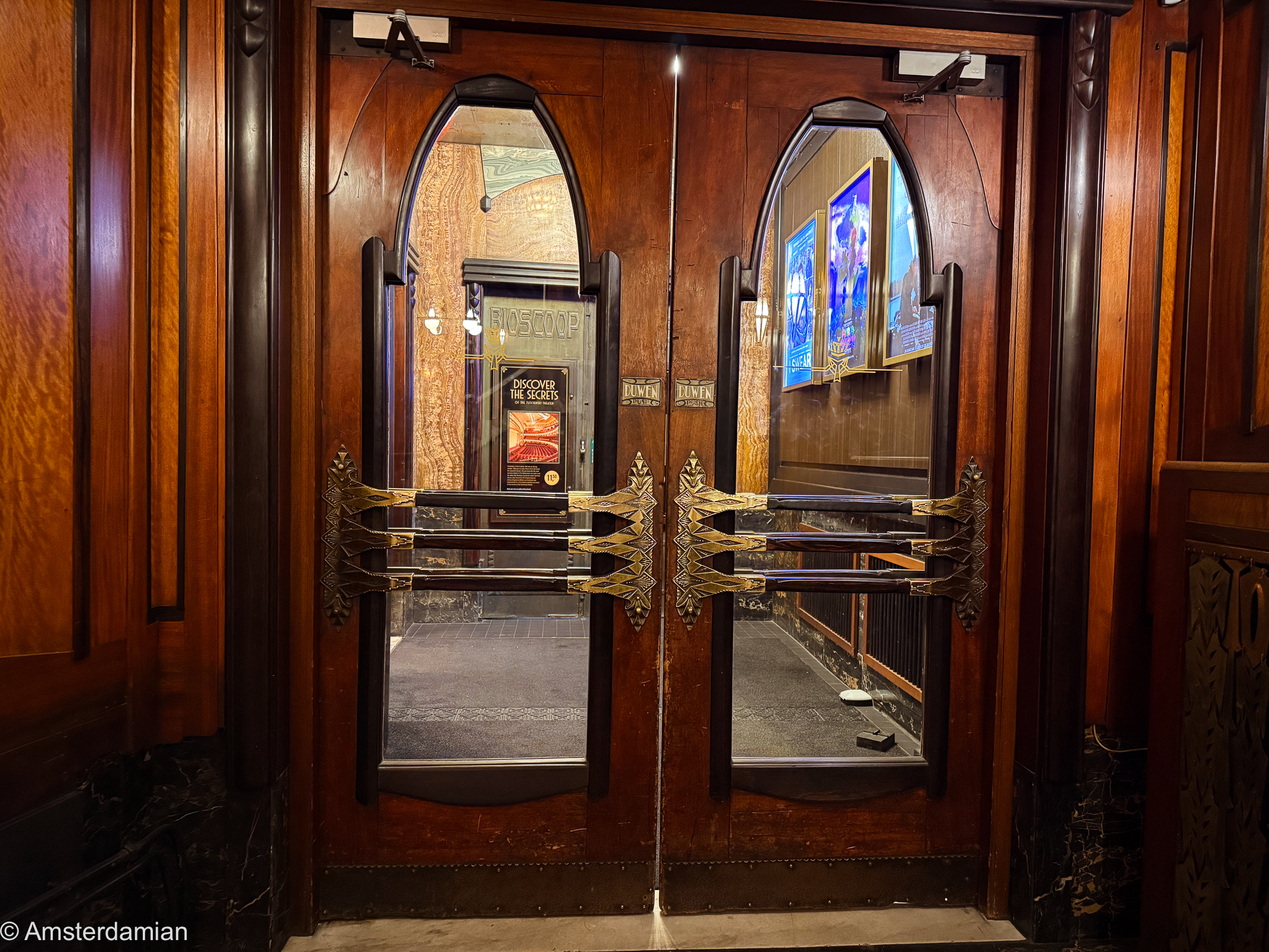
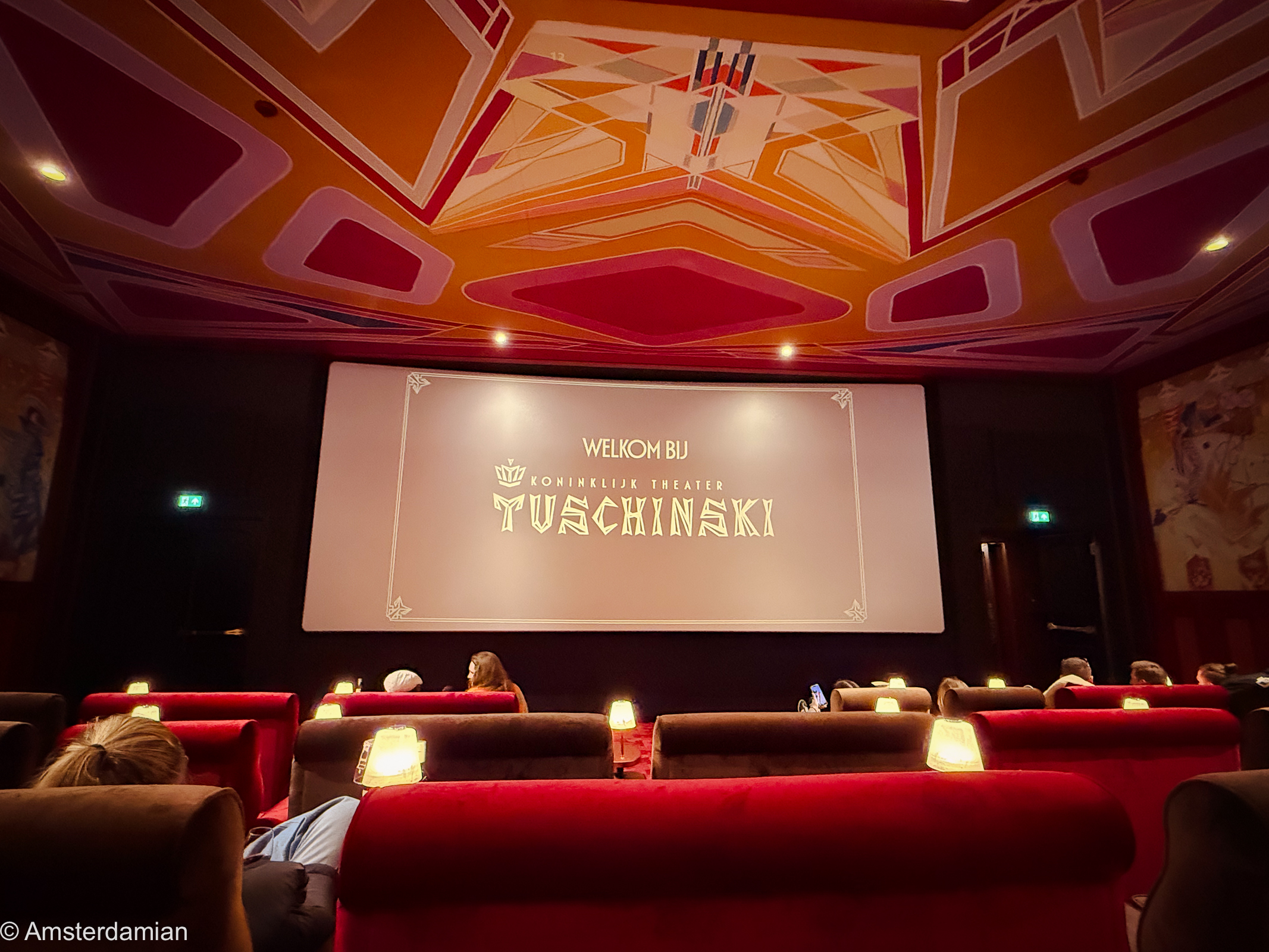
The building of Royal Theater Tuschinski
To build his dream, Tuschinski hired architect Hijman Louis de Jong, and the result is a beautiful mix of styles: Amsterdam School, Jugendstil, and Art Deco, all layered into one building without any of them feeling out of place.
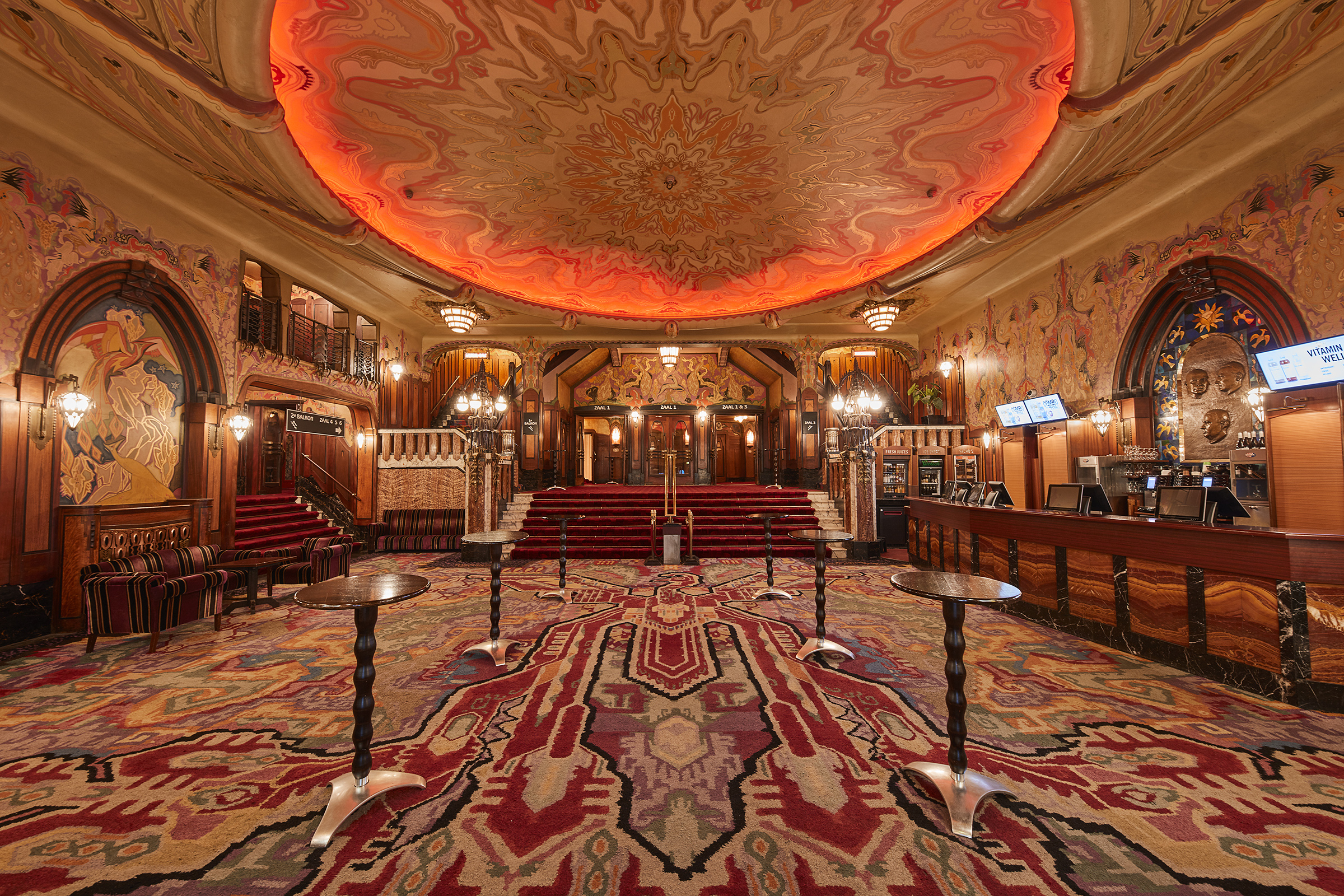
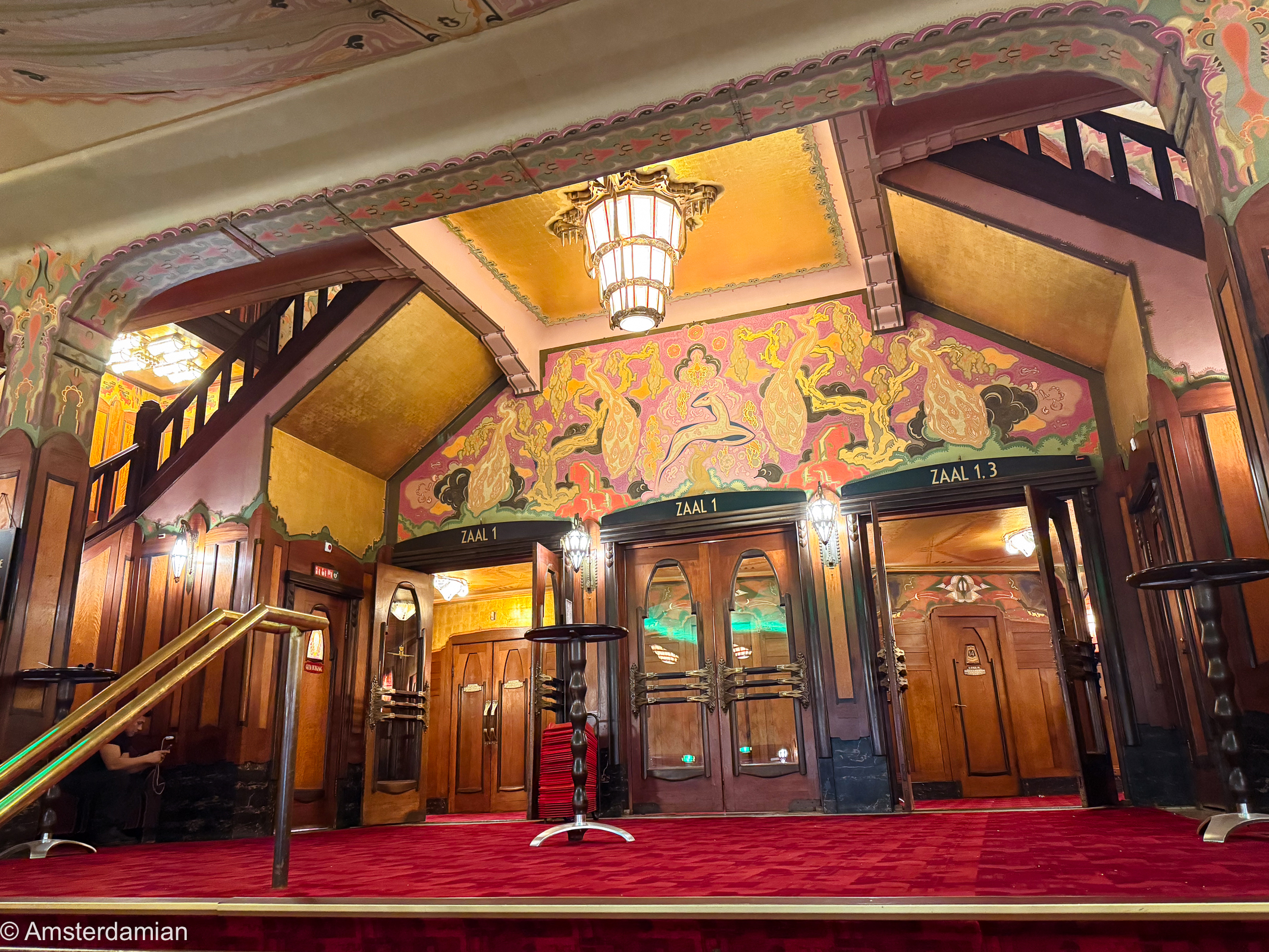
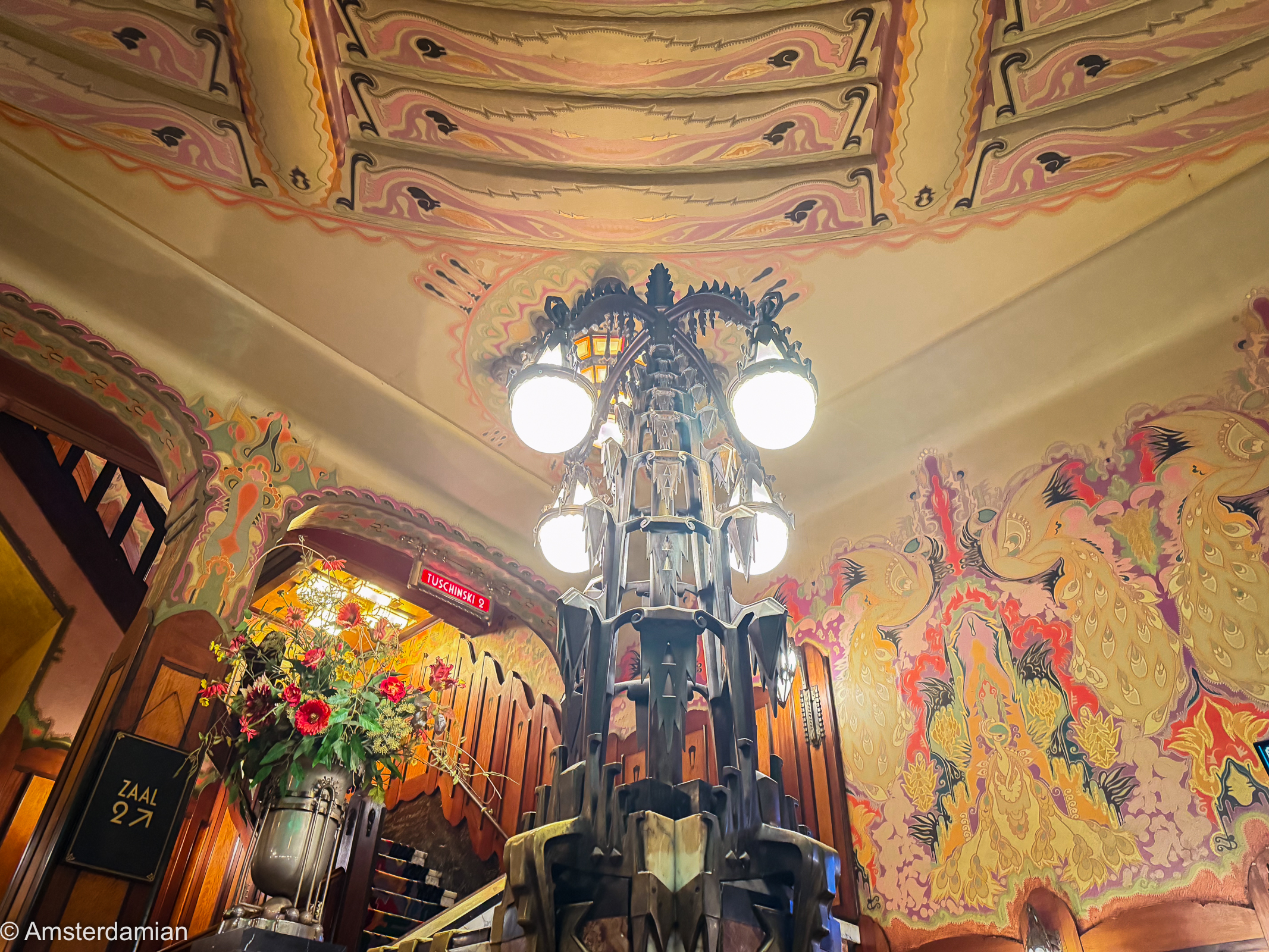
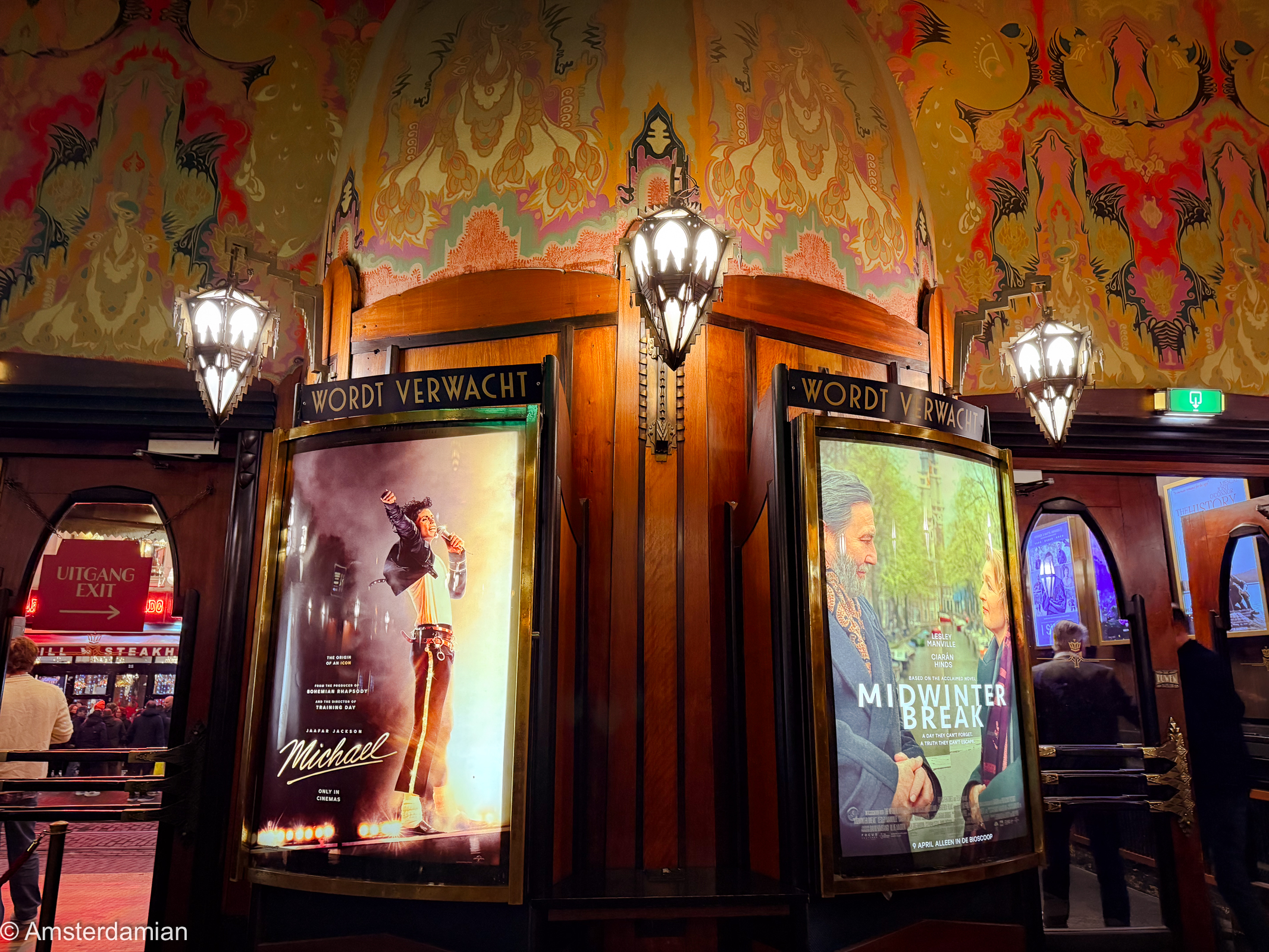
The exterior might be intriguing, but the interior is where it really becomes something else. Walls covered in paintings by Pieter den Besten. Carved wood. Mosaic work. Silk-shaded lamps shaped like caterpillars and butterfly pupae. A carpet with patterns so detailed you almost forget to look up at the ceiling. Which would be a pity, as you might miss the beautiful lamp that changes colours. Everywhere you look, in every hidden corner, there is a splendid detail decorating that spot.
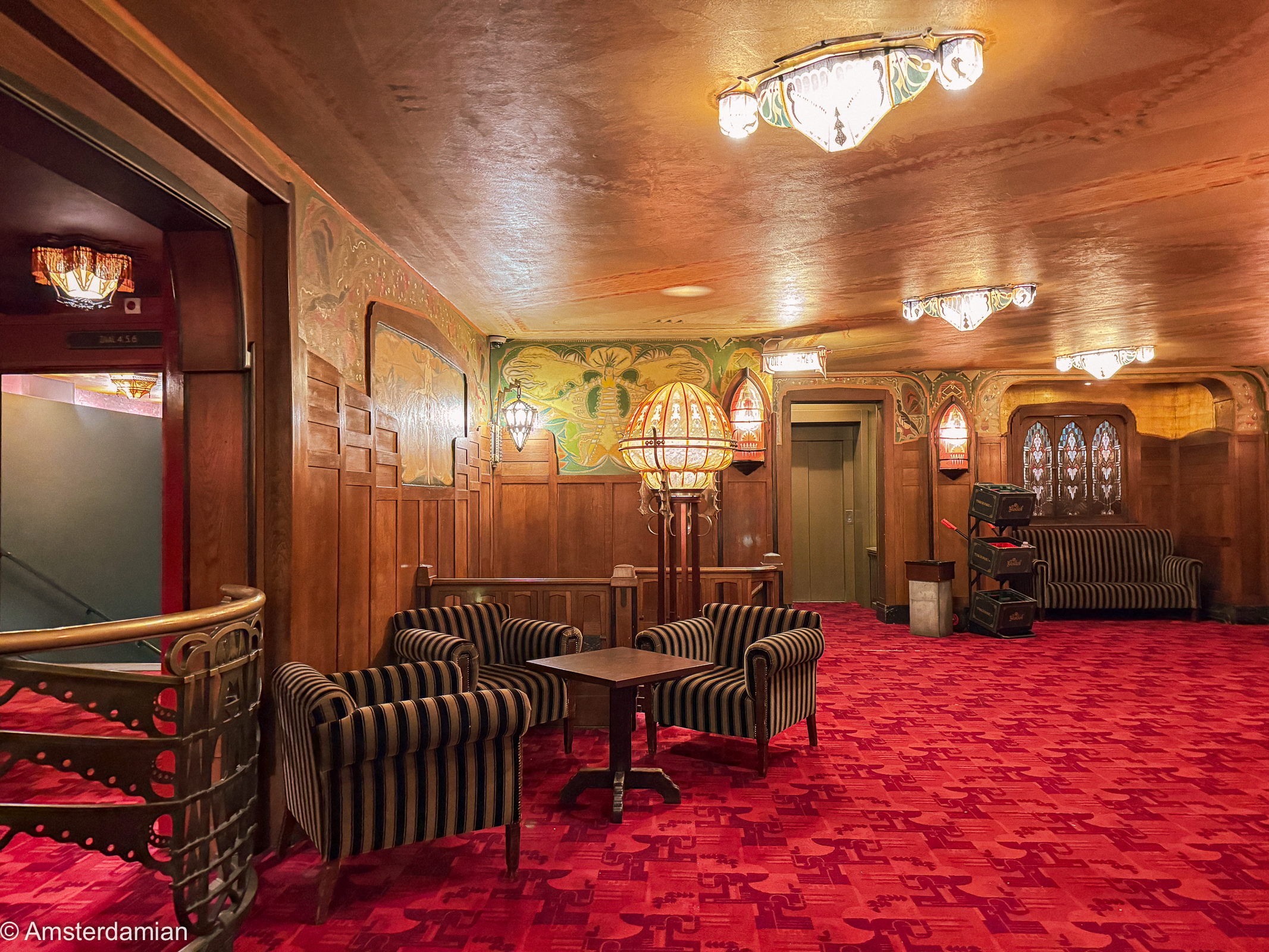
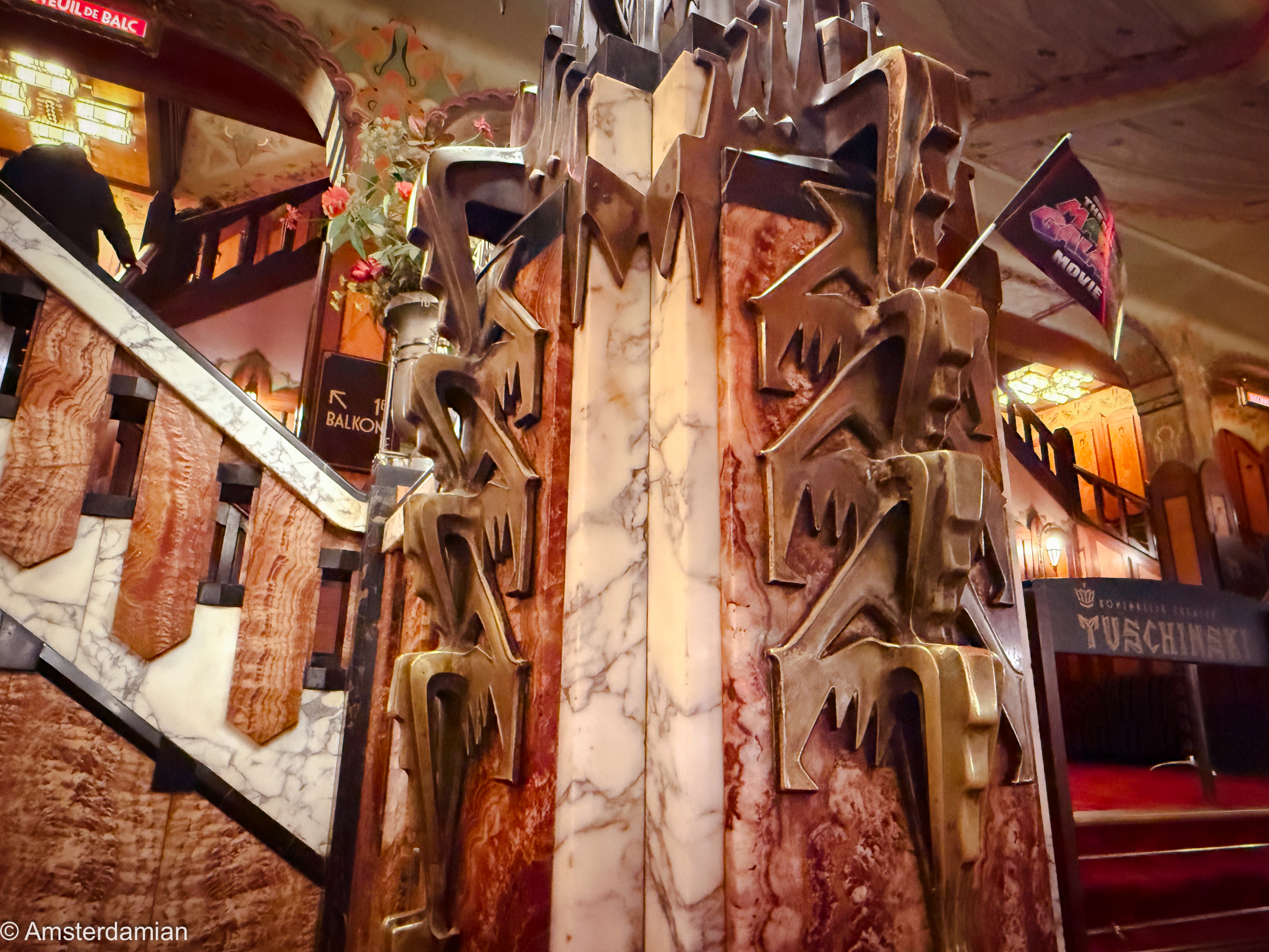
When it opened in 1921, not everyone was convinced it was a good idea. Some critics found it over the top, although many were in awe, saying that he built a film palace. The ticket prices were regular, which meant that working-class Amsterdammers could walk in and feel like royalty for an evening – and this was exactly what Tuschinski wanted. The cinema also had a heating and cooling system that was ahead of its time, a technical detail that tends to get overlooked but says something about how seriously Tuschinski took the whole thing.
Unfortunately, World War II was brutal for the Tuschinski family. Four of their Rotterdam theatres were destroyed in the 1940 bombings and a fire tore through two halls of the Amsterdam theatre in 1941. The cinema was soon taken over by the German occupation, and Abraham, who was Jewish, was deported to Auschwitz, where he was killed in 1942.
The building survived. After the war, it reclaimed its original name, and a plaque was installed to honour the founders. Two rounds of restoration followed between 1998 and 2002, and a more thorough one in 2020 that brought the interior closer to how it looked in Tuschinski’s time. A cocktail bar was added, where visitors can buy film-inspired drinks. And in 2021, for its hundredth anniversary, the cinema was granted the title “Royal.”
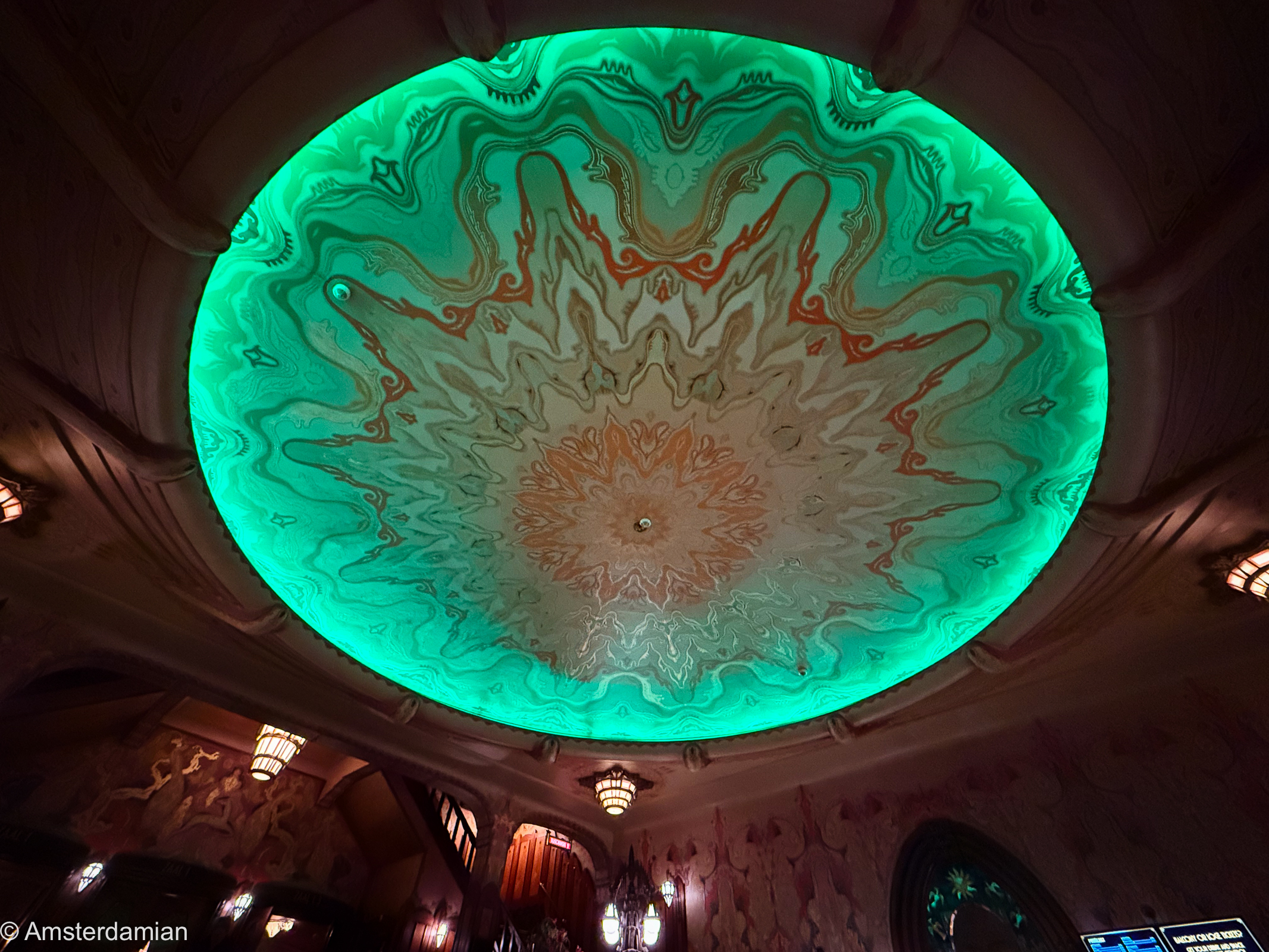
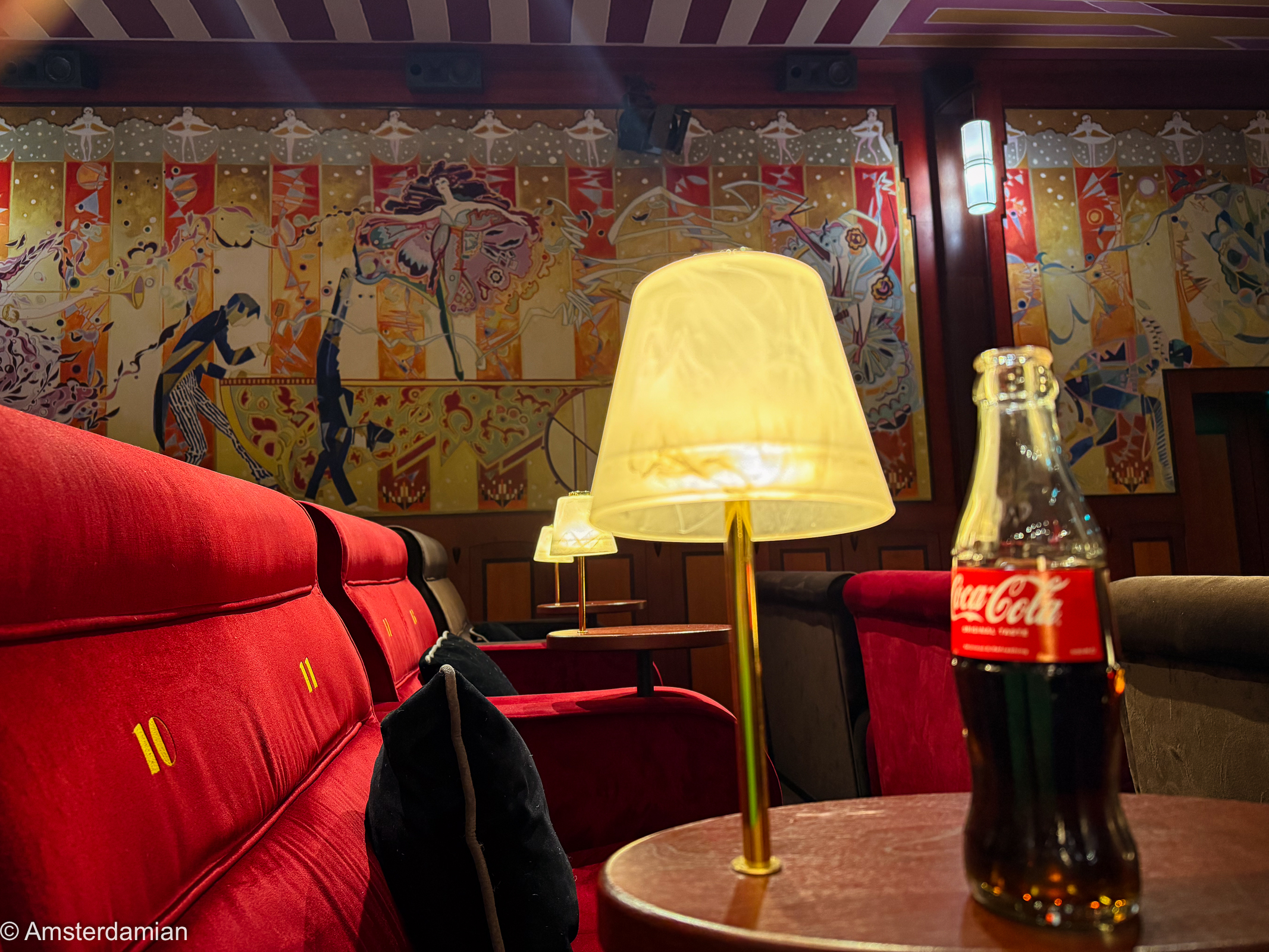
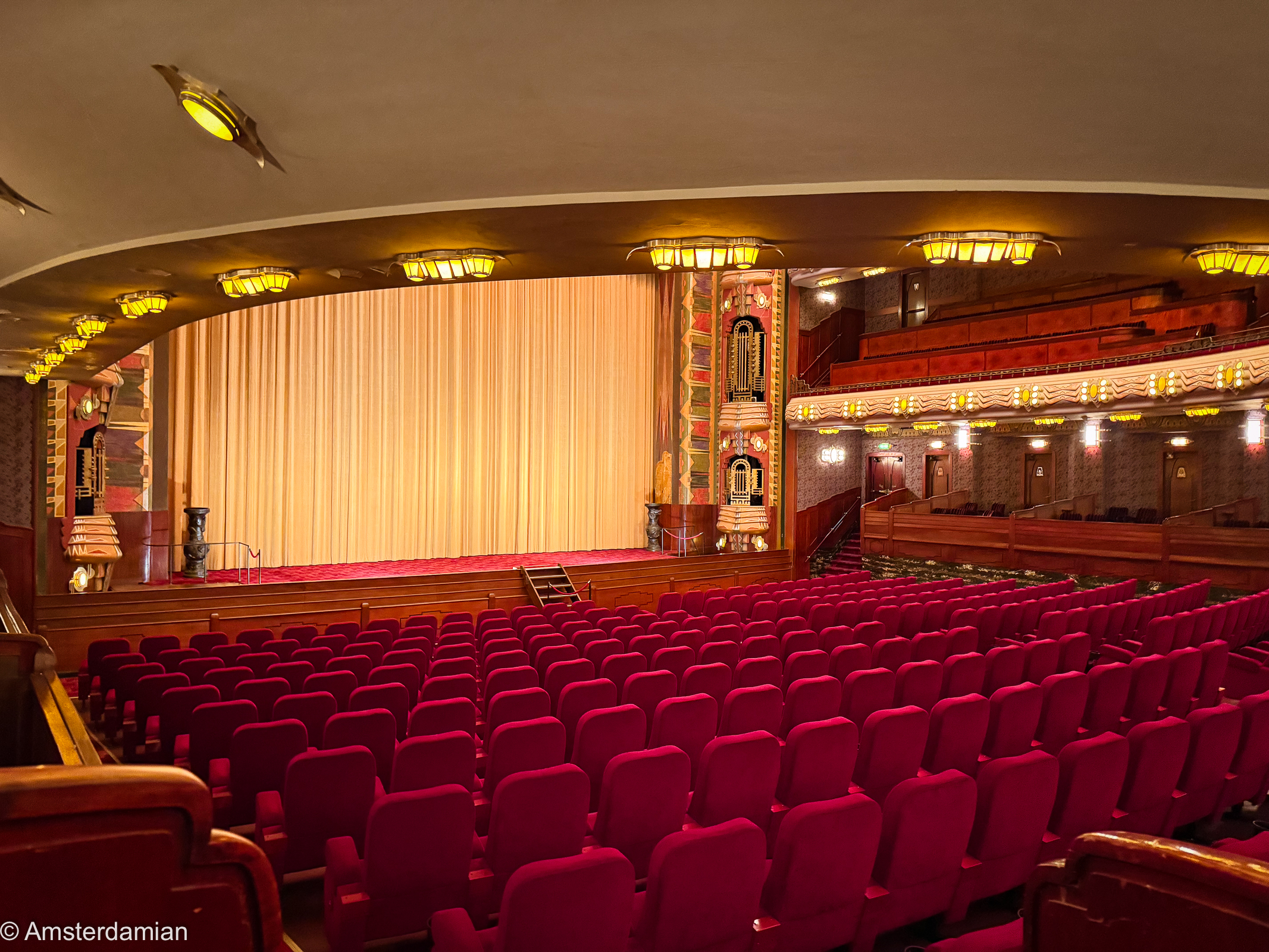
Today, Royal Theater Tuschinski is the symbolic home of Dutch film. There are cinemas, and then there are places like Royal Theater Tuschinski, where the building itself is half the show. It’s one of the Pathé locations, but it’s much more than that. This is where the big Dutch premieres happen, where events are held, and where you go when you want your evening to feel like something more than a regular outing. The tickets have regular prices, but you get to walk across the plush carpet, admire the painted corridors and the intricate details, and watch your movie seated in red velvet seats in a room fitted for the most luxurious theatre. Some rooms even have double seats, designed so couples can sit closely together and enjoy the film in a more intimate setting.
It’s amazing that you can watch Ryan Gosling talking to an alien or a French love story, while eating popcorn in a room that Abraham Tuschinski dreamed up more than a hundred years ago. I think that is the best part of the whole place, that we get to have fun and fulfil the dream of someone who went through many troubles to make this happen. Every time I go to Royal Theater Tuschinski I appreciate the experience even more, knowing the story behind it.
Adress: Reguliersbreestraat 26-34, 1017 CN Amsterdam
Stay tuned for more and follow Amsterdamian on Instagram and Facebook for more stories about life in the Netherlands, written by a real local, updated constantly.
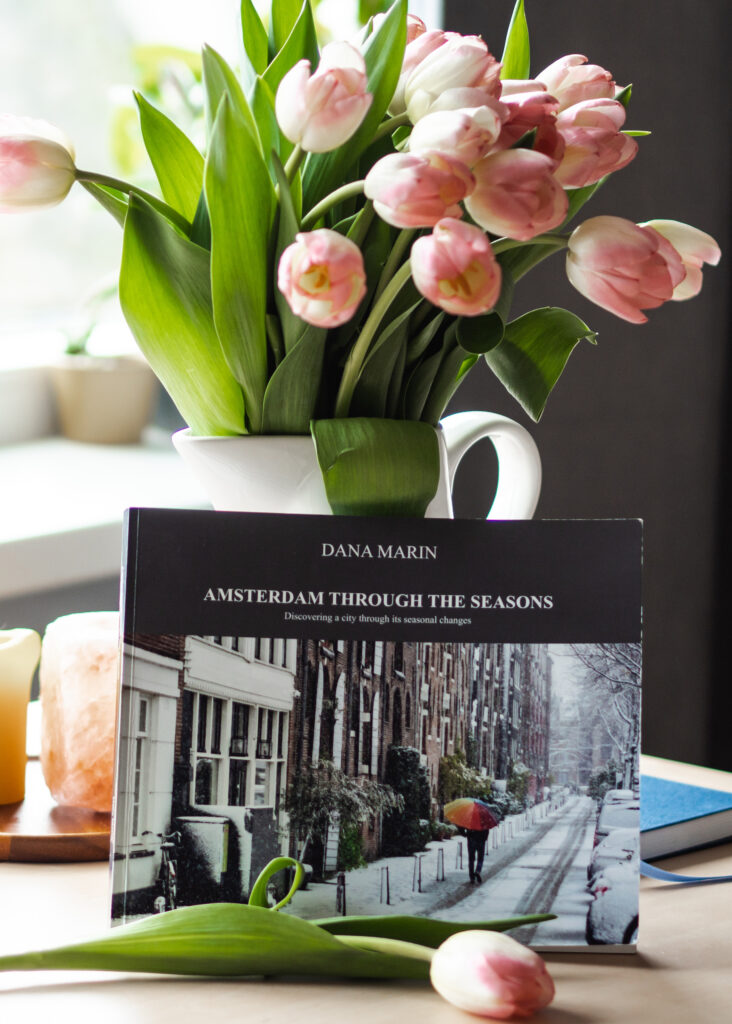
Check out my photo book: Amsterdam Through the Seasons!
Love what you’re reading? Support my work with a small donation.
And share this post if you liked it!




Trackbacks/Pingbacks