Last updated: May 2026
The first thing I learned about Nijmegen was that it claims to be the oldest city in the Netherlands, its origins going back roughly 2,000 years to the Roman occupation; the Romans set up a military camp here around 19 BC and the city was granted official Roman city rights by Emperor Trajan in AD 98. This piece of information alone was enough to spark my interest, I had to visit! So, one summer day, I decided it was time to cross Nijmegen off the list.
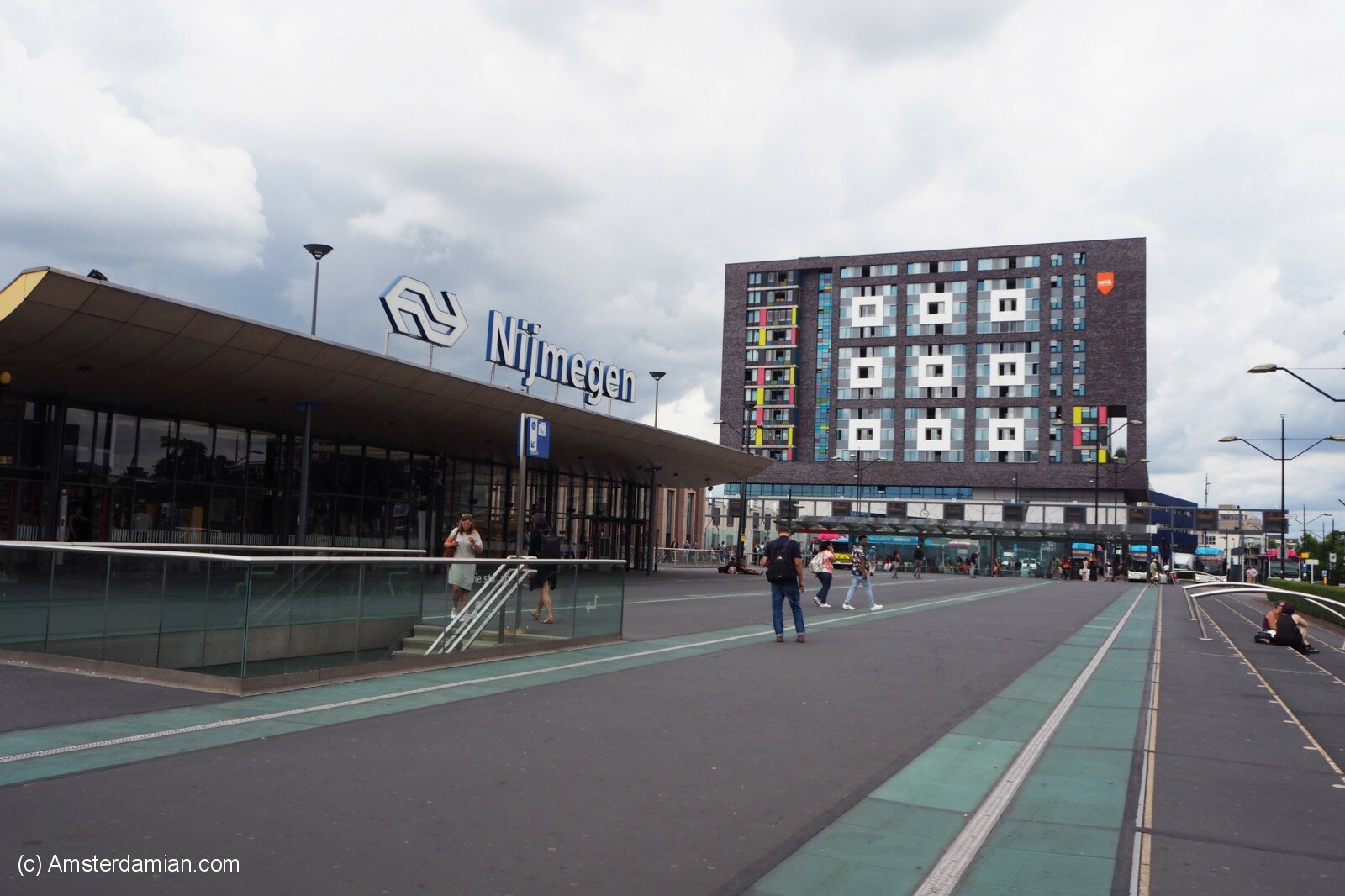
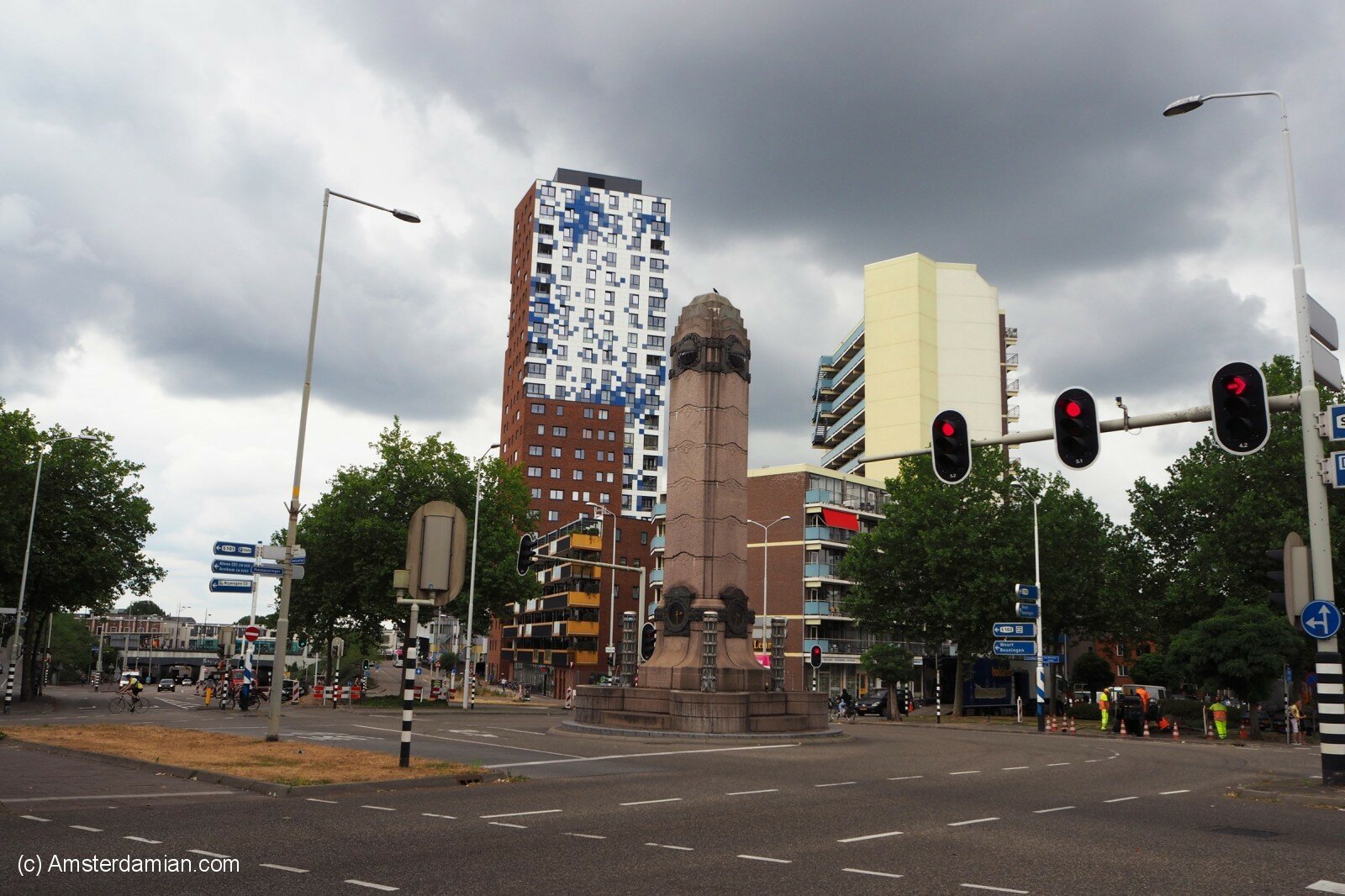
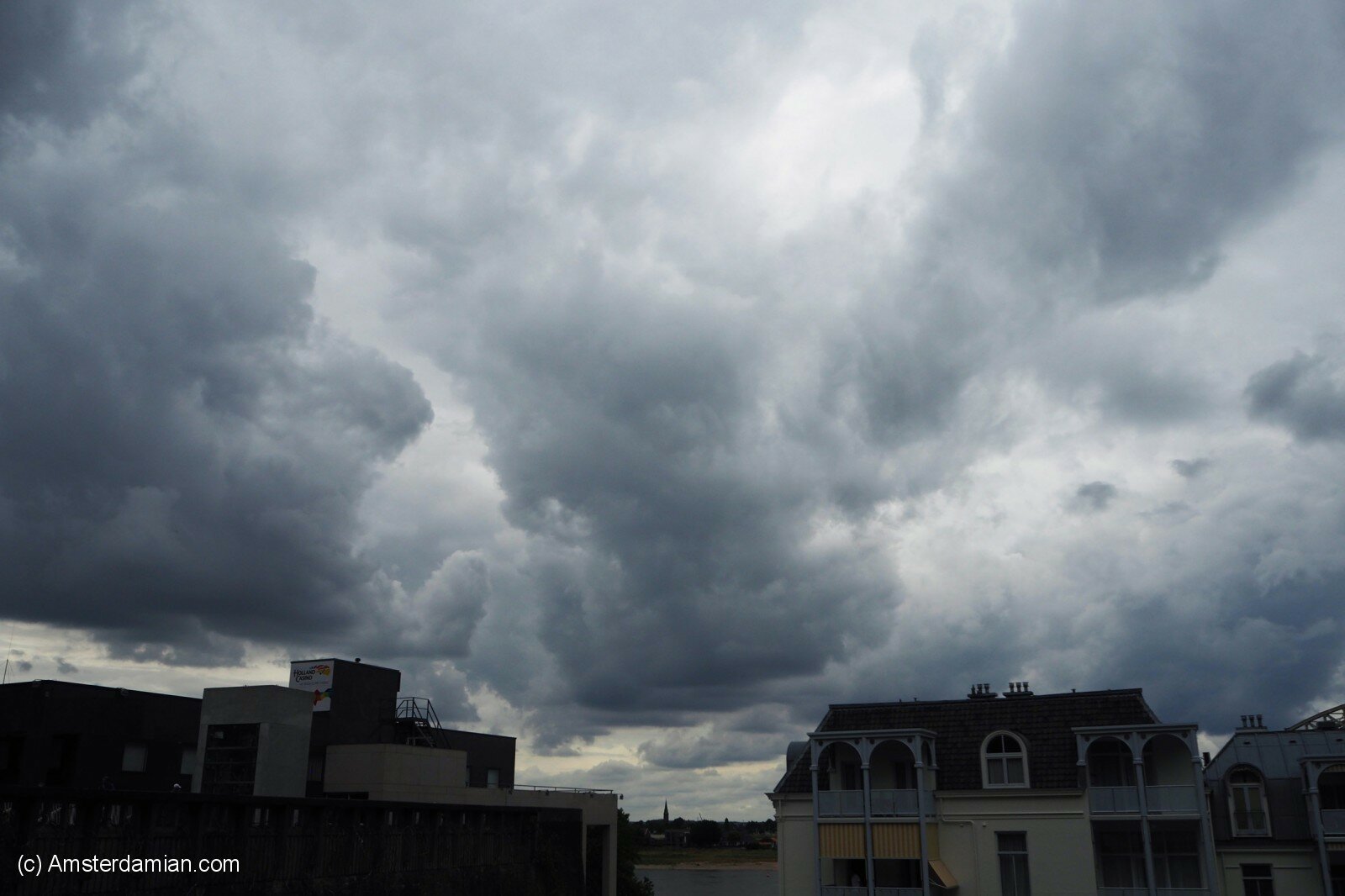
I hopped on a train from Amsterdam Centraal, and about an hour and a half later I arrived at my destination. It was a gloomy day, with menacing clouds covering the sky. I was also in a gloomy kind of mood, so Nijmegen and I didn’t click from the very first moment we met. I was expecting a very old city, with old architecture, and there I was, getting out of the train station and being surrounded by tall, modern buildings. I found out later why: on 22 February 1944, an American bombing raid hit Nijmegen by mistake when the crew had misidentified the city as a German target. Nearly 800 civilians were killed and a large part of the historic centre, including the Stevenskerk, was flattened. Reconstruction took roughly twenty years, which is why the streets around the station feel so much more 20th-century than 17th. Once you know this, the city makes a lot more sense.
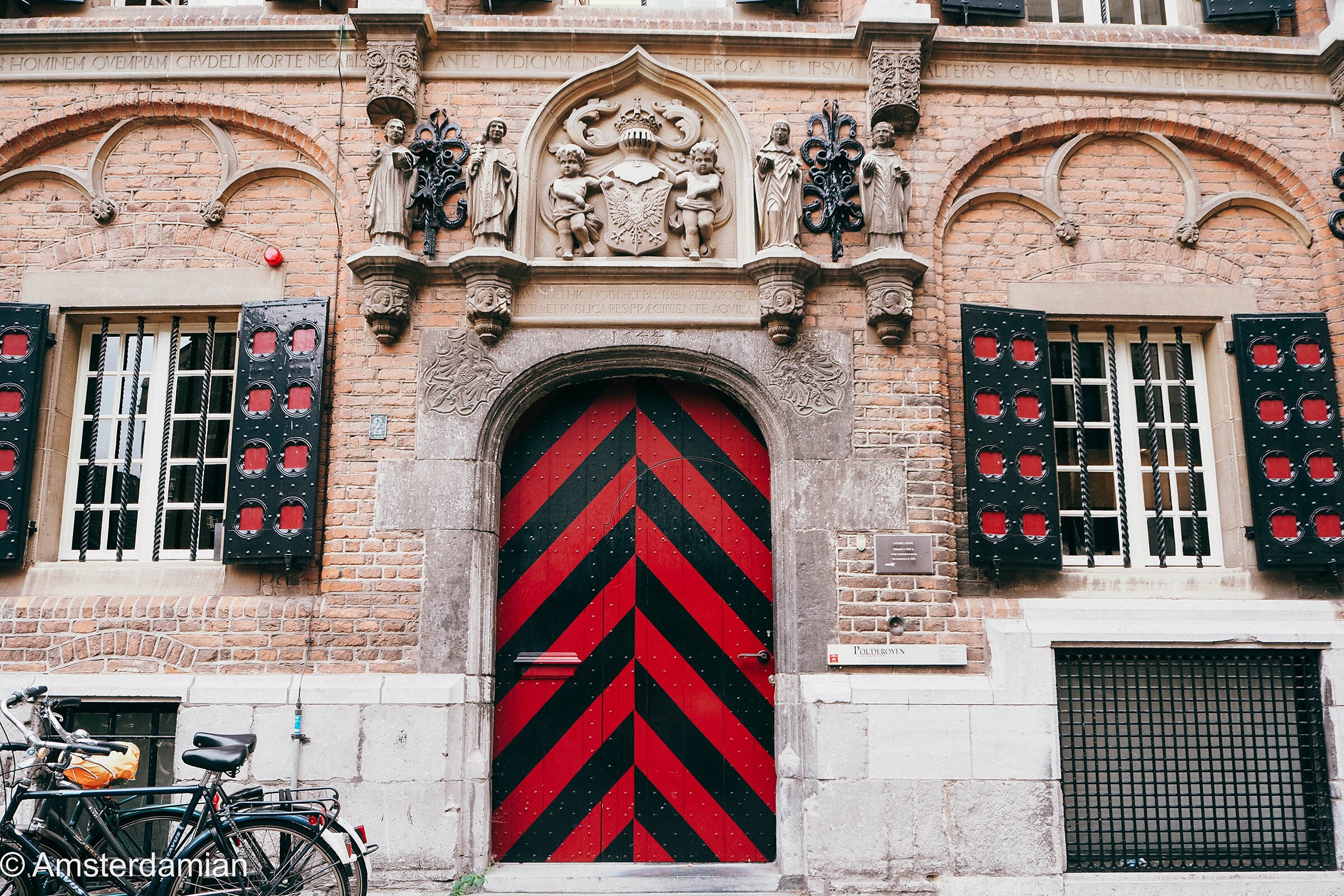
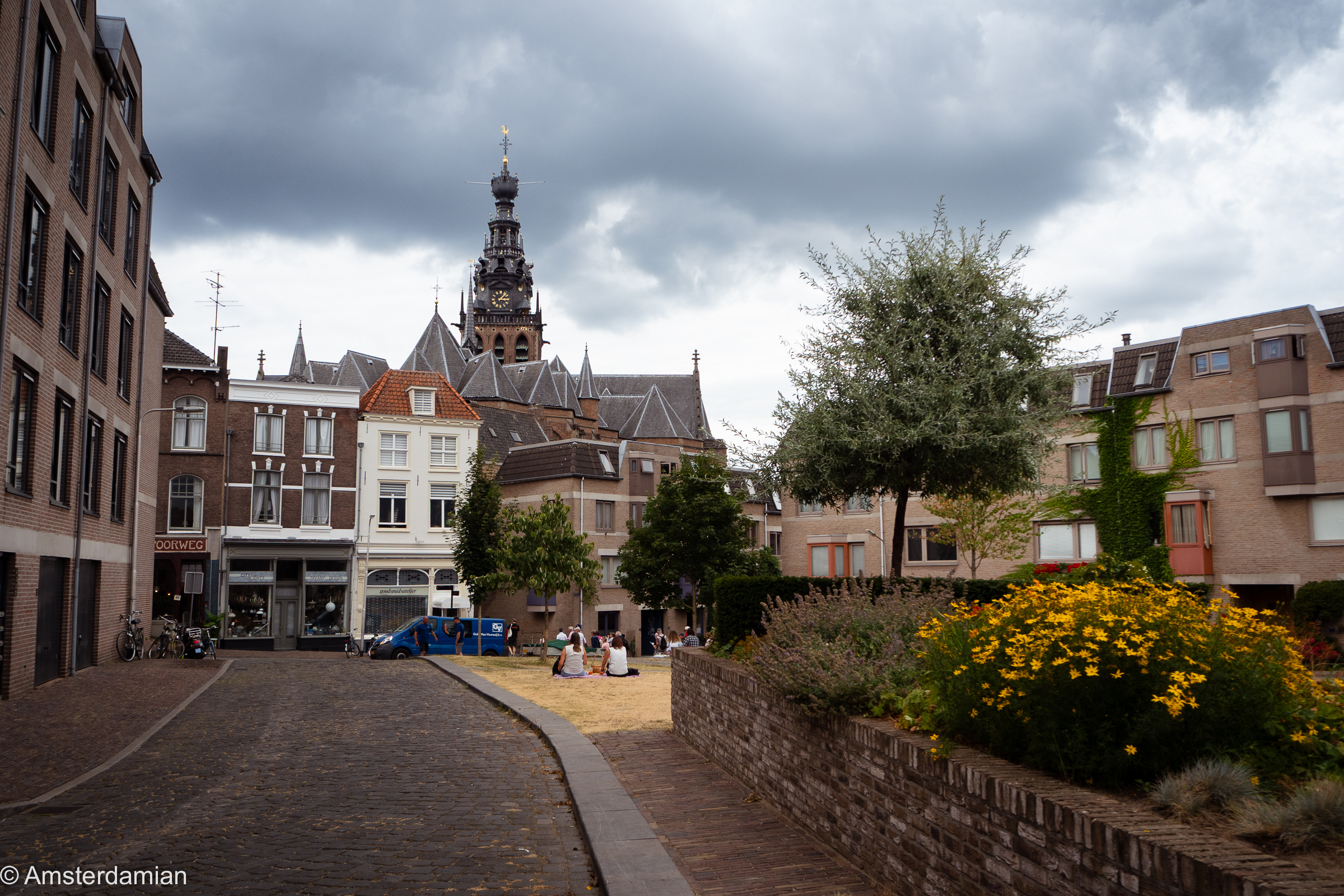
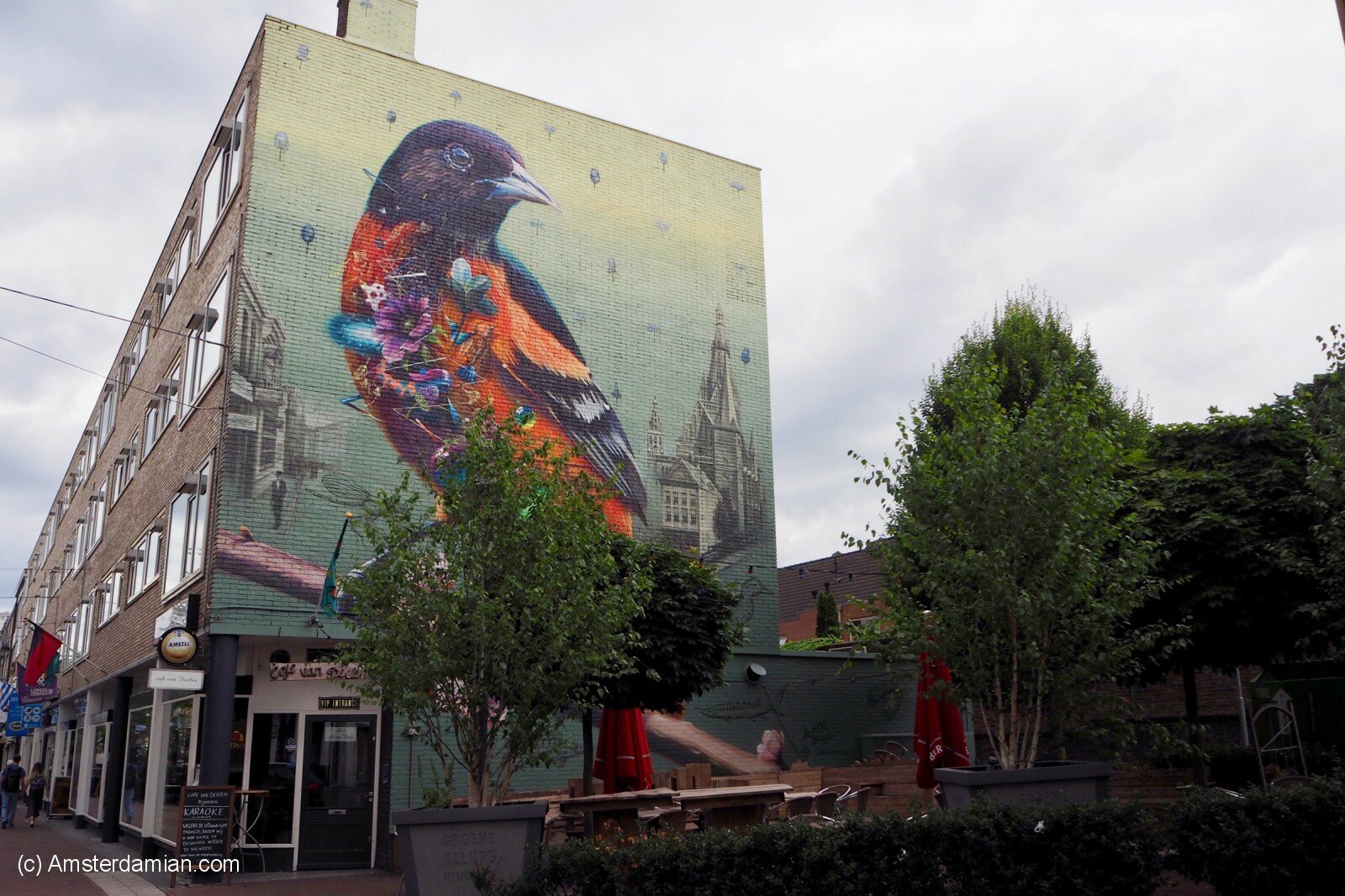
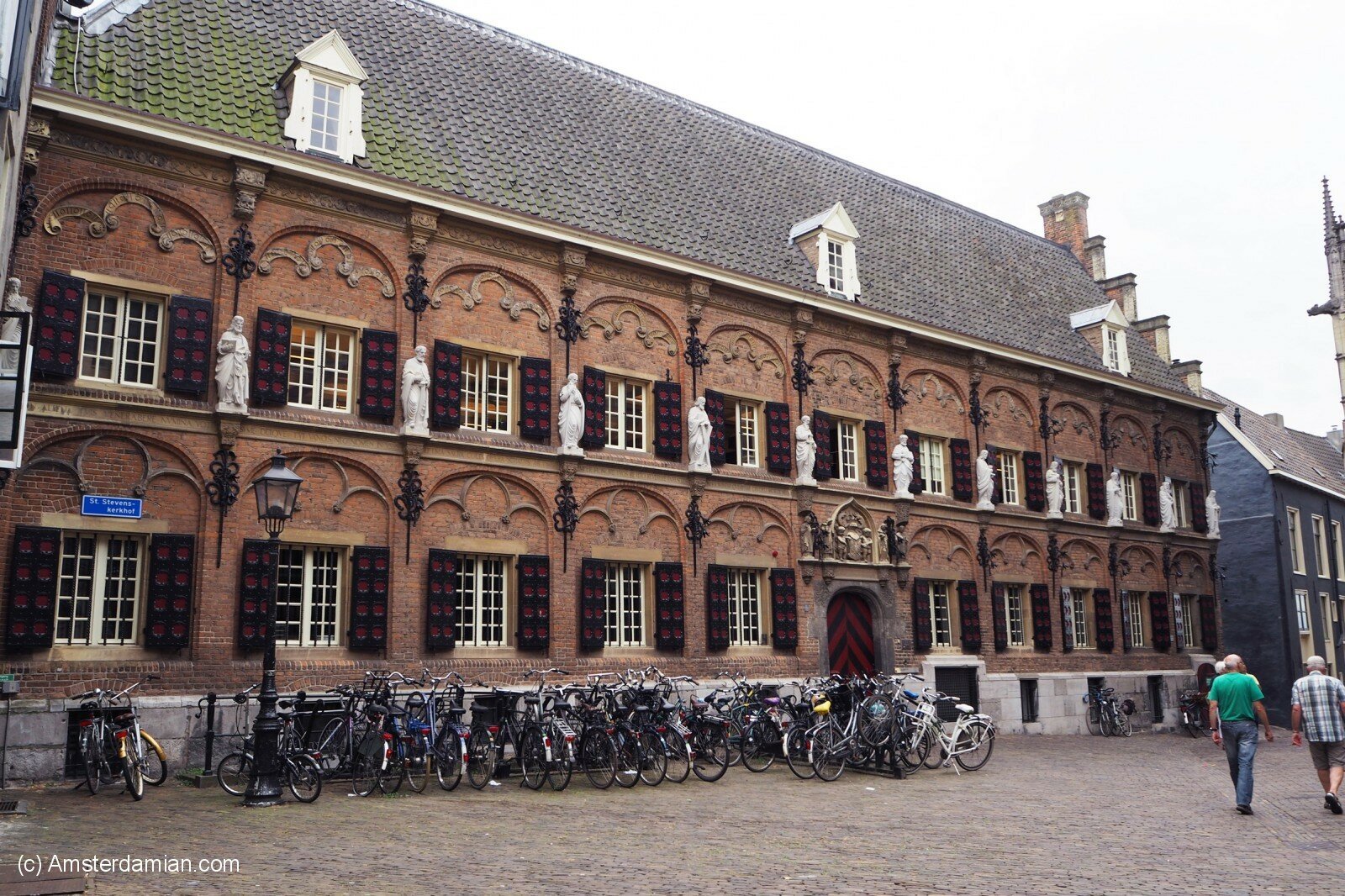
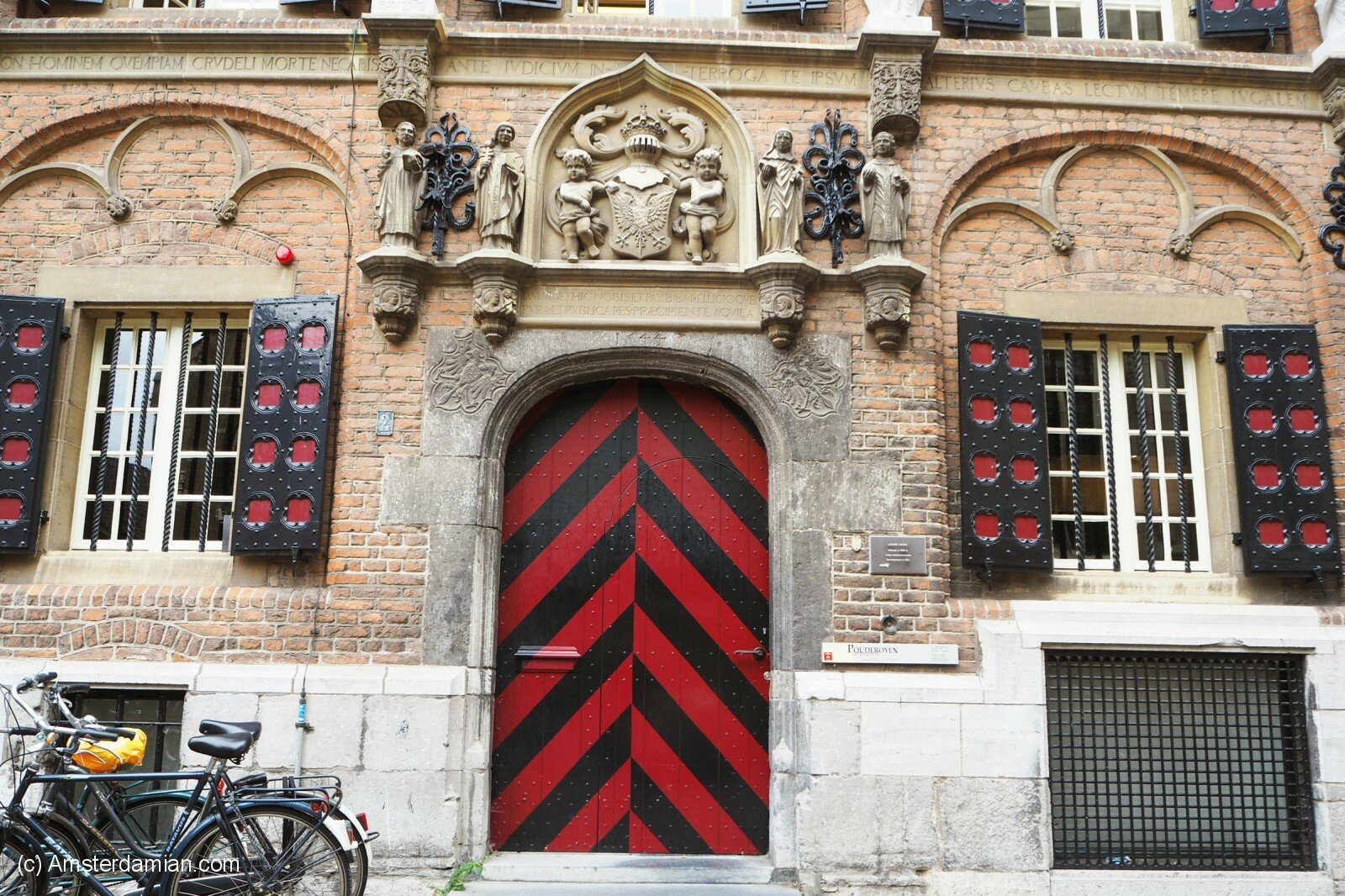
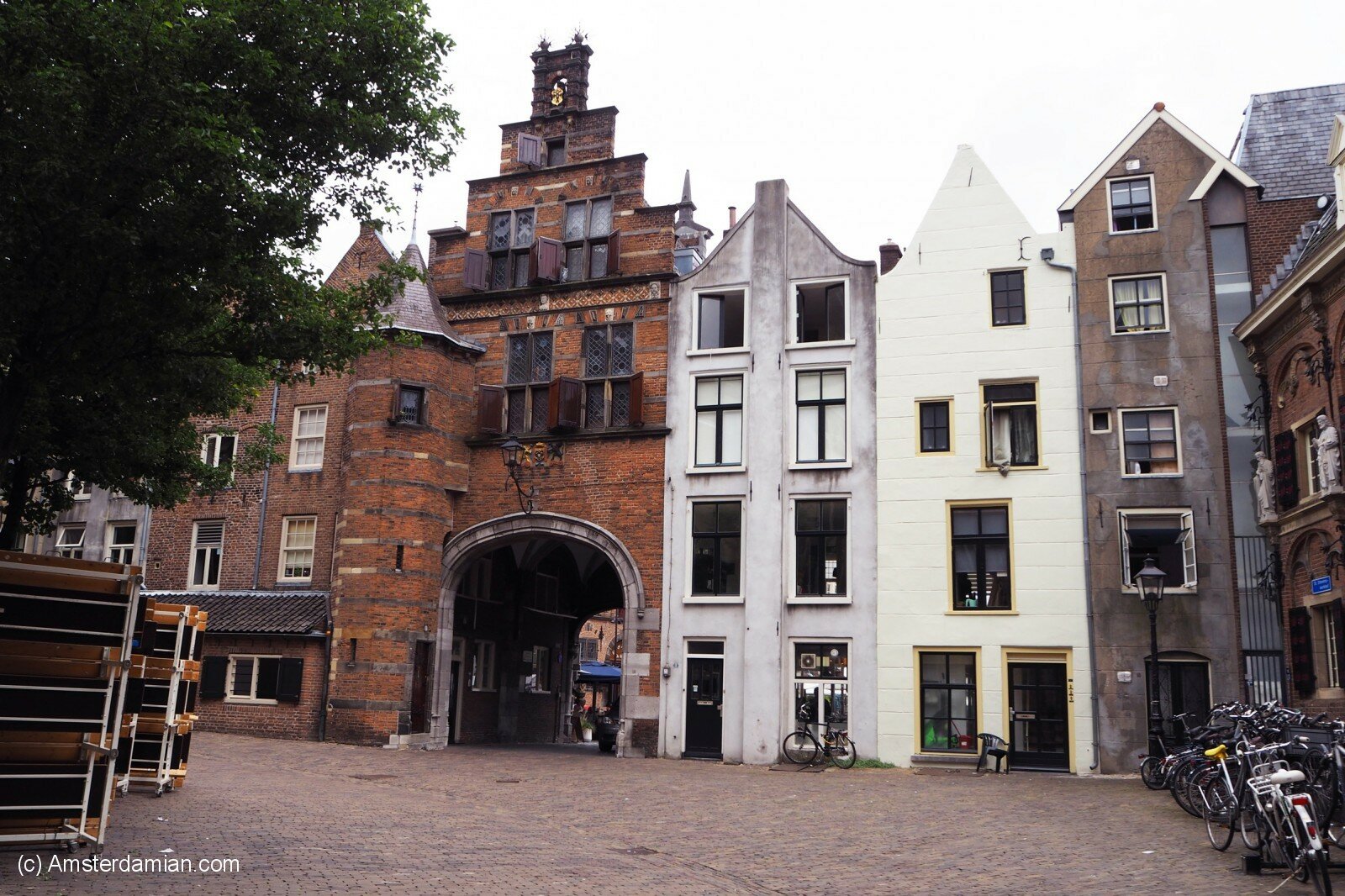
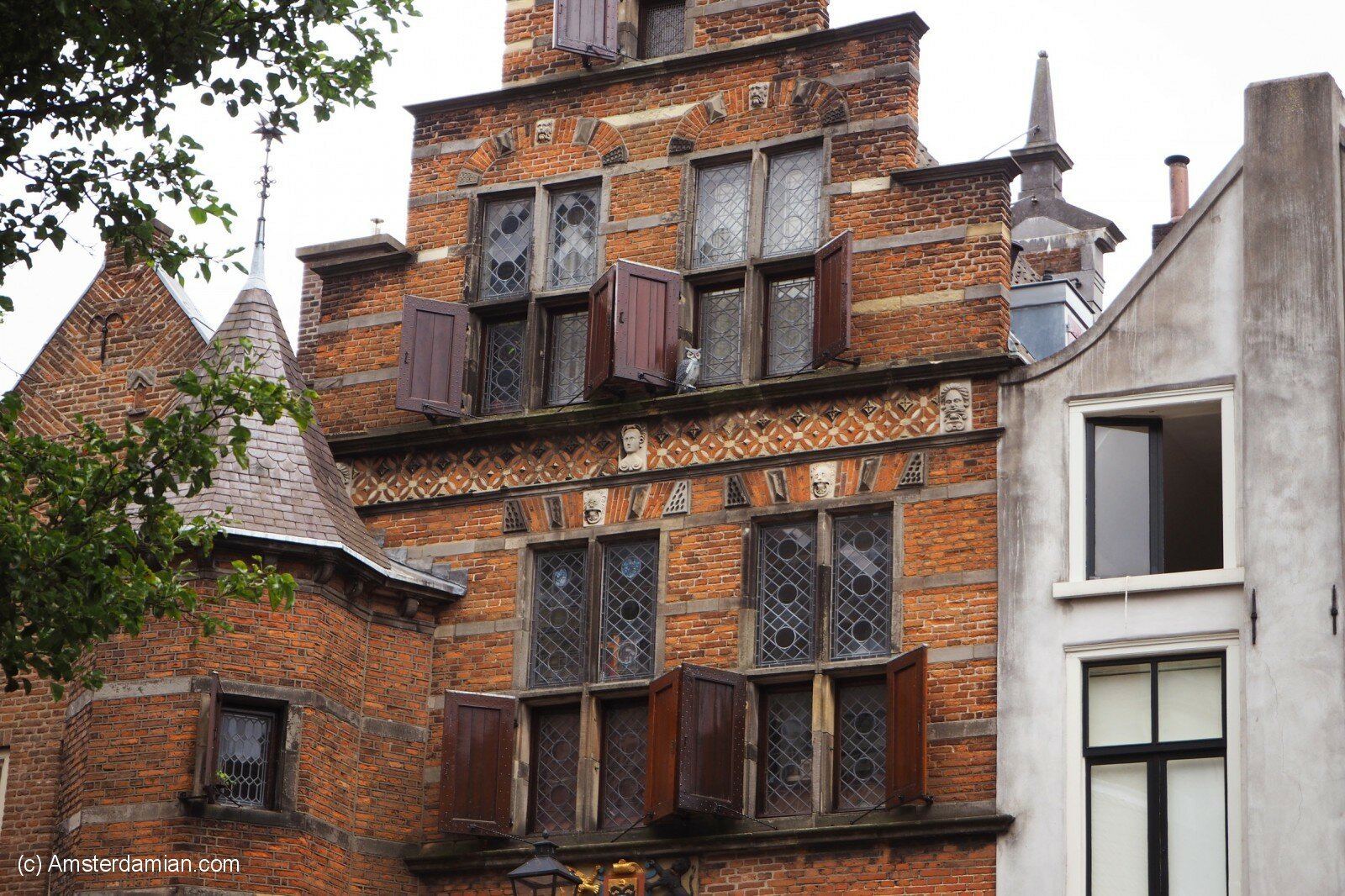
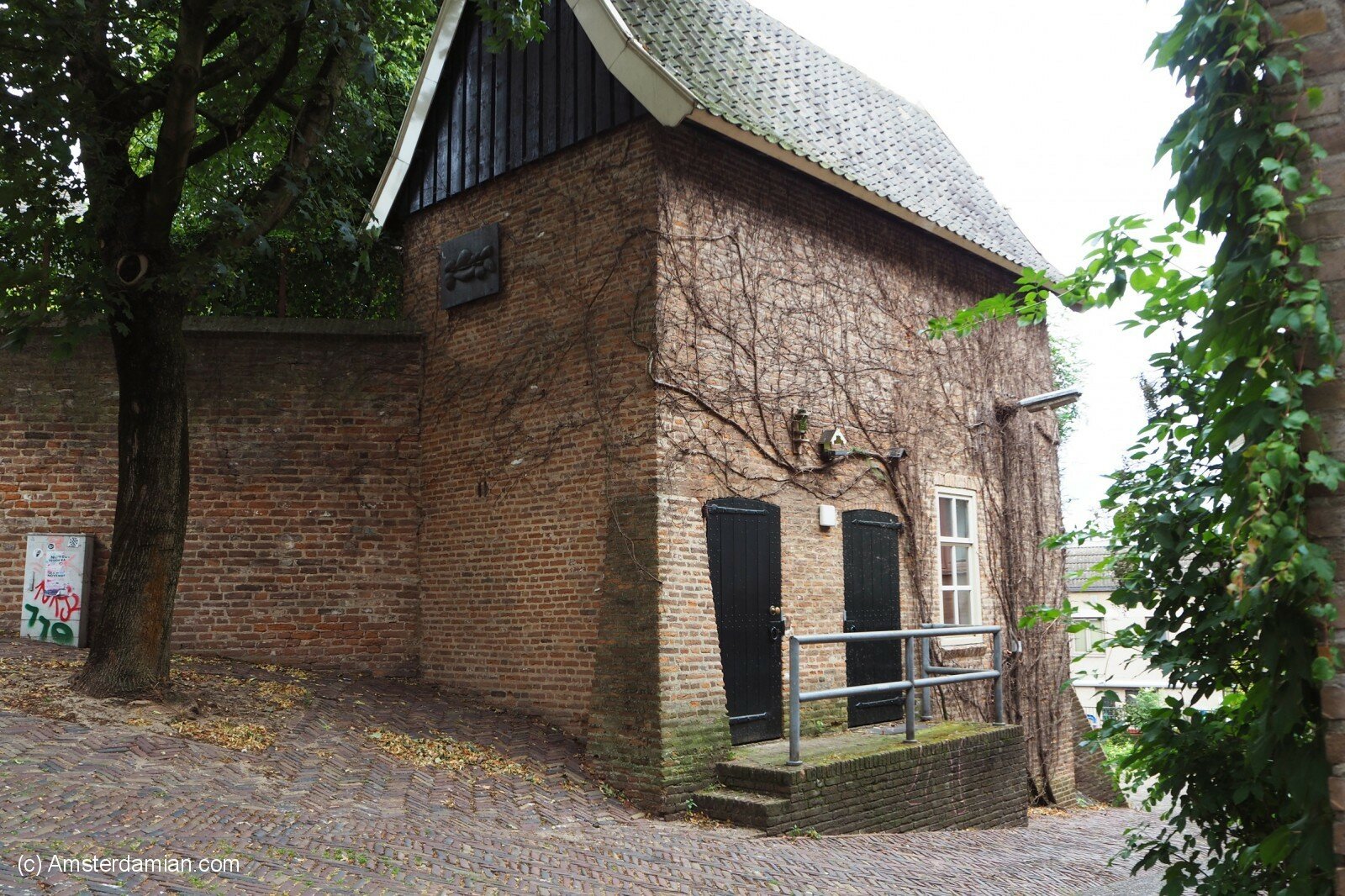
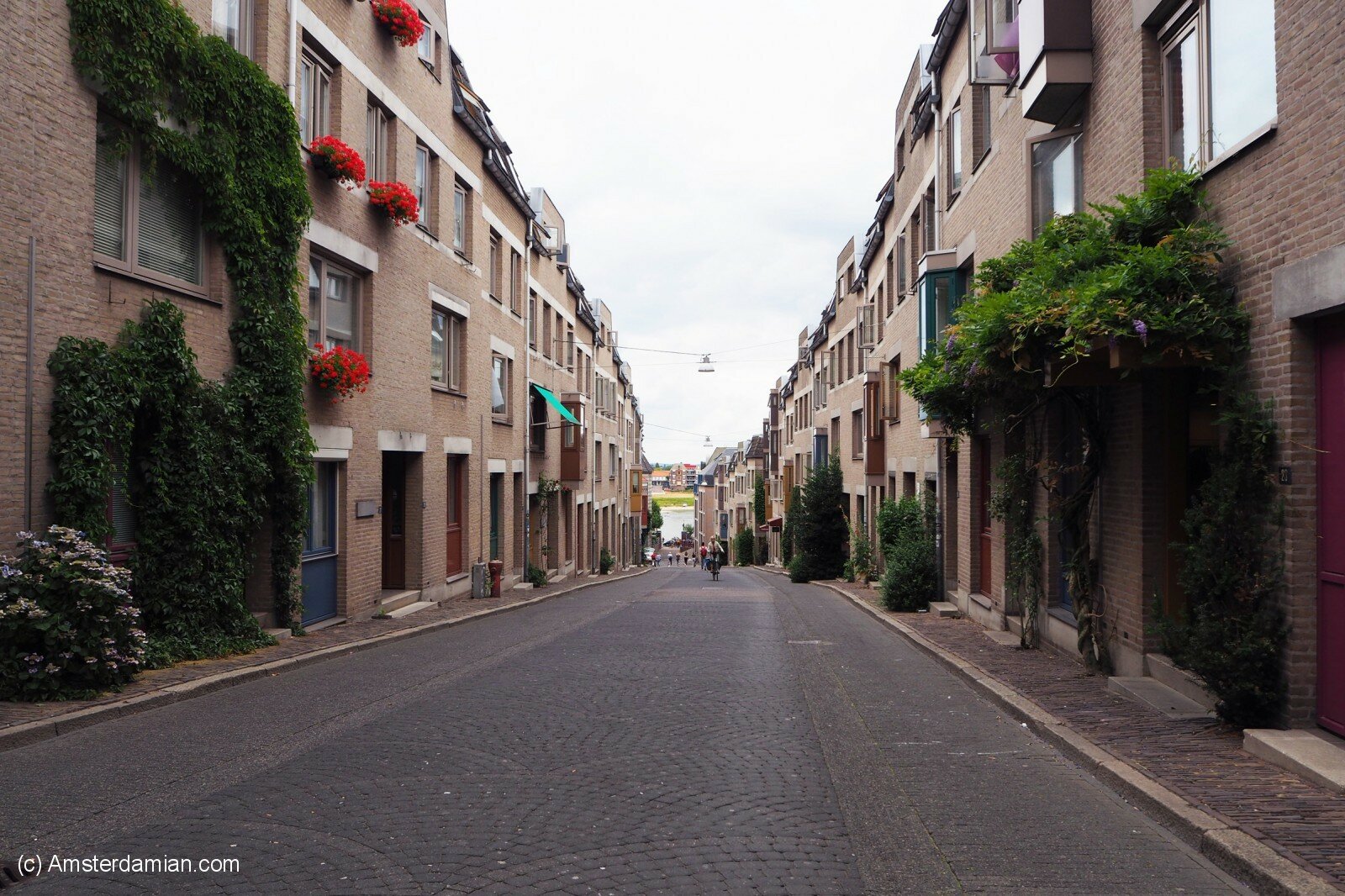
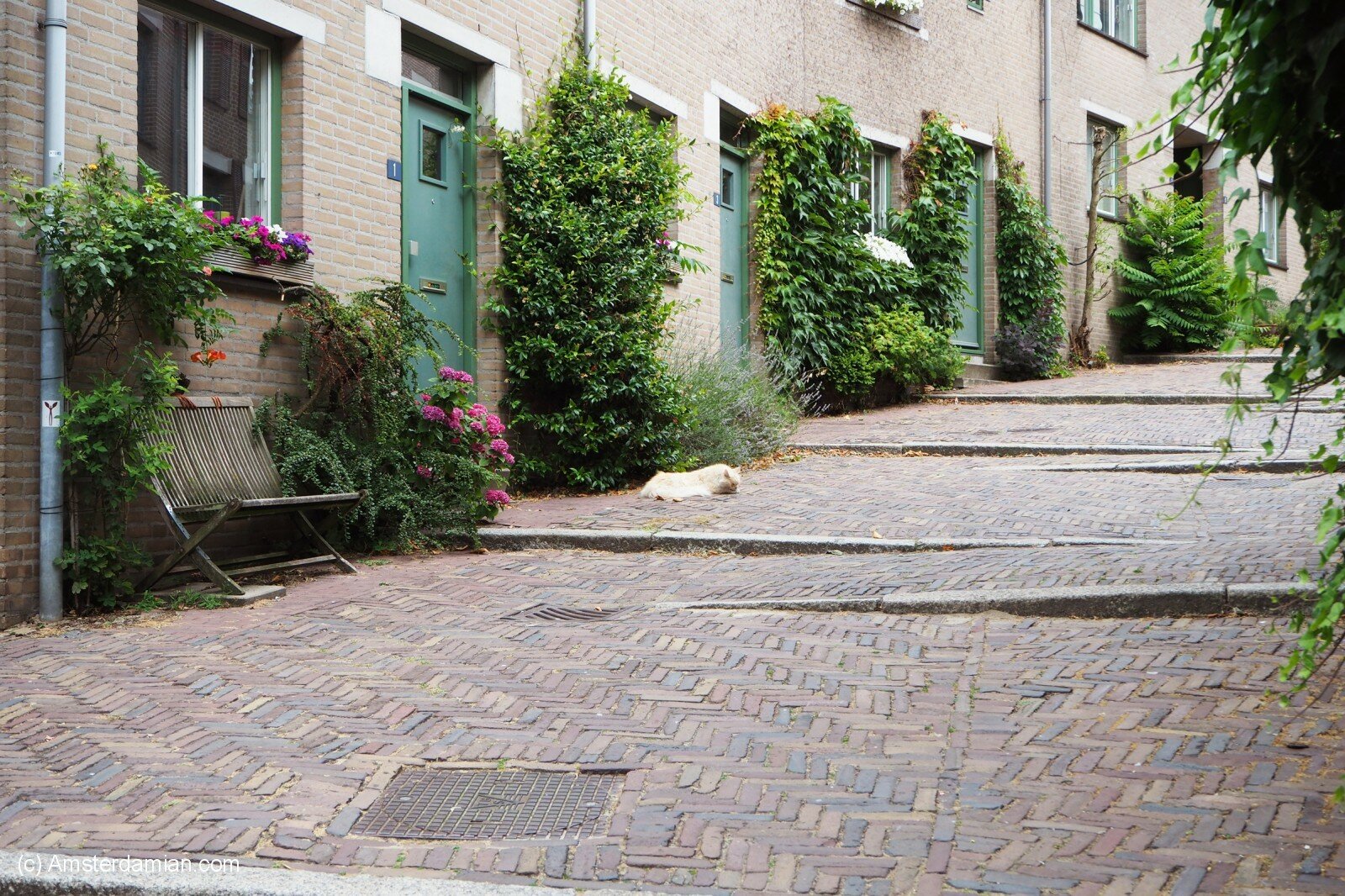
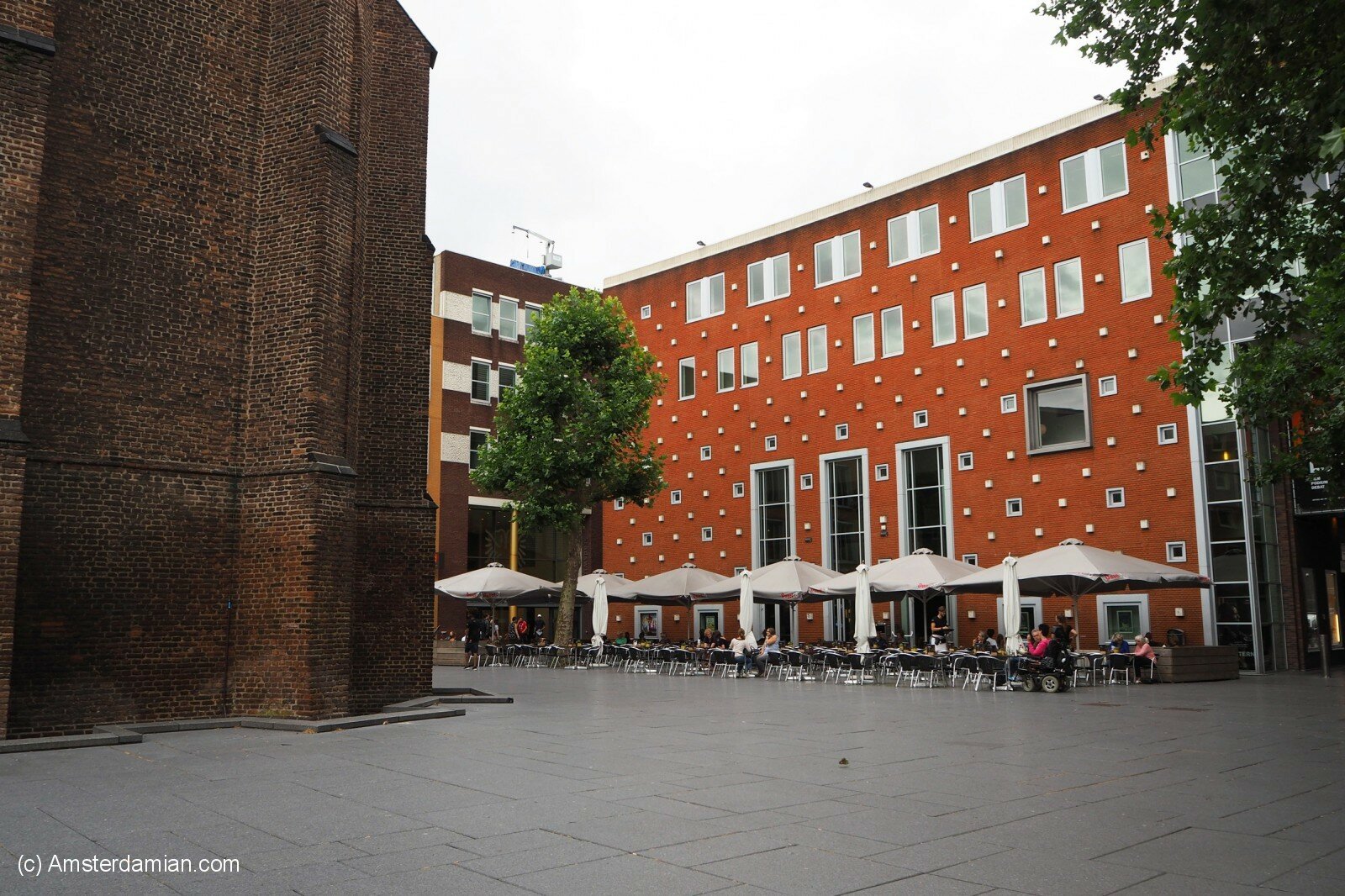
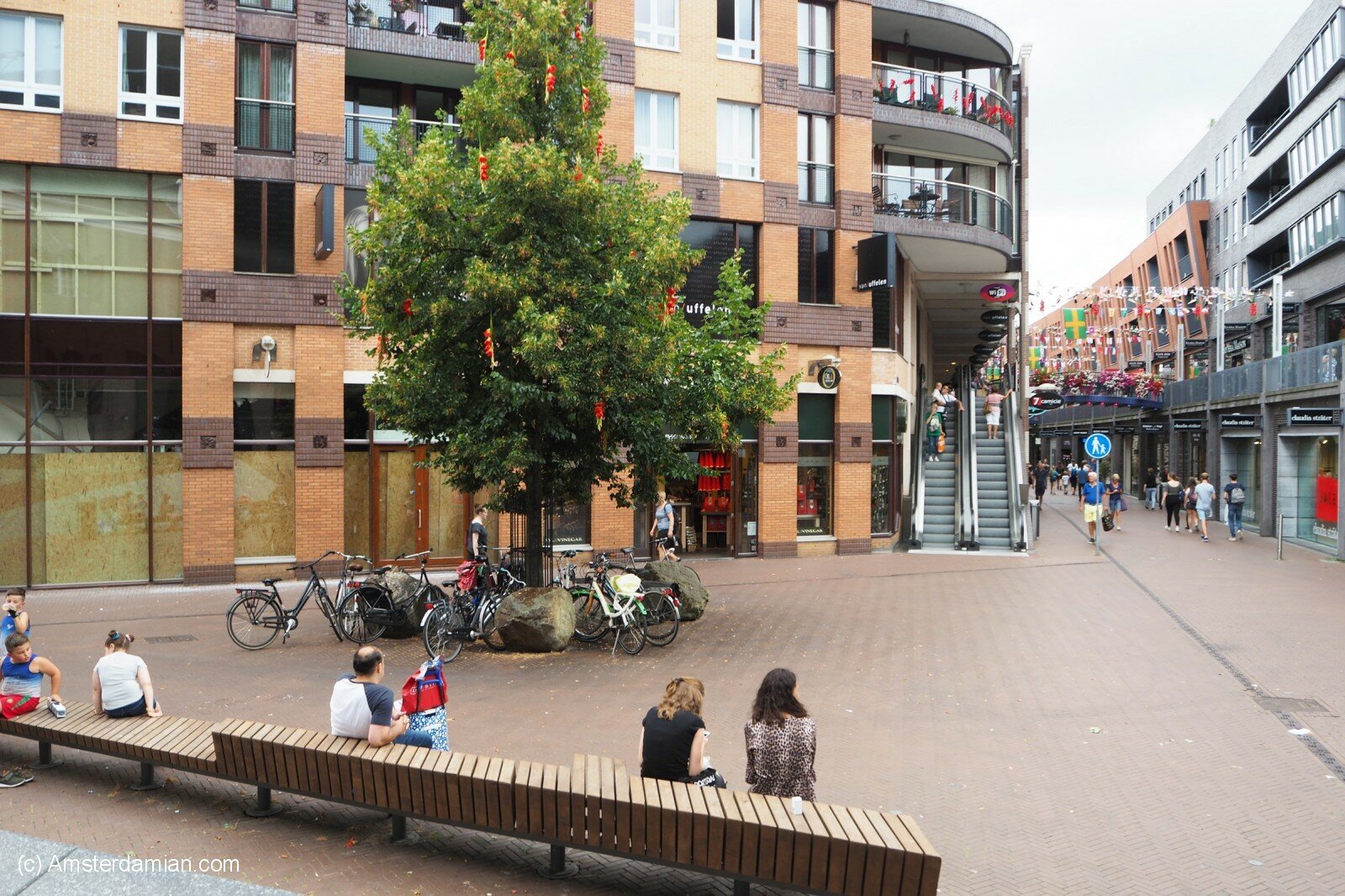
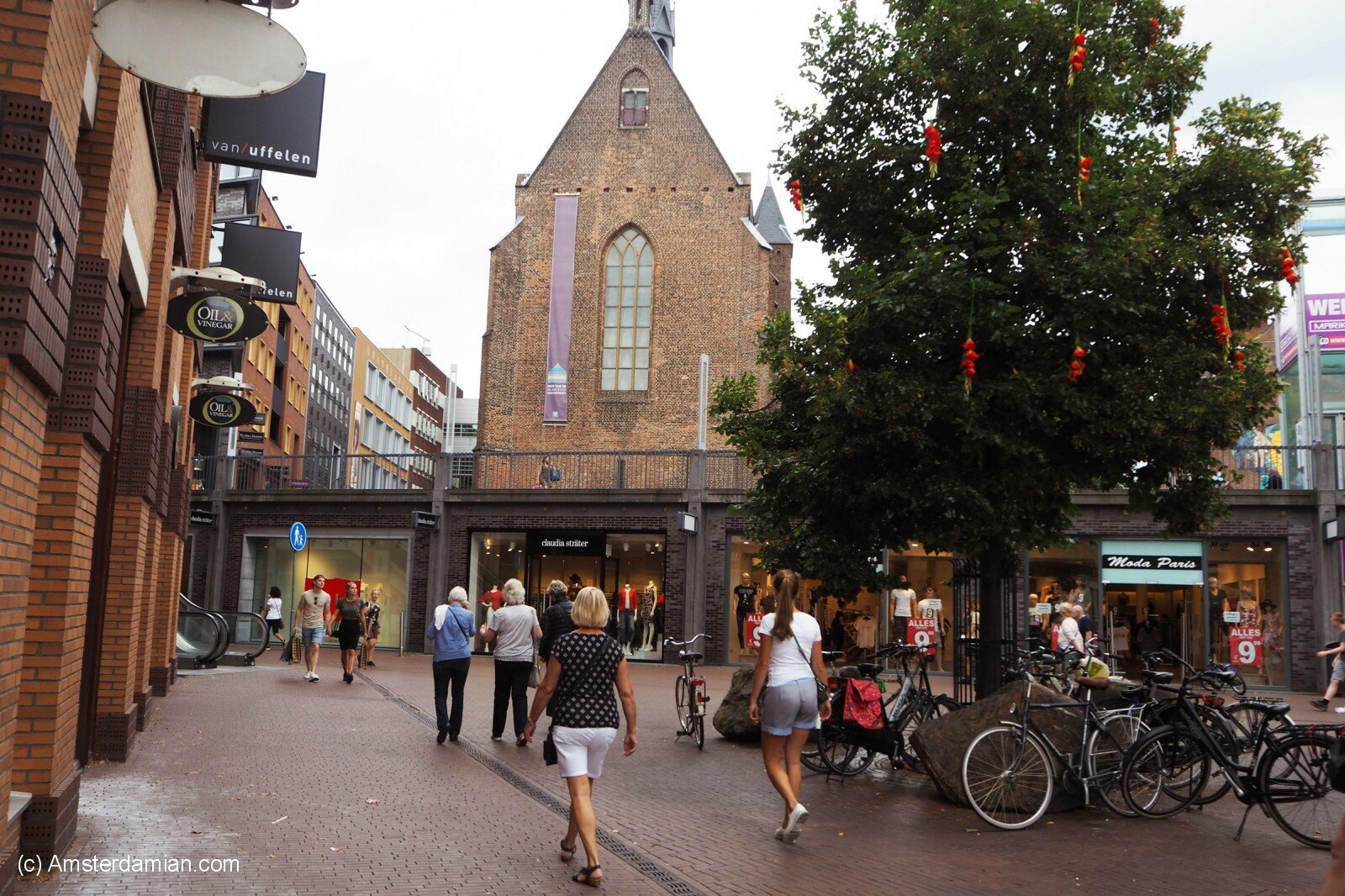
There are also brick houses with long windows, old churches and cobbled streets. But Nijmegen is not pretty in the way Delft is (for example). There is no denying that it has a certain charm. It has a young vibe, almost certainly from the large number of students living here. In the centre there’s an impressive shopping area, buzzing with people, but there are also quiet streets and green parks.
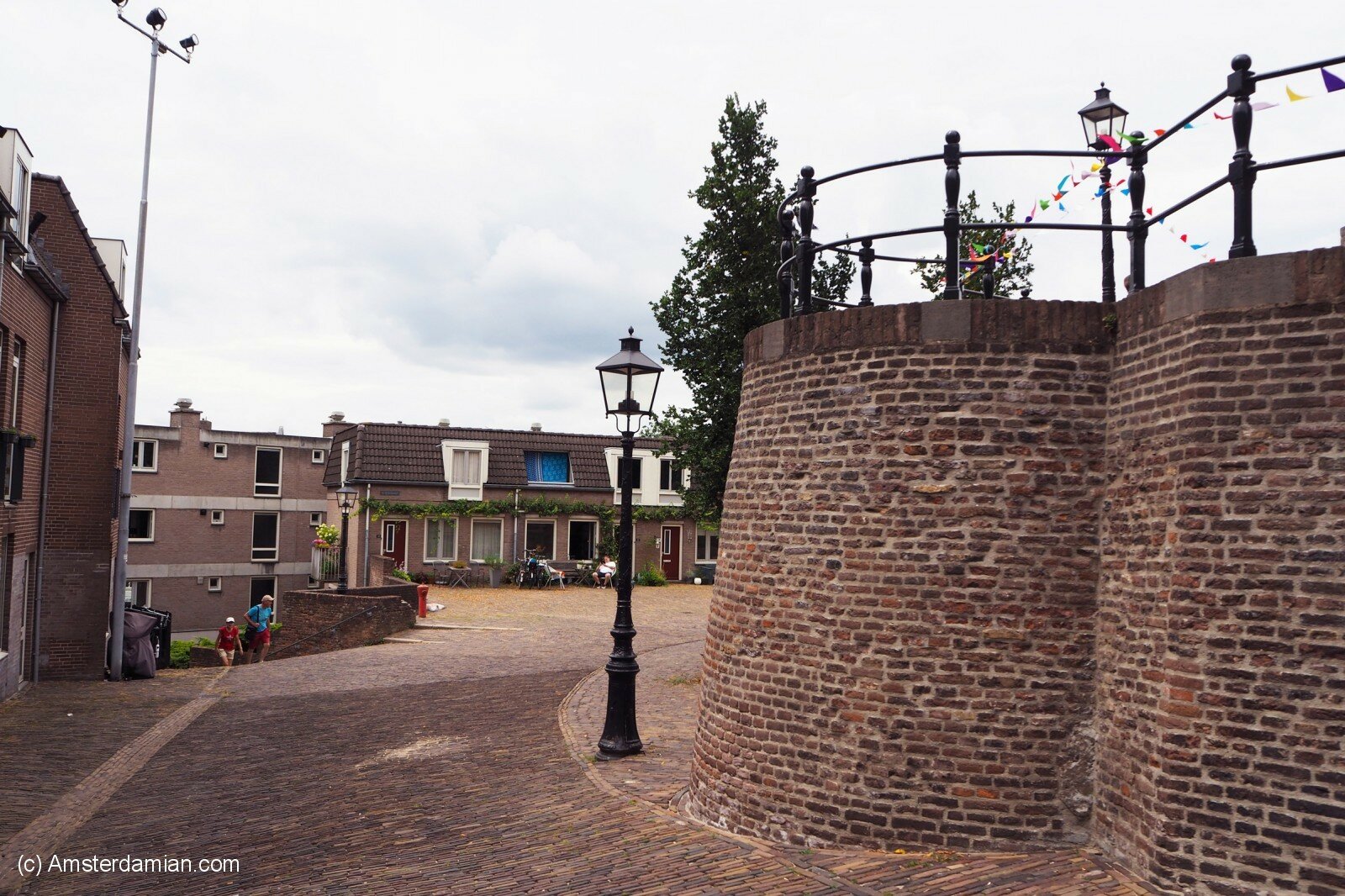
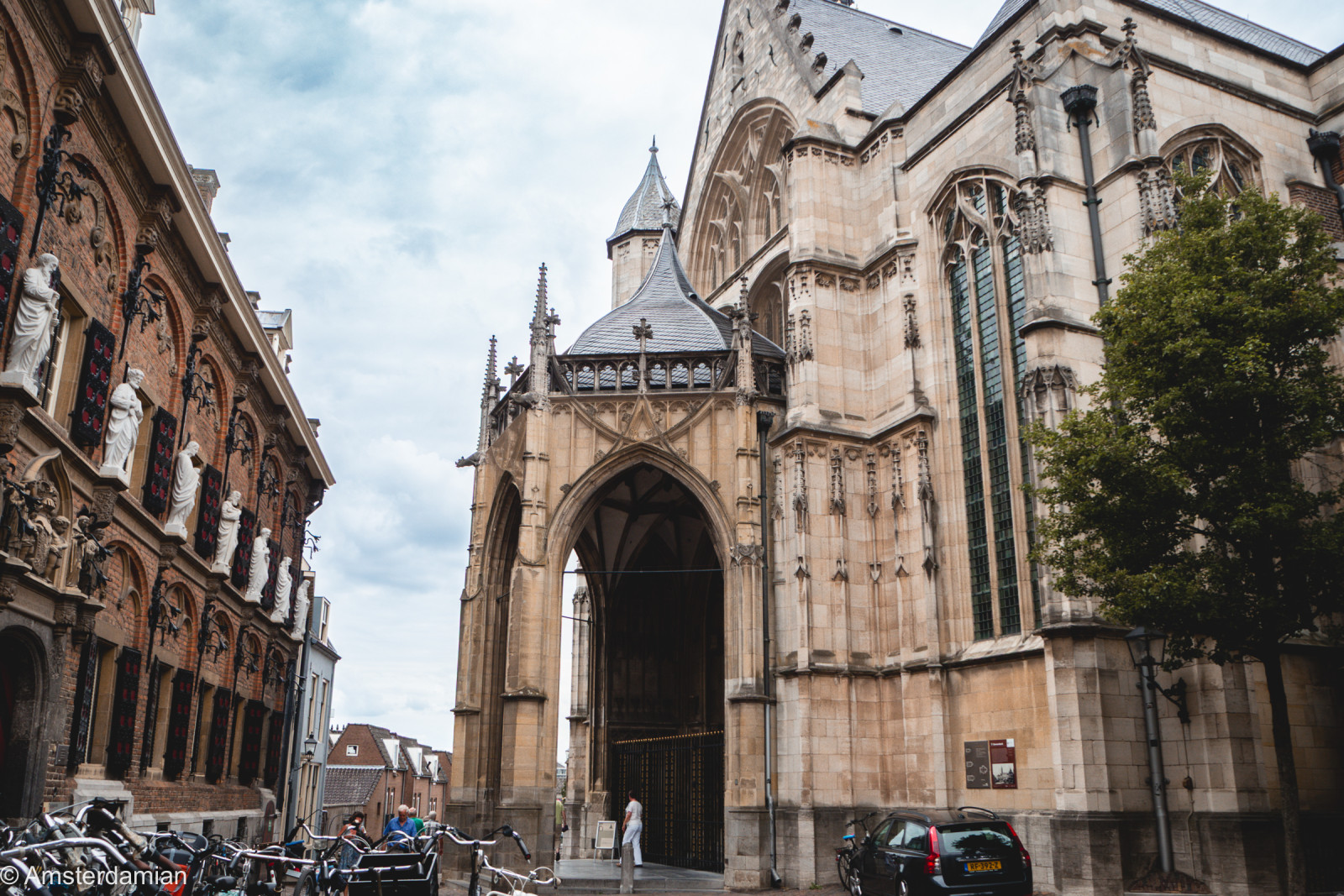
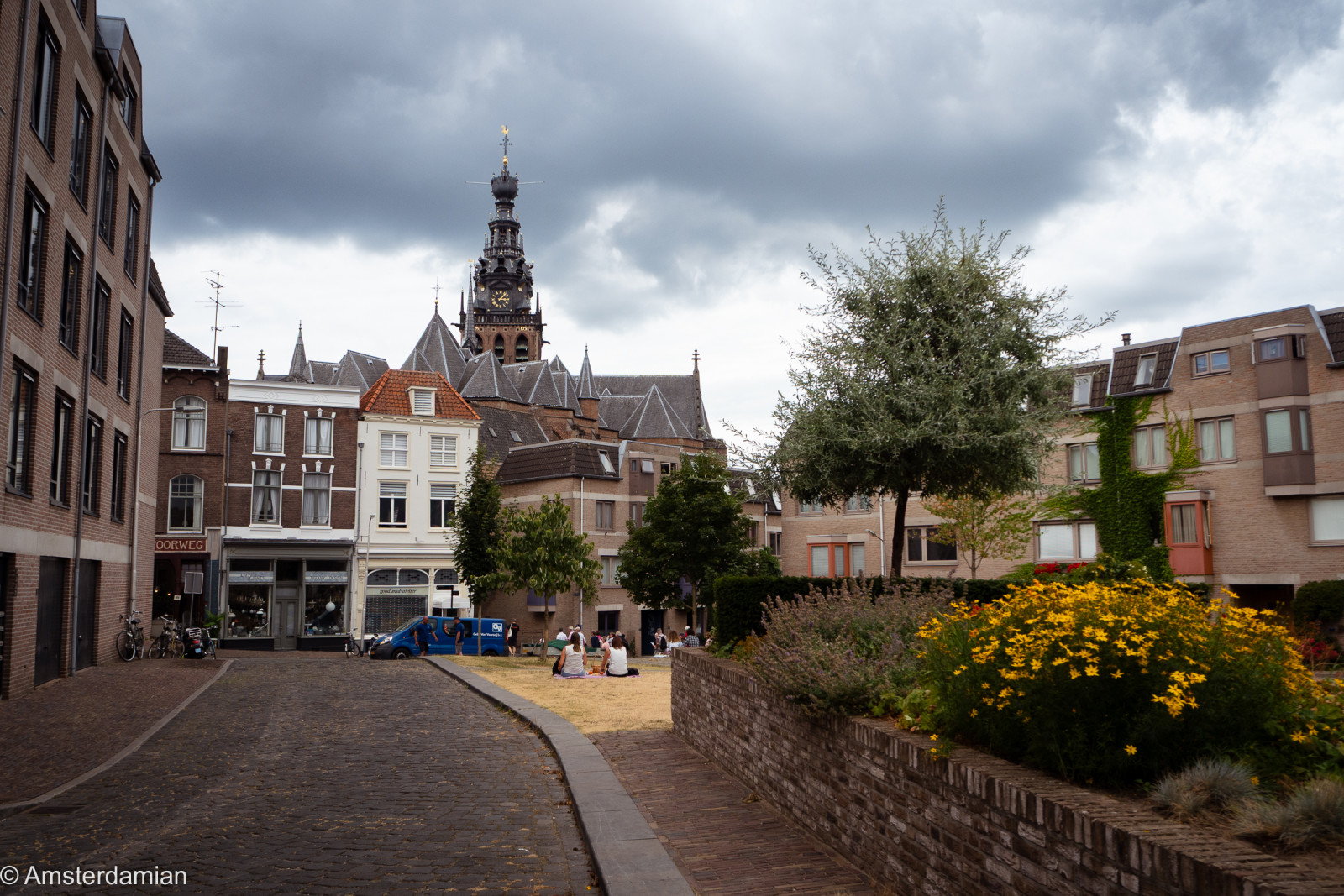
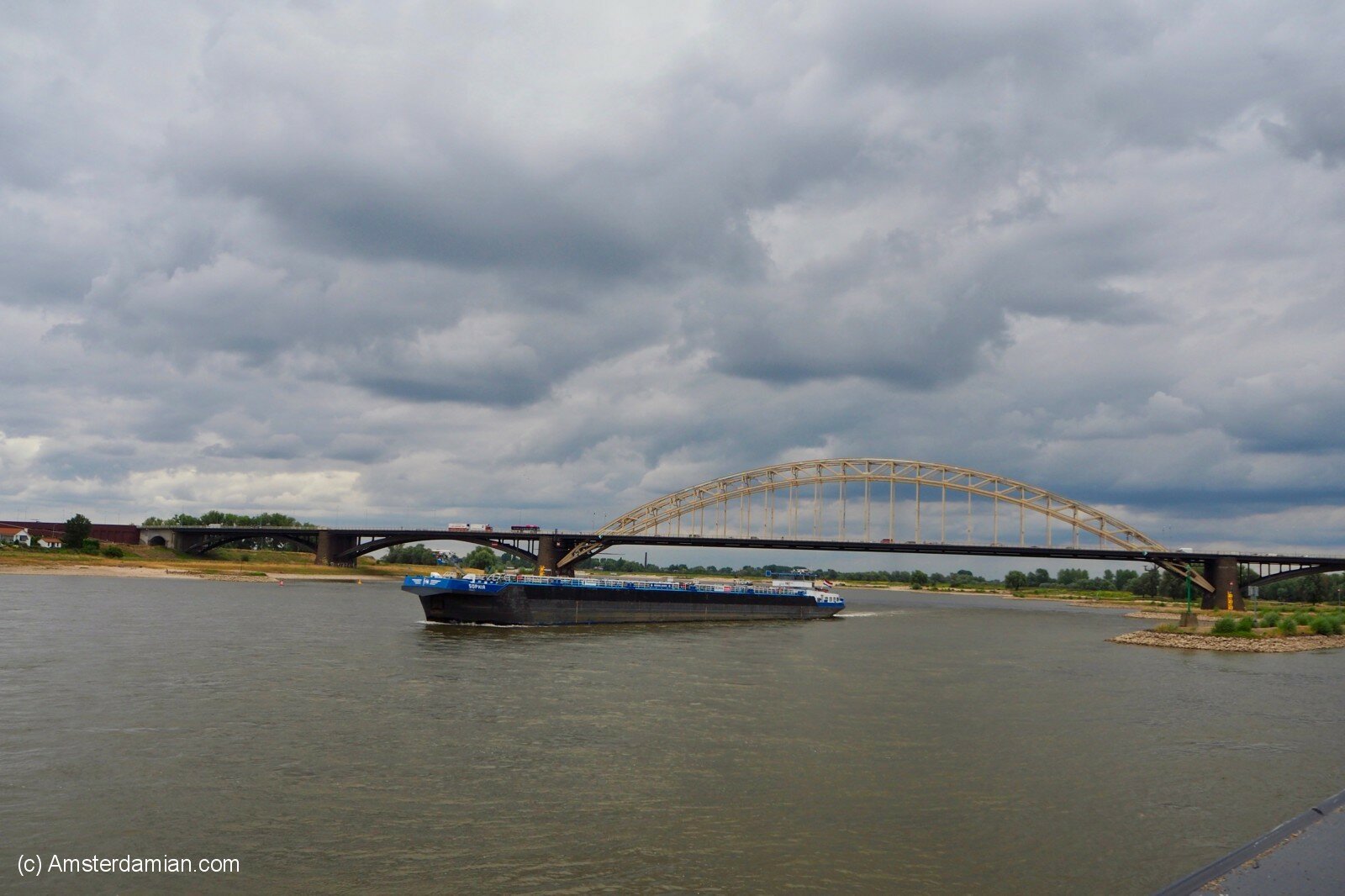
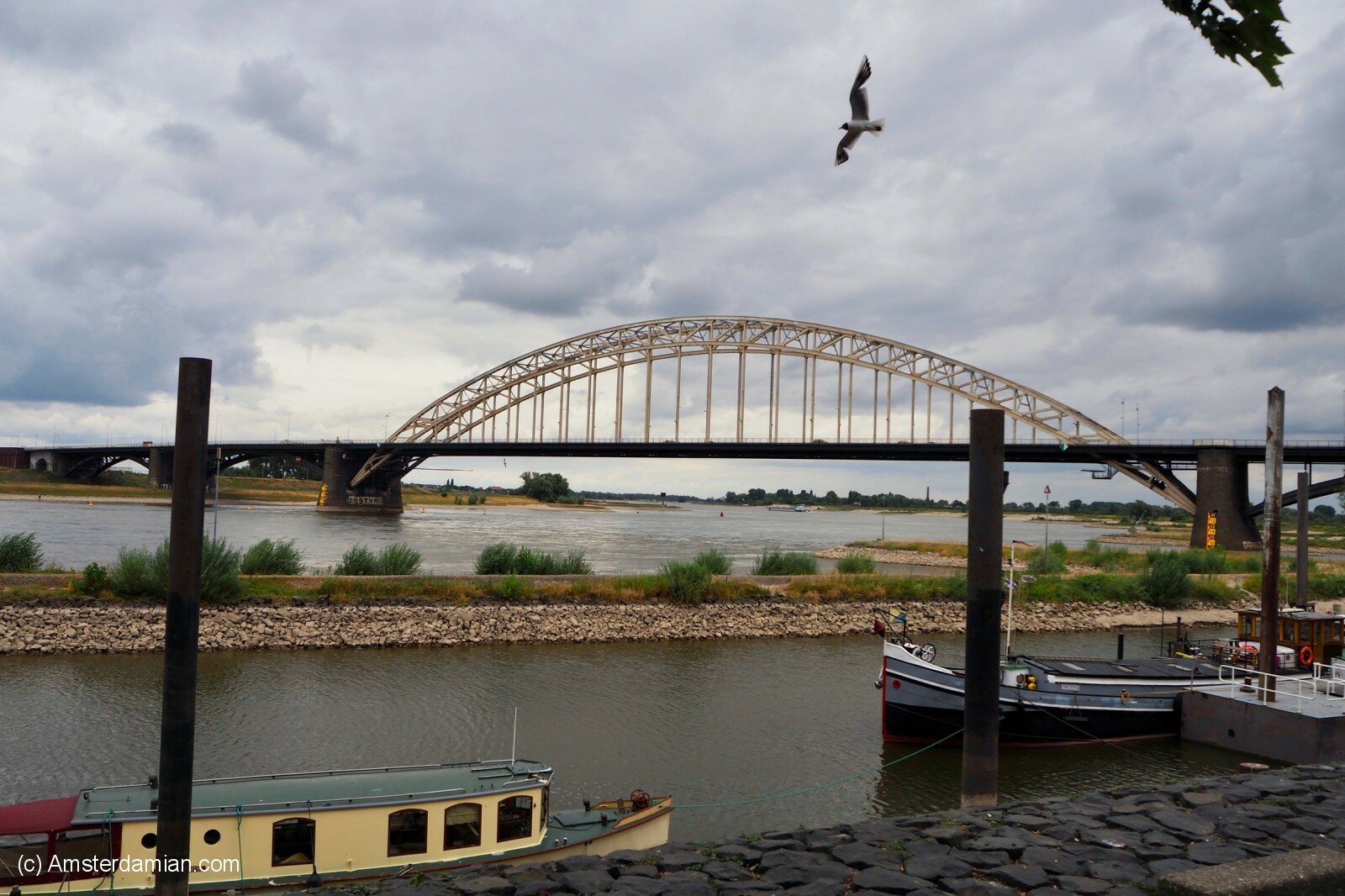
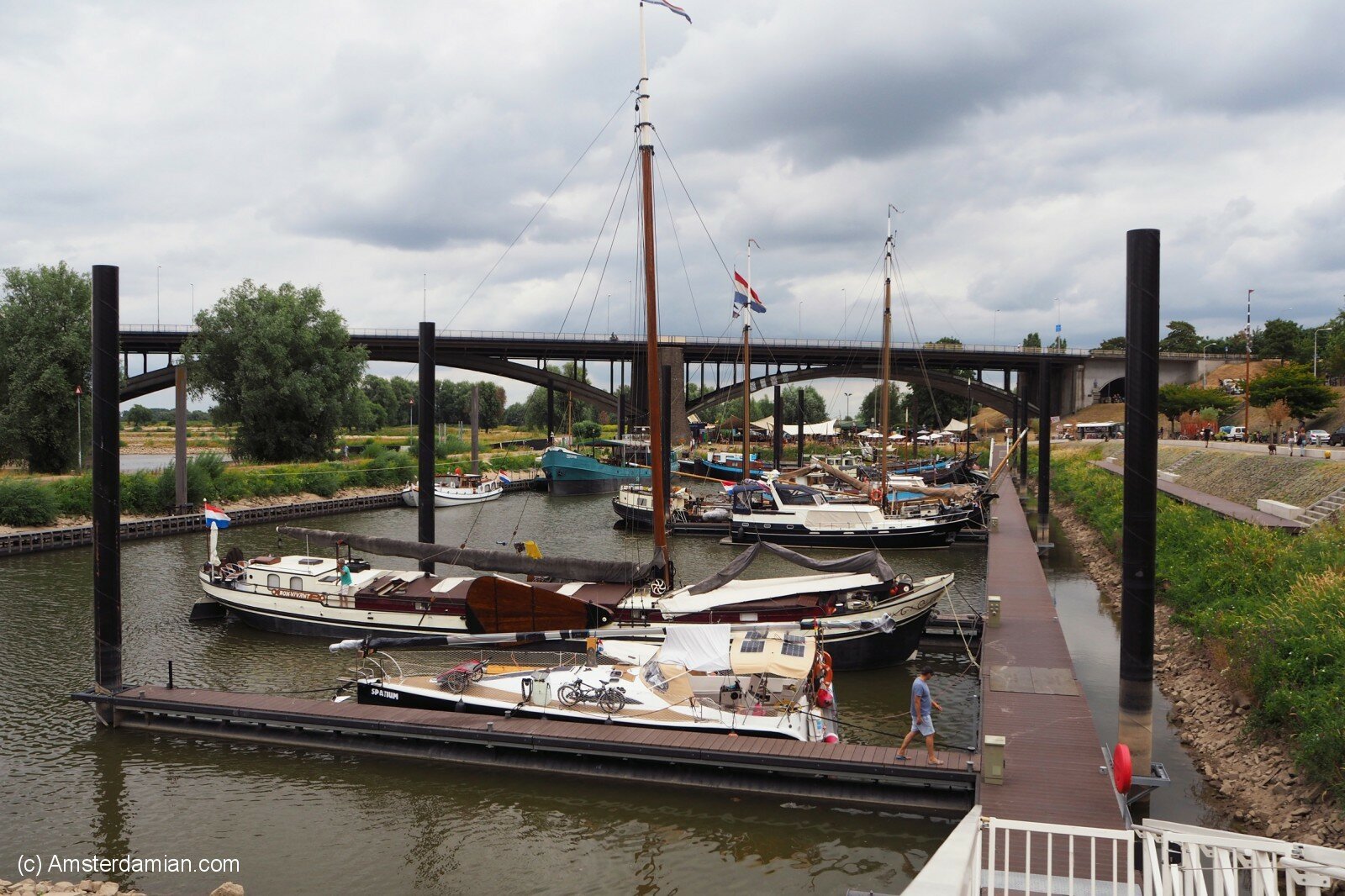
The city is located on the river Waal, and the river promenade(the Waalkade) adds to its charm. Here and there, in the parks and in the city, remains of the city walls and its towers can be found. Stevenskerk (St. Stephens Church) dominates the skyline, its tower looking over the whole city. I liked that there were almost no foreign tourists around. Nijmegen is a city that still belongs to its inhabitants, and most of the visitors you’ll bump into are Dutch day-trippers on their own dagje uit. It has a homey feel to it and life seems to move at a slower pace there.
✨Day-trip suitability
International visitors: ● ● ● ● ○ — Highly recommended if you have time
NL-based day-trippers: ● ● ● ● ○ — A great day out
● Circles indicate suitability, not quality. Some subjectivity included. How to read these ratings 📜
A Bit of History: Why Nijmegen Feels Different
Nijmegen is the kind of city where every century has left its fingerprints. The Romans were here first: around 19 BC they built a military camp on the hill now called Kelfkensbos, and by AD 98 Emperor Trajan had given the settlement, then called Ulpia Noviomagus Batavorum, municipal status under Roman rule — the first place in what is now the Netherlands to receive them. (Maastricht and Voorburg both claim the “oldest city” title too, depending on how you define it, but Nijmegen got the paperwork first.) The city celebrated its 2,000th birthday in 2005.
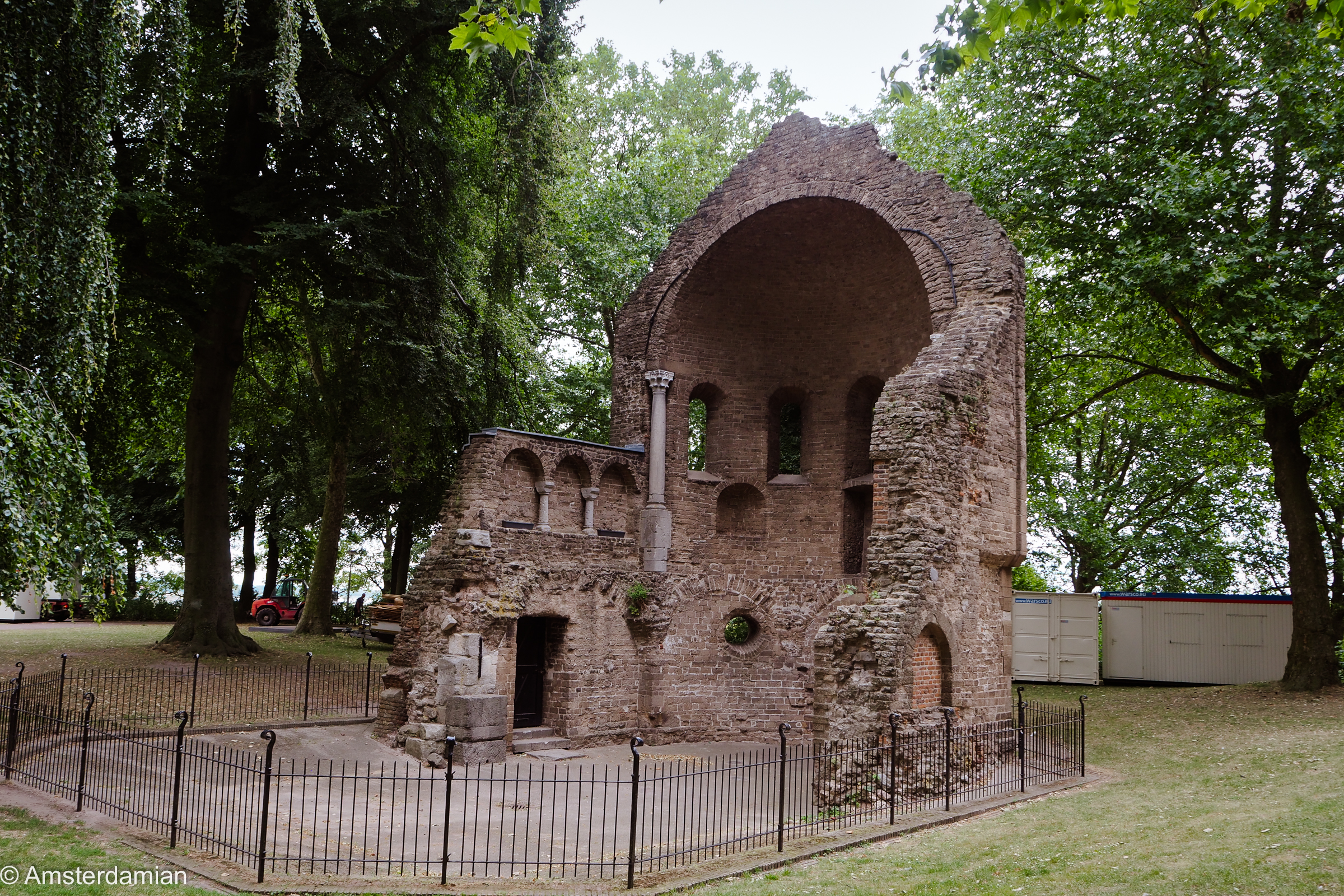
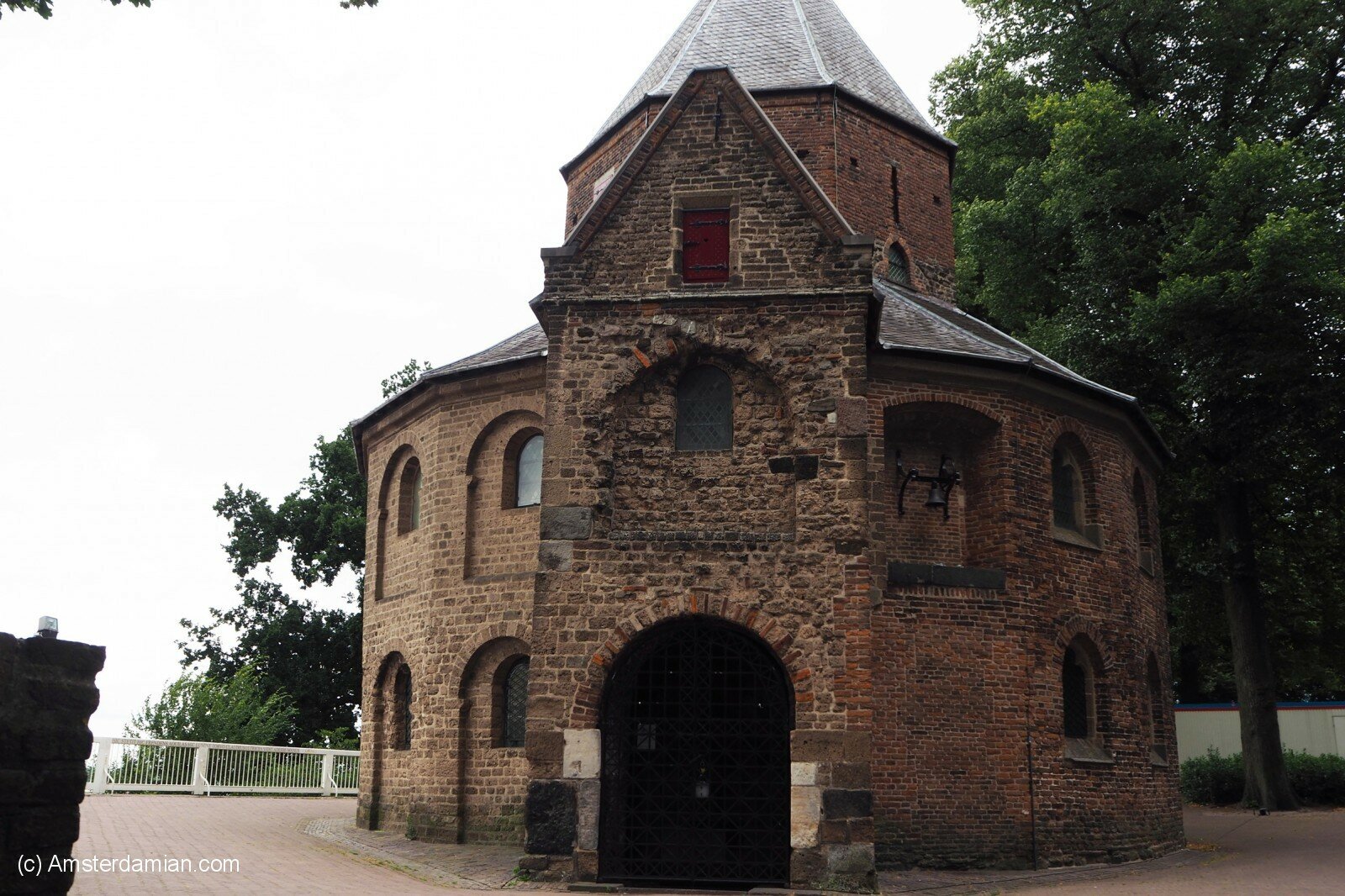
Skip forward a thousand years and you get the Valkhof: an imperial palace complex started under Charlemagne, expanded by Holy Roman Emperor Frederick Barbarossa in 1155, and largely demolished in the 1790s. What survives, the octagonal Sint-Nicolaaskapel from late 11th century, and the Barbarossa Ruin, sits now in a quiet park above the Waal and is one of the oldest standing buildings in the country.
The 20th century was less kind. The accidental American bombing of February 1944 (mentioned above) destroyed a big part of the medieval centre. Seven months later, in September 1944, Nijmegen was at the heart of Operation Market Garden, which was the Allied attempt to capture a chain of bridges across the Rhine. On 20 September 1944, men of the American 82nd Airborne crossed the Waal in canvas boats under heavy fire to take the road bridge; 48 of them died in that single crossing. The Waalbrug still stands, and every evening at sunset a small group walks slowly across the newer pedestrian bridge(the Sunset March) to honour them.
What to Do in Nijmegen
Nijmegen rewards slow walking. The centre is compact and you can cross it in 15 minutes, but every street has something. Here are the spots I’d build a day around.
⏺ Kronenburgerpark
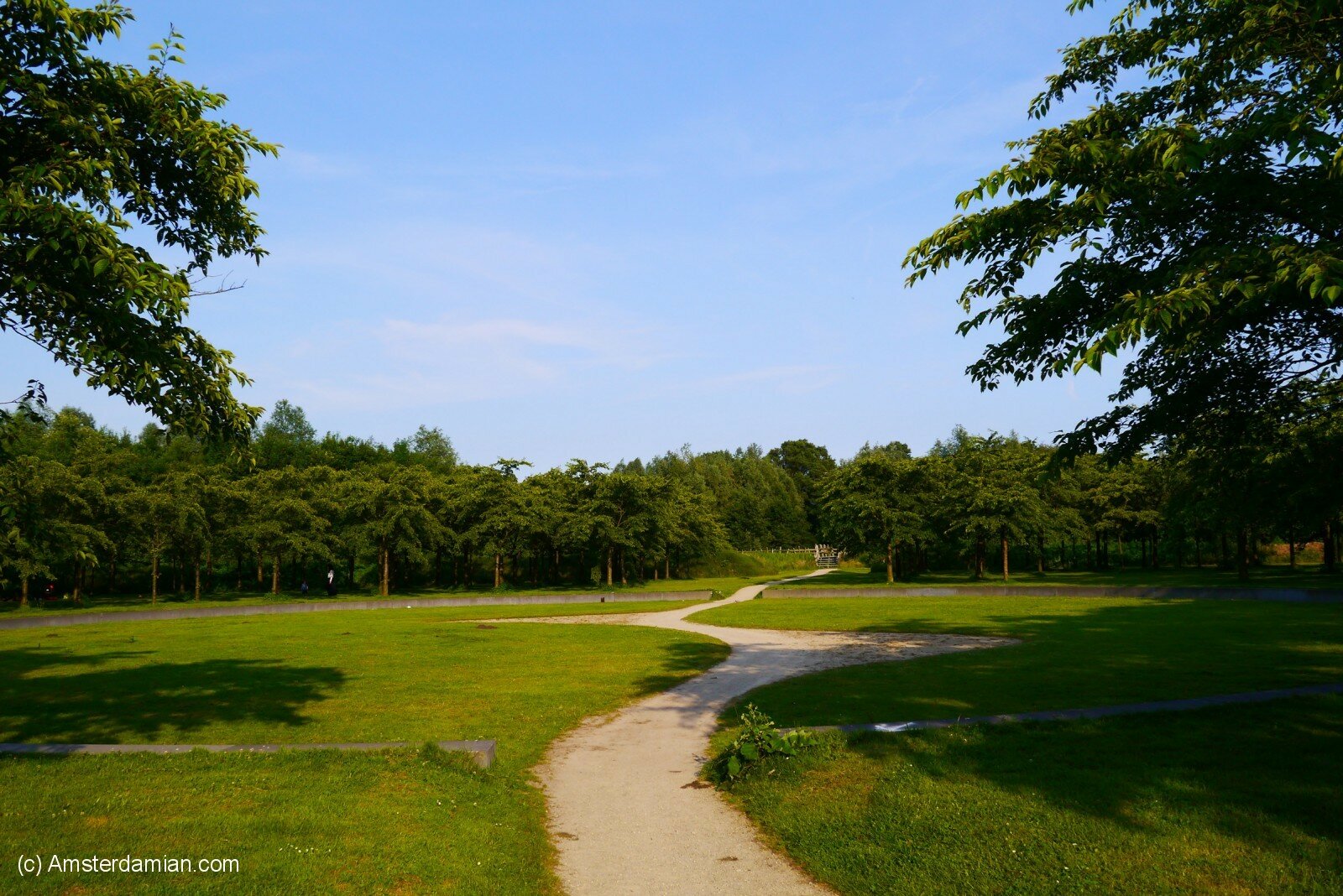
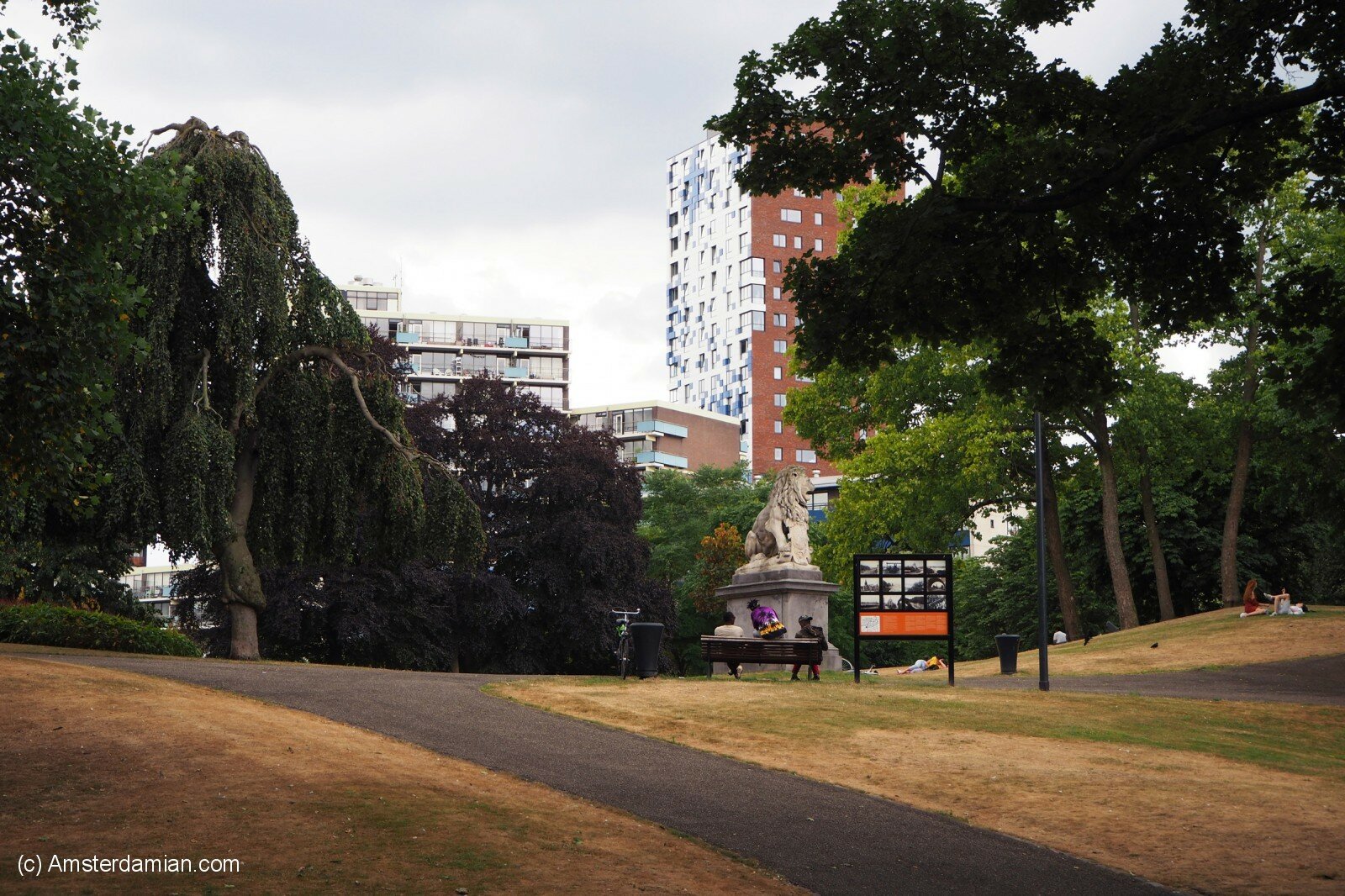
A short walk from the station, this park makes a soft introduction to the city. Tucked among the trees is the Kruittoren (Powder Tower), a stocky medieval defensive tower from 1425, one of the few surviving fragments of the original city walls. Pond, sloping lawns, locals on benches; a good place to take a breath before diving in (or rest after the visit).
⏺ Grote Markt
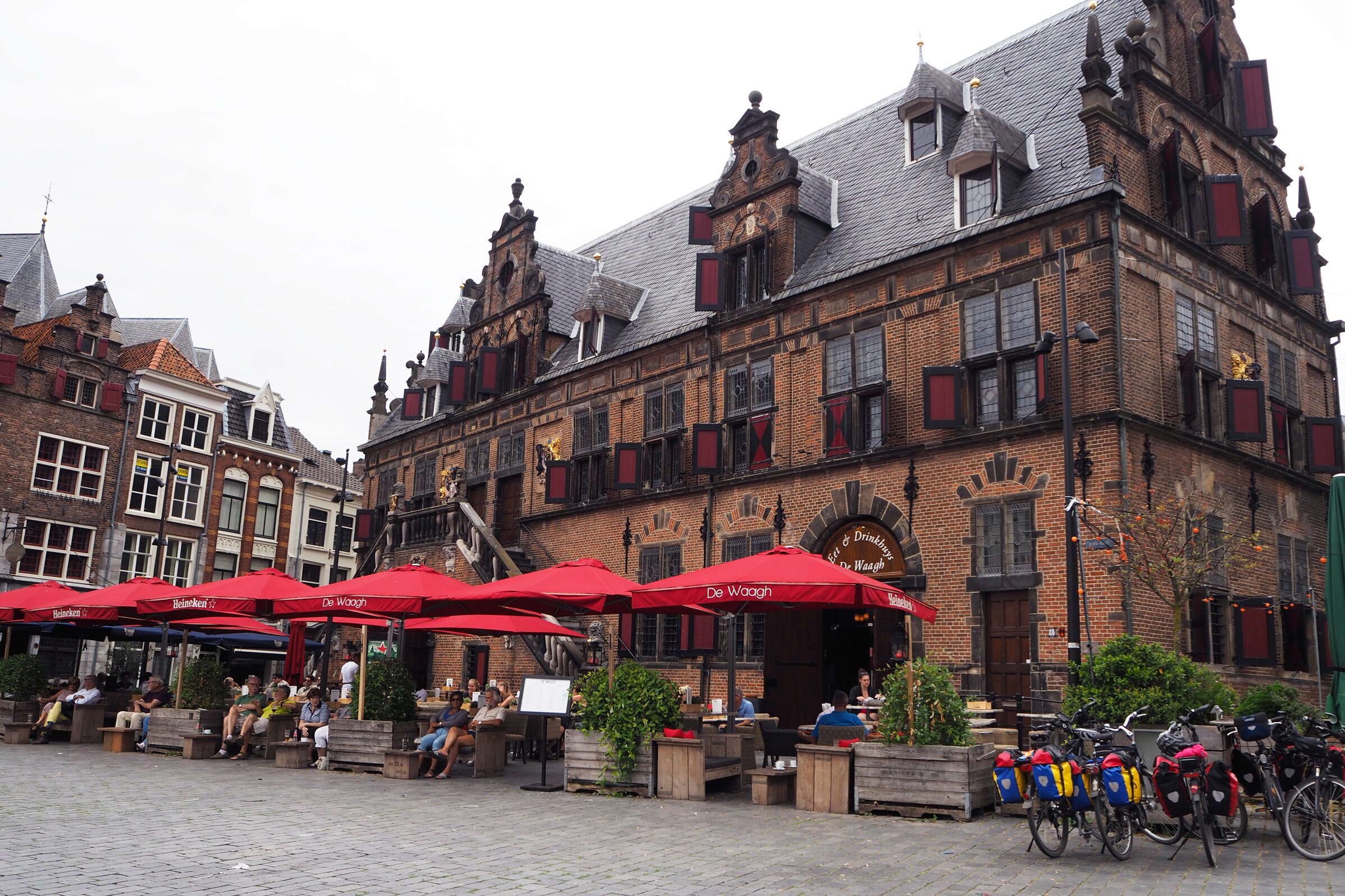
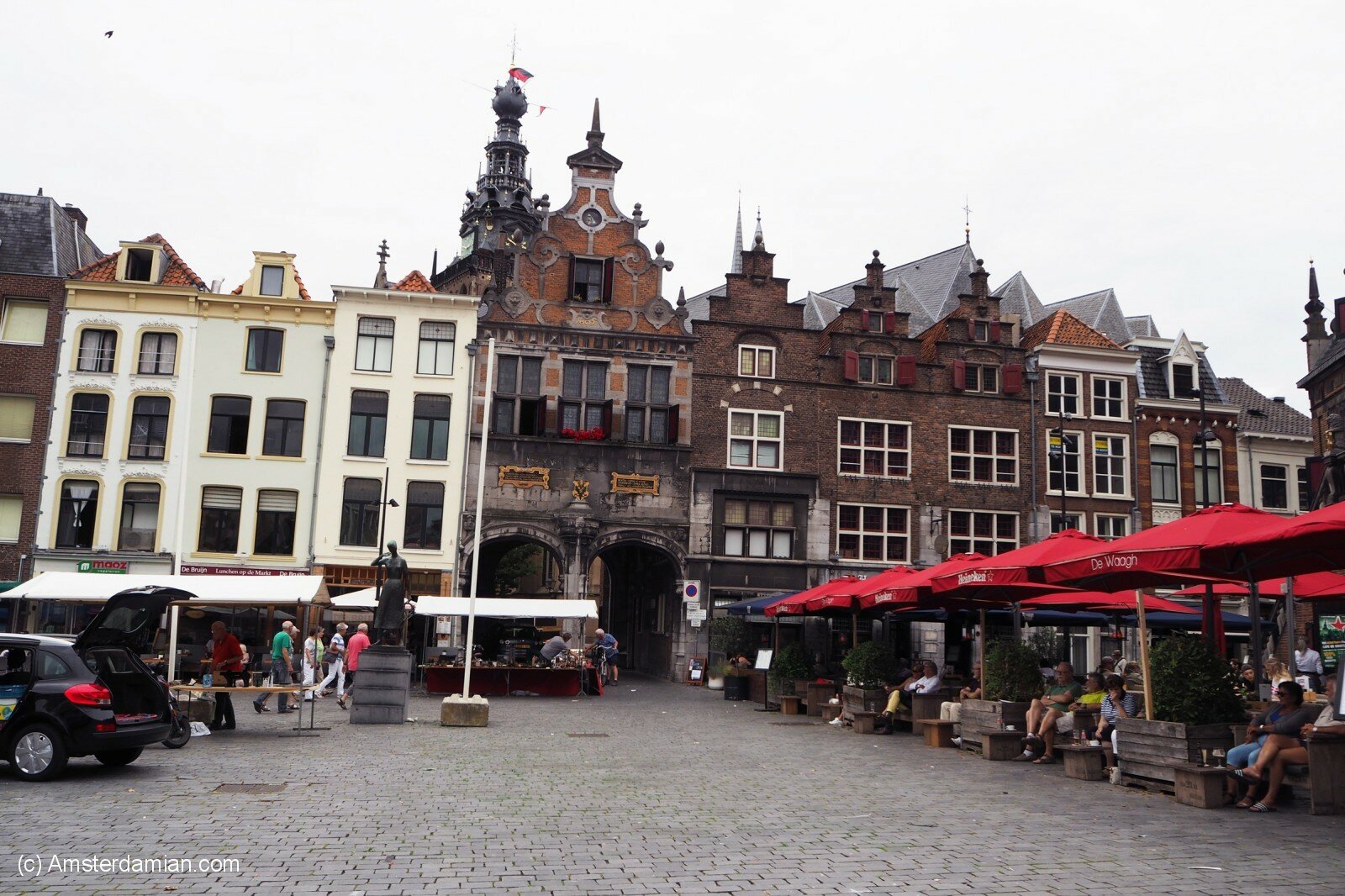
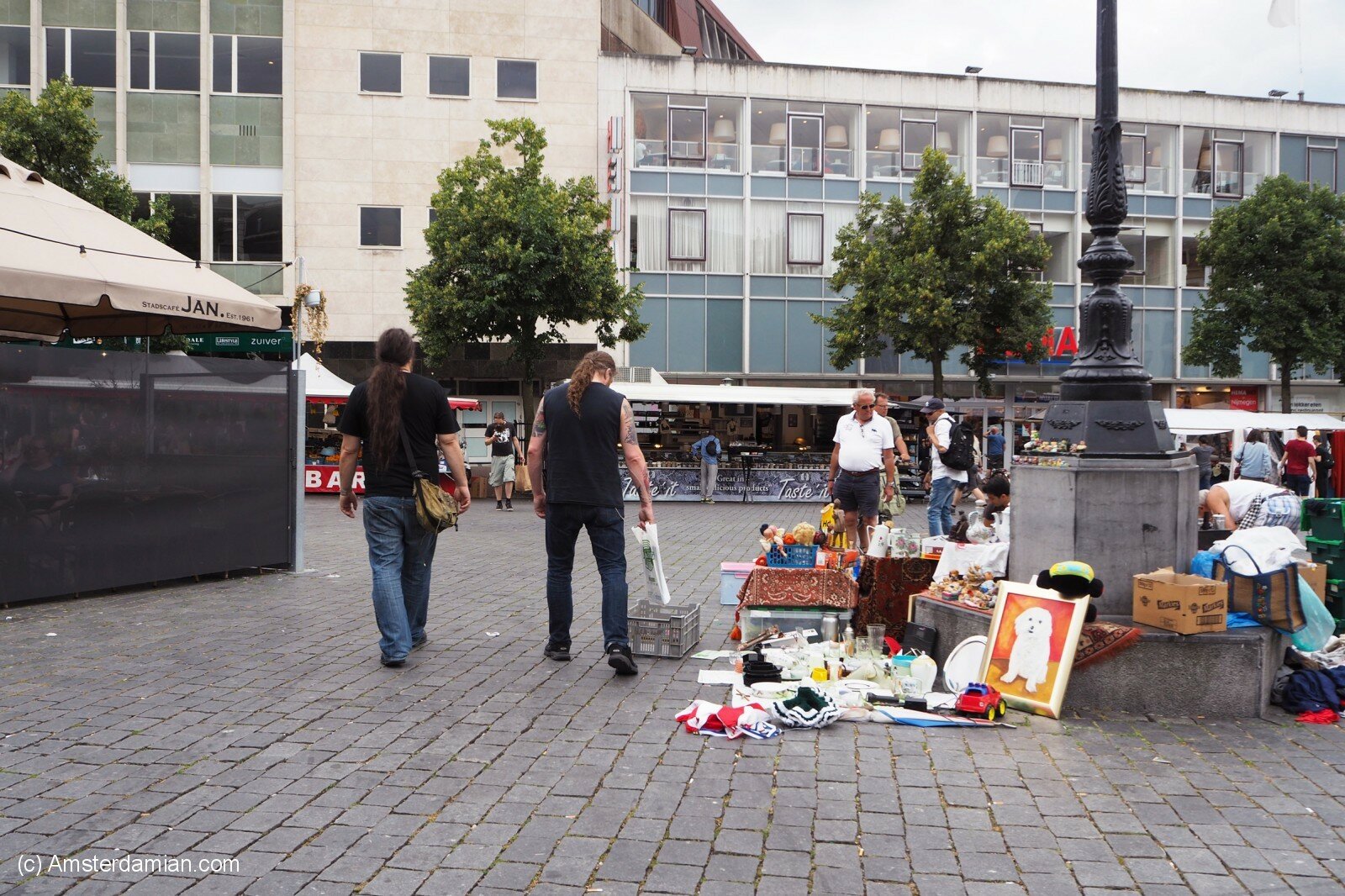
The main square, anchored by De Waagh, a Dutch Renaissance weighing house from 1613 that now houses a brasserie. The square is lively most days, and the surrounding streets are full of cafés. From here you can slip directly into the alleys behind the Stevenskerk.
⏺ Stevenskerk and the surrounding streets
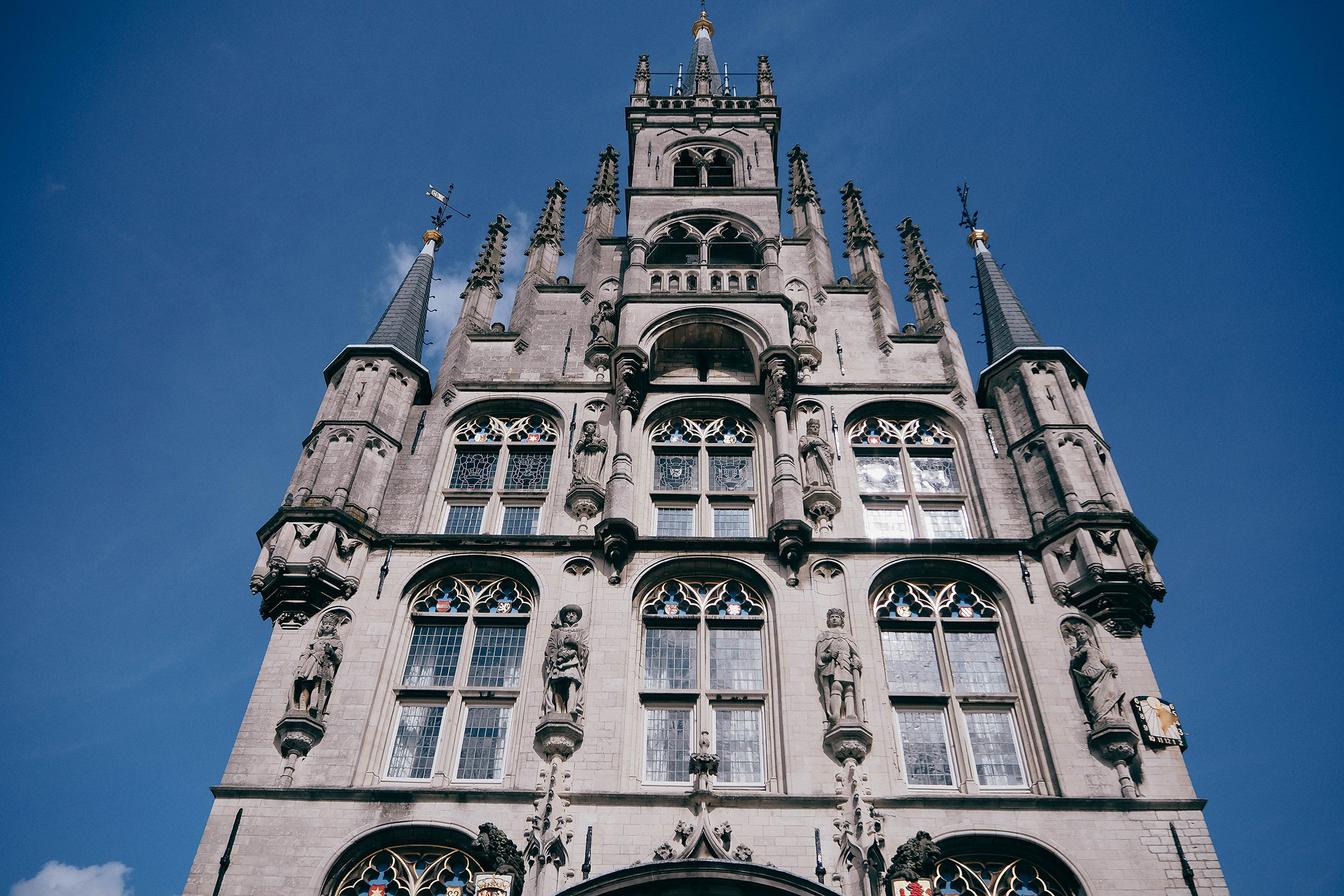
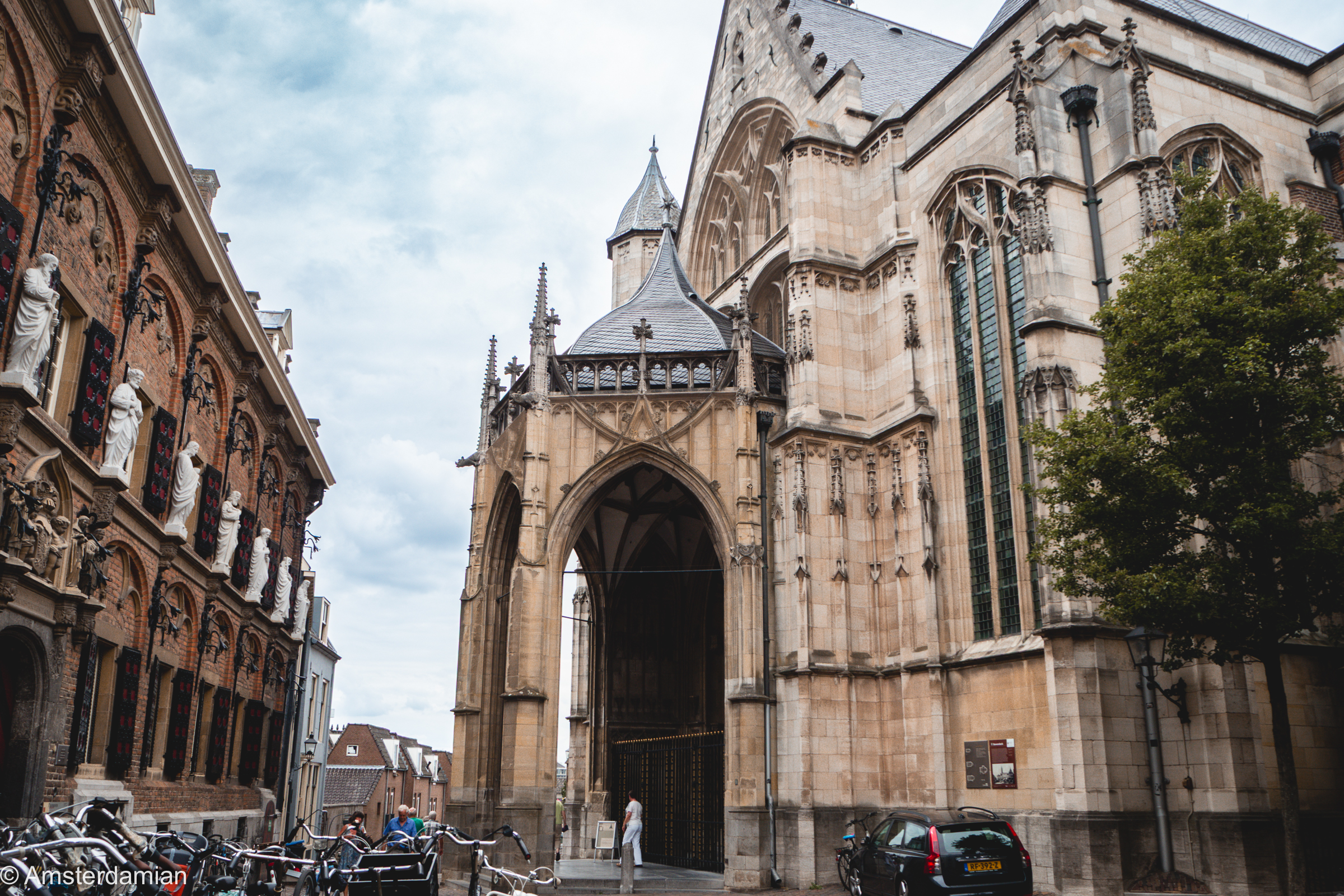
The Gothic Stevenskerk has roots in the 13th century, was rebuilt after the 1944 bombing, and is the visual anchor of the old centre. Entry is usually free; donations are welcome. From April to September you can climb the tower on a guided tour, for the view that sweeps across the river, the Waalbrug, and out into the Ooijpolder. The small cobbled streets immediately around the church are some of the prettiest in the city.
⏺ Valkhof Park and the Sint-Nicolaaskapel
A green hill above the Waal where the Roman fortress, then Charlemagne’s palace, then Barbarossa’s 12th-century residence once stood. Most of the complex is gone, but the octagonal Sint-Nicolaaskapel (late 11th century) and the Barbarossa Ruin still stand. Free to wander; the chapel has limited opening hours so check before you go.
⏺ Lange Hezelstraat
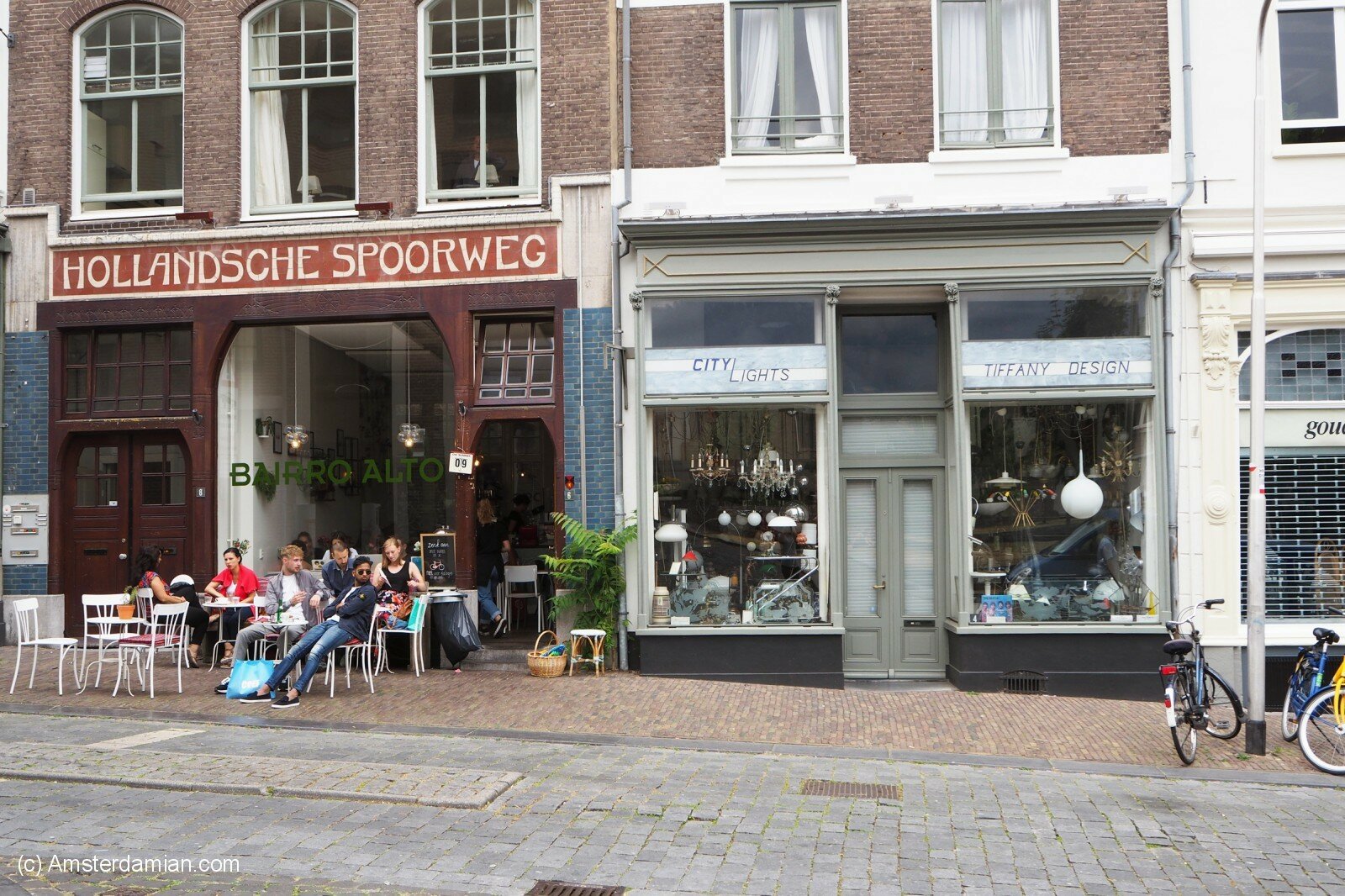
Officially the oldest shopping street in the Netherlands, following the line of a Roman-era route. Today it’s a long, narrow run of small independent shops: bookshops, vintage clothes, design stores, neighbourhood cafés. Worth at least a slow walk end to end.
⏺ Walk along the Waalkade
The river promenade is where Nijmegen relaxes. Have lunch or a drink on one of the café terraces, watch the freight barges go by, and look across to the green strip of the Ooijpolder on the far bank. The newer pedestrian bridge, De Oversteek (“The Crossing”), is where the Sunset March happens every evening(a slow walk by volunteers to honour the 48 American soldiers who died here in 1944). It’s free, unannounced and unforgettable.
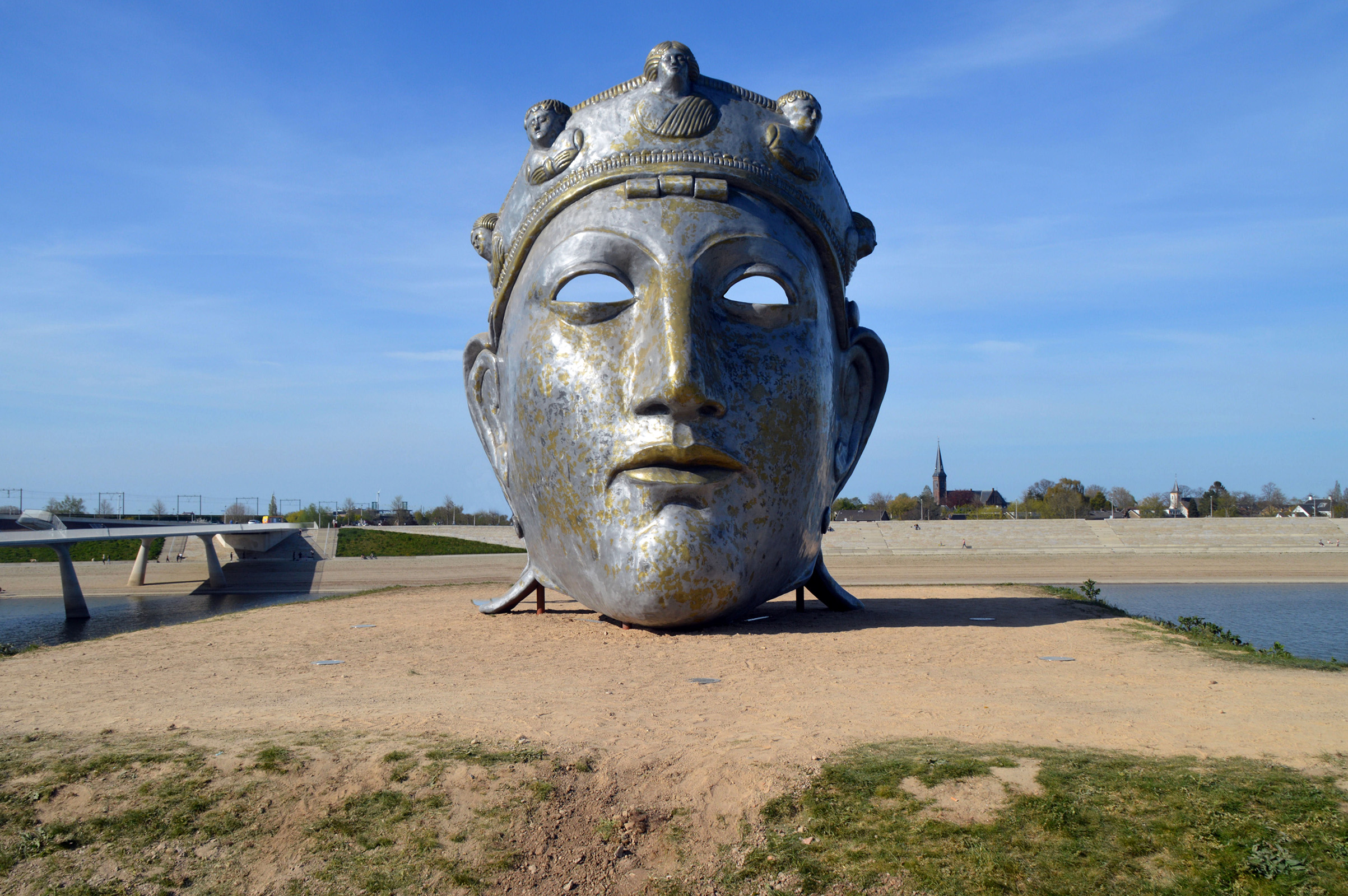
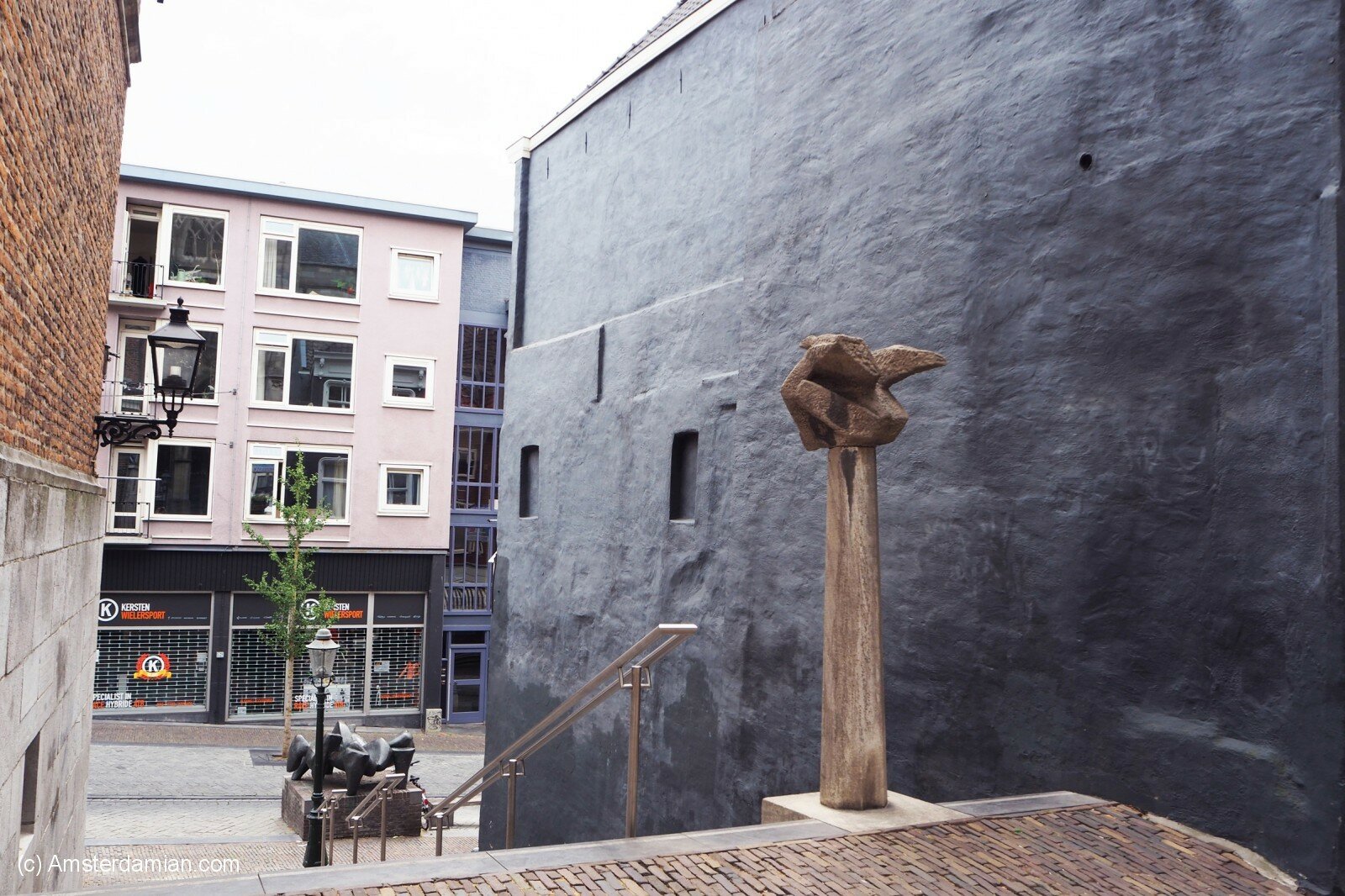
⏺ The Face of Nijmegen” (Het Gezicht van Nijmegen)
On the city island of Nijmegen in Veur-Lent, you’ll find a Roman-inspired mask sculpture by artist Andreas Hetfeld. The striking sculpture is looking over the river, as if thinking about the distant past while admiring how the city changed.
⏺ Have a local beer at Brouwerij de Hemel
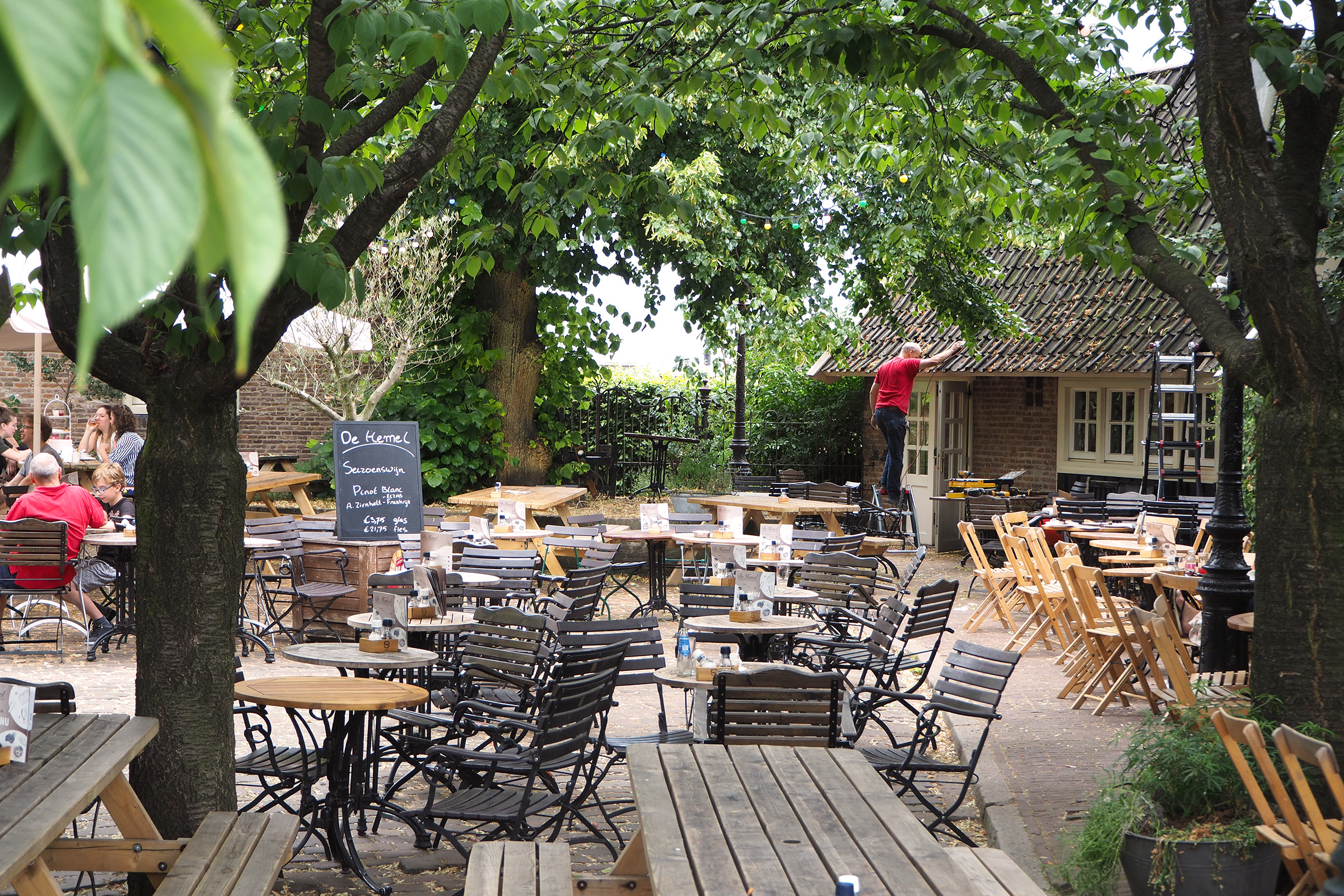
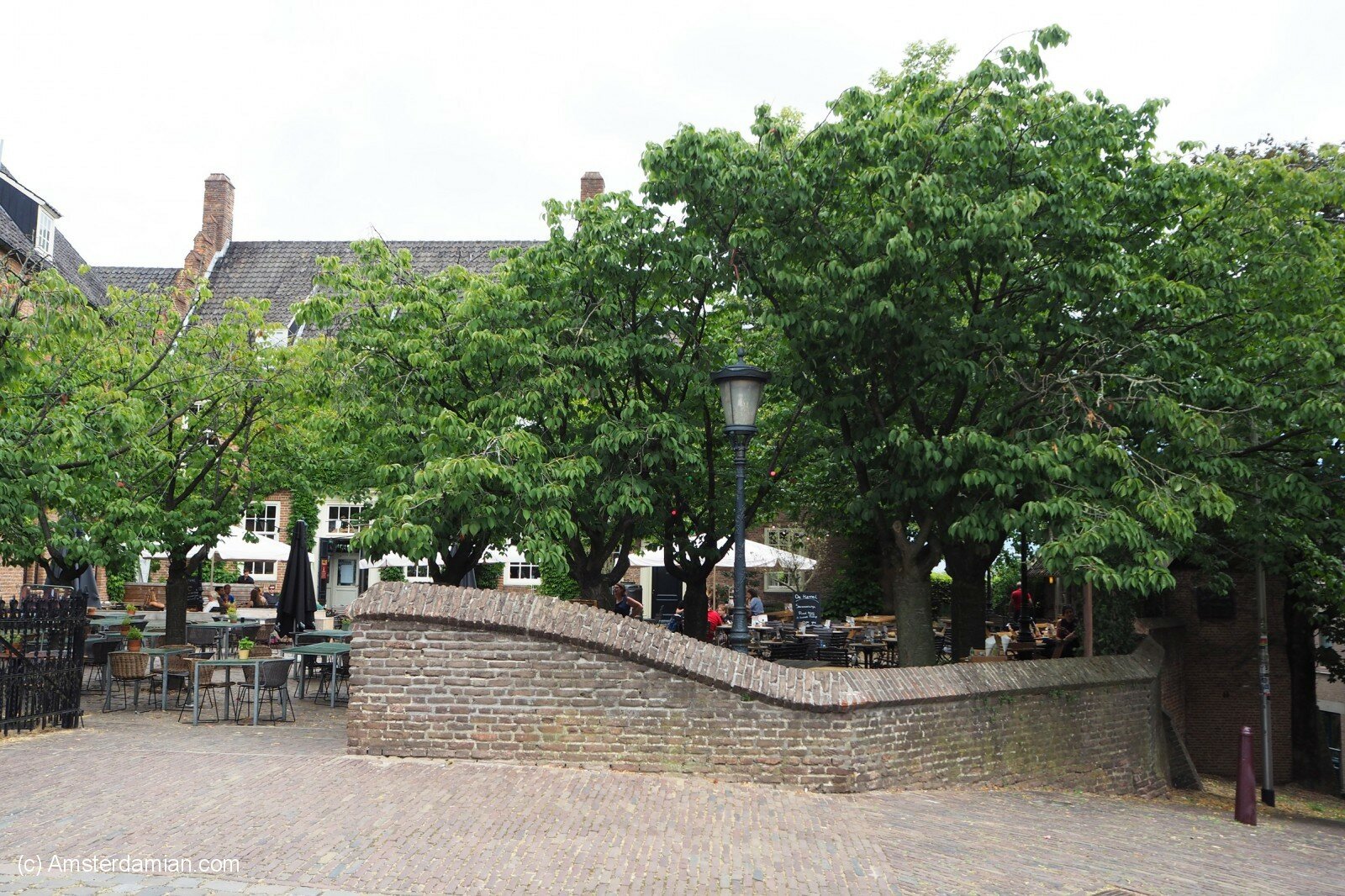
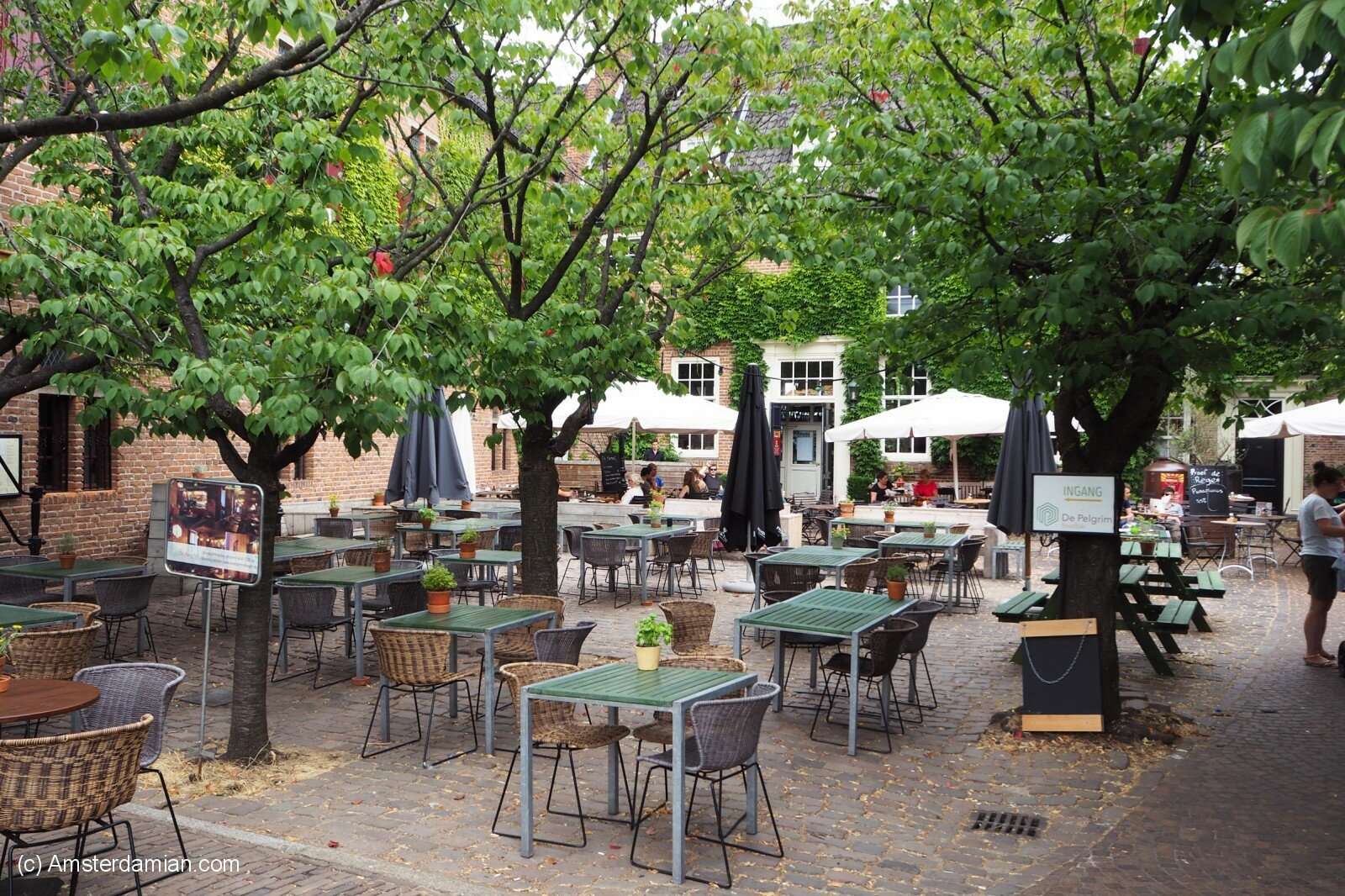
Located in the old Commanderie van Sint Jan near the Valkhof, De Hemel has been brewing since 1983 and bills itself as the oldest craft brewery in the country. They run guided brewery tours and tastings; even without the tour, the courtyard terrace is a lovely place to end a sunny afternoon.
Museums to Visit in Nijmegen
⏺ Museum Het Valkhof. Right next to Valkhof Park, this is Nijmegen’s flagship museum: Roman artefacts excavated locally (the Romans really were everywhere here), regional archaeology, and rotating modern-art exhibitions in the same building. The museum underwent renovations and is scheduled to reopen in June 2026.
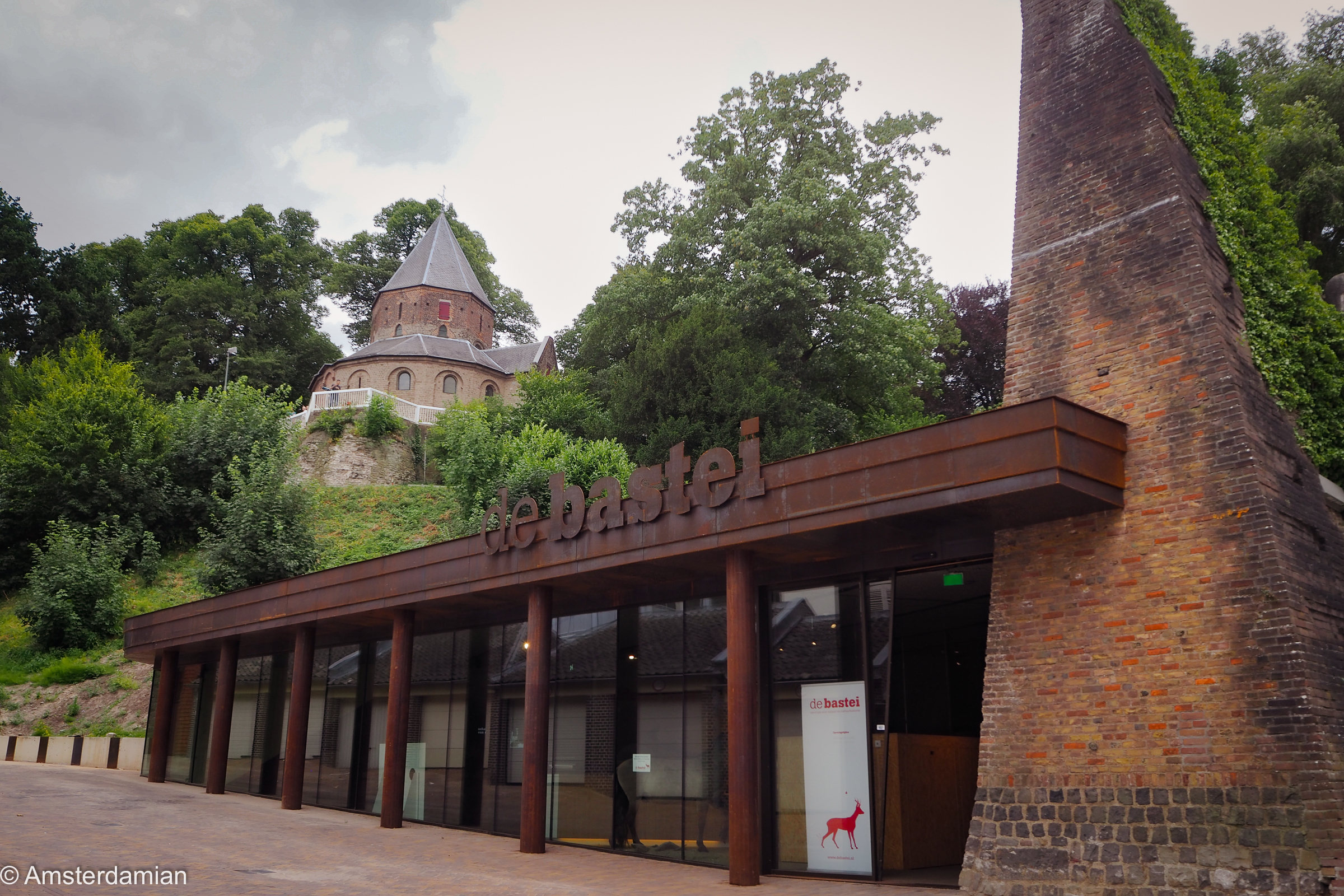
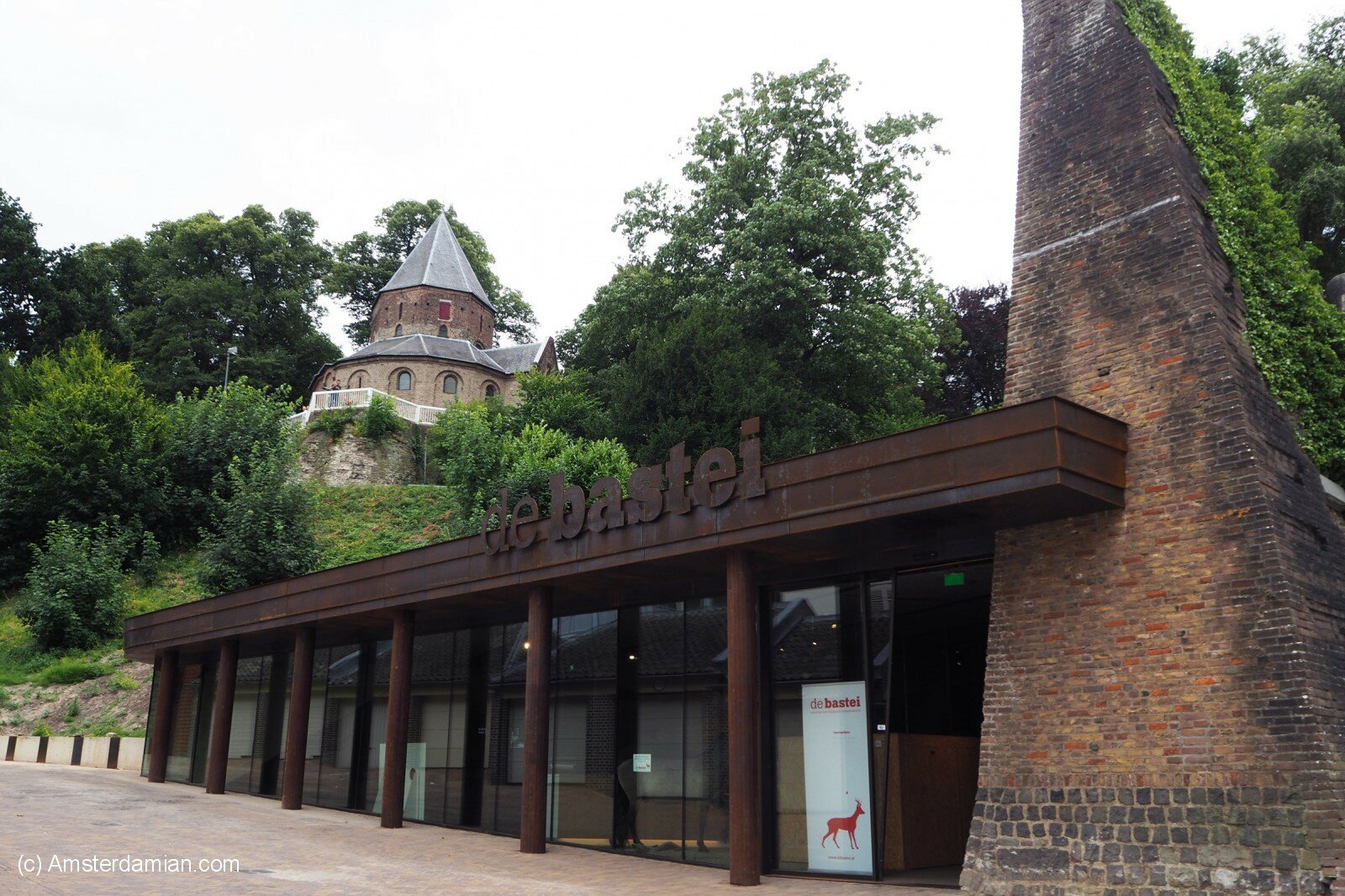
⏺ Museum De Bastei is a riverside museum focused on the relationship between the city, the Waal River, and the surrounding landscape. Built into historic fortifications, it combines archaeology, natural history, and stories of water management to show how the river has shaped life here for centuries.
⏺ muZIEum. Genuinely one of the more unusual museum experiences in the Netherlands. muZIEum (the capitalised ZIE is the Dutch verb “to see”) runs guided tours in complete darkness, led by visually impaired and blind guides, in which sound, smell and touch do all the work. It’s a short, intense, and surprisingly fun thing to do — book ahead, tours fill up.
⏺ Wereldmuseum Berg en Dal (also known as Afrika Museum). Set in a wooded estate just outside Nijmegen, in Berg en Dal. It focuses on African art, heritage, and cultural expression, with exhibitions that bring together historical objects and contemporary works to explore both tradition and modern life across different African regions. The museum grounds are part of the experience too, with open green spaces and changing outdoor installations depending on the season and programming.
Nature and Parks in and Around Nijmegen
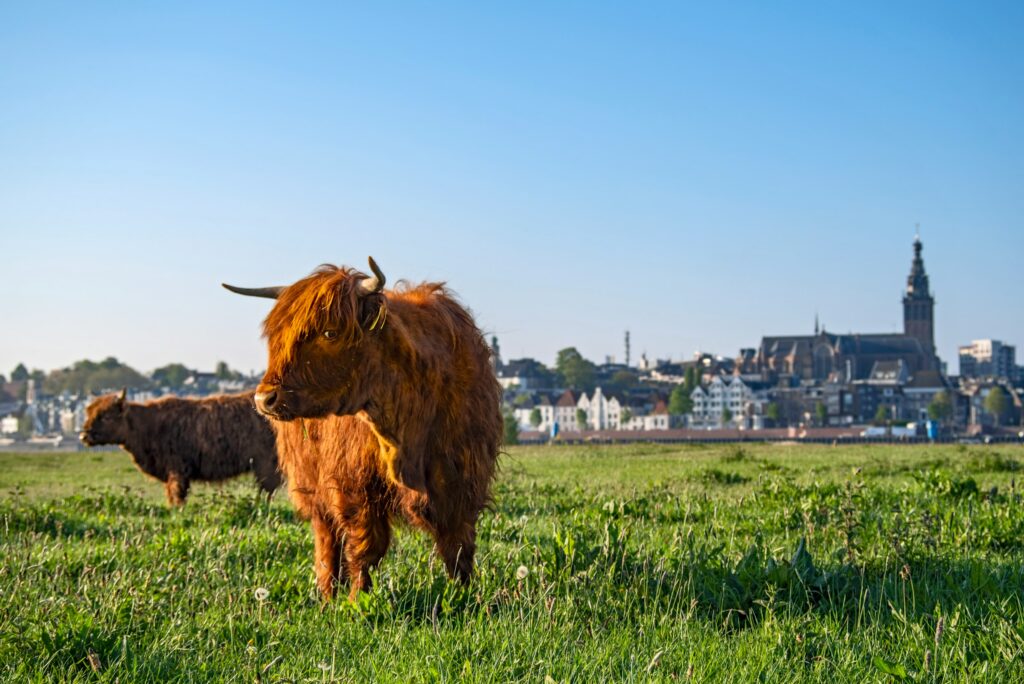
Unlike most Dutch cities, Nijmegen has actual hills. The city sits on the edge of a moraine ridge left by the last ice age, and the landscape immediately east is unexpectedly rolling.
⏺ Hunnerpark and the Belvedere. Just behind Valkhof, this small park has one of the best free views in the city — across the Waal and toward the Waalbrug.
⏺ Ooijpolder. A flat river polder directly across the bridge from the centre, threaded with cycle paths and walking routes, dotted with old farms and seasonal floodplains. Rent a bike at the station and you can be deep in countryside within twenty minutes.
⏺ Heumensoord and the Seven Hills. South of the city is a long stretch of forest and heath: the Zevenheuvelenweg (“Seven Hills Road”), which is famous among Dutch runners and cyclists for being one of the few genuinely hilly stretches in the country.
In the mood to visit a castle?
Museum Kasteel Wijchen is a beautifully restored medieval castle just outside Nijmegen, surrounded by a moat and parkland. Inside, the museum tells the story of Wijchen and the surrounding region, from prehistoric finds and Roman influence to noble families who once lived here. It’s small, atmospheric, and easy to combine with a relaxed half-day trip from the city.
Where to Eat and Drink in Nijmegen
A few neighbourhoods worth pointing yourself at: the Lange Hezelstraat and the streets running off it for café-style lunches and bakeries; the Waalkade for waterfront terraces; and the area immediately around the Grote Markt for cosy restaurants. For something specifically local, look for a Nijmeegs broodje or stop at Brouwerij de Hemel for a tasting flight.
How to Get to Nijmegen from Amsterdam
Nijmegen is easy as a day trip from Amsterdam, even though it sits in the far east of the country. Direct intercity trains run from Amsterdam Centraal and the journey takes around 1 hour 20 minutes. The train leaves you at Nijmegen Centraal, a five-minute walk from the old centre. If you’re using an OV-chipkaart or the new OVpay system, just tap in at Amsterdam and tap out at Nijmegen. There’s no need to book ahead, and you can check the trains schedule on NS website.
A Suggested One-Day Itinerary
If you’re coming from Amsterdam for the day, here’s a route that fits comfortably into a single train ticket.
• Morning train from Amsterdam Centraal, arriving Nijmegen Centraal around 10:30.
• Walk through Kronenburgerpark to the Lange Hezelstraat. Coffee and a wander.
• Cut through to the Grote Markt and the Stevenskerk. Climb the tower if the season allows.
• Lunch on the Waalkade, looking out over the river.
• Walk up to Valkhof Park — the chapel, the ruin, the view.
• A museum in the afternoon (pick one).
• End the day with a beer at Brouwerij de Hemel, or, if the timing is right, walk out to De Oversteek for the Sunset March.
• Evening train back to Amsterdam.
Nijmegen isn’t postcard-pretty in the way the Holland-tourist-trail cities are, but it has something most of them have lost: a sense of being lived in by the people who actually live there. Give it a day, walk slowly, and let the Roman, medieval and 20th-century layers do their work on you.
This article is part of the project: Discover the Netherlands, Province by Province. Read the collection of articles here: Dutch Provinces: a Complete Guide.

If medieval streets are your thing, continue up the IJssel with a day trip to Zutphen — a town where the Middle Ages never quite left.
Stay tuned for more and follow Amsterdamian on Instagram and Facebook for more stories about life in the Netherlands, written by a real local, updated constantly.
Check out my photo book: Amsterdam Through the Seasons!
Love what you’re reading? Support my work with a small donation.
And share this post if you liked it!