Last update June 2026.
What is Keti Koti?
Keti Koti, meaning “the chains are broken” in Sranantongo (creole language spoken in Suriname), is a day of remembrance and celebration marking the abolition of slavery in Suriname and the Dutch Caribbean in 1863. Also known as Emancipation Day, Dag der Vrijheden (Day of Freedoms) Keti Koti is observed each year on July 1st and honours the resilience of enslaved people and their descendants, while also calling for reflection, healing, and justice in the present.
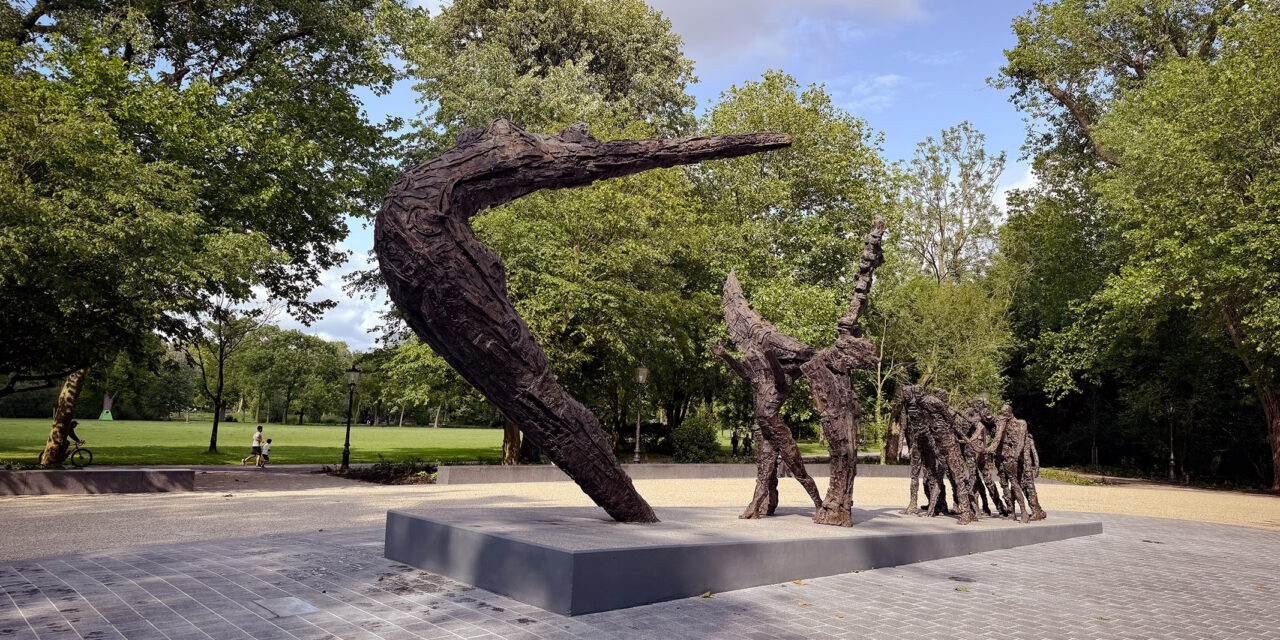
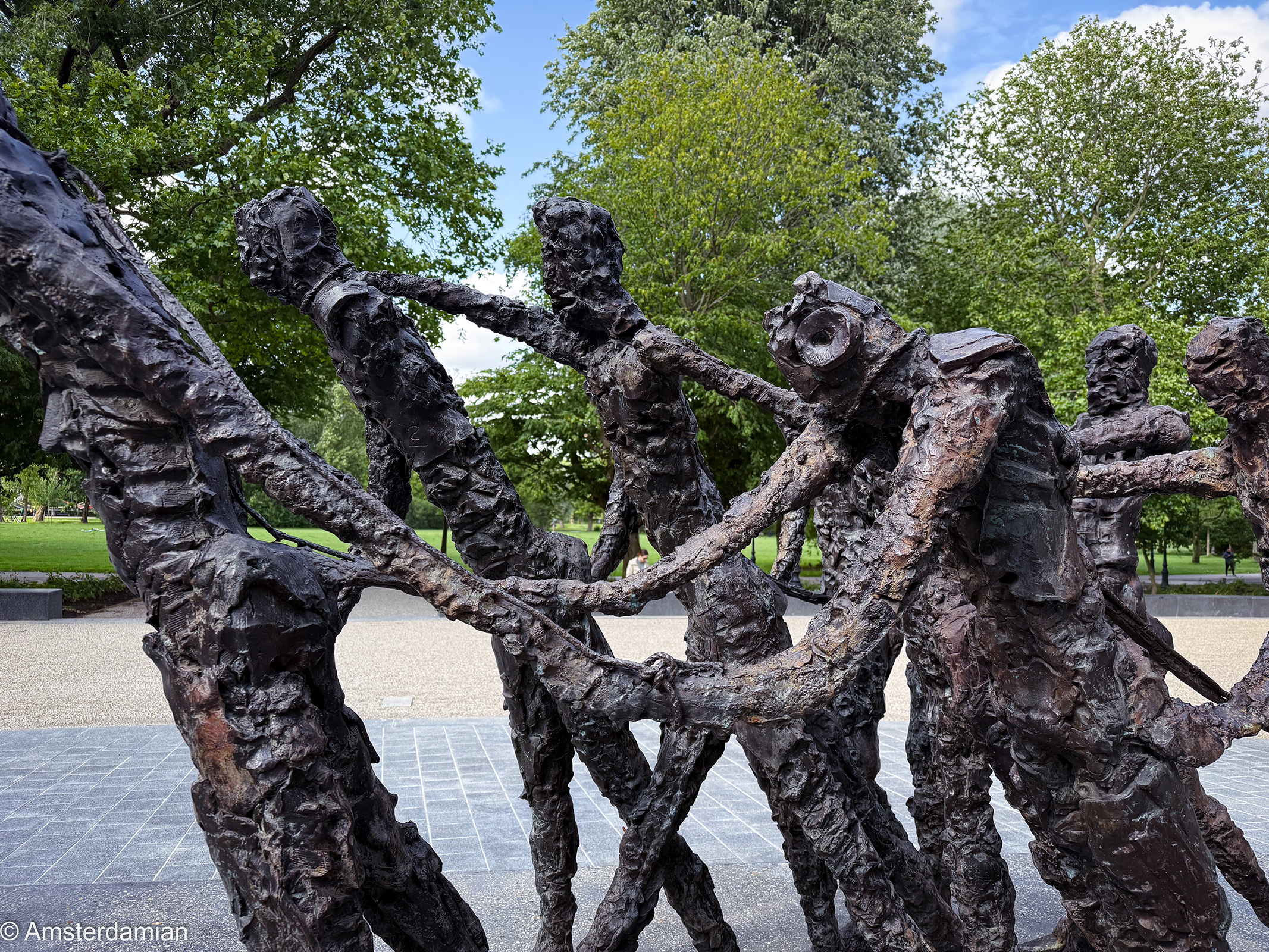
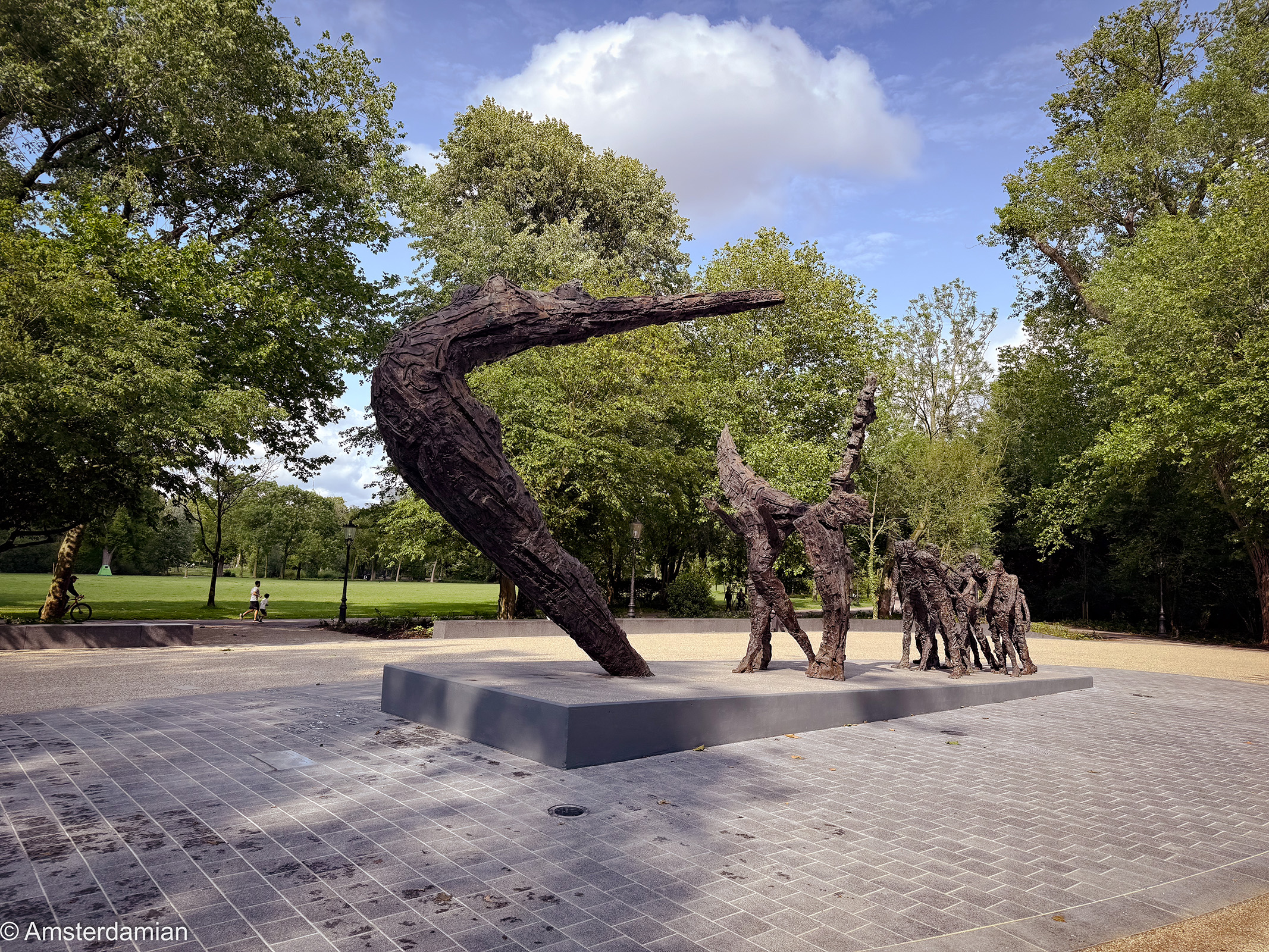
The Netherlands marks Keti Koti to commemorate the abolition of slavery, a legacy rooted in over two centuries of Dutch enslavement of people in Suriname and the Caribbean, who were forced to work on plantations under brutal conditions. Keti Koti acknowledges this painful legacy and the impact it still has on Dutch society today. Currently, more than 345,000 people with a Surinamese background and more than 130,000 people with an Antillean or Aruban background live in the Netherlands. The official commemoration of this day started in the Netherlands in 2009 and a National Slavery Monument (Nationaal Monument Slavernijgeschiedenis) was erected in 2002 in Oosterpark in Amsterdam. Events are organised in Amsterdam and several other cities.
Keti Koti in Amsterdam
In Amsterdam, Keti Koti has grown into a meaningful tradition. The city hosts a range of commemorative and cultural events leading up to and on the day itself, culminating in the vibrant Keti Koti Festival in Oosterpark and the Nationale Herdenking (National Commemoration) at the Slavery Monument.
From solemn ceremonies to music, food, and storytelling, these gatherings offer space for both remembrance and joy and invite everyone to engage with a shared history that continues to shape Dutch society today. There is some pressure to make 1 July a national bank holiday, and I hope this goes through, so people can properly celebrate the occasion. Even though is celebrated since 2009, it’s still something that not everyone knows about or they just heard about it more in the recent years. We need to talk more about this day.
Here are a few of the events or actions that are part of this celebration:
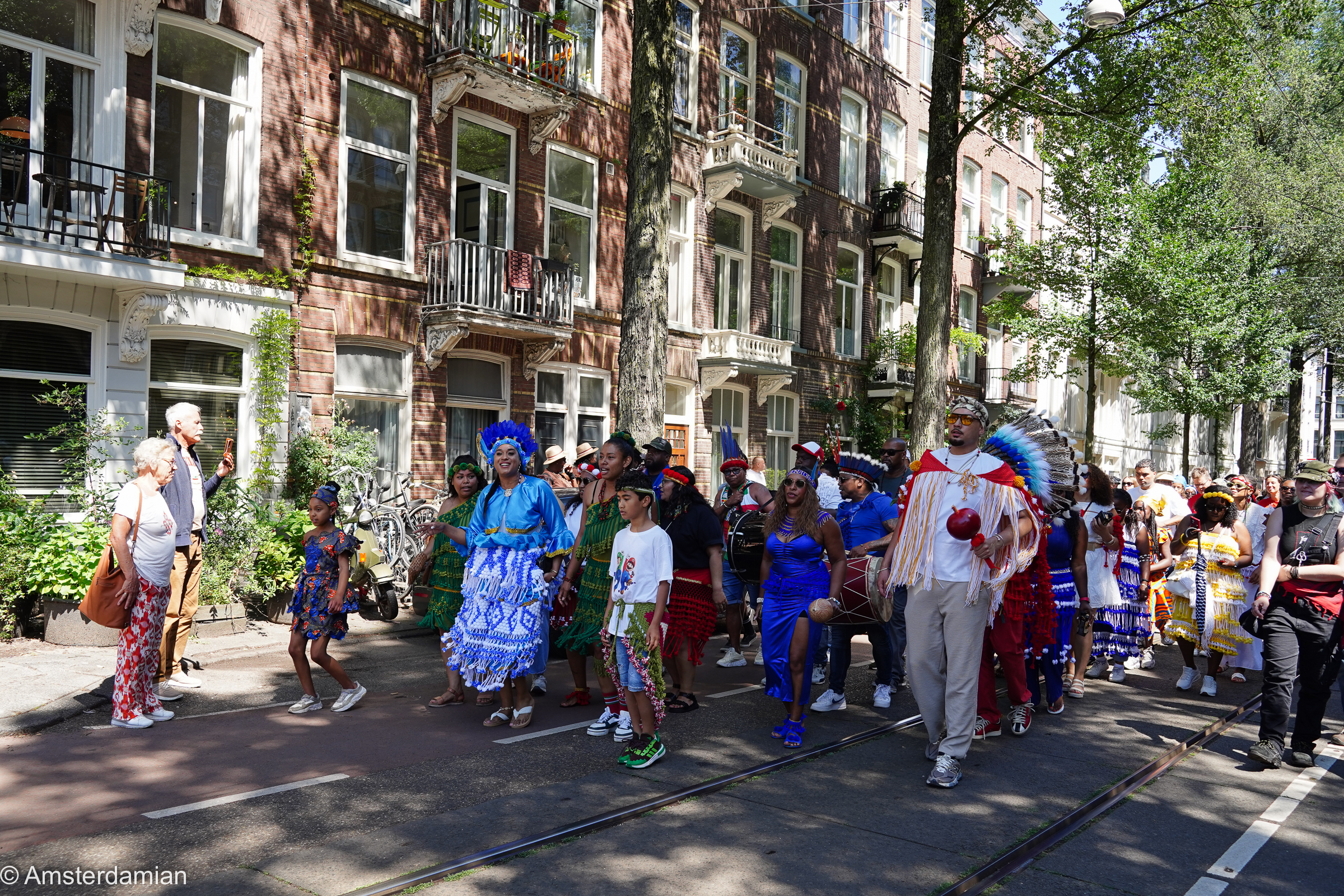
- Keti Koti Festival on 1 July 2026. The programme starts with a parade of traditional costumes from Suriname and the Caribbean, from Waterlooplein and Oosterpark, where it continues with the Nationale Herdenking ceremony. There are also various performances at the Museumplein. Entrance is free. Program of the festival:
- Bigi Spikri Parade Waterlooplein – 10:10 – 13:00
- National Commemoration at the monument in Oosterpark: 14:00 – 15:30
- Keti Koti Festival Museumplein – 13:00 – 22:00.
↪ See here more info and a photo essay about the Bigi Spikri Parade 2026: Bigi Spikri: Photos from Amsterdam’s Keti Koti Parade
- Keti Koti Westerpark. Various events (exhibitions, food, music) are organised in the park throughout June and on 1 July.
- Book publishing: Morgen ben ik vrij (Tomorrow I am free) by Ploegsma publisher. This children’s book, published in 2025, features eleven stories about the time of slavery, told through the eyes of children. Ten different authors contributed to the collection, which includes a foreword by Ernestine Comvalius and beautiful illustrations by Roeqiya Fris. What was it like for children to live in the time of slavery? The kids can read about the rebellion of Tula, Ma Pansa smuggling seeds in her hair, pirates who made Dutchmen work as rowing slaves and much more.
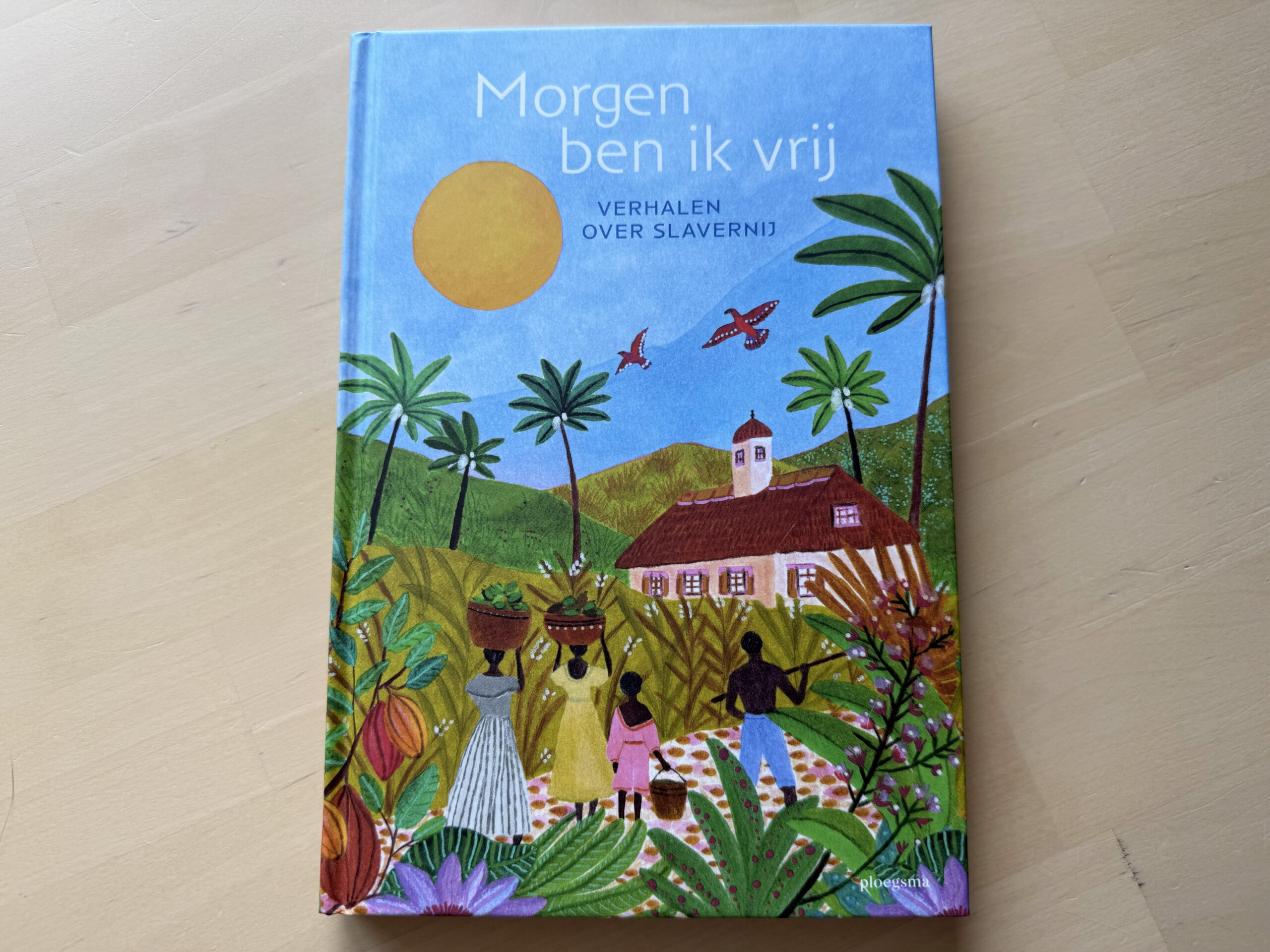
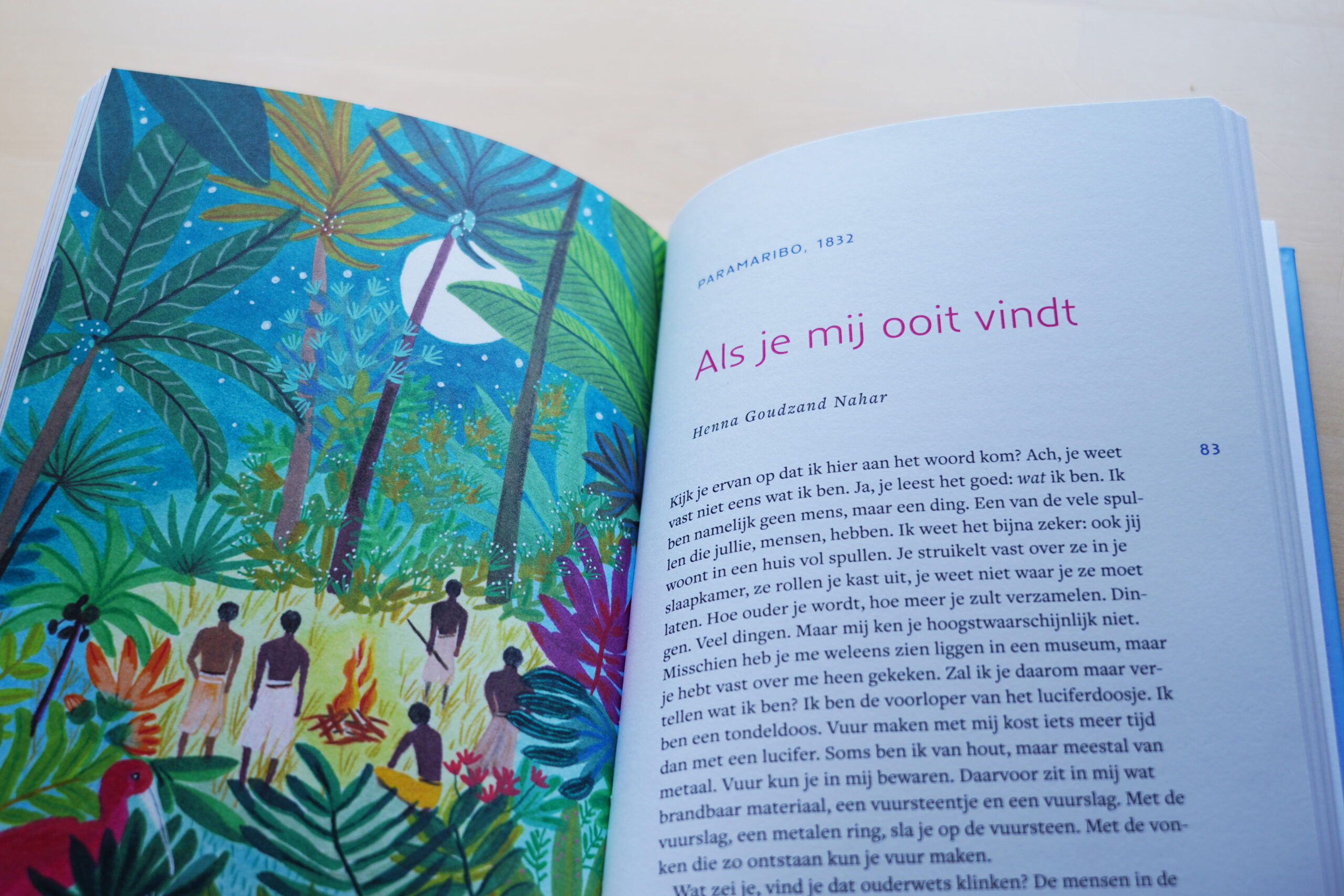
In this book, the reader discovers how many sides slavery has, and it shows the impact of slavery all over the world. It’s a book that tells hard stories in a way that can be presented to children, to invite discussions about this important subject at school or at home. A story that captured my attention is about one of the greatest resistance acts in Paramaribo, on the night of 8 September 1832, told from the perspective of a tinderbox: Als je mij ooit vindt (If you ever find me). I asked the writer, Henna Goudzand Nahar, what drew her to this particular moment of resistance in Suriname’s history, and how did she imagine giving voice to an object that helped spark it.
“The attempt by Cojo, Mentor, Present, Winst, and Christiaan—a group of enslaved people in Paramaribo—to drive out the slaveholders by fire in order to establish a free society, stands as a unique act of resistance by enslaved people in the capital of Surinam. At the time, the capital was small, and the enslaved lived in close proximity to the slaveholders. The choice to tell their story through the tinderbox stemmed from the fact that the existence of this object enabled these resistance fighters to carry out such an act. By placing the perspective with the object, I was able to tell the story from the inside, yet through a narrator who remained more independent.”
- Keti Koti Gala Concert at DeLaMar theatre. Ronald Snijders, Ed Rust, Cheyenne Toney, Muriel Blijd en Prisiri Fu Wi Afo and the renowned Jazz Orchestra of the Concertgebouw will pay tribute to the resilience and cultural wealth of Suriname.
- Keti Koti at the Brakke Grond. Together with Frascati, they present a programme with theatre, film and free heri heri.
- Heri Heri for All. This is an initiative produced by Creative Agency KIP Republic, which has partnered with organizations across the country to distribute free heri heri meals every July 1st.
Heri Heri is a dish born on the Surinamese plantations where enslaved people made do with what they were given and what they could grow themselves. Out of that hardship came something nourishing and meaningful: a one-pot meal made with boiled sweet potato, cassava, green and yellow bananas, salted fish (bakkeljauw), egg, and garnish. Heri means “to heal” or “to make whole”.
I’m still learning about the meaning and history behind this important day, and I hope this article encouraged you to take part in one of the many commemoration or celebration events. Don’t forget that there are events organised in other cities too, and check out the Keti Koti Route for more info.
Stay tuned for more and follow Amsterdamian on Instagram and Facebook for more stories about life in the Netherlands, written by a real local, updated constantly.
Check out my photo book: Amsterdam Through the Seasons!
Love what you’re reading? Support my work with a small donation.
And share this post if you liked it!