
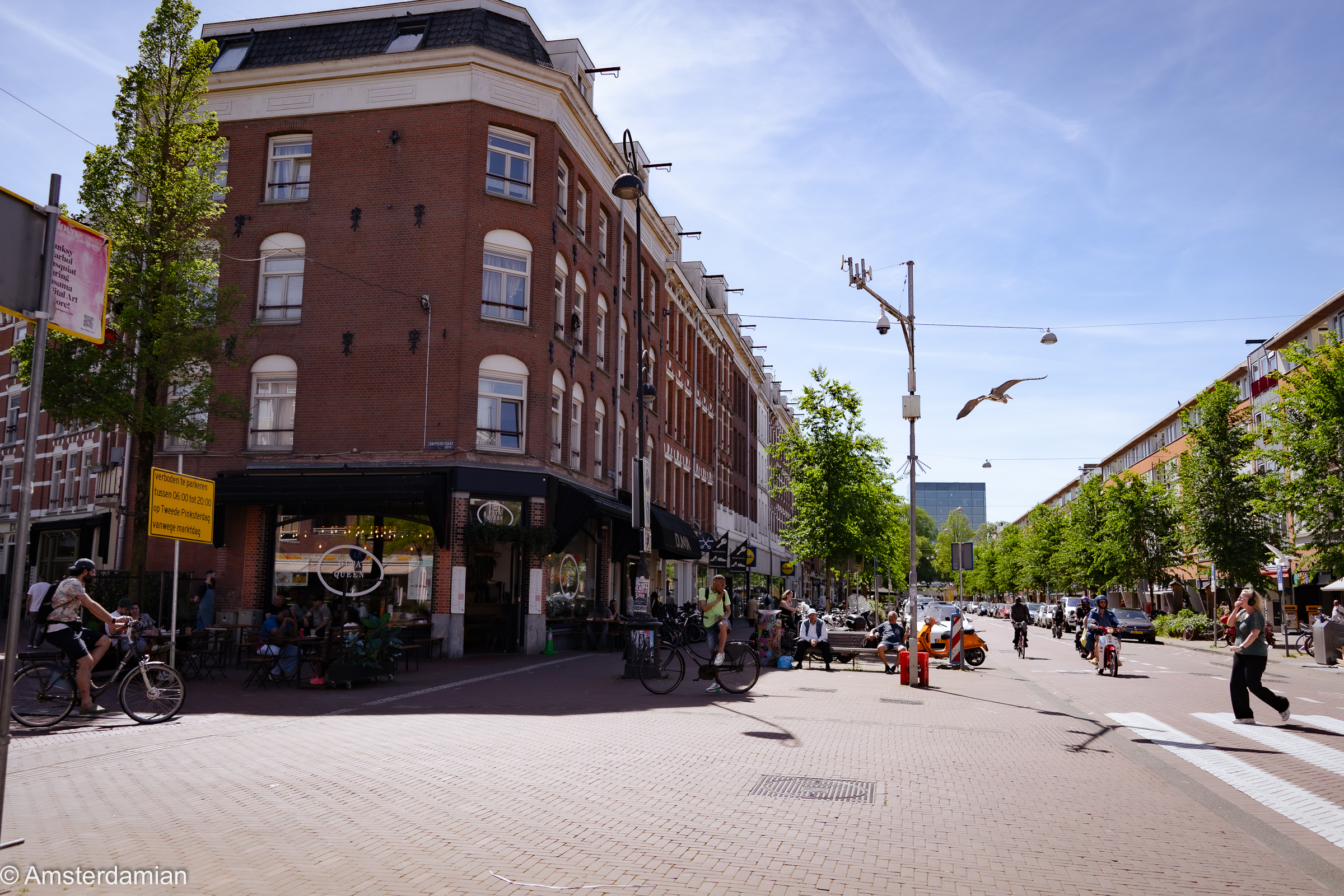
Oud-Oost is the historic heart of Amsterdam Oost (Amsterdam East), the part of the city that grew up around the Oosterpark and the Dappermarkt at the end of the 19th century. It’s sitting just east of the Amstel river and a short tram ride from the city centre, and it’s a neighbourhood that feels lived-in. There are no canals like the ones in the Jordaan, no boutique strip like the one in De Pijp. What Oud-Oost has instead is a lovely park, a daily multicultural market, two interesting museums, a windmill with a brewery underneath it, and a long quiet stretch of the Amstel that locals have to themselves.
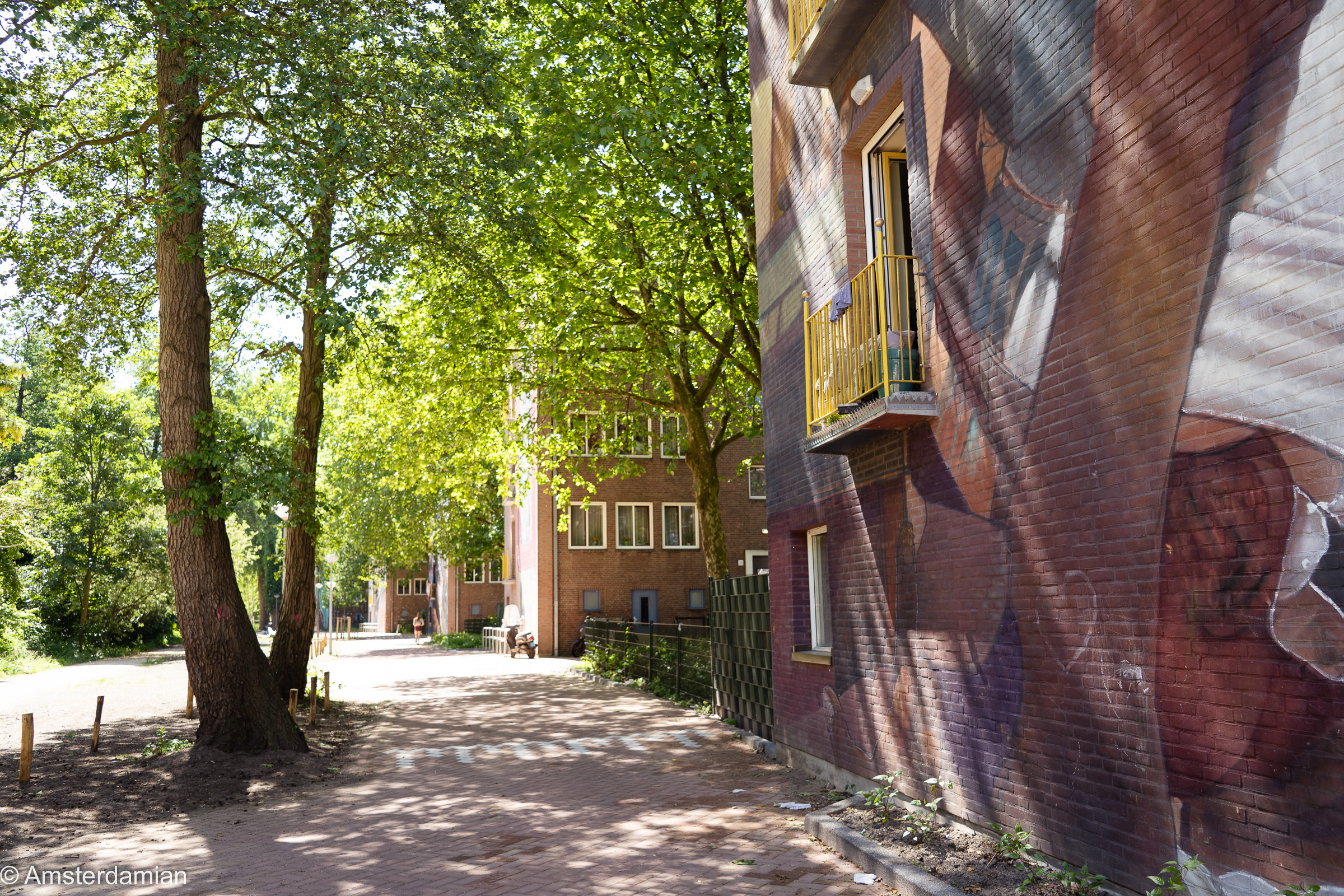
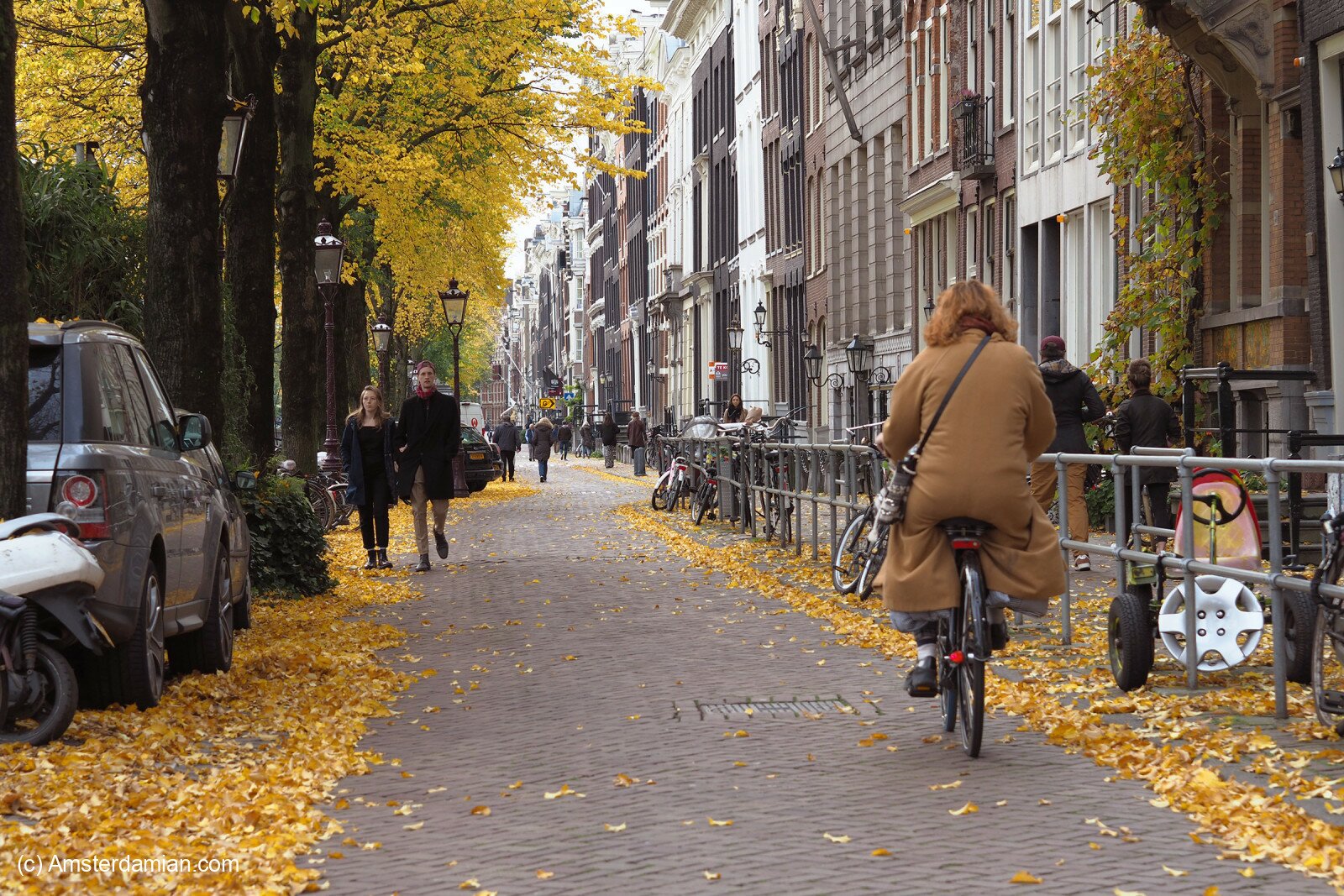
Oud-Oost has a residential, slightly messy feel: flower pots on the pavement, delivery trucks blocking narrow streets in the morning, children’s laughter spilling out of playgrounds. It’s a place to buy your vegetables, drink a beer at a corner cafe, walk along a river, and probably not see another tourist for hours. The look and feel varies from the expensive-looking houses on the Weesperzijde to the more modest ones in the Dapperbuurt area, so much that I find it weird to consider both these areas as part of the same neighbourhood. I like walking along the Amstel River (it’s one of the things I always recommend to people visiting Amsterdam), and also like to visit Dappermarkt, to buy fresh flowers and vegetables. It’s a neighbourhood that has a more utilitarian function for me, as well as for others.
The history of Oud-Oost Amsterdam
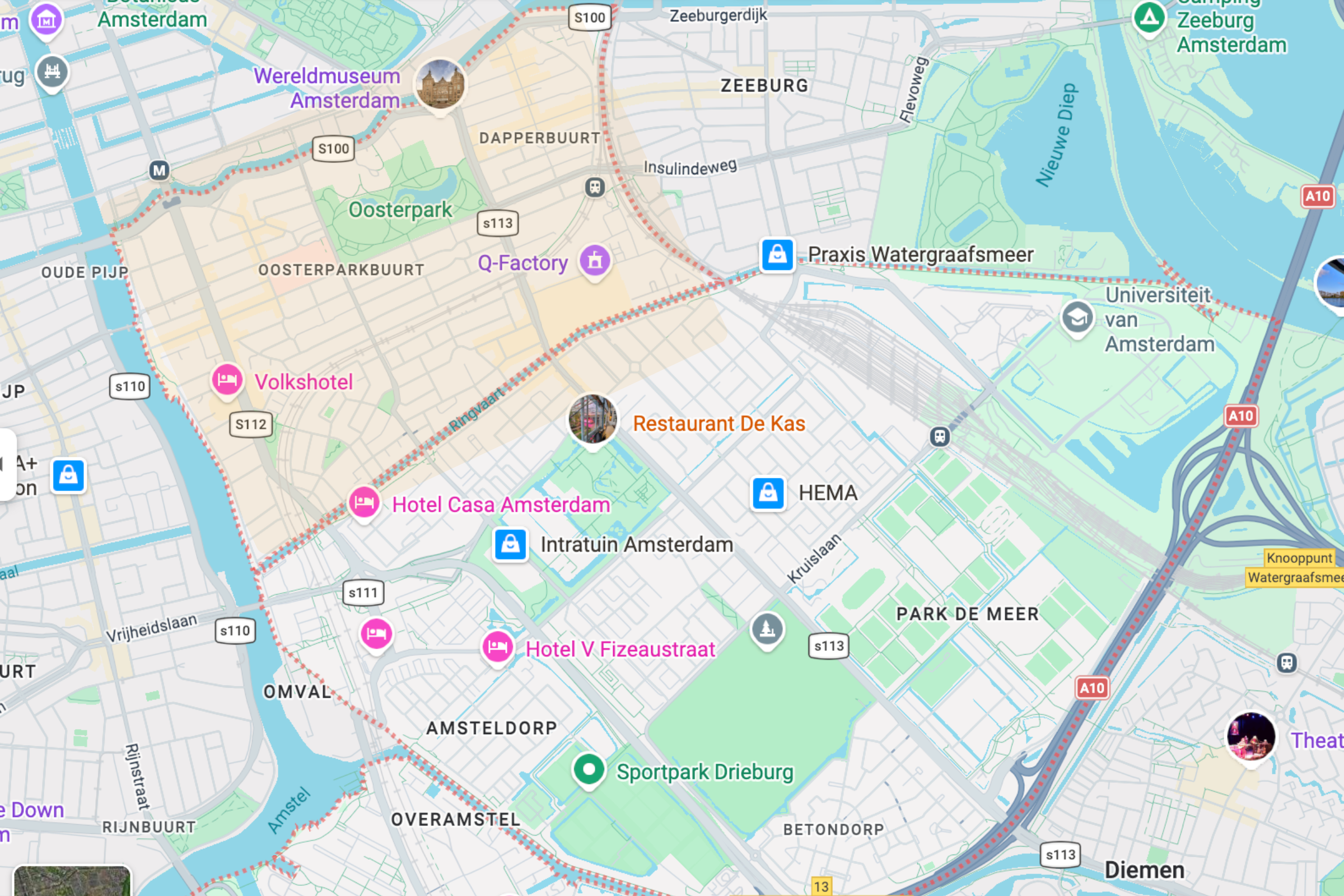
Before the history itself, a quick word on what Oud-Oost actually is. The borough of Amsterdam-Oost is large: it stretches from the Amstel all the way out to the artificial islands of IJburg in the IJmeer, and it is made up of several quite different neighbourhoods: the Indische Buurt north of the railway, the Eastern Docklands along the IJ, Watergraafsmeer with its country estate, and the new world of IJburg and Zeeburg further east. Each of those has its own character and will get its own piece in this series. Oud-Oost is the oldest part: the 19th-century working-class core, planned around the Oosterpark, and the part most locals mean when they say simply “Oost”. This article is about that part.
The neighbourhood was developed from the late 19th century as part of Amsterdam’s eastern expansion, under the direction of city engineer Jan Kalff. The aim was to create new residential areas for the rapidly growing population of workers, artisans, and newcomers who could no longer be accommodated in the crowded Jordaan and inner city. The expansion took shape through a series of municipal developments that together formed what we now understand as Oud-Oost. Over time, several distinct sub-areas emerged within this eastern expansion, including the Oosterparkbuurt around the newly laid-out Oosterpark, the Dapperbuurt centred on the market streets, the Weesperzijde along the Amstel, and the Transvaalbuurt to the south, named in reference to regions in South Africa that were widely discussed in the Netherlands at the time.
The Oosterpark itself opened in 1891 and was an early example of a park built as part of the city’s working-class expansion. Cheap rents, decent housing for the time, and a brand-new park made Oud-Oost an attractive place for new arrivals. People came from across the country and from across the Dutch colonial world, and that mix is still visible in the neighbourhood today.
Like most of Amsterdam’s working-class neighbourhoods, Oud-Oost suffered through the 20th century (economic decline, war, post-war neglect) and the housing stock fell into a poor state. But unlike some of its neighbours, kept much of its original street plan, and large parts of the original housing survived..
Things to do in Amsterdam Oost (Oud-Oost) — like a tourist
Oud-Oost is not packed with the famous tourist sights you find in the city centre. To be honest, if you have only three days to spend in Amsterdam, this is not an absolute must, but it does have a few outstanding places that pull visitors in from across the city and are very cool. These are the ones I’m adding to this section.
‣ Wereldmuseum Amsterdam (formerly Tropenmuseum)
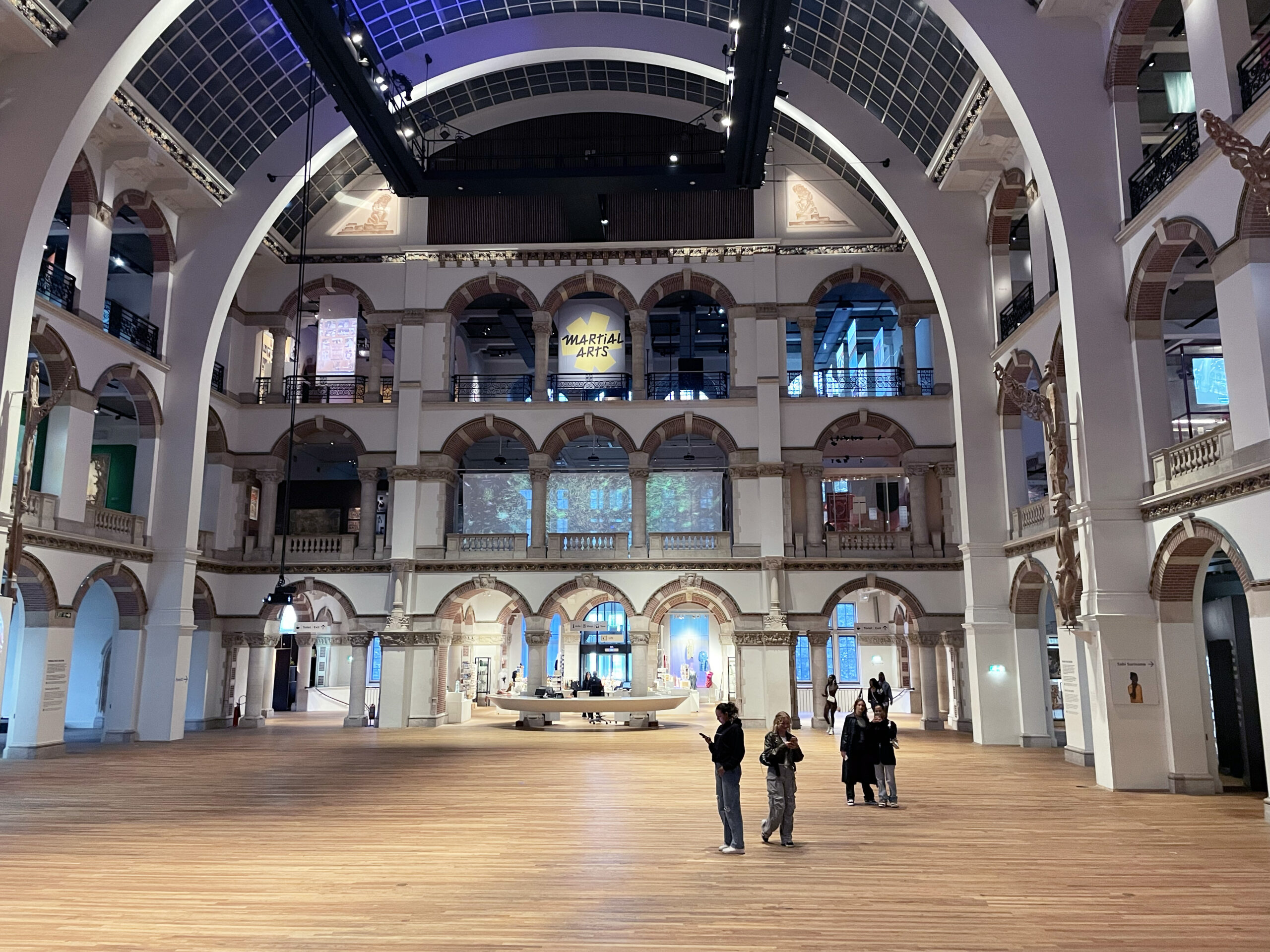
The Wereldmuseum Amsterdam(known until 2023 as the Tropenmuseum) is the most important museum in Oost and one of the most striking buildings in the entire city. The neo-Renaissance complex on Mauritskade was designed by J.J. van Nieukerken and his sons, completed in 1926 and opened by Queen Wilhelmina in October of that year. Originally part of the Colonial Institute, the museum now sits within a national association of ethnographic museums and tells the story of human cultures from a global, post-colonial perspective. It’s a great museum, totally worth visiting, especially if you are interested in anthropology.
‣ Oosterpark
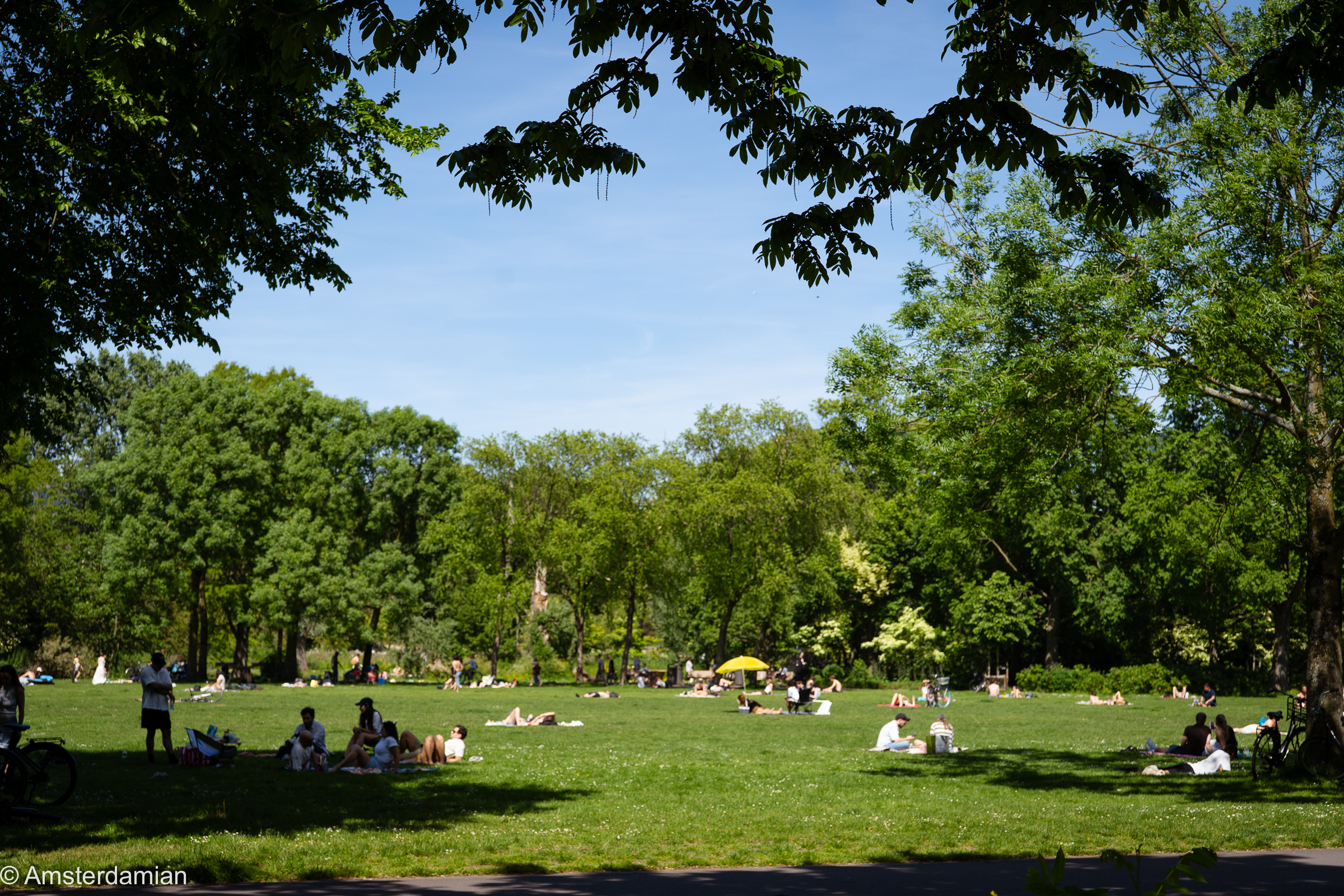
Oosterpark is the green heart of Oud-Oost. It was opened in 1891 and it’s laid out in English style, with winding paths, ponds, lawns and a few statues, and is much used by everyone in the surrounding streets. On warmer days it fills up with picnics, prams, joggers, open-air concerts and occasional festivals.
At the western edge of the park stands the National Monument to Slavery (Nationaal Monument Slavernijverleden), unveiled in 2002. Every year on 1 July the park is the focus of Keti Koti, the commemoration of the abolition of slavery in the Dutch colonies. If you are in the city in early July, it is one of the most moving public events of the year.
‣ De Gooyer windmill and Brouwerij ‘t IJ
On the northern edge of Oud-Oost, on Funenkade, you’ll find De Gooyer — the tallest wooden windmill in the Netherlands at 26.6 metres. The octagonal mill itself dates from 1725, and was moved onto its current stone base in 1814; it is a registered National Monument. Right next door, in the former Funen public bathhouse of 1911, sits Brouwerij ‘t IJ, the craft brewery founded in 1985 by Kaspar Peterson that helped put Amsterdam back on the beer map. The terrace under the mill is one of those places that captures the city perfectly on a summer afternoon.
I love the Brouwerij ‘t IJ beers and my favourites are the IPA’s. If you’ve never tried it, put it on your list.
‣ Dappermarkt
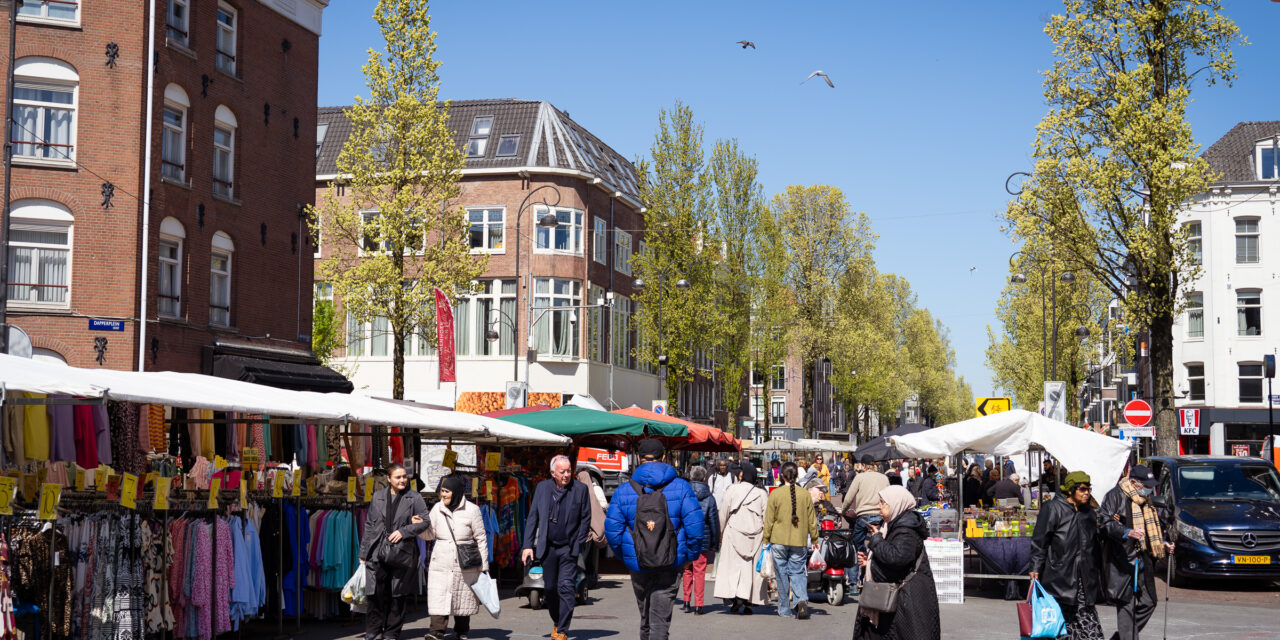
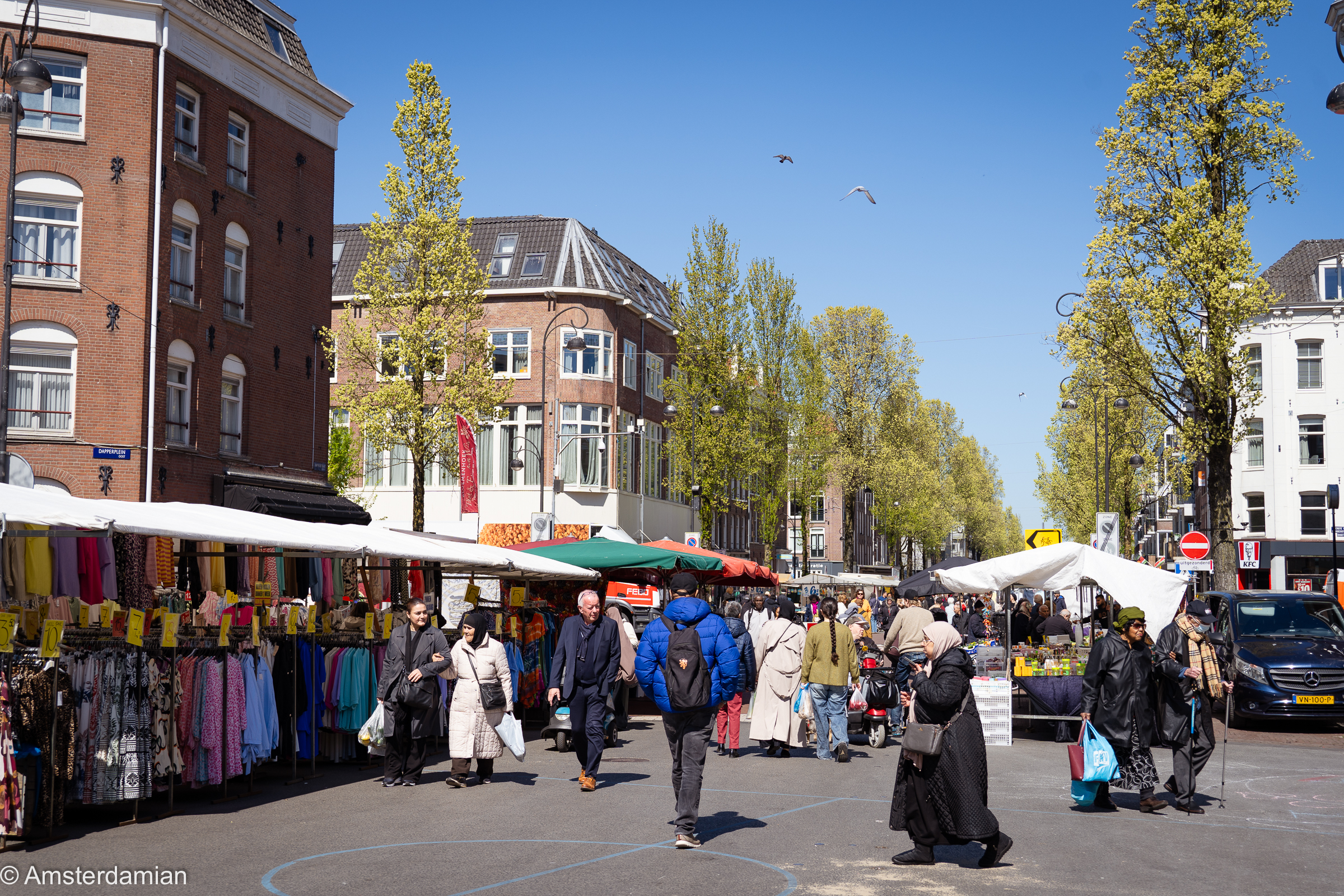
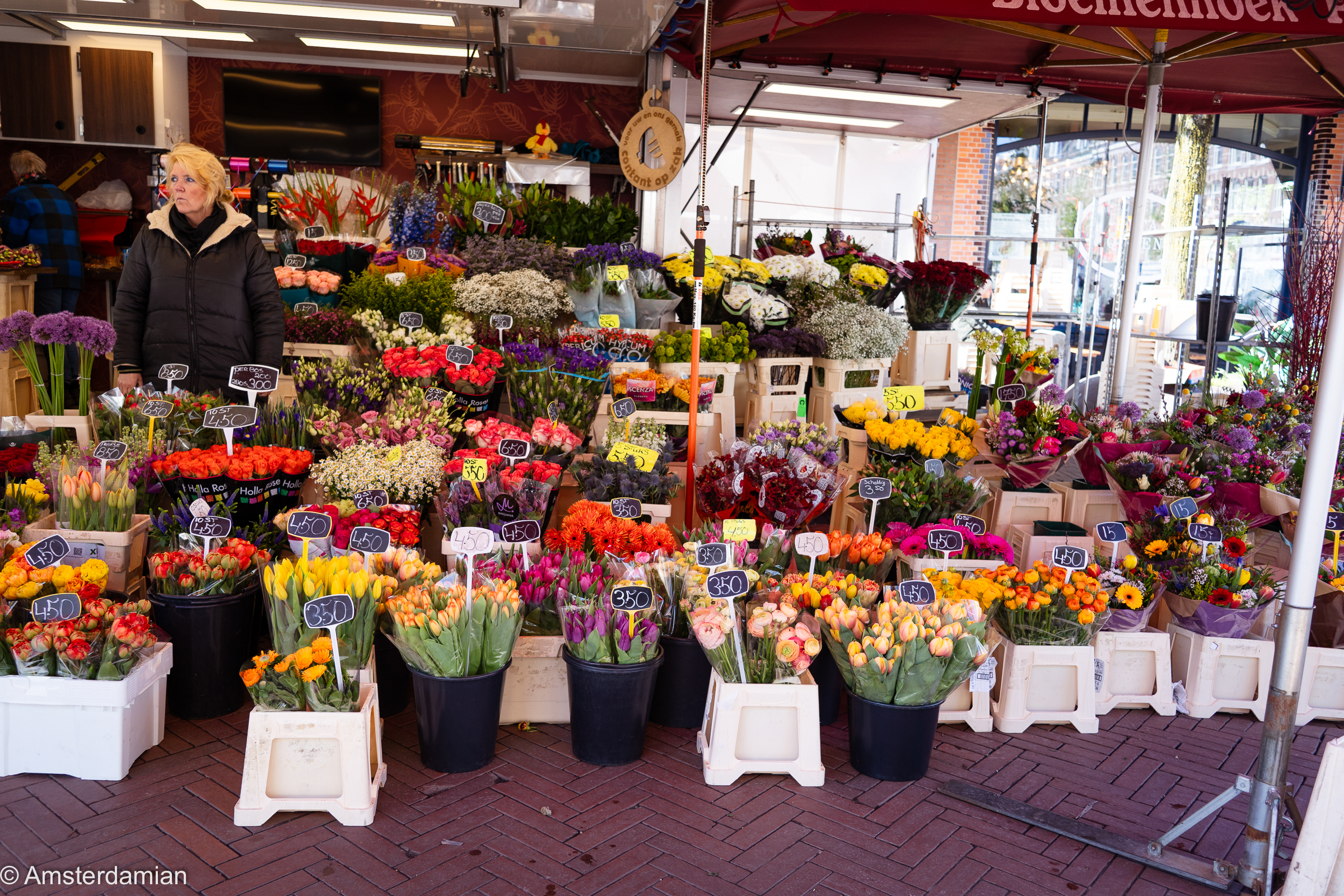
Officially designated as a market street in 1910 and named after the 17th-century Amsterdam doctor and writer Olfert Dapper, Dappermarkt runs along Dapperstraat from Monday to Saturday, 9 a.m. to 5 p.m. It is one of the busiest markets in the city, with stalls selling fruit and vegetables, fish, fabric, kitchenware, Turkish bread, Surinamese roti, Moroccan olives and just about anything else you can think of. For groceries, atmosphere and people-watching, it is the most Oud-Oost thing you can do. It’s not a hip-looking market like Noordermarkt, or a tourist packed one like Albert Cuyp. This is a very authentic market catering to the mix of cultures in the area and a meeting point for the locals doing their groceries.
‣ Muiderpoort
At the southern edge of the Oosterpark, where Linnaeusstraat meets Sarphatistraat, stands the elegant Muiderpoort, a classical city gate built in 1770 in the spot where a 17th-century one used to stand. The most famous moment in its history was in October 1811, when Napoleon entered Amsterdam through it on his only official visit to the city. Today it is one of the few surviving city gates of Amsterdam, and a small but lovely landmark to walk past on your way into the park.
‣ The Suriname Museum and The Black Archives
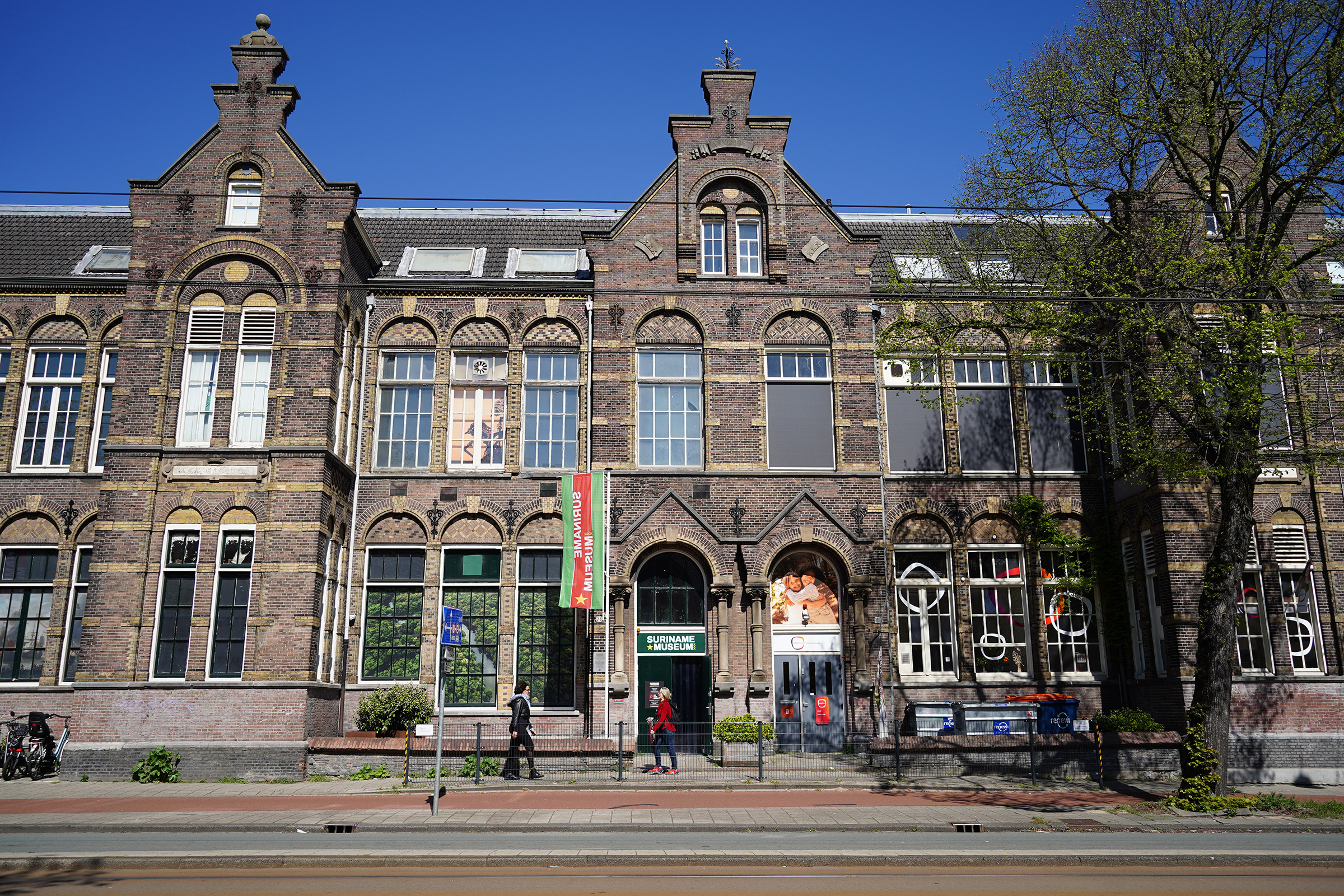
The Suriname Museum in Amsterdam, opened in 2025, explores the history and culture of Suriname, with a focus on its colonial past and the communities that have shaped the country. Through photographs, documents, artworks, and everyday objects, it covers themes such as slavery, migration, resistance, and cultural exchange between Suriname and the Netherlands. Located in a historic monumental building, it offers reflection and context on shared histories and their lasting impact on Dutch society. They are sharing the space now with The Black Archives, a unique historical archive and cultural organisation in Amsterdam that documents and makes visible the rich and often forgotten history of Black people and the African diaspora.
This page includes affiliate links. If you click and purchase, I may receive a small commission at no extra cost to you.
Oud-Oost like a local
When you visit Oud-Oost, you very quickly stop feeling like a tourist. The streets have a residential rhythm; you’ll meet locals coming back from the market or going about their day. If you visit, the trick is to walk around, soak up the view, and let the neighbourhood lead.
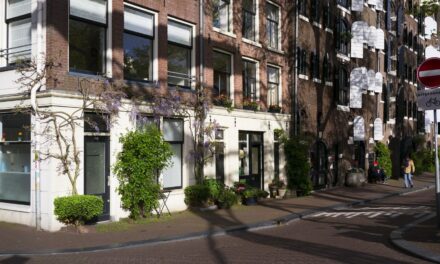
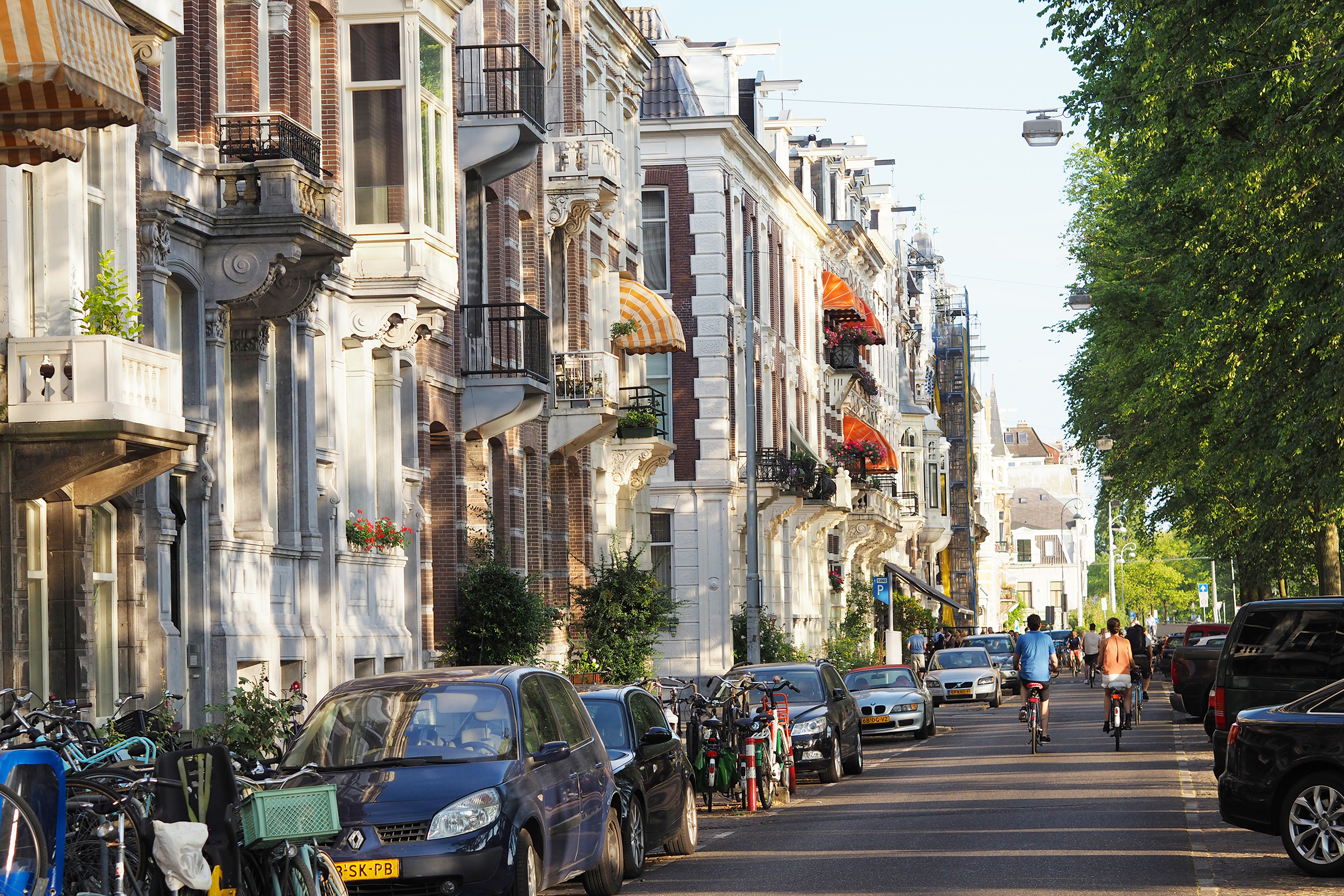
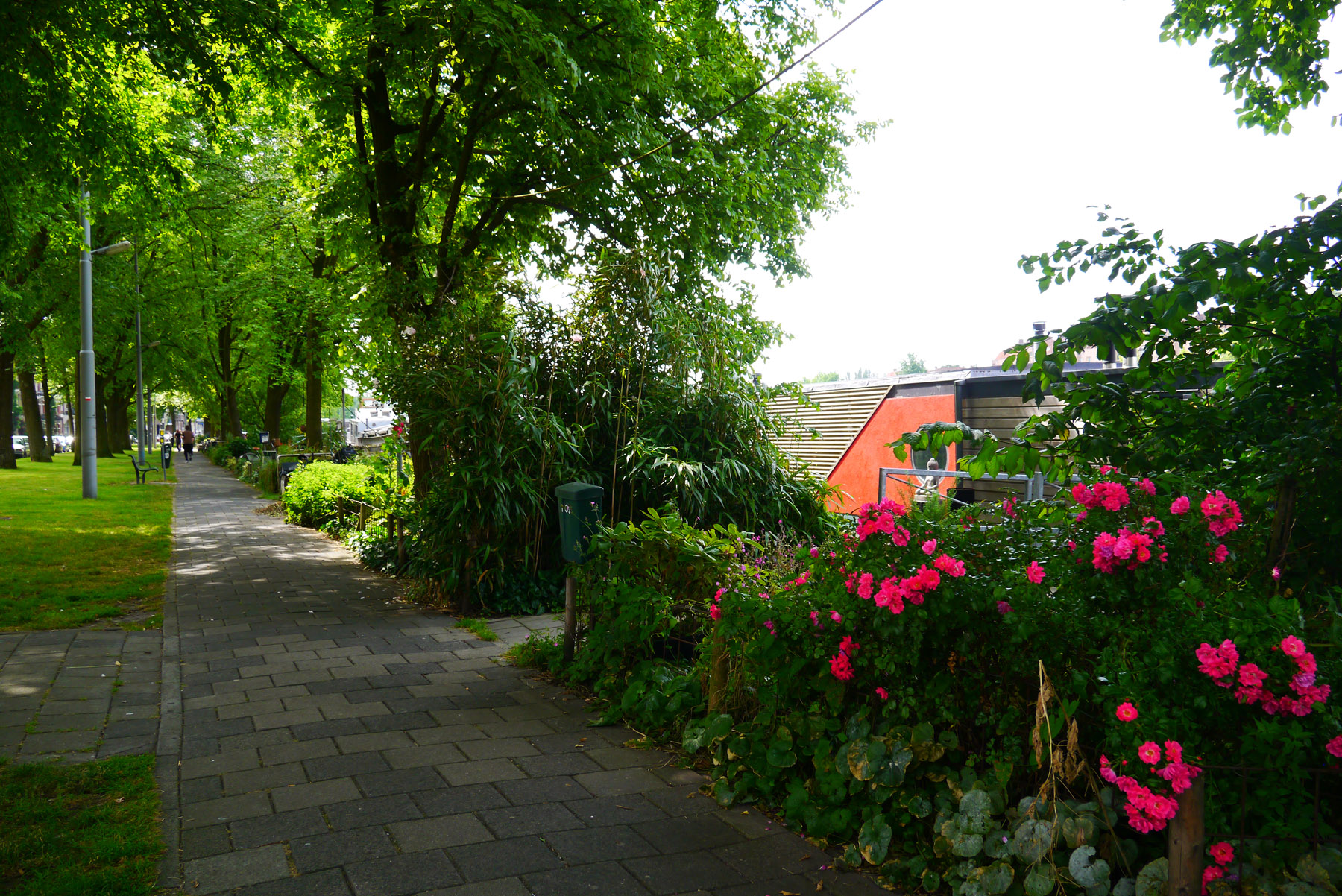
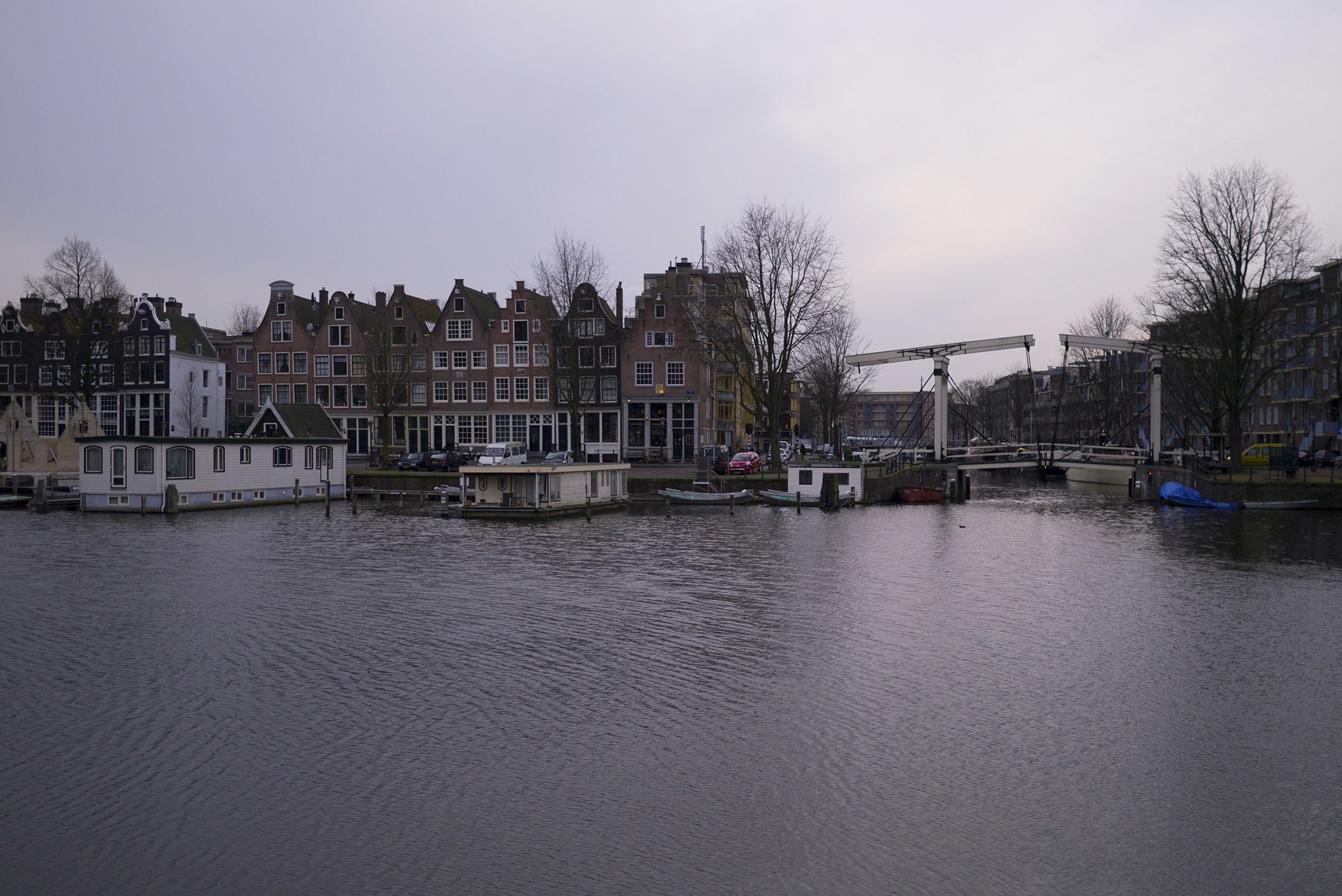
One of the first place to mention is the Weesperzijde, the long line of houses running south along the Amstel. On one side there are the regular houses, and on the other, on the river, there are the houseboats, equally beautiful and interesting. It is the only stretch of the borough that touches the river, and on a summer evening with the sun going down, it’s one of the most beautiful walks in the east of the city. The terraces are filled with locals having their first beer of the evening; you can join them or just keep walking.
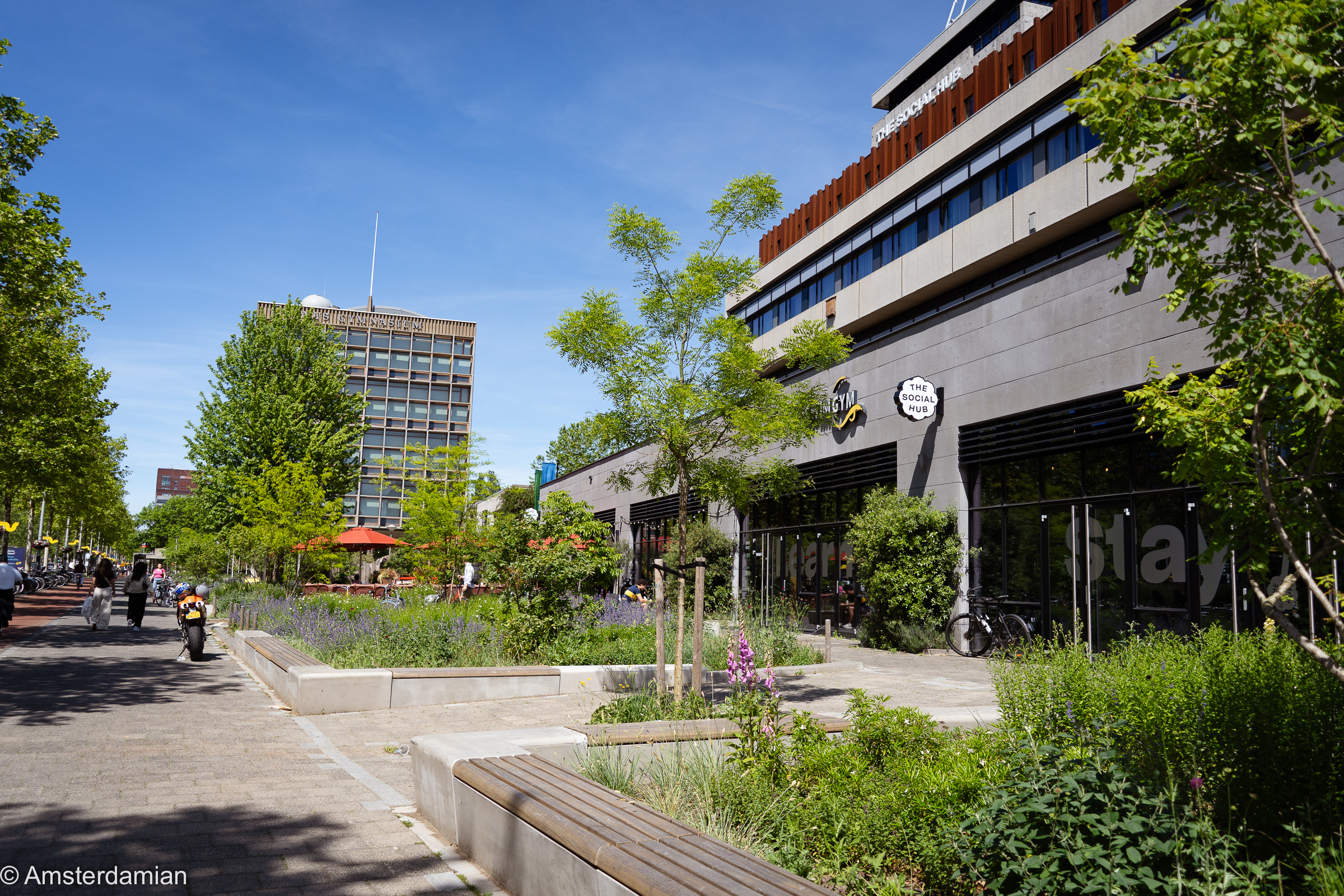
And then there’s the Wibautstraat, parallel with this one but so different! It’s one of those Amsterdam streets that has changed a lot in a relatively short time. Once dominated by heavy traffic and office blocks, it was long seen as more of a corridor than a place to linger. Over the past decade, though, it has been slowly reshaped into a much more mixed urban strip, with new housing, student life, creative spaces and cafés bringing a different kind of energy to the area. You’ll find universities and media organisations alongside cafés, co-working spaces and hotels, which gives the street a constant flow of students, commuters and visitors passing through. A good example is Volkshotel with the café which functions as a mix of café and co-working space, where freelancers, students, and creatives sit side by side with laptops during the day and slowly drift into drinks and events later on. Across the street there’s The Social Hub, another one of those hybrid buildings that has become a kind of social anchor in this part of Oost. It combines hotel rooms, student housing, co-working spaces, and a ground-floor bar and restaurant that’s open to anyone passing through.
Next to the Wereldmuseum sits the KIT Theatre and café, on the edge of Oosterpark. Today it functions as a local meeting place as much as a cultural venue, with people coming here for coffee, informal meetings, and events in the theatre space. The café opens into the building’s large central hall, so you get this mix of everyday use and monumental architecture, right in the middle of the neighbourhood.
There are also two small theatres: Plein Theater(community space and a performance venue) and Badhuistheater (Boerhaaveplein), a former bathhouse turned into a very local theatre and meeting space.
Places to eat and drink in Oud-Oost
There is a range of food in Oud-Oost: Turkish bakeries, Surinamese rotis, specialty coffee, brown cafés, and almost nothing here is a tourist trap(that doesn’t mean they are all good, though).
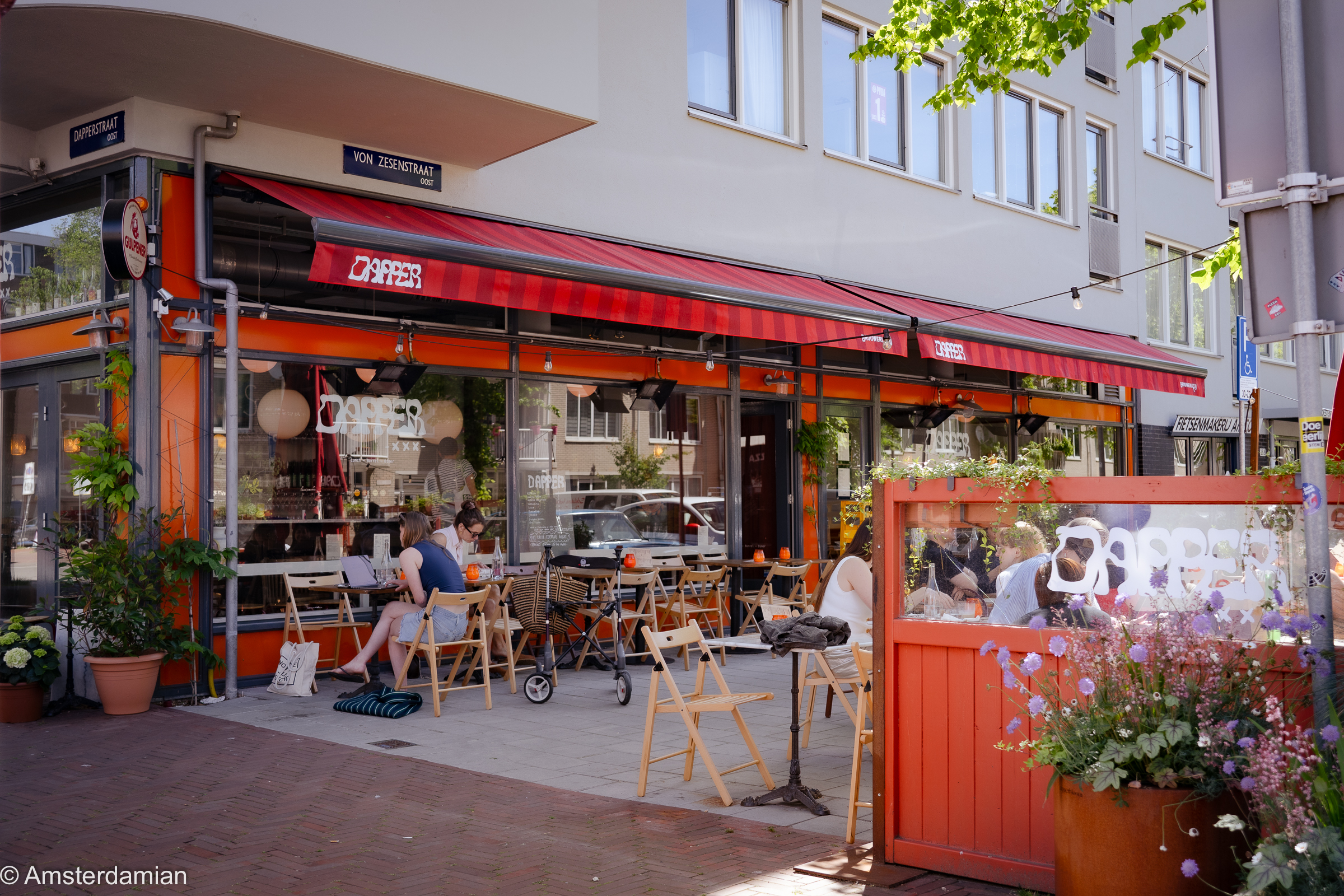
For specialty coffee: Coffee Bru on Beukenplein, Wakuli Coffee on Linnaeusstraat, KAFFEE on Dapperplein, Bertus (Coffee & Pastries) at Alexanderplein, YUSU, Café Dapper, The Greek Embassy – Coffee Bar Kouzina, 4850 (coffee, wine and food). If you’re into bakeries, check out Hartog’s Wholegrain Bakery and Milling on Wibautstraat, Olafbrood Bakery Dapperstraat, Baking Lab Amsterdam.
For lunch and brunch there’s a good variety to choose from: Five Ways Coffee Roasters, Benji’s, The Breakfast Club, Bagels & Beans Ruyschstraat.
Restaurants: Mister Watson, a new addition to the neighbourhood (mushroom focused, vegan), Veganees (vegetarian and vegan Asiatic style), Loetje Oost, BAUT Oost, Café Restaurant De Ysbreeker (with a great view), Loulou Pizzabar, De Biertuin East. An Oud-Oost classic is Roopram Roti on Eerste van Swindenstraat — Surinamese rotis served from a counter.
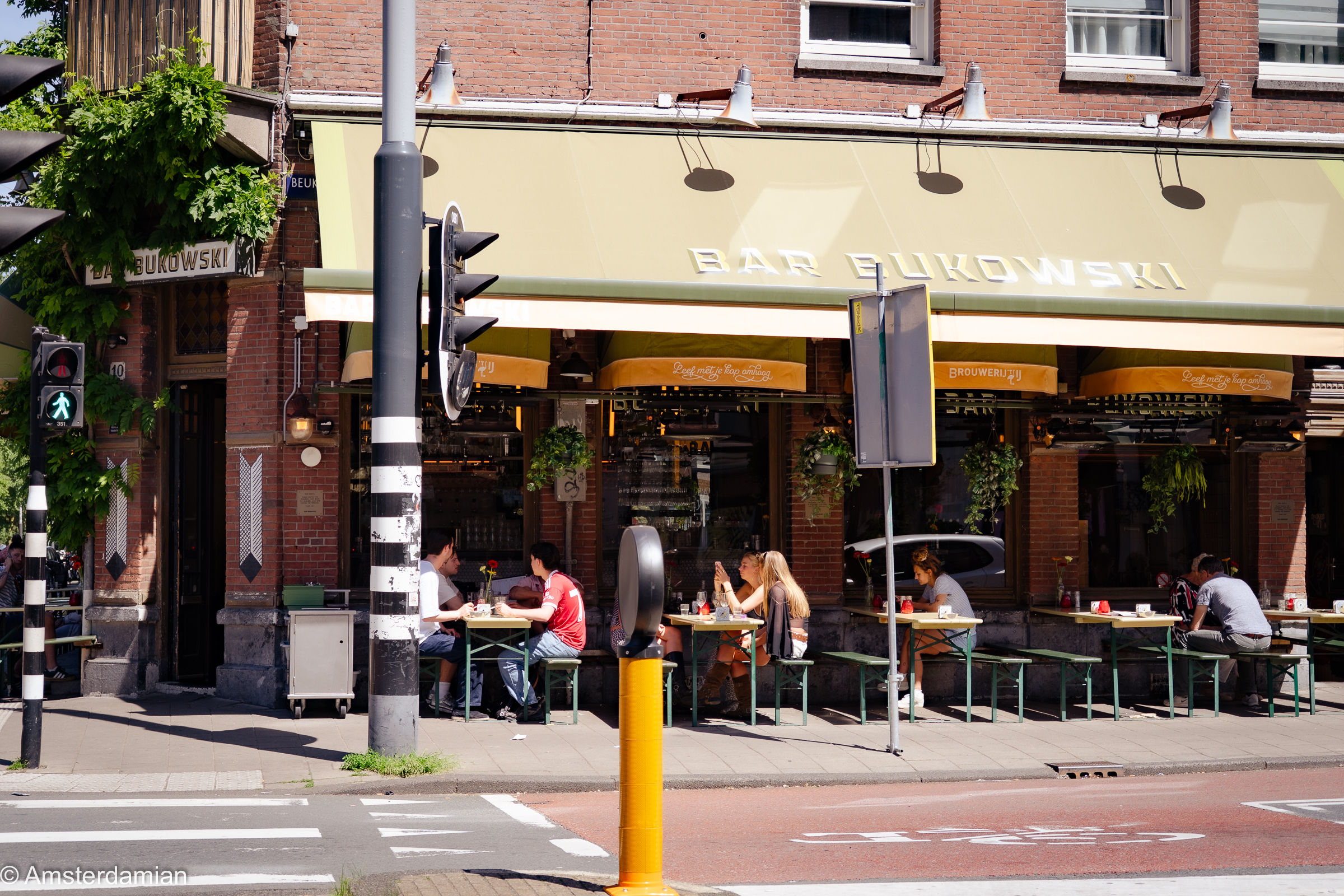
For drinks and brown cafés, the obvious one is Brouwerij ‘t IJ under the windmill. For something more traditional, Café Hesp on the Weesperzijde overlooks the Amstel and has been there forever; Bar Bukowski near the Oosterpark is the newer-but-already-classic option for an evening drink. For a rooftop with a view, the Canvas bar on top of the Volkshotel on Wibautstraat has one of the best panoramas in the east, especially at sunset.
Oud-Oost is not a postcard neighbourhood. It is the kind of place you fall for slowly, after a few visits, when you start recognising the same faces at the market and remembering which café to go to in which weather. If you want to feel Amsterdam as a working, living city, this is the place to come. Amsterdammers’ preferences often split between West and East (Oost), and I guess you love one or the other more depending where you lived the most. I’ve lived in Amsterdam West most of my years here, so I’m still discovering the charm of Oost. Do you have any favourites?
Stay tuned for more and follow Amsterdamian on Instagram and Facebook for more stories about life in the Netherlands, written by a real local, updated constantly.
Check out my photo book: Amsterdam Through the Seasons!
Love what you’re reading? Support my work with a small donation.
And share this post if you liked it!






Trackbacks/Pingbacks