
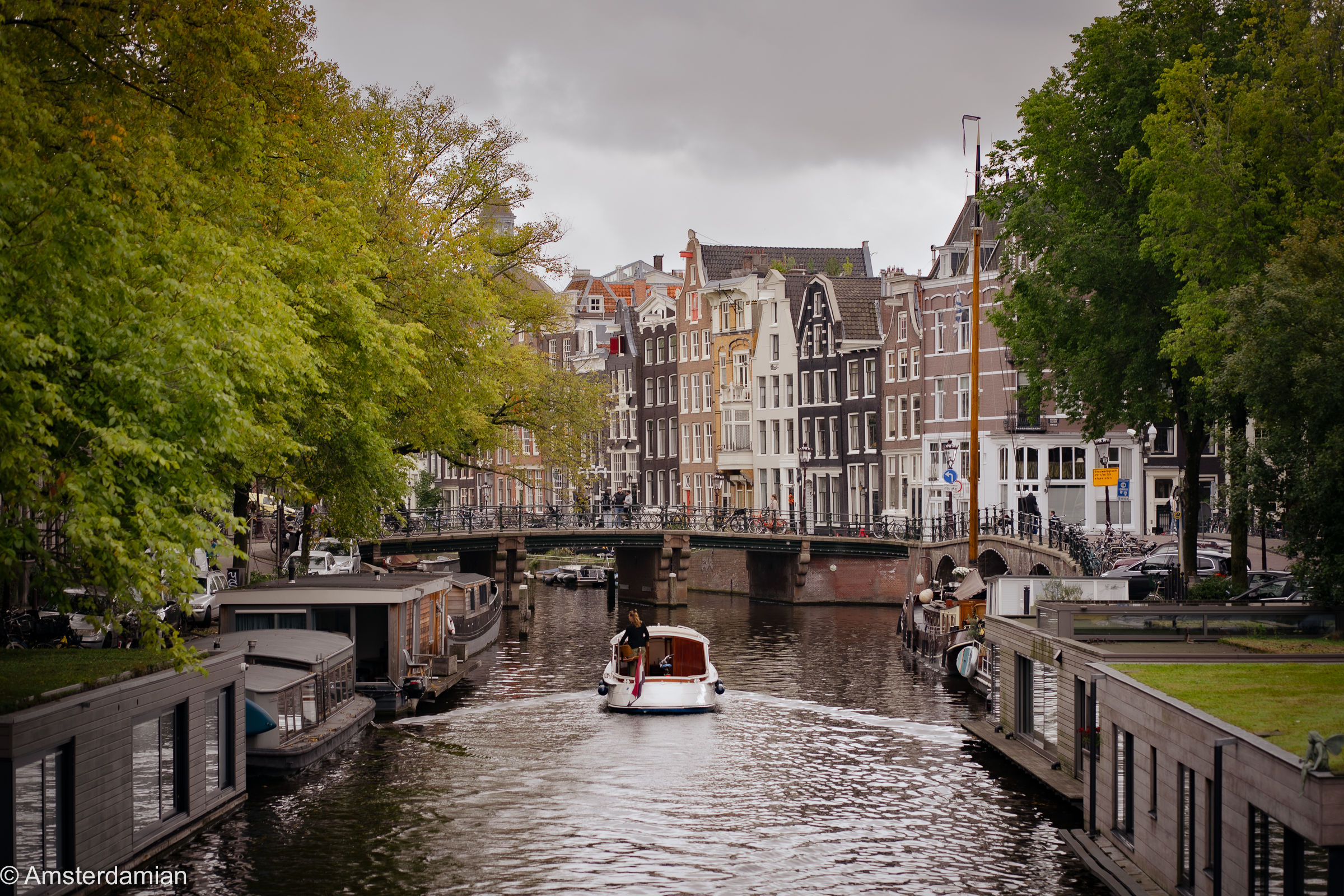
Amsterdam is a water city before it is anything else. There are around 165 canals threaded through the centre, the broad Amstel running up into the heart of it, the open expanse of the IJ behind Centraal Station, and a ring of lakes on the edges where everyone in the city goes to cool off in summer. The honest truth is that you have not really seen Amsterdam until you have seen it from the water. Here is how to actually get out on the water, from the obvious to the slightly mad, with the prices and the rules.
The first time I discovered Amsterdam from the water was when I came here as a tourist, years ago. We took one of those big cruise boats, which are now the least of my favourites, and we still enjoyed the experience very much. Then I moved here and I tried other options: small open boats, small covered boats, luxury cruises and pedal boats. What I haven’t tried but I dream about doing one day is SUP-ing. I see myself floating on the Amstel river at sunset, when the water traffic is thinning out and it’s only me and the birds breaking the sparkling ripples. Or maybe in the morning, to watch the city waking up and the fog dispersing. Swimming in the canals is another thing I haven’t tried, but that is not really a dream of mine 😀
This page contains affiliate links. If you click and book, I may receive a small commission at no extra cost to you.
Rent your own boat (no licence needed)
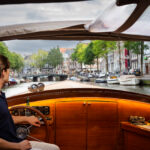
You can rent a small electric boat and skipper it yourself, with no licence required; the only rule is that the driver is over eighteen. The boats are simple to handle and barely faster than walking pace, and before you set off you get a quick briefing on how to steer and which side to keep to. Expect to pay somewhere around €80 to €100 for two hours in a boat that seats six to eight, with extra hours added on top; rates vary by company and boat size.
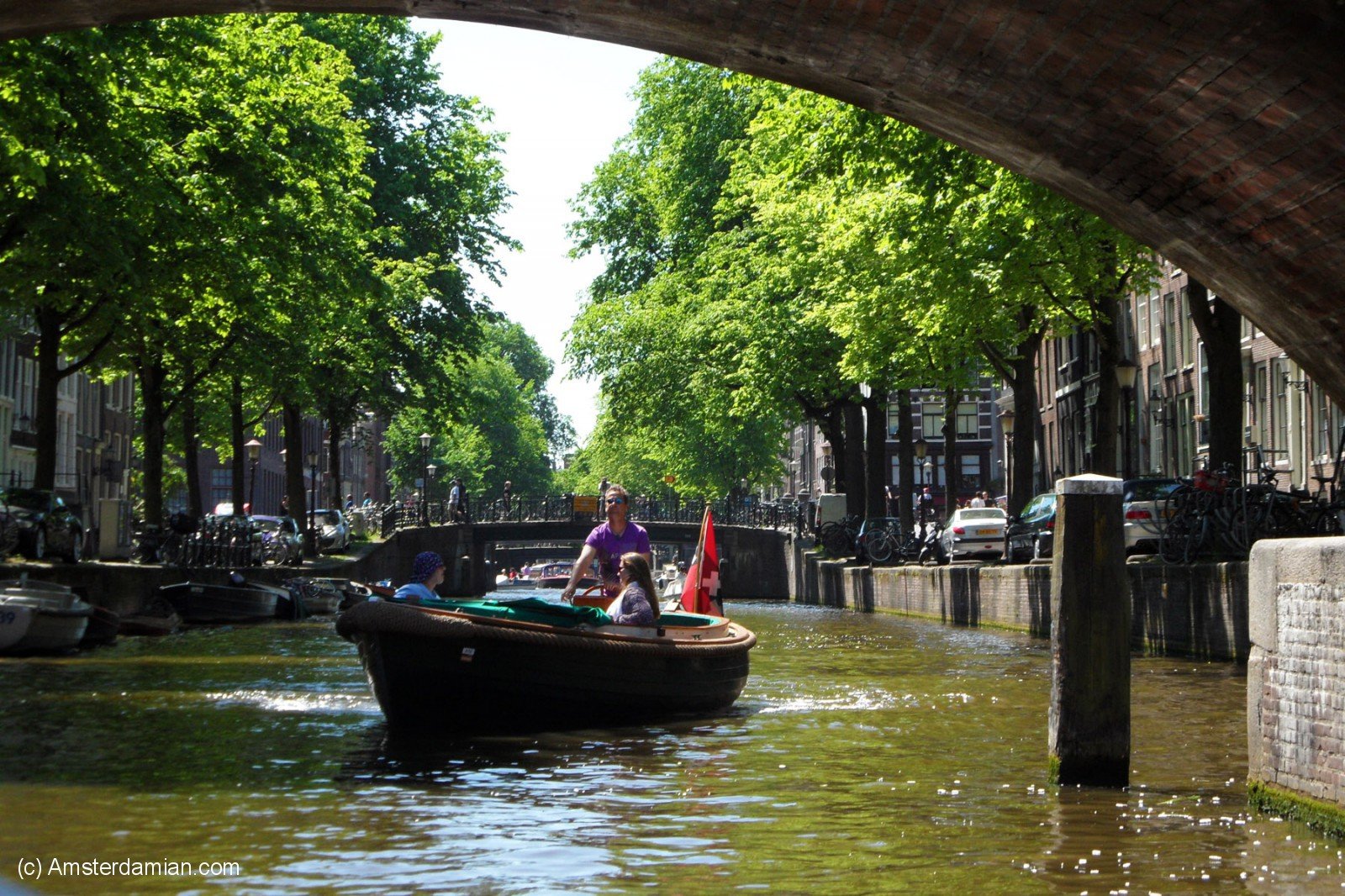
Usually you also get a map of the route you can take. The Jordaan’s narrow canals are the intimate, postcard Amsterdam, with tight bridges, leaning houses, brown cafés at the water’s edge. The main ring (Herengracht, Keizersgracht, Prinsengracht) is the grand version, all seventeenth-century gables. And the Amstel gives you room to breathe, wider and calmer, the city opening out around you all of a sudden. A small electric boat can slip into the little side canals the big tour boats can never reach, which is half the joy of having your own.
You have to keep in mind a few rules. First, you are not allowed to play amplified music on an open boat on the canals — the fine is around €140, so keep the speaker at home. Second, you can bring your own food and drink, alcohol included, but whoever is steering needs to stay sober; pick your skipper before the first bottle is opened. There is also a small per-person city tax on boat rentals.
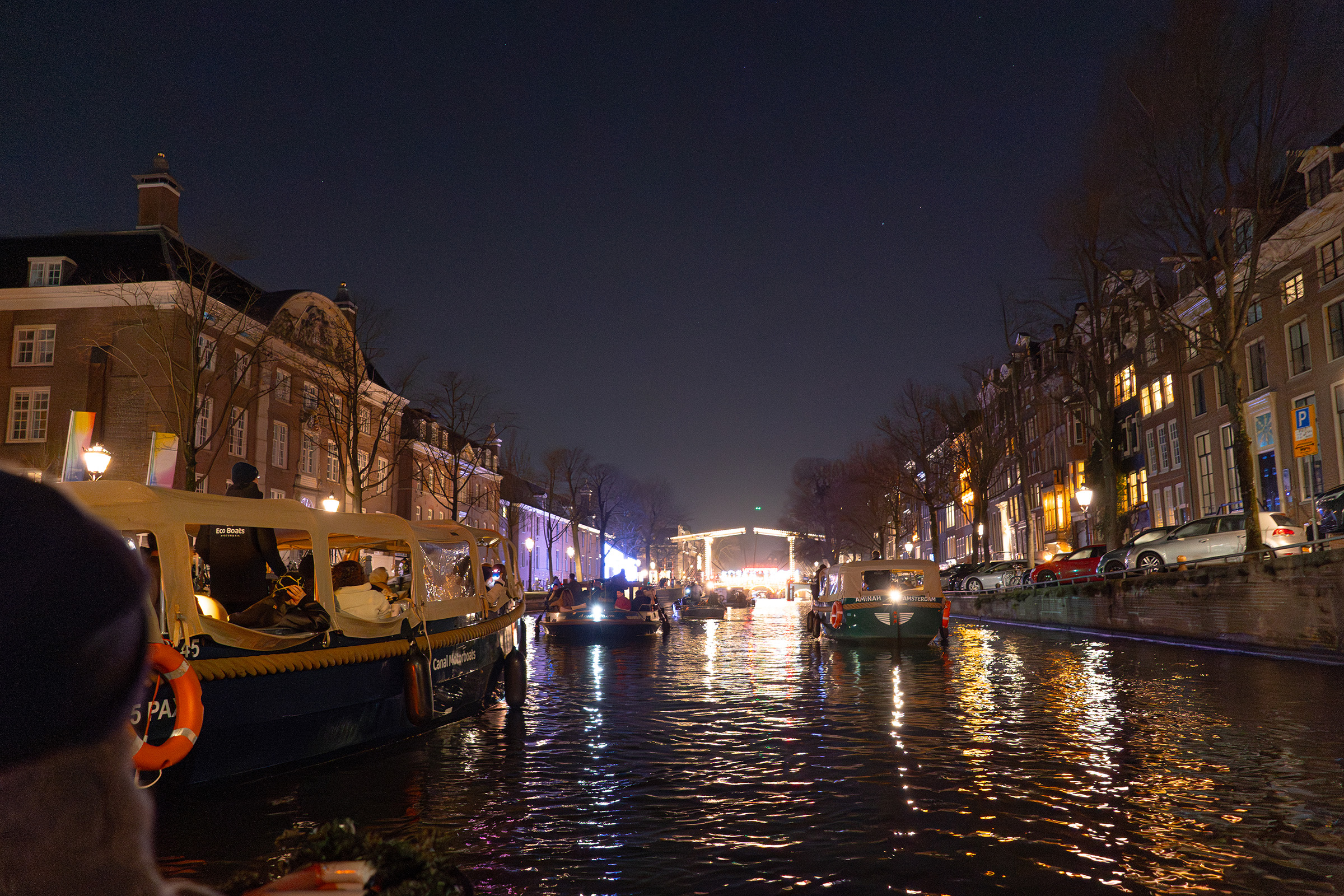
Las winter we went to see the Light Festival with some friends in self-driving boat from Eco Boats. It was a great experience, very easy to manoeuvre, and I gladly recommend them for any time of the year.
Take a canal cruise (if you’d prefer someone else driving)
If you would rather sit back with a drink and let someone else bother with the driving, a canal cruise is the classic for a reason. My advice is to skip the enormous glass-topped boats where you are one of a hundred behind a window, and choose one of the smaller open (or closed, if it’s raining) electric boats with a local skipper who actually talks to you. Evening cruises are lovely as the bridges light up, dinner cruises turn it into a whole night out, and in winter the Amsterdam Light Festival is genuinely best seen from the water, gliding under the illuminated artworks strung across the canals.
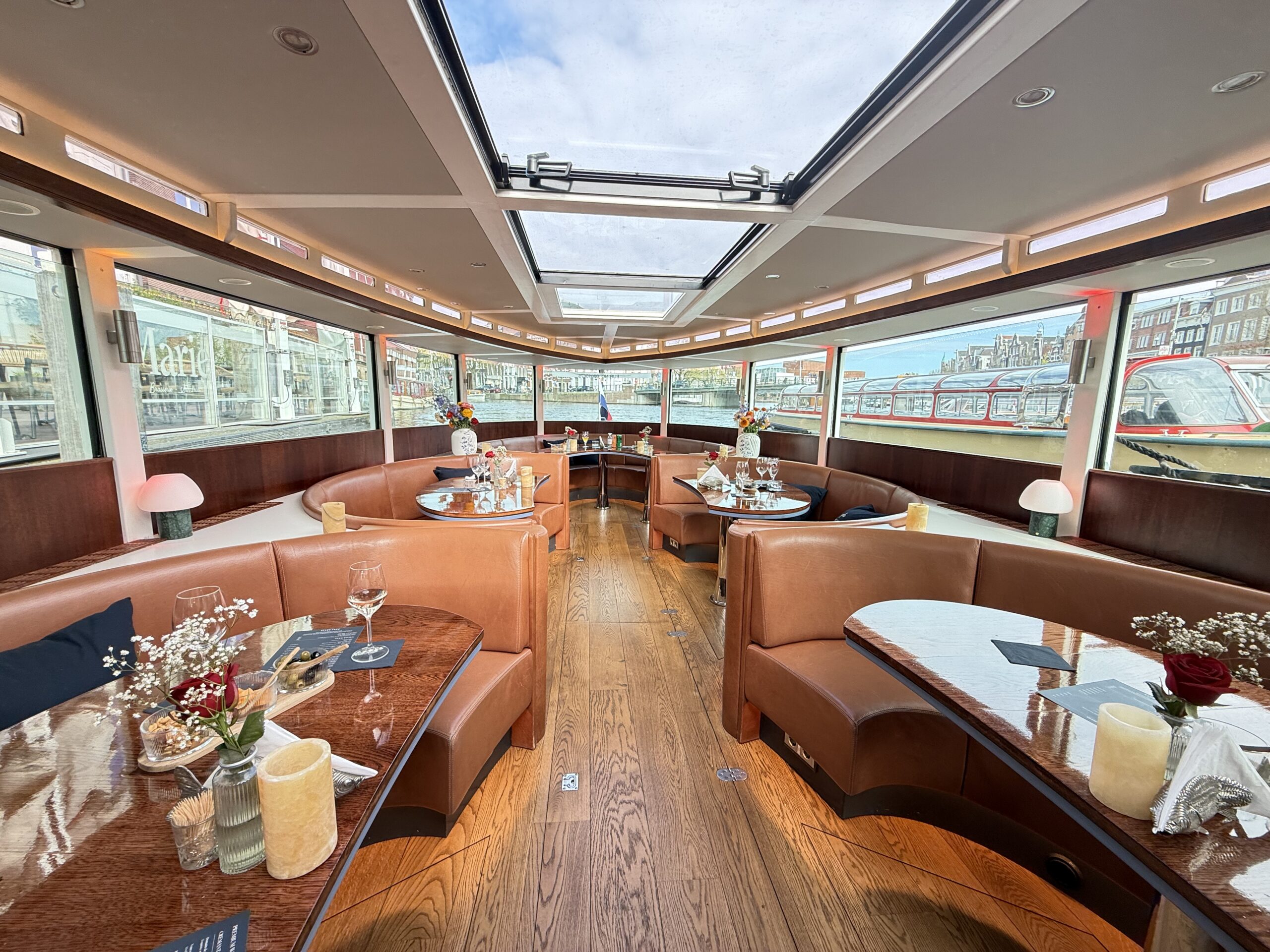
For a luxury experience, I recommend Pure Boats. We went on the semi-private cruise this spring and it was something special. We had food and drinks on a beautiful, freshly renovated boat; we had a guide as well, who told stories but also gave us enough time to talk among ourselves and enjoy the ride (not that I learn anything new about Amsterdam on these tours nowadays, but it’s fun and interesting for new-comers). It could be a great idea for a date, a celebration, or simply a treat for yourself.
Stand-Up Paddleboarding (SUP)
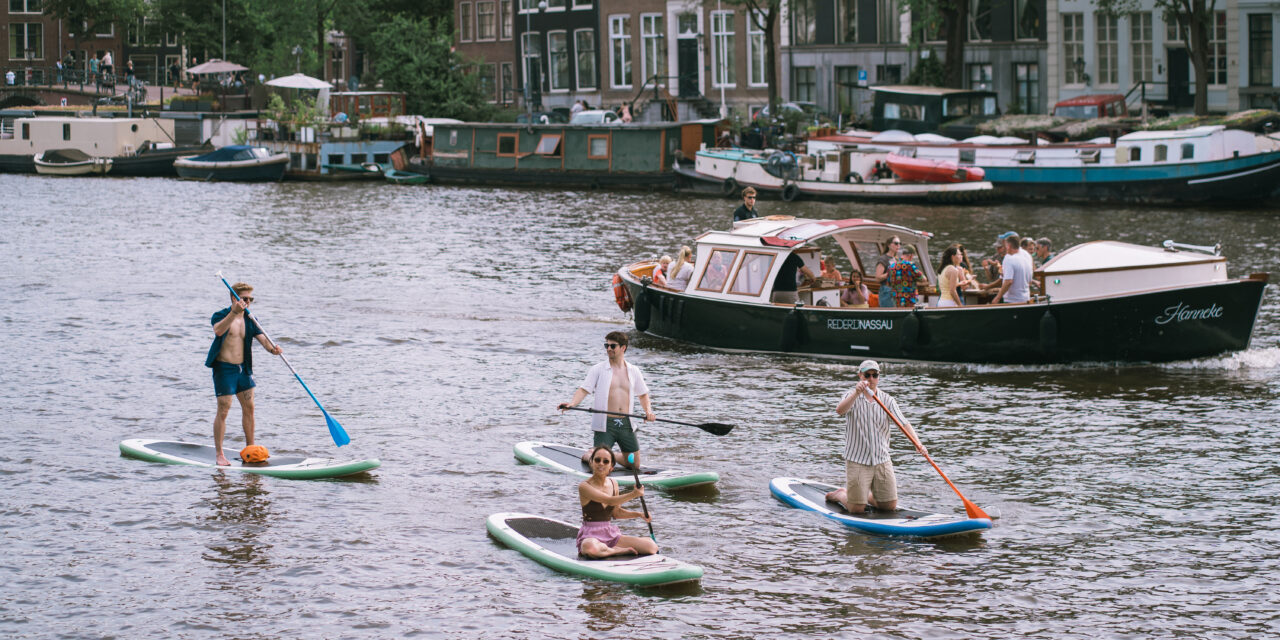
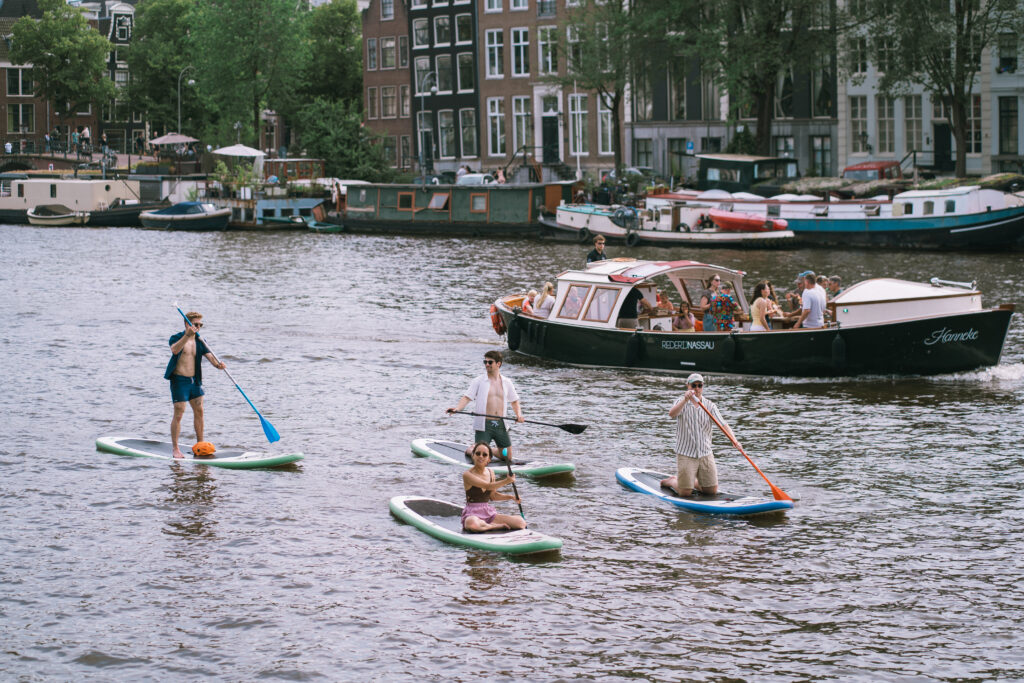
SUP is taking over Amsterdam’s water in the warmer months, and it is the most surprising way to see the city: standing up, gliding past the houseboats. They say it’s easier to learn than it looks, and the canals are calm and current-free, and rental starts at around €12.50 an hour, with day rates near €40. The trick the locals know: go early. In the first hours of the morning the Amstel and the quieter canals are almost empty, the water is like glass, and you have the city more or less to yourself before the boats wake up.
Kayaking and canoeing
For something a touch more sporty, a kayak or canoe sits you right down at water level. Outfits like Kayak & SUP Amsterdam run from the Amstel on the south side of the centre, with introductory sessions for beginners and routes that take you off the busy stretches into the calmer waterways. Paddle out towards the Amsterdamse Bos to trade the city canals for trees, herons and open green, a completely different afternoon, and a quietly lovely one.
Pedal boats or canal bikes
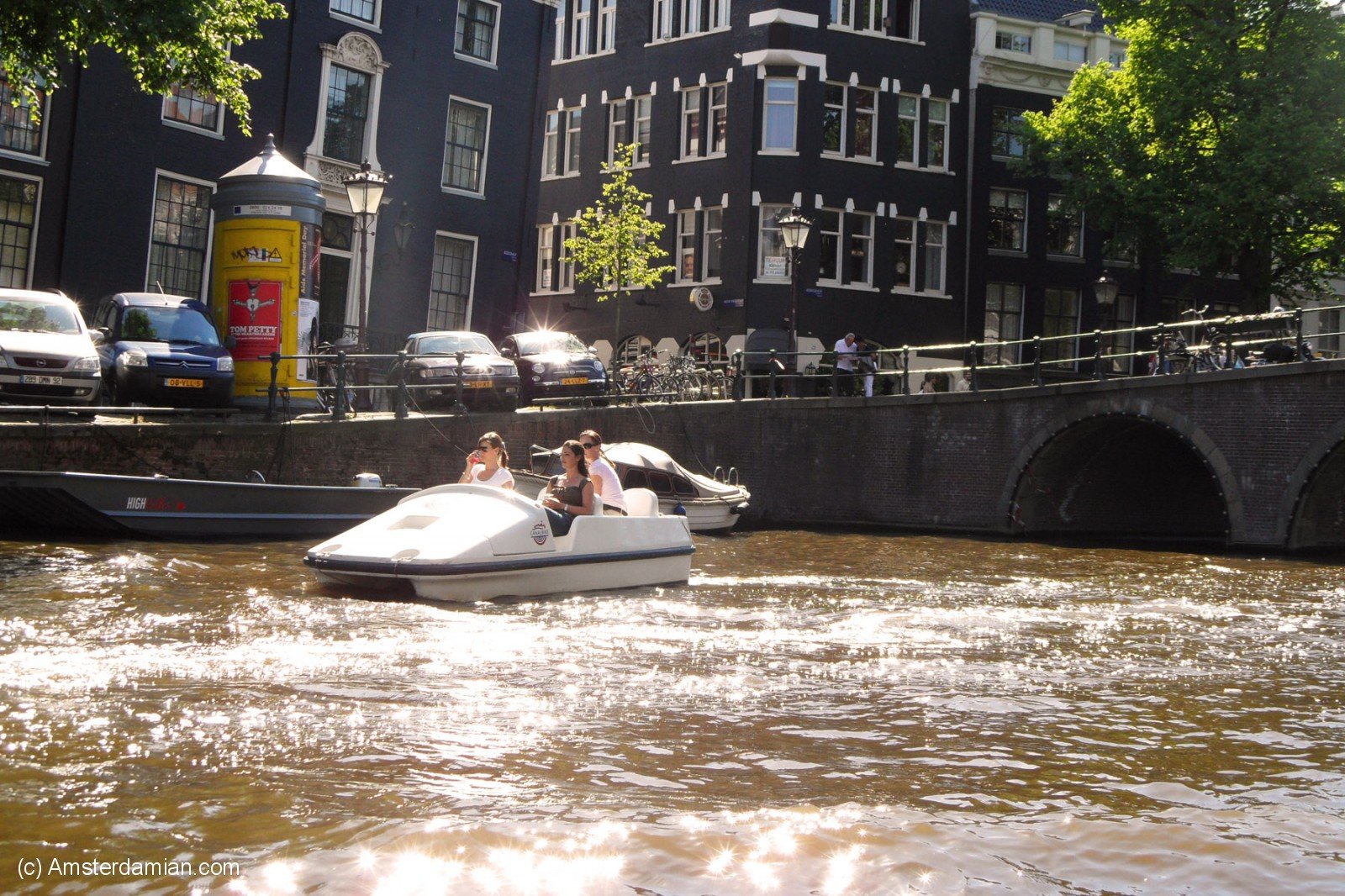
Not glamorous, but honestly good fun, especially with children: the pedal boats moored near the Rijksmuseum let you explore the canals at your own pace, usually for a minimum of an hour. They are cheap, slow and a bit ridiculous, and that is rather the point. A solid choice for a sunny afternoon with kids (but not only) or a lazy hour that does not need a plan. I tried this a few year ago during a team outing and it was fun!
↪ Plan your day: Pedal Boat Rental from Rijksmuseum
Something a bit different on the water
Amsterdam being Amsterdam, the water is not all serene paddling. A few only-here options are worth knowing about:
⏺ Plastic fishing
You can cruise the canals while scooping plastic out of the water with a net, part boat trip, part clean-up. Plastic Whale built a whole social enterprise around it, turning the rubbish into furniture and boats, and several rental companies offer it as a cheap add-on. It is good for the canals, surprisingly satisfying, and a genuinely nice thing to do.
⏺ The hot tug
Exactly what it sounds like: a little wood-fired hot tub that is also a boat. You sit in water heated to around 38 degrees and chug gently along the canals, which on a cold, clear day is one of the most absurd and wonderful things you can do in this city. I have to try this next winter!
⏺ Silent-disco and party boats
Because amplified music is banned on open boats, the workaround is headphones — silent-disco cruises let a group dance their way through the canals without breaking the noise rules or anyone’s eardrums. Daft in the best way.
Swimming in Amsterdam
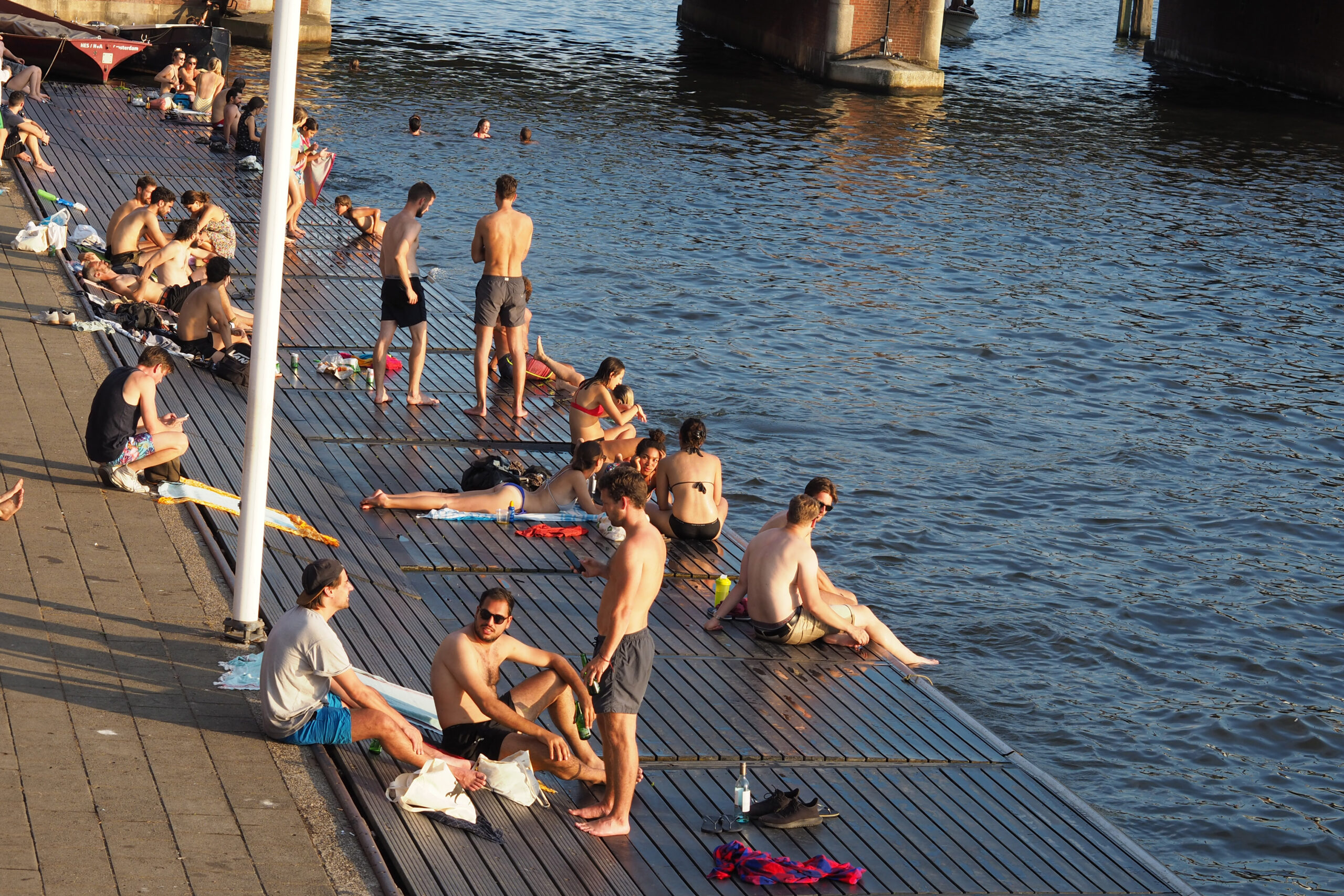
Here is where locals and visitors part ways, so let me be very clear: do not swim in the canals. It is tempting on a hot day, but the central canals carry boat traffic and lock systems, the water quality is not tested for swimming, and there is a real risk of nasty waterborne infections. People do jump in on the hottest days; it is not a good idea, and the city advises against it.
Where locals actually swim is the lakes and the designated spots. Strand IJburg on the east side is the city beach, with sand and shallow water and lifeguards in season. Gaasperplas in the south-east and the Nieuwe Meer in the Amsterdamse Bos are big, clean lakes made for swimming. The Diemerpark has water too. And since spring 2025 there is finally an official swim spot right in the centre — the inner harbour at the Marineterrein — though there are no lifeguards there and you swim at your own risk.
Two practical notes. Official swimming water is monitored for quality between 1 May and 1 October, and you can check the current status of any spot on the Dutch swimming-water site or the Waternet information before you go; blue-green algae warnings are common in high summer.
The free one locals love to recommend: the IJ ferries
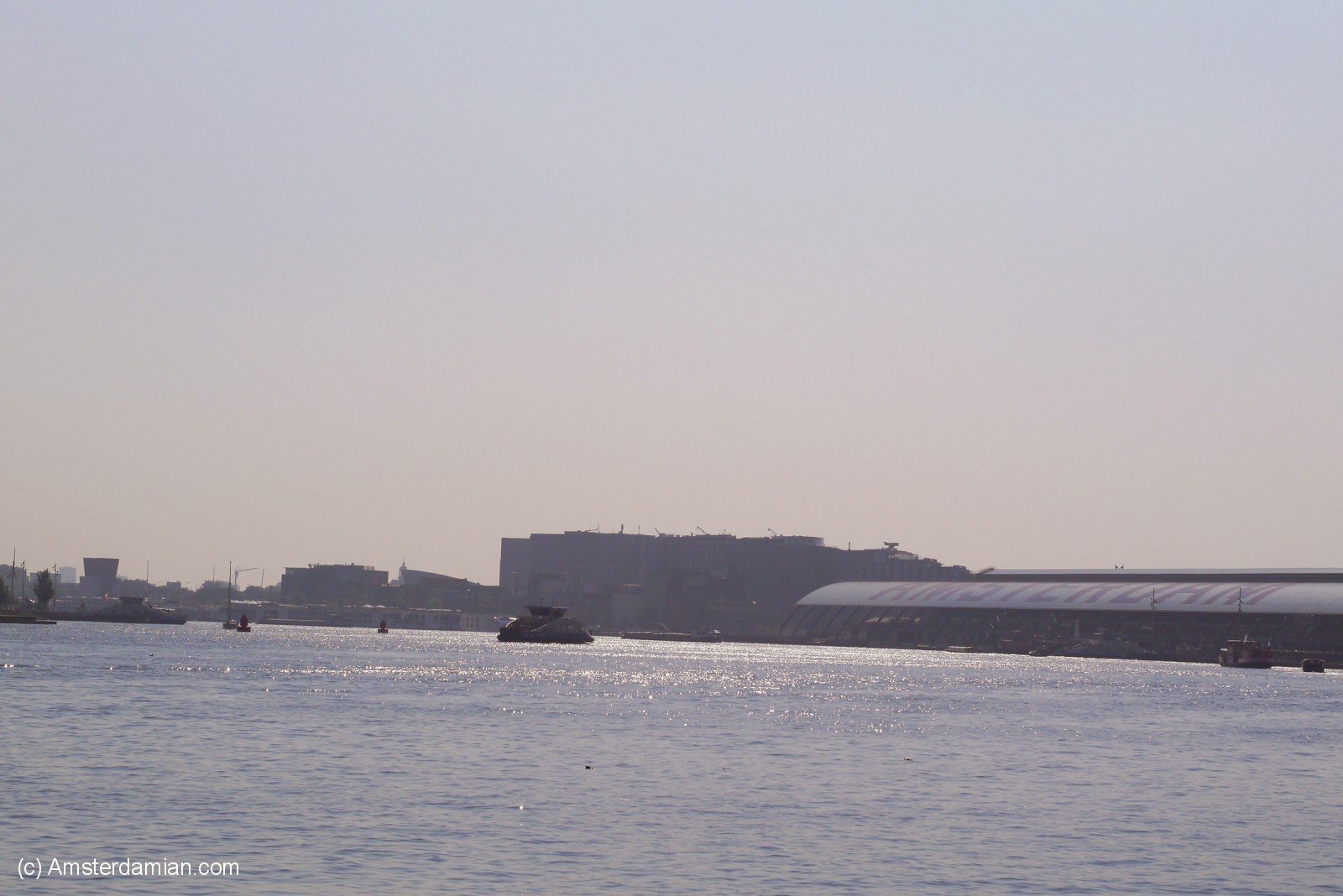
The best cheap thrill on the water is completely free. Walk to the back of Centraal Station and hop on one of the GVB ferries that shuttle across the IJ to Amsterdam-Noord — to Buiksloterweg, or the longer ride out to the NDSM wharf. They run constantly, cost nothing, take a few minutes, and on the crossing you get the wind, the working river, the big boats, and a view back at the city skyline that no paid cruise quite matches. Take a coffee, ride it across and back, and you have had a proper water outing for the price of nothing.
I absolutely love riding the ferries to Amsterdam Noord. I always try to be among the first ones to enter so I can cross the ferry and find a good spot outside. I love feeling the wind on my face, watching the cityscape, the special light over the IJ, and the other boats. There are a few other spots in the city where you can take a ferry, but the easiest one is Central Station. I love going to NDSM as the ride is a bit longer, but also cross very often to go to the Eye Filmmuseum right across the water.
Beyond the canals: sailing the IJ and the IJsselmeer
When the canals start to feel small, the water keeps going. Out on the IJ and the great inland sea of the IJsselmeer you can sail properly, charter a classic flat-bottomed boat with a skipper, or join a sailing trip out onto open water that feels a world away from the city centre. The fortress island of Pampus, part of the old Defence Line of Amsterdam, sits out in the IJmeer and makes a brilliant half-day by boat in summer.
Water on the Calendar
Some of Amsterdam’s best days happen on the water. King’s Day, on 27 April, turns the canals into a floating street party, every boat in the city packed and orange and going nowhere fast. The Pride Canal Parade, which sails on 1 August this year as the centrepiece of WorldPride Amsterdam (25 July to 8 August 2026), is the only boat parade of its kind in the world, a procession of decorated boats watched by hundreds of thousands from the quays. SAIL Amsterdam brings tall ships from around the world into the IJ. It runs only every five years, and the last edition was in August 2025, so the next, in August 2030, is one to plan ahead for. And in the depths of winter, the Amsterdam Light Festival lines the canals with light artworks made to be seen from a boat; the next edition runs from 26 November 2026 to 17 January 2027.
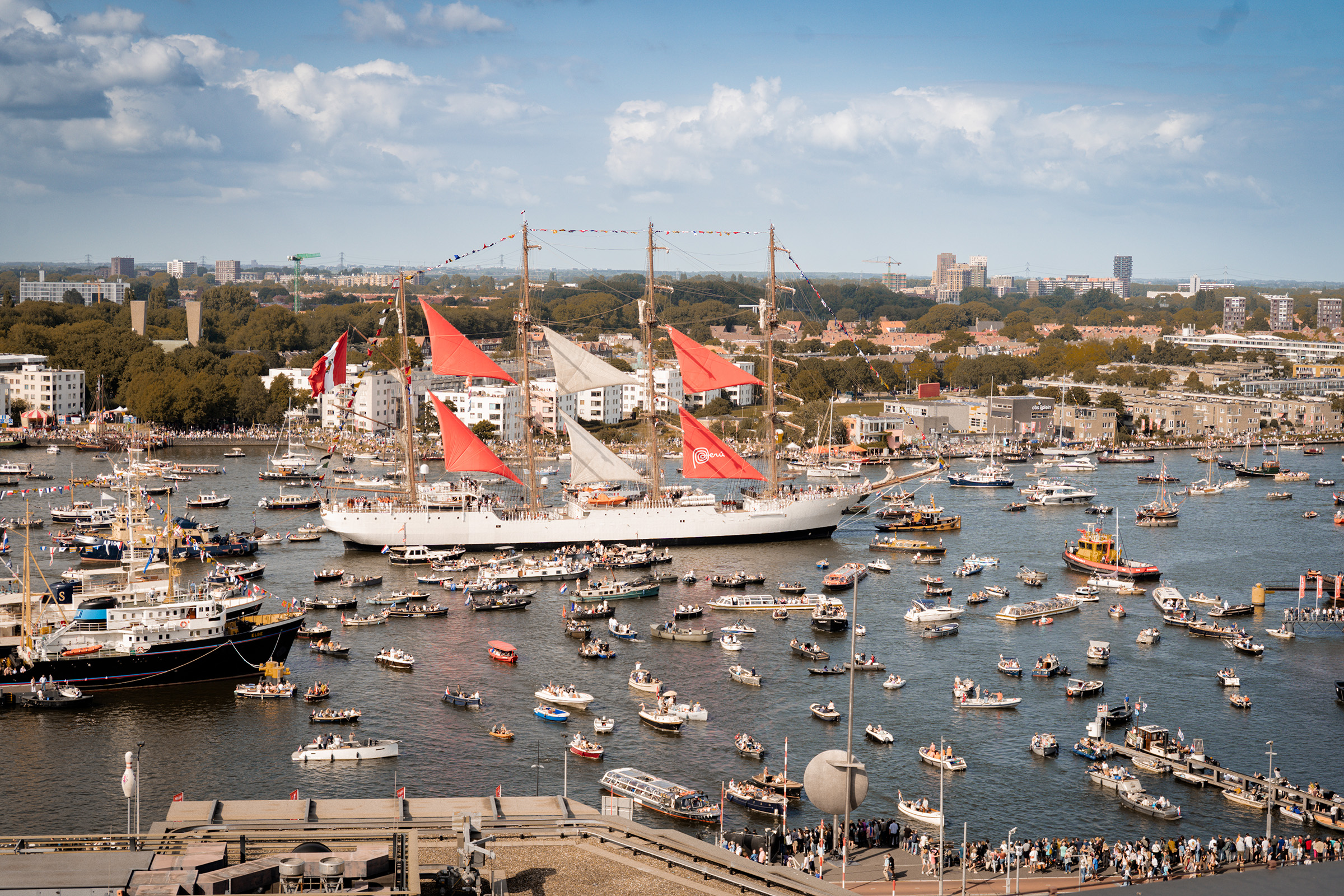
My favourite, by far, is SAIL. I would like to have this festival every year. Seeing all those tall ships parked in Amsterdam, or the SAIL-IN parade, is something absolutely amazing! The second favourite is Pride Canal Parade, which is usually around my birthday, and it feel like an extra celebration especially for me.
Etiquette and rules
A few things that keep you safe and out of trouble on Amsterdam’s water: keep to the right (starboard), and give way to bigger boats and commercial traffic, which cannot stop or turn the way you can. Mind your head and your hands on the low bridges. No amplified music on open boats. The skipper stays sober. Don’t swim in the canals. And if you have small children aboard, life jackets, always. None of it is complicated; most of it is just being a good neighbour on a crowded bit of water.
Stay tuned for more and follow Amsterdamian on Instagram and Facebook for more stories about life in the Netherlands, written by a real local, updated constantly.
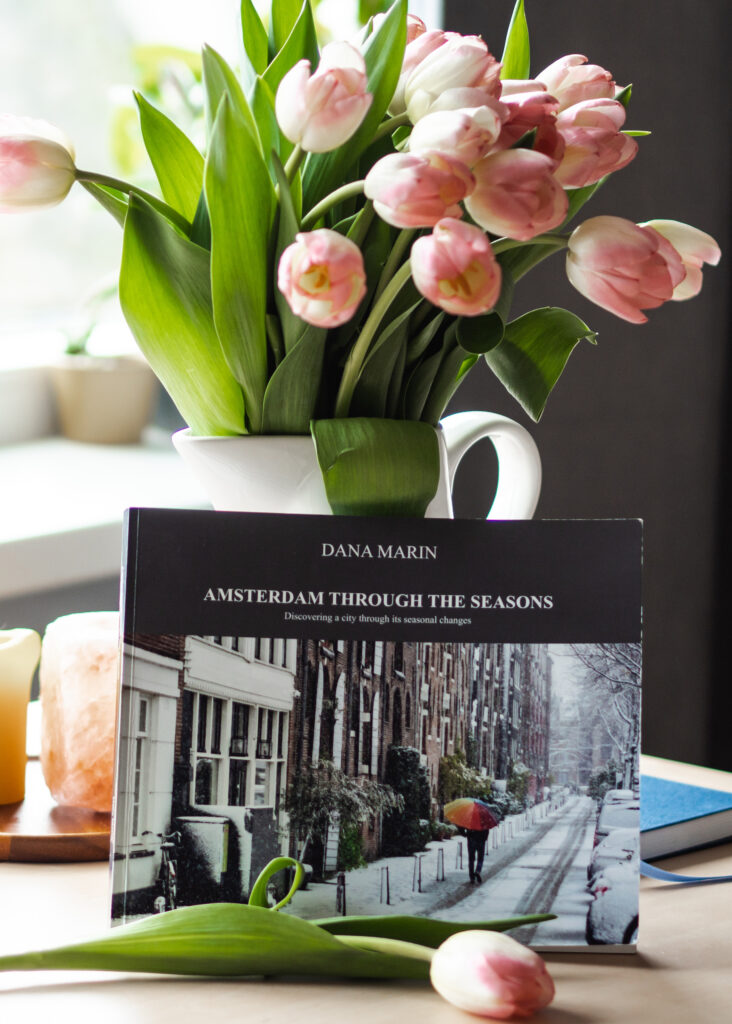
Check out my photo book: Amsterdam Through the Seasons!
Love what you’re reading? Support my work with a small donation.
And share this post if you liked it!






Trackbacks/Pingbacks