
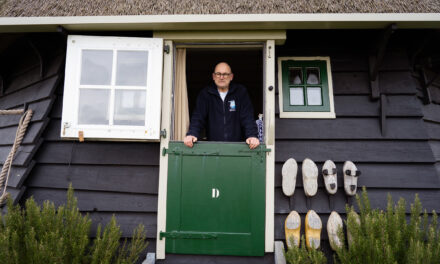
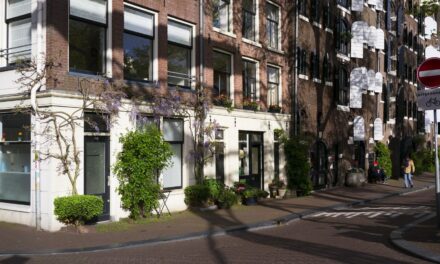
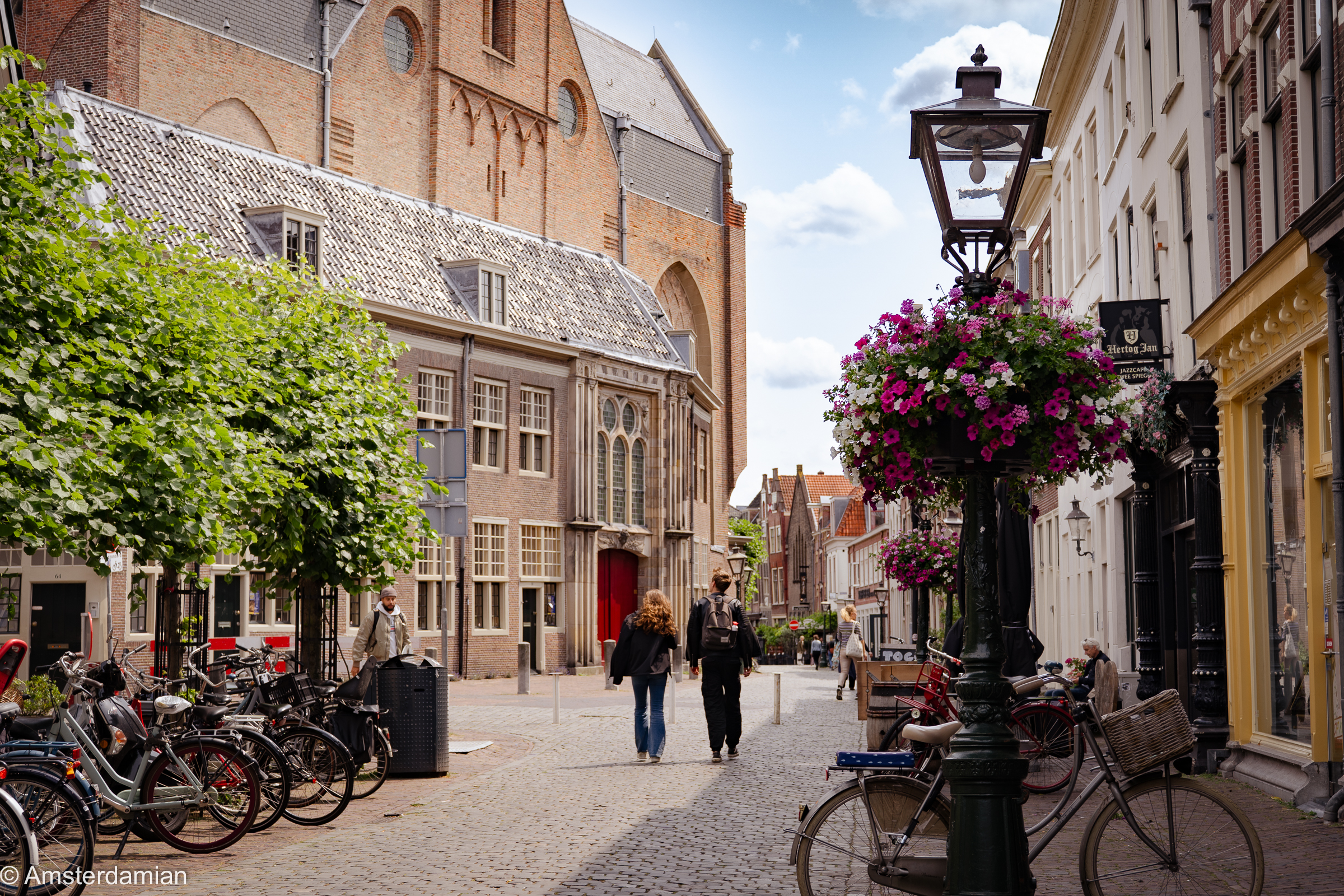
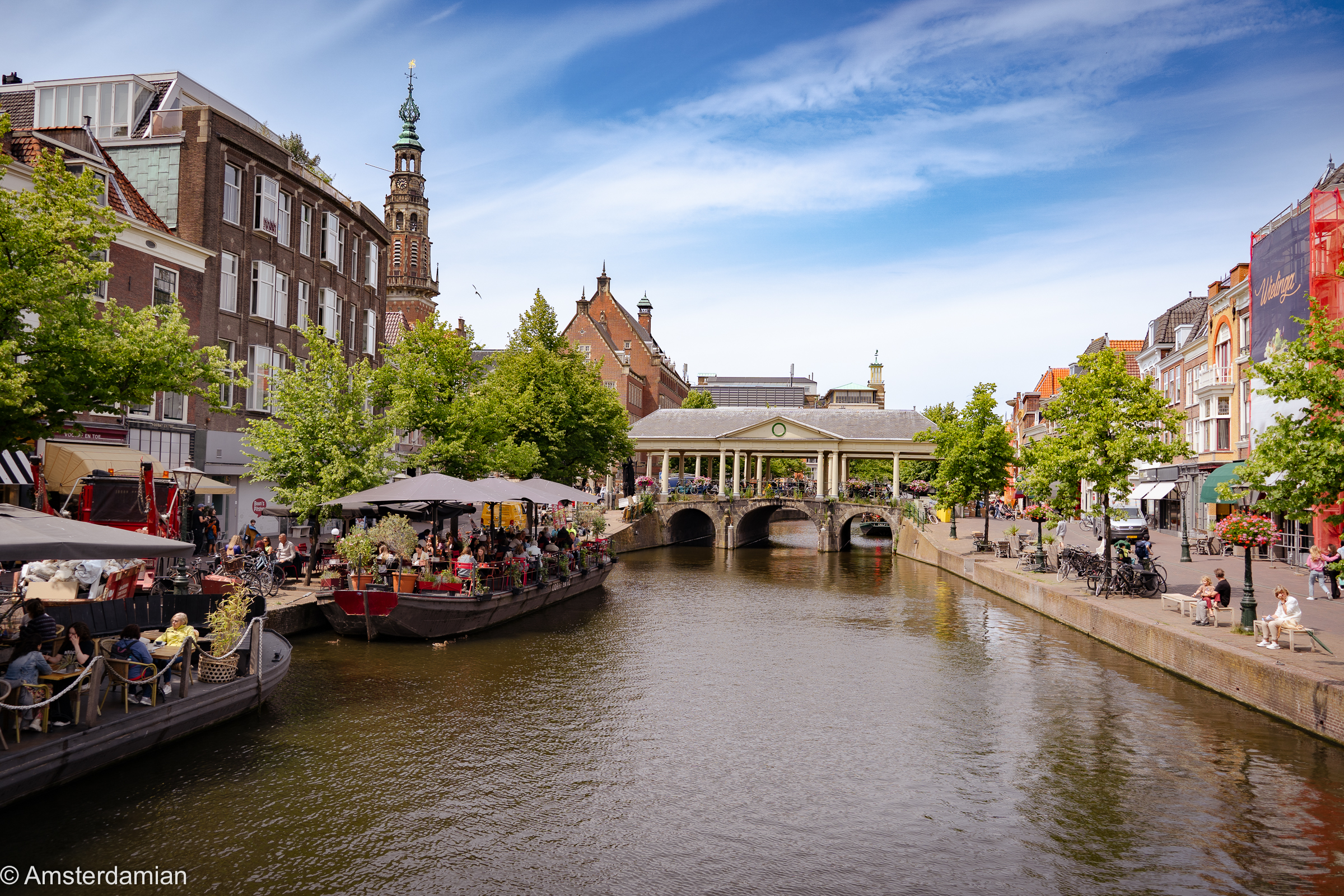
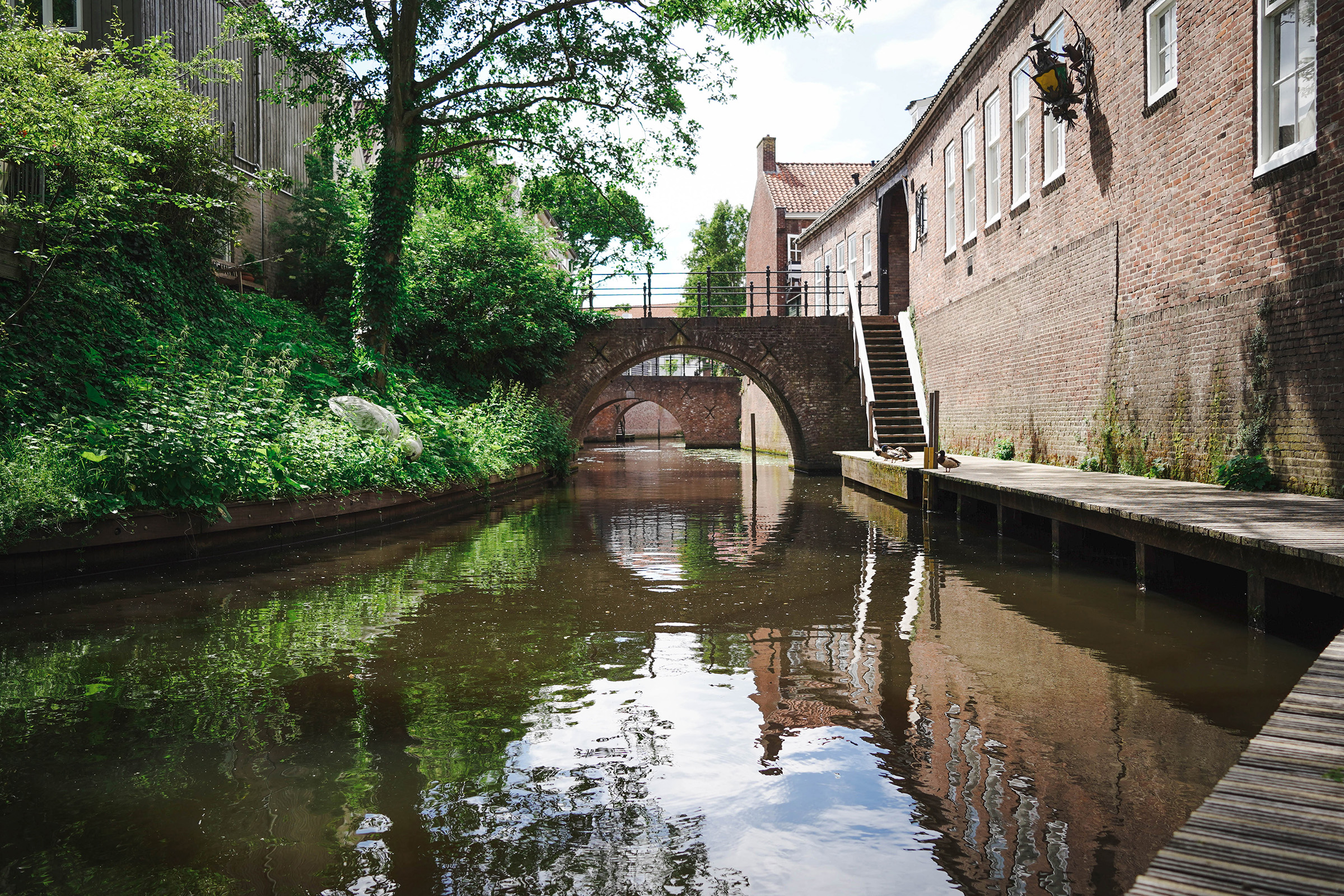
Leiden is a city that doesn’t wait long to show you its beauty. Going out from Leiden’s Central Station, you walk for a few minutes and the old city already starts to unfold in front of you. Wide canals, beautiful bridges, waterside terraces, a windmill and people going about their day or chilling out in a square, all offer a glimpse of the city’s charm.
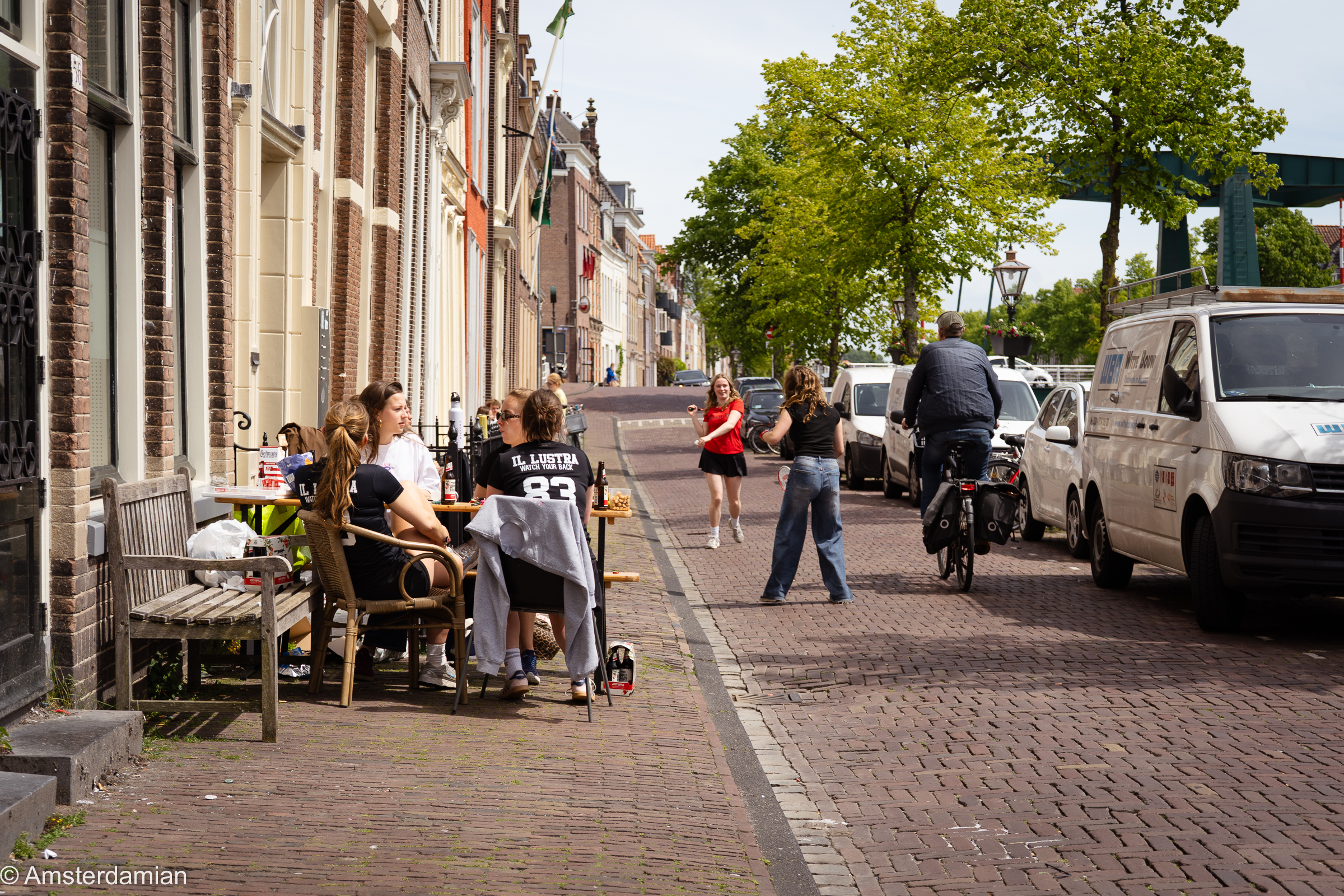
Just over half an hour by train from Amsterdam, Leiden is a city of canals, second only to Amsterdam in the country, with 88 bridges and around 28 kilometres of waterways, but the atmosphere is different. The pace of life seems slower here and the students cycling past in laughing groups or playing in the street next to an old house remind you that this is, above all, a university town.
Leiden is one of the most rewarding day trips from Amsterdam if you care about history (but not only for that reason). Rembrandt was born here. The Pilgrim Fathers lived here for over a decade before sailing to America. The first university in the Netherlands was founded here as a gift from William of Orange after the city survived a brutal Spanish siege. The first tulips bloomed in Europe in a small academic garden behind the university walls. For a place so compact, Leiden has been at the centre of an extraordinary amount of Dutch and European history.
I love going to Leiden because the city has such a special chill energy that transfers to me immediately. I feel like slowing down, taking in the view and walking around aimlessly to see what I discover (one time I was late for an event because of it!).
✨Day-trip suitability
International visitors: ● ● ● ● ○ — Highly recommended if you have time
NL-based day-trippers: ● ● ● ● ● — Worth planning a day/weekend around
● Circles indicate suitability, not quality. Some subjectivity included. How to read these ratings 📜
In this guide
- A Bit of History
- Things to Do in Leiden
- Exploring the City
- Museums
- Historical Leiden
- Rembrandt and the Painters of Leiden
- Annual Events in Leiden
- Where to Eat and Drink in Leiden
- What to See Around Leiden
- Practical Information
A Bit of History
Leiden developed around an artificial mound called the Burcht, a small fortress at the meeting point of the Oude Rijn and the Nieuwe Rijn, the two branches of the old Rhine that run through the city centre. By the late Middle Ages it had become a wealthy cloth-making town. Leiden laken, a fine wool cloth, was exported across Europe and made the city rich enough to start building churches that still dominate the skyline today.
The defining event in Leiden’s history is the siege of 1574. During the Eighty Years’ War against Spain, the city came under siege by Francisco de Valdez’s army. It held out for months. By autumn people were starving (the population is thought to have dropped by a third) and the situation looked hopeless. In the end the dykes were deliberately breached, the polders around the city were flooded, and the Sea Beggars sailed in across the drowned fields. The Spanish camp was abandoned overnight. On the morning of 3 October 1574 the relief boats arrived with herring and white bread, and the legend says that a forgotten cooking pot of stew left behind in the Spanish camp at the Lammenschans gave the city its second tradition: hutspot (a mash of potato, carrot and onion — though in 1574 it would have been parsnip). Leiden still eats herring, white bread and hutspot every 3 October.
As a reward for the city’s resistance, William of Orange offered Leiden a choice between tax exemption and a university. The city, wisely, you could argue, chose the university. Leiden University opened on 8 February 1575, the first in the Northern Netherlands.
And it was in this same century, in 1606, that Rembrandt Harmenszoon van Rijn was born in a miller’s house on the Weddesteeg, just behind the old city wall. He grew up beside one of the windmills that lined the Galgewater, was enrolled at Leiden University at fourteen, and left almost immediately to learn to paint. He spent his first twenty-five years here.
Leiden’s cloth industry declined in the 18th and 19th centuries, but the university kept the city going. Today the university remains one of the city’s defining institutions, and that mix of old wealth, deep history and a steady current of student life is what gives Leiden its very particular character.
Things to Do in Leiden
Leiden has a generous offer for its visitors. Depending on how much time you have here, you can choose what to visit. The best thing to do in Leiden is to walk around the city centre, taking in the chill atmosphere, stopping for a drink somewhere, and simply enjoying being there. But the entire city breathes history, and you will want to see some of it up close, and learn a bit more about how this charming city came to be.
If you are a history buff and want to see how this city proudly celebrates the 3 October, plan around that date. It’s a cool thing to witness.
Exploring the City
⏺ Walking the Canals
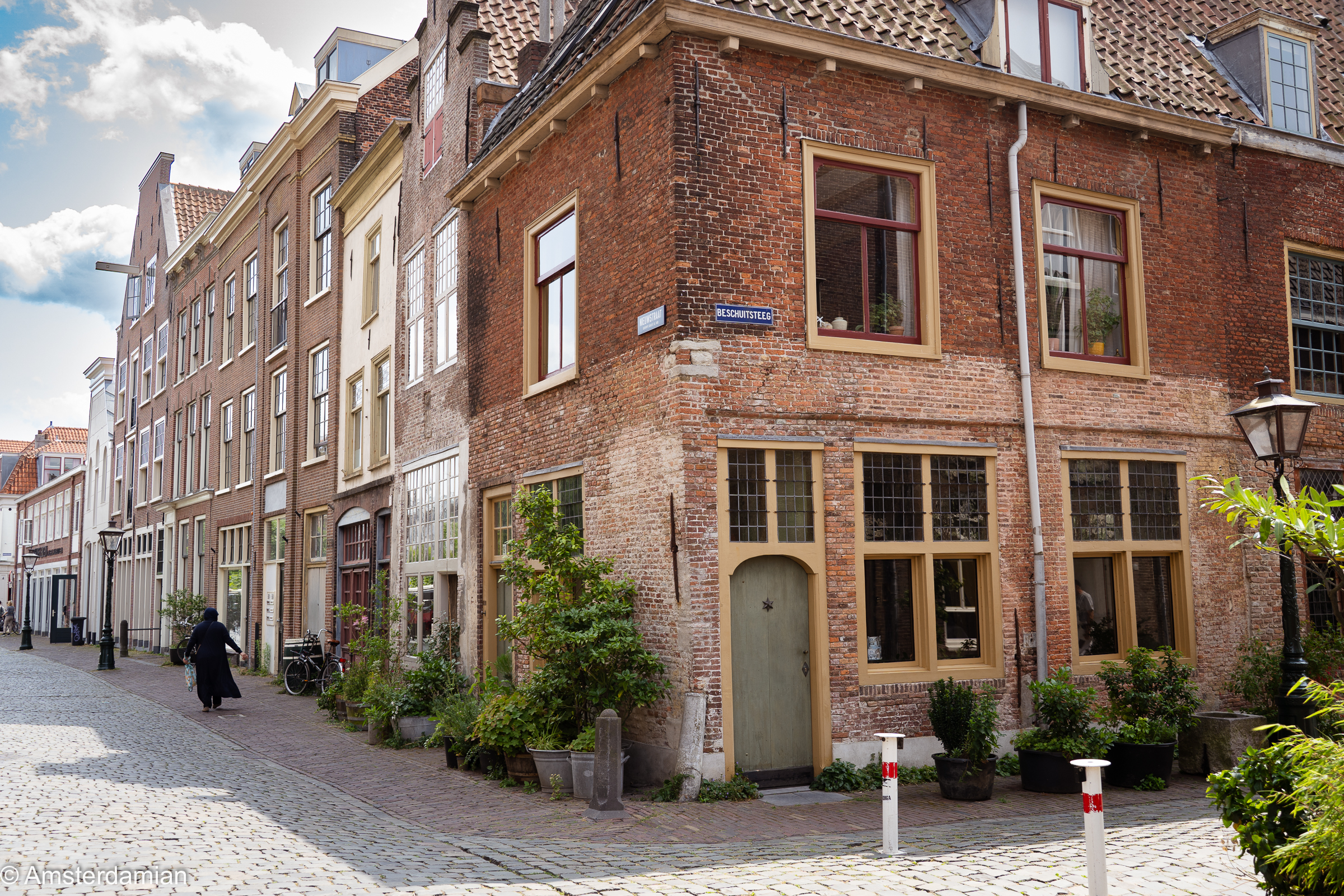
Leiden is small enough that you can do most of it on foot. Walk along the canals, check out the smaller side streets (most very rewarding!), discover squares and old houses and sidewalk gardens. It’s the best way to see the city. Make sure to not miss the Rapenburg, the broadest and most stately of Leiden’s canals, lined with the grandest 17th-century houses and the main buildings of the university. The Oude Rijn and Nieuwe Rijn also need to be added to your list.
⏺ See the City from the Water
The city looks different from the water. As in most Dutch cities, a canal cruise is worth taking. Several operators run guided tours of about fifty minutes from the city centre, from spring through autumn.
⏺ Hortus Botanicus and the First Tulips
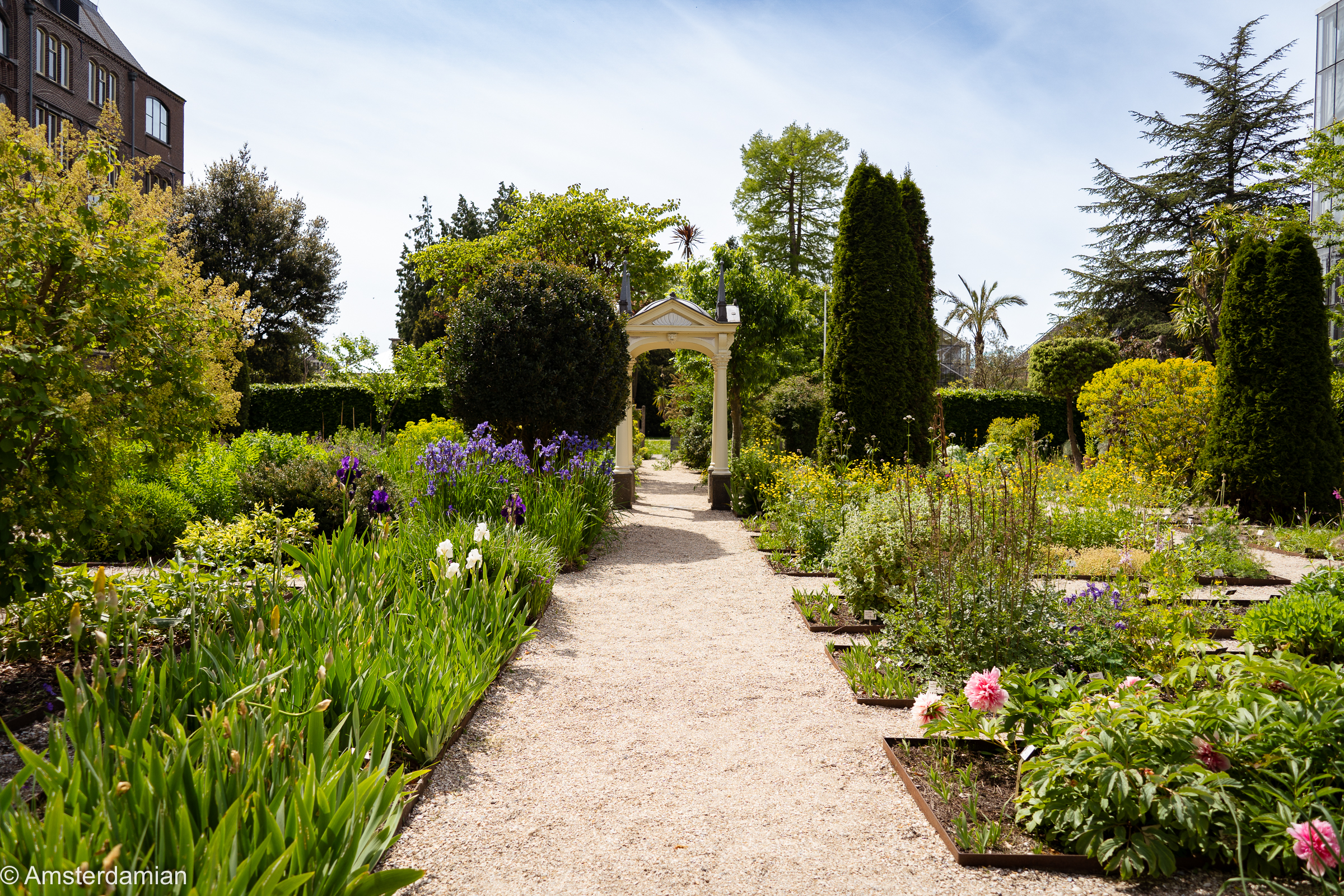
Behind the Rapenburg, through an archway beside the university’s main building, lies three hectares of garden. The Hortus Botanicus is the oldest botanical garden in the Netherlands, and it has glasshouses thick with orchids, ferns and carnivorous plants, a Japanese garden, a canal curving through the middle, and trees old enough to be labelled individually with their planting dates.
If you want one piece of history to carry around with you, it’s this: Carolus Clusius planted his bulb collection here in the 1590s, and Dutch tulip growing effectively started on this spot.
Go in spring or summer if you can, but the garden is impressive in any season. Allow for at least two hours, more if possible. You will want to walk in the park, sit on a bench near the lake, check out the maze of orchids.
↪ Hortus botanicus Leiden + Canal Cruise Leiden tickets.
This page contains affiliate links. If you click and book, I may receive a small commission at no extra cost to you.
⏺ De Valk Windmill
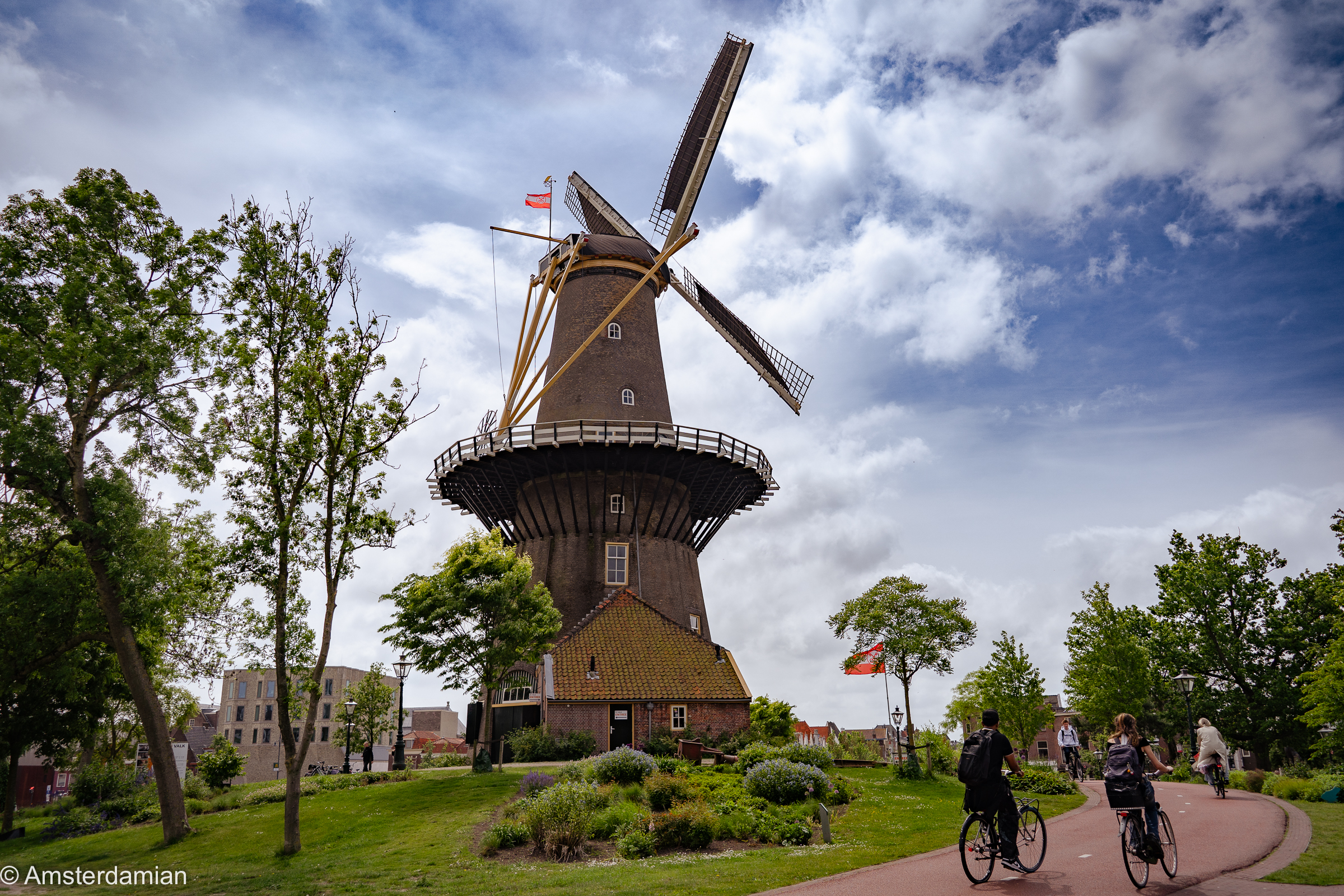
De Valk (the Falcon) is the only one of Leiden’s nineteen historic windmills still standing in the heart of the city. De Valk became a municipal museum in June 1966. It became fully operational again in 2000 and has since been used for milling. You can climb all the way to the top to see the city the way the miller saw it. Next to it there is a lovely park where you can relax and a few restaurants to stop for a drink.
⏺ The Wall Poems
Scattered across Leiden’s historic centre are more than a hundred wall poems, painted in large letters directly onto the gable ends and side walls of old houses. The project began in 1992 with a poem by Marina Tsvetaeva on Nieuwsteeg, and has grown ever since: Pablo Neruda, William Shakespeare, Federico García Lorca, and a Sanskrit verse from the Bhagavad Gita are all there. There is a free map at the tourist office, but it is just as enjoyable to stumble across them as you walk.
⏺ The Hidden Hofjes
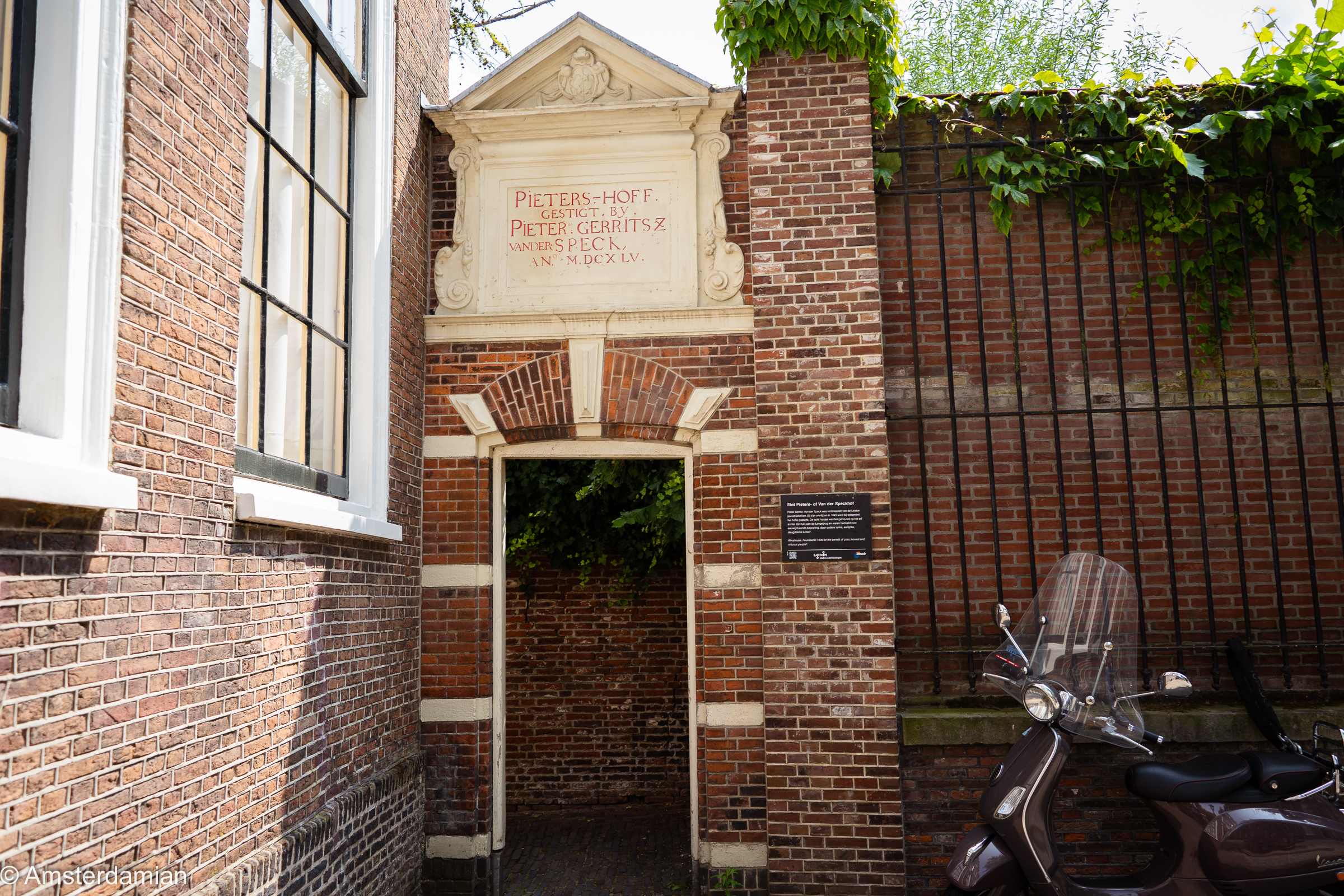
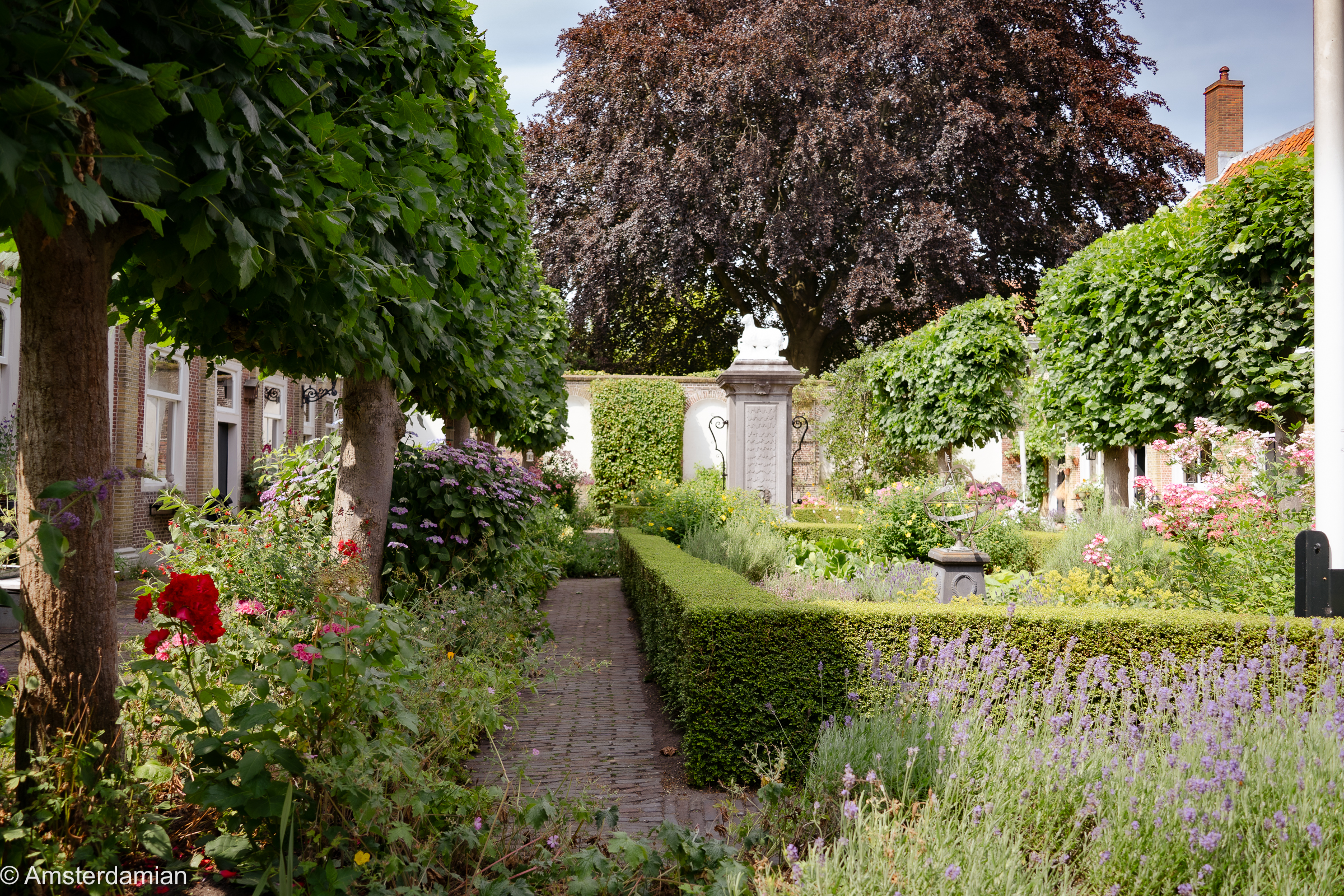
Push open an unassuming door in the old centre and you might find yourself in a hofje (almshouses built around a garden, founded from the fifteenth century onwards to give elderly or poorer residents a home for free). Leiden has around thirty-five of them hiding behind the street fronts, and most are still lived in, which is why a small sign at the gate usually asks you to keep your voice down. Not all of them are open to the public though. One of the oldest is the Sint Annahofje, founded in 1492 and the only one to keep its own chapel, with an entrance hidden away on the Middelstegracht; the best known is the Jean Pesijnhofje on the Kloksteeg, which stands on the very spot where the Pilgrims’ pastor John Robinson lived and died. Once a year, these hofjes open their doors for two days during the Leidse Hofjes Festival. Concerts and various performances, from classical to jazz to world music, take place in gardens you would otherwise never get to see.
Museums
With 13 museums packed into its compact historic centre, Leiden has one of the highest concentrations of museums in the Netherlands. If you only have time for one, pick from the four below, but on a longer visit, the museum quarter alone can fill a day.
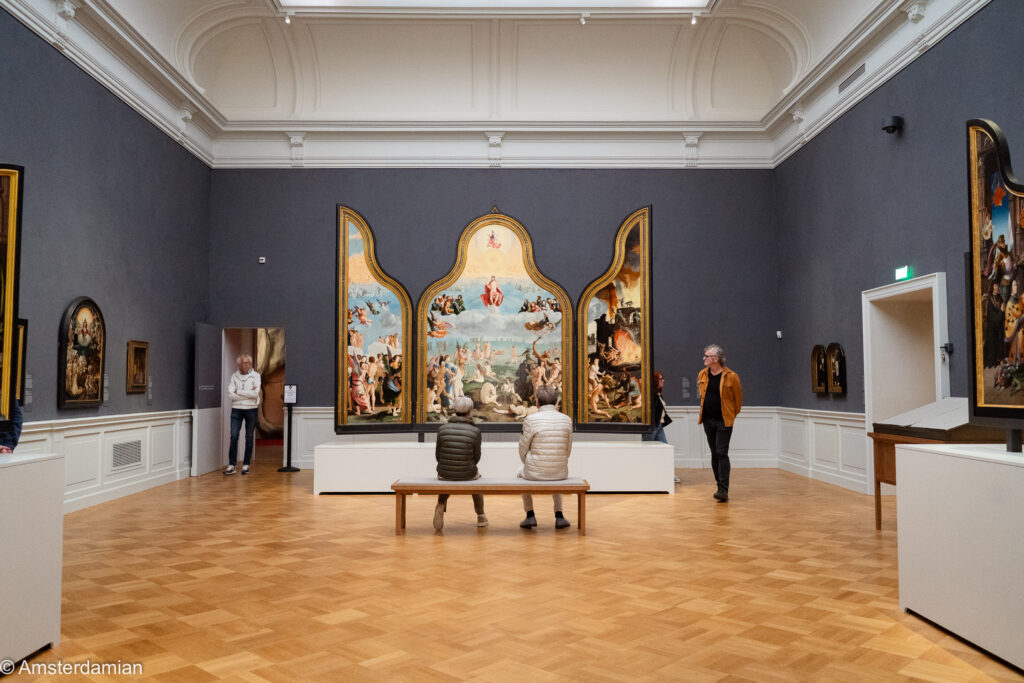
⏺ Museum De Lakenhal
Museum De Lakenhal is Leiden’s main museum for art and history, housed since 1874 in the city’s beautifully restored 17th-century cloth hall — the Lakenhal — where Leiden laken was once tested and graded. Inside you will find two early Rembrandt paintings: a History Painting from 1626 and the The Spectacle Seller (Quacksalver) from around 1624. The museum also preserves several of the building’s original rooms, among them the Staalmeesterskamer, hung with gilded leather and once used by the cloth masters who judged the laken. It gives the collection a weight that most city museums don’t have: you are standing in the room where the city’s wealth was decided.
The museum also explores the city’s wider history, including the Siege and Relief of Leiden, commemorated every year on 3 October. Plan at least two hours, as the museum is larger than you might think and there is a lot of interesting information to take in. At the end of your visit you can rest at the cute café and let everything you’ve learned settle in. Opening times: Tuesday to Sunday, from 10.00–17.00. Admission price: €16,00. Free up to and including 17 years old and with Museumkaart or other passes.
⏺ Rijksmuseum van Oudheden (National Museum of Antiquities)
The Rijksmuseum van Oudheden, at Rapenburg 28, holds the Netherlands’ national collection of antiquities, spanning ancient Egypt, the Near East, Greece, Etruria, Rome, and the prehistoric, Roman and medieval Netherlands. It has around 180,000 objects in its collection, divided into four areas: Egypt and Nubia, Classical Antiquity (Greeks, Romans, and Etruscans), The Ancient Near East, The Netherlands (prehistory, the Roman period, and the Middle Ages). Allow at least two hours. Open daily 10:00–17:00, and Thursday evenings 19:00–22:00. Admission €14, free under 18 and with Dutch Museumkaart and other passes.
⏺ Naturalis Biodiversity Center
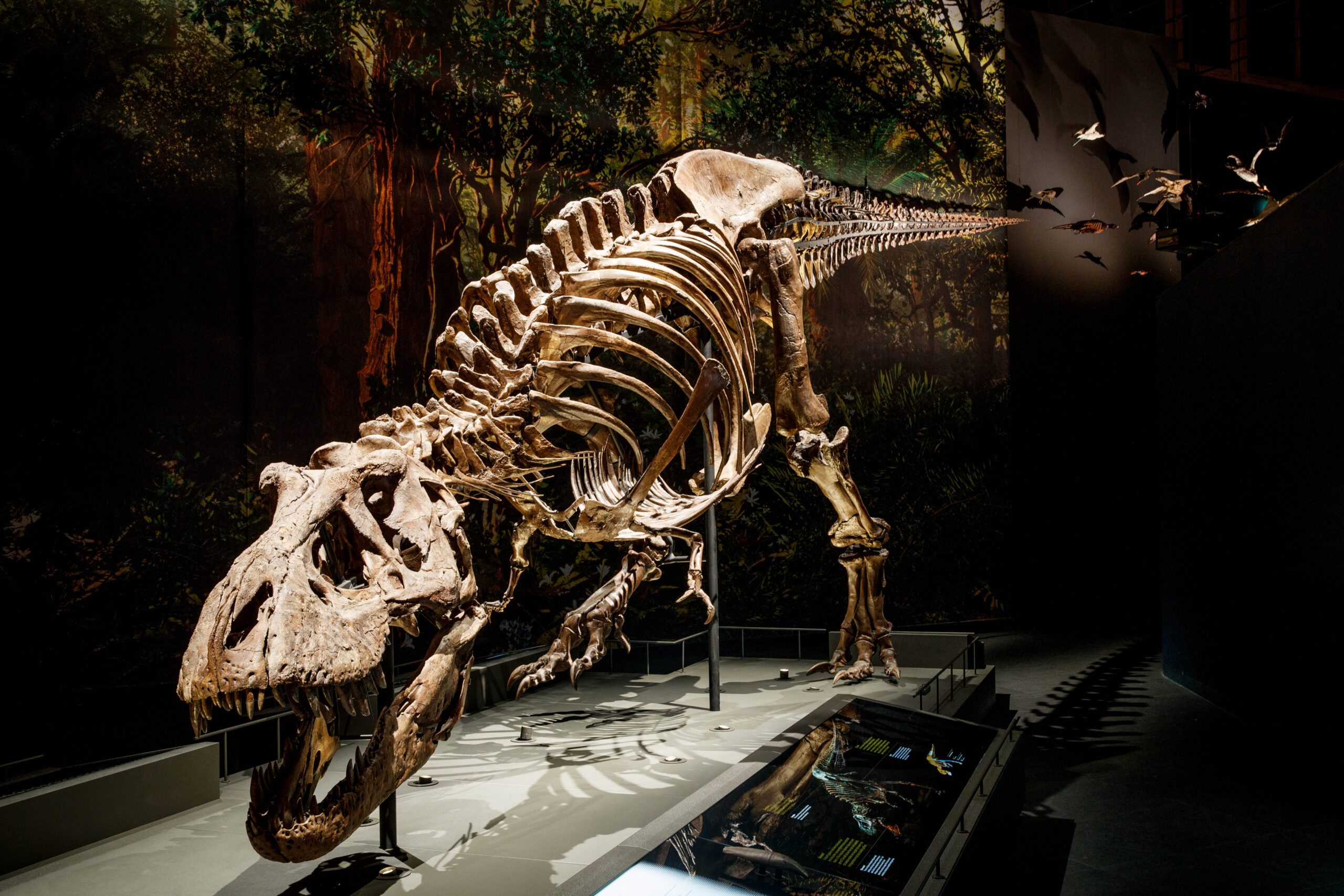
Naturalis is Leiden’s natural history museum, and a research centre on biodiversity. It is enormous, beautifully lit, and the dinosaur hall, featuring Trix, one of the few near-complete adult T. Rex skeletons in the world, is truly unforgettable. If you are travelling with children, this is the museum to choose, but adults who think they have outgrown natural history museums tend to leave converted. You can also explore the museum virtually. Open daily 10:00–17:00. Admission €18, free with Museumkaart and various discounts.
⏺ Wereldmuseum Leiden (formerly Museum Volkenkunde)
Wereldmuseum Leiden, part of the National Museum of World Cultures, traces its origins in part back to the Japanese collection brought to Leiden by Philipp Franz von Siebold in the 1830s, as well as to collections from the Royal Cabinet of Curiosities, established in 1816 under King Willem I. Founded in 1837, it is one of the oldest ethnographic museums in the world, with extensive collections from Indonesia, Japan, China, Africa, the Pacific, the Americas, and beyond. Open Tue–Sun 10:00–17:00. Admission: €18 at the counter, €16 online, free with Museumkaart and various discounts.
↪ Wereldmuseum Leiden + Canal Cruise Leiden tickets.
⏺ Rijksmuseum Boerhaave
Rijksmuseum Boerhaave is the national museum of the history of science and medicine, named after the legendary Leiden anatomist Herman Boerhaave. The museum’s collection holds over 126,000 objects, books, prints, and images. Among the highlights are the microscopes of Antoni van Leeuwenhoek, Christiaan Huygens’ first pendulum clock, the world’s oldest heliocentric planetarium, anatomical preparations, items from Dutch Nobel Prize winners, Einstein’s fountain pen, the first dialysis machine by Willem Kolff, and Maria Sybilla Merian’s Surinam Insects Book. They also feature more recent items, like the first administered COVID-19 vaccine, the qubit (the building block of quantum computers), and an artificial pancreas. The reconstructed anatomy theatre is one of the highlights, a modern reconstruction of the seventeenth-century Leiden University anatomical theatre, with skeletons and objects arranged to evoke early scientific teaching. Open daily 10:00–17:00. Admission €17,50; free with Museumkaart and other passes.
⏺ Textile Research Centre
A short walk from Leiden Centraal, the Textile Research Centre (TRC) is one of the city’s quietest surprises. Founded in 1991 as an independent foundation, it holds a collection of more than 50,000 textiles, garments and accessories gathered from across the world, from Andean weaving to Japanese kimono. The centre stages two small exhibitions a year drawn from that collection, alongside a steady programme of workshops, courses and lectures on various subjects, like Palestinian embroidery or historic lace. It is small, welcoming and run largely by volunteers, and far enough off the tourist trail that you often have the gallery to yourself. Check the current exhibition and opening hours on the TRC’s website before you go.
Historical Leiden
⏺ De Burcht
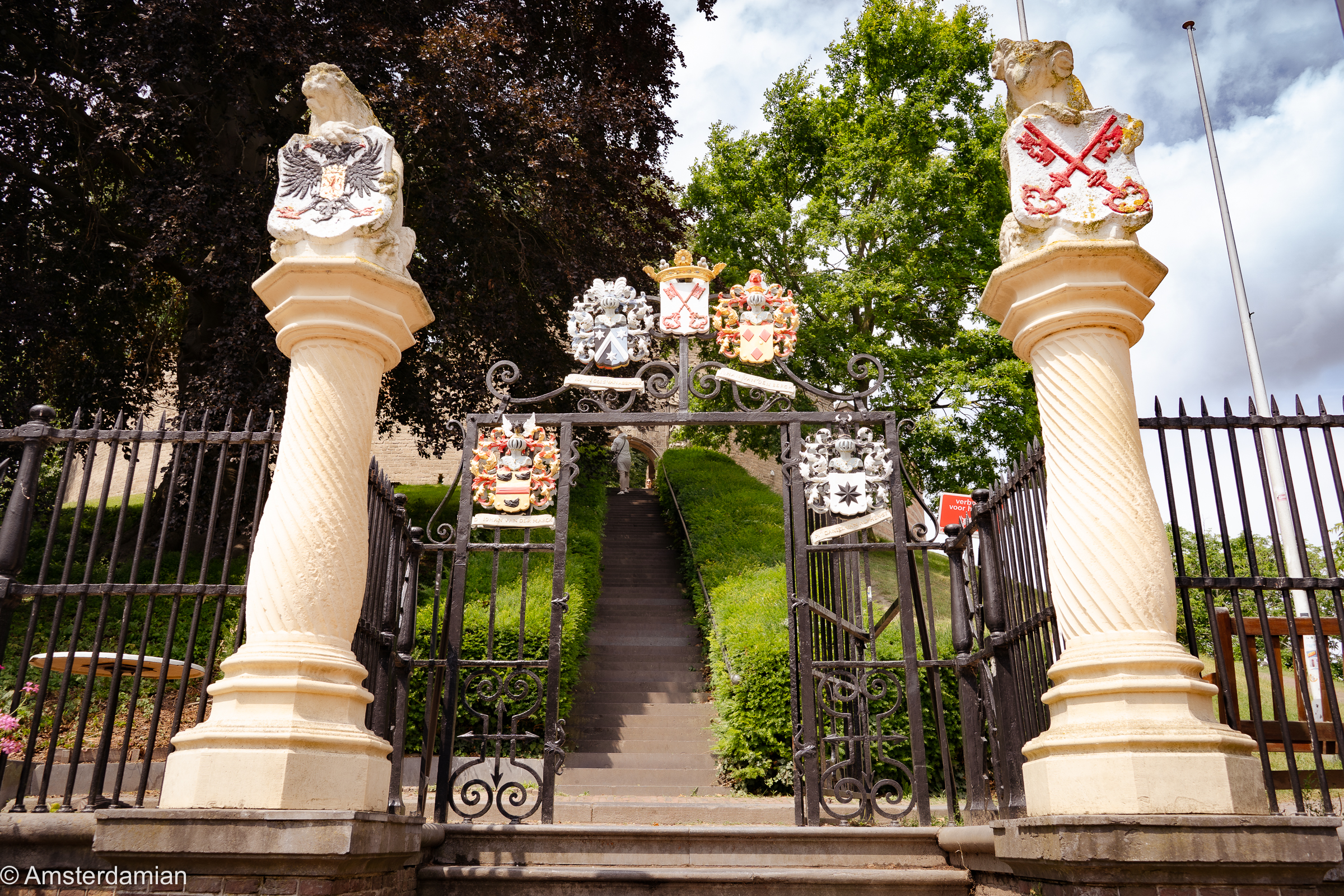
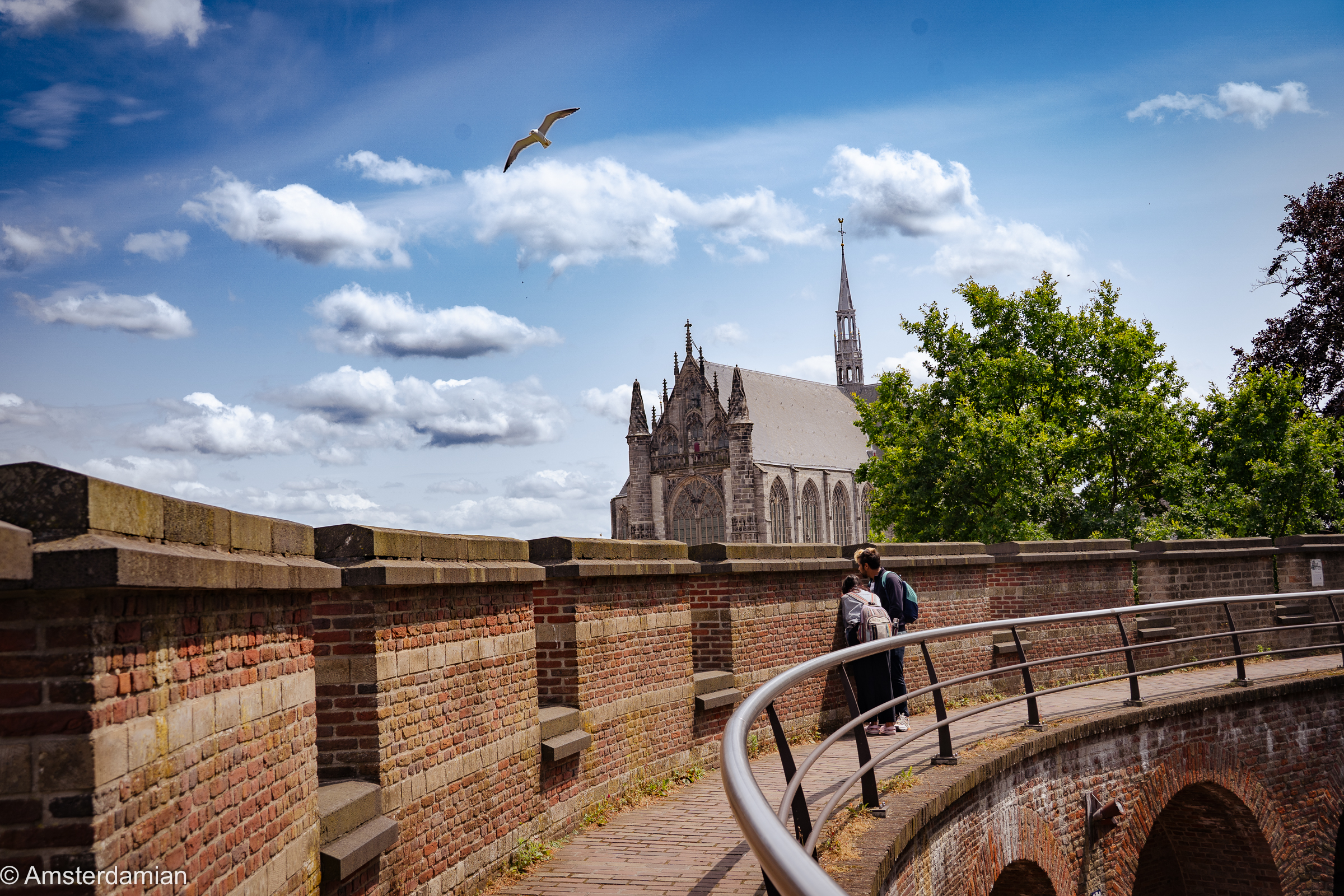
Start at the Burcht (the Castle) if you like to begin by getting a view of the city from above. This small circular fortress sits on a man-made mound between the two arms of the Rhine. In the Middle Ages it formed the defensive heart of the city, a refuge in times of flooding or attack, long before Leiden grew beyond its ring of canals. It is free to enter, open all day, and the climb to the top is short. From the wall walk you get a complete view of the city: the towers of the two great churches, the line of the canals, the red-tiled roofs running off in every direction. It’s also a city park and you can relax on the grass surrounding the “castle”, read a book, have a picnic. This is really a great spot and it stayed with me after the first visit in Leiden, especially because a hill, even man-made, it’s not something you find often in a Dutch city. Tip: don’t miss the chance to take a photo standing right in front of the entrance, from the inside of the Burcht.
⏺ Pieterskerk
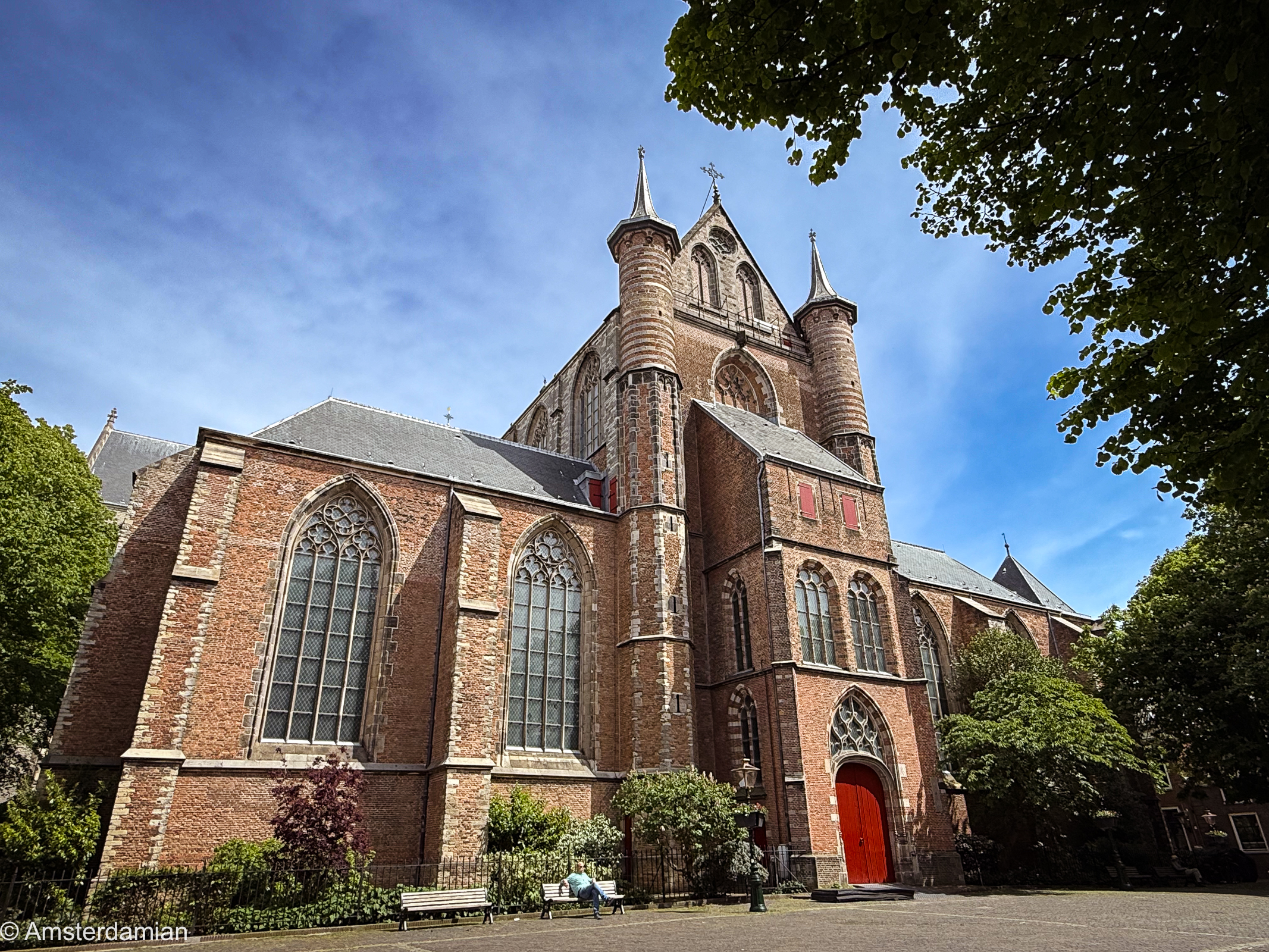
The Pieterskerk is Leiden’s oldest surviving church, a vast late-Gothic brick basilica that has lost its tower (it collapsed in 1512 and was never rebuilt). Inside, the floor is paved with worn ledger stones marking the graves of professors, mayors and ordinary citizens of four centuries. Pastor John Robinson, leader of the Pilgrim Fathers, is buried in the Pieterskerk in Leiden, where he is commemorated with a plaque near the south side of the church. The Pieterskerkhof, the run of small squares and lanes around it, is one of the prettiest corners in the country: cobbled, leafy, and lined with old houses.
⏺ Hooglandse Kerk
The Hooglandse Kerk, the city’s other great church, feels lighter and taller than the Pieterskerk, with soaring white walls and a sense of space inside that feels almost northern European cathedral-like. It dates from the fifteenth century and is often open for free during the day.
⏺ Morspoort and Zijlpoort
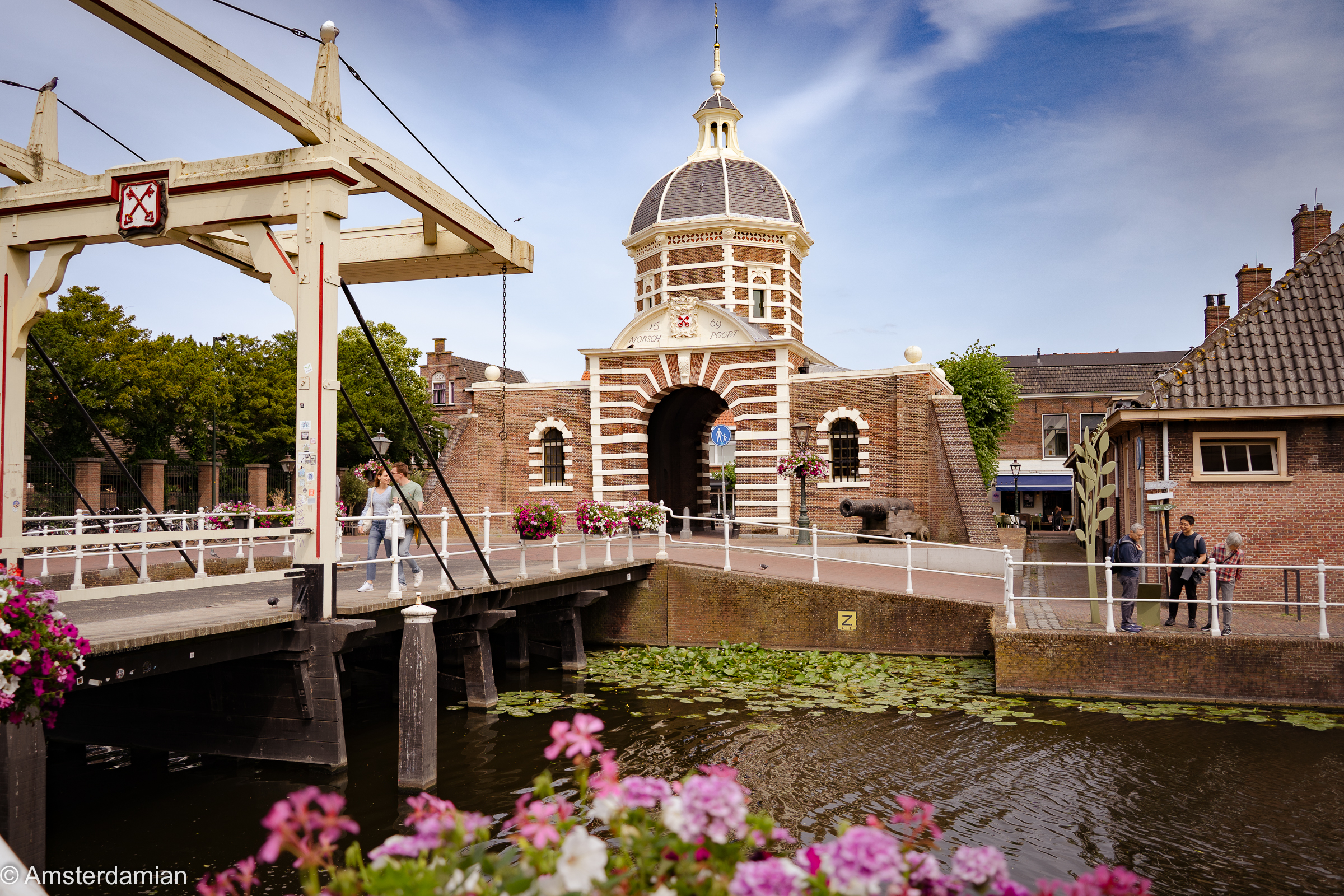
Leiden once had eight city gates. Two survive: the Morspoort to the west and the Zijlpoort to the east. Both were built in the 1660s, in different but elegant architectural styles, and both still stand at the edge of canals, framing the entry to the old city the way a painter might have framed them. The Morspoort is the more atmospheric of the two; you pass under it on the way out to the windmills.
⏺ The Stadhuis
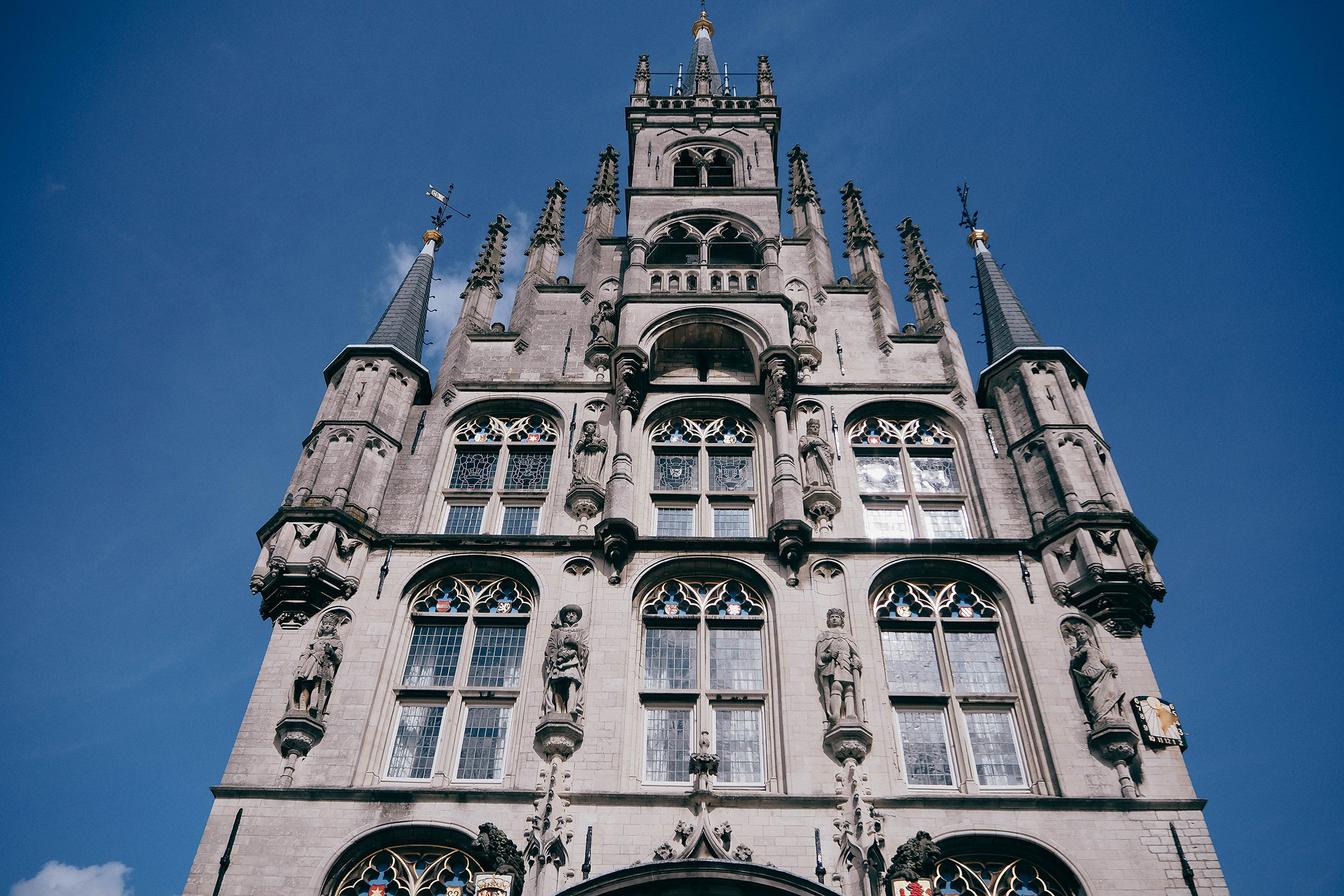
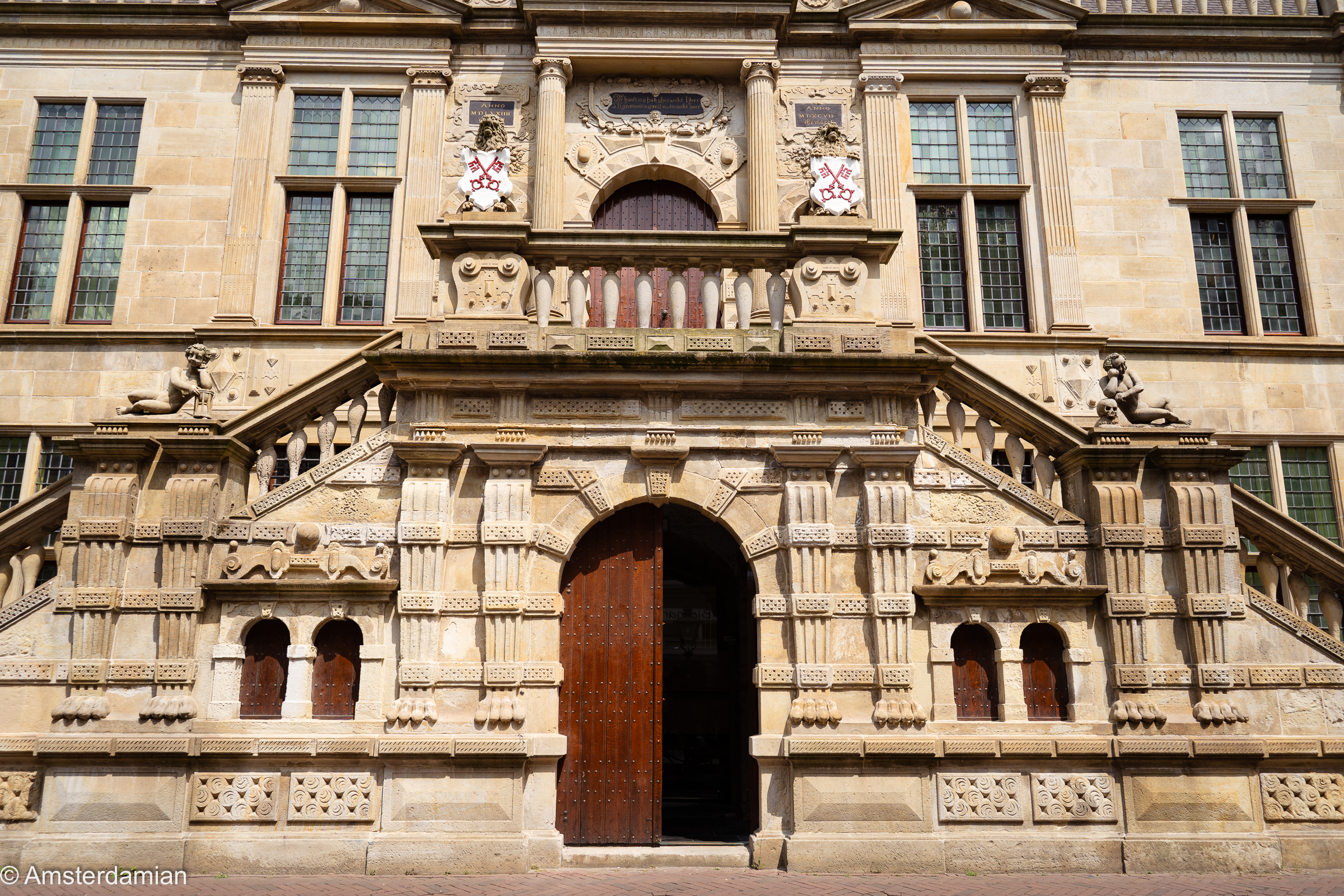
Leiden’s town hall, on the Breestraat, has the longest Renaissance façade in the Netherlands: 86 metres of sandstone, built in the 1590s. It is also nearly all that survives of the original building. A fire in February 1929, during a winter so cold the water froze on the stone as the firemen worked, gutted everything behind it and brought down the clock tower. What stands there now was designed in the 1930s. To the left of the entrance steps, a Latin verse by Jan van Hout commemorates the siege. Worth stopping to read.
⏺ Pilgrim Fathers Trail
In the early 17th century a small community of English Separatists, fleeing religious persecution under King James I, made their way to Leiden, after a first stop in Amsterdam. About a hundred of them, led by their pastor John Robinson, settled in the streets around the Pieterskerk in 1609. They worked as weavers and printers and worshipped freely for more than a decade. In 1620 a smaller group decided to seek a new life across the Atlantic; the rest stayed behind. Their story is woven through this part of the city, with plaques on doorways and a museum dedicated to it.
If the Pilgrim Fathers’ story interests you, the Pilgrim Museum, on Kloksteeg 16, is a tiny but interesting visit. It’s hosted in the former sexton’s house of the Pieterskerk Leiden, and the way in is through Museumcafé Pieter, where you also buy tickets (€7.50). It’s open Wednesday to Friday from 14:00 to 17:00, and Saturday and Sunday from 12:00 to 17:00. From there, you can go to see John Robinson’s house site at Kloksteeg 21, now the Jean Pesijnhofje (a working almshouse, open to visitors who keep it quiet), the Pieterskerk where he is buried, and the doorways where the Pilgrim community lived from 1609 onwards.
Rembrandt and the Painters of Leiden
⏺ Weddesteeg — Rembrandt’s Birthplace
Rembrandt was born on the Weddesteeg, a small alley running off the Galgewater on the western edge of the old city, on 15 July 1606. The miller’s house where he grew up is long gone and only a gable stone on the wall marks the spot. But the canal he would have crossed every day, the line of mills along the water (only one, De Put, still stands as a 1987 reconstruction nearby), and the brick warehouses opposite are essentially unchanged. There is a statue marking the area where Rembrandt was born. It’s a beautiful moment to stand there, imagining for a few minutes how the city would have looked like when he was a child, knowing that you are standing on the spot where he took his first steps and played. When I was there, walking around and taking photos, a local stopped to make sure I knew where I was, telling me the history of the place. Dutch people would randomly do that for you.
⏺ The Young Rembrandt Studio
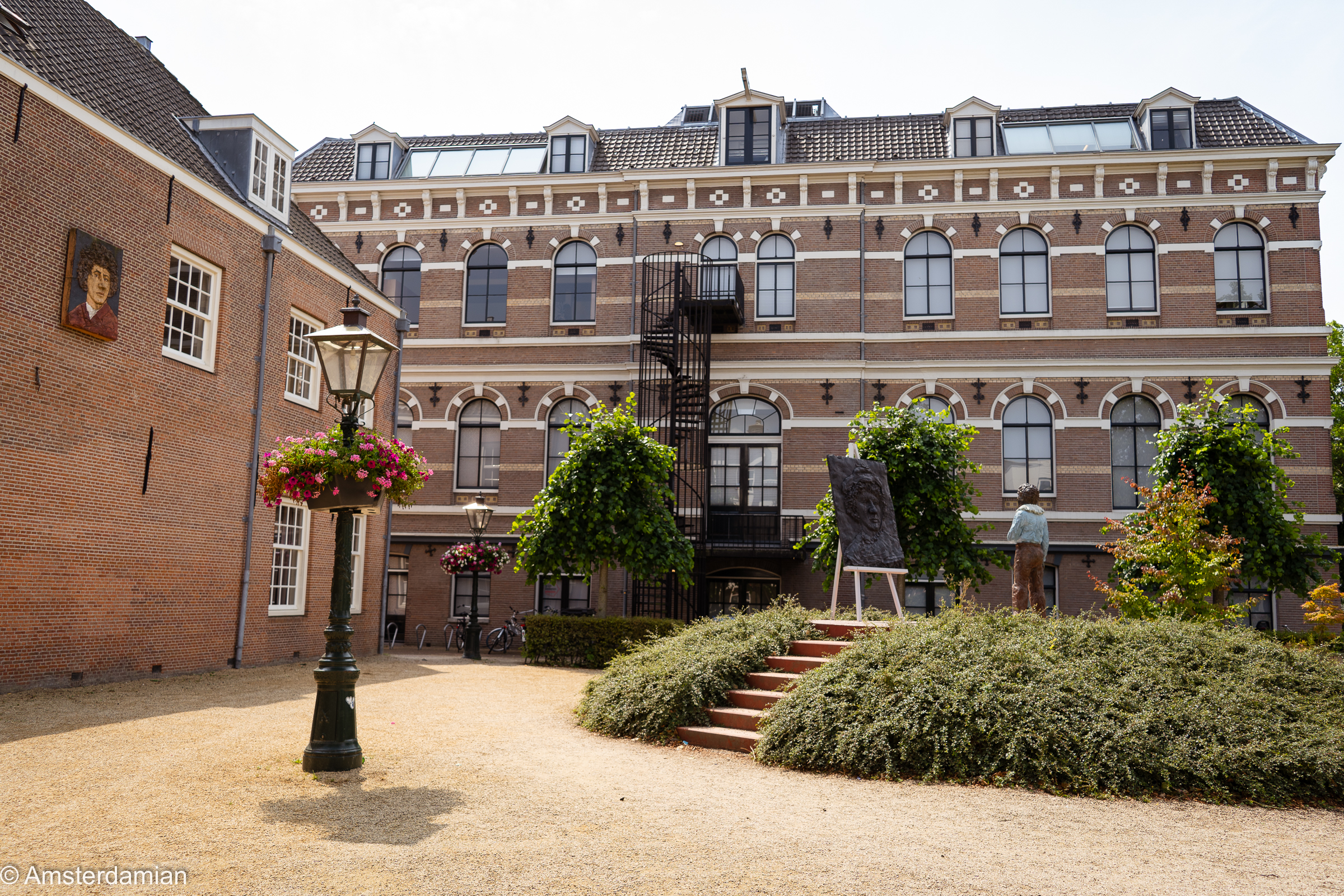
After his apprenticeship Rembrandt set up his first independent studio in Leiden, in a workshop at Langebrug 89. He worked here for about five or six years, painting his earliest masterpieces and teaching his first pupils, before moving to Amsterdam in 1631. The Young Rembrandt Studio is a small, atmospheric reconstruction inside the actual building. It takes only twenty minutes to visit but it is the closest you will ever get to the room where his career began. During your visit you watch a seven-minute video mapping projection introducing Rembrandt and the key figures in his life, and, if you want to leave with something cool, you can have your own portrait generated in his style and printed on the spot for €10. Entrance fee: €2,50 for adults.
Annual Events in Leiden
Leidens Ontzet (3 October). This is Leiden’s biggest annual celebration, marking the day in 1574 when the Spanish siege was finally broken. The city eats hutspot, herring and white bread (the food said to have been left behind by the fleeing Spanish), and the streets fill with funfairs, a parade and fireworks, and reenactments take place. Half the city takes the day off; the celebrations really kick off the evening before.
Lakenfeesten (summer, usually late June/early July). A free city festival rooted in Leiden’s old cloth-trade heritage, the laken (woollen cloth) that once made the city rich. There’s live music on several stages across the city, open-air performances, food stalls and dragon-boat races along the canals.
Werfpop (July). One of the largest free music festivals in the country, held in the leafy Leidse Hout park. A relaxed, family-friendly day out with a broad mix of genres and a loyal local crowd.
Nacht van Ontdekkingen (September). The “Night of Discoveries,” born from Leiden’s identity as a city of science and knowledge. For one evening, museums, the university and venues across town throw open their doors for art, experiments, talks and performances.
Leiden International Film Festival (October). Ten days of cinema, with more than a hundred films from around the world screened across the city. A genuine fixture on the Dutch film calendar and a good reason to visit in autumn.
Where to Eat and Drink in Leiden
Leiden’s compact centre means you are never far from a good café or a restaurant. I love finding a spot on one of the floating restaurants, like Annie’s, and watch the boats passing by, but there are quite a few great places other than those.
Specialty coffee: Barista Cafe, KOFKOF, Chummy Coffee, I Scream Coffee.
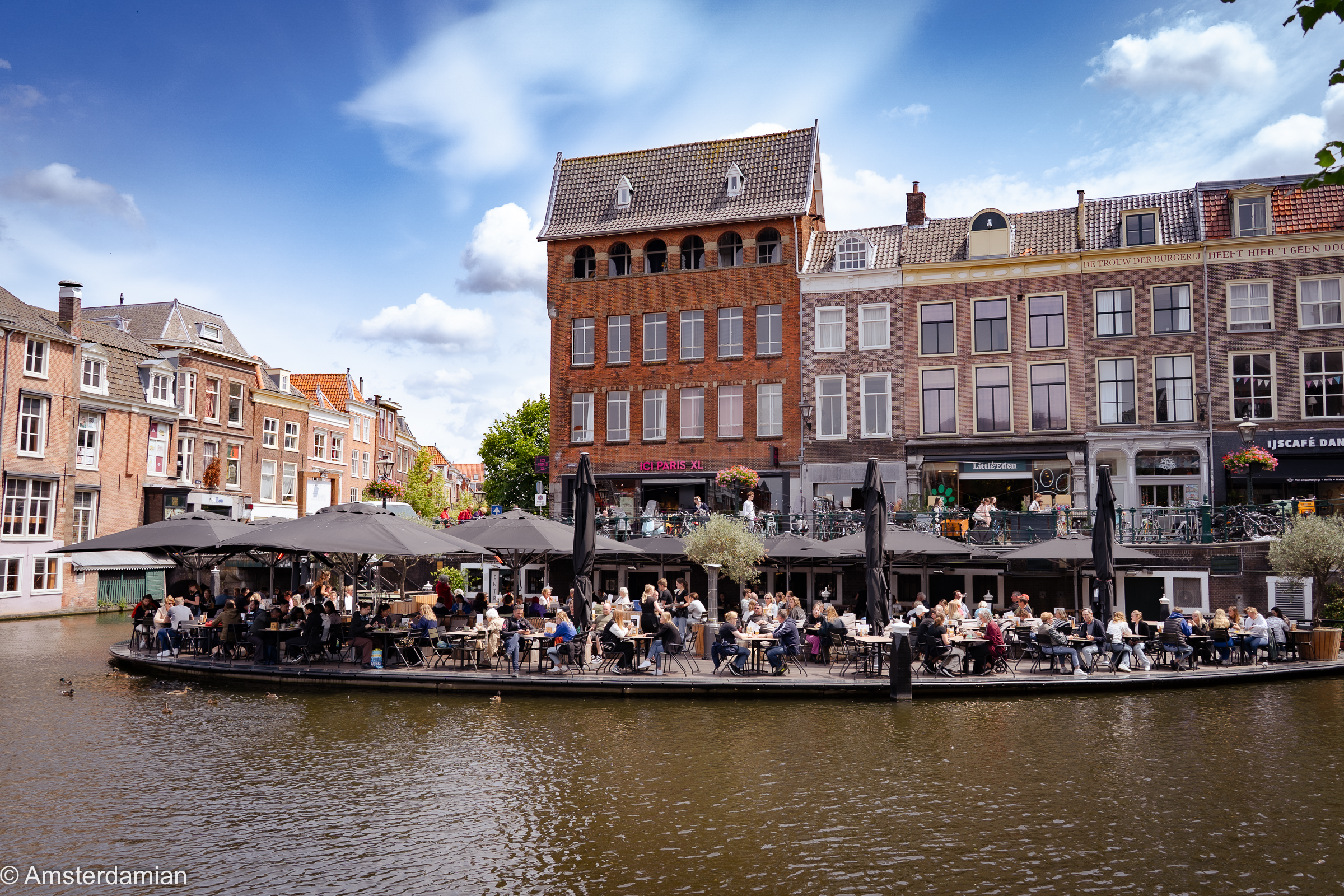
For lunch, the streets around the Pieterskerk and the Hooglandse Kerk are full of small lunchrooms doing fresh sandwiches, tostis and good soup. A few places for breakfast and brunch/lunch: Tootje, Roos, Floor’s, Vlot Grand Café, Midi Marche. For dinner: In den Doofpot, The Bishop, Anna&Fred, Pakhuis Leiden.
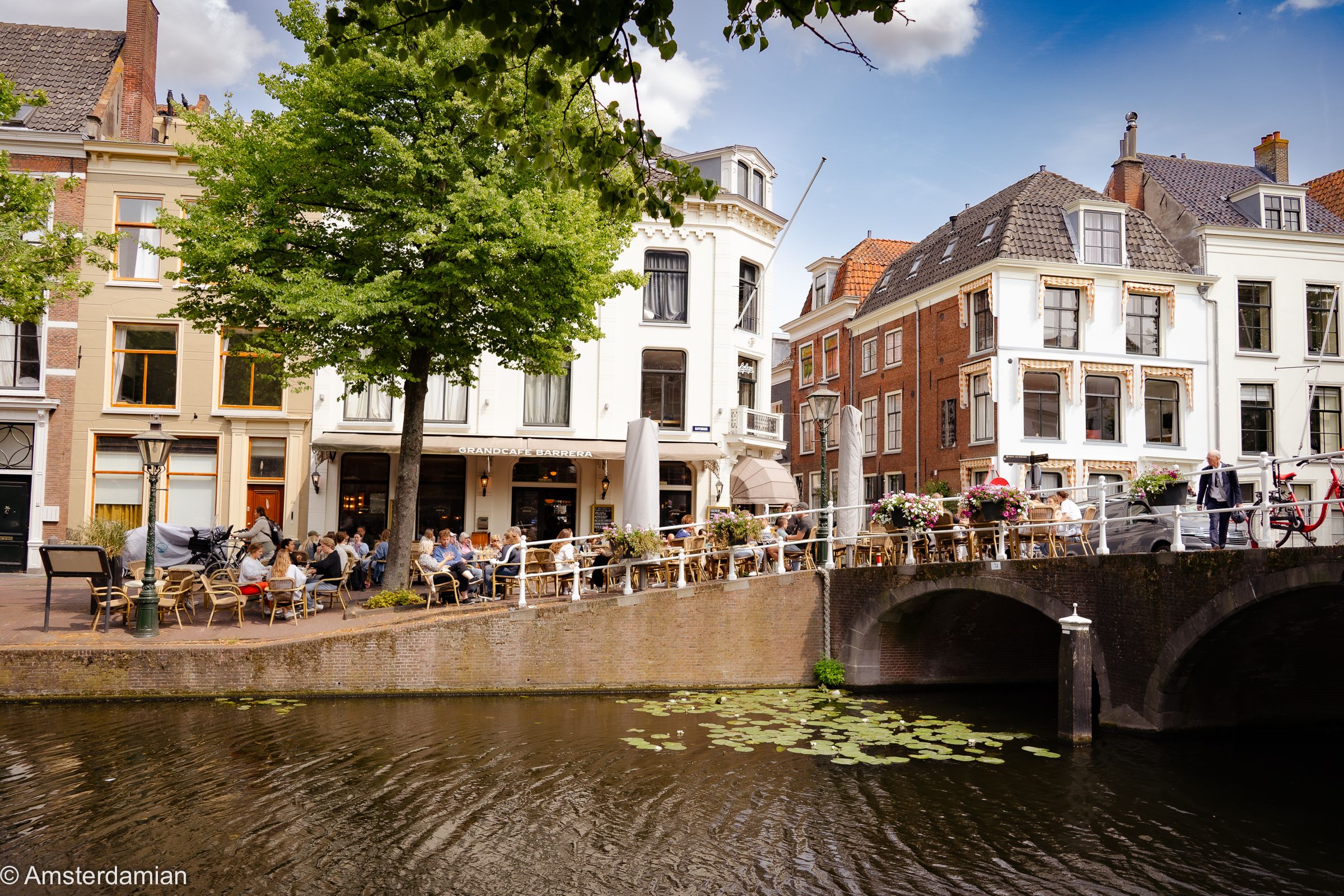
The Beestenmarkt and the Aalmarkt are the main spots for an early-evening drink on a terrace by the water. There’s also a biweekly street market along the Nieuwe Rijn, every Wednesday to Saturday from 08.00 to 17.00.
What to See Around Leiden
Katwijk & Noordwijk (the coast). Leiden is a stone’s throw from the sea. Katwijk aan Zee sits where the Old Rhine finally meets the North Sea, with a wide sandy beach and a lighthouse; neighbouring Noordwijk is more polished, all dunes and seafront cafés. Both are a short bus ride away and make an easy half-day escape.
Lisse & the Keukenhof (the bulb region). This is for a spring visit (late March to mid-May). The flower fields of the Bollenstreek bloom in stripes of tulip colour right on Leiden’s doorstep, and the Keukenhof gardens near Lisse draw visitors from all over the world for roughly eight weeks each spring.
The Hague (Den Haag). The seat of Dutch government, fifteen minutes by train. Come for the Mauritshuis and its Vermeers, the seaside resort of Scheveningen, and a grander, more international feel than cosy Leiden. An easy day out with plenty to fill it.
Delft. A smaller, postcard-pretty canal city, famous for its blue-and-white pottery and as the home and burial place of Vermeer and the House of Orange. The vibe is much like Leiden’s: historic, walkable, student city.
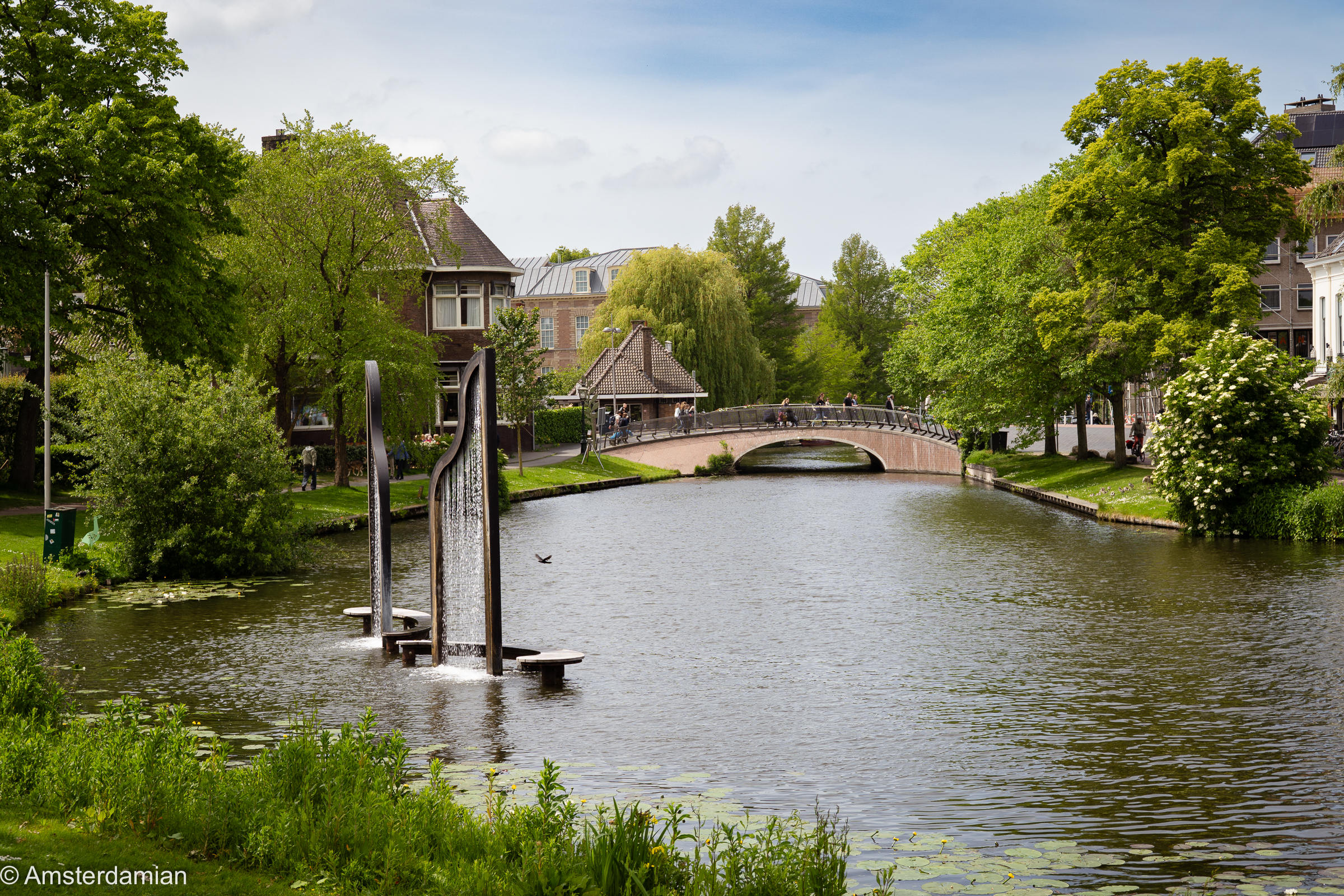
Warmond. A picturesqe village just north of Leiden, set among the Kagerplassen, a web of lakes that make it one of the oldest watersports areas in the country. Come for a sail or a lazy boat trip, wander to the island of Koudenhoorn with its little beach and drawbridge, or seek out the romantic ruins of the old St Matthias church and the Huys te Warmont estate. Quiet, green and faintly aristocratic, it’s the countryside in miniature, ten minutes from the city.
Practical Information
How to Get to Leiden from Amsterdam
Leiden is about 40 minutes by direct Intercity train from Amsterdam Centraal. Sprinter trains take a little longer but also run regularly. A one-way ticket costs around €12. Leiden Centraal is a 10-minute walk from the historic centre; head south across the bridge and you are in the old city within minutes.
By car it is roughly 45 minutes from Amsterdam (longer in rush hour), but parking in the centre is restricted, expensive and largely unnecessary. The train is the right choice.
FAQ
Is Leiden worth a day trip from Amsterdam?
Definitely YES! Leiden is one of the best day trips from Amsterdam if you are interested in history, art or museums. The historic centre is compact, the canals are quieter than Amsterdam’s, and the city has Rembrandt, the oldest university and the oldest botanical garden in the country, all within a 15-minute walk of each other.
How long do you need in Leiden?
You need a full day to properly visit this city. You can see the highlights in half a day, but to take in the Burcht, the two great churches, a museum or two, the Hortus Botanicus and De Valk windmill, and have a proper lunch on a canal, a full day gives you the best experience. If you have the time, you could easily do a weekend here.
What is Leiden famous for?
Leiden is famous for three things: it is the birthplace of Rembrandt, who was born here in 1606; it is home to the oldest university in the Netherlands, founded in 1575 after the siege of Leiden; and it is where the Pilgrim Fathers lived between 1609 and 1620 before sailing to America on the Mayflower.
This article is part of the project: Discover the Netherlands, Province by Province. Read the collection of articles here: Dutch Provinces: a Complete Guide.
Stay tuned for more and follow Amsterdamian on Instagram and Facebook for more stories about life in the Netherlands, written by a real local, updated constantly.
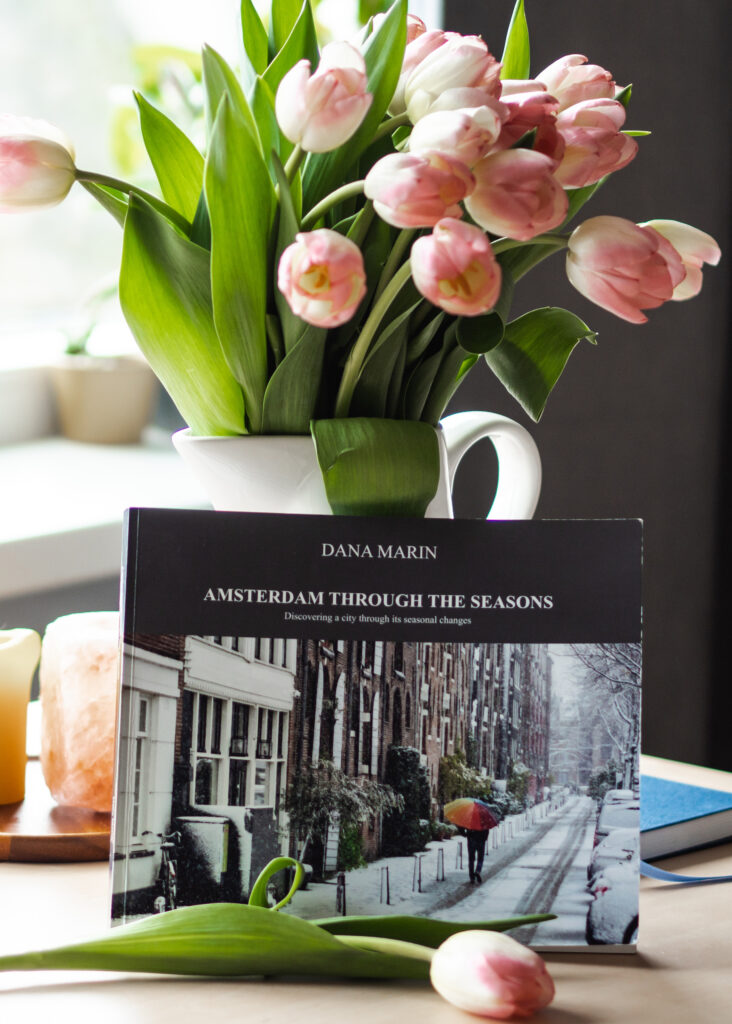
Check out my photo book: Amsterdam Through the Seasons!
Love what you’re reading? Support my work with a small donation.
And share this post if you liked it!







Trackbacks/Pingbacks