

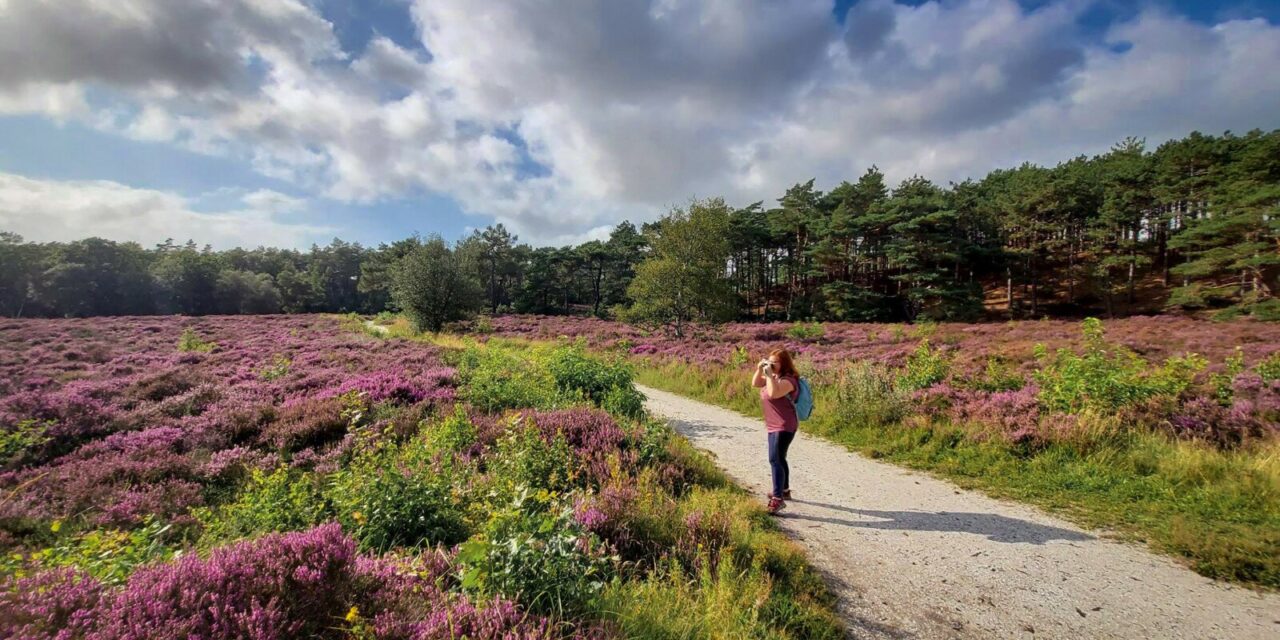
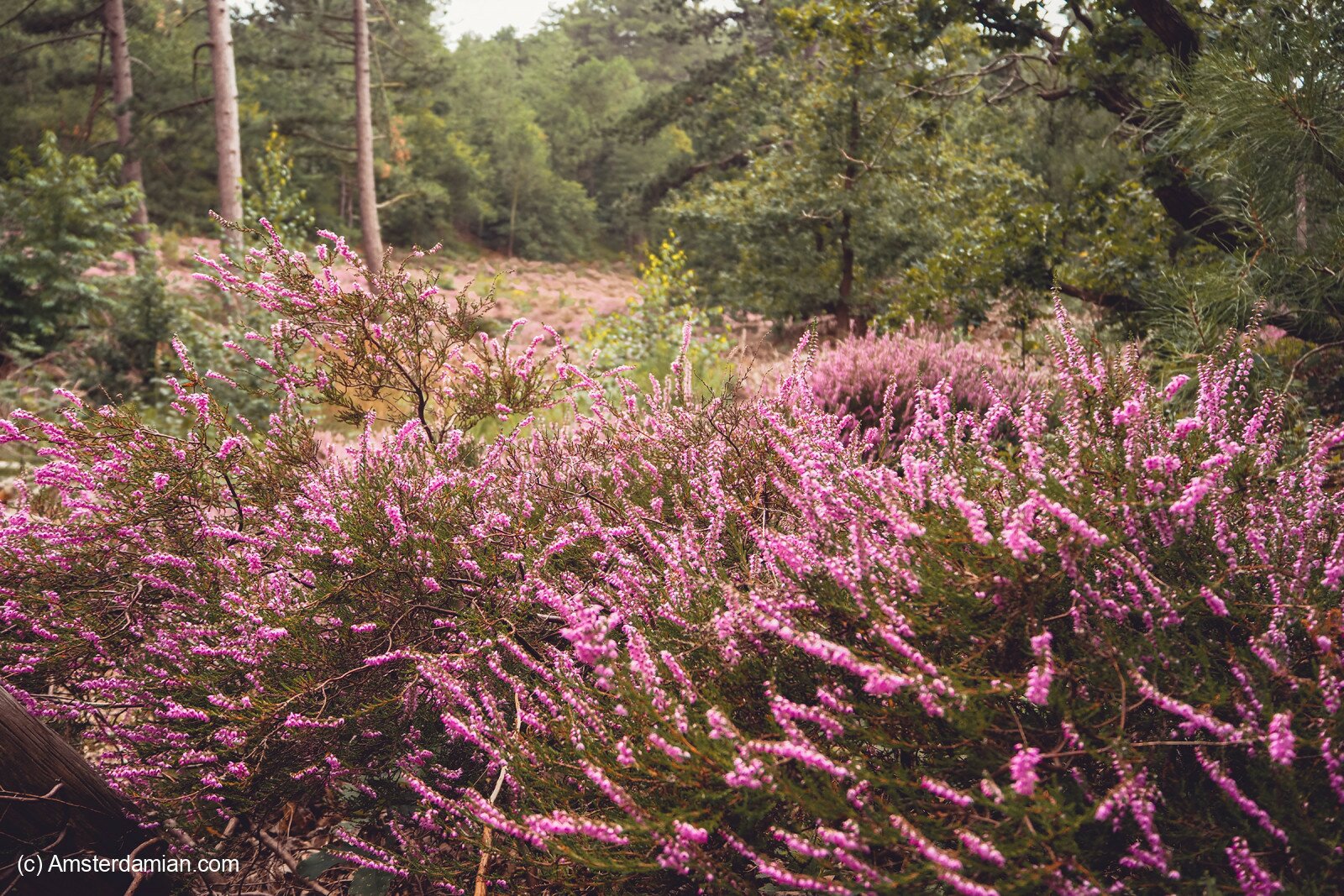
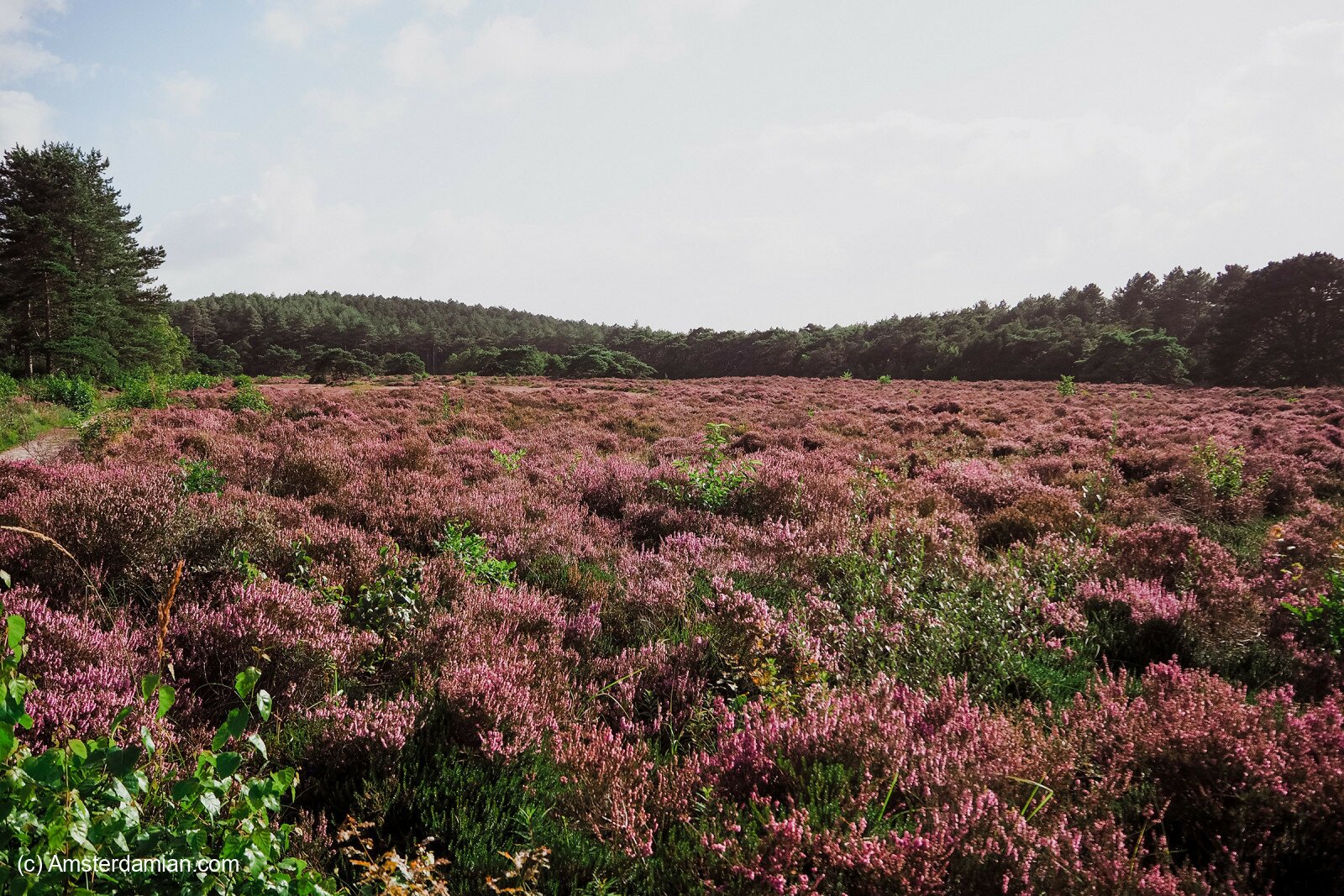
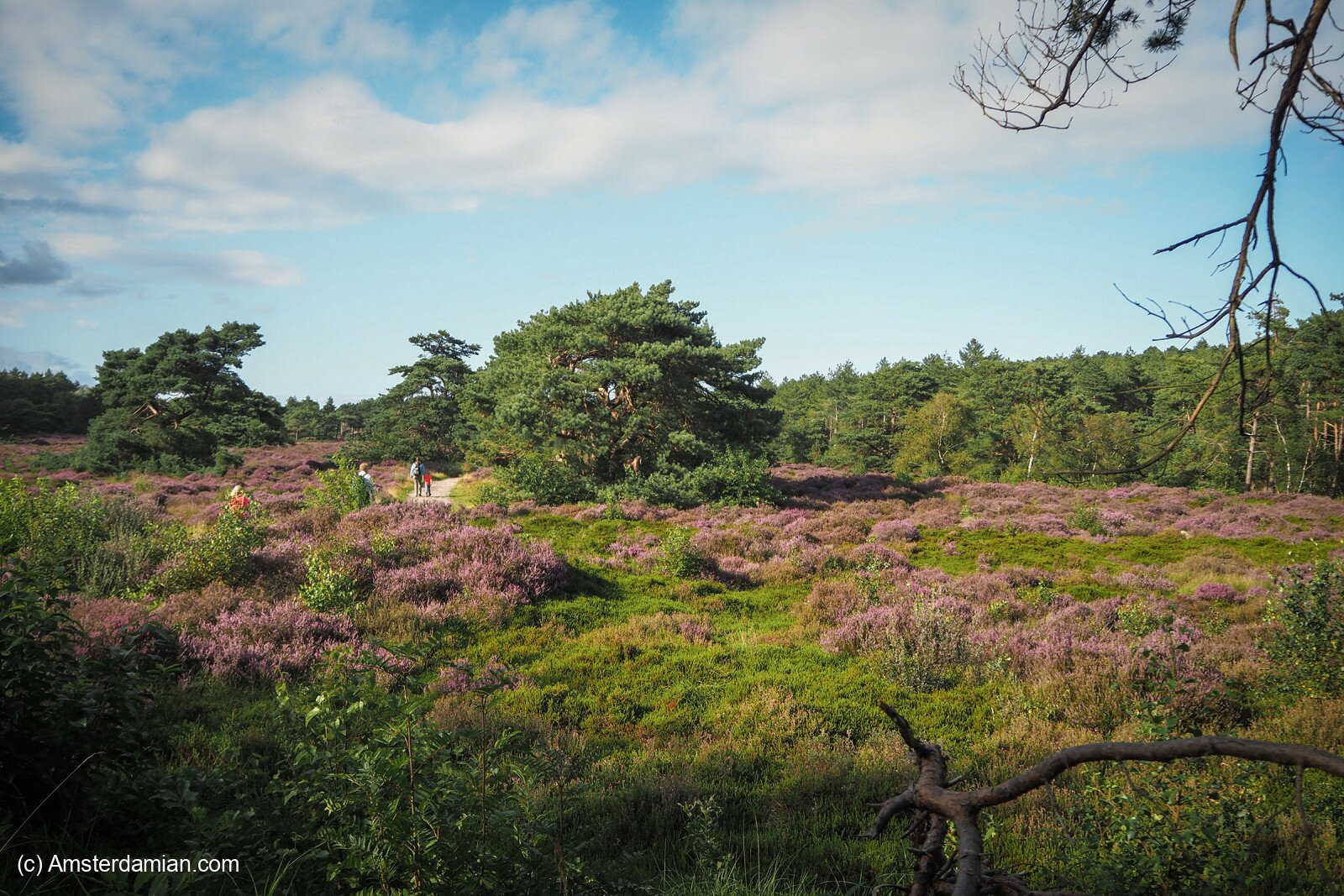
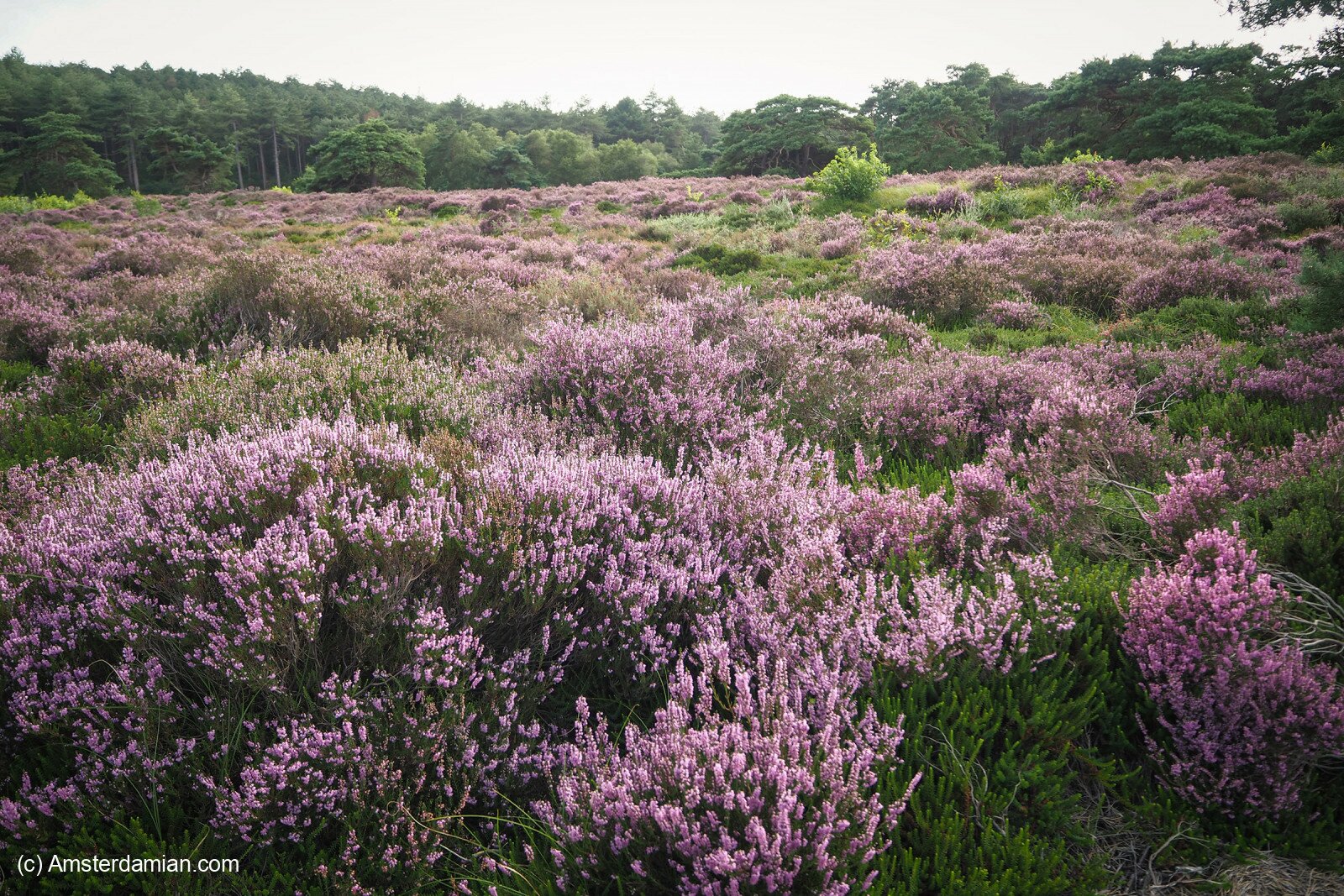
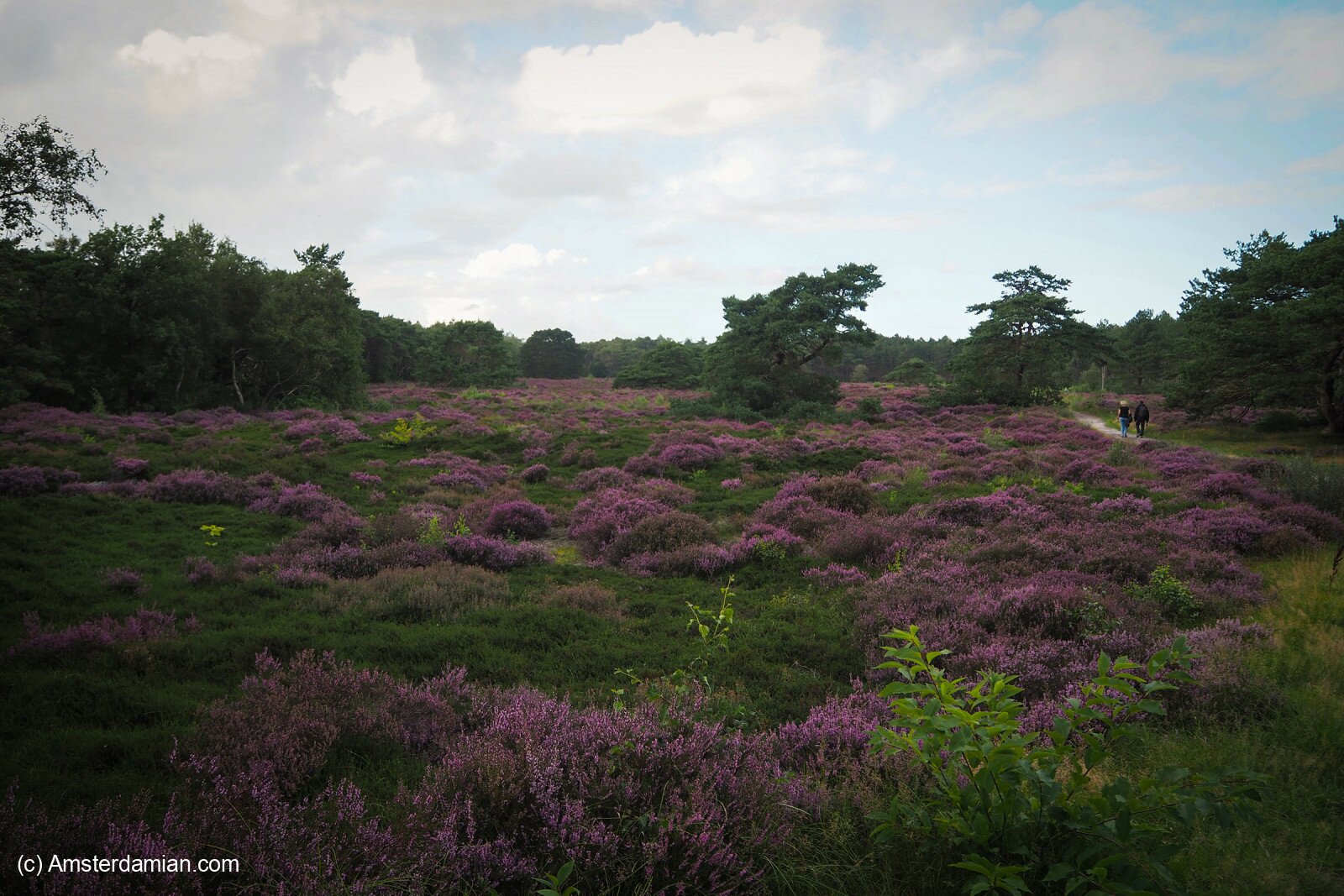
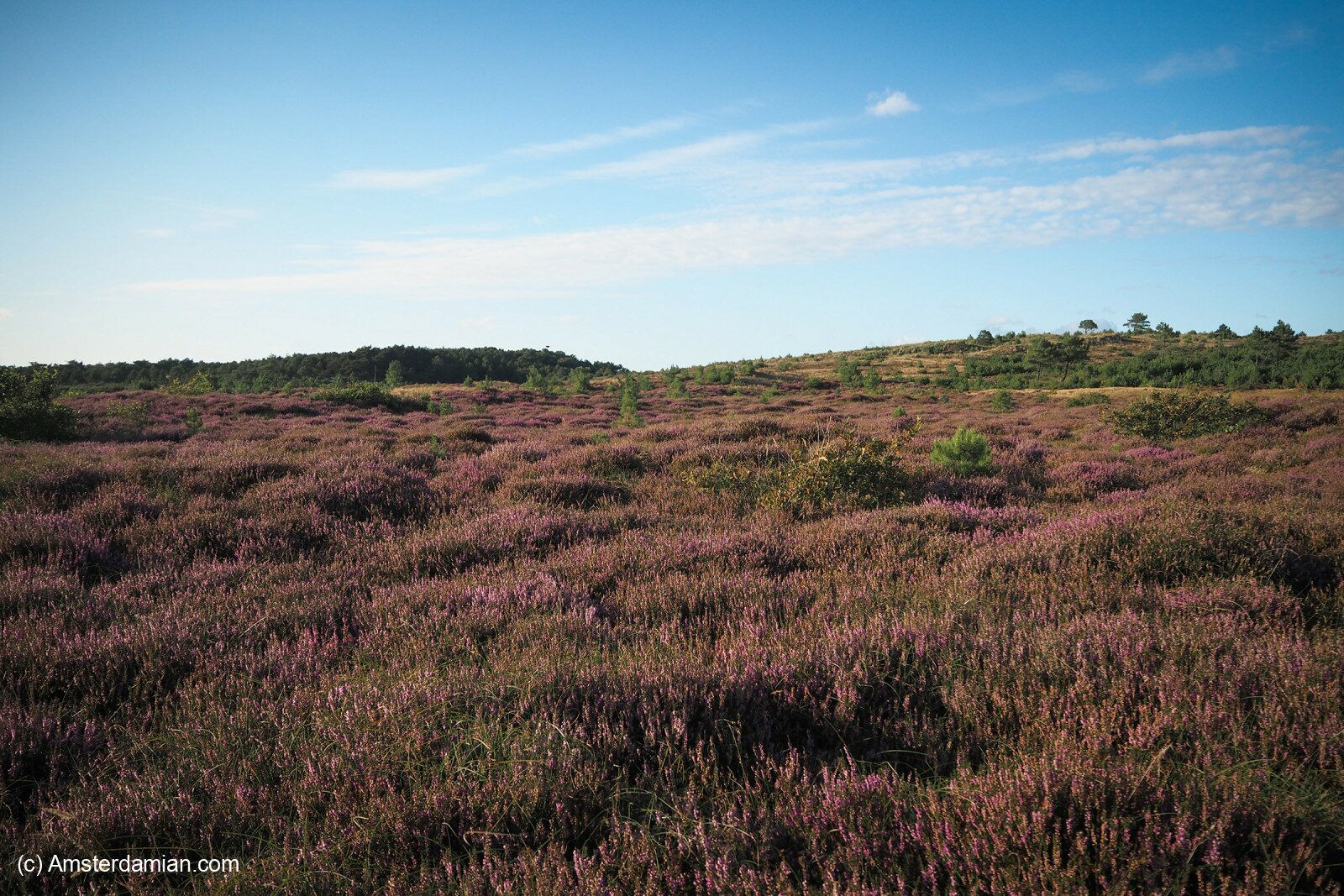
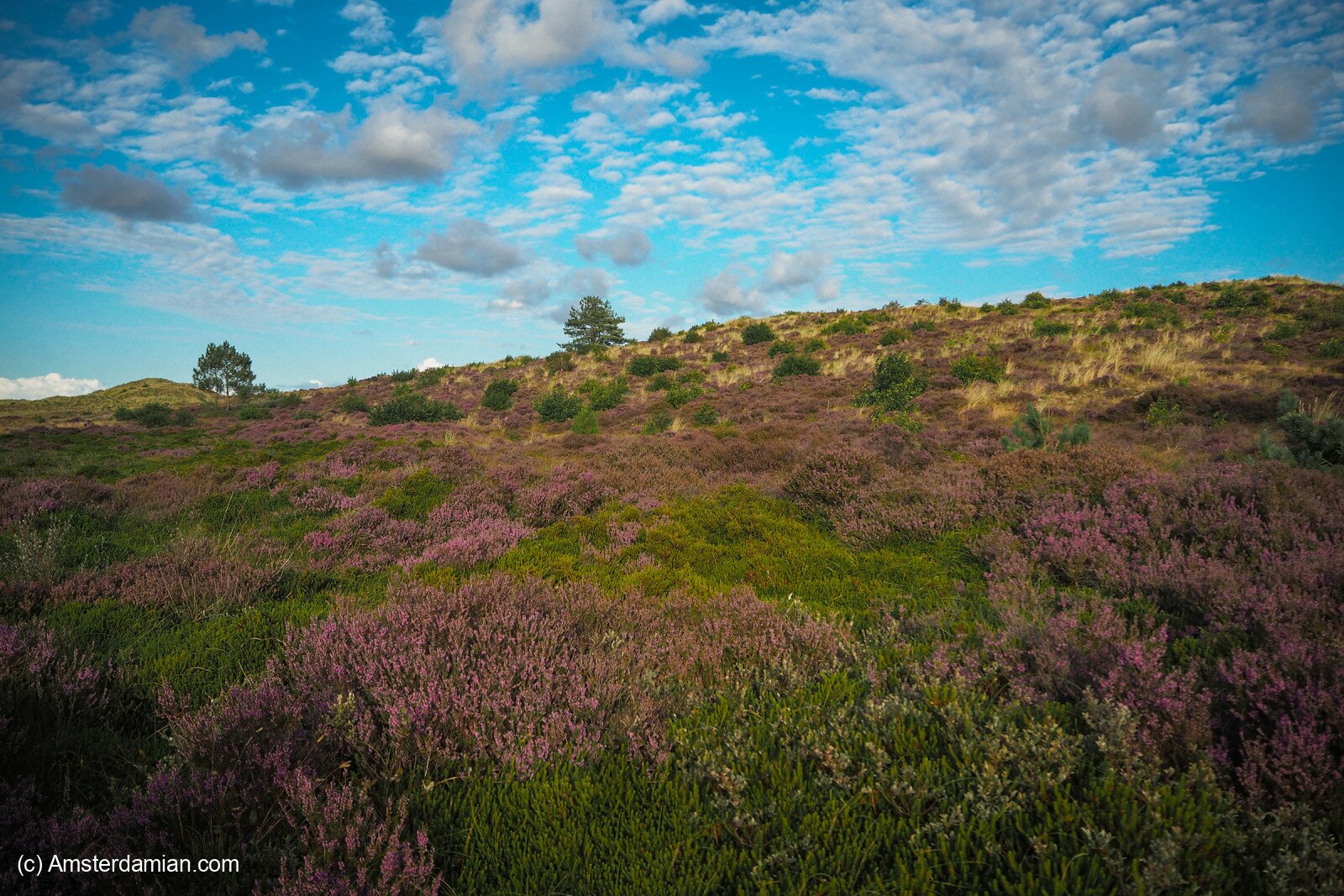
The Netherlands has many flower fields, and I’m not talking only about the spring flowers like tulips and hyacinths! At the end of the summer, the Netherlands turns purple: the heather fields are in bloom! It’s an event that many people look forward to, and rightly so: seeing the national parks and the dunes covered in purple is amazing.
Below you’ll find when the heather flowers, the walk I go back to every year in the Schoorl dunes, and where else in the country you can find it.

When to go and see the heather at its best
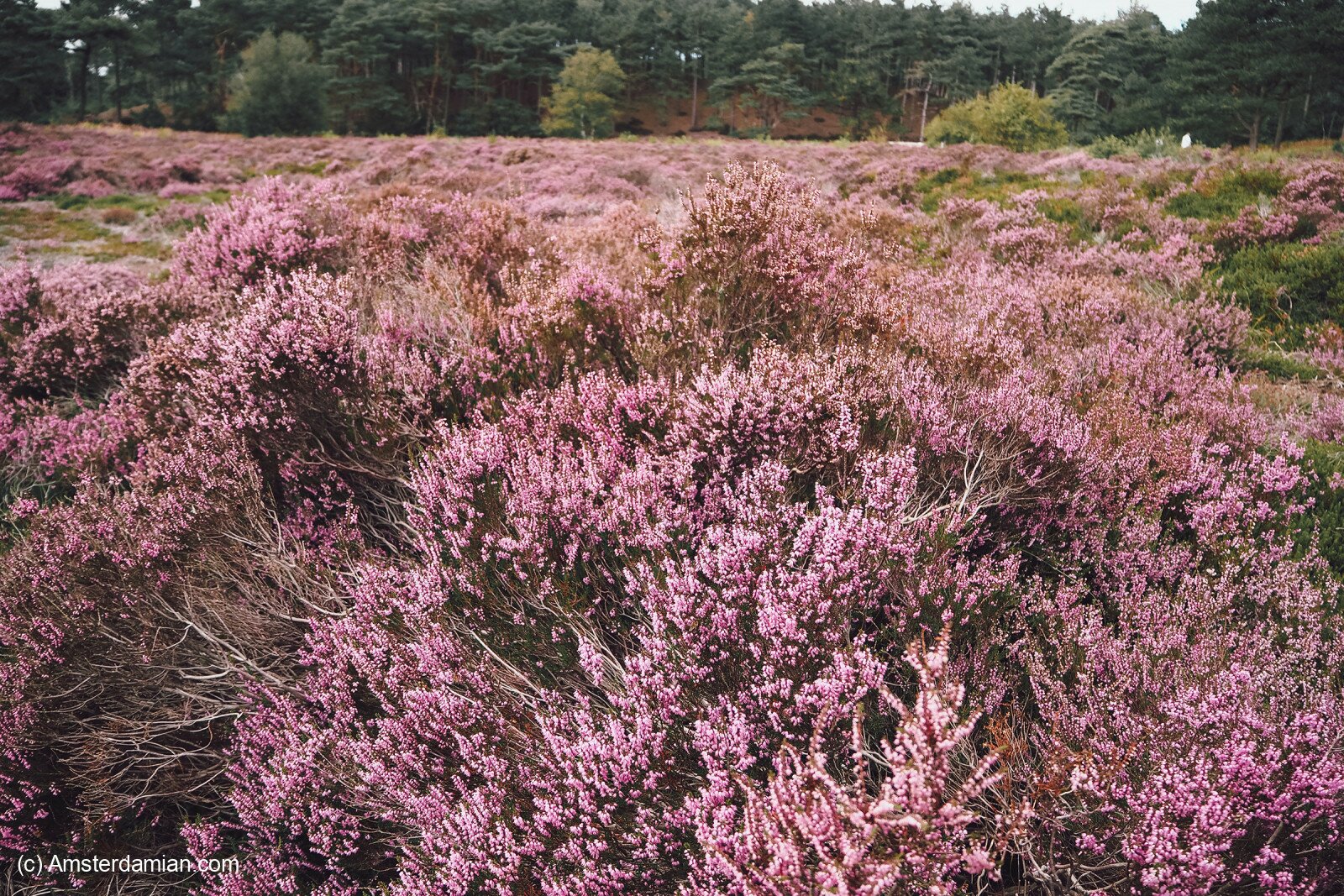
The heather flowers over a long stretch, but the window when it actually looks like the photographs is short. Aim for the last two weeks of August. Natuurmonumenten put the start of the bloom at around the middle of July and say the intense colour already begins to flatten off during September, which puts late August squarely in the middle of the good part. The weather shifts it by a week or so either way each year, but the best bet is the last week of August I think. If you go too late, you risk seeing only dry bushes. I went one year at the end of the season and found nothing but dried stalks, which were beautiful in their own way, but not what I was hoping for. So the next time I planned the day trip right at the peak of the blooming season.
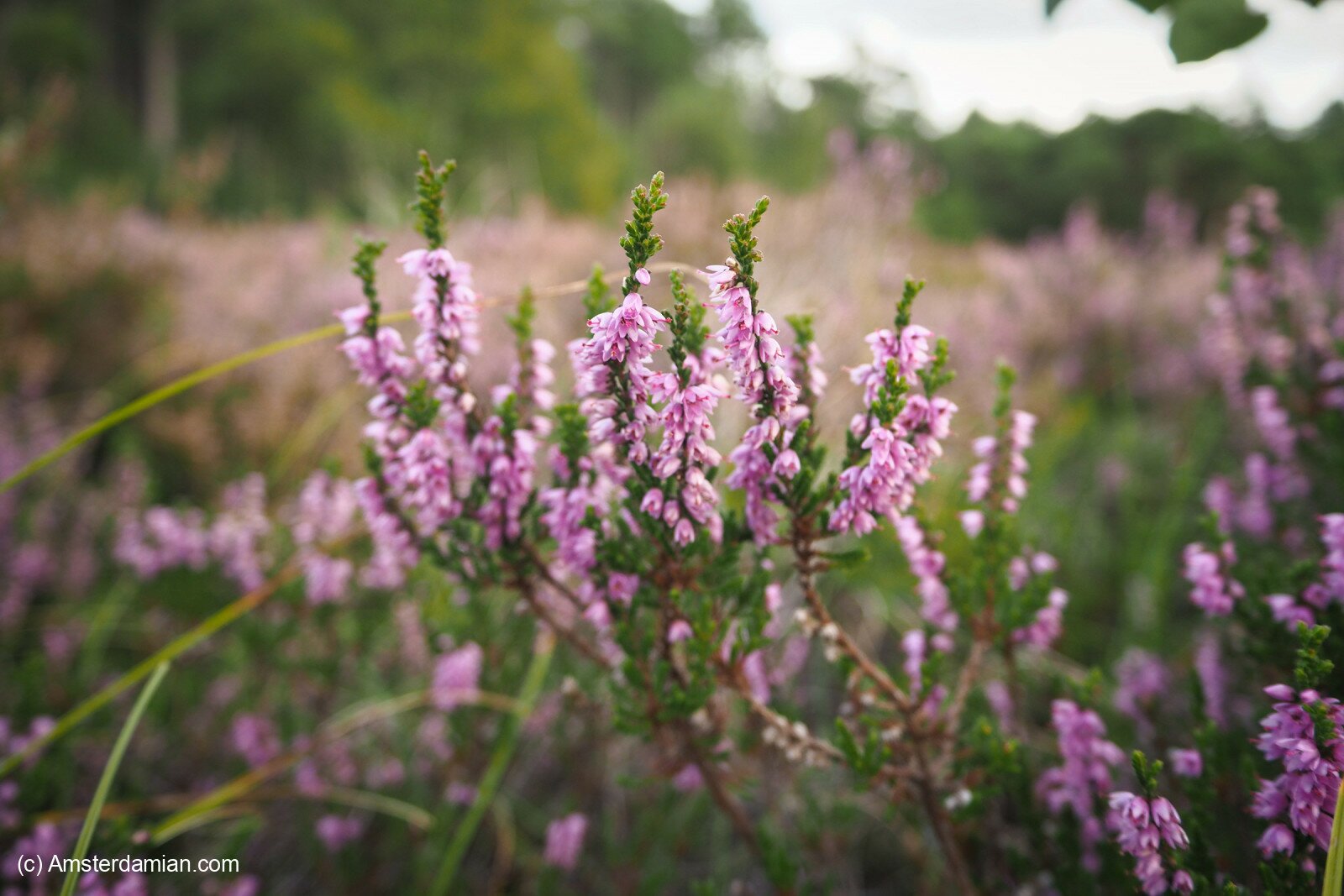
You’ll sometimes see heather dates as early as June or July. That’s the dopheide, which flowers earlier and likes wetter ground; the struikhei that turns the dunes purple comes later.
Walking the purple route at Schoorl
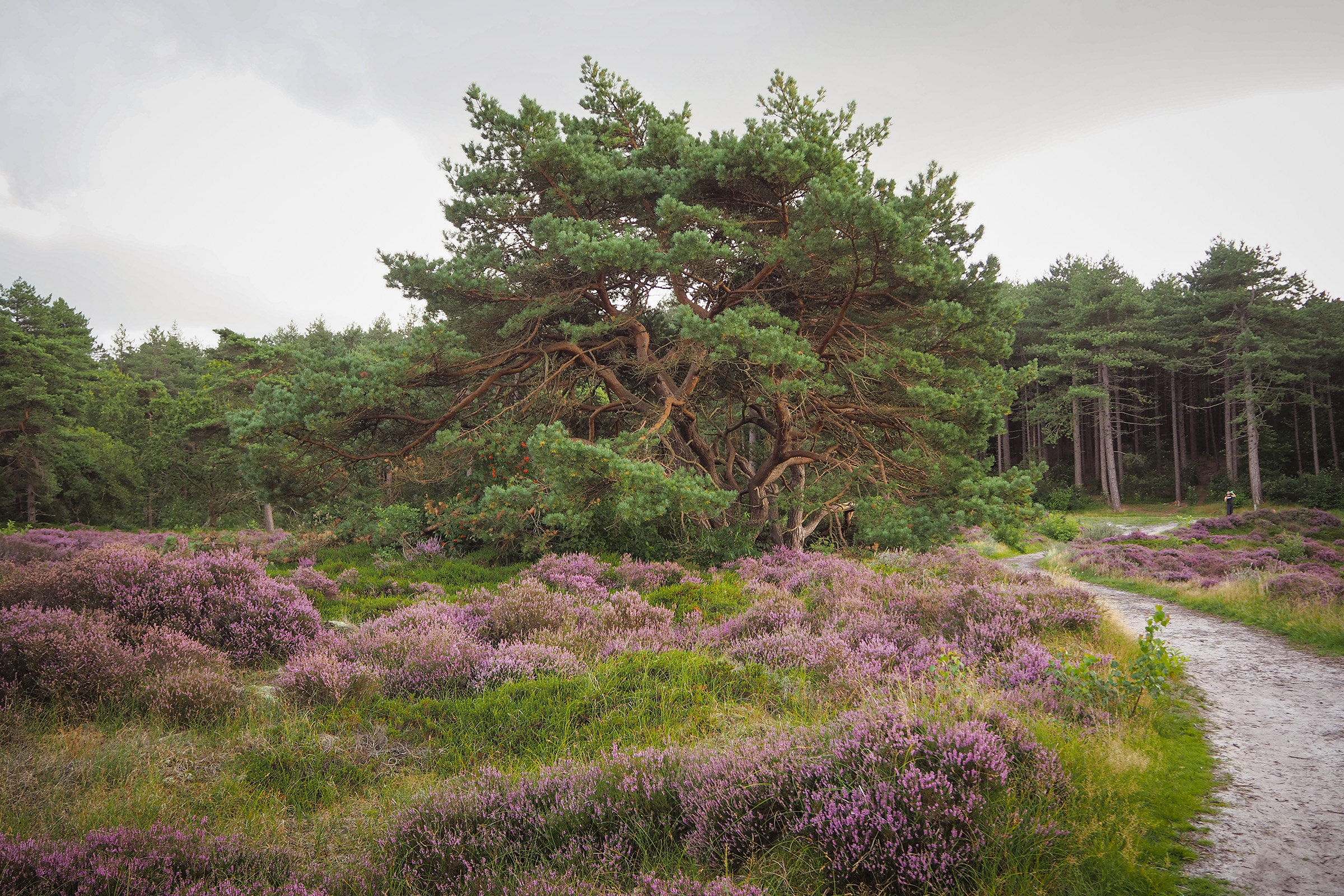
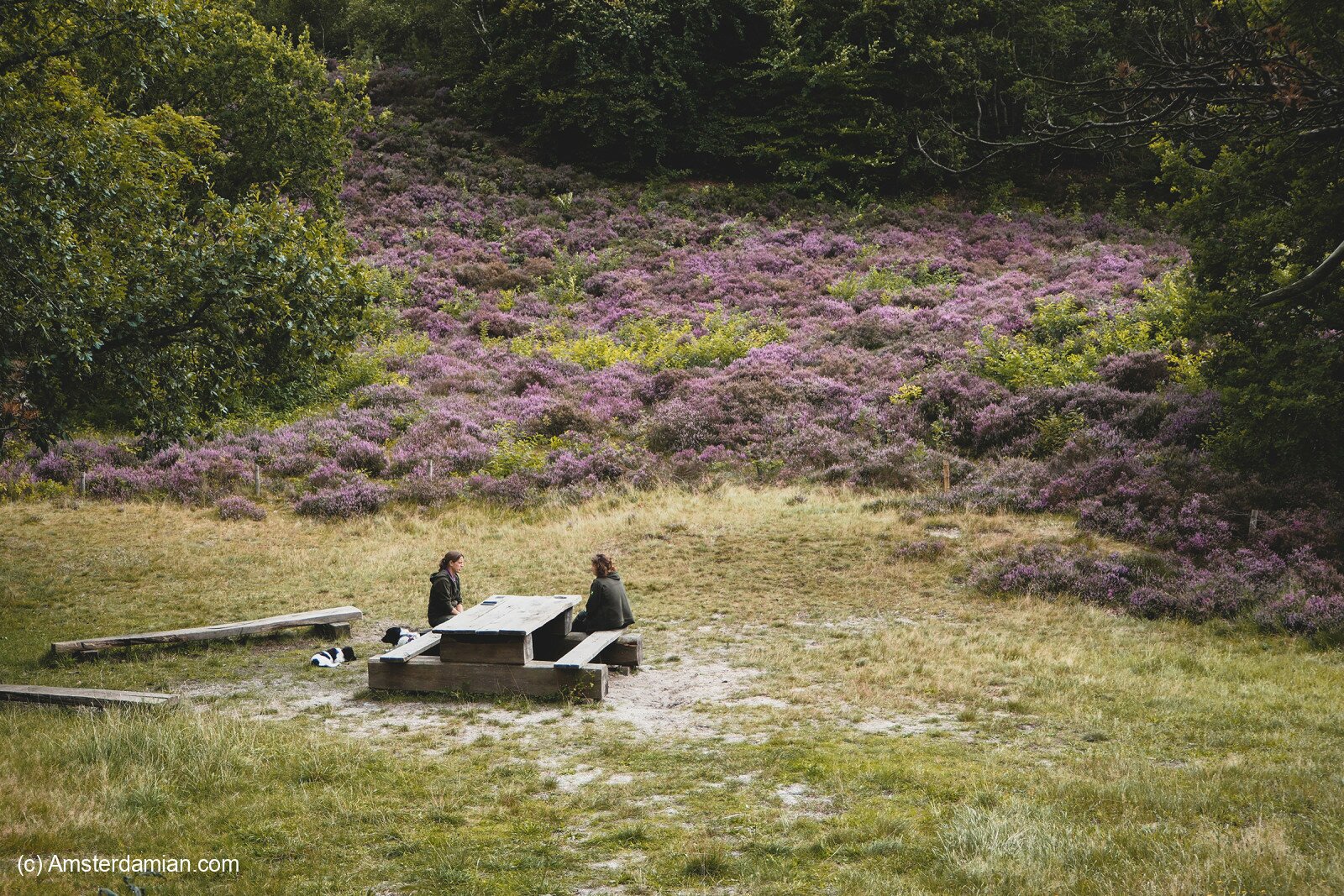
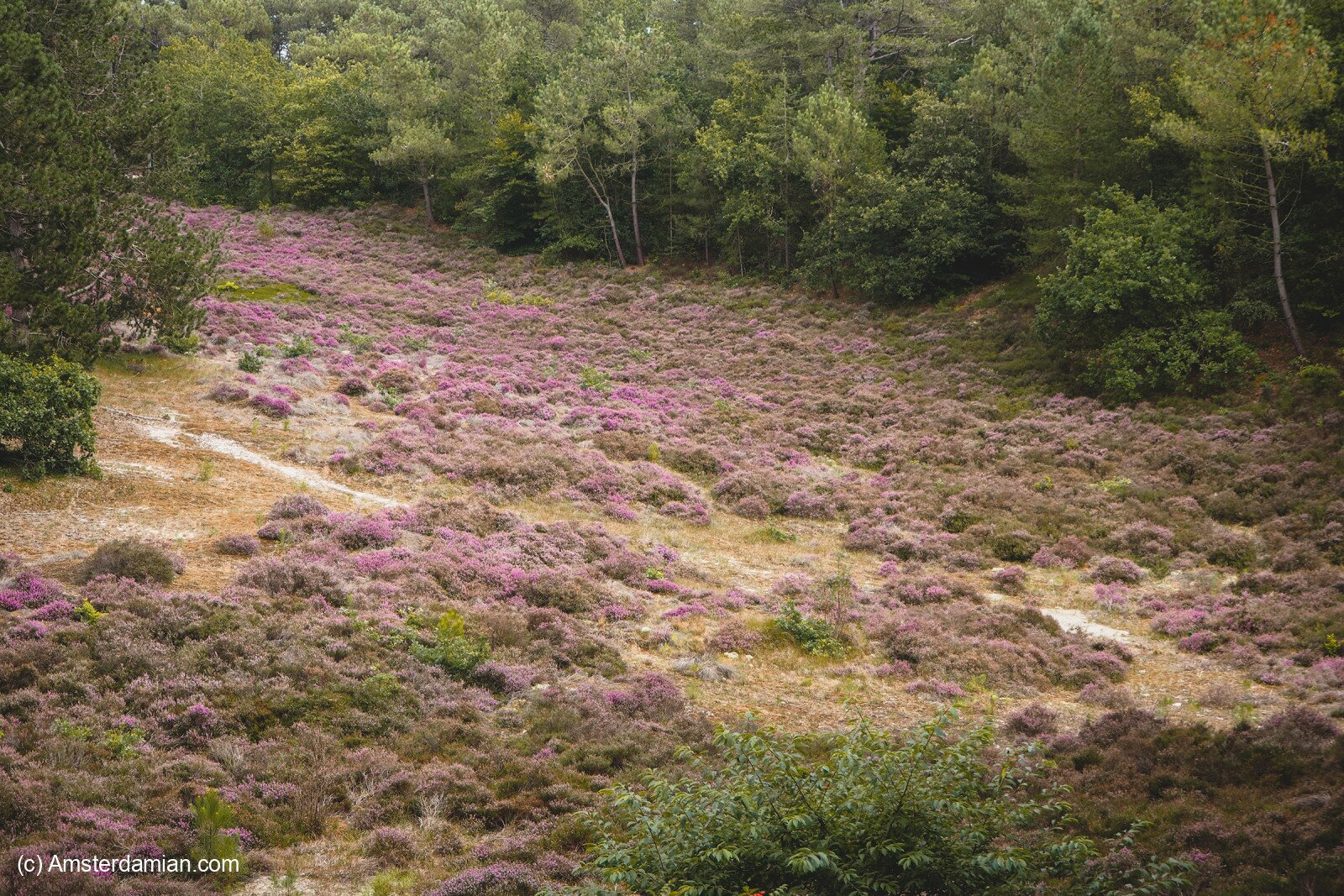
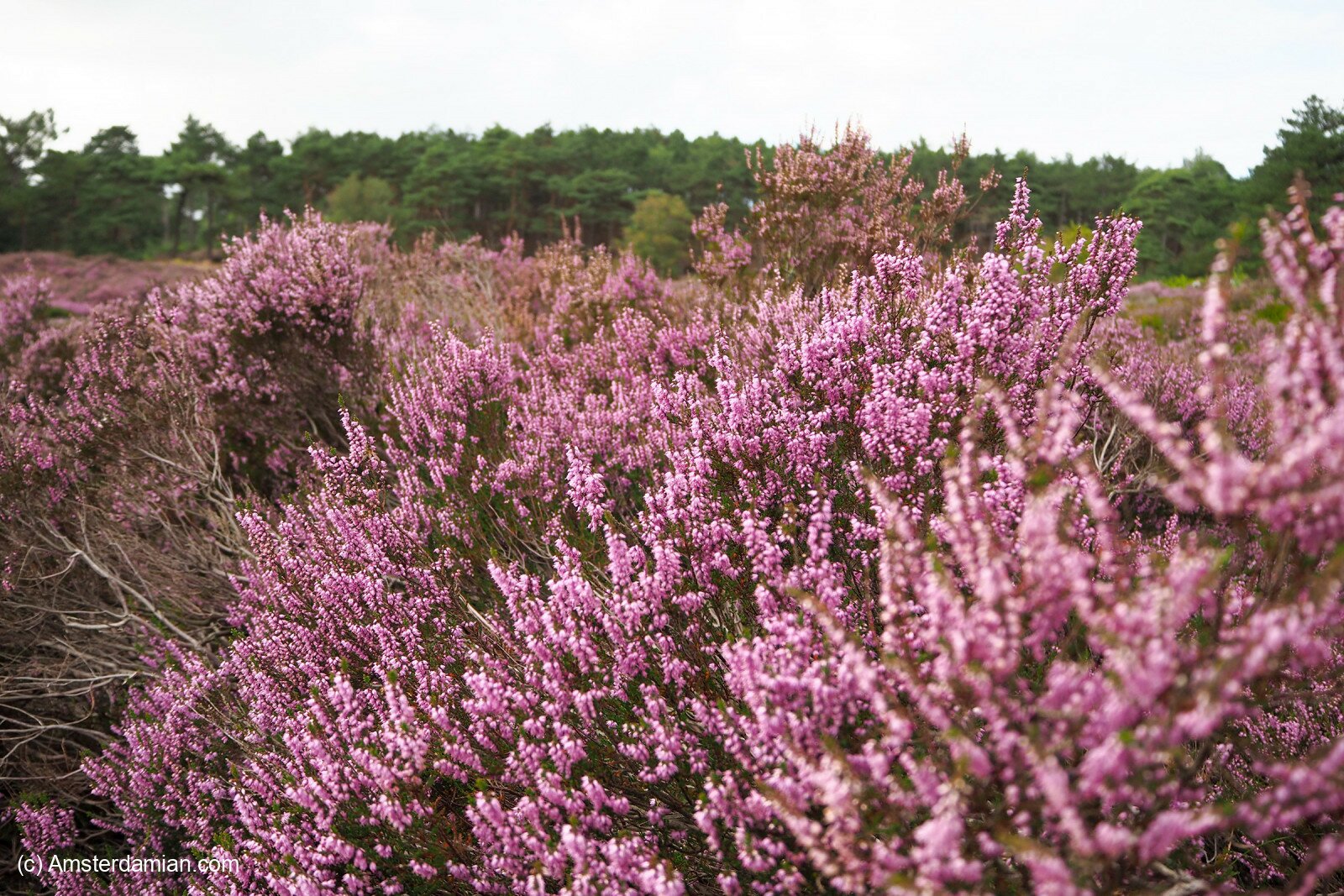
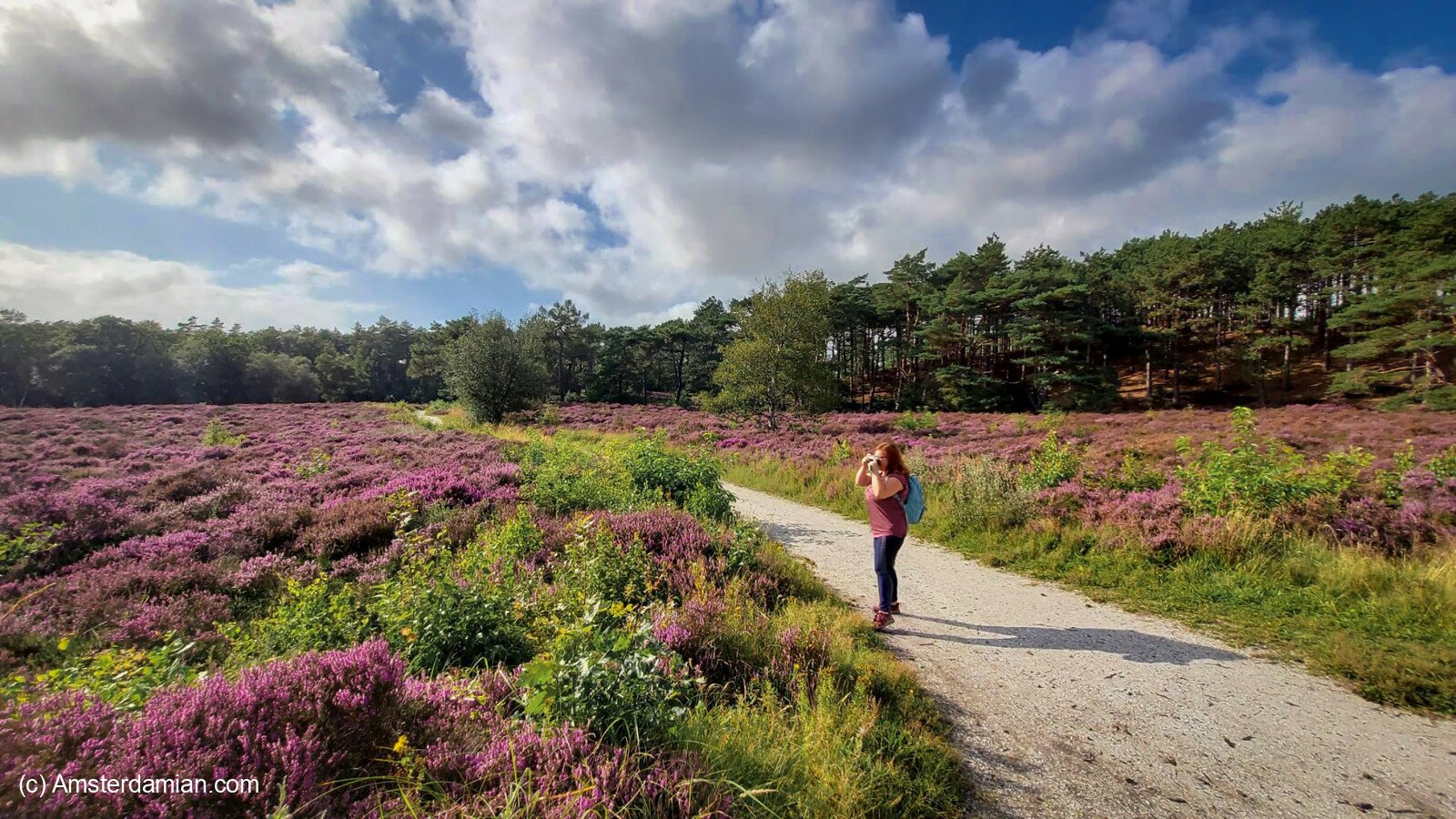
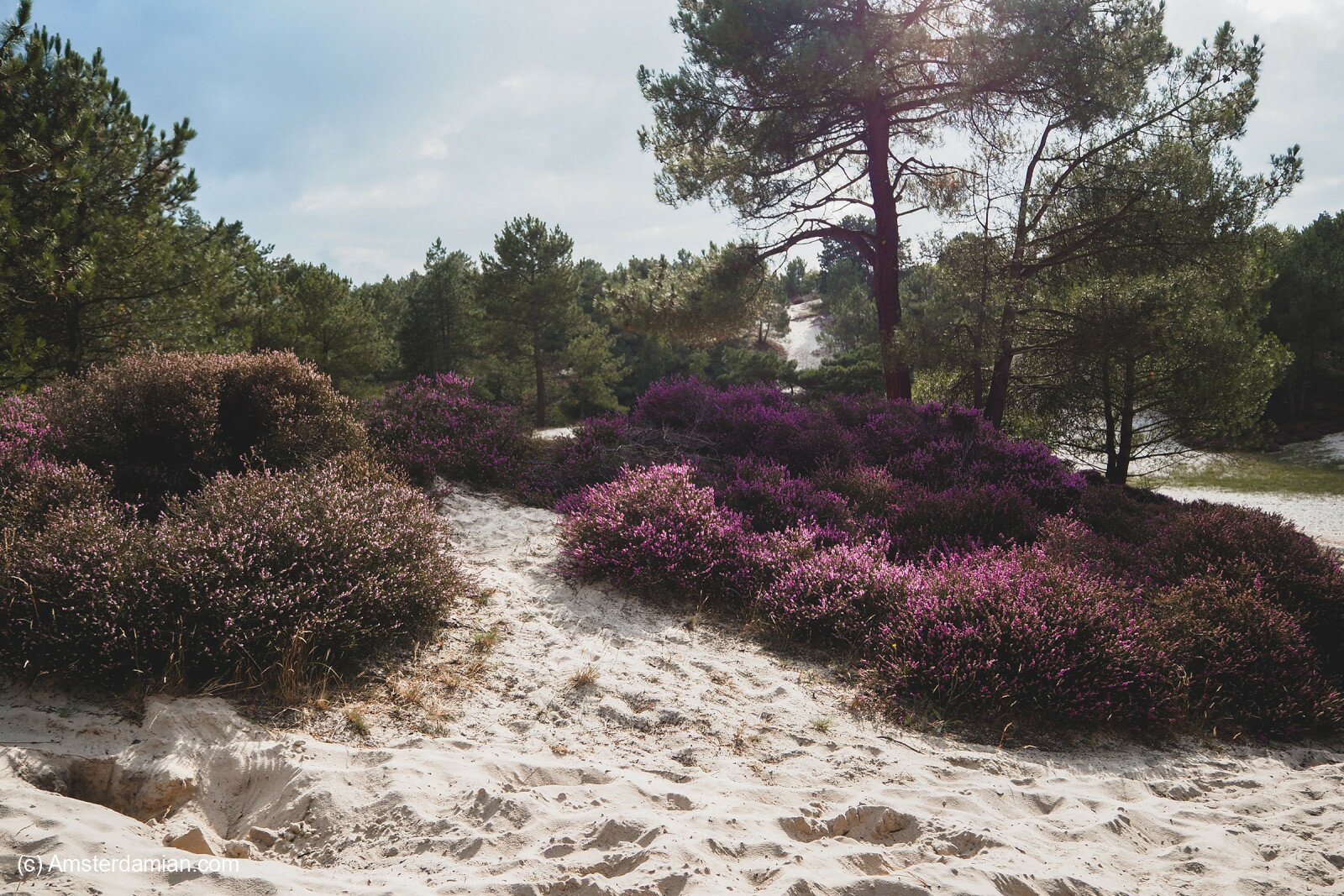
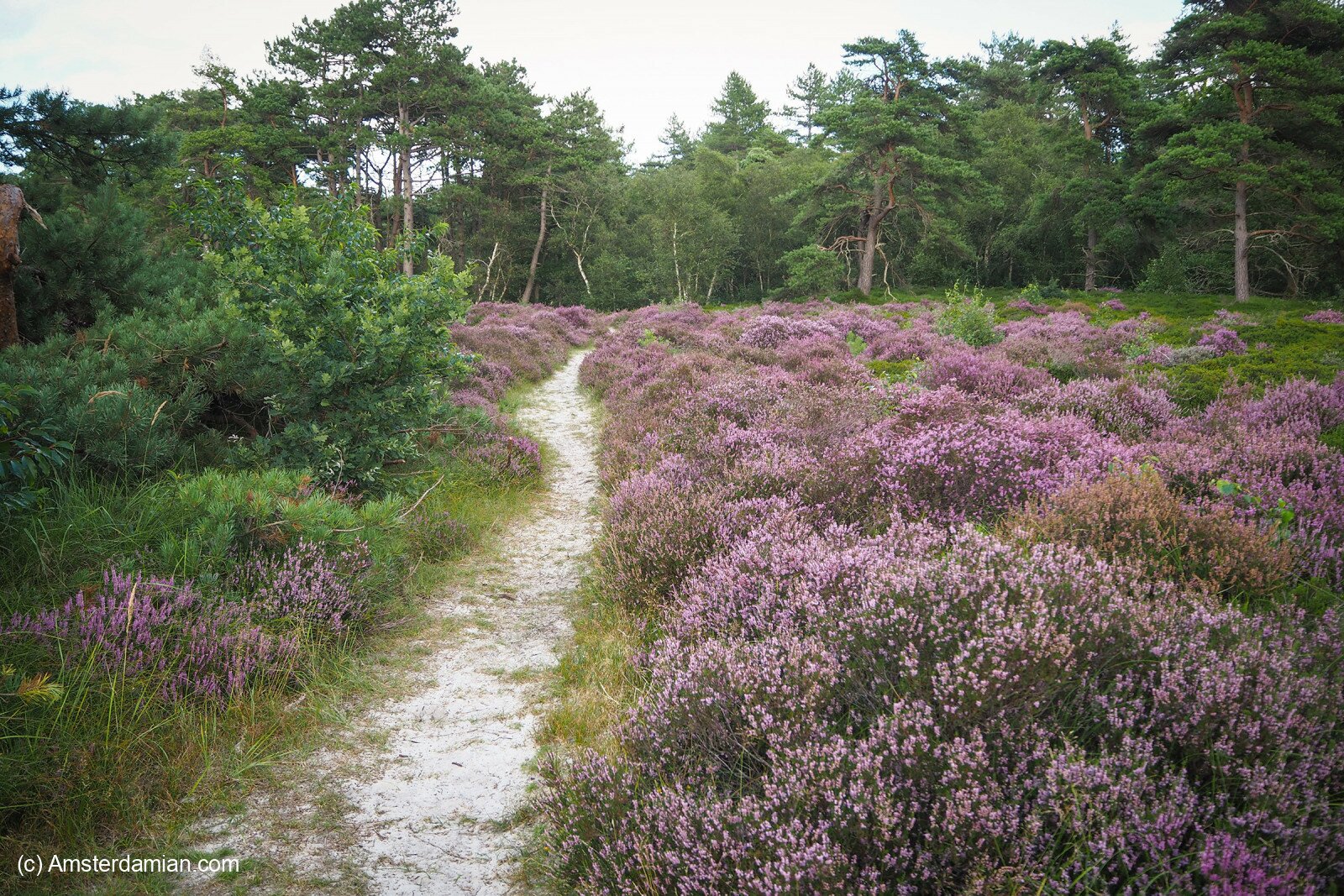
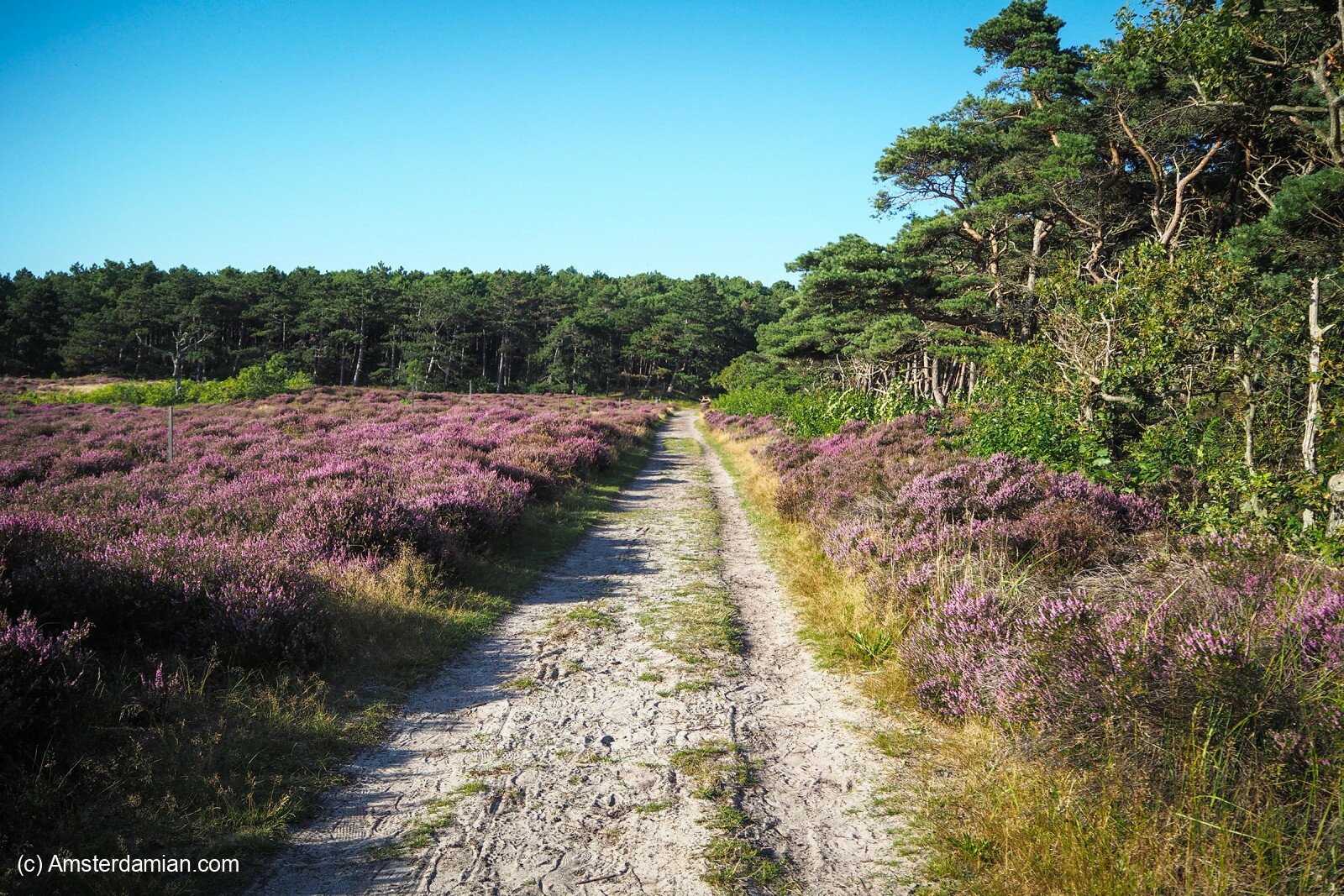
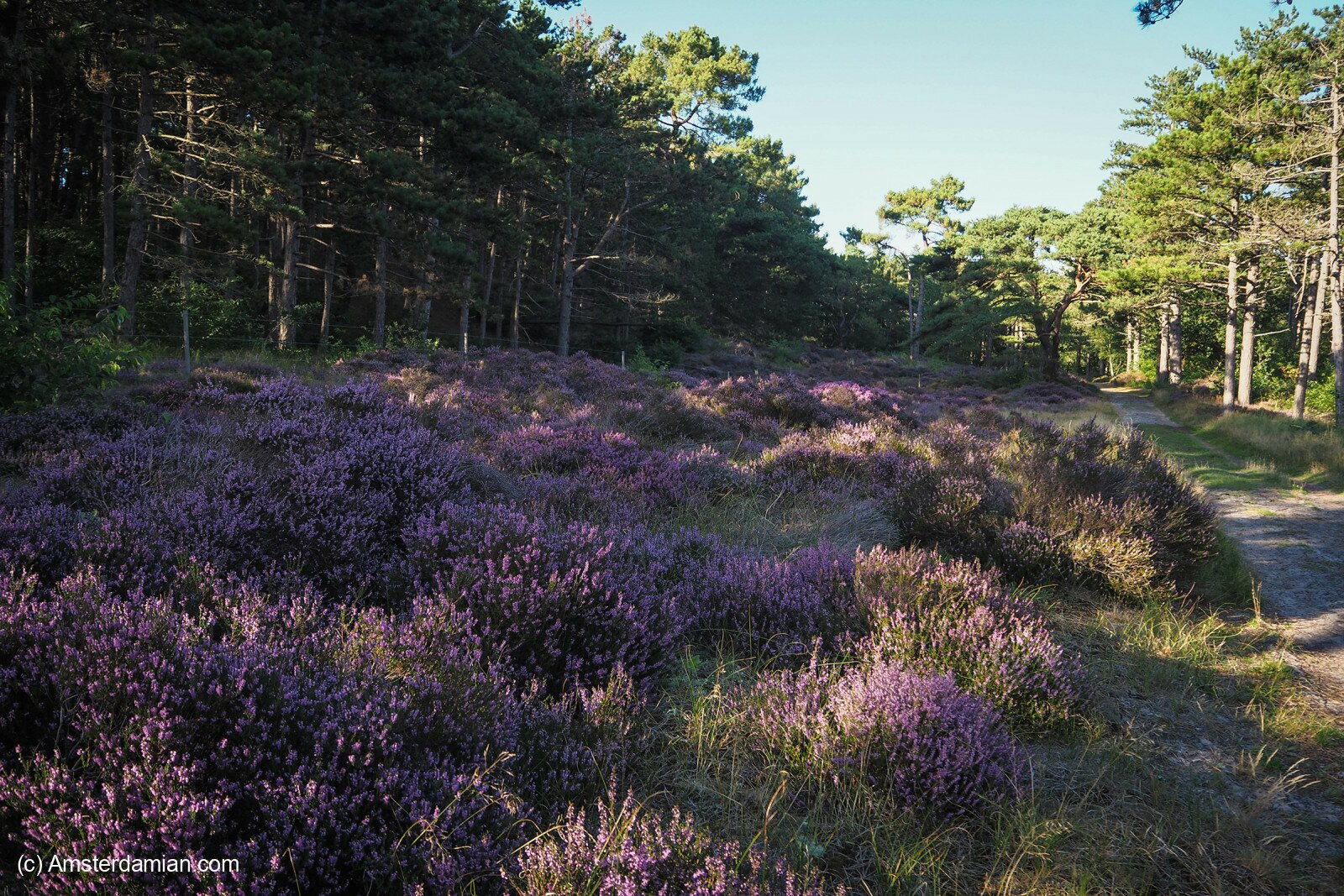
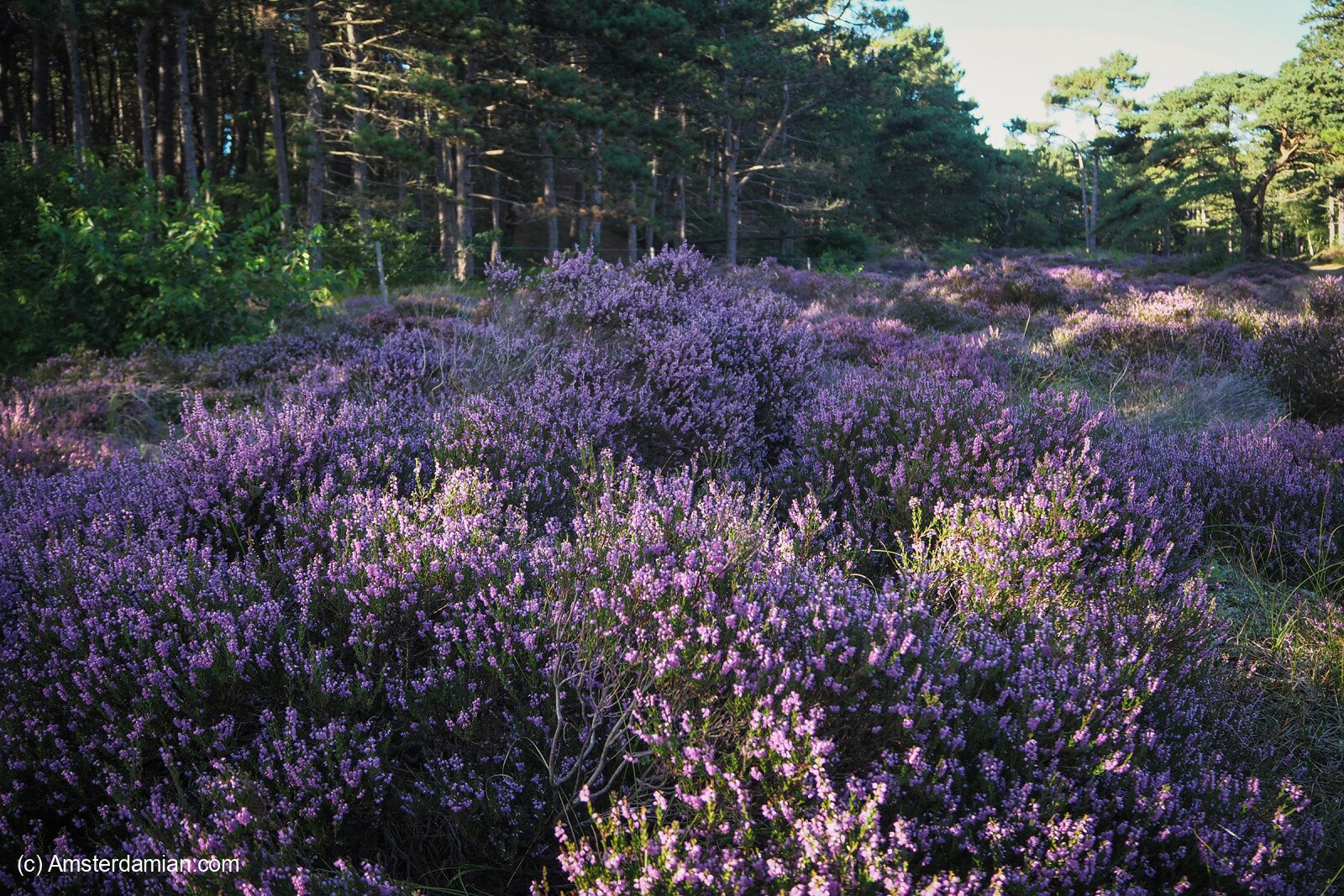
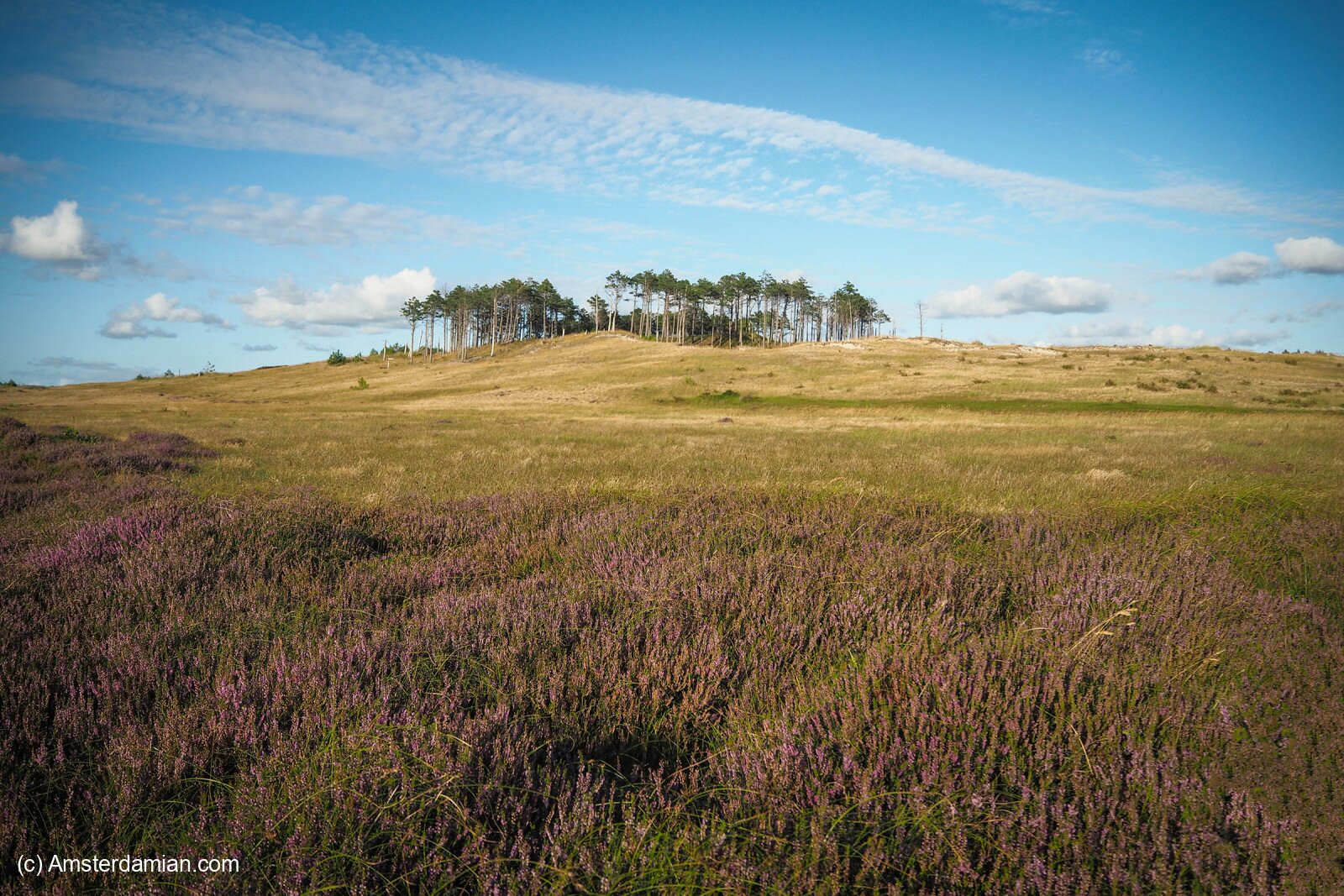
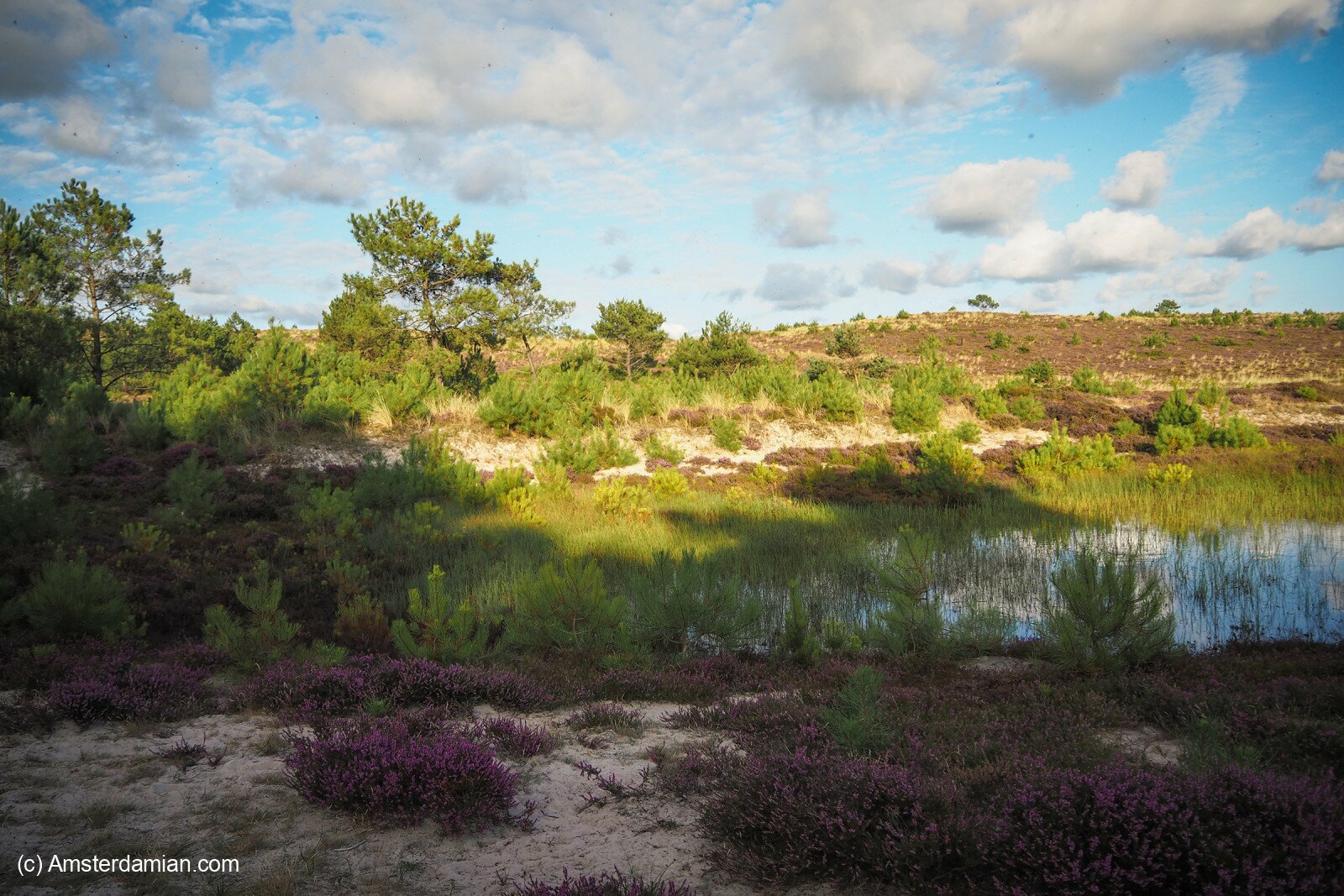
My go to place to see the heather fields is Schoorlse Duinen, and the purple route in this area, an 11 km route that goes through the forest and the dunes. Last time I went there I’ve seen so many heather fields to have material for a lot of day-dreaming for a while now! They remind me of the lavender fields, only that the heather bushes grow wildly and in no particular arrangement. They are taller than I expected, and the colour varies from almost pink to dark purple.
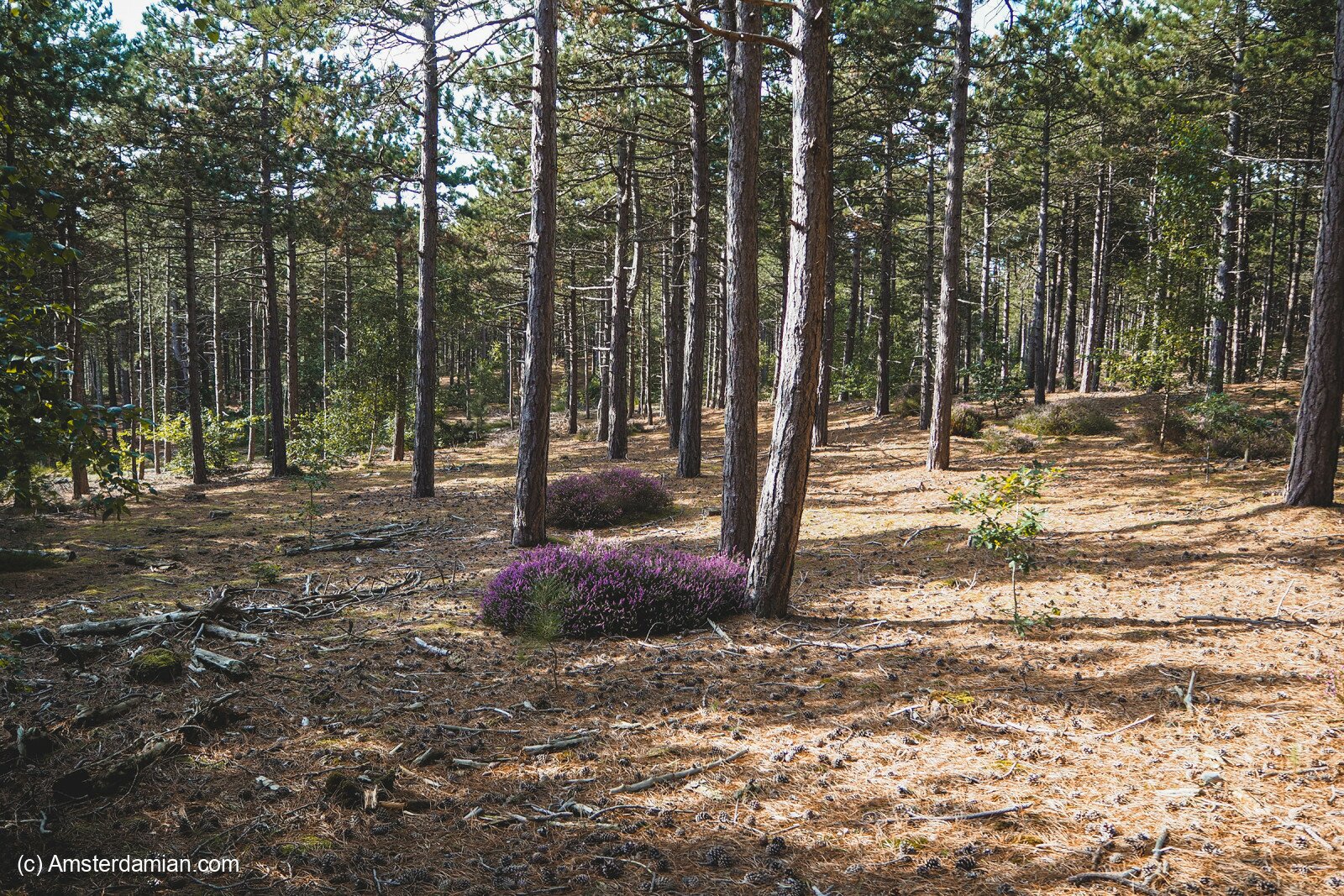
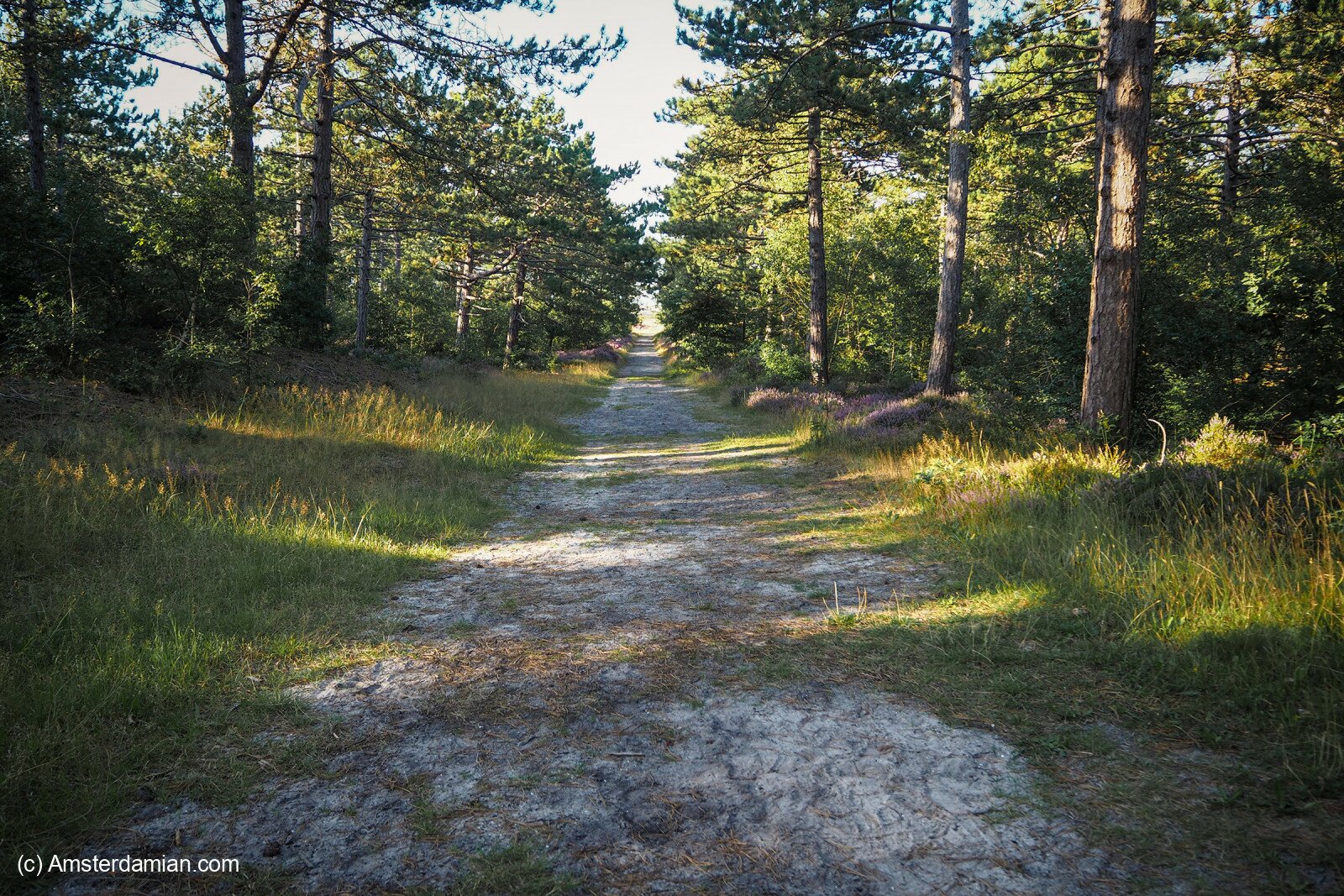
This route is on the longer side, and eleven kilometres on sand felt like much more, but it was totally worth it! The scenery kept changing along the way, from pine trees to oaks and bushes, from dense forest to open fields. It goes up and down and it’s the closest thing you get to a mountain here, in the north of the Netherlands. It’s a big stretch to compare it to a mountain, but a very tall dune is impressive. The highest dune in the country is here: the Catrijper Nok, 55.4 metres above sea level, named after the nearby hamlet of Catrijp. Close to it is Klimduin in Schoorl, a massive climbing dune standing at 51 meters tall and is right in the village. The Schoorlse Duinen are the widest dune belt in the Netherlands too, around five kilometres across, with more than 60 kilometres of paths running through them.
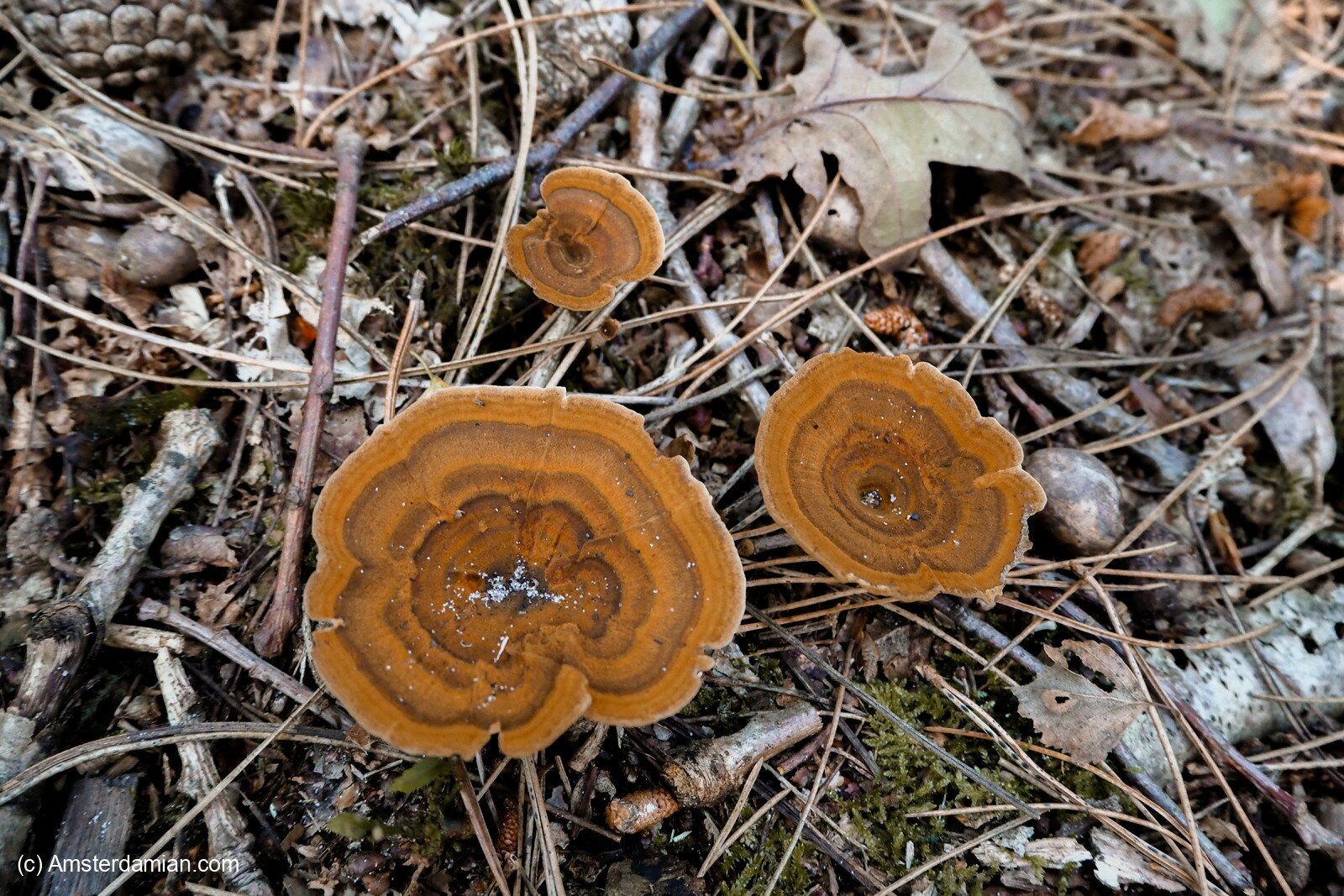
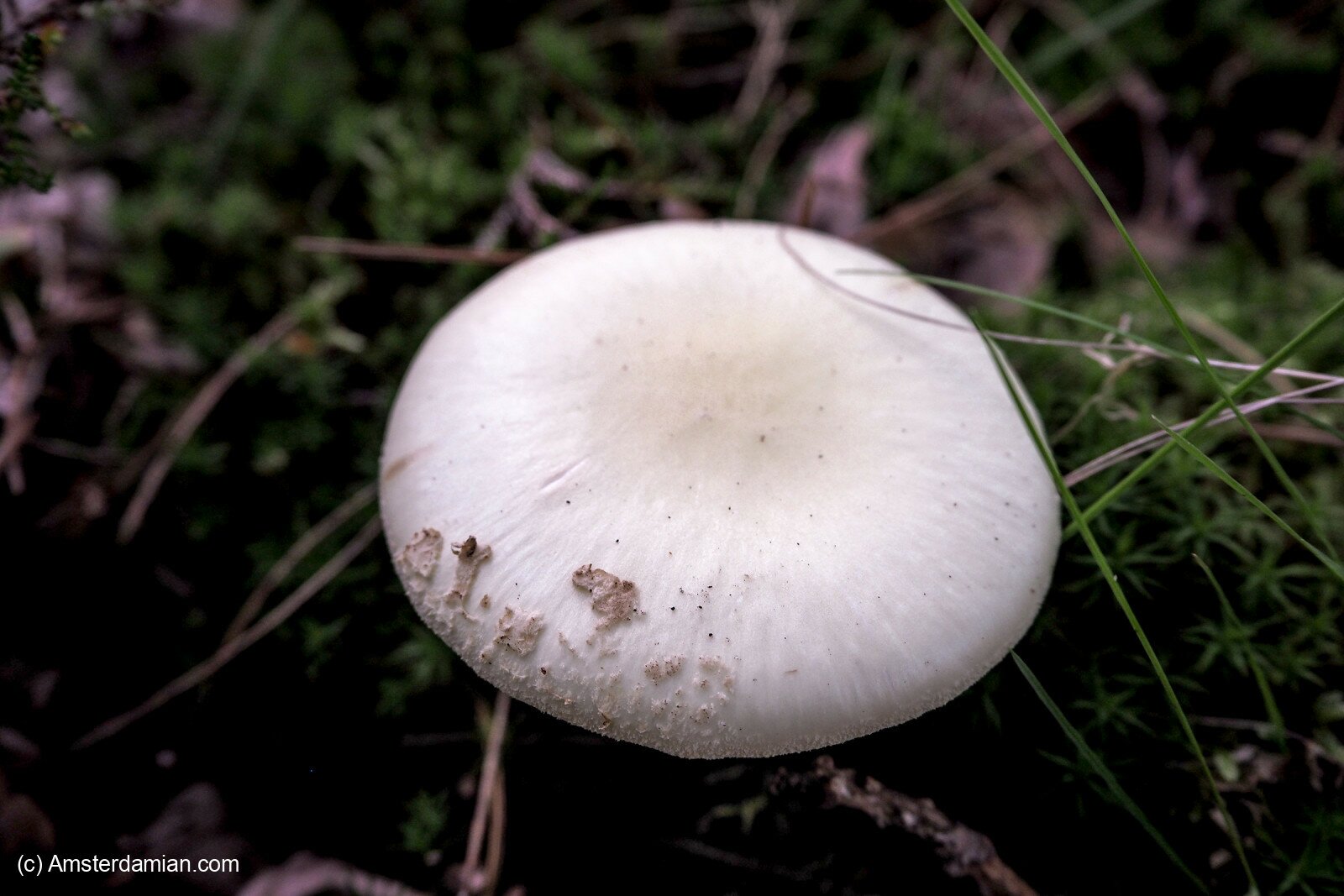
We’ve spotted a few types of mushrooms, reminding us of another season I enjoy very much: the autumn mushroom spotting in the Dutch forest. It was a wonderful day which we ended with a delicious dinner at the restaurant Kanunnik in Schoorl (spontaneous discovery and, luckily, a happy one).
Planning Your Walk on the Purple Route
- Start here. Buitencentrum Schoorlse Duinen, Oorsprongweg 1, Schoorl. Open daily 10.00–17.00, with Brasserie IJgenweis on site if you’d rather eat before you walk than after.
- Get there by public transport: take a train to Alkmaar and from there bus 151 towards Schoorl, getting off at the Idenslaan stop, the closest one to the information centre, which is where all the routes begin.
- Get there by car: set the navigation to Heereweg 62; the Oorsprongweg is the road opposite. Parking at the centre is paid, and the rates are set by the Gemeente Bergen, so check their site for the current price.
- Follow the purple markers. Once there, you can get a map or simply follow the poles. The loop is 11 km. Allow three to four hours, and more if you stop to photograph, which you will.
- No dogs on this route. The purple route crosses a grazing area where dogs aren’t allowed. The centre can suggest alternatives.
- Check before you go. Staatsbosbeheer list a diversion on part of this route, so it can come out longer or shorter than 11 km. Their route page has the current state.
- Wear shoes you don’t mind emptying. Most of this is sand, and it gets everywhere.
Where Else to See Heather in the Netherlands
If you’re looking beyond Schoorl, the Netherlands has heather landscapes spread across the country. These are a few of the best-known spots:
- Veluwezoom – Posbank, Gelderland. The oldest national park in the Netherlands, and the one most people picture when they imagine purple hills. The Natuurmonumenten walking route is 5 km with a fair amount of climbing, and there is a pavilion at the Posbank to rest in.
- Brunssummerheide, Limburg. Rolling heath and woodland in the South Limburg hill country, where every rise gives you a different view. There is a 4.9 km walking route, and separately a 1 km beleefpad suitable for wheelchairs and pushchairs.
- Loonse en Drunense Duinen, North Brabant. Sand drifts and heath that colour in August and September, with sand lizards basking on the open stretches. The route from the Roestelberg is 5.5 km.
- De Sprengenberg, Sallandse Heuvelrug, Overijssel. A longer 16.3 km route over rolling heath and old farmland. This is the only place in the Netherlands where black grouse still occur.
- Dwingelderveld, Drenthe. A large, quiet heath grazed by a flock of Drenthe heath sheep, which is what keeps it open and purple each year. The walking route from Ruinen is 4.7 km.
If none of those is convenient, Natuurmonumenten keeps a list of heather routes across the country, and will send you a free booklet of ten of them.
The heather is one of the first signals that the seasons are turning here. If you want the rest of them, I’ve gathered my favourites in things to do in the Netherlands in autumn, and there are more ideas in my guide to day trips from Amsterdam.




Stay tuned for more and follow Amsterdamian on Instagram and Facebook for more stories about life in the Netherlands, written by a real local, updated constantly.
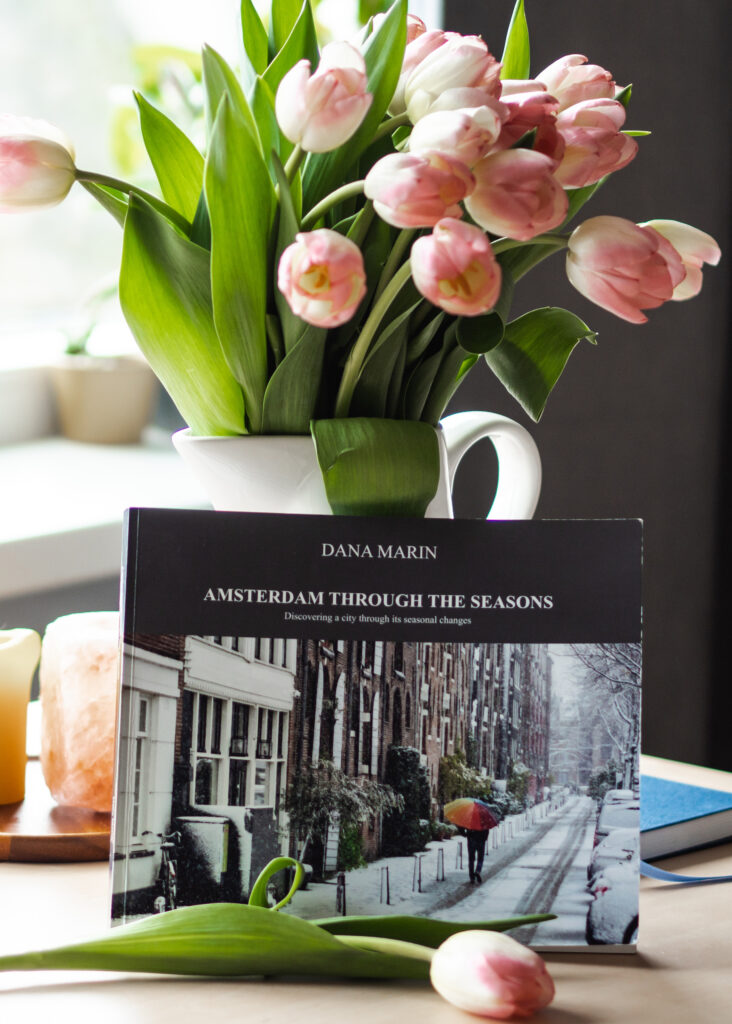
Check out my photo book: Amsterdam Through the Seasons!
Love what you’re reading? Support my work with a small donation.
And share this post if you liked it!