
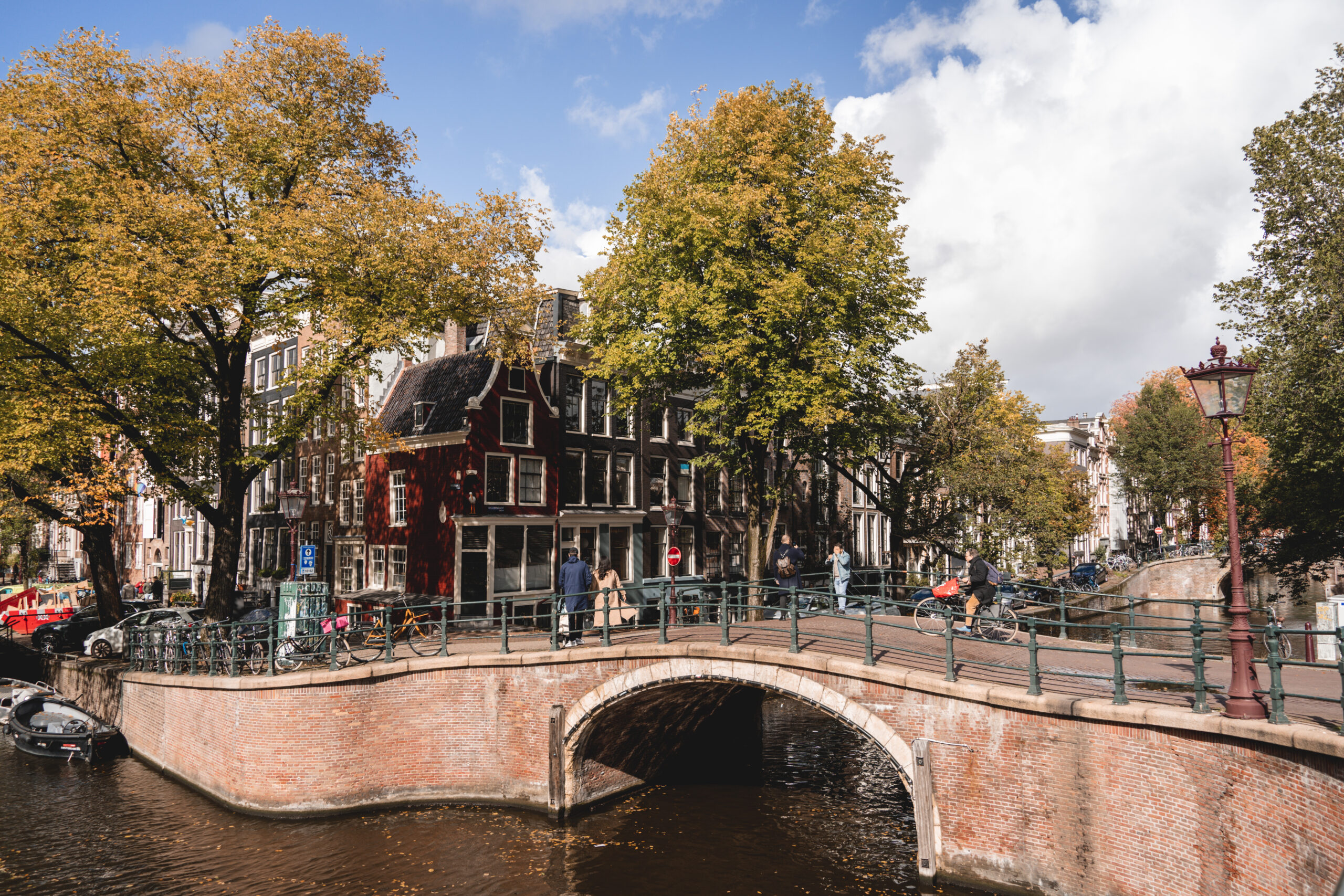
When you say Amsterdam, you immediately think of water. The canals, the harbour and the ships, they are woven into the city’s identity and its history. Amsterdam’s story is, in many ways, a maritime story.
The city’s wealth was built in large part on the ships that sailed in and out of its harbour, carrying goods and people across the world. The canal ring, the warehouses, the whole idea of the city as a place that trades with the world, all of it came over water. Like many Dutch cities, Amsterdam grew prosperous through its connection to the water, and you can still see traces of that past throughout the city.
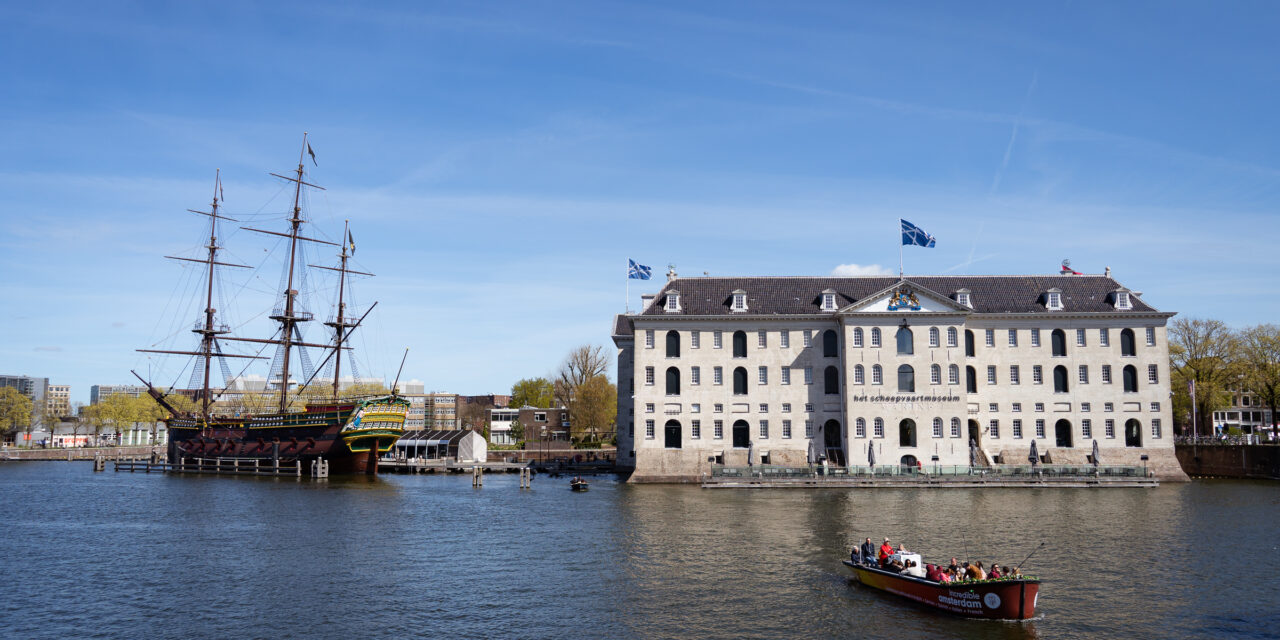
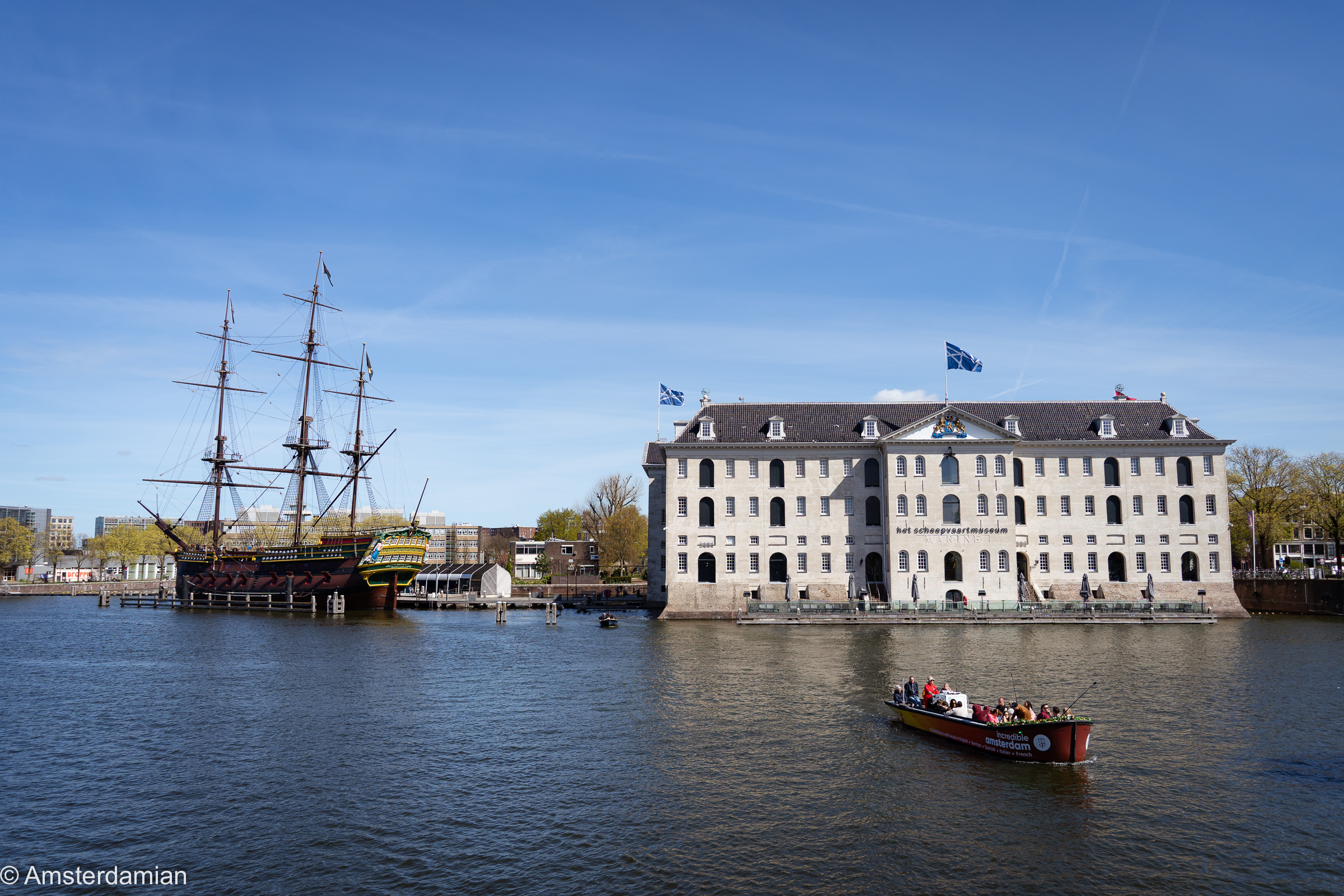
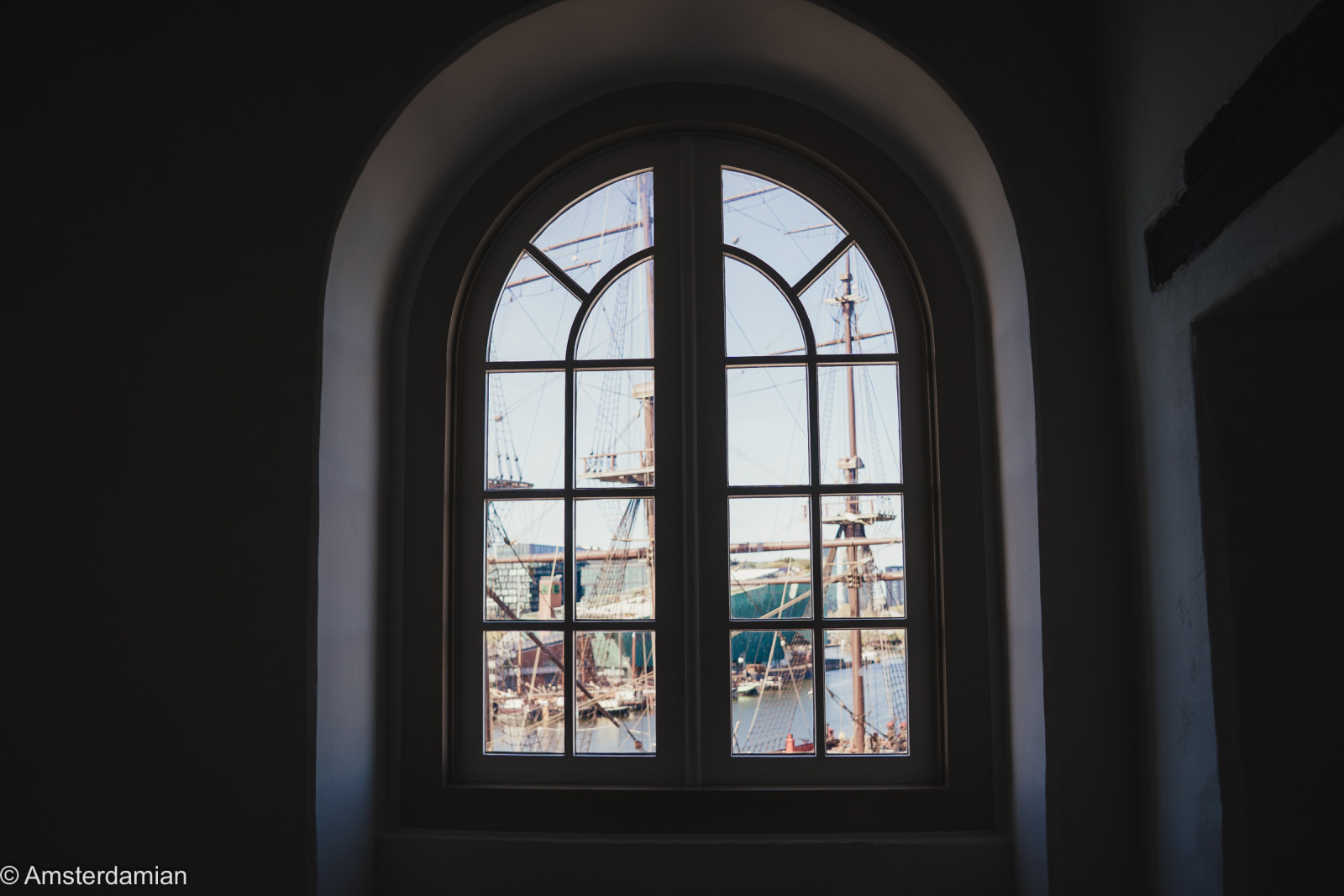
So if you want to understand how Amsterdam grew from a small settlement into the city we know today, there is one place you shouldn’t miss: the National Maritime Museum, or Het Scheepvaartmuseum, as it is called in Dutch. You can’t miss it, if you walk in the Eastern Docklands area: the building the museum sits in is an impressive former warehouse built for the Admiralty, and, moored next to it, there’s a beautiful old ship, standing out among the modern boats.
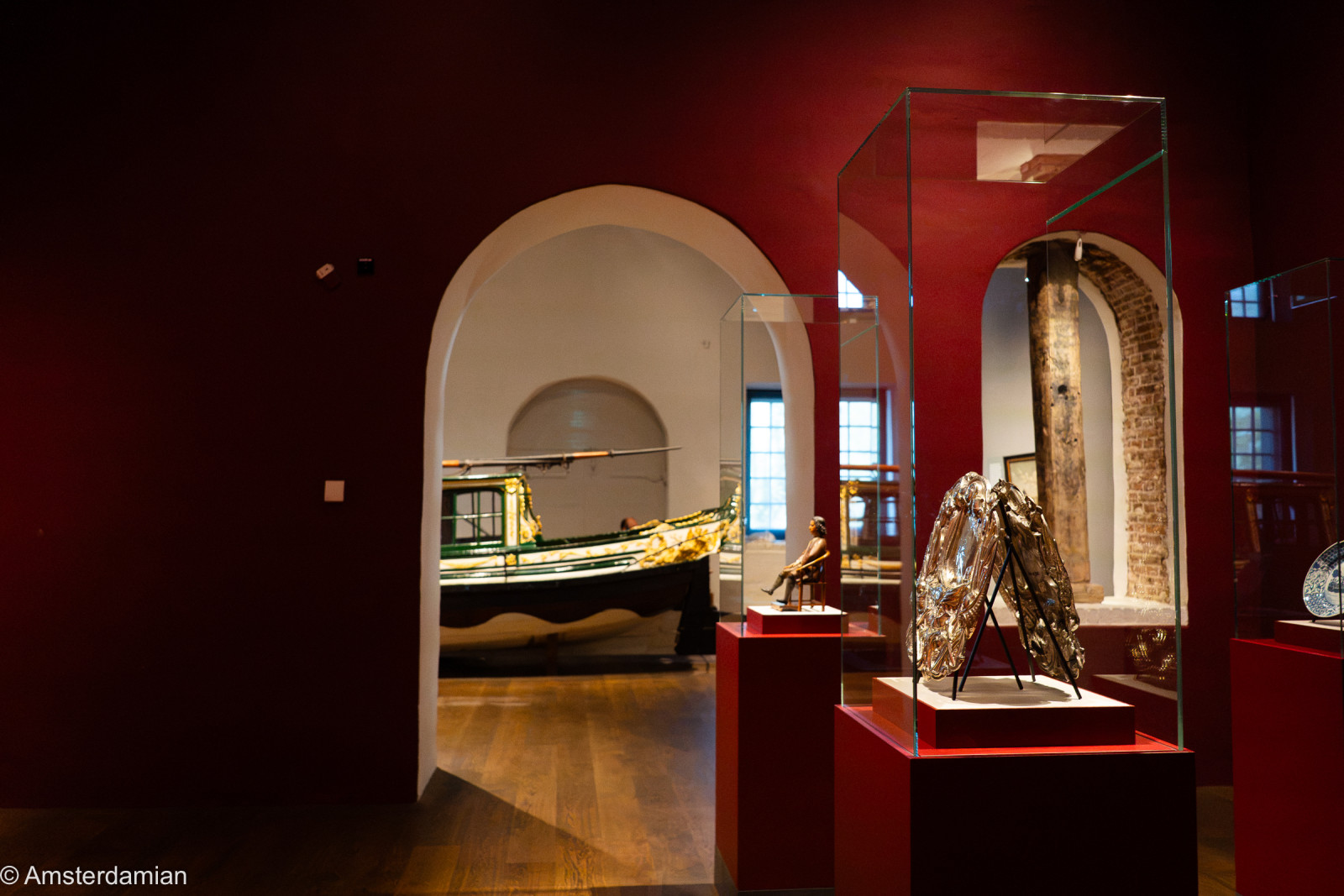
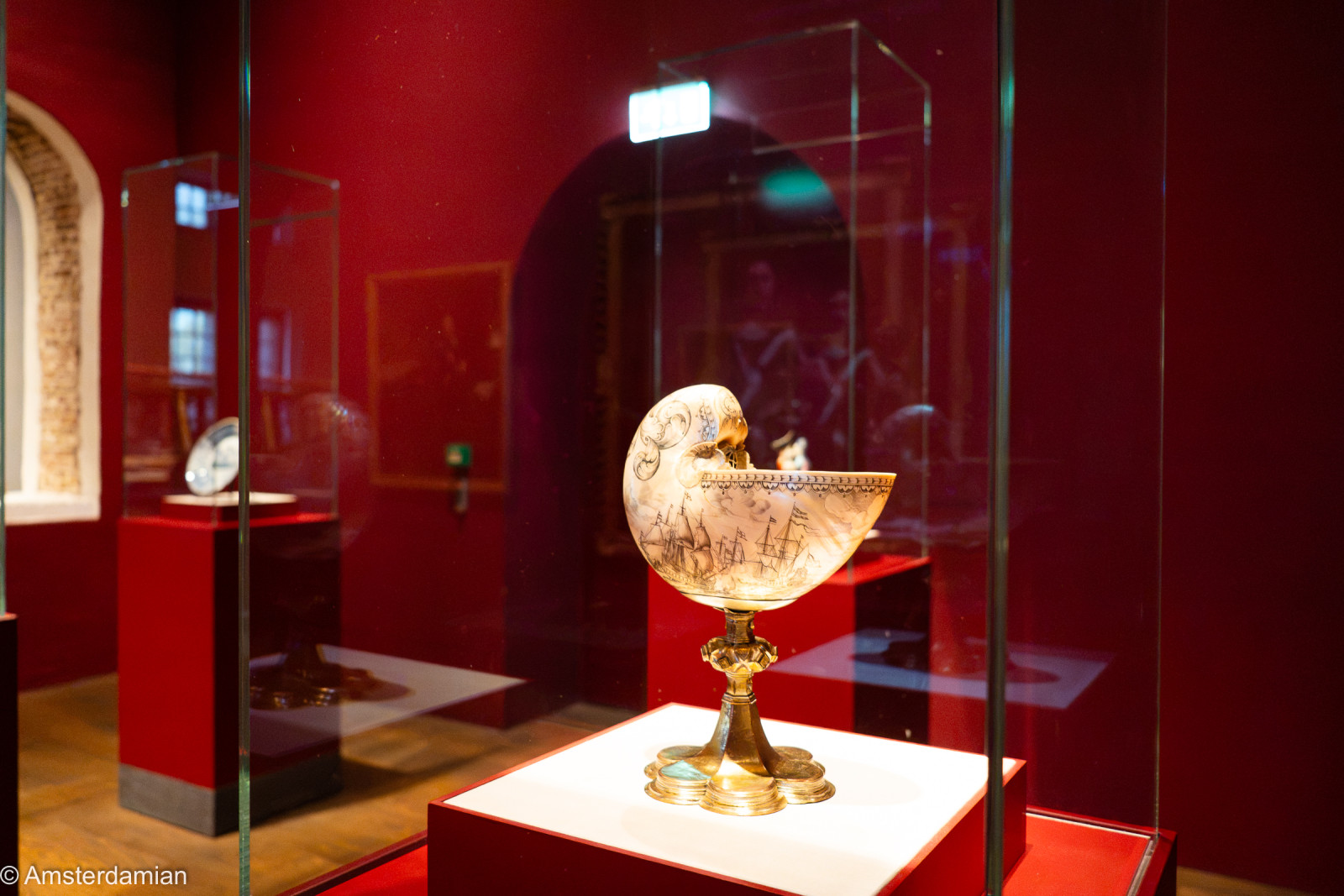
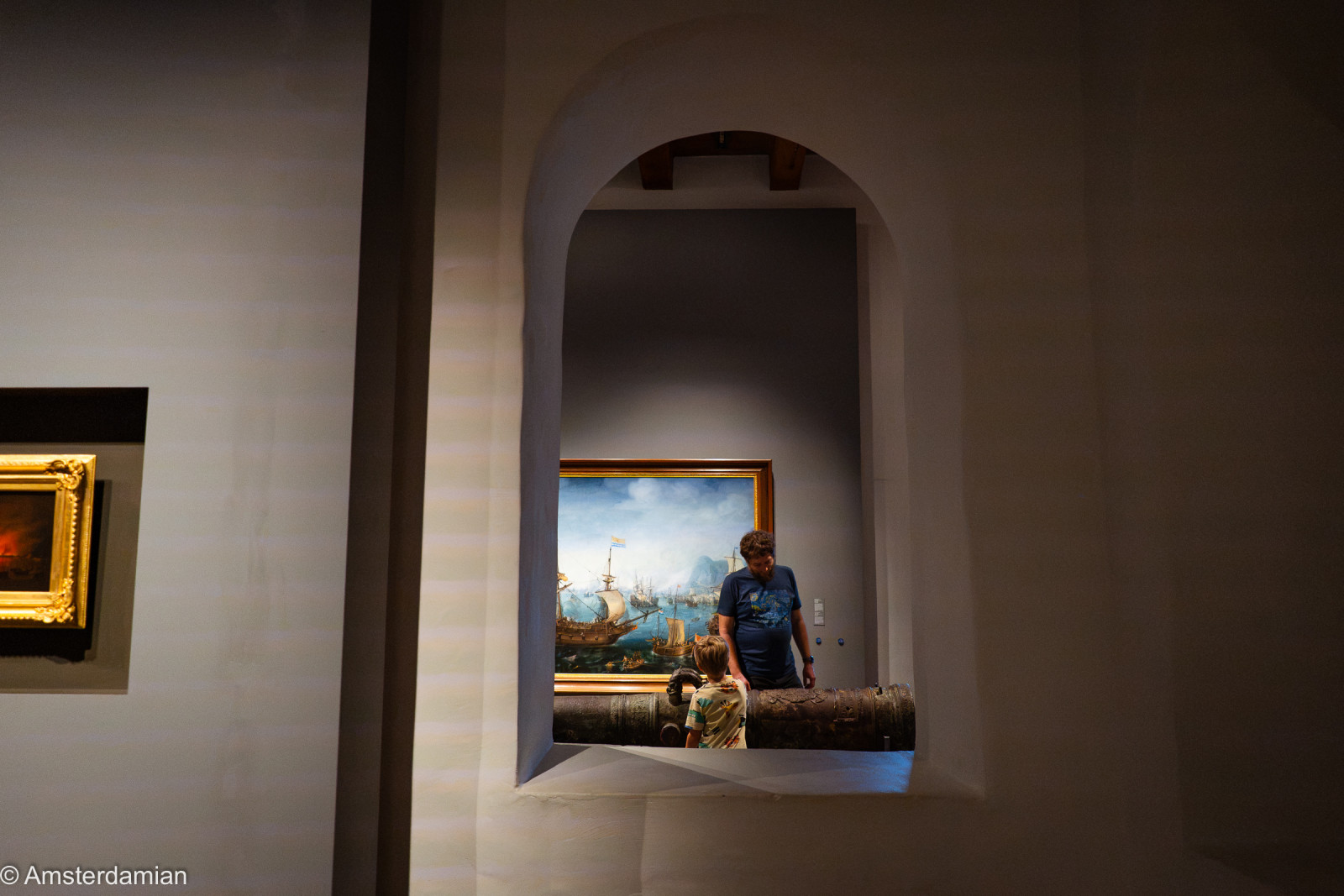
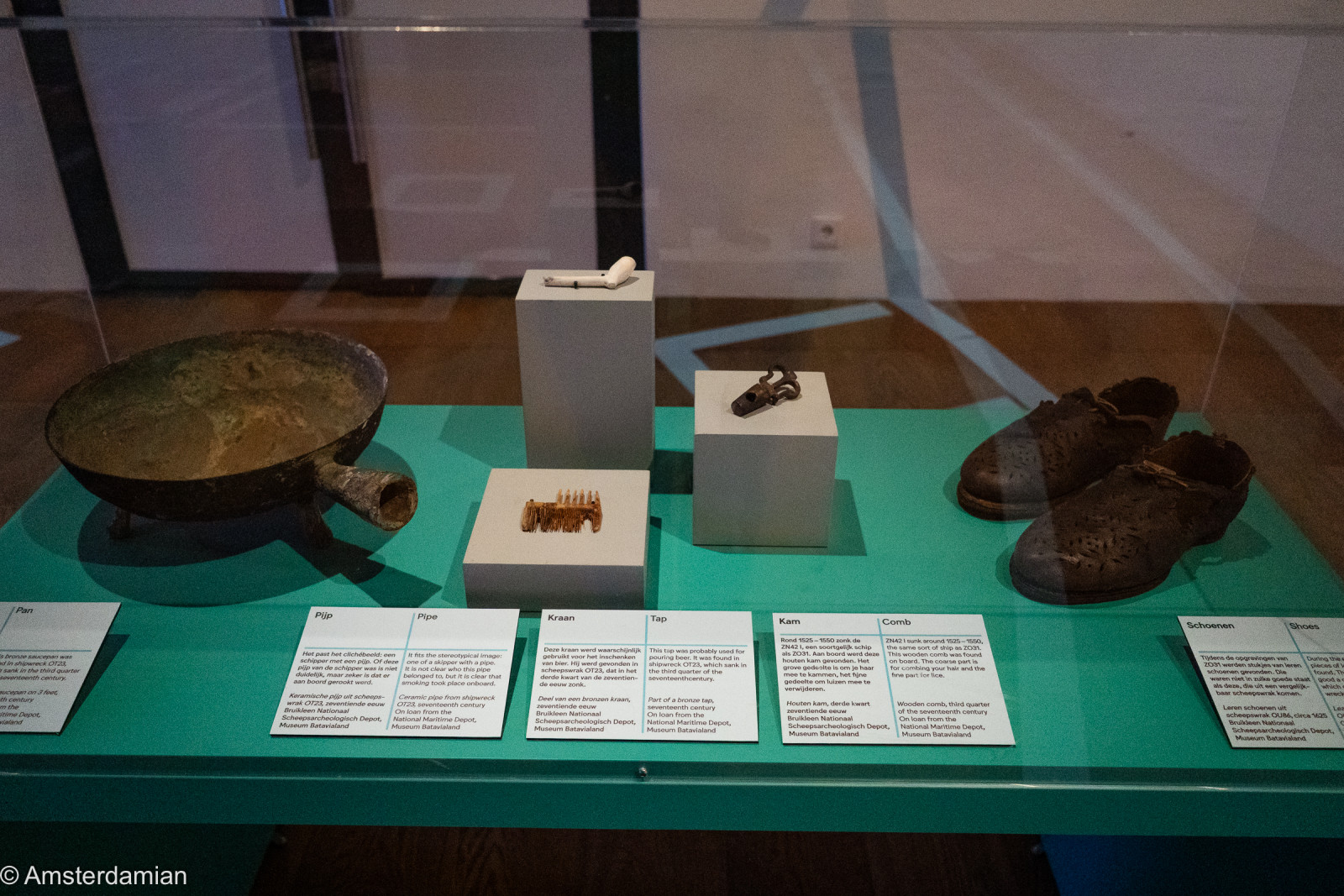
It’s a big museum and its collection is one of the most important maritime historical collections in the world. You should reserve a few hours for it (at least two), to explore it properly. There are full-size ship replicas to visit, as well as collections of paintings, ship models, maritime objects, maps, navigation instruments, and much more to see.
A storehouse before it was a museum
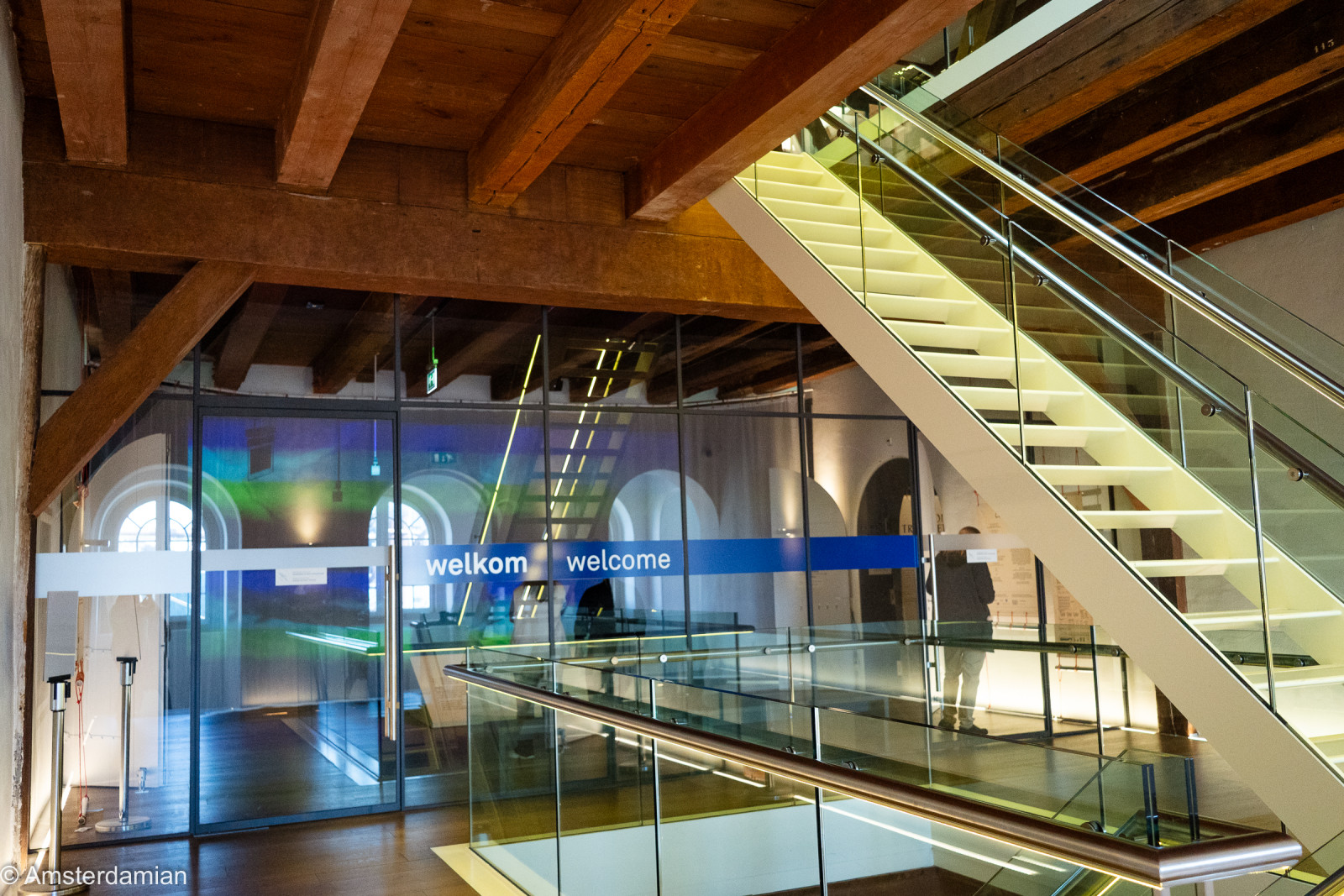
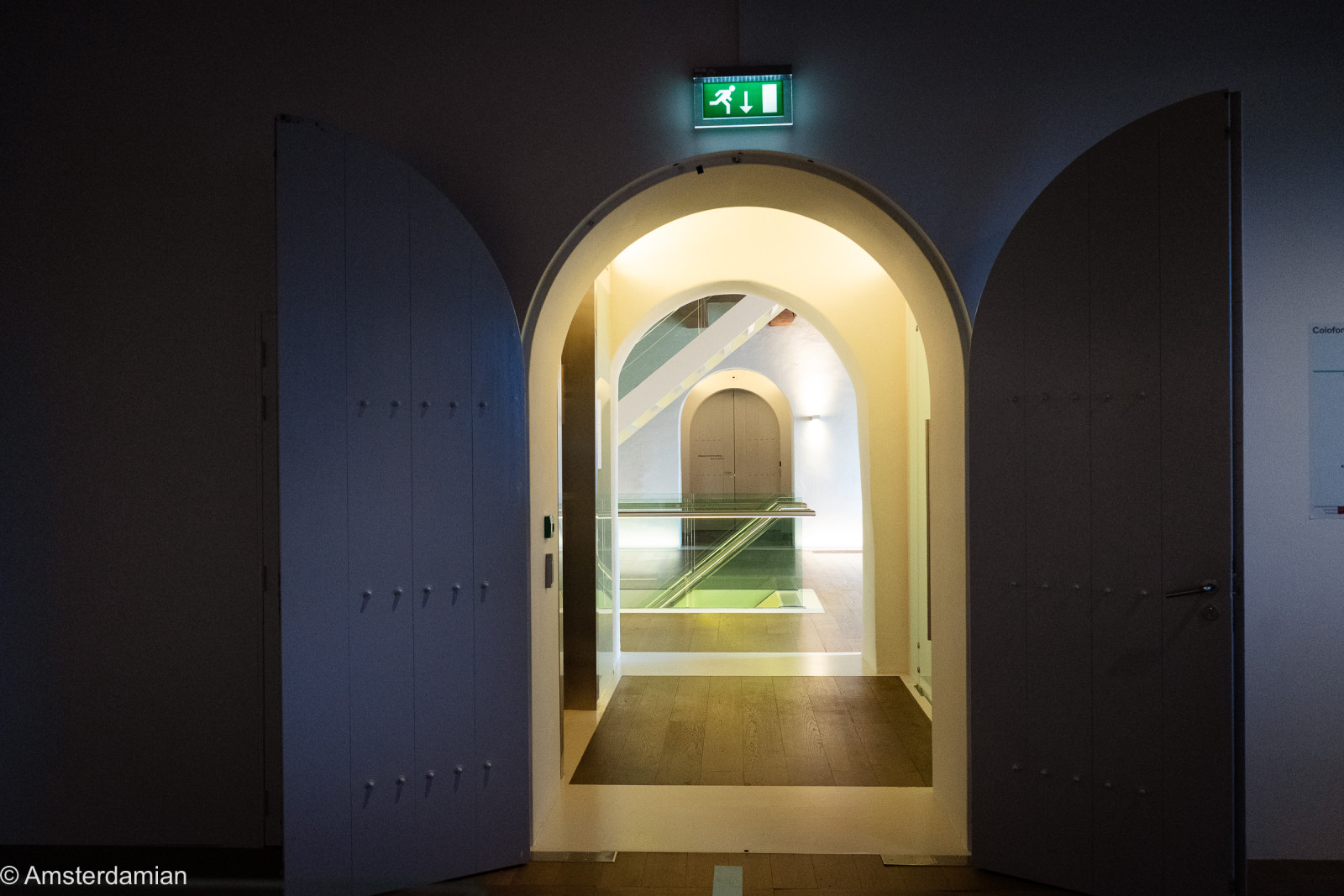
The building is called ’s Lands Zeemagazijn (the Arsenal). It was built in 1656 on Kattenburg, one of the artificial islands the city made for its shipyards when Amsterdam was the busiest port in the world. Daniel Stalpaert, the city architect, designed it as the storehouse of the Amsterdam Admiralty. Cannons, sails, ropes and flags for the war fleet were all kept here. It stands on 2,300 wooden piles, and the vaulted cellars held 40,000 litres of rainwater for the ships. Even then, the building attracted tourists: people climbed up to the roof for a view over the city.
In 1791 a fire destroyed the interior and left only the outer walls standing. They were later covered with a layer of plaster made to look like blocks of sandstone, which is the front you see today. After the French arrived in 1795 the building became a national navy depot, and the navy kept using it until the early 1970s. Princess Beatrix opened the museum here in April 1973. A large renovation followed between 2007 and 2011, led by architect Liesbeth van der Pol, and that is when the building got the feature everyone photographs today. It was then when the glass roof over the open courtyard was added, a feature I think it ads a lot to the charm of the museum.
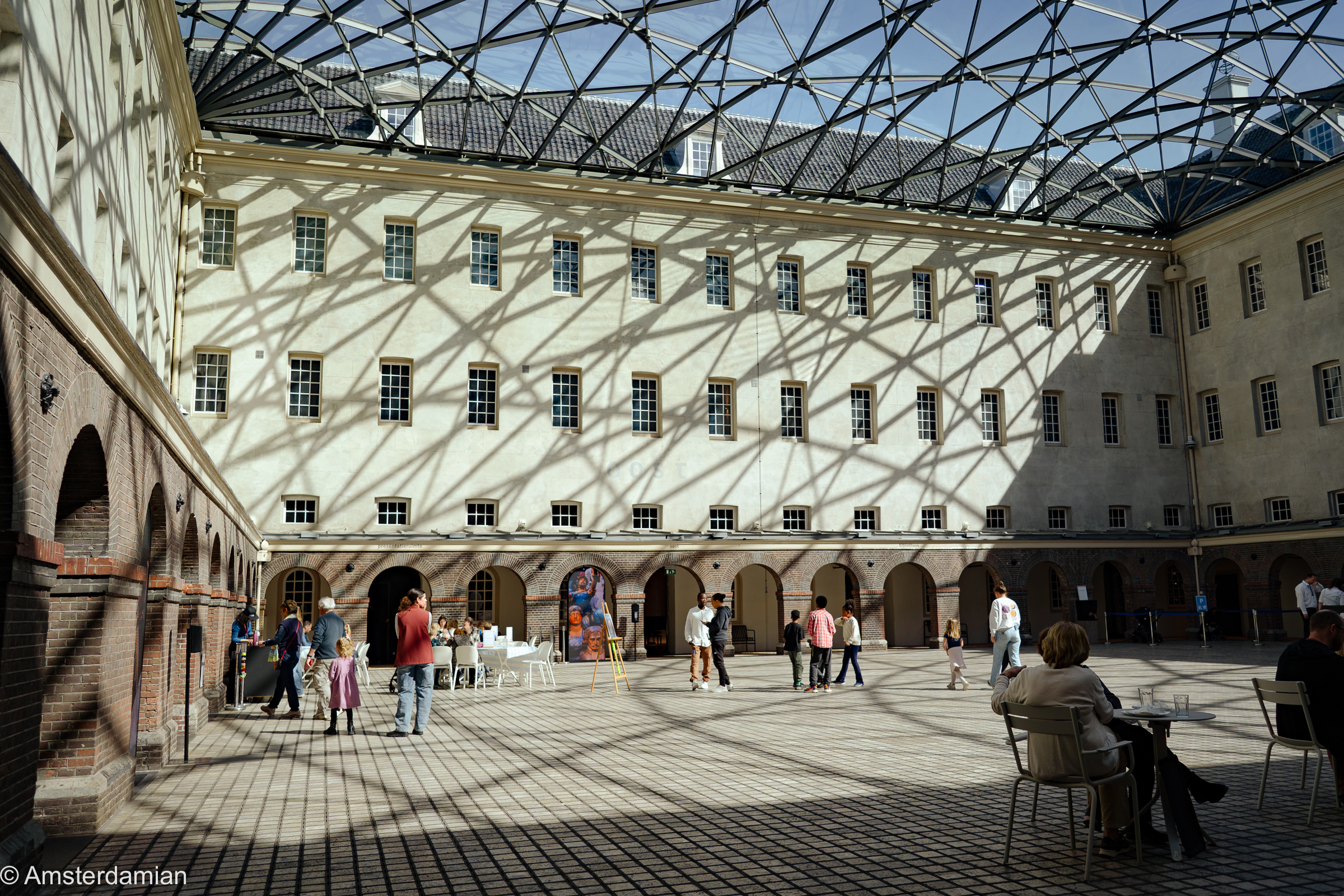
The Open Courtyard (Open Plein) is the heart of the museum; it makes you hold your breath for a second when you enter the museum, especially on a sunny day, when the ceiling casts shadows over the entire place. It measures 34 by 34 metres and is made of around 1,200 panes of glass in a web of steel, designed by the Belgian engineer and architect Laurent Ney. The pattern of the steel is not random: the lines are taken from the compass lines on old nautical charts, the ones sailors drew to plot a course.
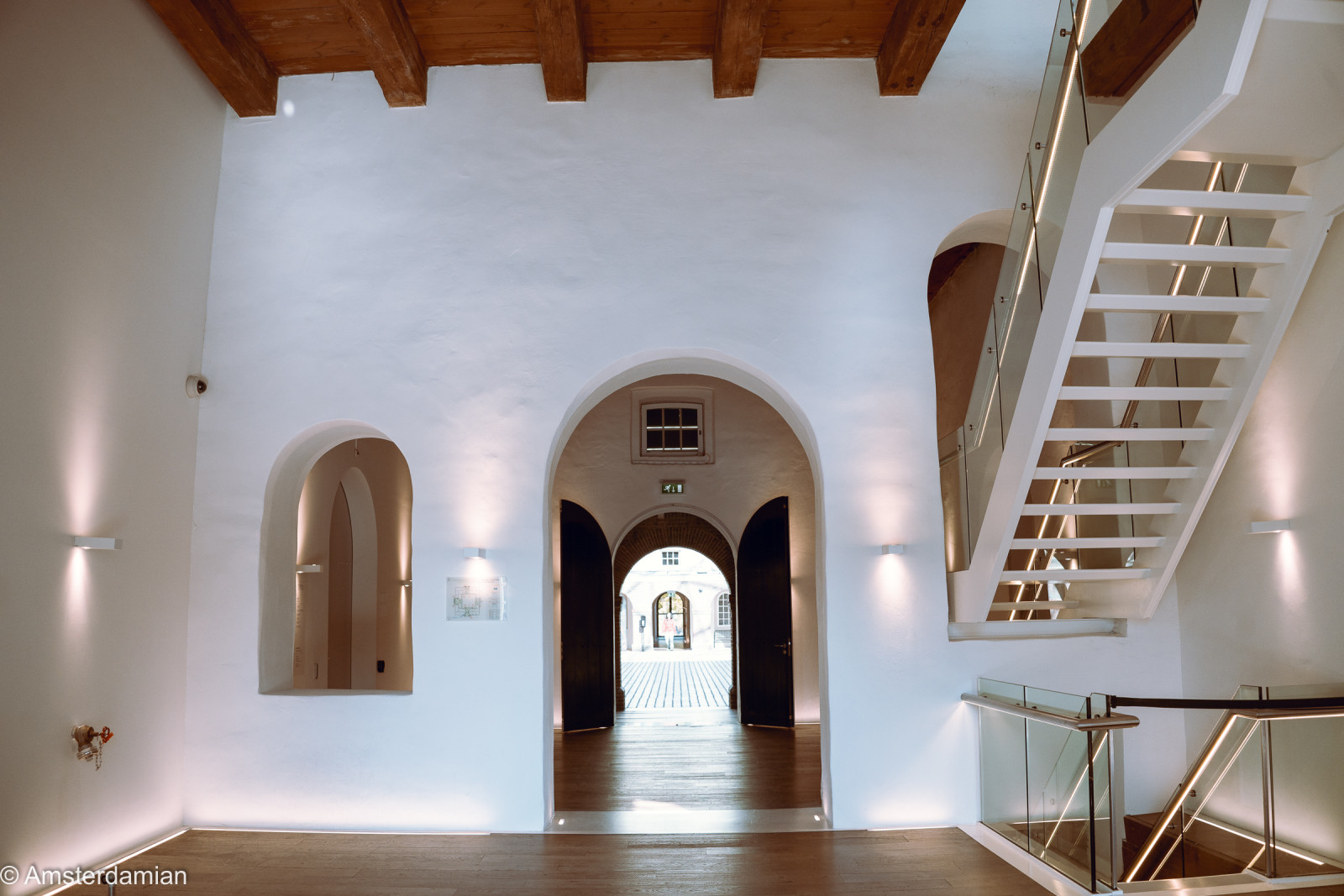
The museum uses the four points of the compass to help you find your way, and the building has four wings. You come in on the south side, where the entrance, the information desk, the shop, the café-restaurant and the library are. The exhibitions are in the other three wings, North, East and West, and the wings don’t connect with each other on the upper floors. After each wing you come back to the courtyard and choose a new direction. I quite liked this. It gives you a natural pause between one part of the collection and the next. If you want, you can stop in the courtyard for a drink in between wings.
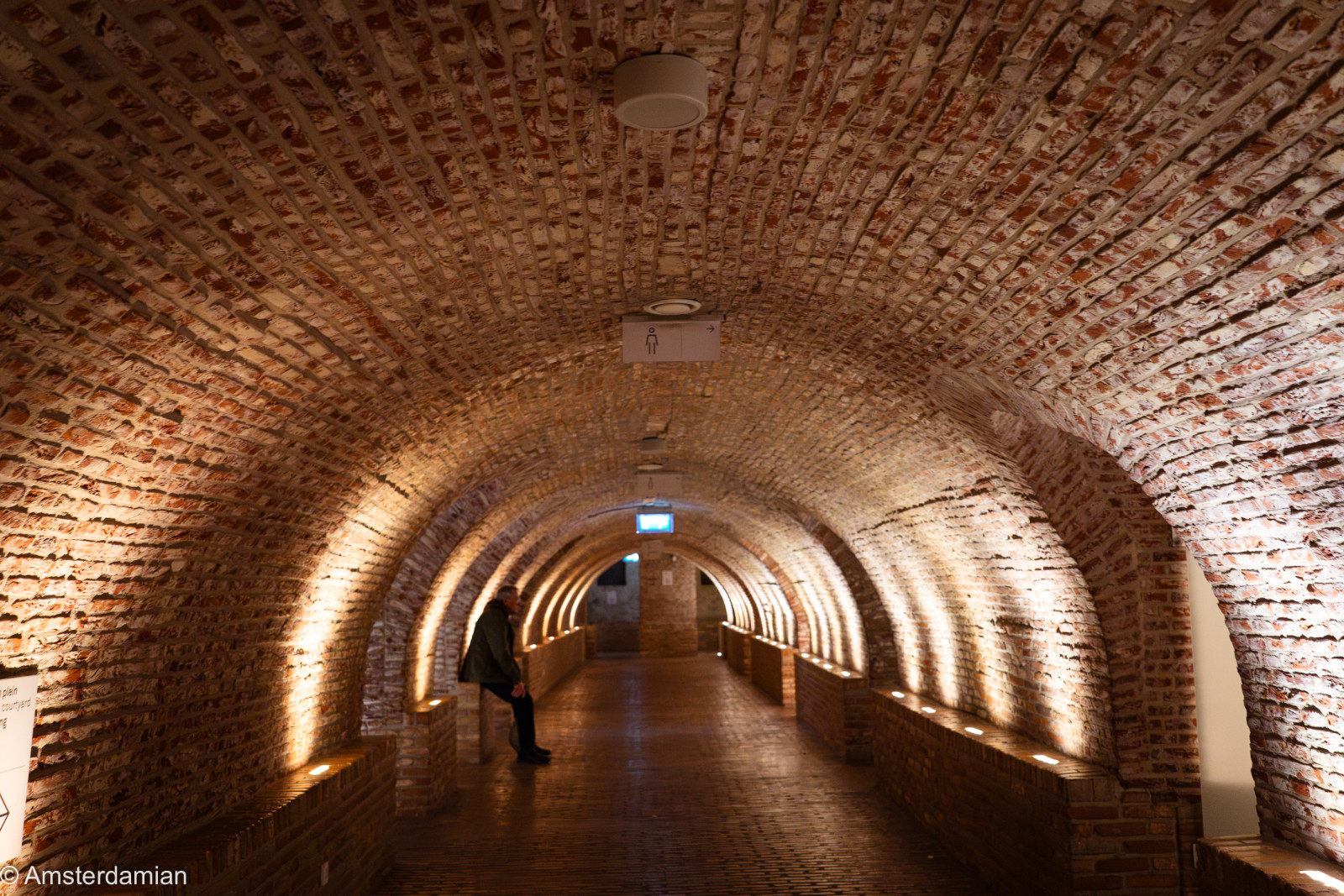
The building itself is worth admiring while you visit, and don’t miss the chance to go to the wardrobe and toilet because the underground tunnels where they’re located are quite cool 😏
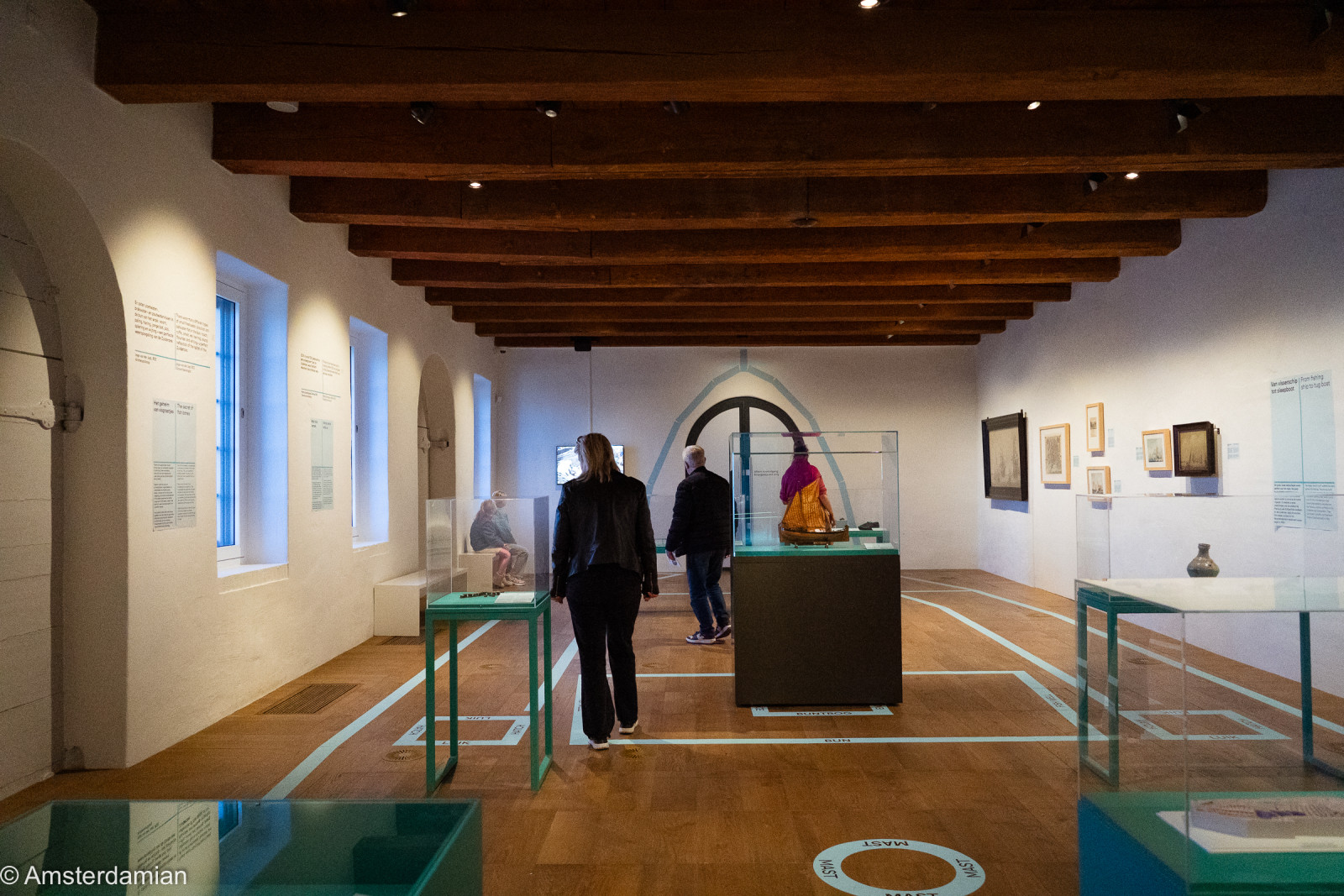
East: the collection
The East wing is where the collection is put at the centre, and it is the wing I would go first. OK, maybe second after the East Indiaman Amsterdam, because, if you are like me, you’ll head straight to the ships first.
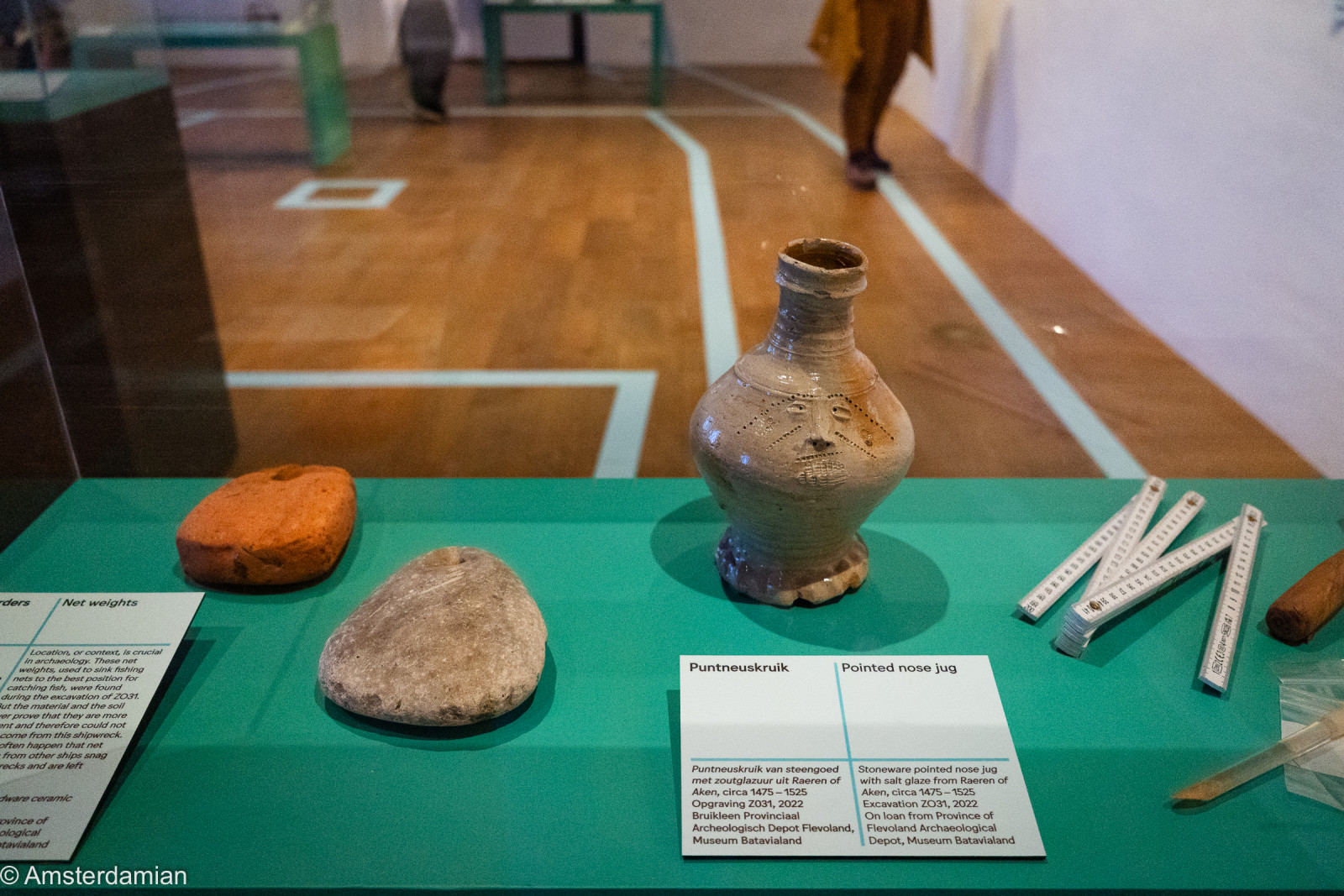
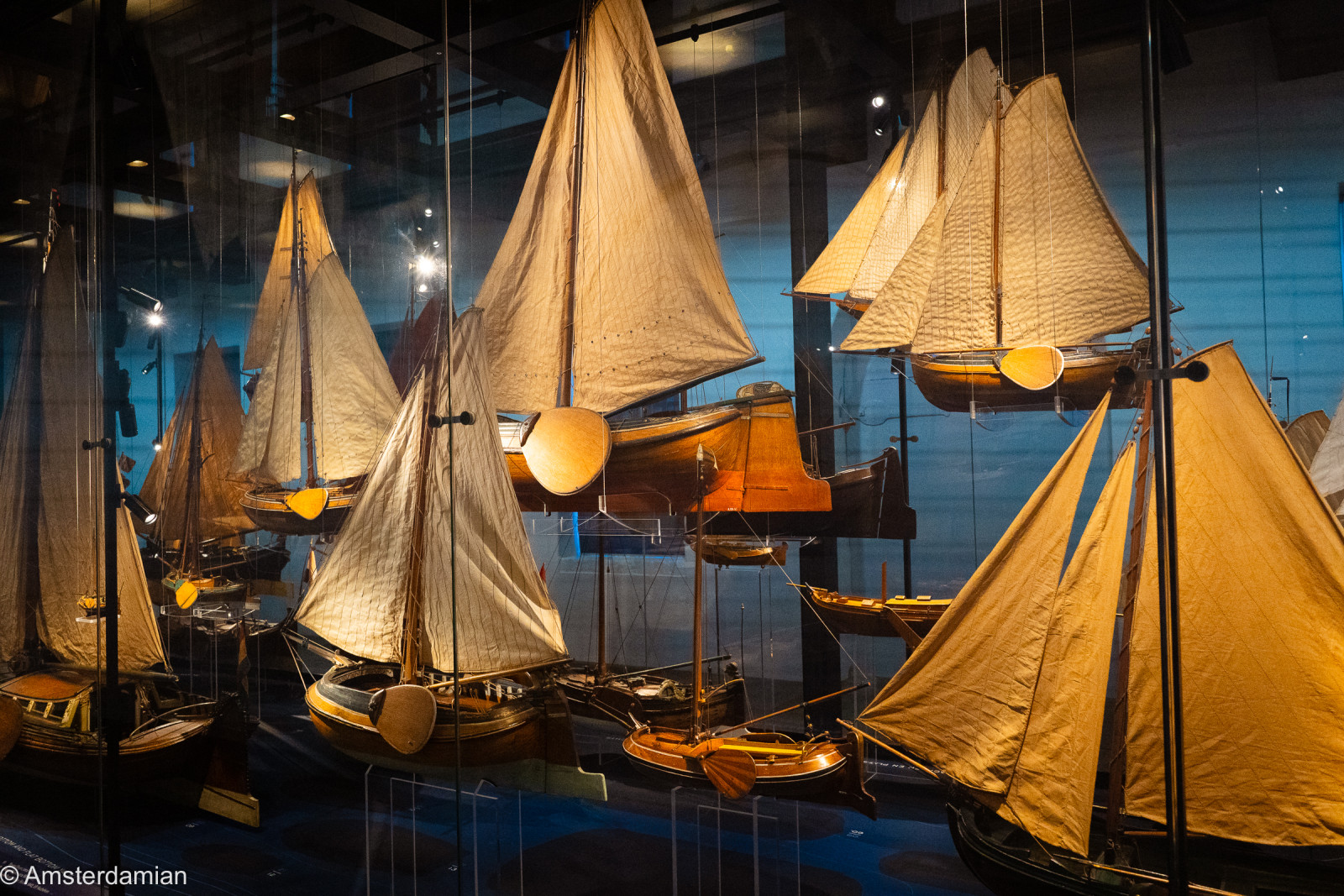
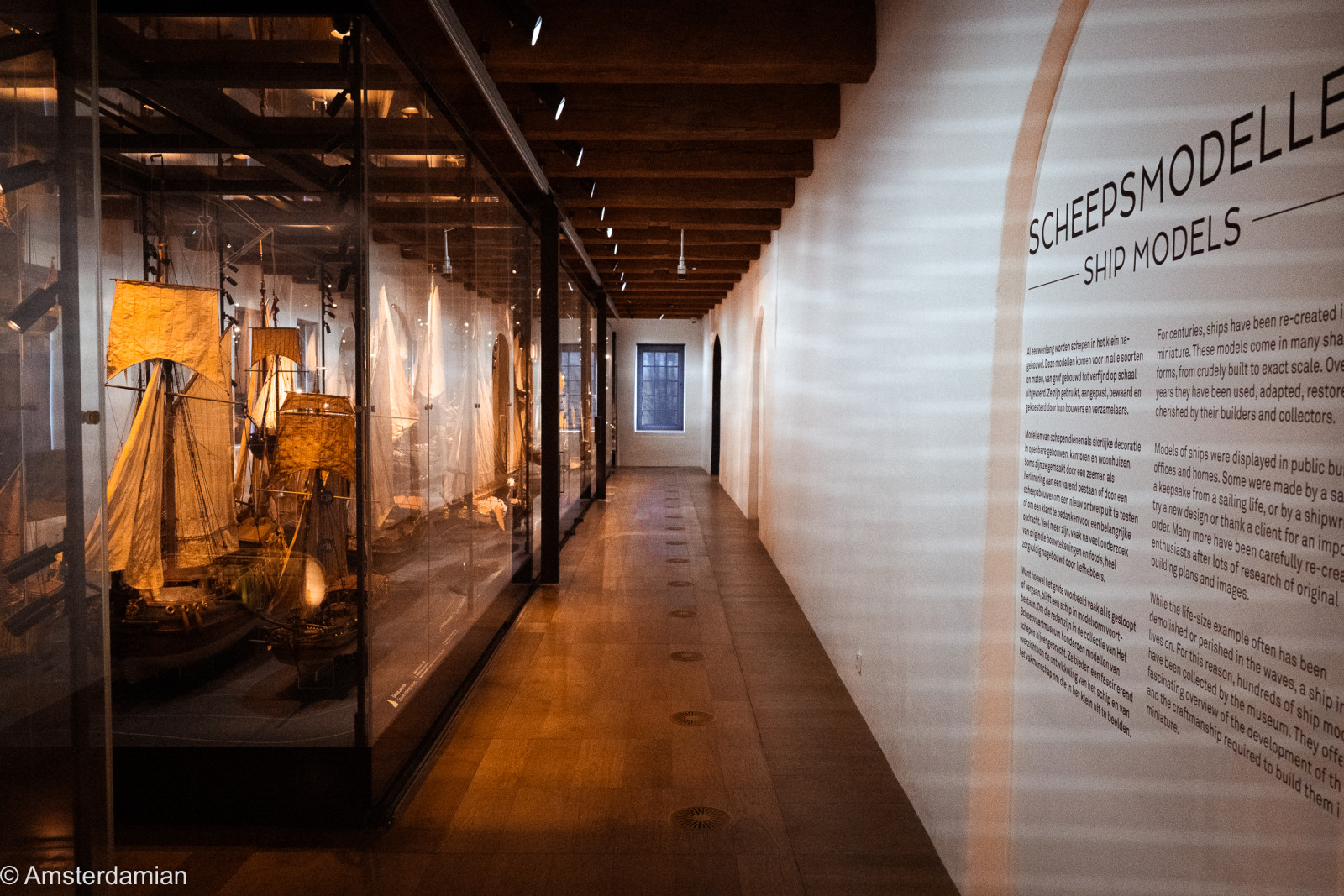
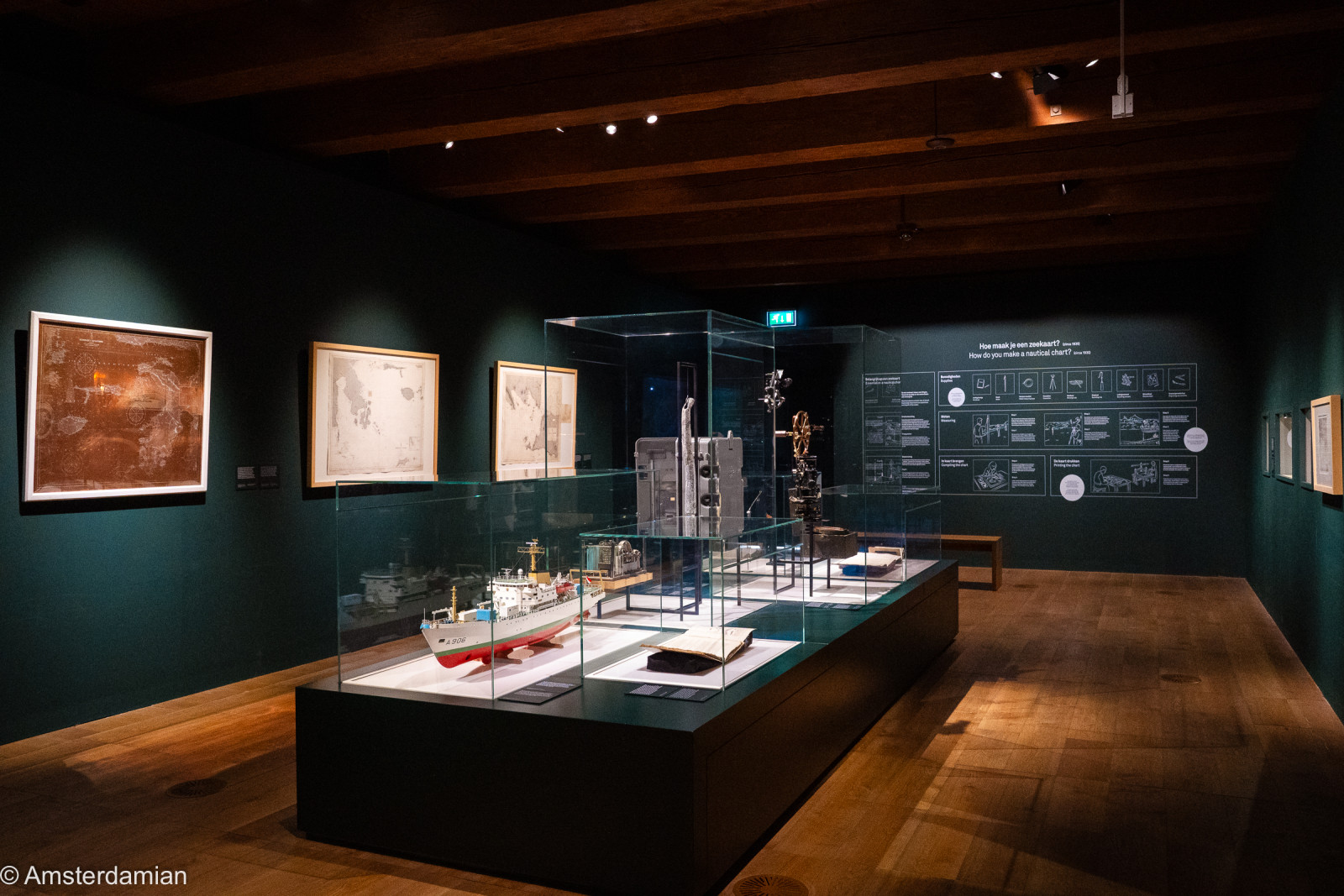
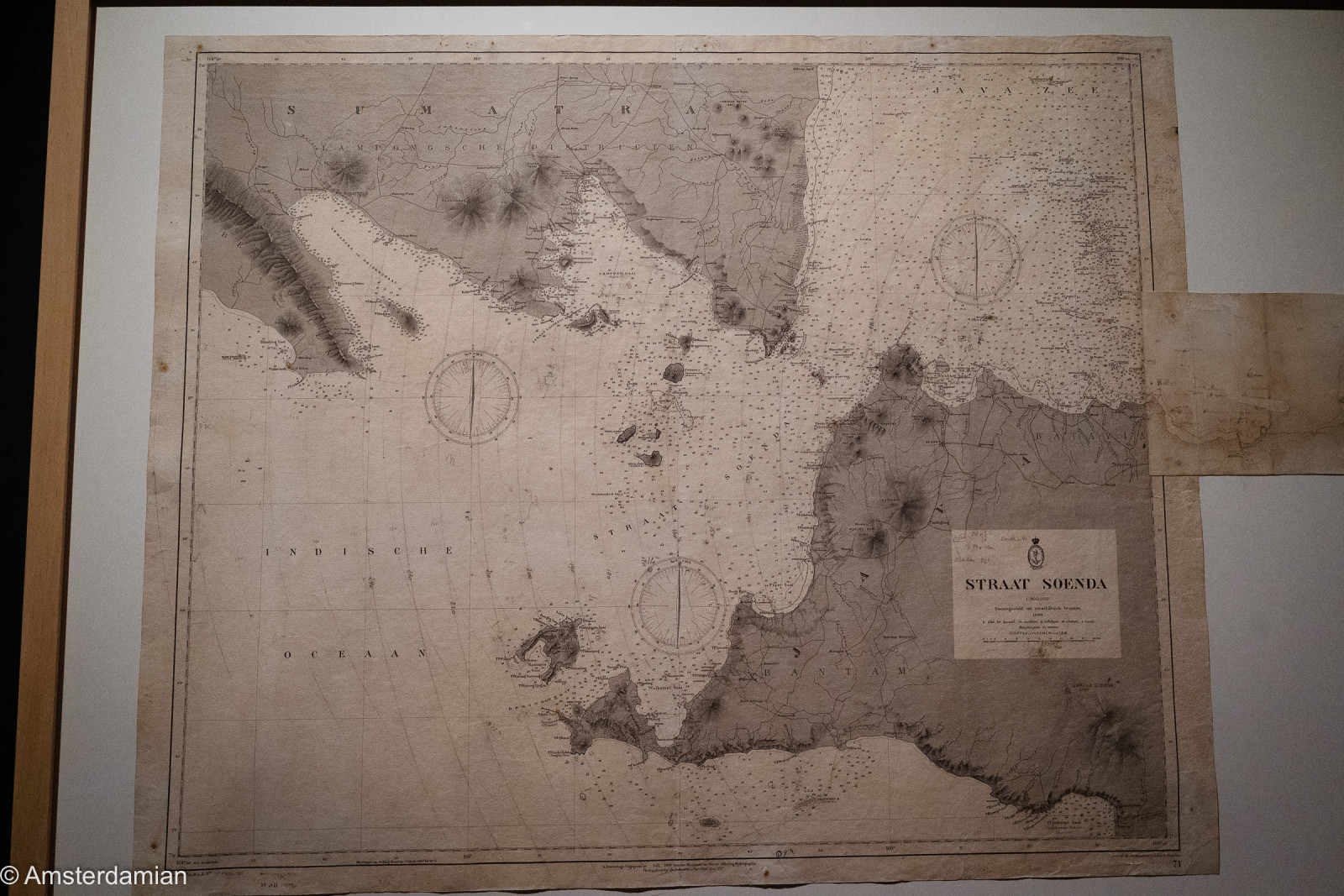
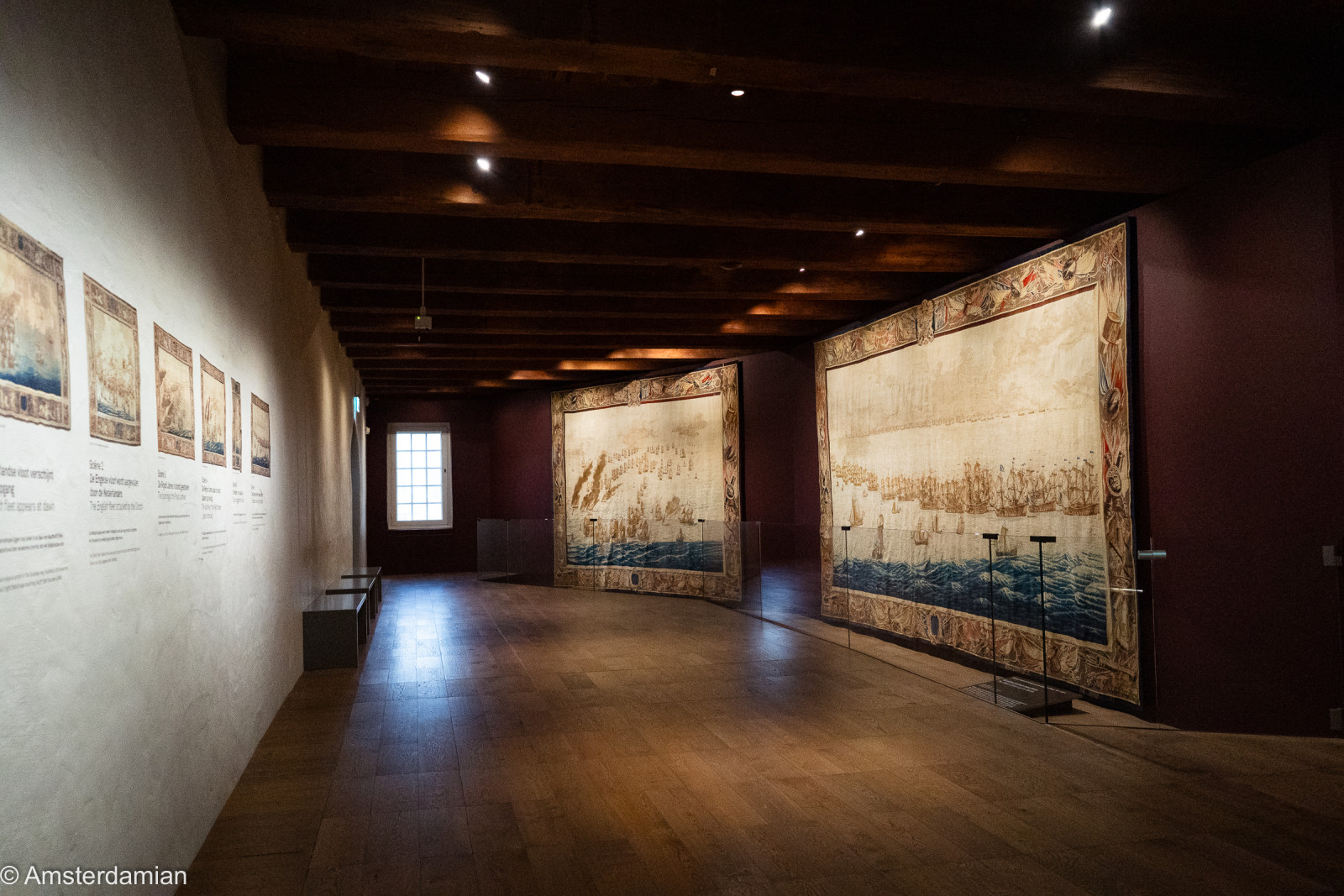
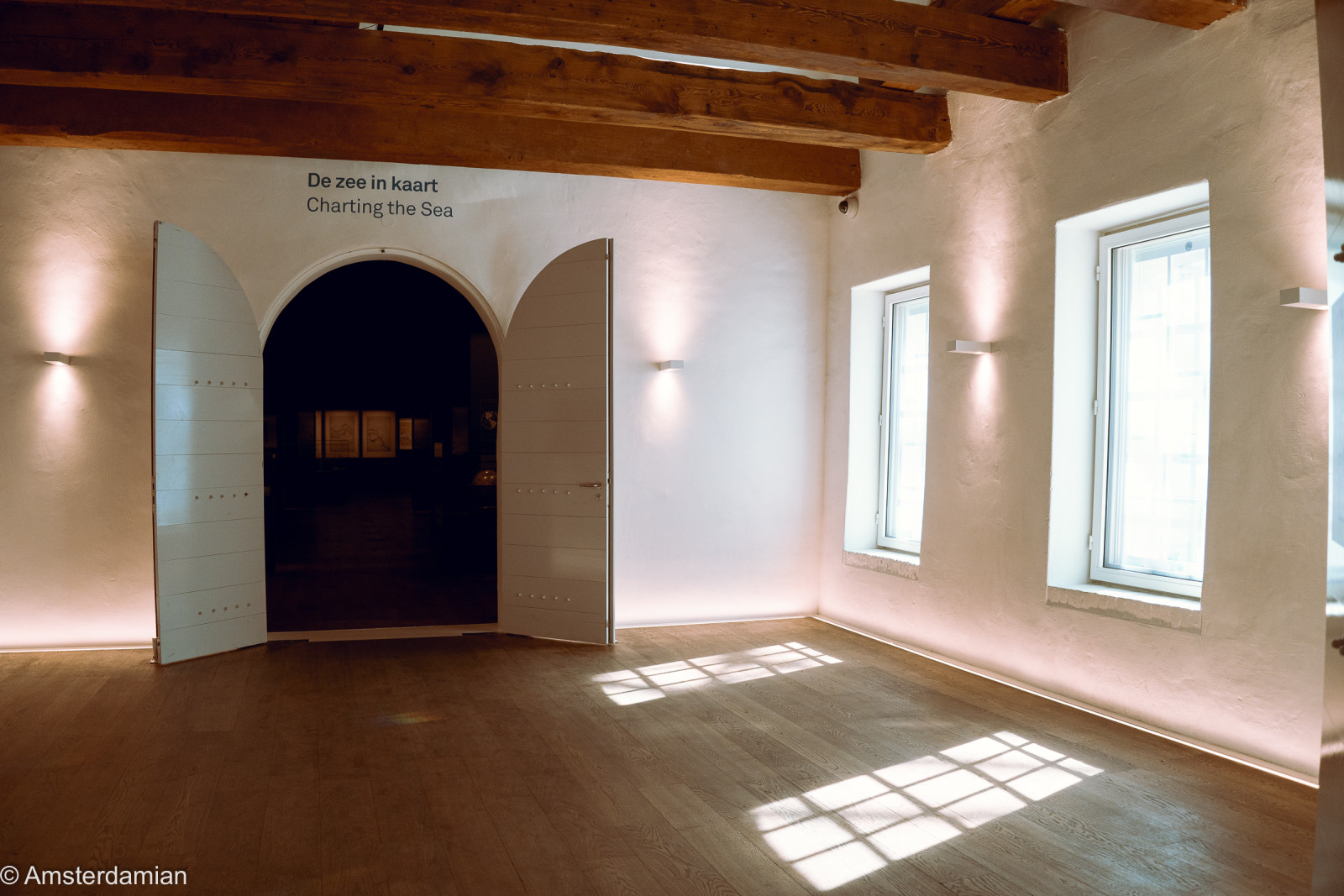
In the East wing, there are ship models set up as a sailing race between old and new models, which is a nice way of showing several centuries of boatbuilding in one room. Charting the Sea explains how nautical charts were made and why, using the museum’s large map collection. Also here you will find the Solebay tapestries, two monumental pieces designed by Willem van de Velde the Elder after the Battle of Solebay in 1672.
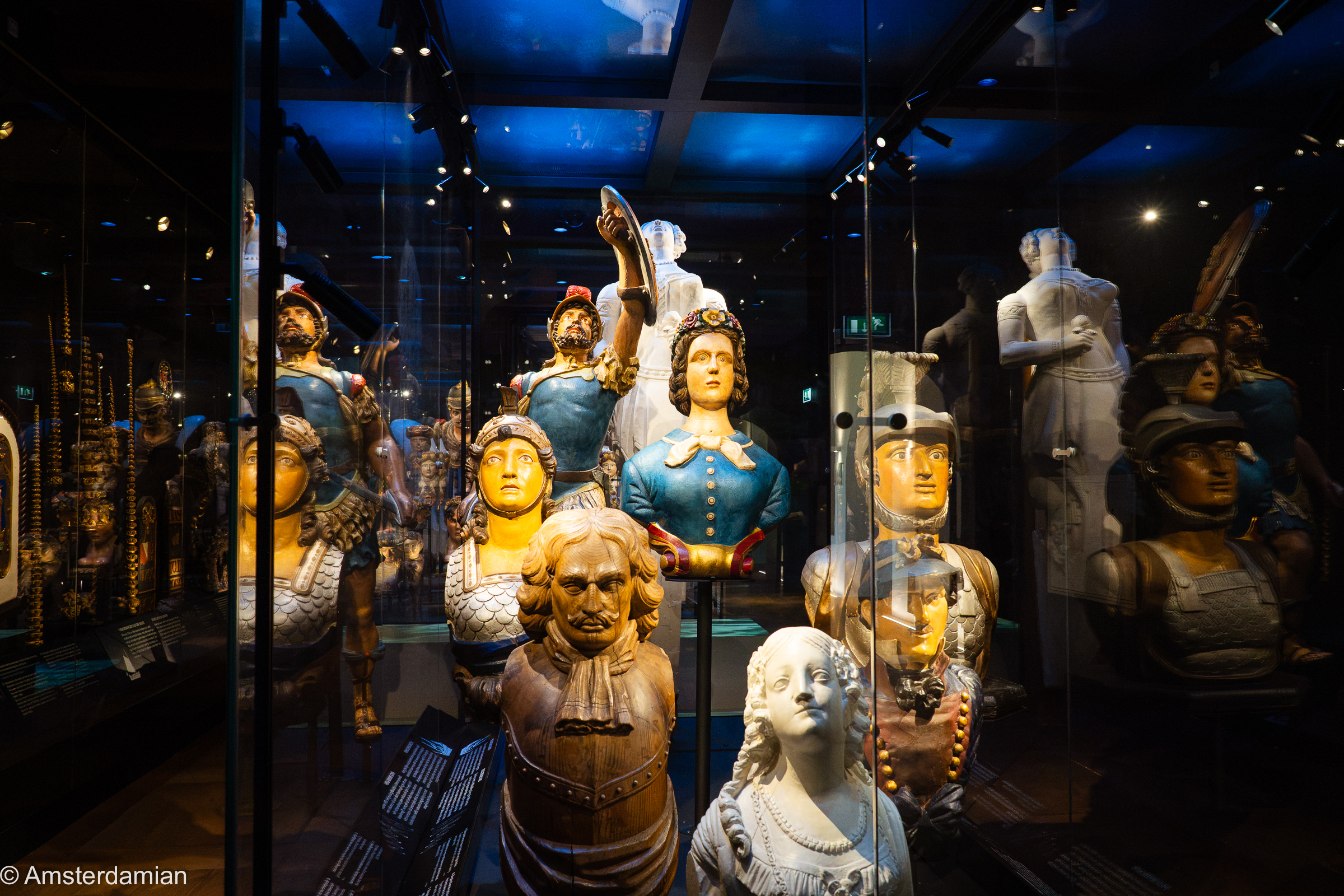
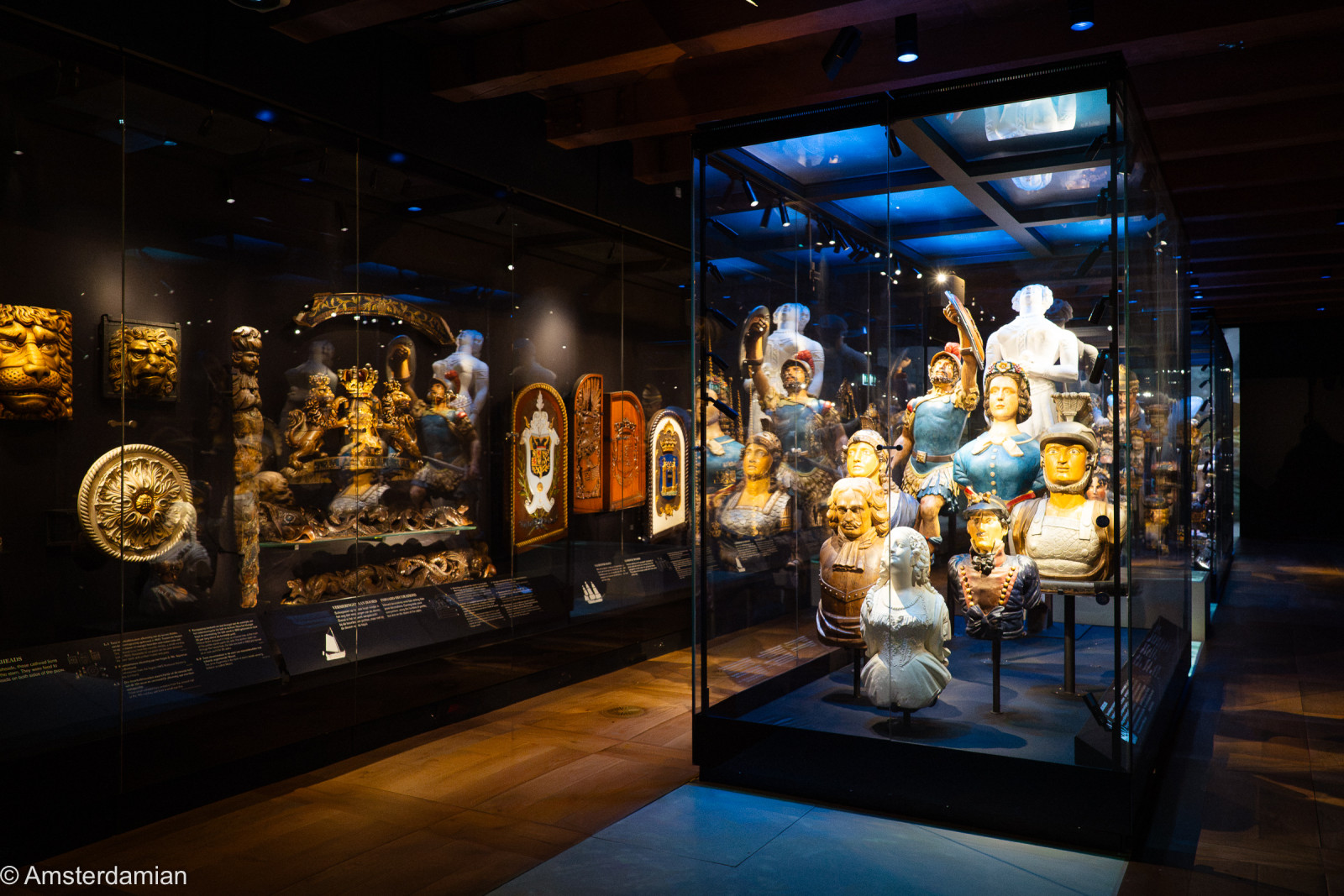
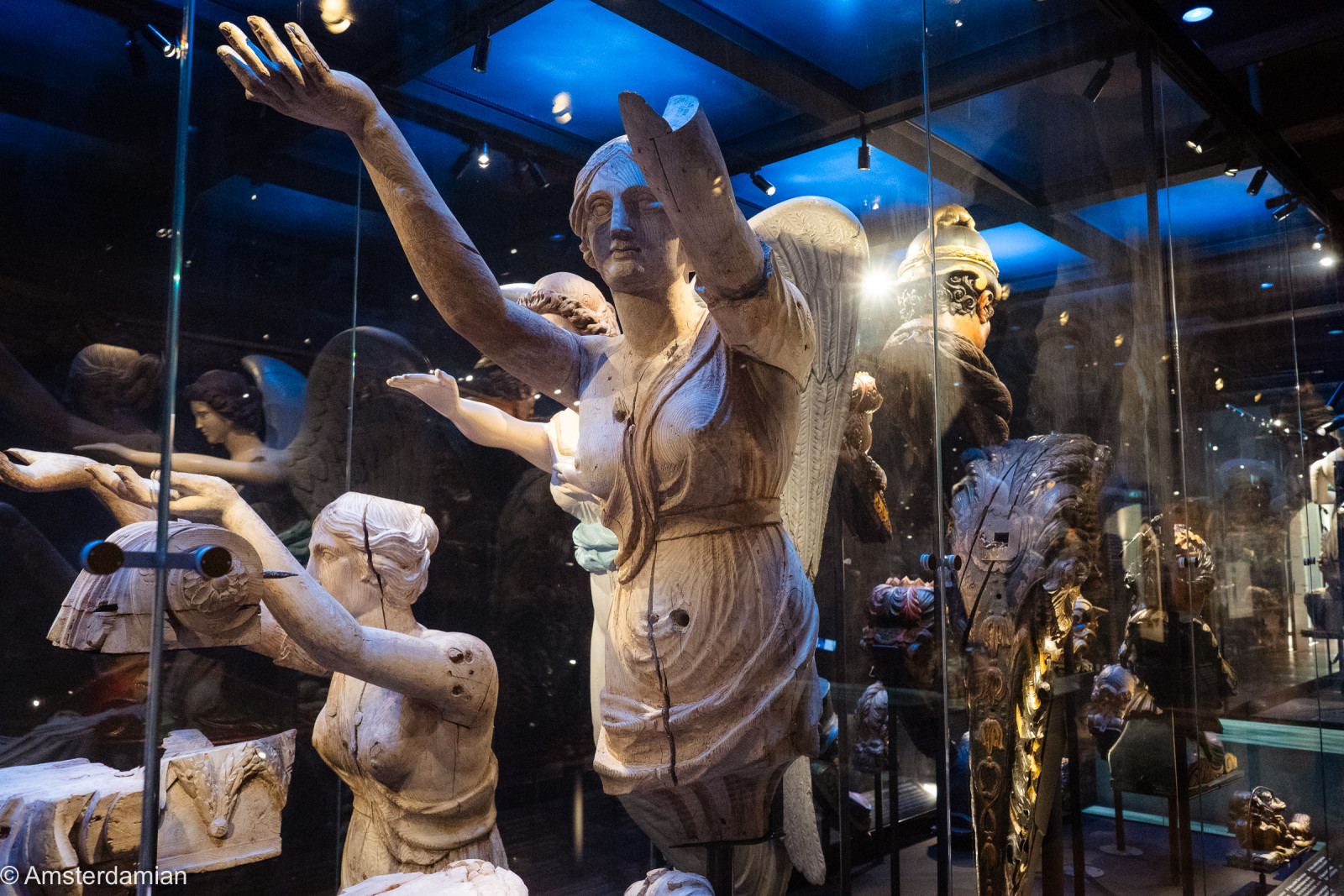
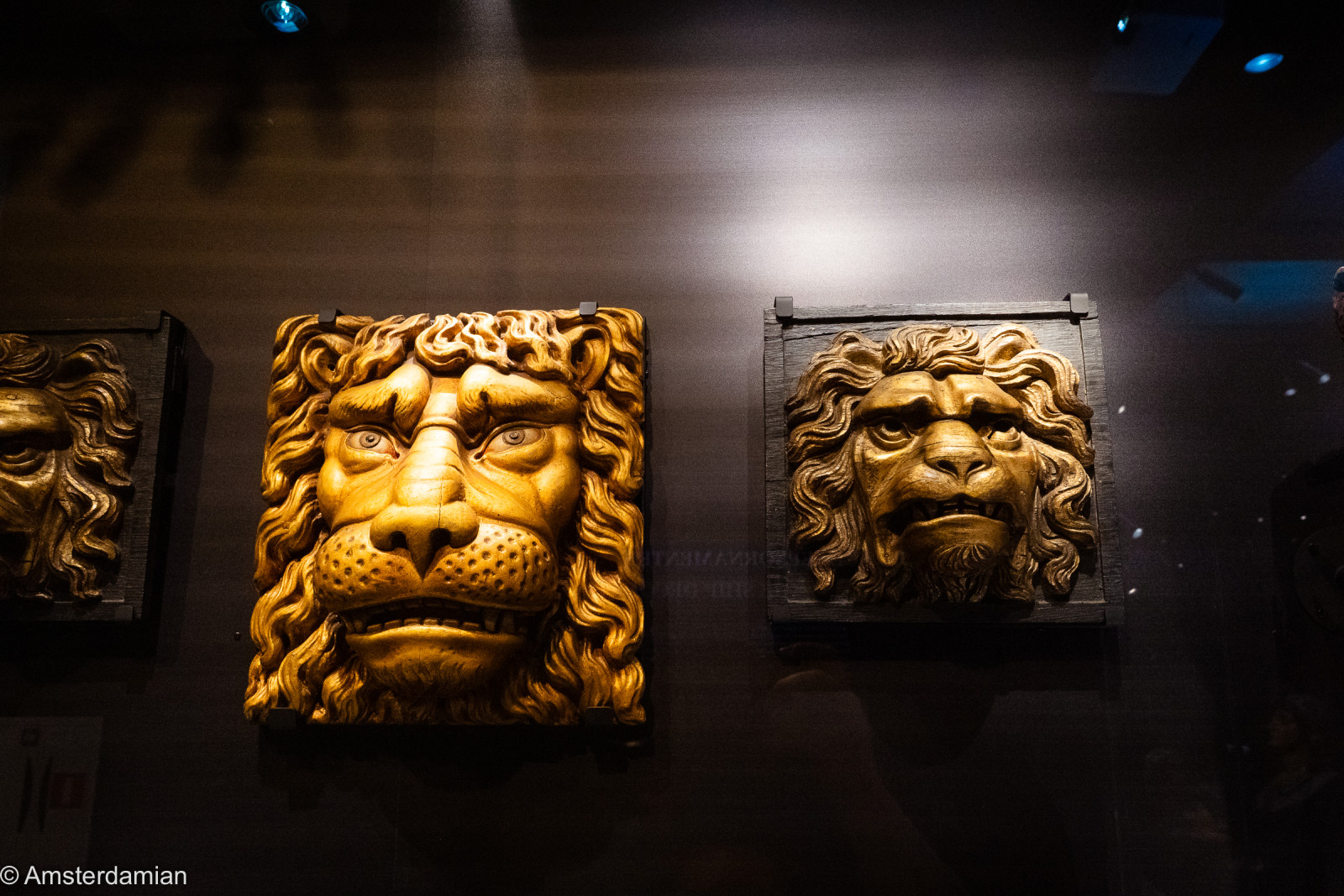
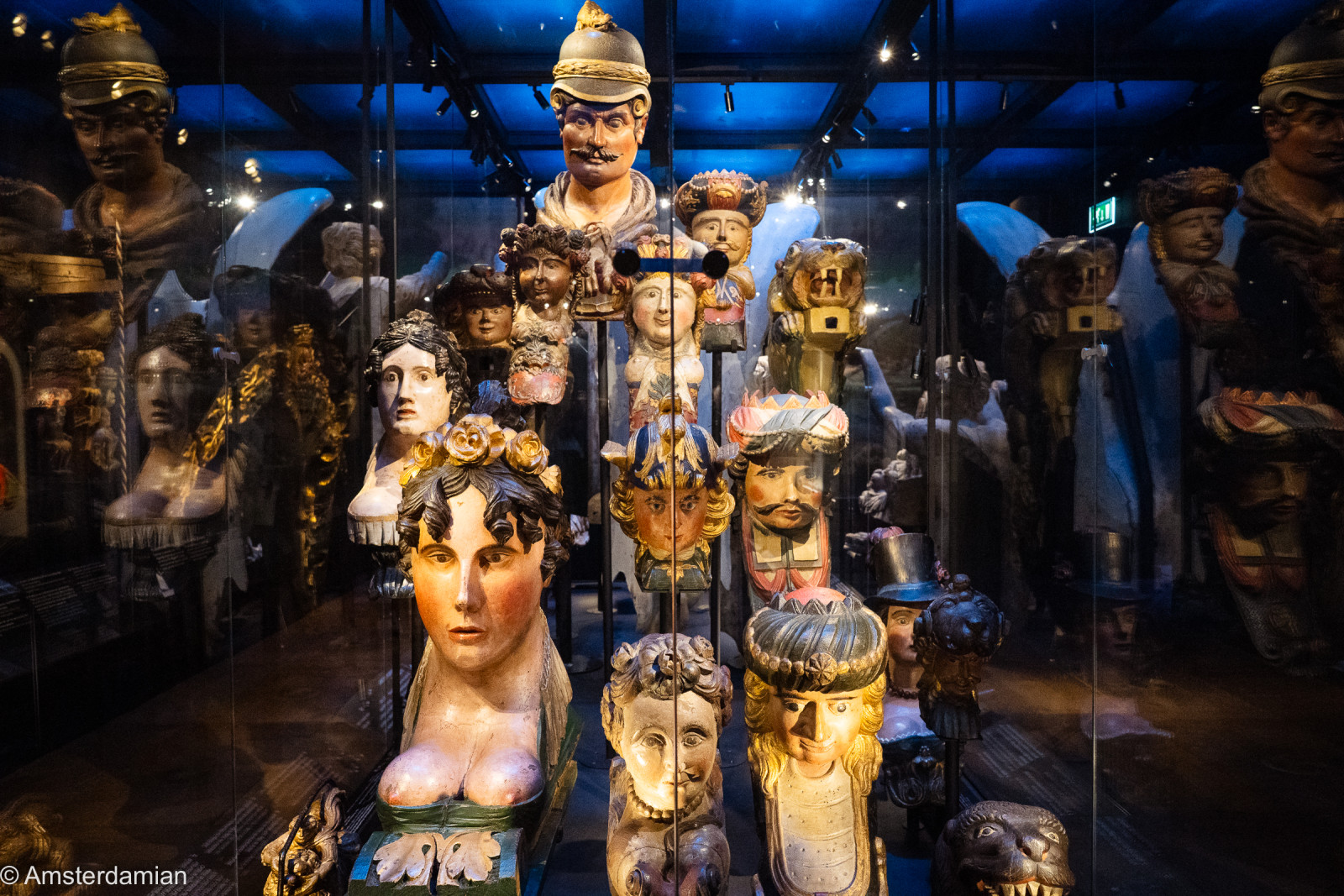
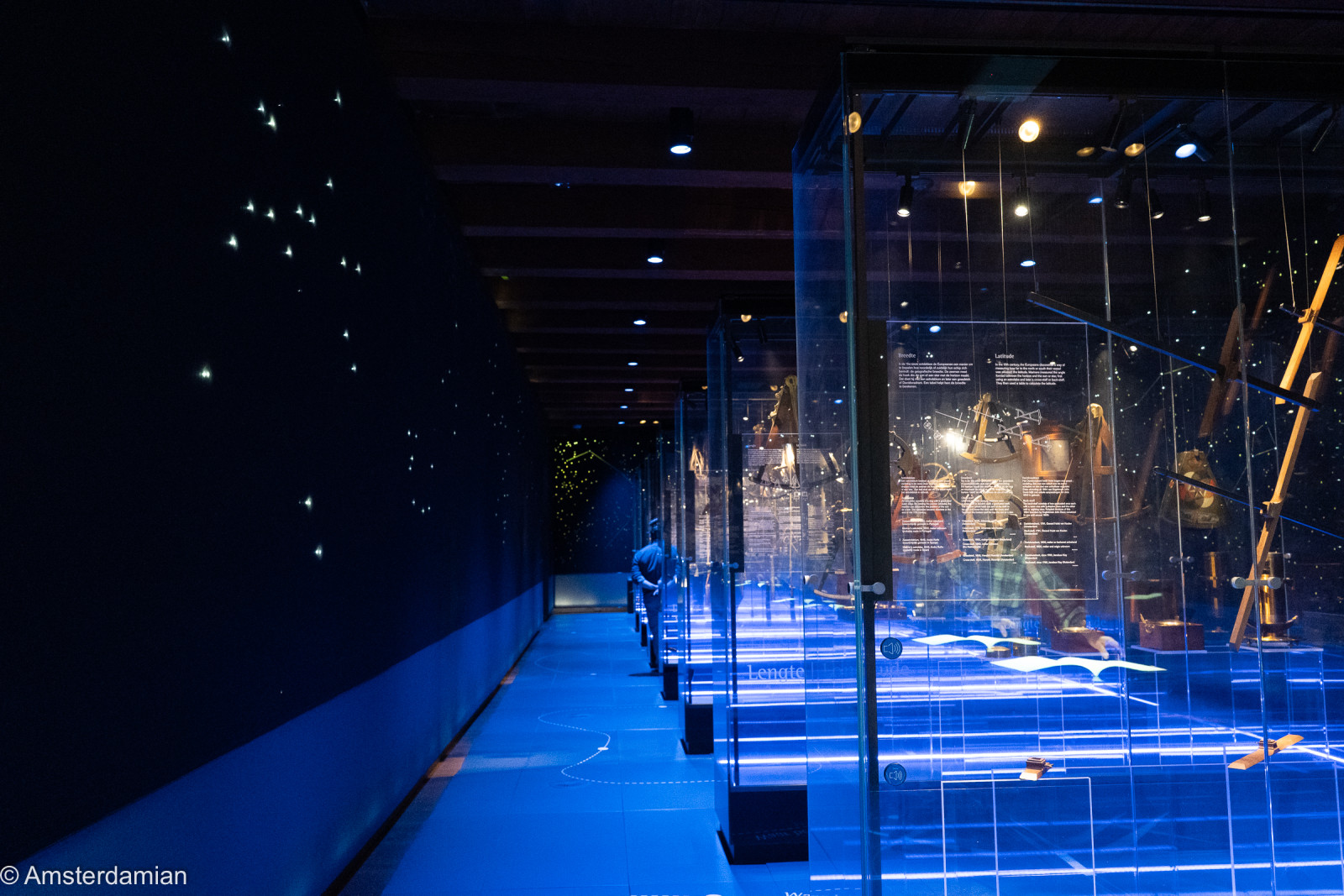
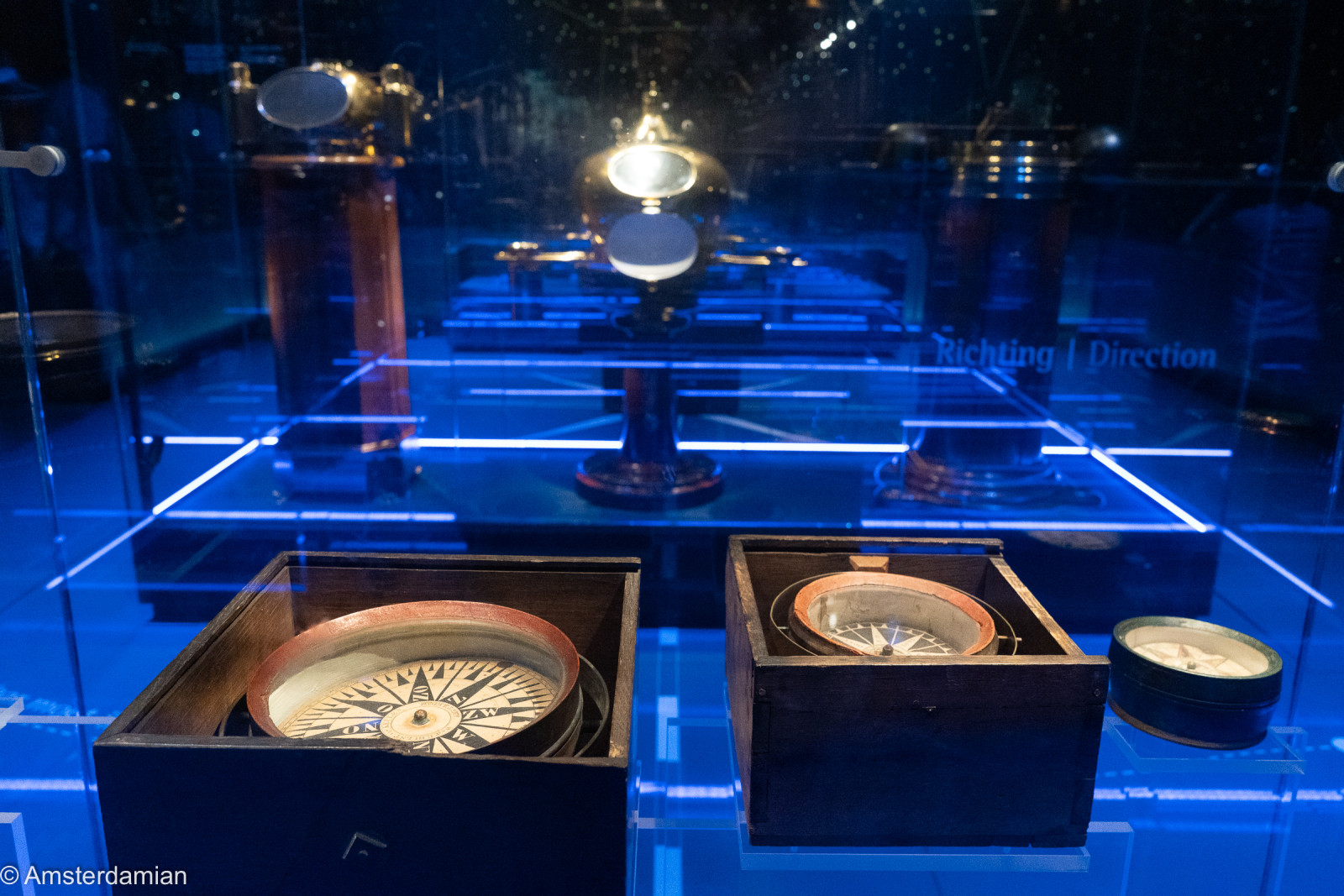
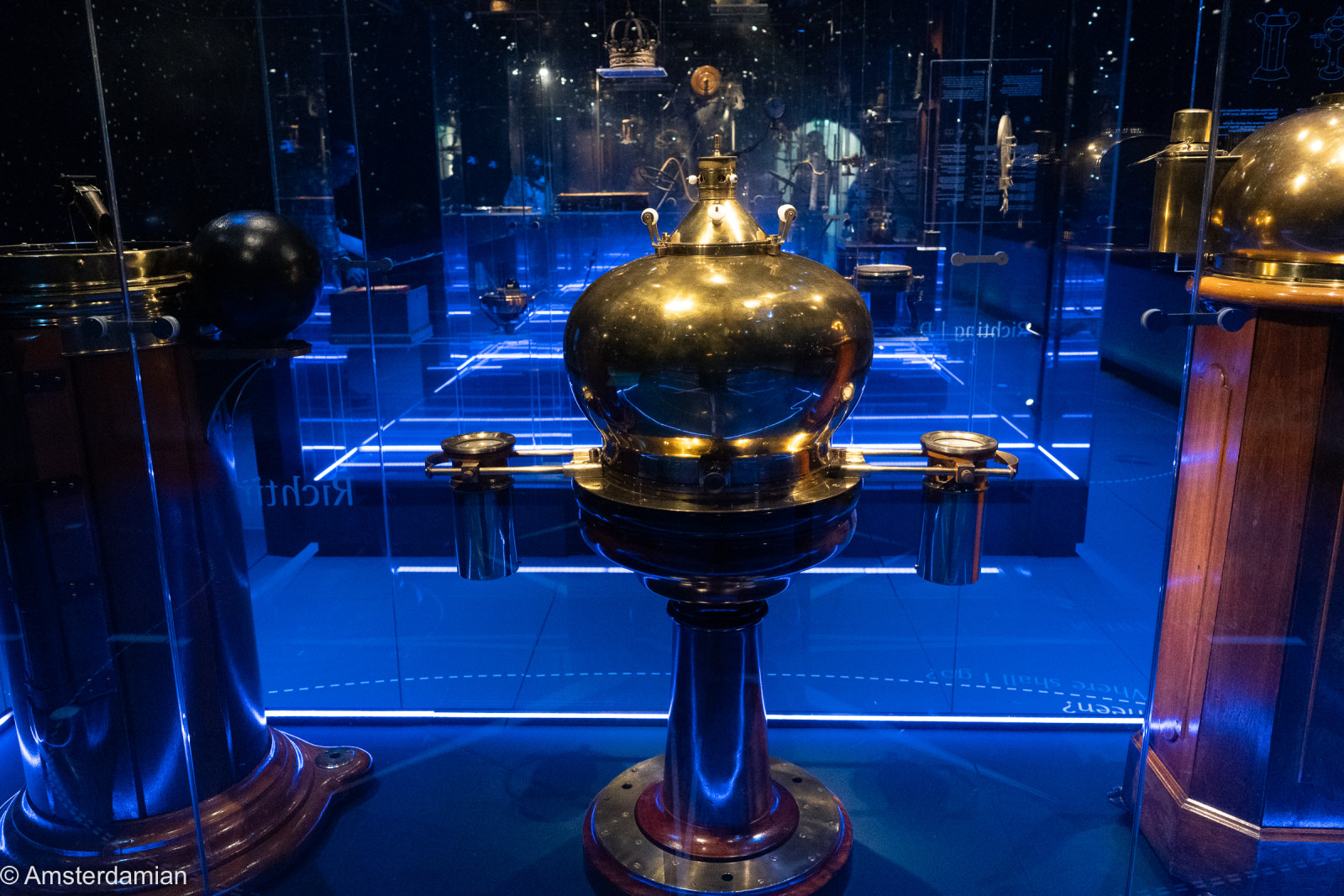
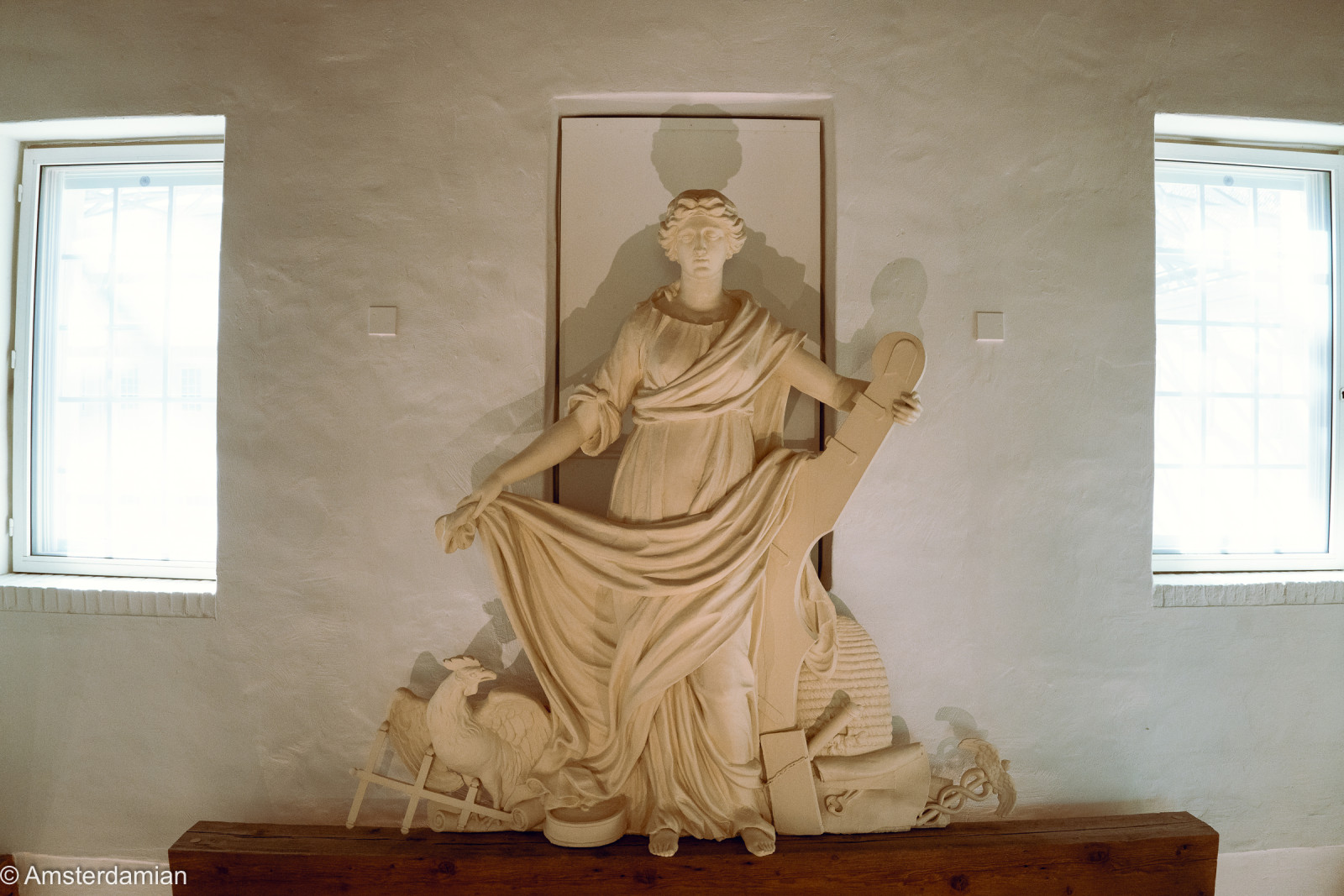
One floor up are the ship decorations, figureheads and carved stern pieces, rough and beautiful. I definitely spent more time here than I probably should have. Next to them is another room that felt special: the navigational instruments, from the cross-staff to the sextant, shown under an artificial starry sky. You are meant to feel how sailors found their way by the stars, and it works.
West: for families
The West wing is the interactive wing, made for children but perfectly watchable for adults. The Tale of the Whale follows our long and uneasy relationship with the whale, from sea monster to hunted commodity to protected species, and yes, you can walk into a whale’s mouth. For the youngest visitors there is Doris the Diver, an adventure story for children from two years old, in which the lighthouse has lost its lamp and Doris needs help finding it. On the second floor is Amsterdam Port and City, which looks at the relationship between the harbour and the city from the first dam in the Amstel up to today and a little beyond.
This page contains affiliate links. If you click and book, I may receive a small commission at no extra cost to you.
North: the big stories
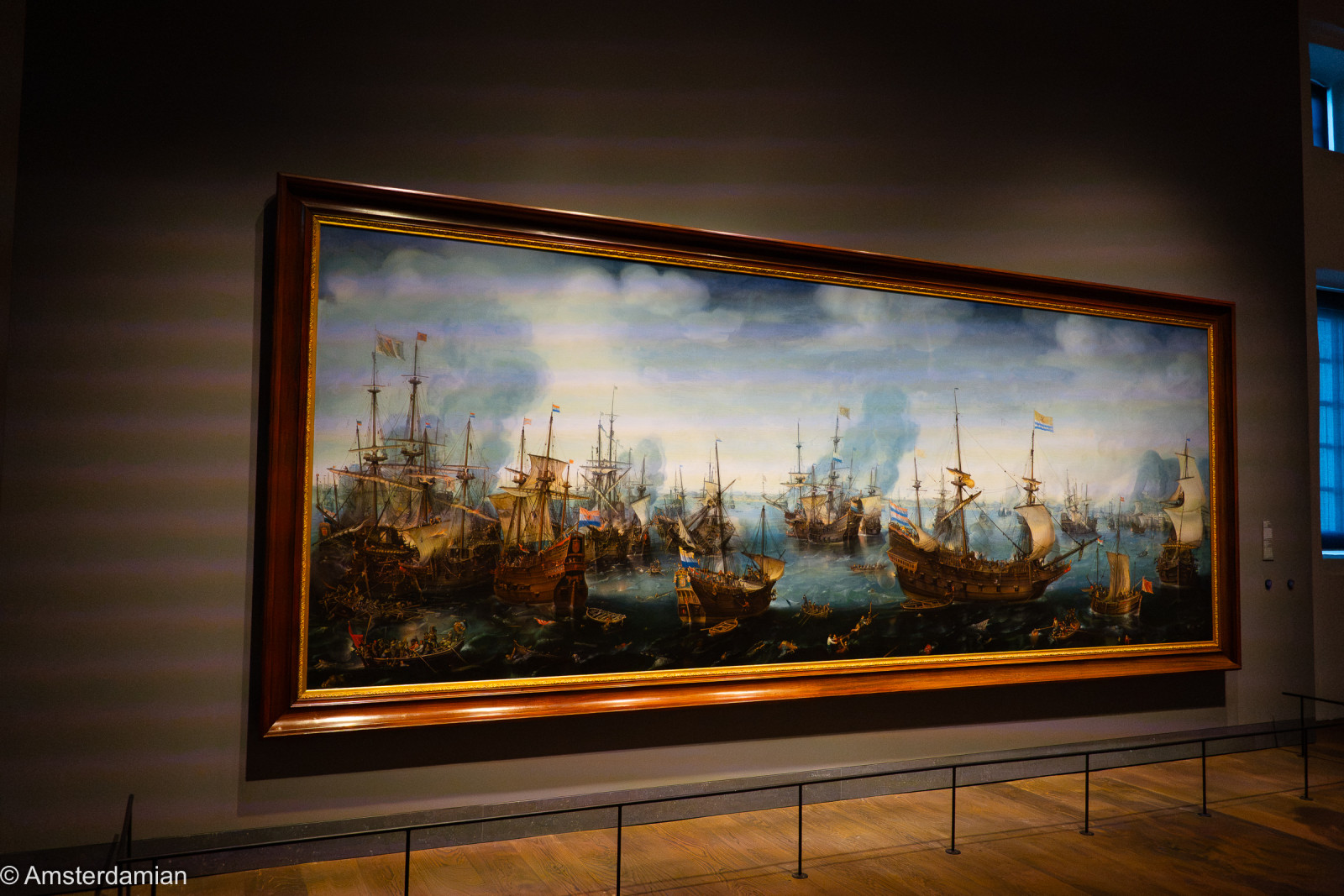
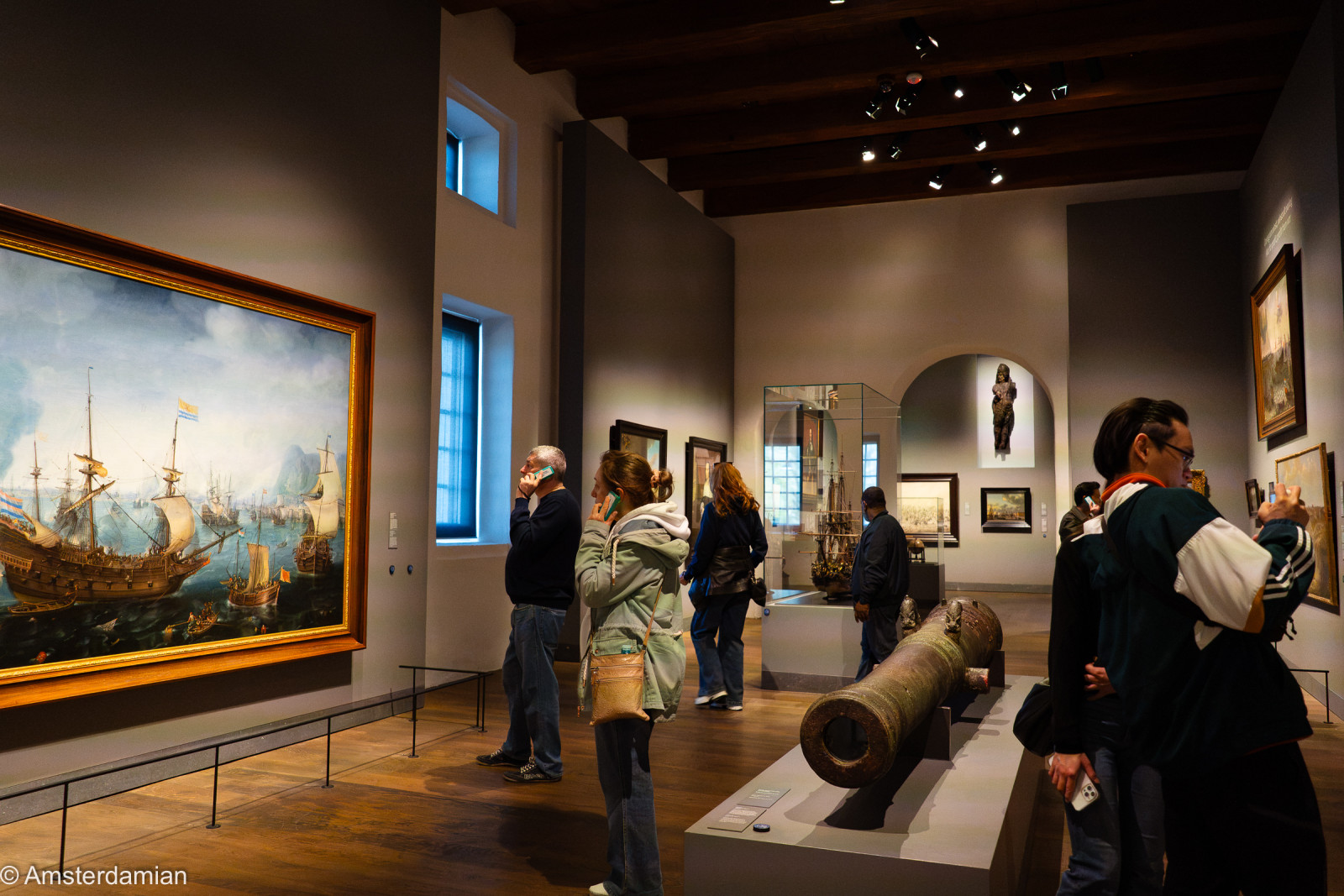
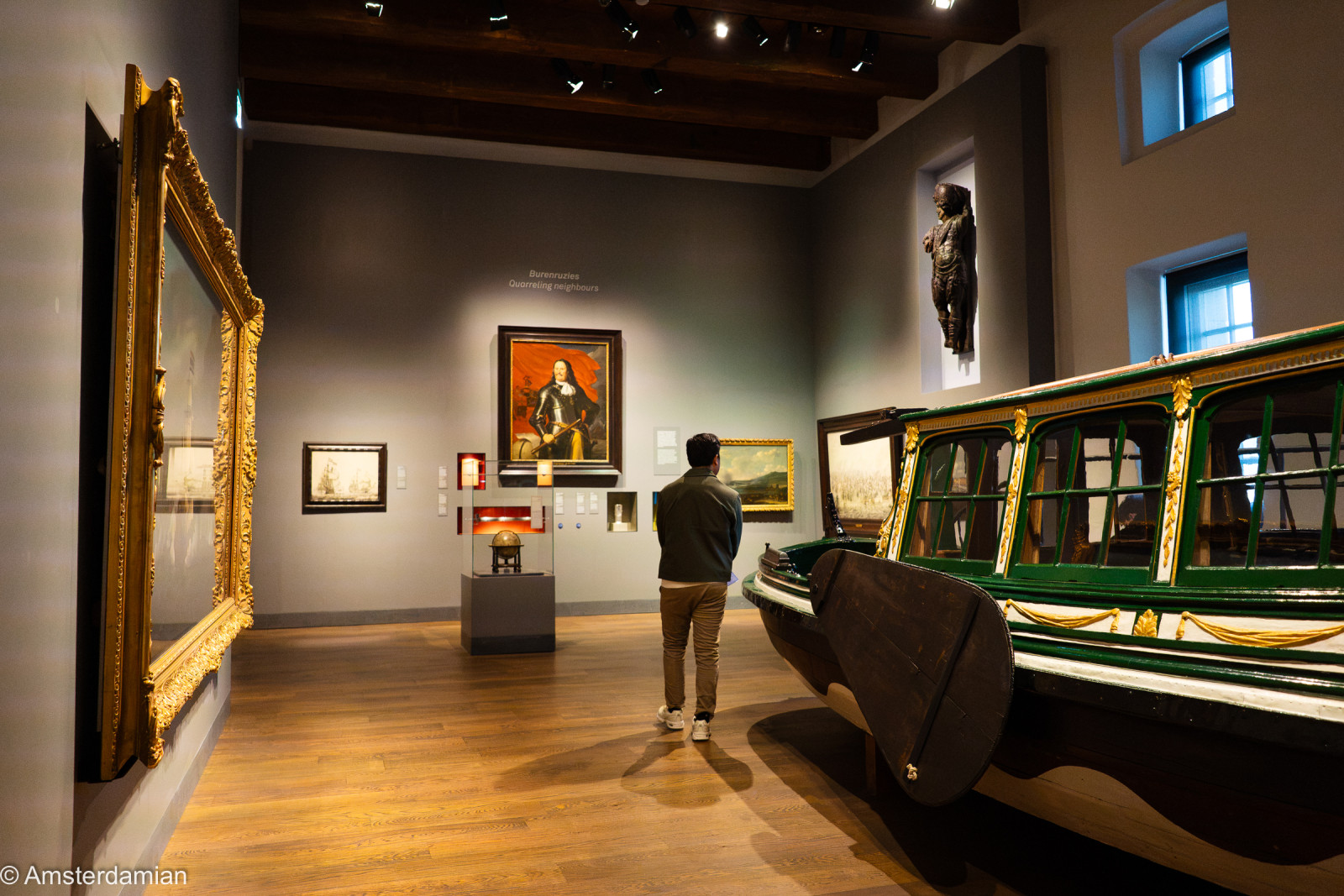
The North wing holds the museum’s main exhibitions. On the ground floor is the Main Gallery with Republic at Sea, the story of how a small republic became a maritime power in the seventeenth and eighteenth centuries, told through some fifty masterpieces from the collection. The museum is clear that this is not a hero story. Look closely and the shadow side of the VOC and the WIC is there too.
Upstairs that shadow side gets its own exhibition. Shadows on the Atlantic looks at how shipping, colonial violence and slavery were tied together, and what that meant, and still means, for people’s lives. It uses contemporary art and personal video stories.
The North wing is also your way out to the water. Past the brick wall by the exit (it is an artwork, Bringing Back the Ballast by Nathan Coley, and easy to walk past without noticing) you go down to the jetty, where the ships are.
The ship: the East Indiaman Amsterdam
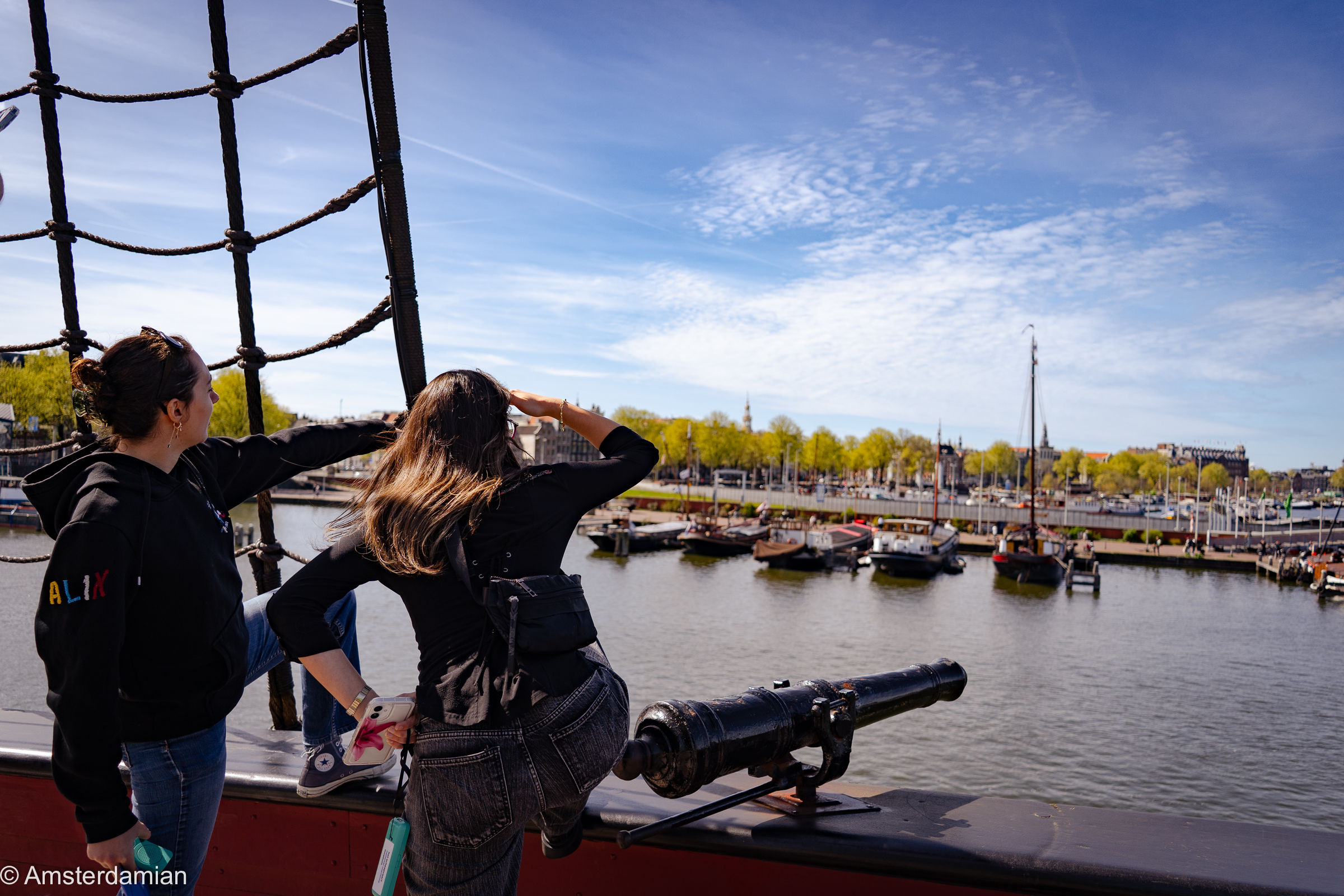
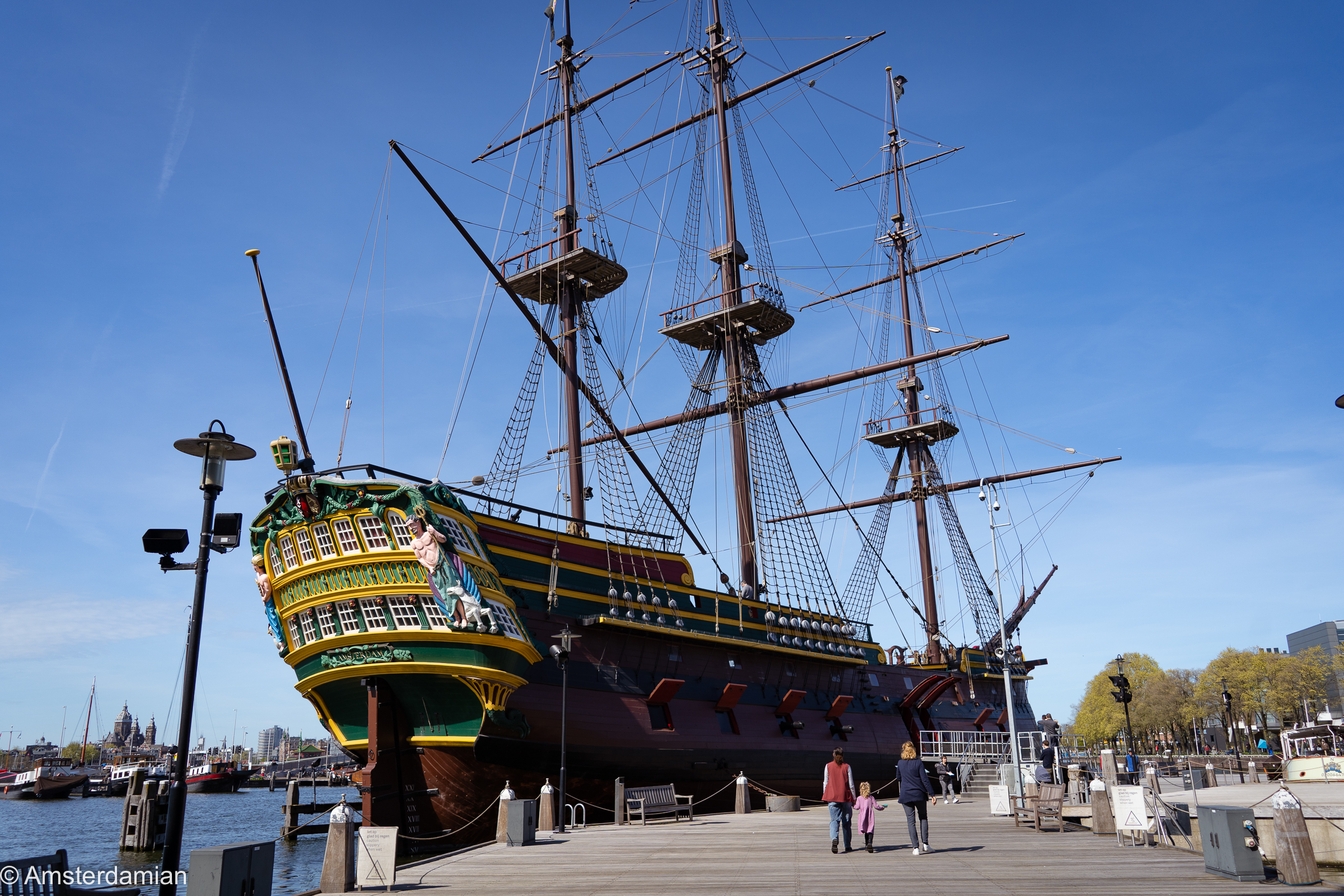
This is the part I was most excited about. The Amsterdam is a full-size replica of a Dutch East India Company ship. The original left Texel on 8 January 1749 on her maiden voyage to Batavia (the Dutch East Indies), ran into a heavy storm in the Channel, lost her rudder, and on 26 January ran aground near Hastings on the English coast. She never sailed again. Her remains are still there and at very low tide you can see the timbers.
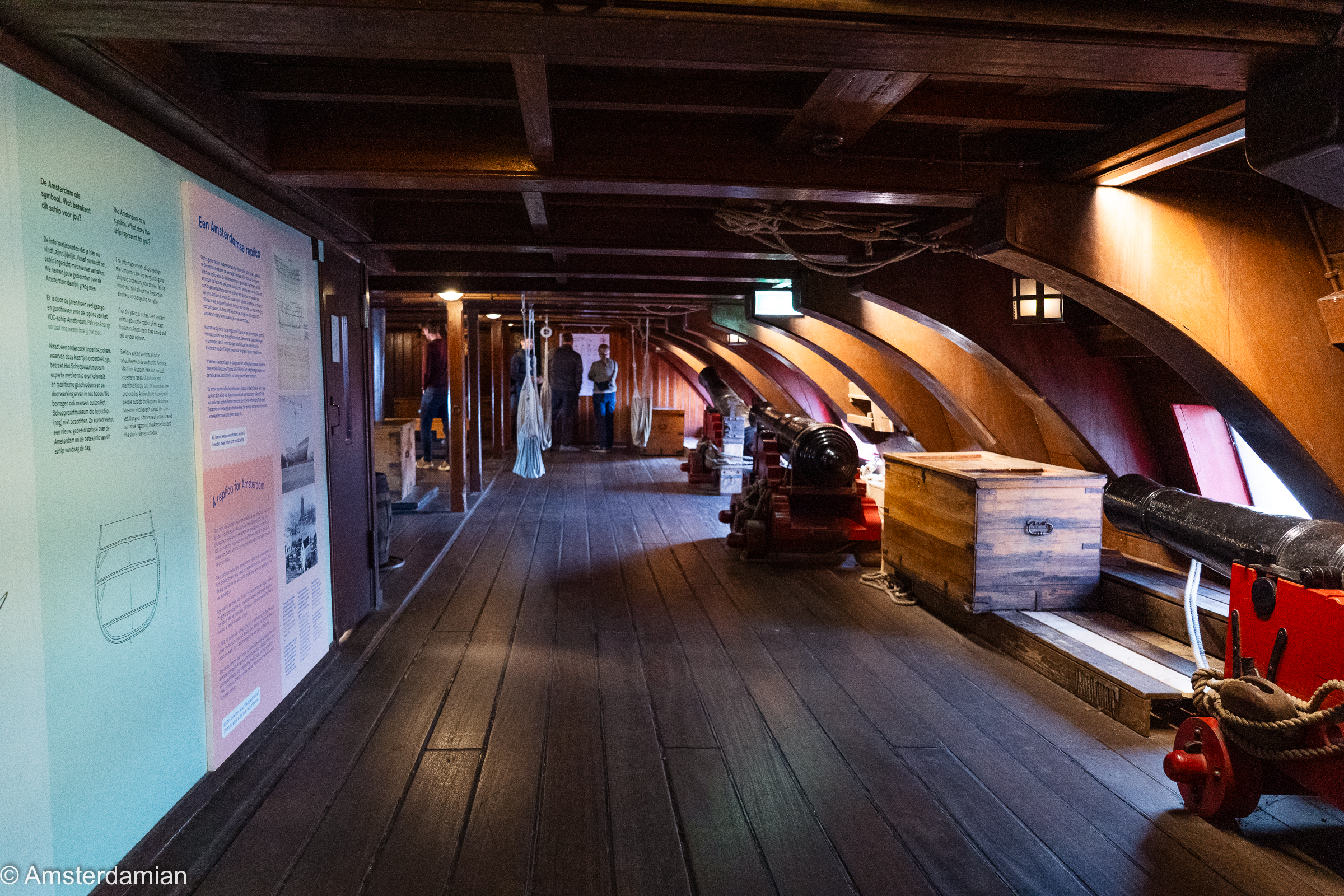
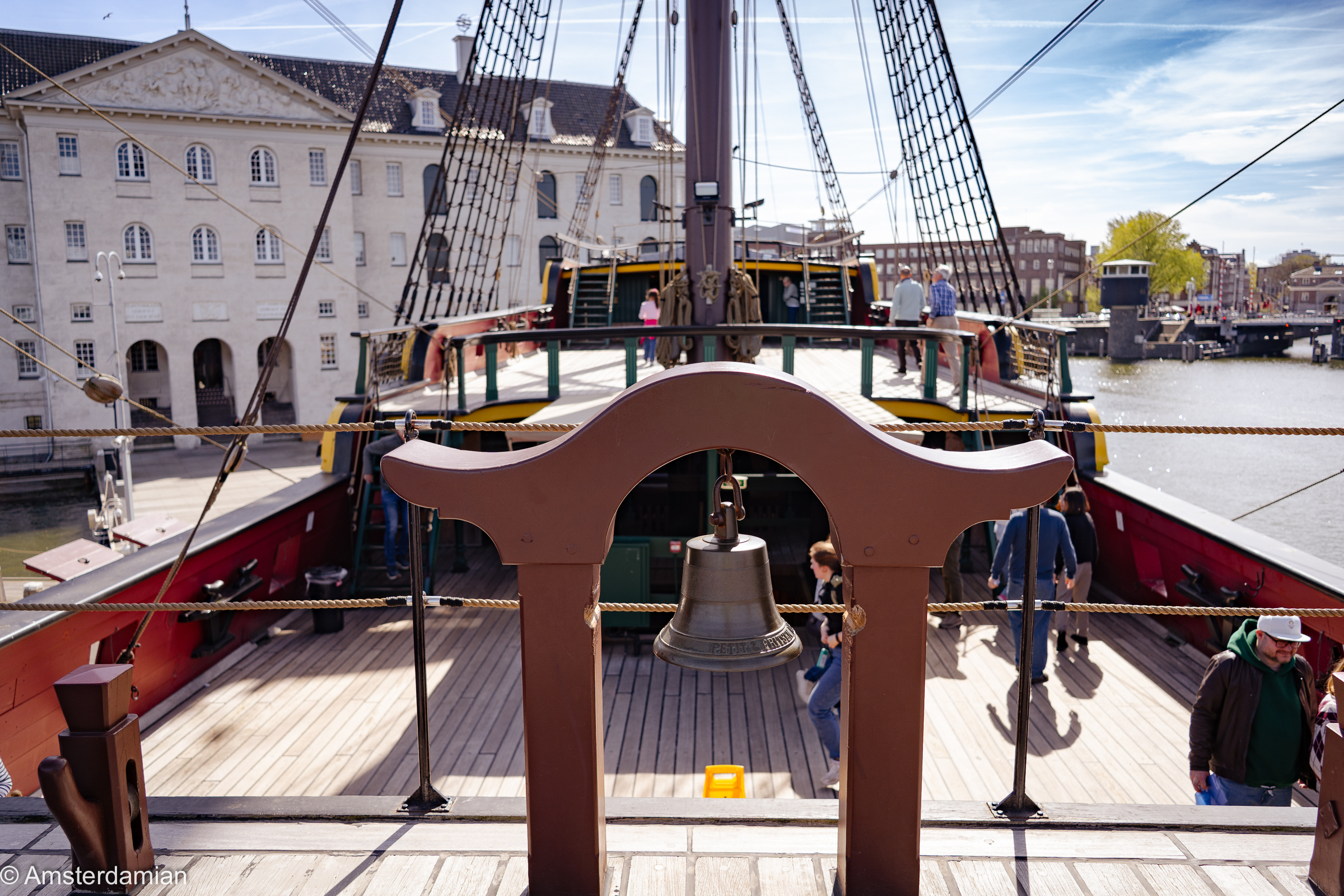
The replica was built between 1985 and 1990, largely by volunteers, using modern tools as well as tools of the period. You can climb aboard and go through the whole ship: the deck, the captain’s cabin with its windows over the water, the hold, the galley, and the sleeping quarters where you can lie in a hammock and imagine sharing that space with a few hundred men for eight months. Children love it, and it is one of the few museum objects where climbing on things is allowed and encouraged. Most of the ship is accessible by a special lift, though not every deck.
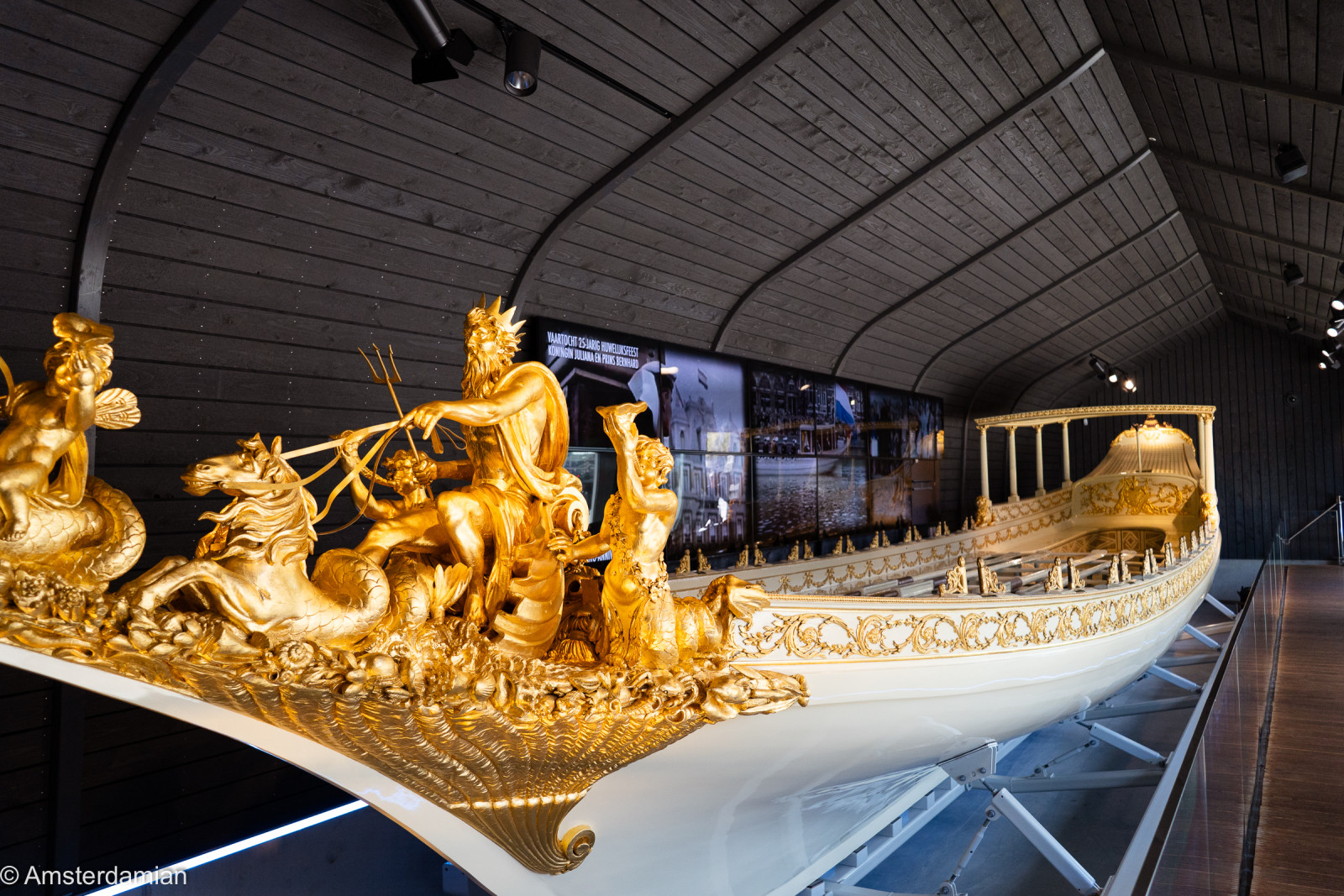
Two other vessels are moored closed to this one. The Royal Barge, a gilded rowing boat built for the Dutch royal family between 1816 and 1818, rests in its own boathouse and is as over-the-top as you would hope. Worth a quick look. The Christiaan Brunings is a steam icebreaker from 1900, built for Rijkswaterstaat with a surprisingly luxurious interior so she could carry officials as well as break ice.
Temporary exhibitions
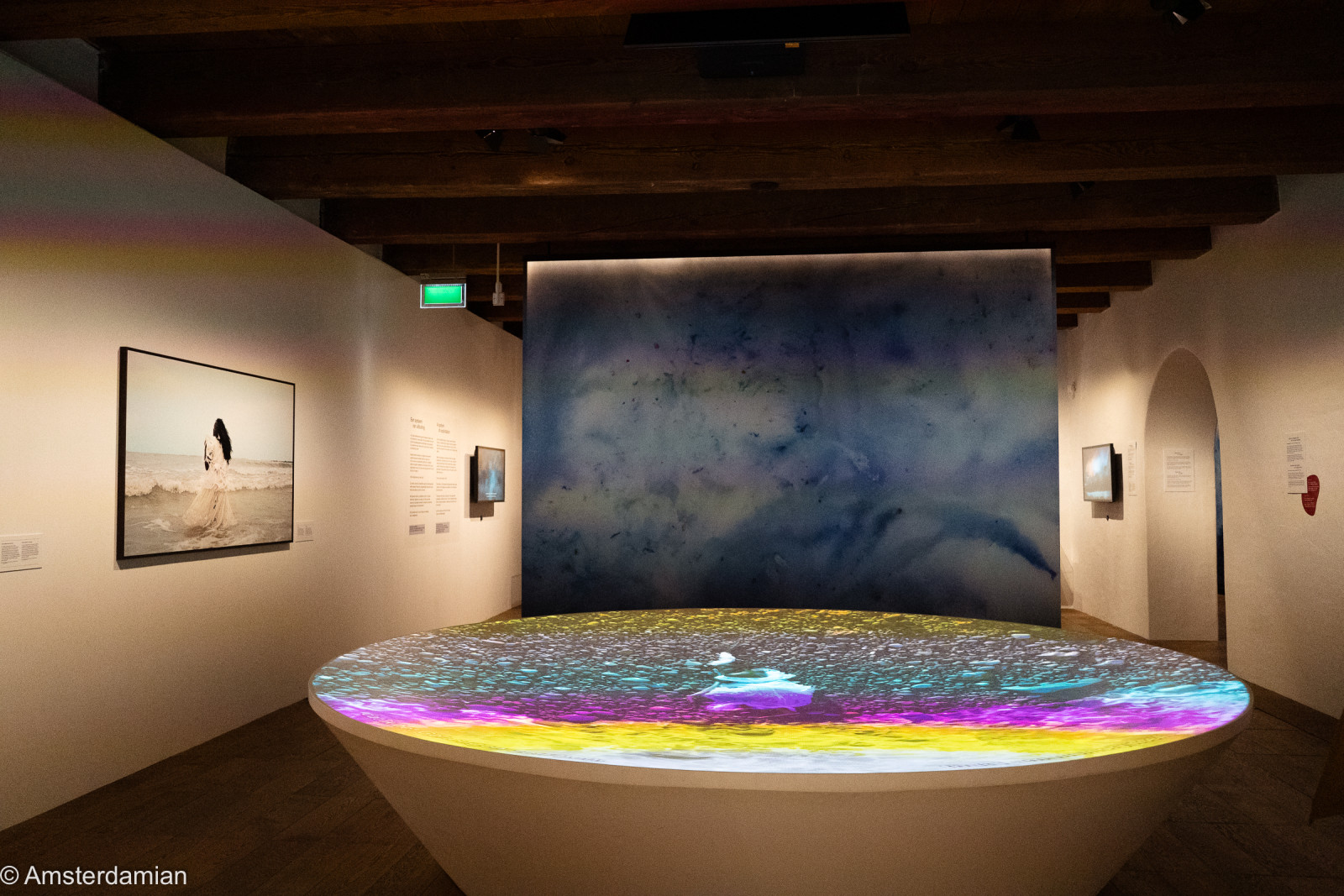
The permanent collection is enough for a visit, but the museum always has temporary shows as well. This autumn brings three: Crimson Gilt by Vincent Ruijters, a textile installation inspired by the sunken Amsterdam (from 18 September 2026); Atlantic Window IV with dancer Sedrig Verwoert (from 9 October); and Transcripts of a Sea, five years of sea photographs by Stephan Vanfleteren (from 10 October). Check the current programme before you go.
The library
The museum’s collection includes 60,000 books, from which some are over 500 years old. They are available to be consulted in the library, and can be found also in the online collection.
Practical corner: tickets, hours and timing (2026)
- Opening hours: daily 10:00 to 17:00. The café-restaurant closes at 16:30 and the library is open on weekdays only. Closed on King’s Day (27 April), Christmas Day and New Year’s Day.
- Tickets: €20 for adults, €8.50 for ages 5 to 17 and for students, free for children up to 4. Online tickets are €1 cheaper.
- Free with: Museumkaart, I Amsterdam City Card, ICOM cards and Vereniging Rembrandt membership. I compared the Museumkaart and city passes in a separate post.
- Payment: cashless throughout, so bring a debit or credit card (no American Express).
- Audio tour: free. Pick up a player at the information desk or download the GuideID app.
- Getting there: Kattenburgerplein 1, in the eastern docklands, a 15 to 20 minute walk from Centraal Station, right next to NEMO’s green hull. ARTIS is a short walk away if you want to make a day of it in the east of the city.
Is it good for visiting with children? Very. The whole West wing is built for them, and the ship is the rare museum piece children are actively encouraged to climb on. If you are choosing between this and NEMO next door: NEMO is a hands-on science museum aimed at children, the Scheepvaartmuseum is a history museum with one very good family wing.
If you are planning more museum days, I have an overview of all museums in Amsterdam.
This is a museum you walk out feeling like you know the city better, and with your head full of stories. And maybe, when you walk back outside along Amsterdam’s canals afterwards, you’ll look at the water a little differently.
Stay tuned for more and follow Amsterdamian on Instagram and Facebook for more stories about life in the Netherlands, written by a real local, updated constantly.
Check out my photo book: Amsterdam Through the Seasons!
Love what you’re reading? Support my work with a small donation.
And share this post if you liked it!






The glass courtyard roof inspired by compass lines is such a clever architectural detail. I also love that visitors can actually climb aboard the Amsterdam replica rather than just viewing it from a distance.