Amsterdam has more museums, galleries and landmark buildings than most visitors can fit into one trip, so it’s easy to forget how much lies just beyond the city. But for those wanting to discover more of the Netherlands than just its famous capital, there are many places that show a different side of the country, and they’re just a short train ride away. Whenever you go out of Amsterdam, you find quieter streets, fewer or no queues, and art and architecture that tell another part of the Dutch story. I’m a big fan of the Dutch dagje weg culture, and I always like to discover new places over a weekend. As I usually go further from Amsterdam, some places that are close to it simply slipped from my list, and that is a shame, because many of them have quite a few surprises in store for their visitors.
Cities like Almere, Hilversum and Amstelveen in Amsterdam Area are good examples. Each is better known as something other than a tourism destination: Almere as a new town built on reclaimed land, Hilversum as the home of Dutch television and radio, and Amstelveen as a green suburb on Amsterdam’s southern edge. Spend a day in each, though, and they turn out to be very different places.
Almere: street art, architecture, and a city that is 50 years young
Almere just turned 50, and it’s the youngest Dutch city. Yes, you’ve heard it right. A bit over 50 years ago, there was only water in the place where Almere stands today.
Almere is located in the newest Dutch province, Flevoland, and is one of the cities built after the land reclamation of parts of the former Zuiderzee. The Dutch decided they wanted a new province, and they simply built one. The Zuiderzee was an inlet of the North Sea that cut deep into the country, which was closed off in 1932 with the construction of the Afsluitdijk, and it was transformed into a lake. Parts of this lake were drained to create (most of) the new Flevoland province. Today, Almere is the 7th largest city in the Netherlands and still growing, home to over 200,000 inhabitants as diverse as the city itself.
It boasts modern architecture, a couple of beaches, a city centre with around 400 shops and plenty of wide, open spaces, and it’s great for a relaxed day trip from Amsterdam.
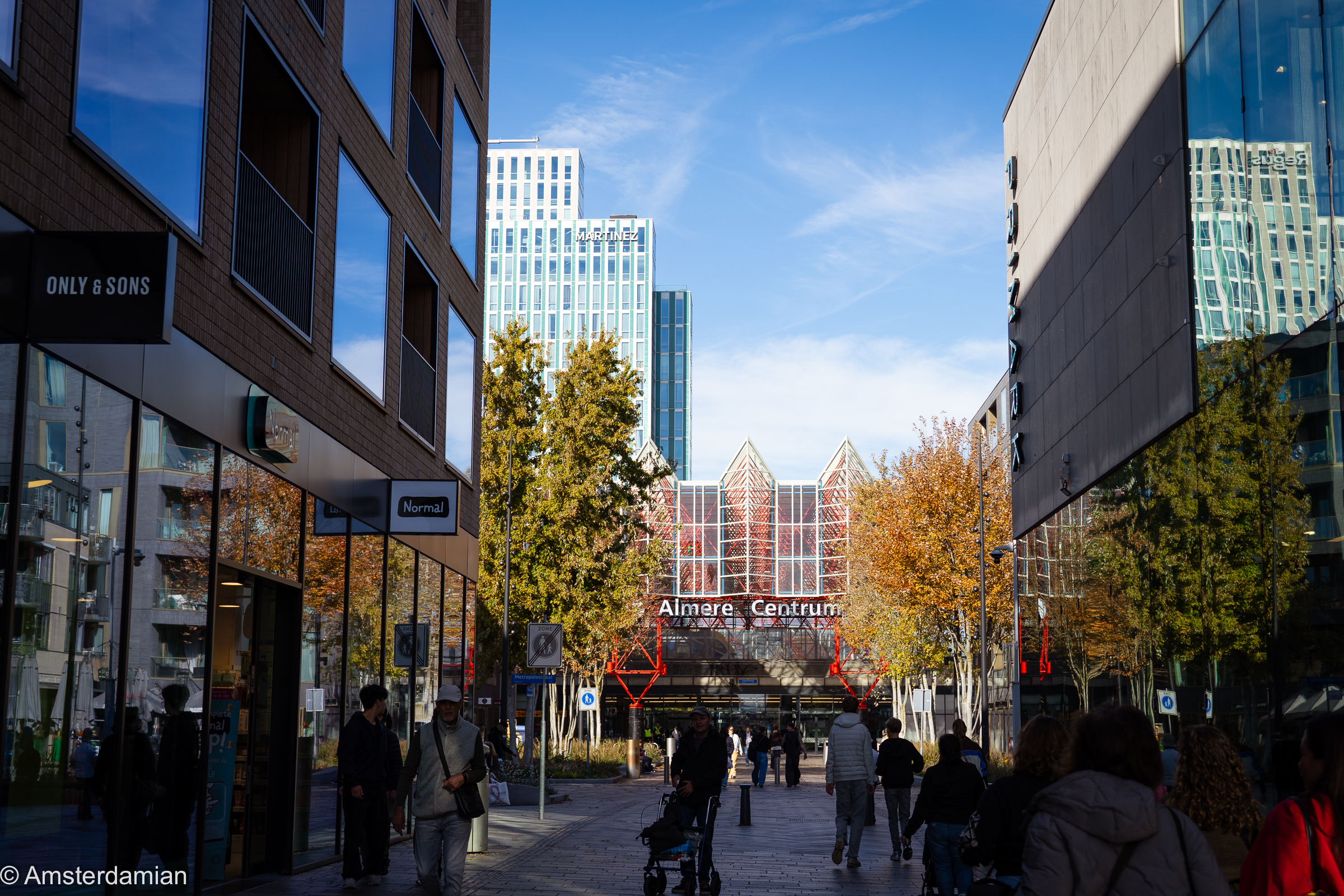
What to do in Almere
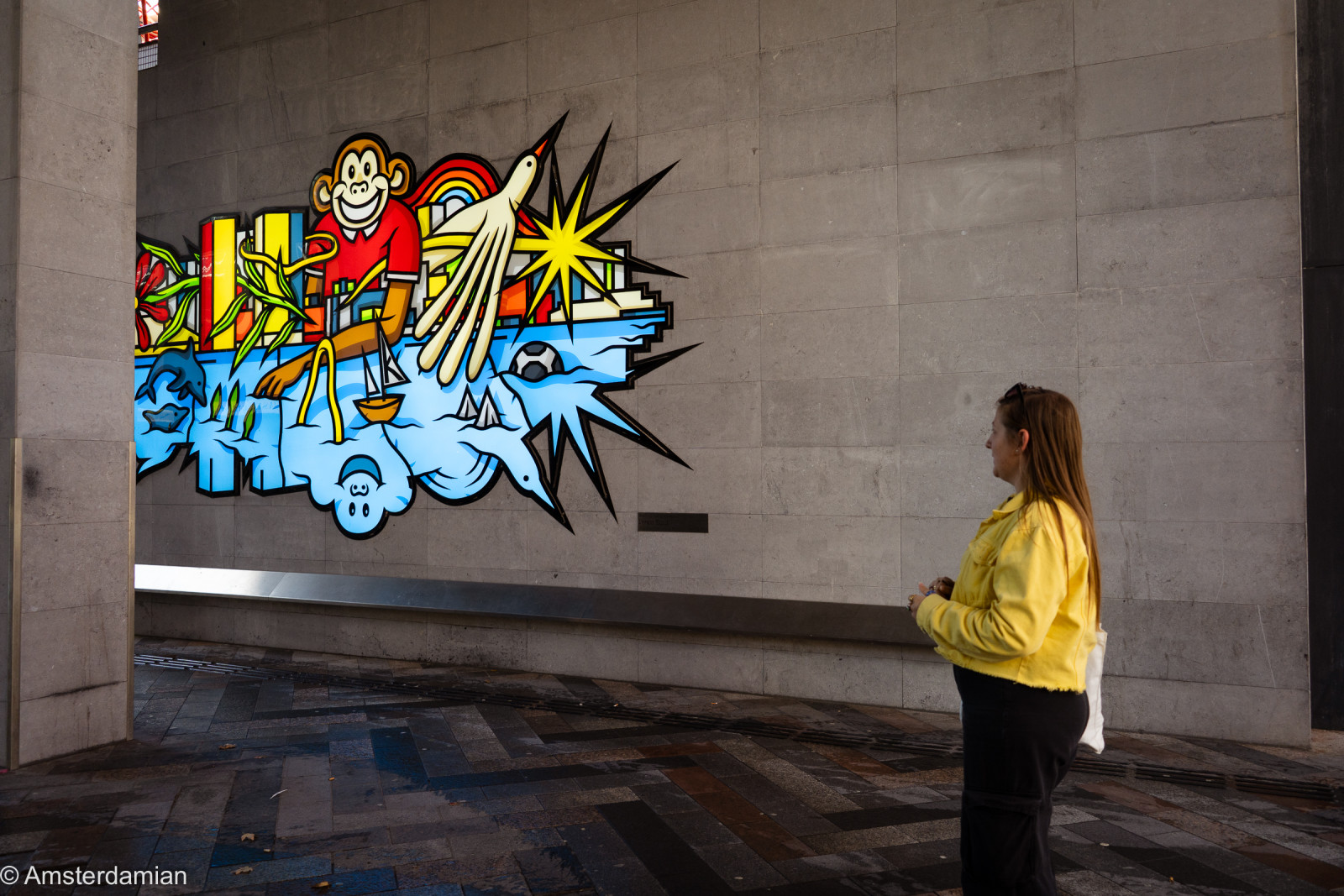
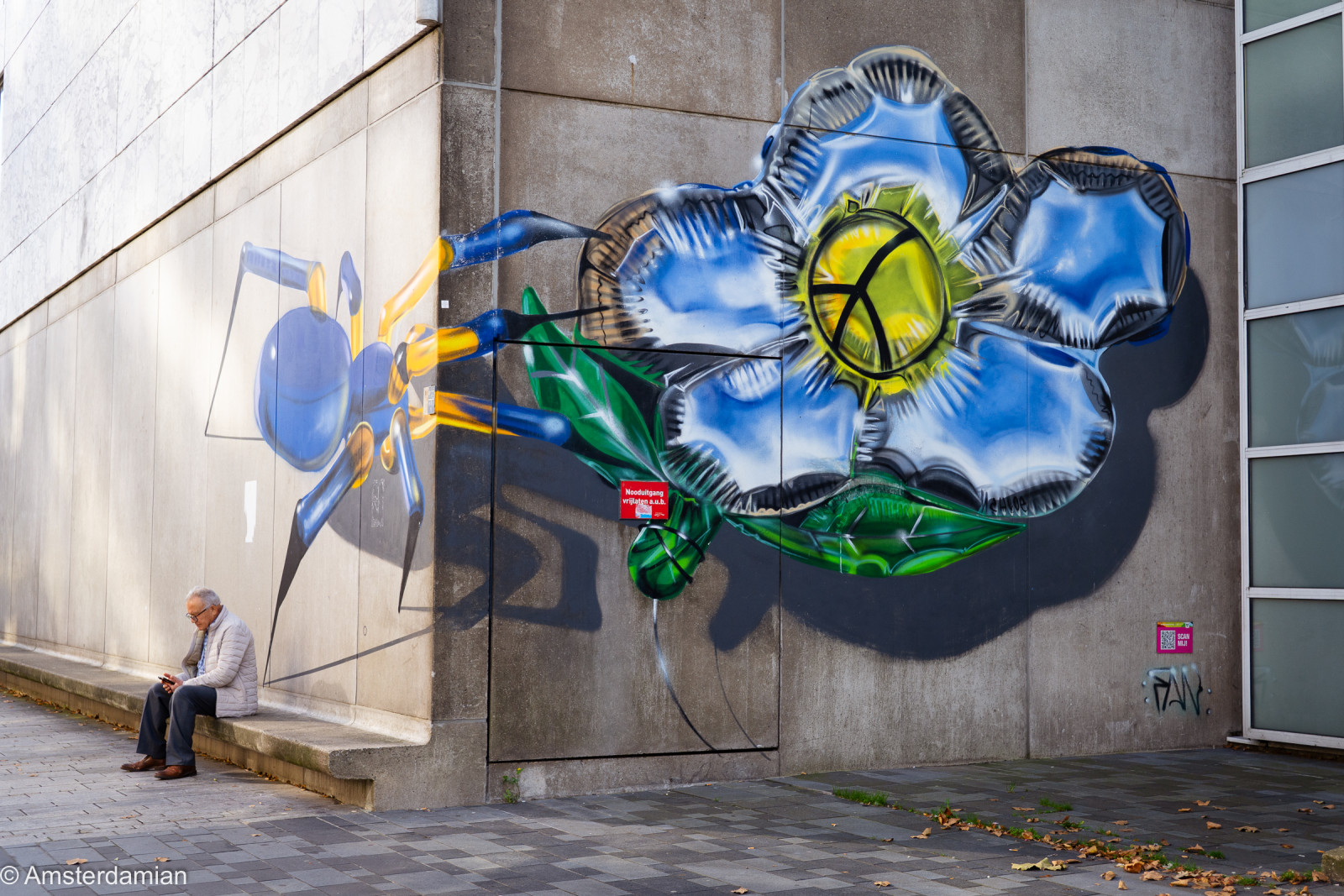
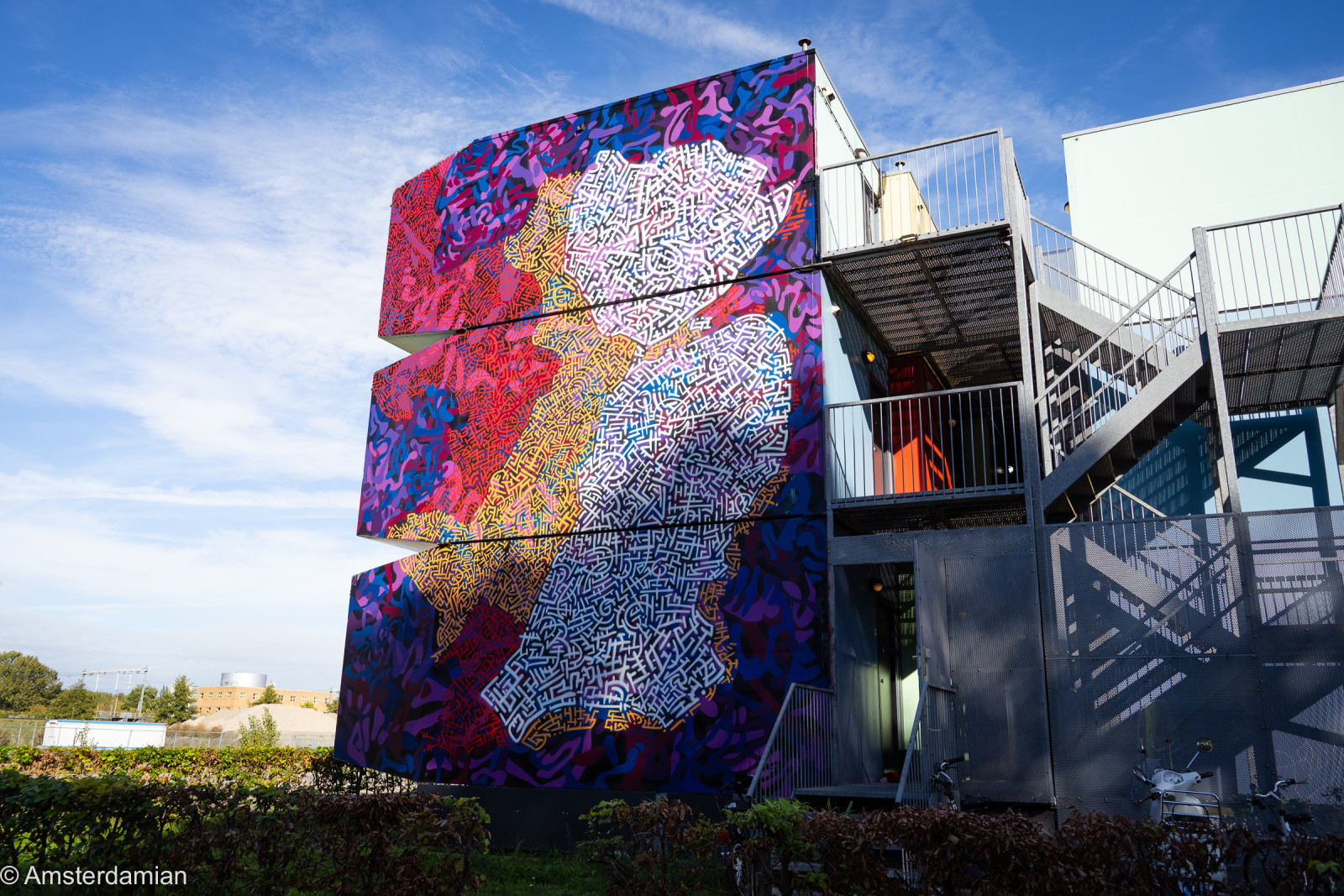
⏺ Street art walk
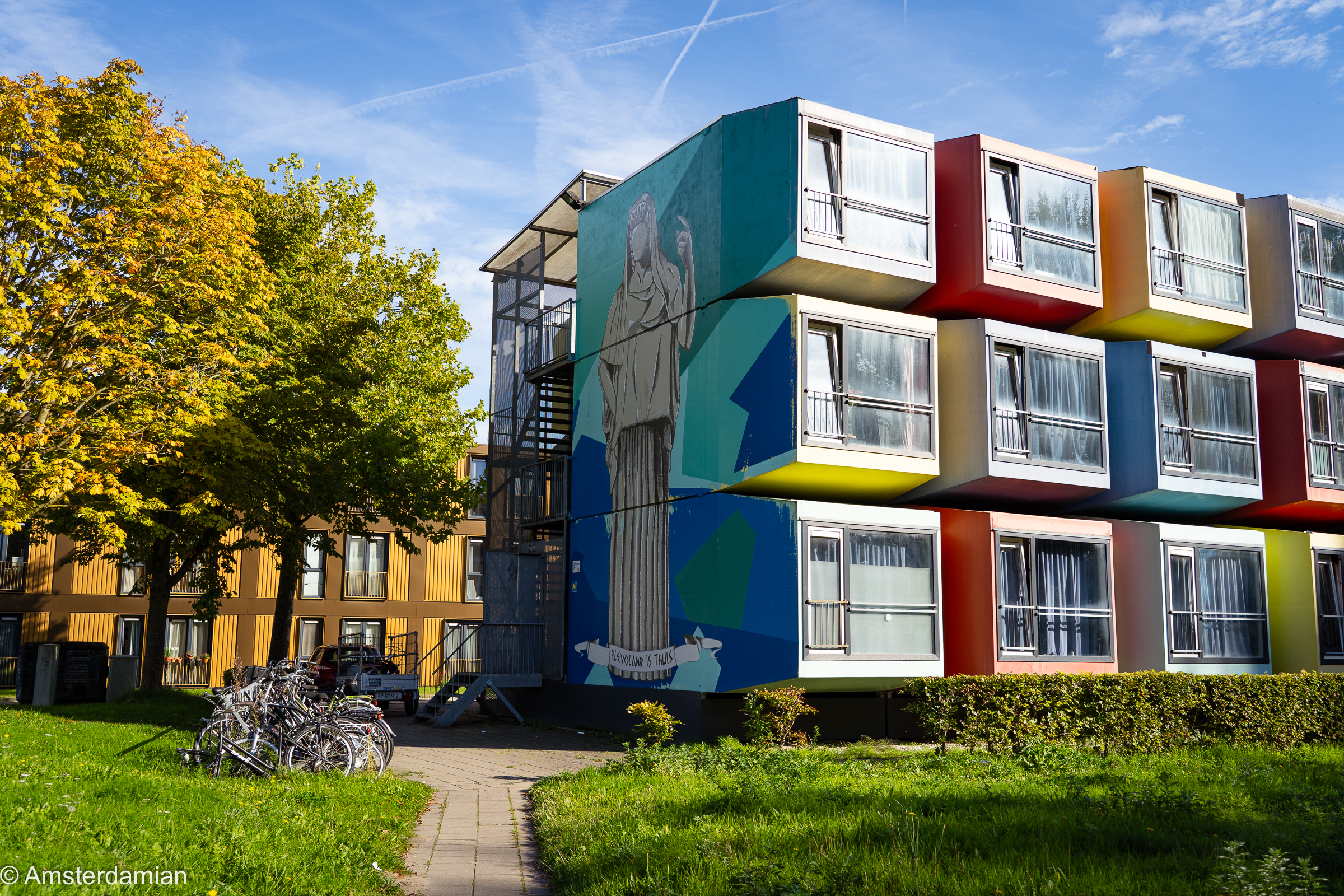
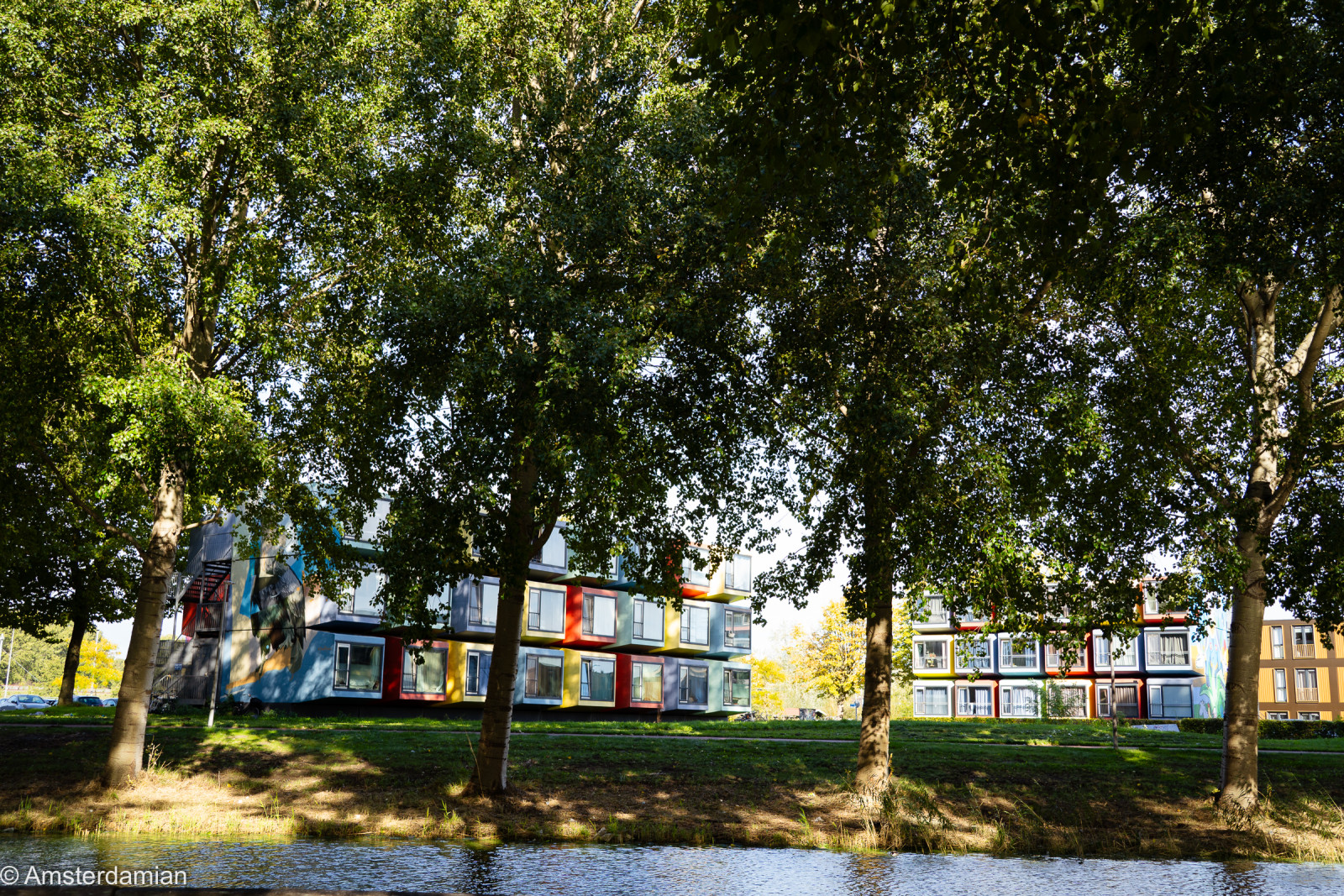
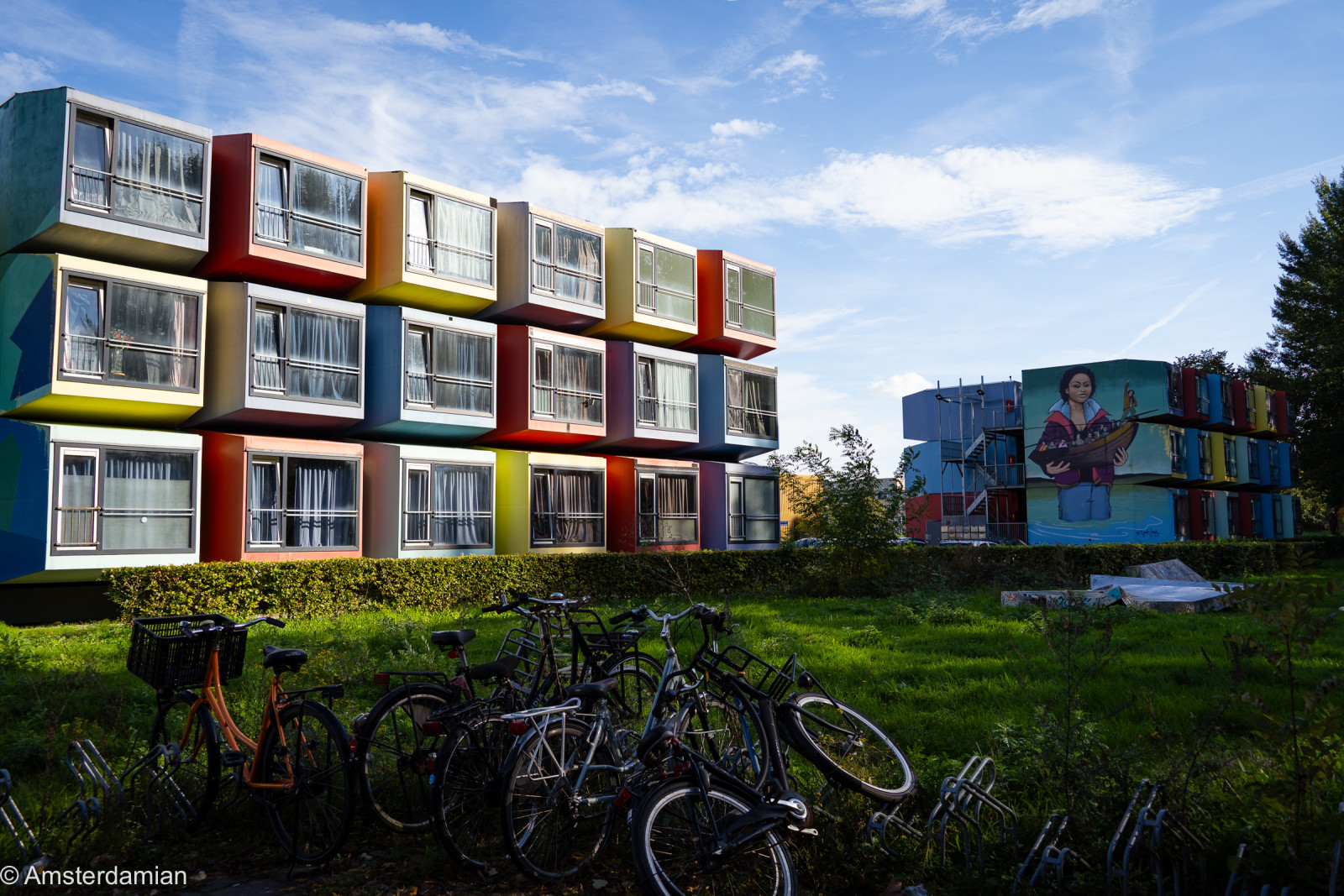
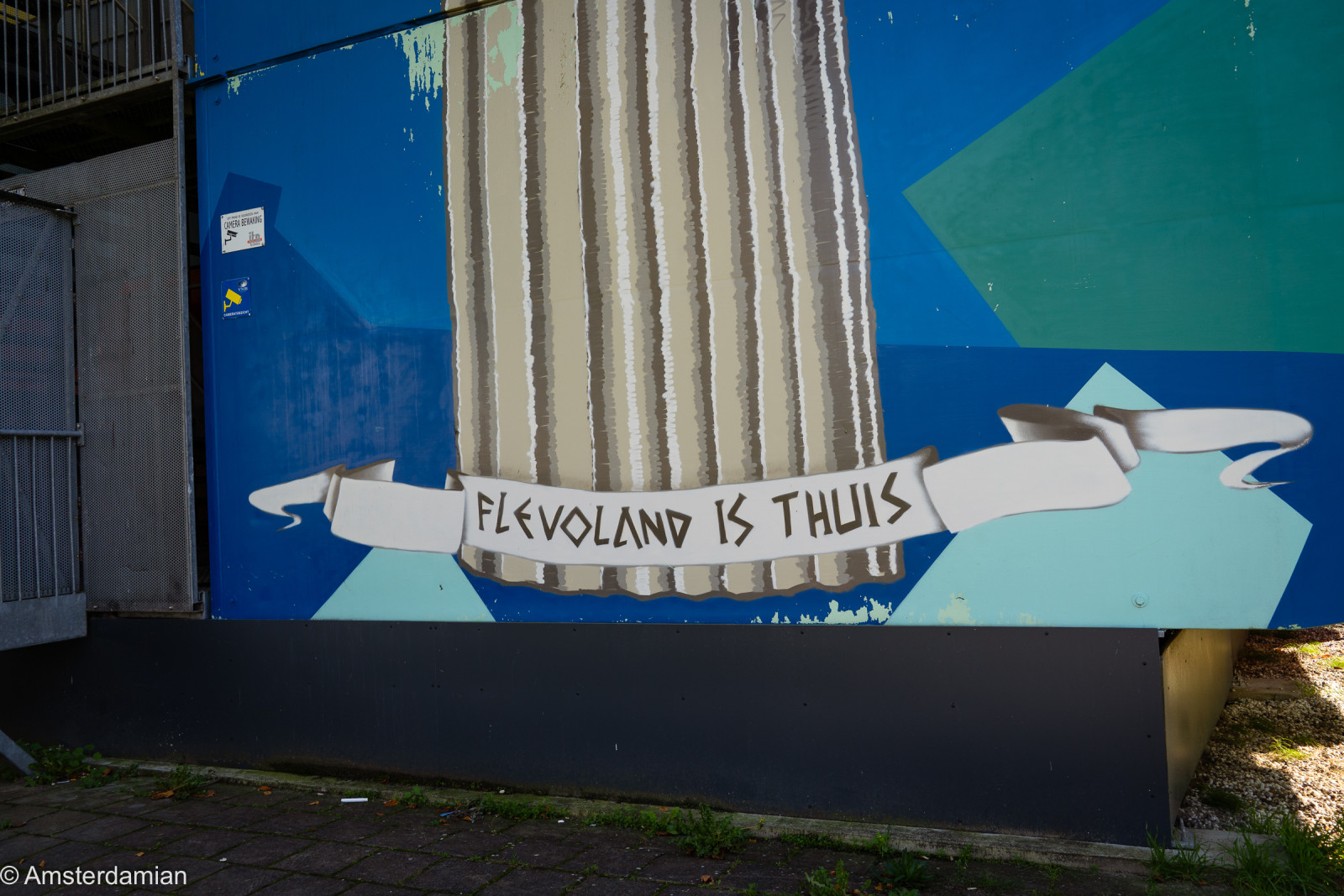
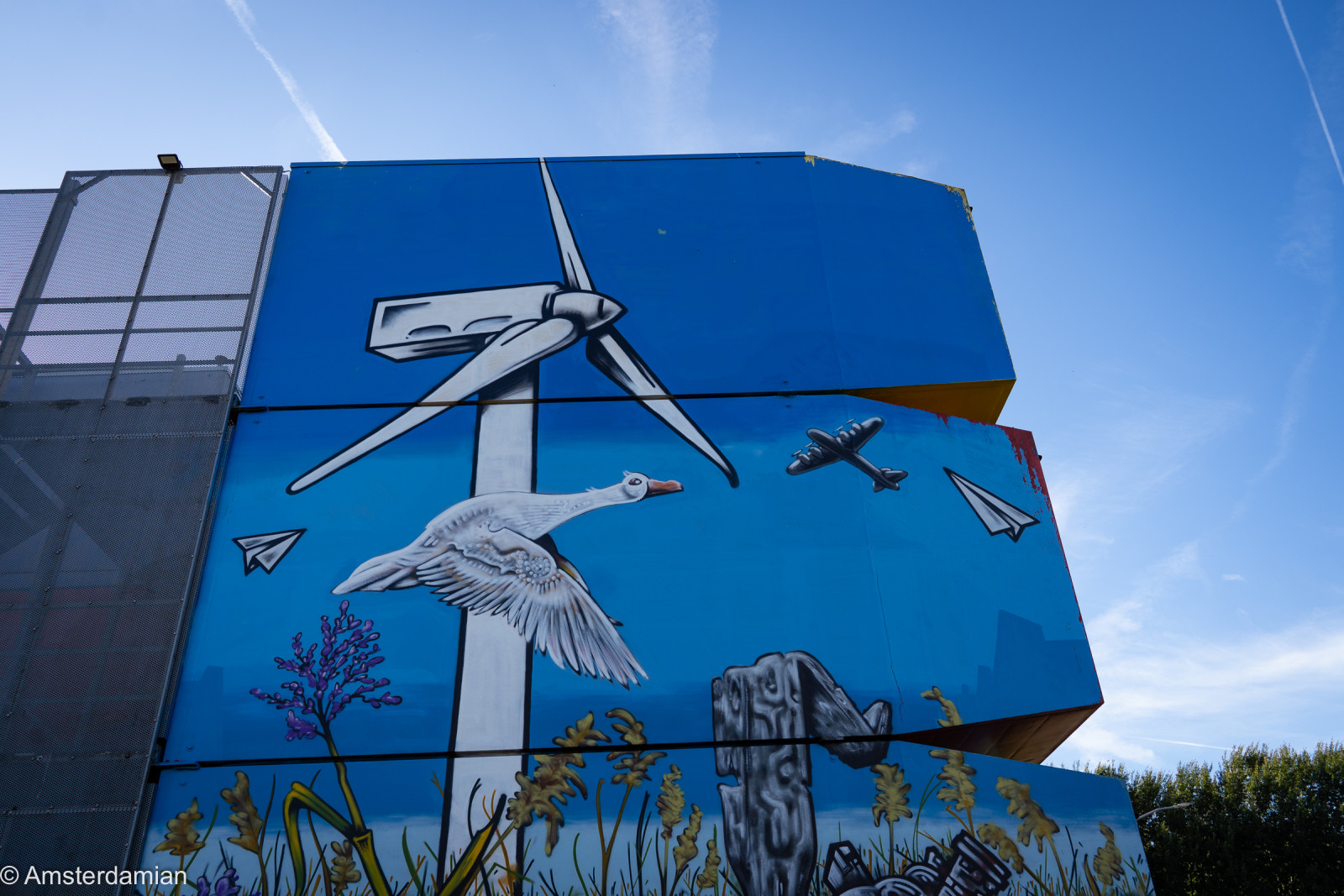
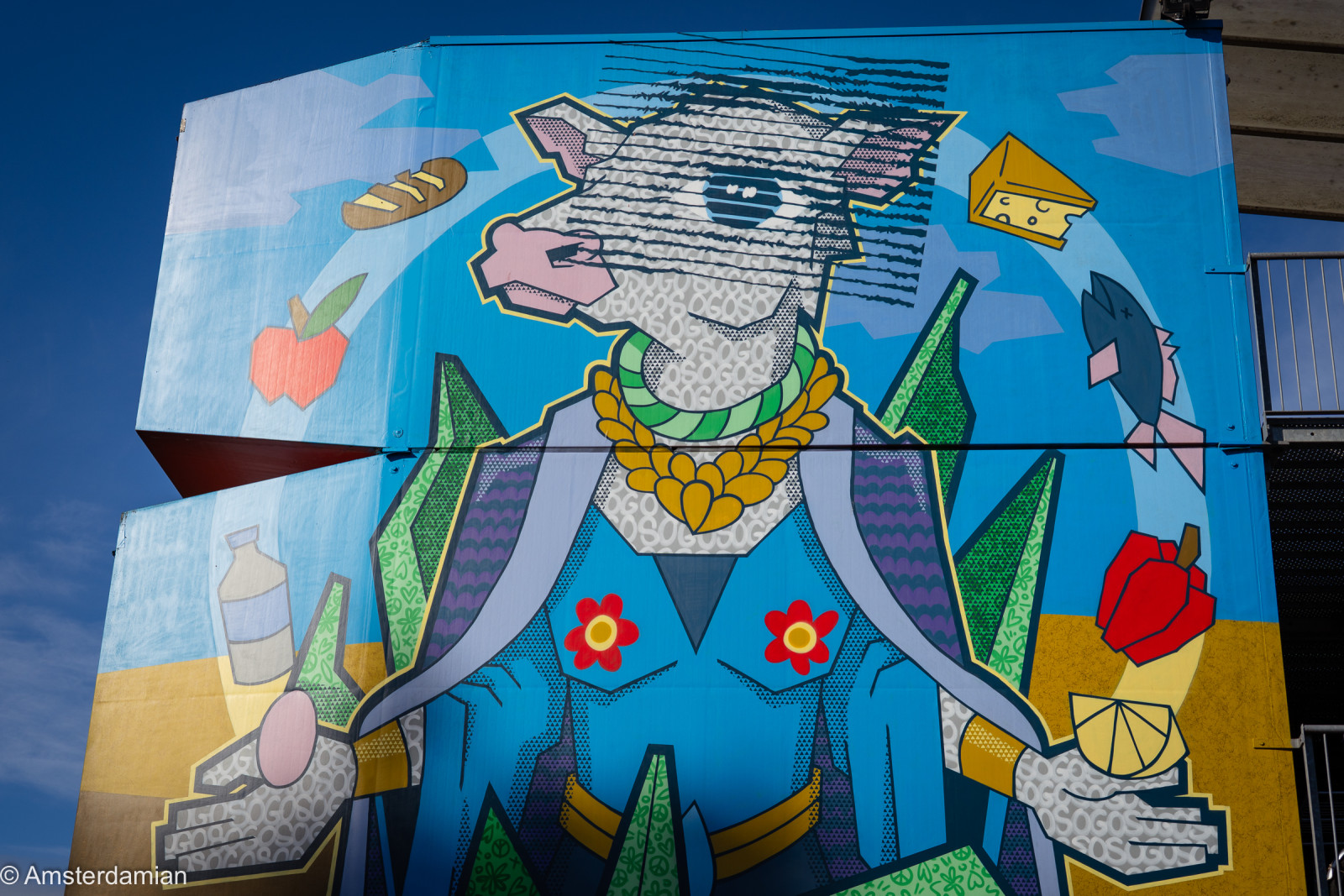
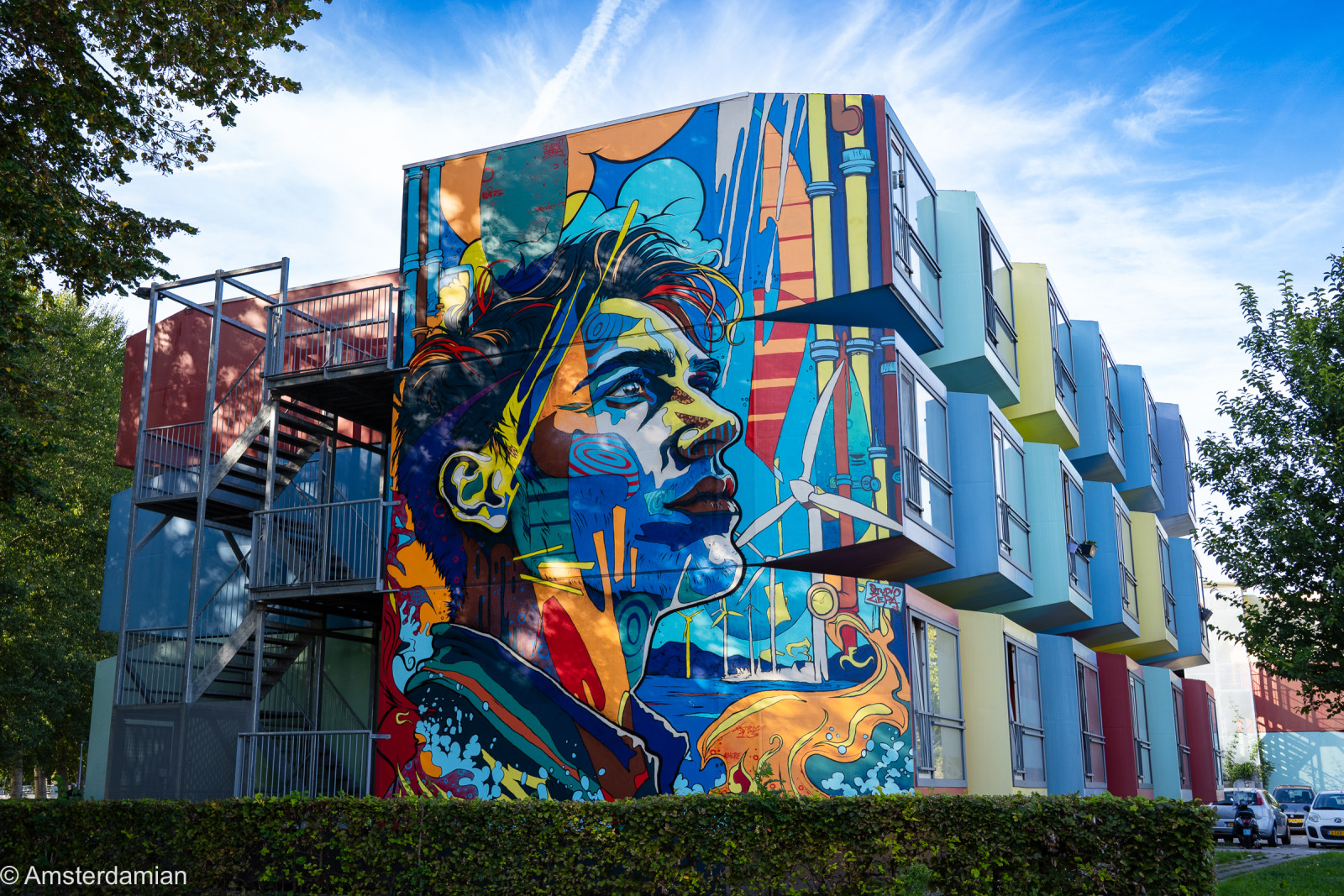
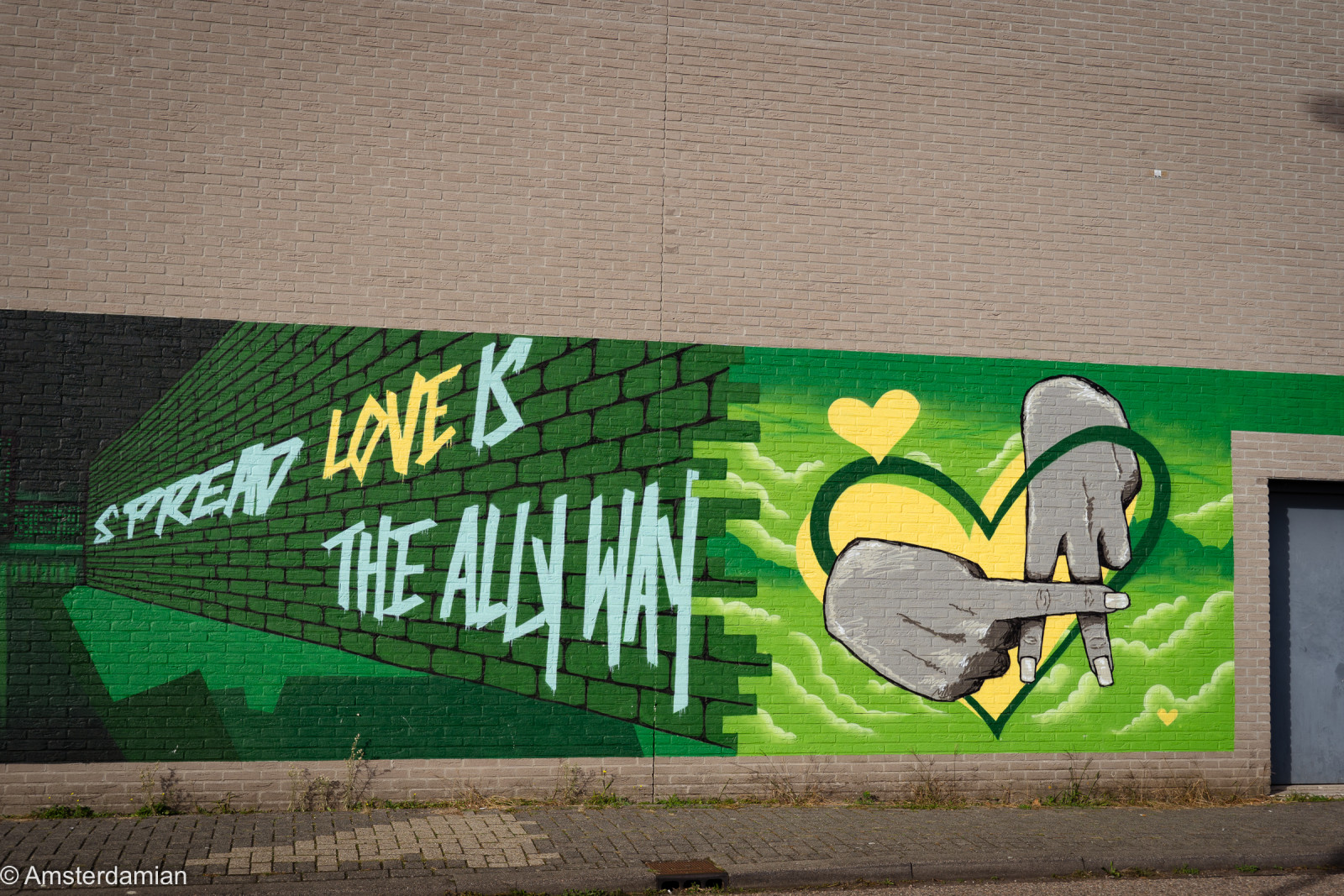
Visit Almere has mapped a four-kilometre street art walking route through the city centre, including murals and other works on walls, staircases and car parks. A recent addition is The Story of Flevoland, a series of eight-metre-high murals on the Odeonstraat that tell the history, present and future of the province. One of them, Student in Almere, was made by artist Kasper Jongejan, who visited schools to gather input from the students for this piece of art.
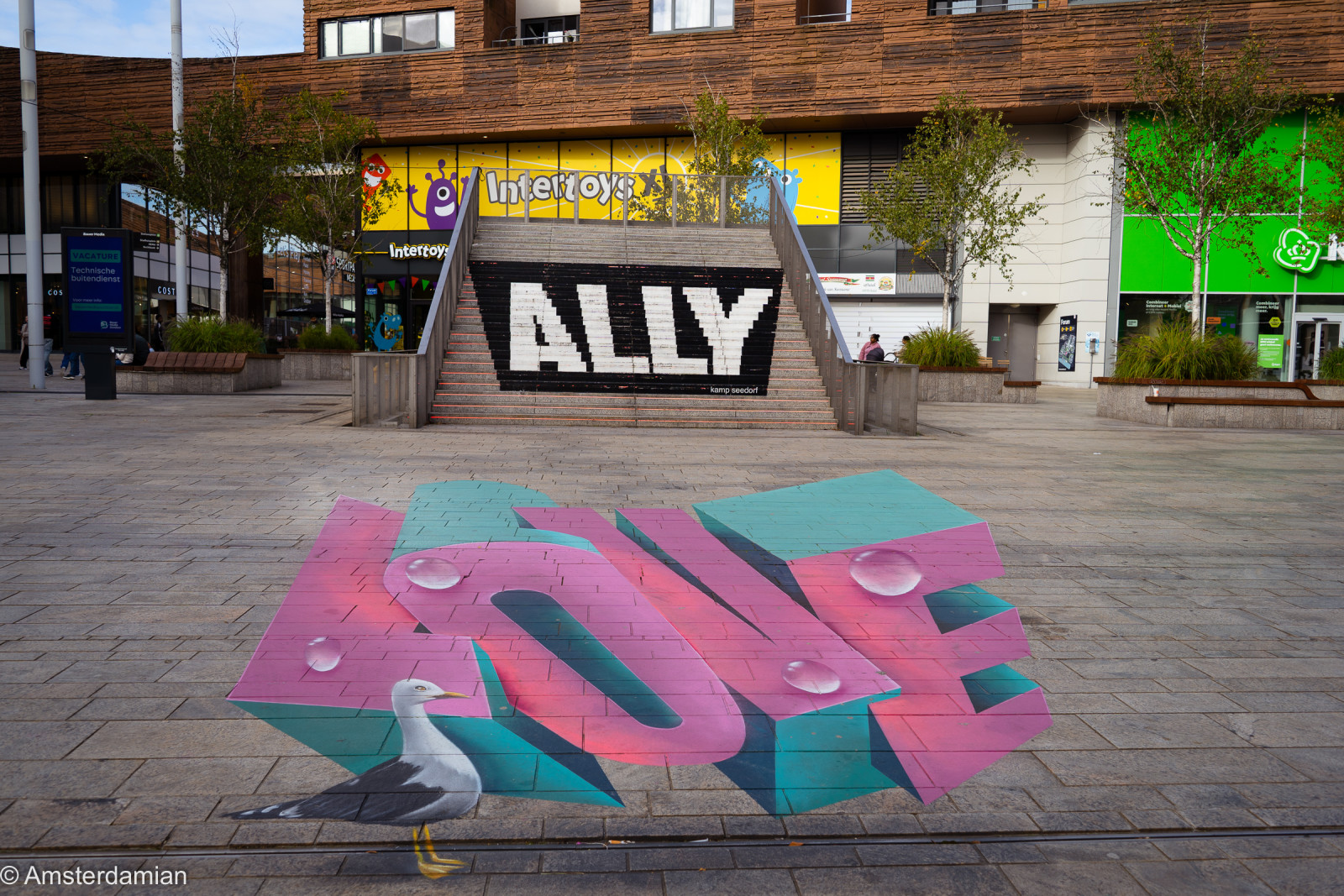
While doing a street art tour, you can’t skip the ALLY steps near the Forum: a stage-like staircase leading nowhere, with “ALLY” (nickname for Almere) painted across the steps. It is the work of Camp Seedorf, a collective that started in 2010 as illegal street artists and won the city’s first cultural prize in 2022. Its members still prefer to stay anonymous.
⏺ Architecture walk
Being a new city, Almere got to create everything exactly as it wanted to. Almere is made up of several districts, each with its own distinct character: Almere Haven, Almere Stad, Almere Buiten, Almere Hout and Almere Poort. Almere Pampus and Almere Oosterwold are still in their planning stages.
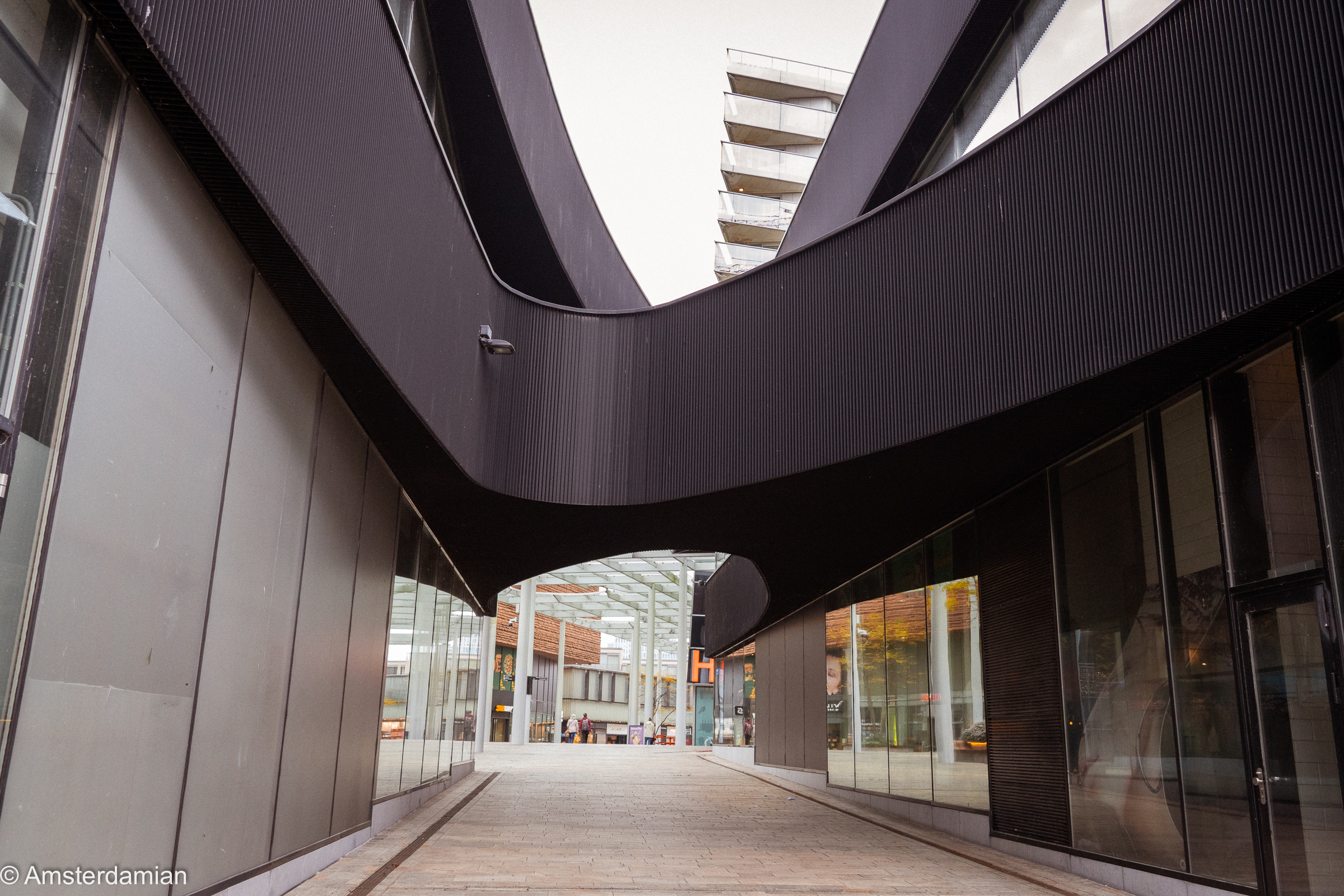
The recently renovated city centre is a good place to start your architecture walk. It was designed by Rem Koolhaas and his Office for Metropolitan Architecture (OMA). It consists of apartments, a futuristic shopping centre and entertainment facilities. It’s divided into two separate surface levels with the bottom providing roads and parking facilities. The Citadel, designed by French architect Christian de Portzamparc forms the heart of the city centre. It is a multifunctional complex consisting of four quadrants separated by two shopping streets. On top of the shops there are residential facilities with grass-topped roofs. You can book a tour to make it easier to find all the interesting places.
Highlights to look for:
- The Wave by René van Zuuk, a housing block on the waterfront.
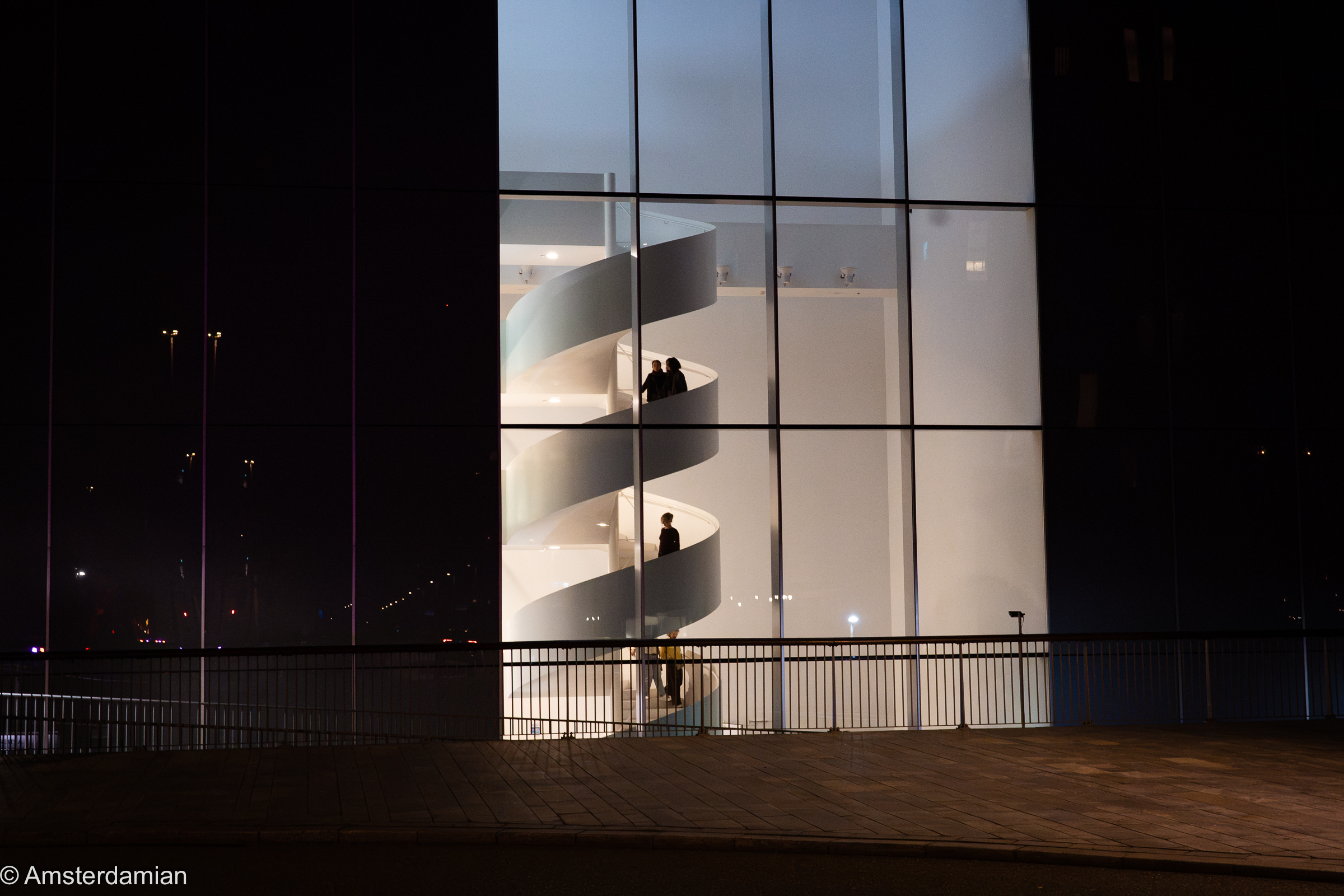
- The theatre and arts centre (now Kunstlinie Almere Flevoland, KAF) by the Japanese practice SANAA, on the waterfront. I loved this one, especially in the evening, when you can see people coming down the spiral stairs after a show. Really great photo spot.
- The Urban Entertainment Centre by British architect William Alsop, including a blob-shaped music venue.
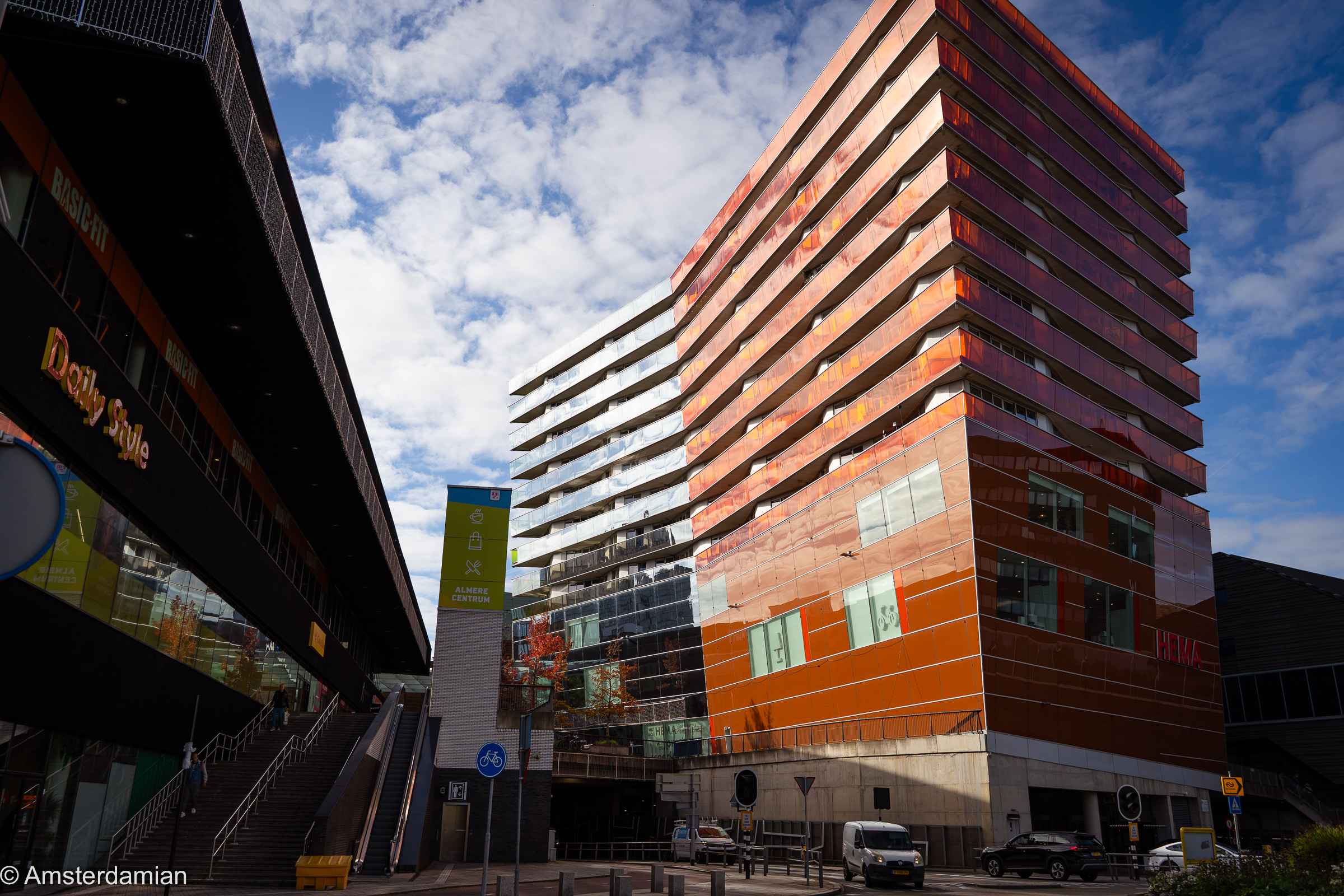
- La Défense, an office complex by UNStudio, with glass and foil-clad façades. It’s the most photogenic, especially in the afternoon light when it gets an amazing reddish colour that you can see from a distance.
- De Nieuwe Bibliotheek (The New Library). A great space for studying and relaxing.
Another thing that surprised me was that Almere has public waste bins which are self cleaning; they are connected to underground pipes and the waste is sucked into these at regular intervals.
⏺ ALLUMINOUS light art festival
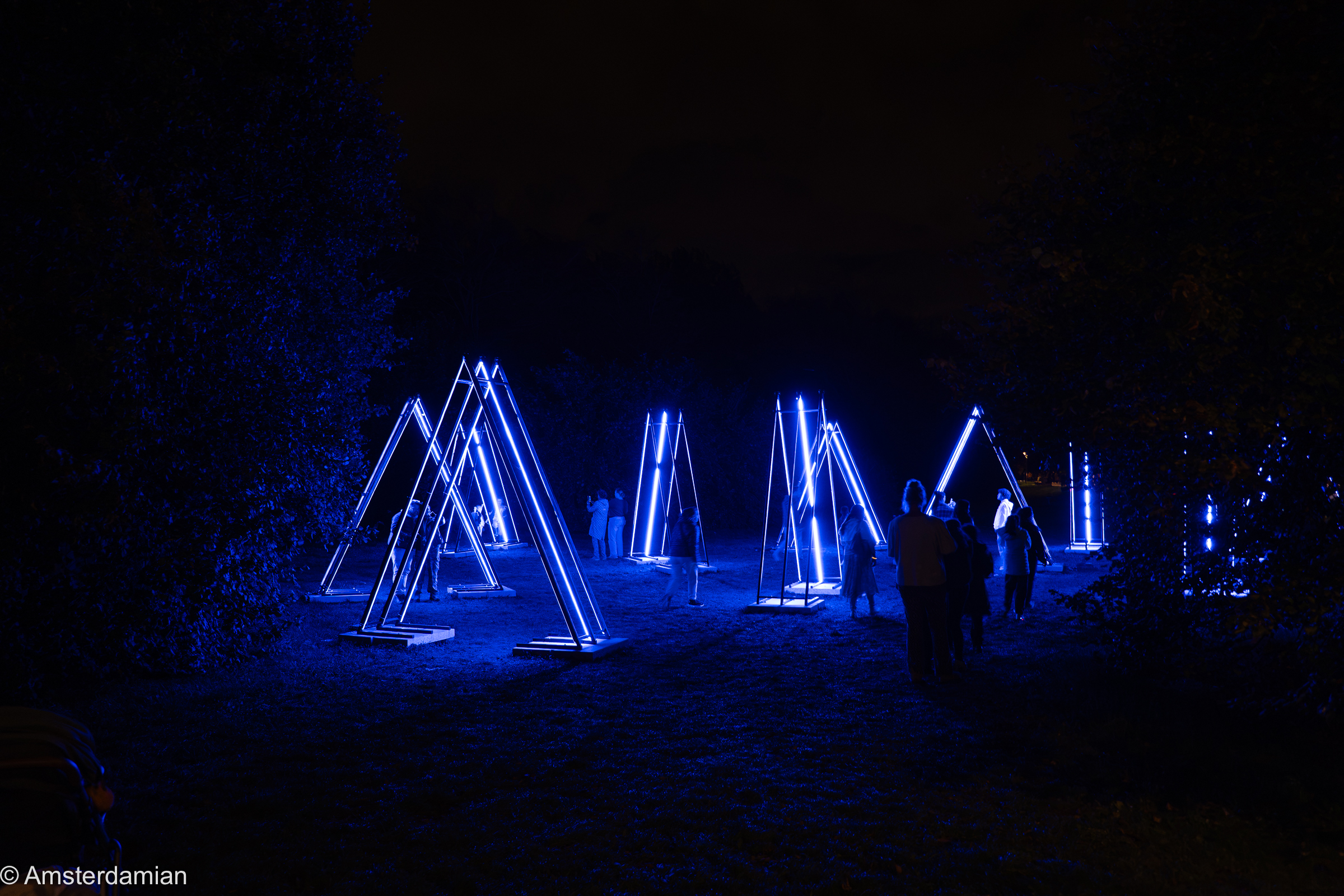
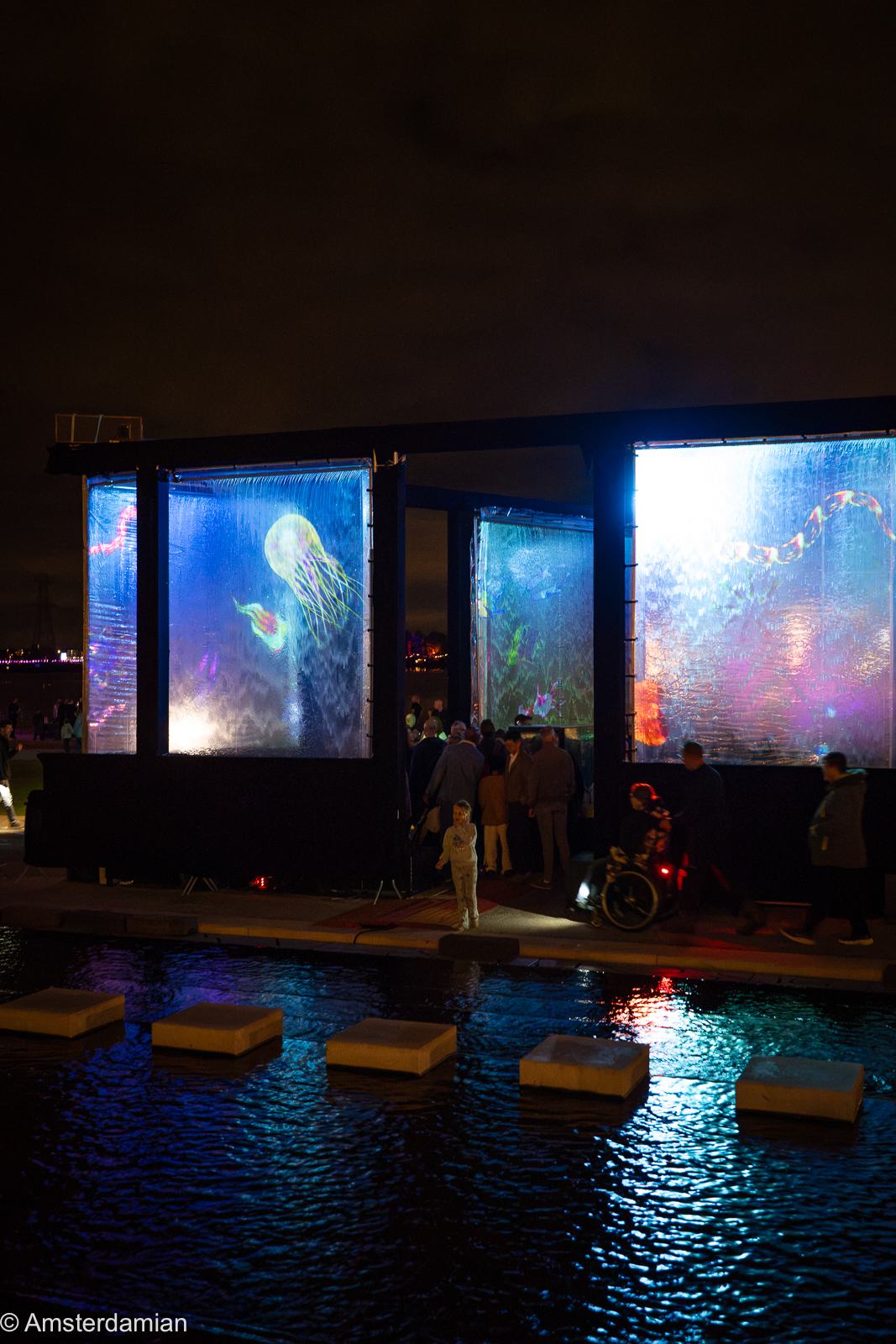
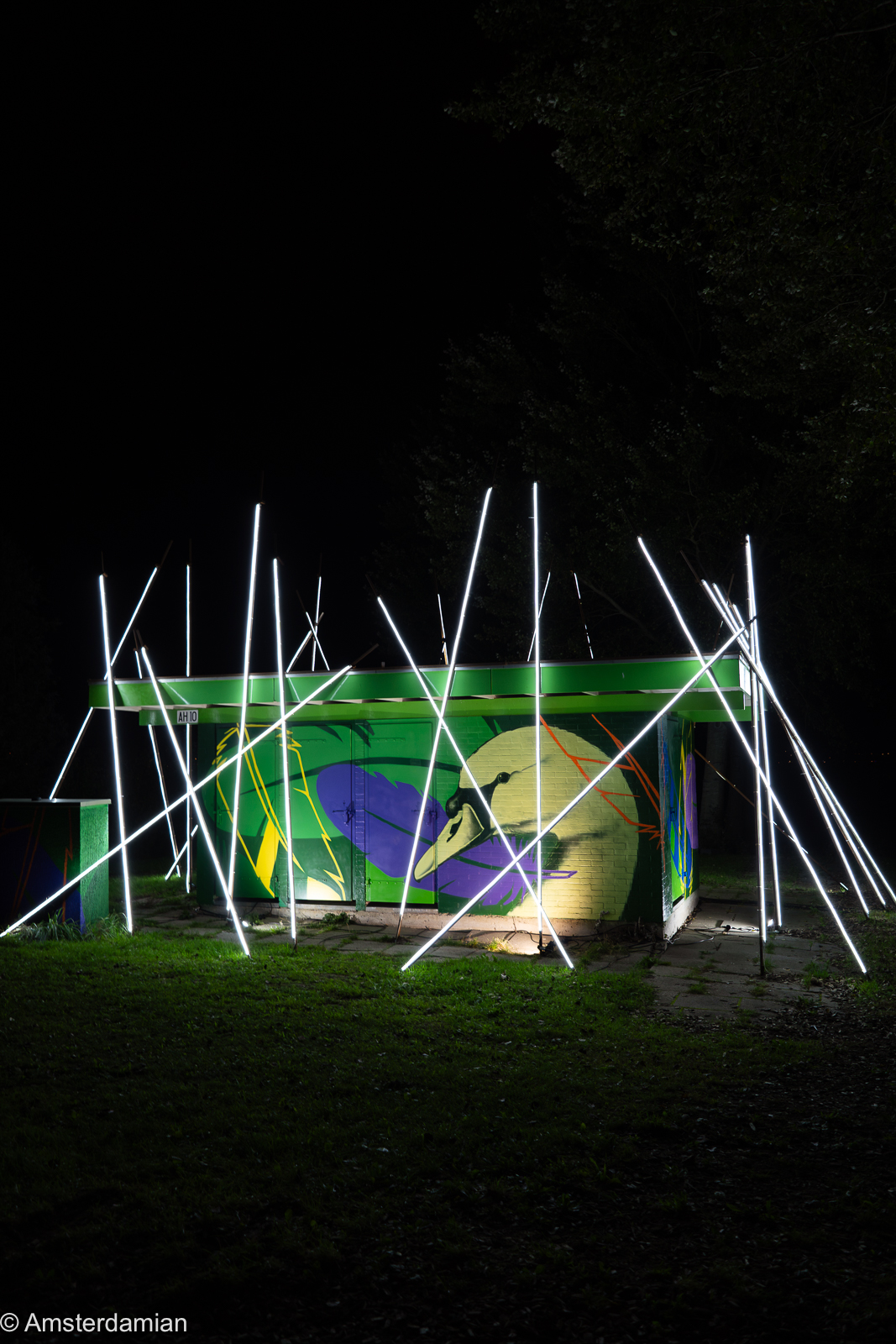
A relatively new festival, which took place for the first time in 2022, during the Floriade Expo (a horticultural exhibition) and was so beloved that it became a tradition. It takes place in October. In the evening, the area around the Weerwater turns into the route of ALLUMINOUS, a free light art festival of about 5.5 km. The location adds to the beautiful art installations: while walking the festival route, you can see the cityscape across the lake, with its lights reflected onto the water.
The 2026 edition was the festival’s fifth, timed to coincide with Almere’s 50th anniversary.
In the summer, you can visit Almere for its beaches as well, because it has 42 kilometres of coastline where you can sunbathe, party and do water sports.
Where to eat
- Le Baron is a grand café with a terrace on the Grote Markt, open from morning until late for lunch, dinner or coffee and cake. Typical Dutch lunch, and they serve vegetarian kroketten as well, which were very yum.
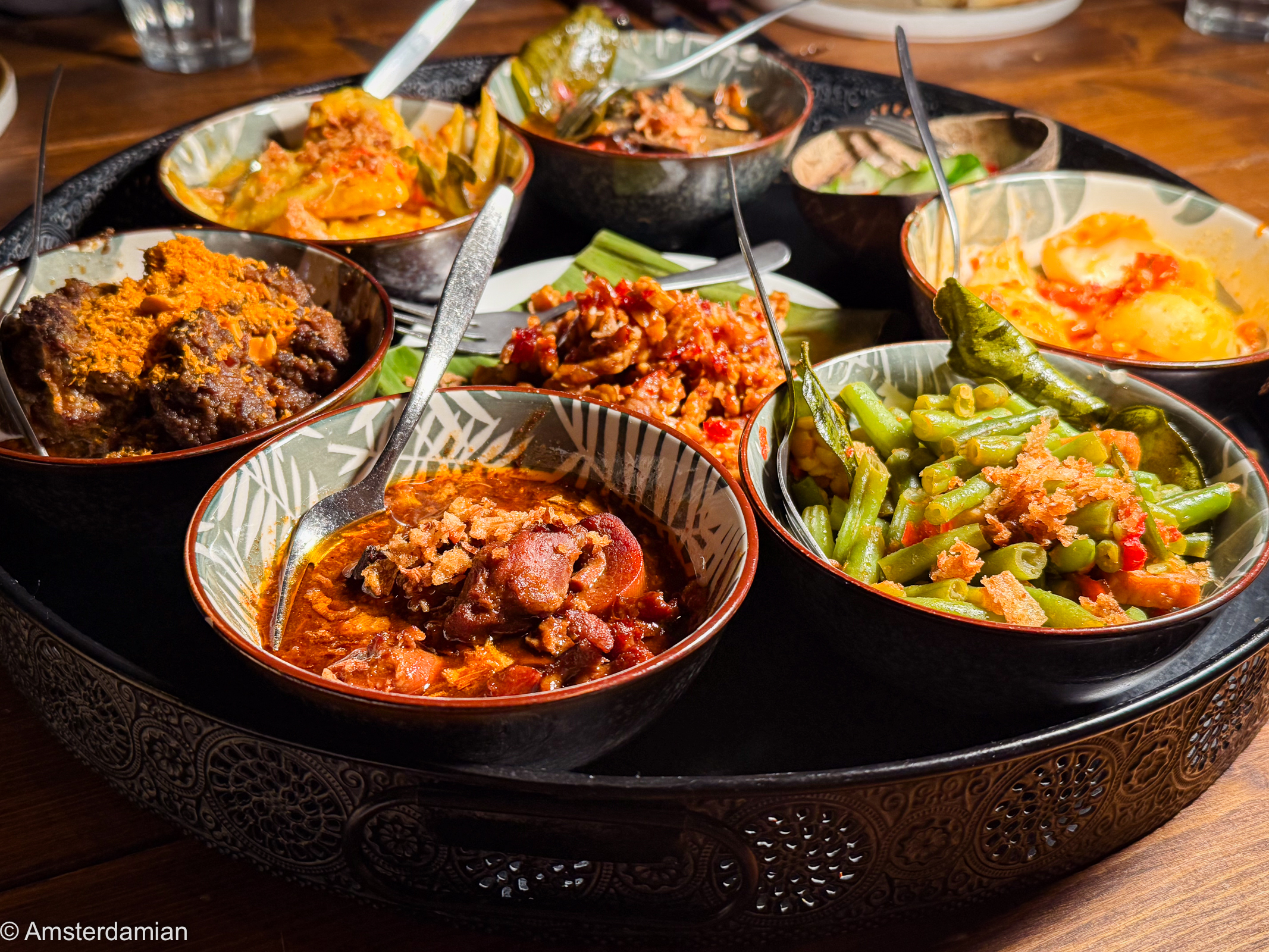
- Indo Kitchen Bar on the restaurant square Belfort serves delicious Indonesian dishes. I always recommend trying a rijsttafel, a traditional feast of rice accompanied by a variety of Indonesian specialities, so you can sample a bit of everything.
Where to stay: Leonardo Hotel Almere City Center, Koetsierbaan 2, in the centre next to the theatre. It has spacious, comfortable rooms and a great breakfast.
Getting to Almere: direct trains run from Amsterdam Centraal to Almere Centrum; the fastest take about 20 minutes.
⏤⏤⏤⏤⏤
Hilversum: modernism, photography and a local beer
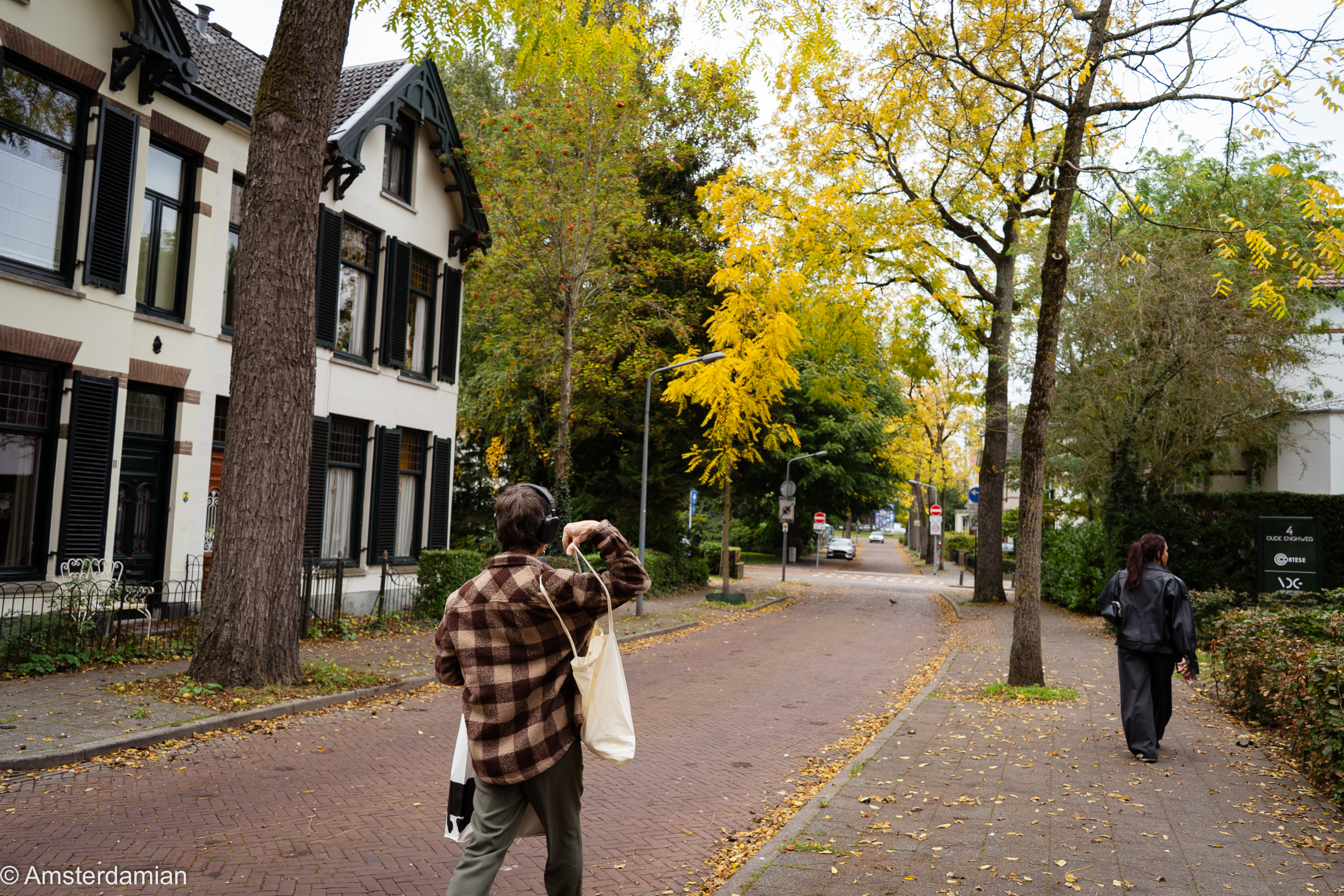
Hilversum is known as the Netherlands’ media city, home to the Media Park where many of the Netherlands’ television and radio programmes are produced. But there’s more to this city if you stop to check it out: museums, restaurants, and nature on its doorstep. What captured my attention as soon as I arrived there was the amount of green in the city. There were so many trees everywhere, and that reminded me of a mountain resort. Without the mountains, obviously.
Hilversum is located in the Gooi area, which is a district in the southeastern parts of North Holland, known for its wooded and gently hilly landscape covered in forests and open heathlands. This distinctive terrain was formed by glaciers during the penultimate Ice Age, which pushed up ridges of sand. Historic villages and country estates sit alongside nature reserves, making it a remarkably green part of the densely populated Randstad.
Walking around the city, you can notice the architecture of Willem Marinus Dudok here and there: as director of public works and later municipal architect, he designed schools, housing districts and parks across Hilversum, not just single buildings.
What to do in Hilversum
⏺ Raadhuis and Dudok Architecture Centre
Willem Marinus Dudok was the town’s architect for nearly four decades. He arrived in Hilversum in 1915 and designed everything from schools to parks. The Raadhuis (town hall), one of the landmarks of modernist architecture, was completed in 1931 and it’s the building where his ideas come together most completely. It’s a composition of stacked brick volumes rising to a tall clock tower. Dudok designed everything, from the interiors, carpets and furniture down to the lettering, and had special elongated yellow bricks made for it, a format now known by his name.
The contrast between the exterior and the interior is striking. While the outside feels monumental, the rooms inside are more intimate, with carefully chosen colours, marble, wood and textile. You will either love or hate the style of this building. Regardless, it makes for a very interesting visit. I particularly like the council chamber, where every sound disappeared, muffled by the huge curtains, and the interior courtyard, where there’s a little pond. I also liked how every window was decorated with bright red geraniums, which, I learned, are taken home by citizens every winter, to help them survive.
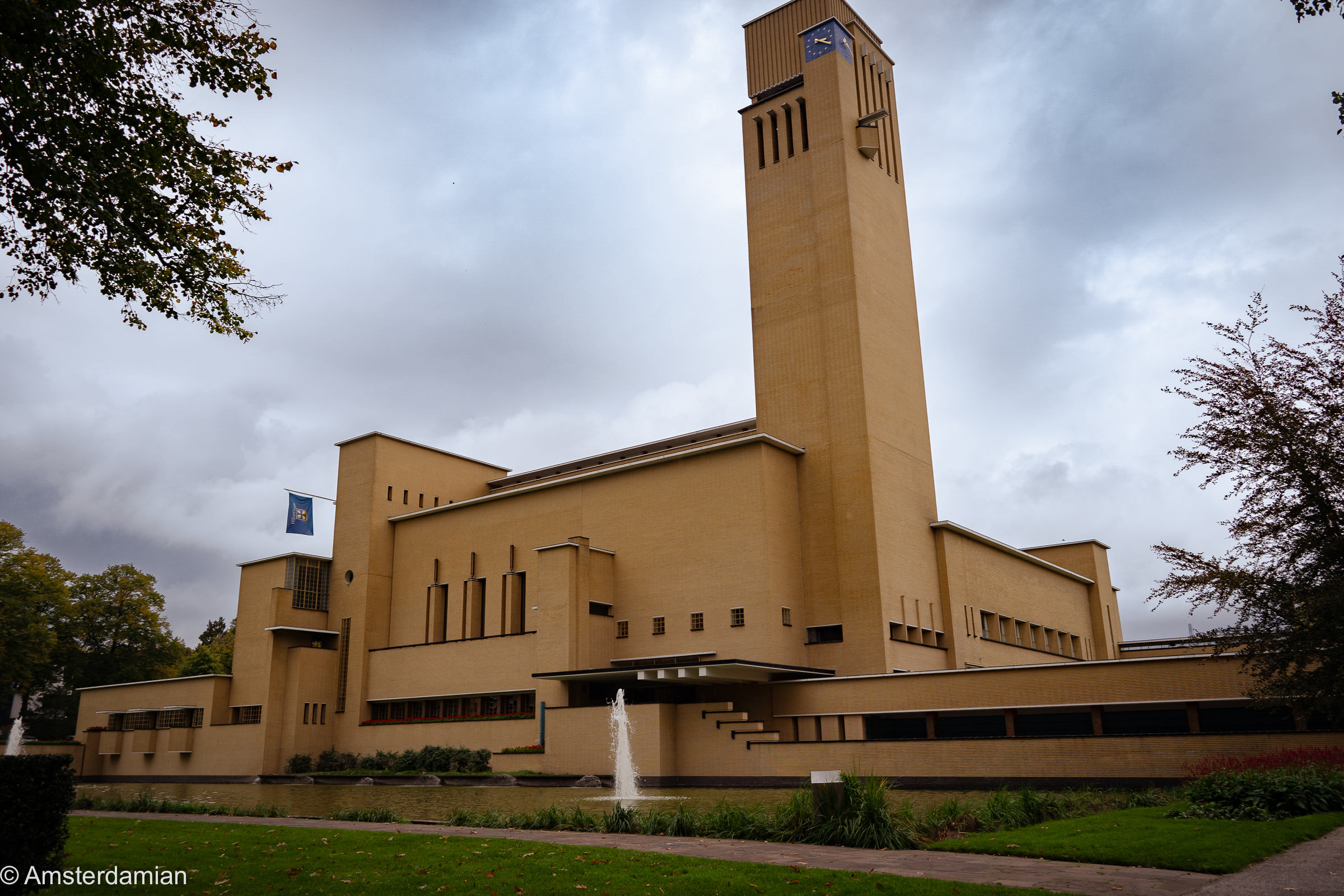
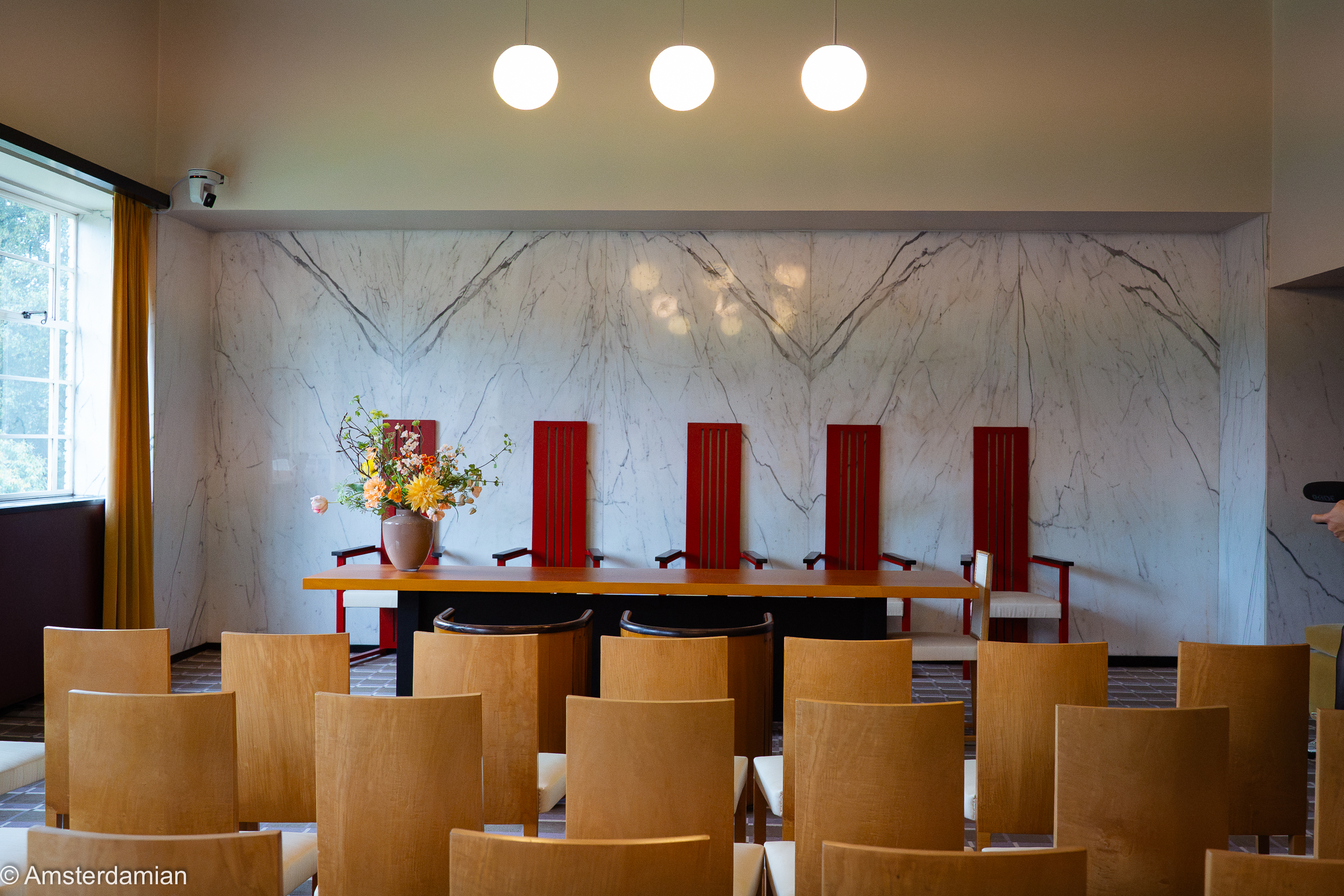
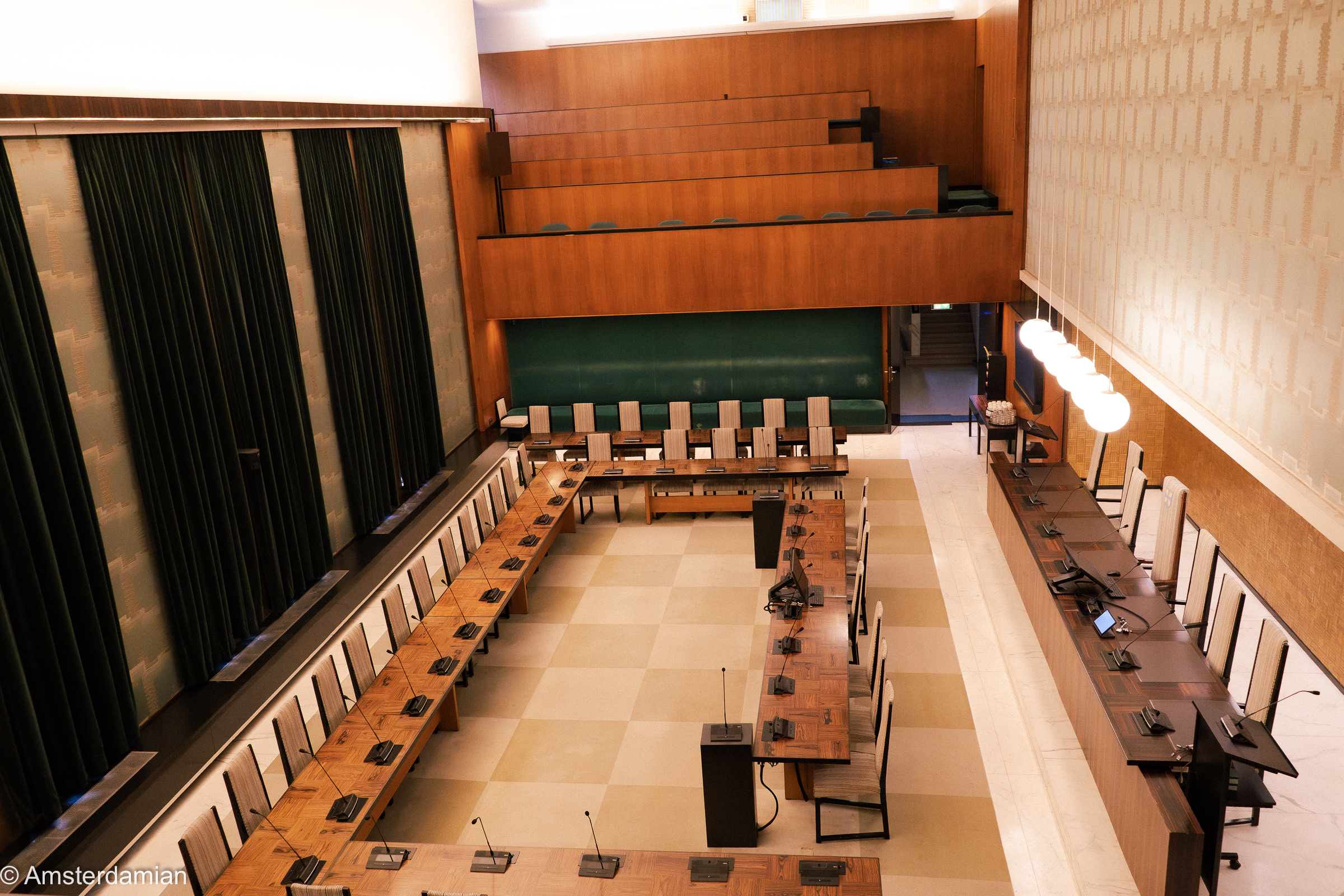
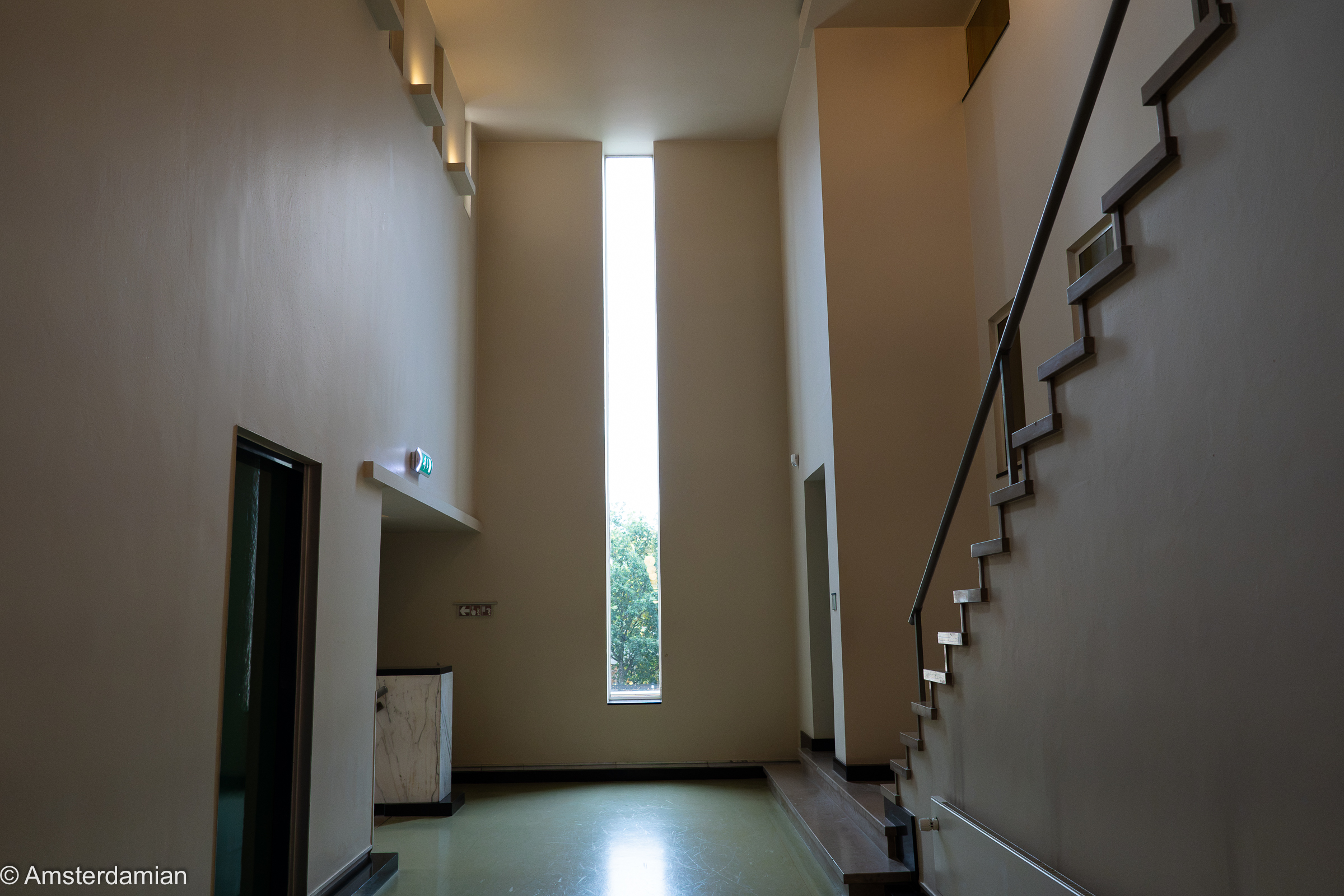
Guided tours start in the Dudok Architecture Centre in the basement, where a permanent exhibition covers his life and work. The tour takes you through the most original rooms of the building and, in dry weather, up the 47-metre tower for a view across the town and surrounding landscape.
- Address: Dudokpark 1
- Guided tours are on: Thursday, Friday, Saturday, and Sunday at 13:30, and at 15:00 on Wednesday. Register in advance.
- Ticket price: €14.00 for adults, €8.50 for secondary school students and university students, CJP and free for under 12 yo.
⏺ Fotomuseum Hilversum
The Fotomuseum Hilversum focuses on contemporary photography, and showcases photojournalism, documentary photo stories, and projects that explore current visual culture. It stands in the city centre, in the old town hall on the Kerkbrink, which is one of the oldest buildings in Hilversum, dating back to 1766. The building is an attraction in itself. You enter through the old part of the building, where you can admire the old interior, and then go into the new space, which has a few floors connected through a circular opening in the middle. In addition to exhibitions, the museum has an active programme of artist talks, guided tours, workshops, film screenings, and public discussions. Sometimes, when the museum organises a show, the bottom floor serves as a stage and the top as a balcony from where the guests can watch the show. Must be a cool view.
During our visit, the museum showed Layered Realities: Photography & Collage, a group exhibition of 15 contemporary artists from the Netherlands and abroad who use collage to break open photography and explore themes such as identity, family history and the flood of images we see every day.
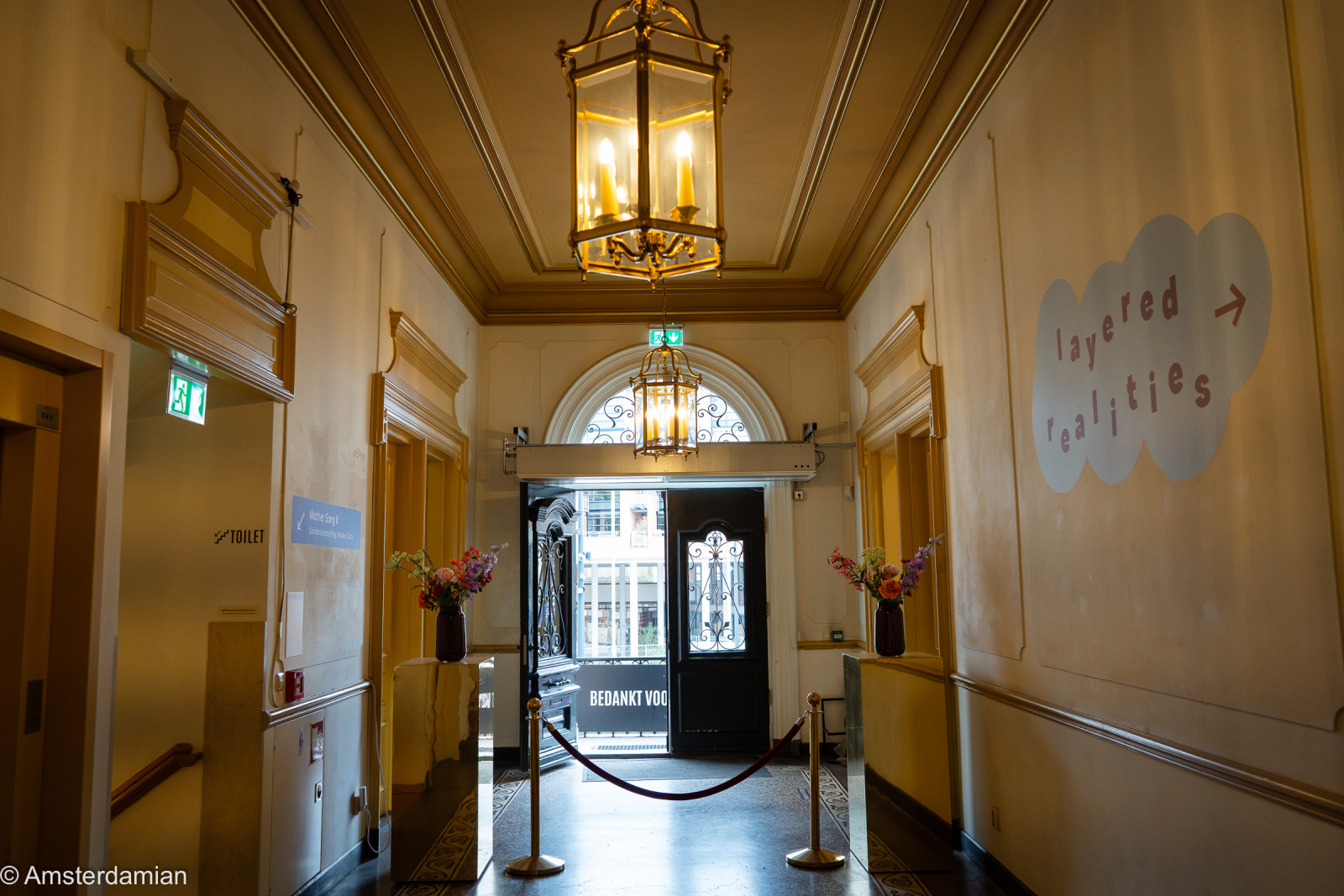
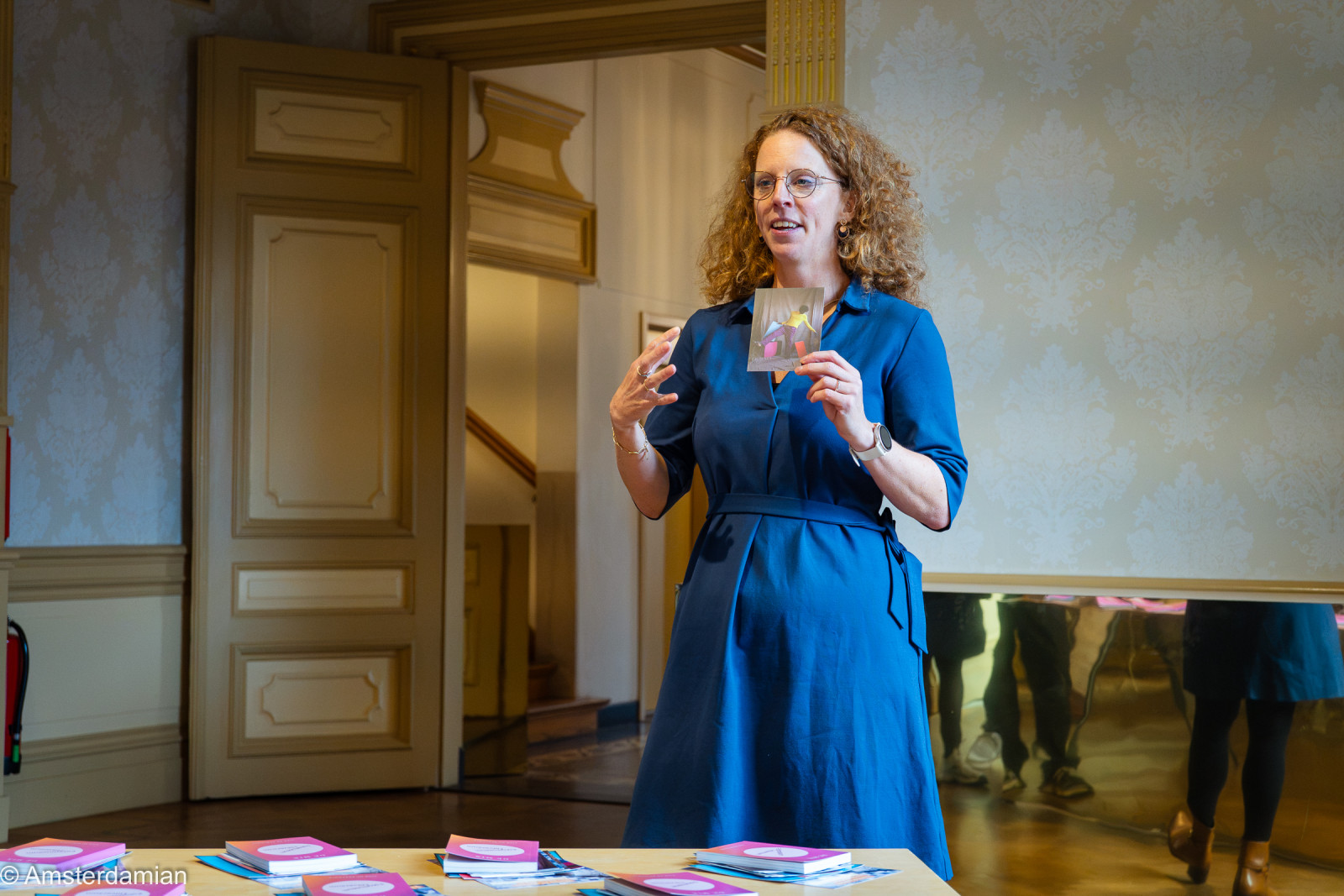
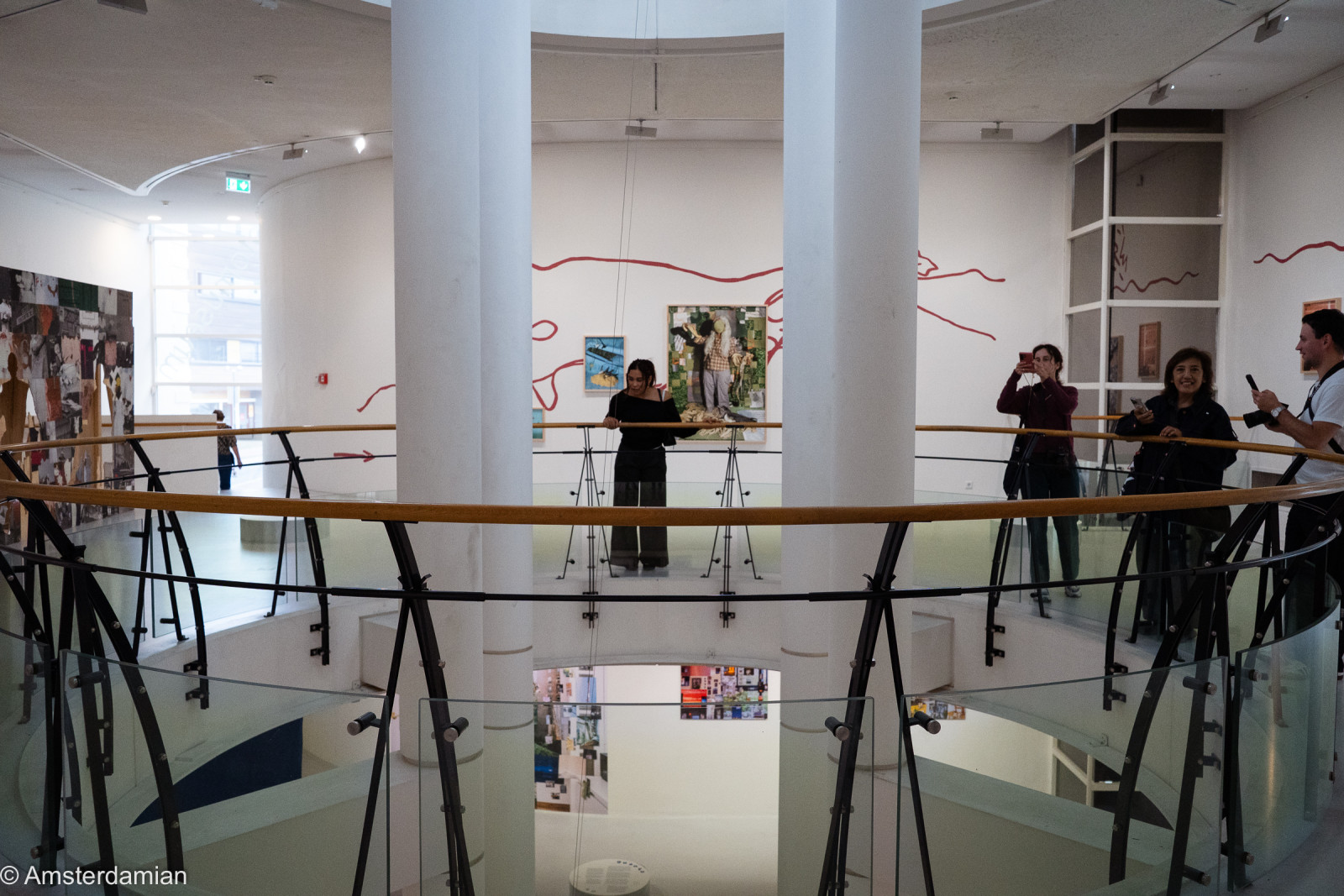
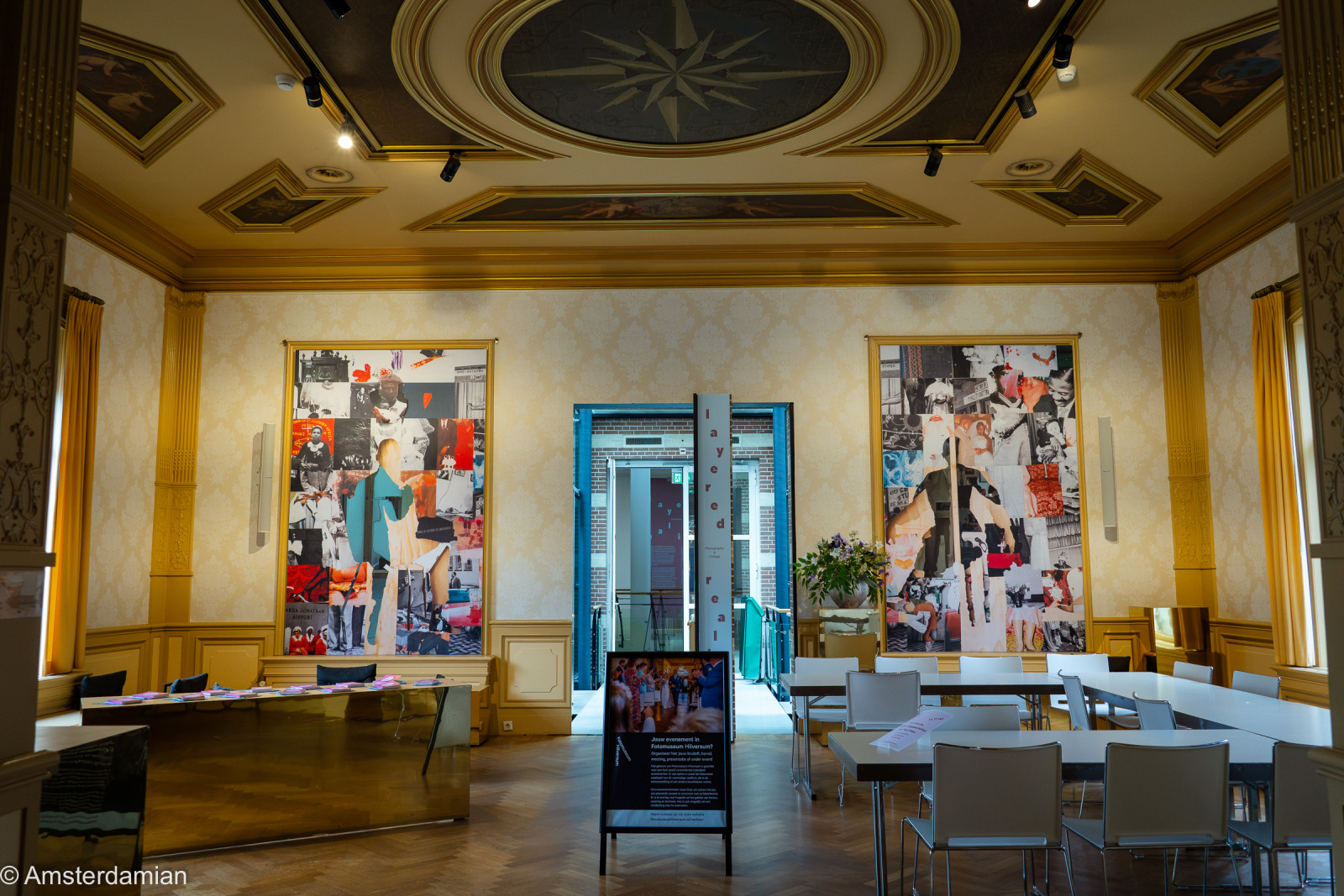
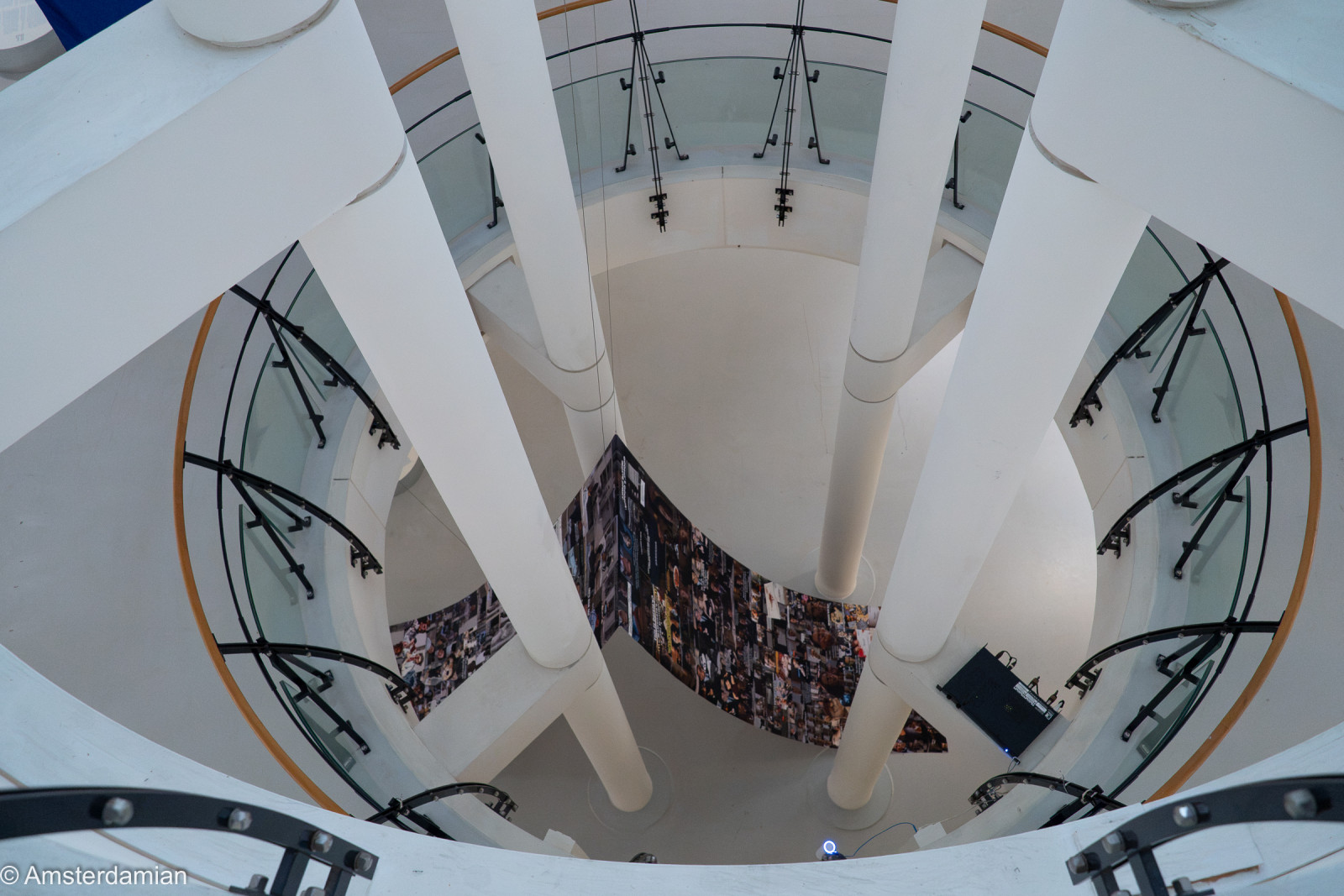
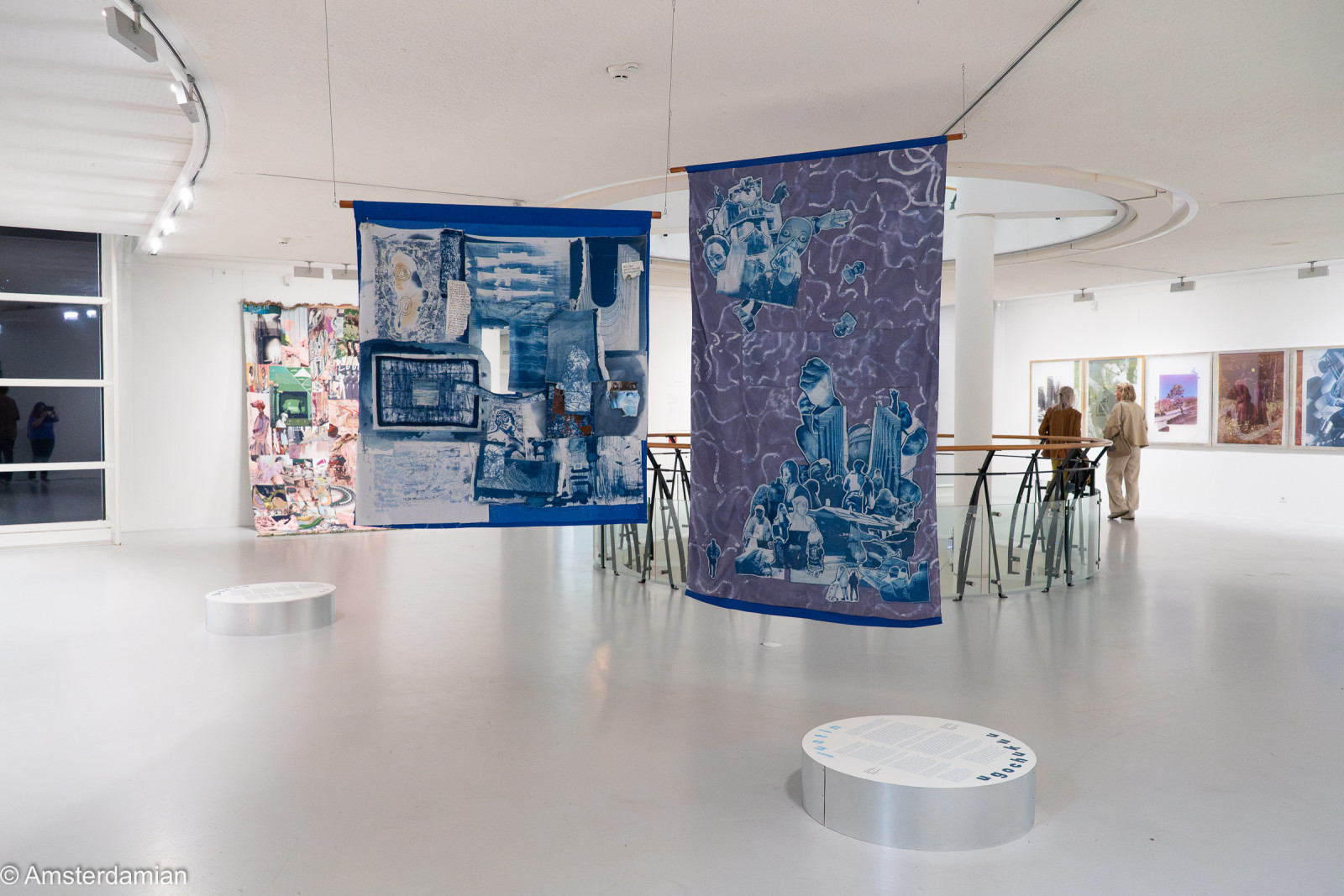
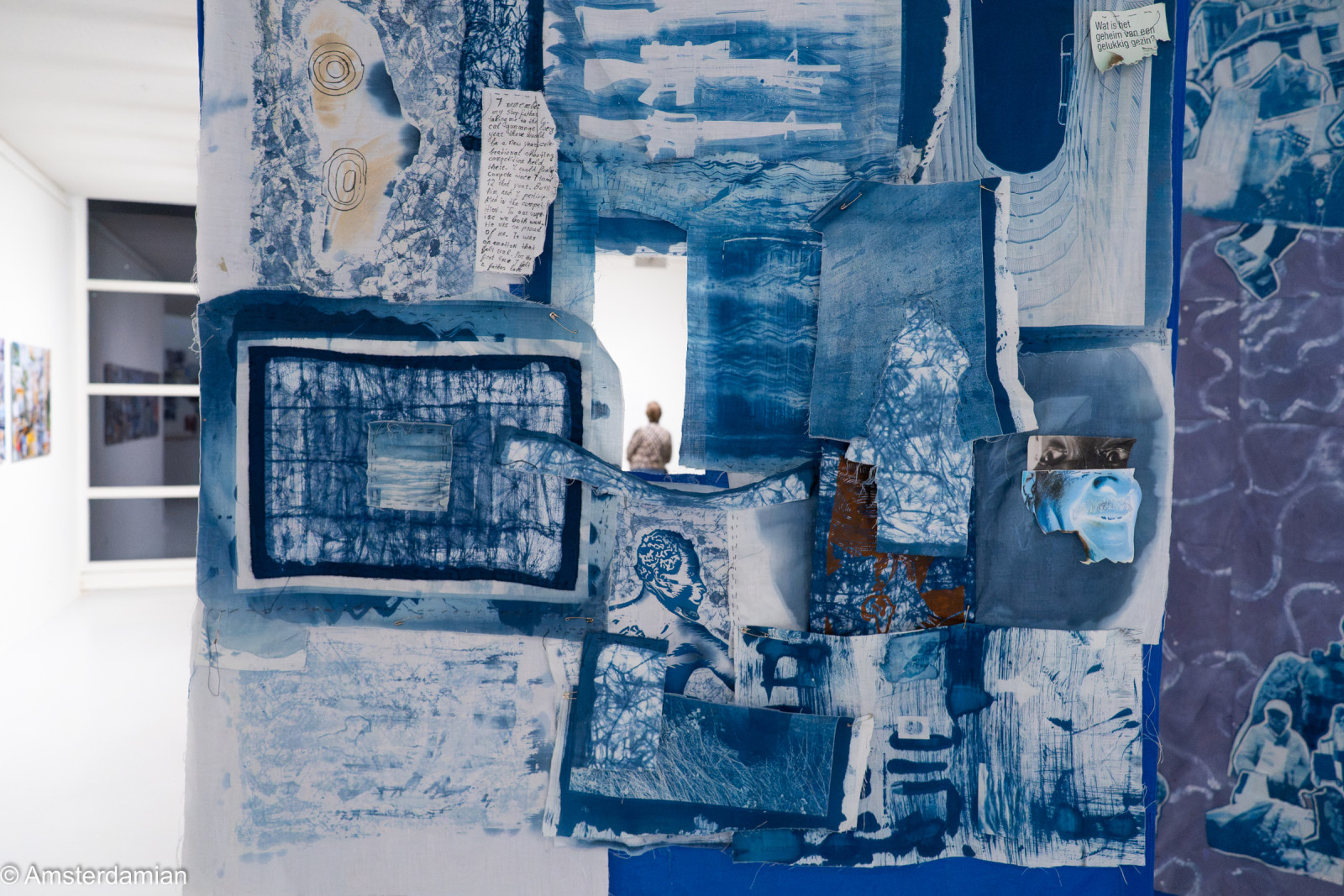
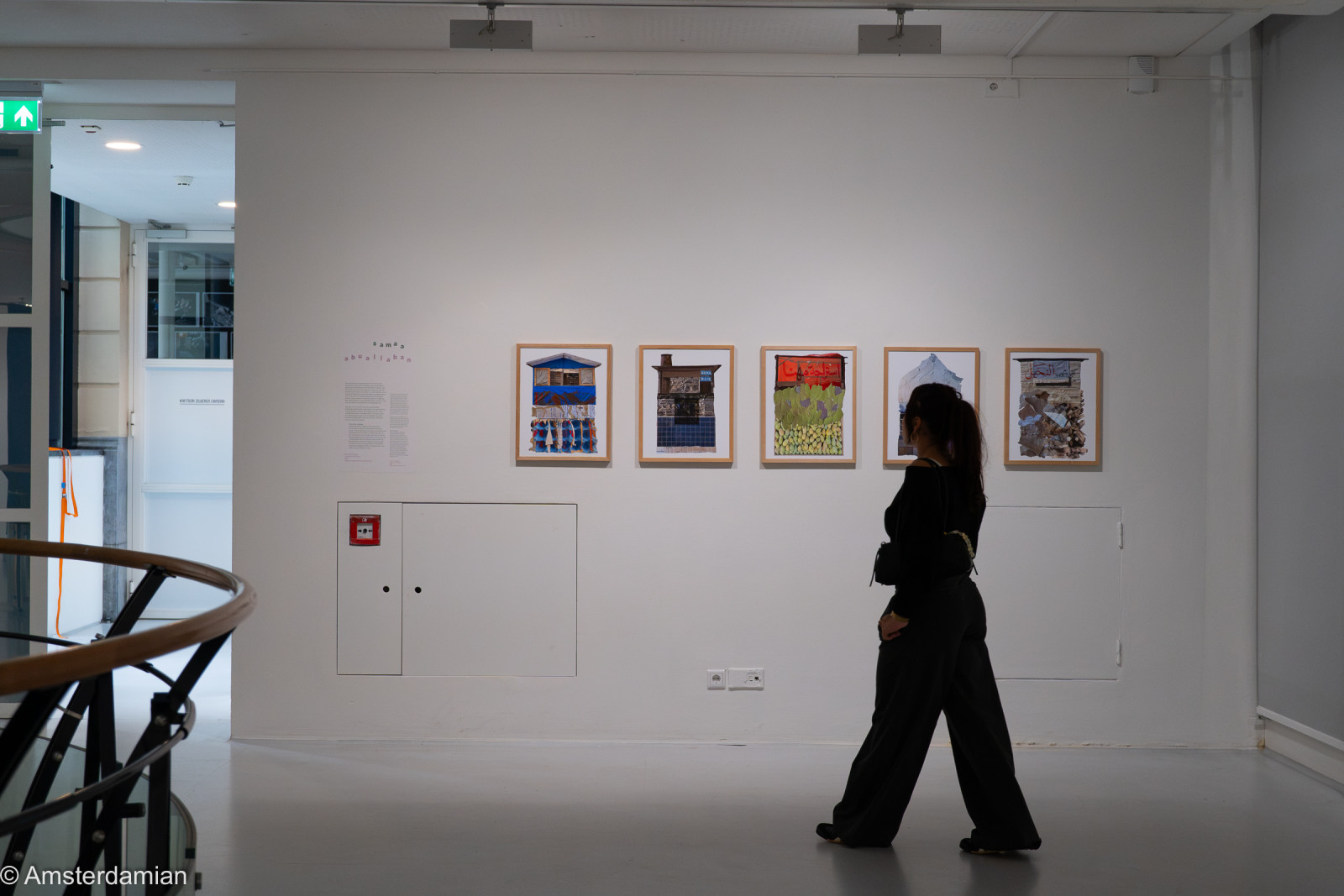
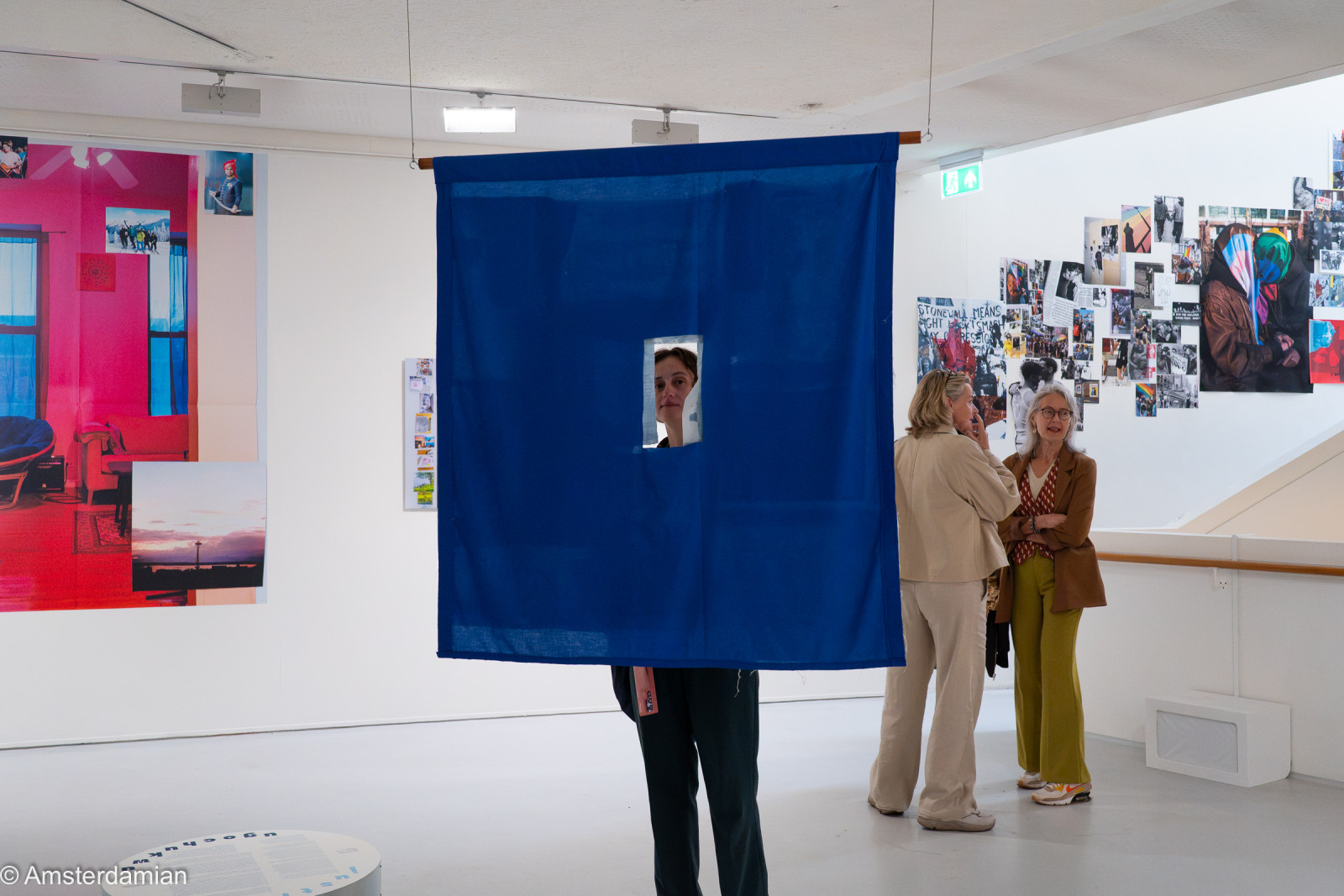
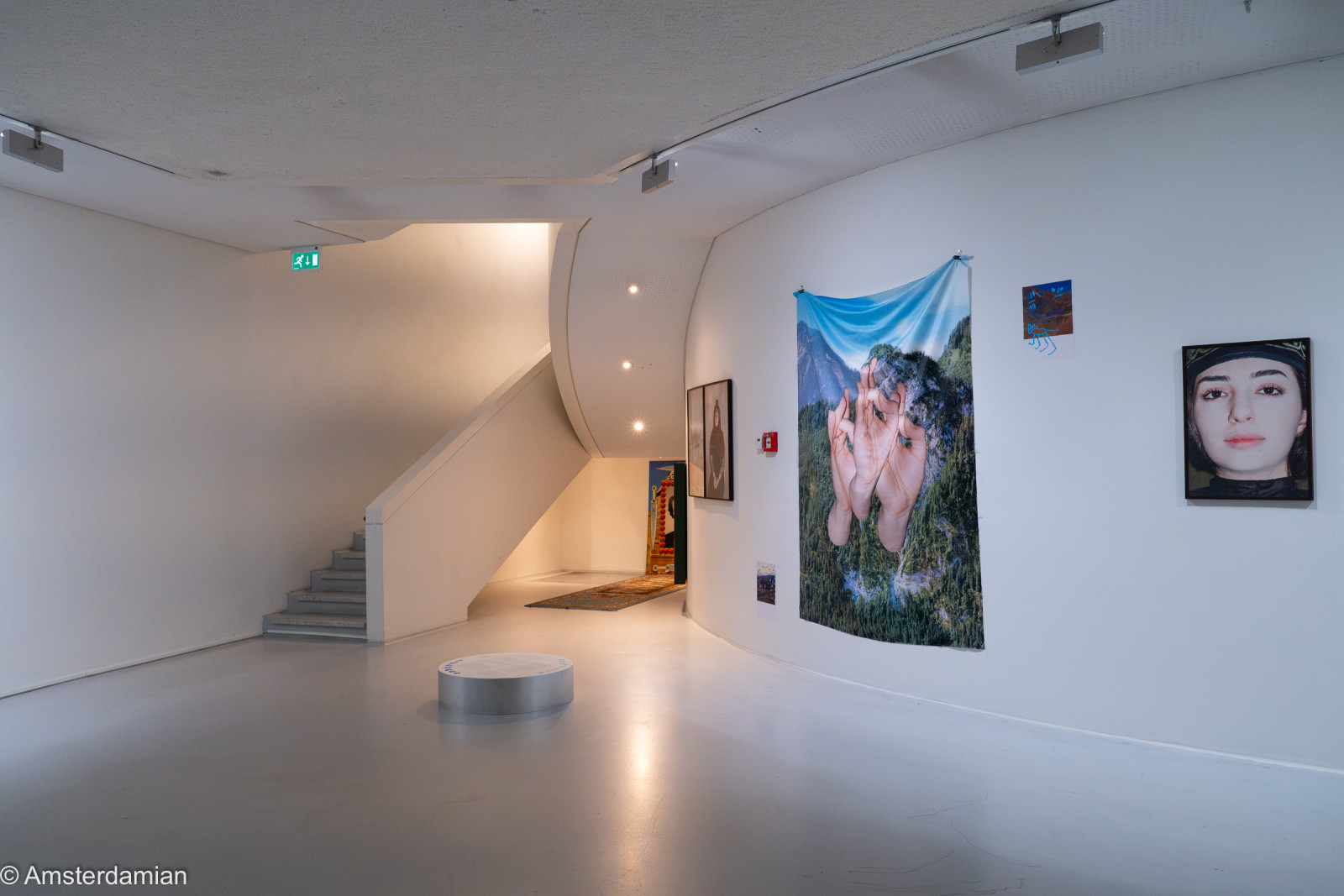
The museum is run with the help of a team of dedicated volunteers. It’s a small museum, but you can see the passion of the people maintaining it in every detail. It has a lovely cafe that is accessible without a ticket as well, and it’s a quiet, cosy place for coffee on a rainy day.
- Address: Kerkbrink 6
- Opening hours: Tuesday to Sunday from 11:00 to 17:00. Visit duration: about one hour.
- Entrance fee: €12,50 for adults, €6,25 for young adults (18-25 yo), and free for under 18 and with a few passes like the Museumkaart.
Gooische Bierbrouwerij
When you’re done with art and architecture, it’s time to relax at Foodhall MOUT, on the Marktplein. Inside, you’ll find seven kitchens serving street food from all over the world and the Gooische Bierbrouwerij. This beer brewery has no less than 14 boilers in which 2000 (each) litre of beer is made. Its signature ingredient is buckwheat, a crop grown on the sandy soils of the Gooi since the Middle Ages; they work only with local flavours, including chestnut and rye. There are around 15 beers to try, including Gooisch Blond, Gooisch Bubbel and Gooisch Bock, and some tables have their own taps so you can pour your own. If you don’t drink alcohol, they also have alcohol free beers.
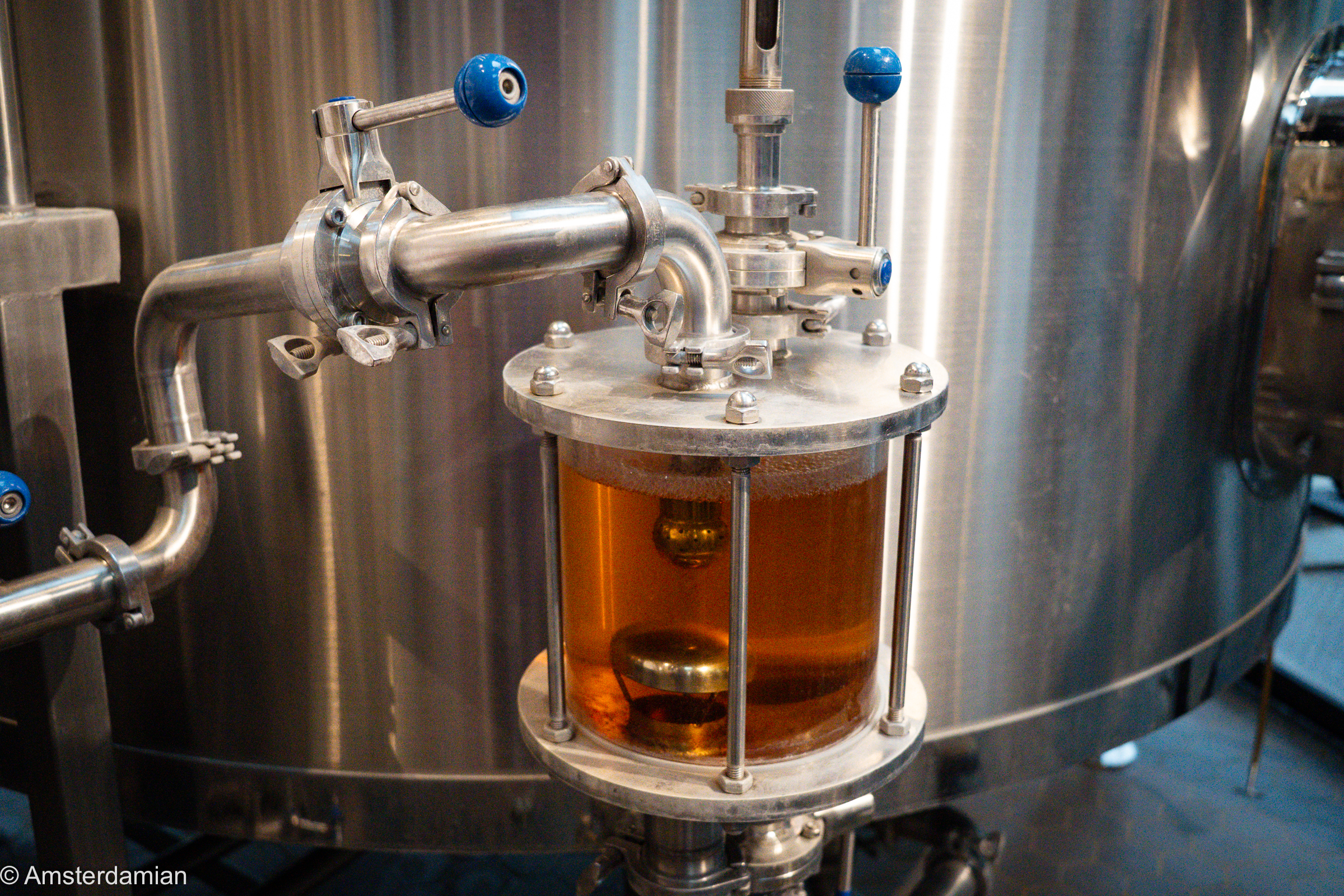
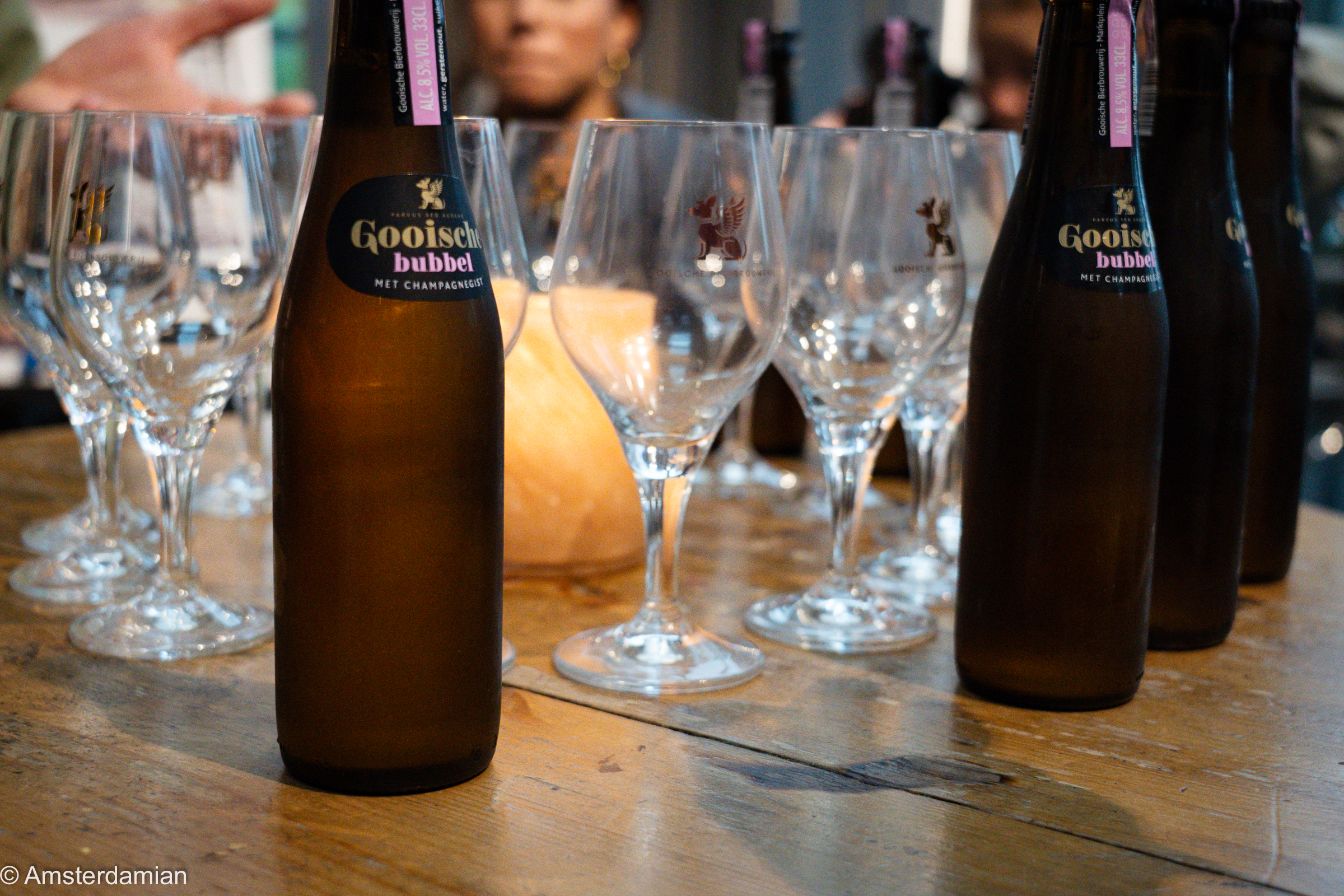
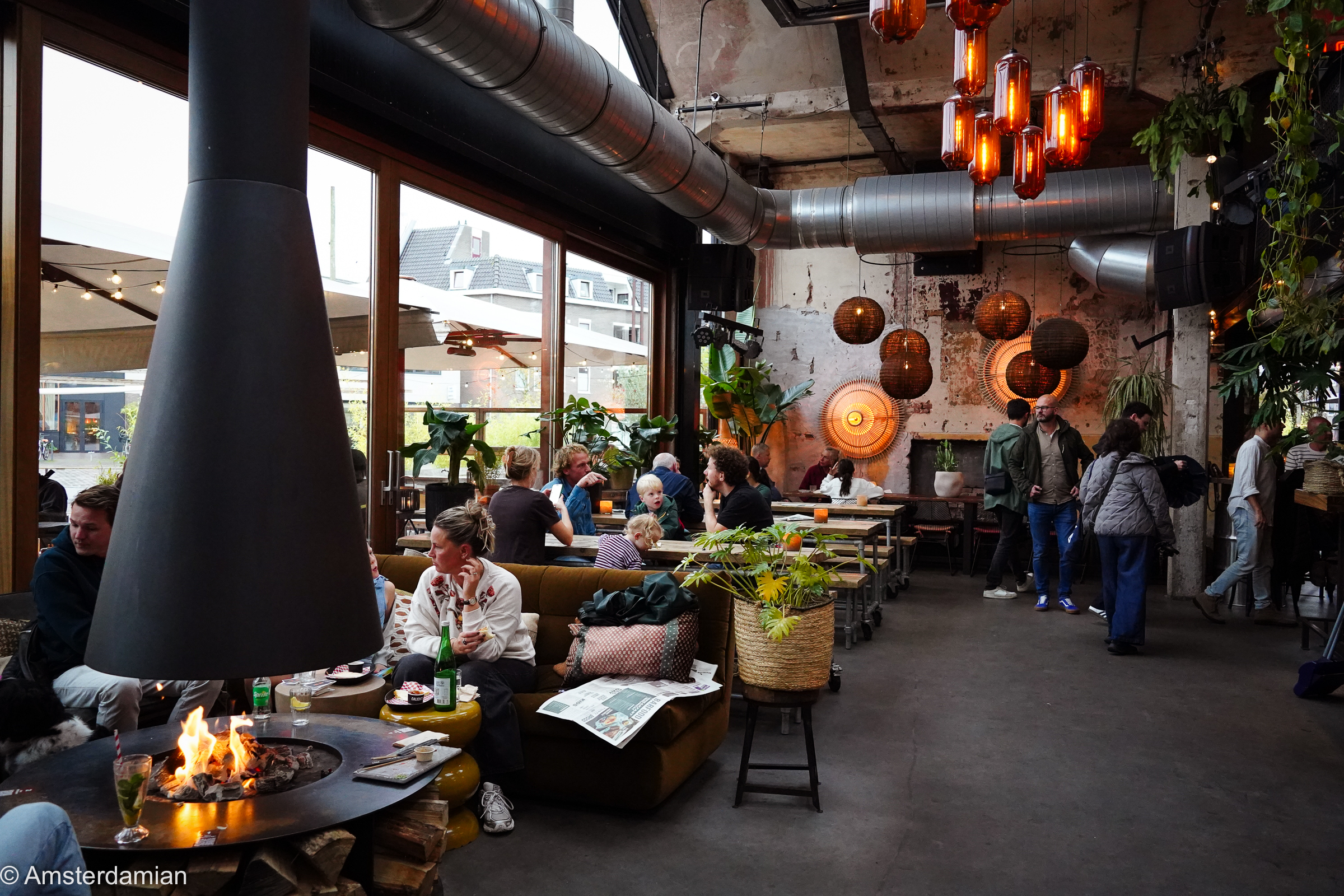
We got a tour of the brewery by the owner and one of the brewers; their enthusiasm was contagious and their passion came through in every word. Gooische Bierbrouwerij employs people who face barriers to entering the job market. This is one of the reasons the brewery chooses to remain small, allowing it to provide a supportive working environment and meaningful employment opportunities.
Definitely put this on your visiting list! There’s also a fireplace inside, if you are lucky to find a spot next to it, and the space is very lively.
- Address: Marktplein 1.
Where to eat
Brasserie Zonnestraal for lunch. This is an architectural visit in itself. The brasserie sits on the Zonnestraal estate, a former sanatorium from the 1920s. Built from concrete, steel and glass around ideas of light, air and nature, it is considered one of the finest examples of Het Nieuwe Bouwen, Dutch modernism. Its restoration won the 2010 World Monuments Fund/Knoll Modernism Prize, and there are plans to nominate it for UNESCO World Heritage status. Right next to it is a heather field and the Zonneheide nature reserve where you can go for a walk after.
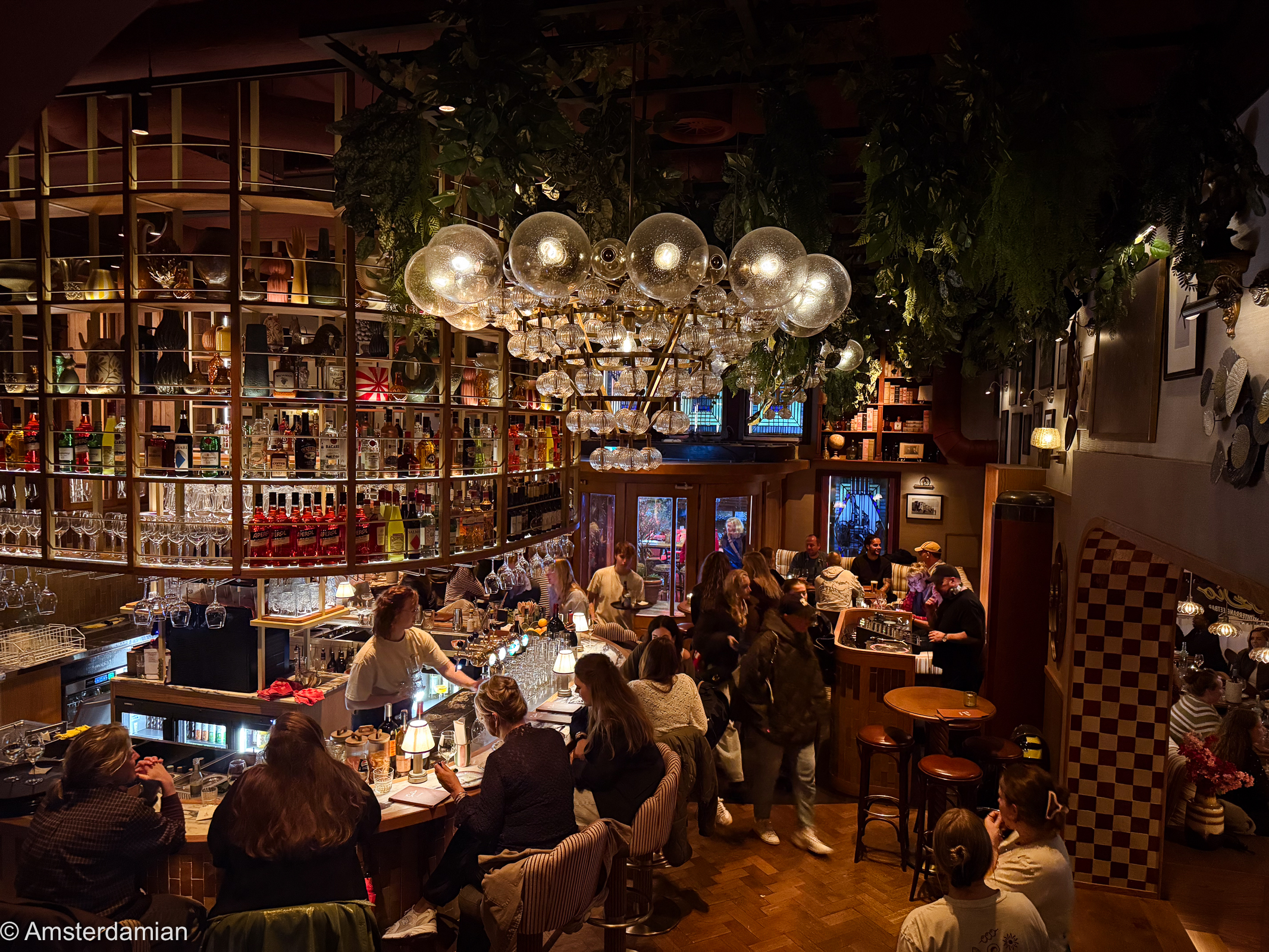
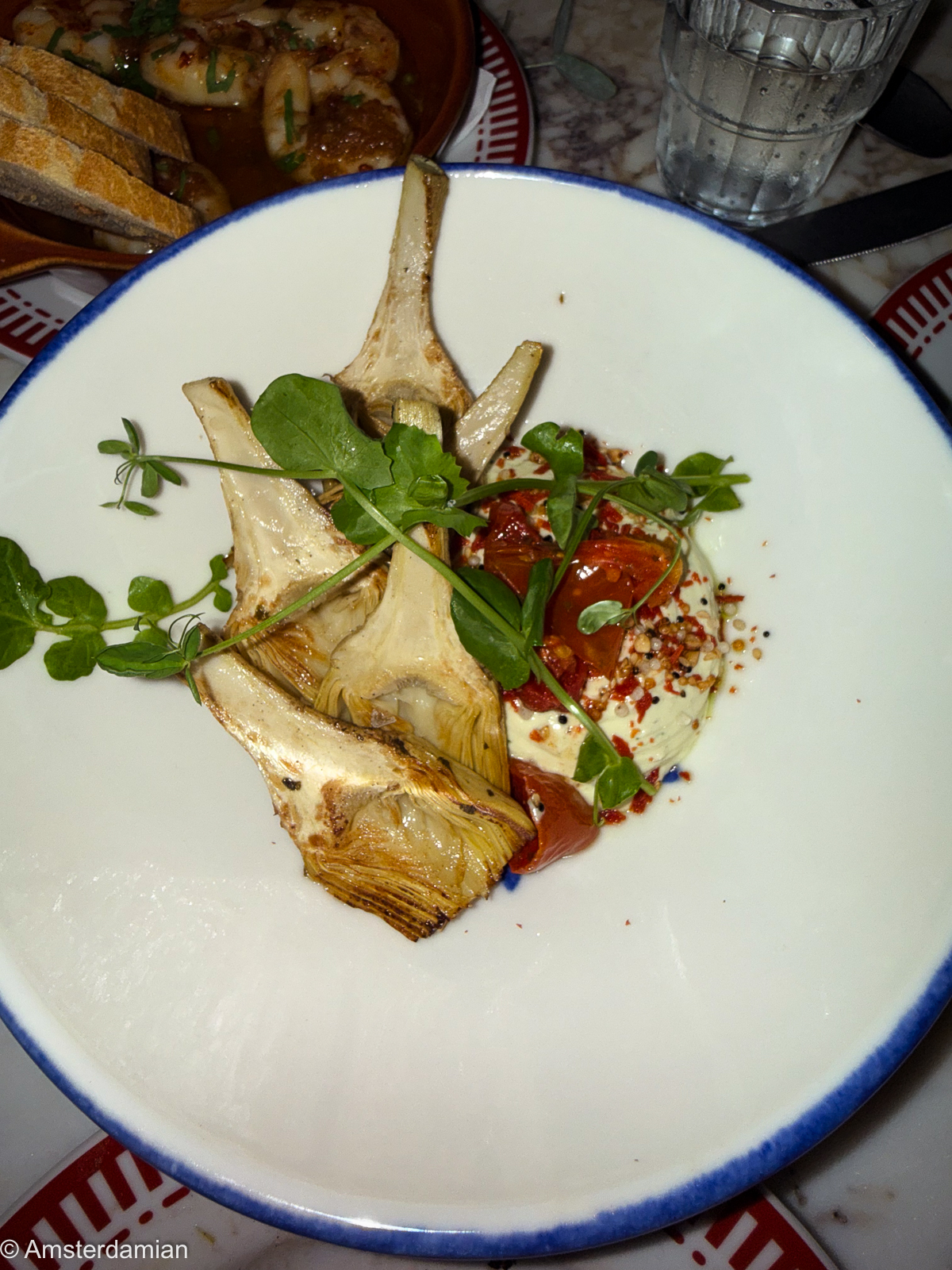
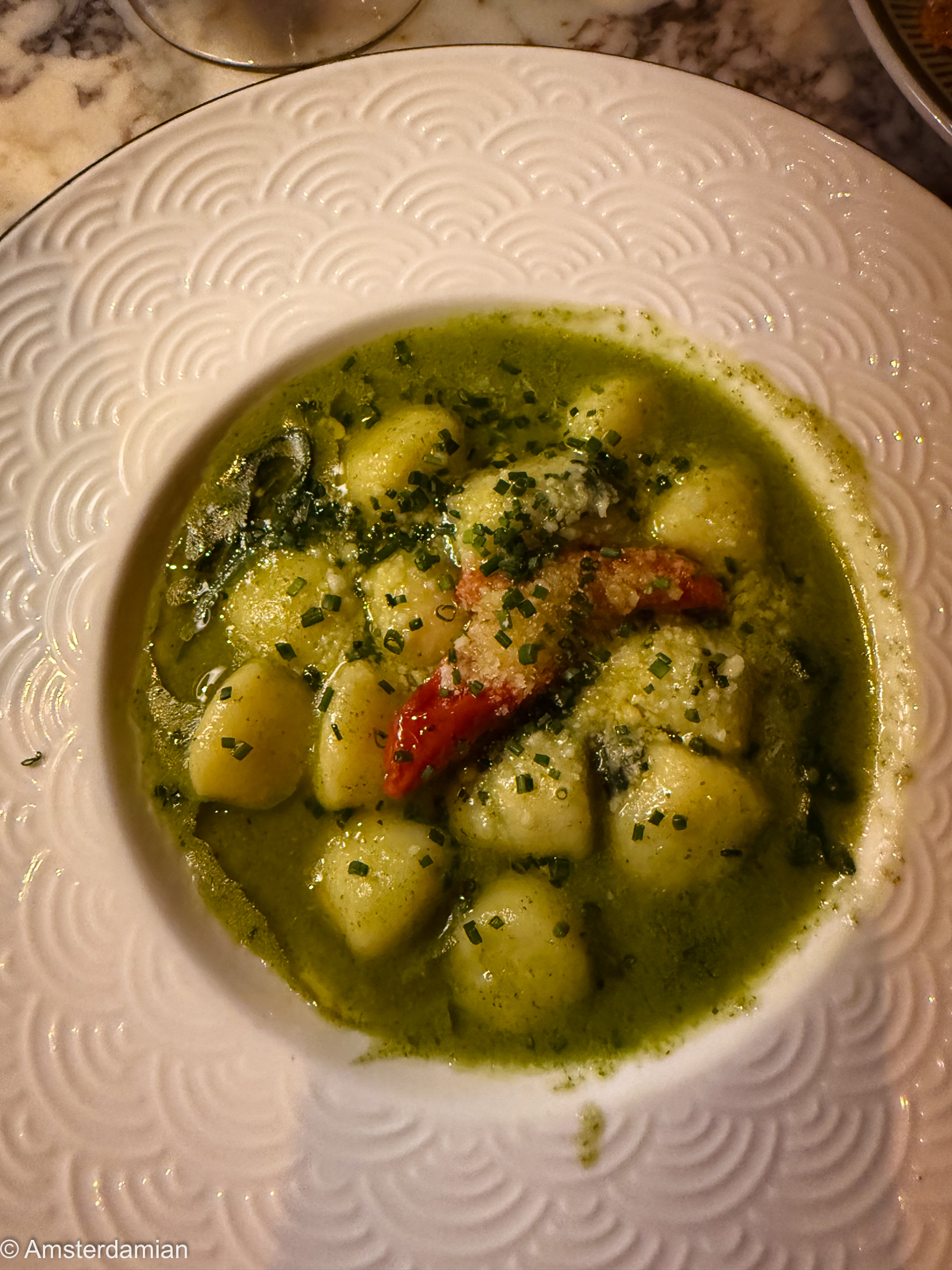
Dinner at Gio Dio. This is a new Mediterranean restaurant built around sharing plates, drinks and a lively atmosphere. It has a beautiful interior and tasty food with vegetarian options as well (I loved their artichoke!). They also have sangria, which is always a good idea.
Where to stay: Amrâth Hotel Media Park, Koninginneweg 30. A cosy stay, especially in rainy weather. If you get a room on the top floor you can listen to the rain on your windows.
Getting there: direct trains from Amsterdam Centraal to Hilversum take about 20 minutes.
⏤⏤⏤⏤⏤
Amstelveen: glass art and the old village
Amstelveen is located right on Amsterdam’s southern edge, and it’s an area where people move when they want to be close to Amsterdam but look for something quieter and more affordable. It’s where the Amsterdamse Bos (Amsterdam Forest) is located, with its cherry blossom orchard that attracts around 150,000 visitors each spring. The old city centre still feels like a village, and the city has a chill atmosphere, complemented by a couple of great museums, shops and restaurants.
What to do in Amstelveen
⏺ Coffee at SUNDAY
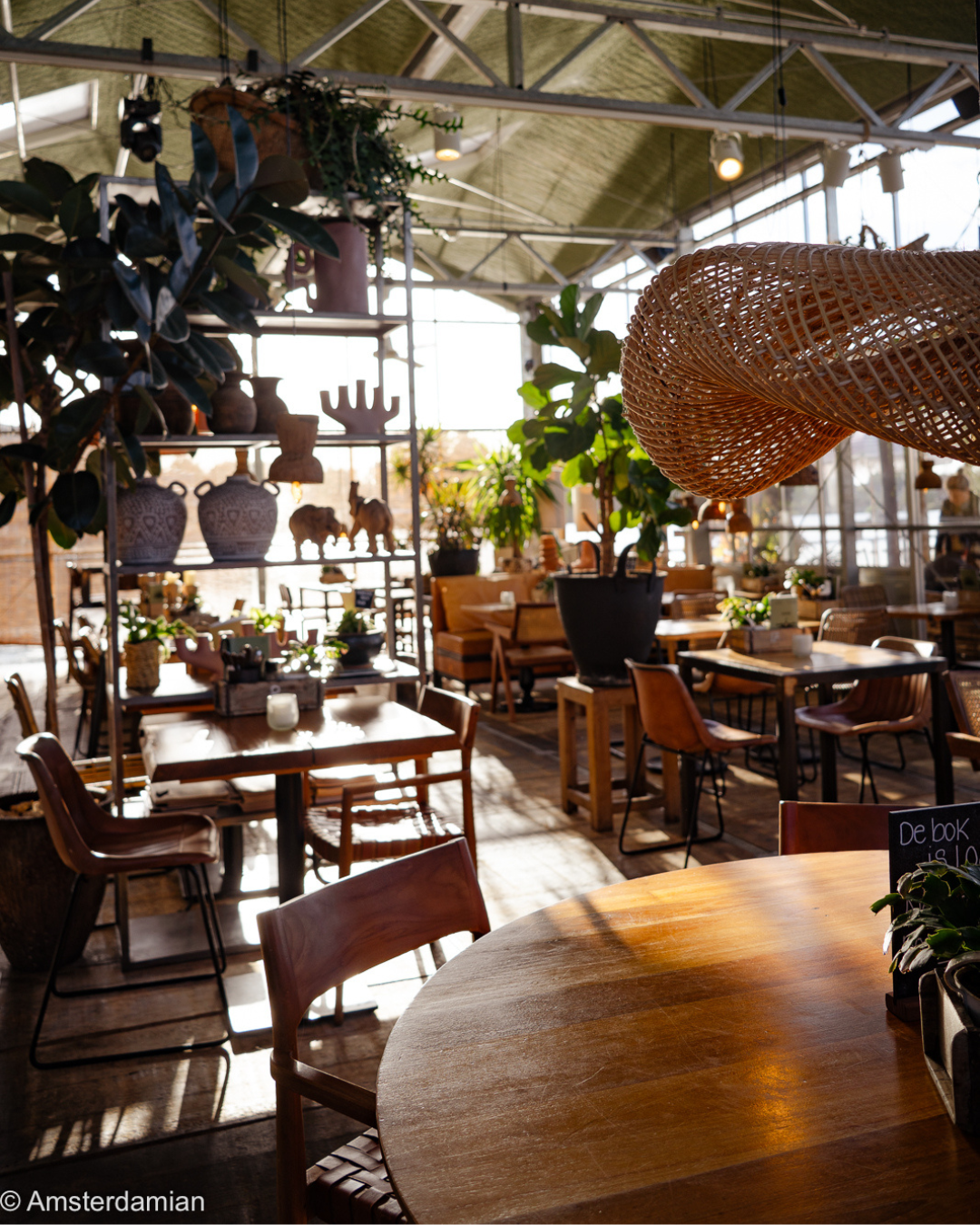
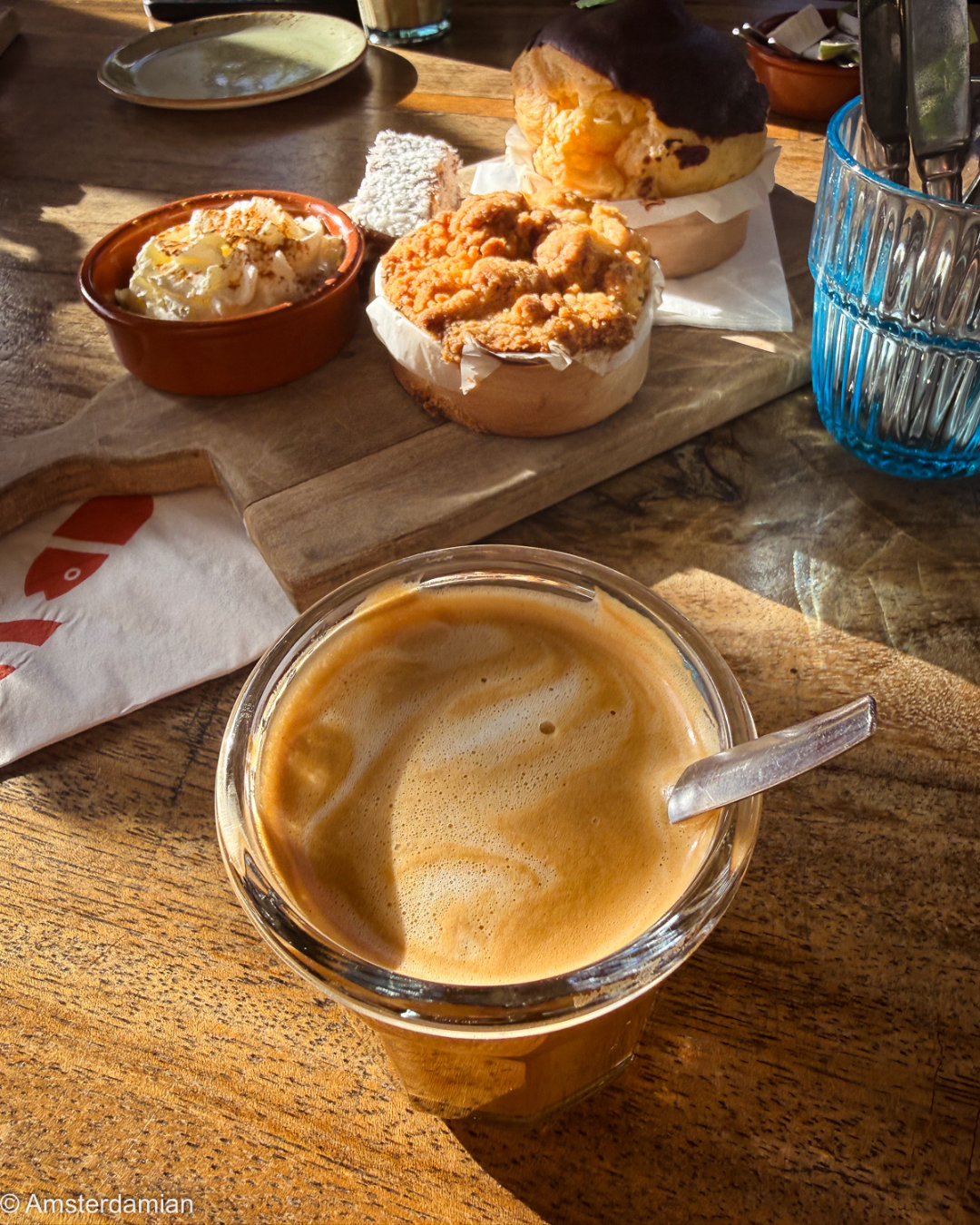
Start your day in Amstelveen with a coffee at this floating terrace and food bar on De Poel, the lake next to the Amsterdamse Bos. In spring, this can be your stop before going to see the cherry blossom, and in summer it’s a beach bar. Officially, it is not allowed to swim in this part of the lake, but people still do it. In winter, you can sit in its glasshouse-style interior, admiring the dancing of the light filtered through the windows. The coffee is great and there’s a good selection of sweets to go with it, including the Amsterdamse Bos bol (pastry filled with a cream that is changing weekly). Looks like the Bosche Bol, but it can be less heavy, depending on the filling.
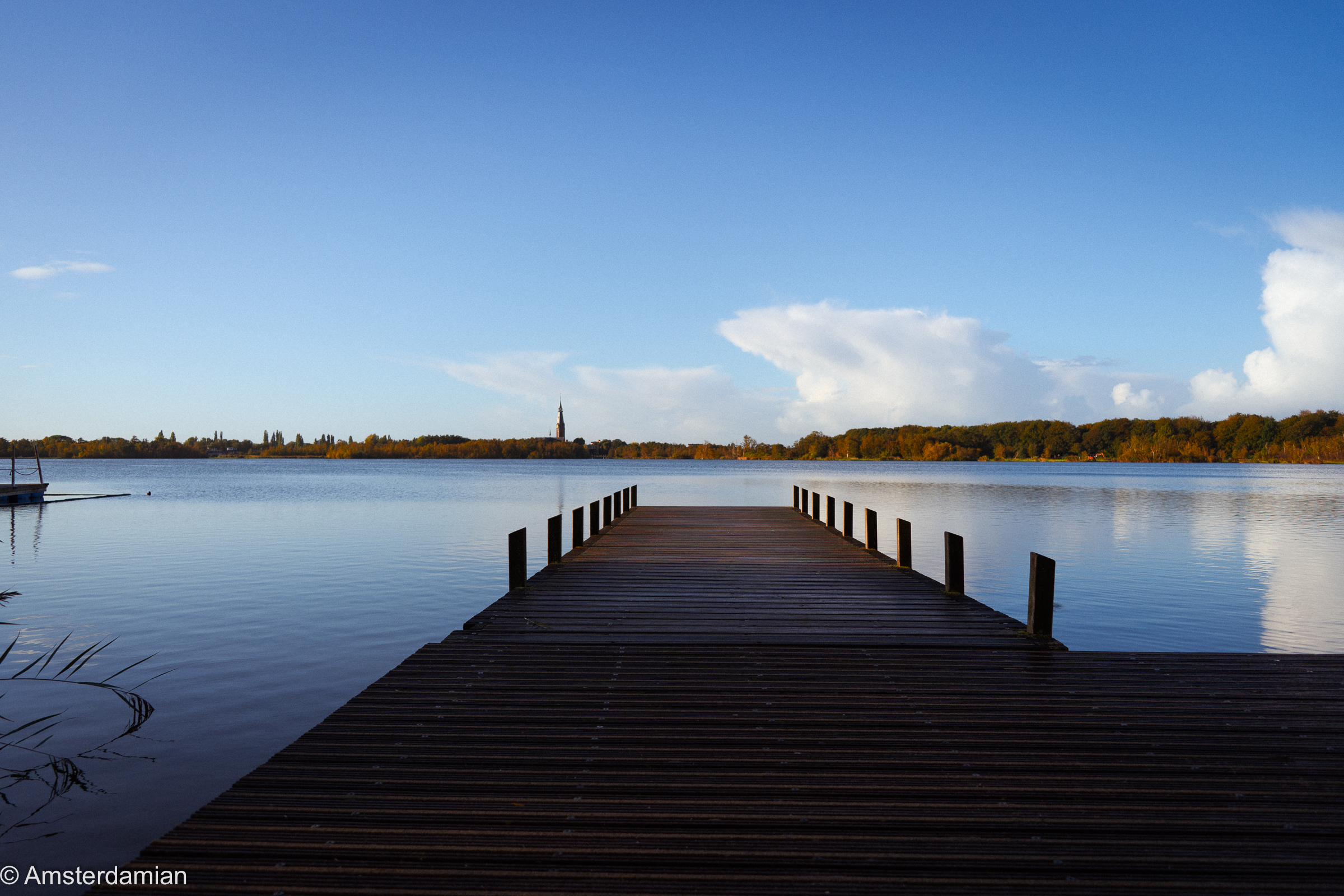
You can go for a nature walk in Amsterdamse Bos before your coffee or after. I went for it early in the morning, and the area was very quiet, the autumn air was crisp and I met only a few other people and the herons resting on the pontoons.
⏺ A walk through the Oude Dorp
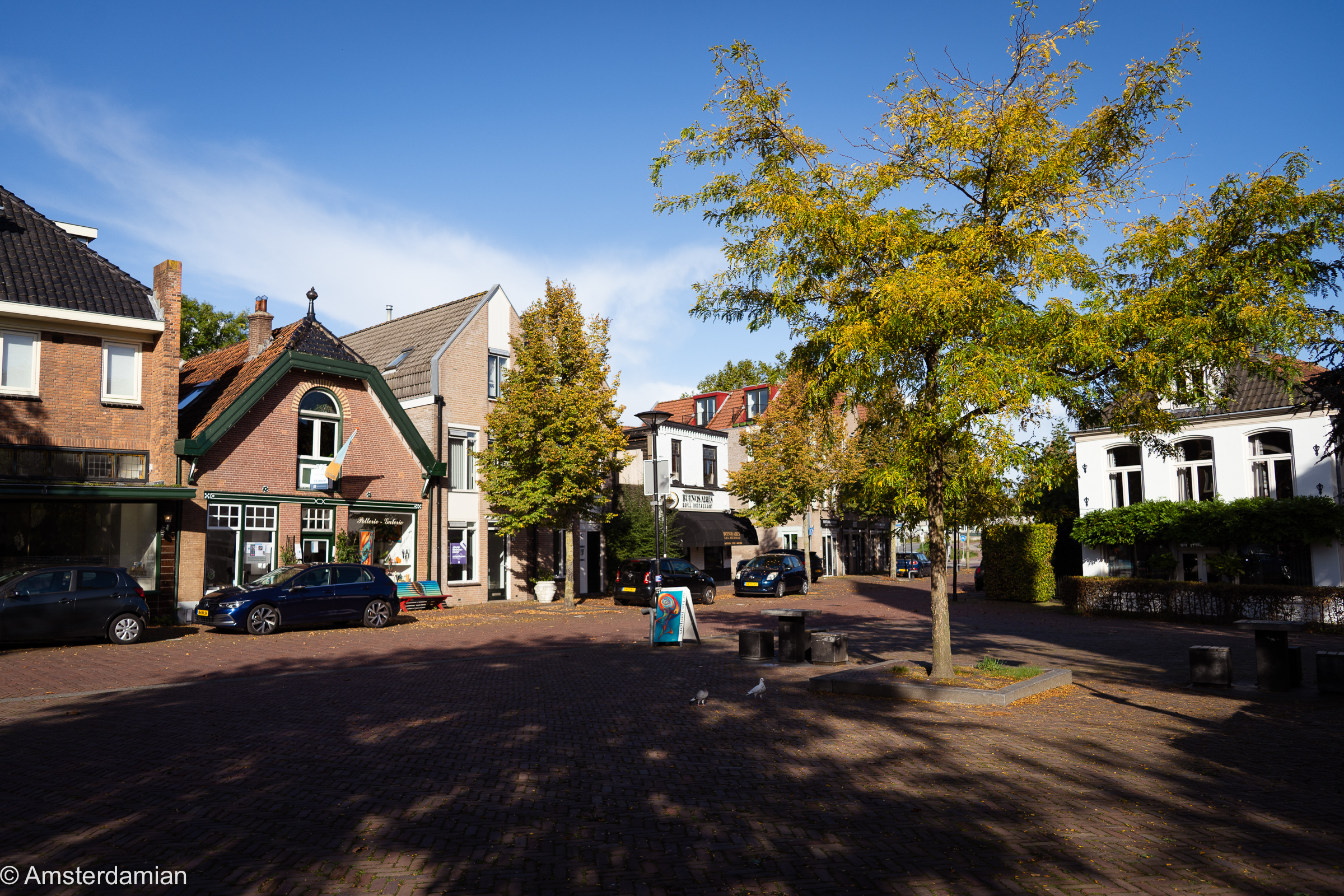
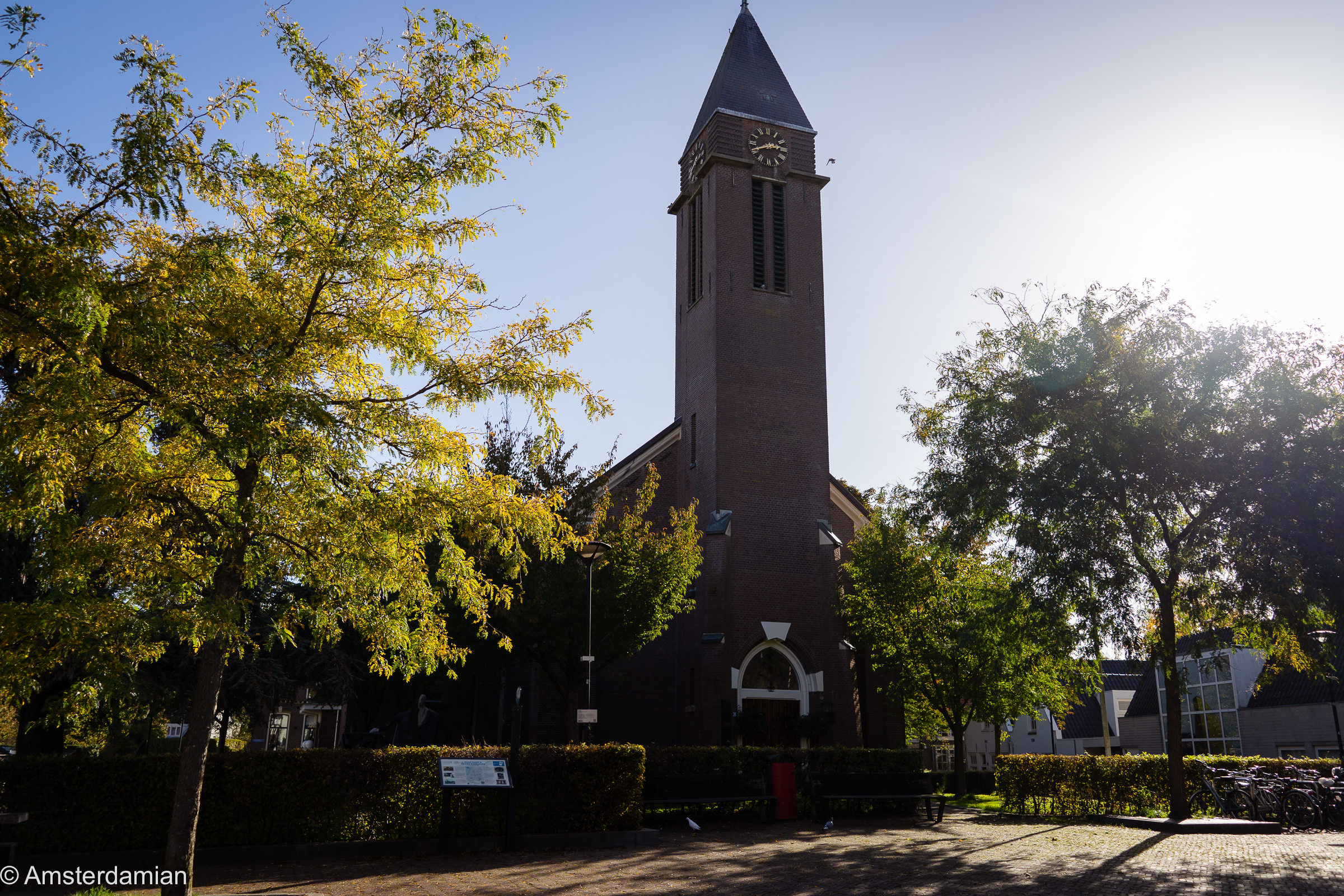
The Oude Dorp (Old Village) developed around the Dorpskerk, which dates from 1568, though a chapel probably stood here as early as 1319. A fire in 1792 destroyed much of the village, so most of what you see today was built after it. The Dorpsplein was the heart of Amstelveen for centuries, and the Dorpsstraat is now lined with boutiques, cafés and restaurants, including the two-Michelin-star Aan de Poel nearby.
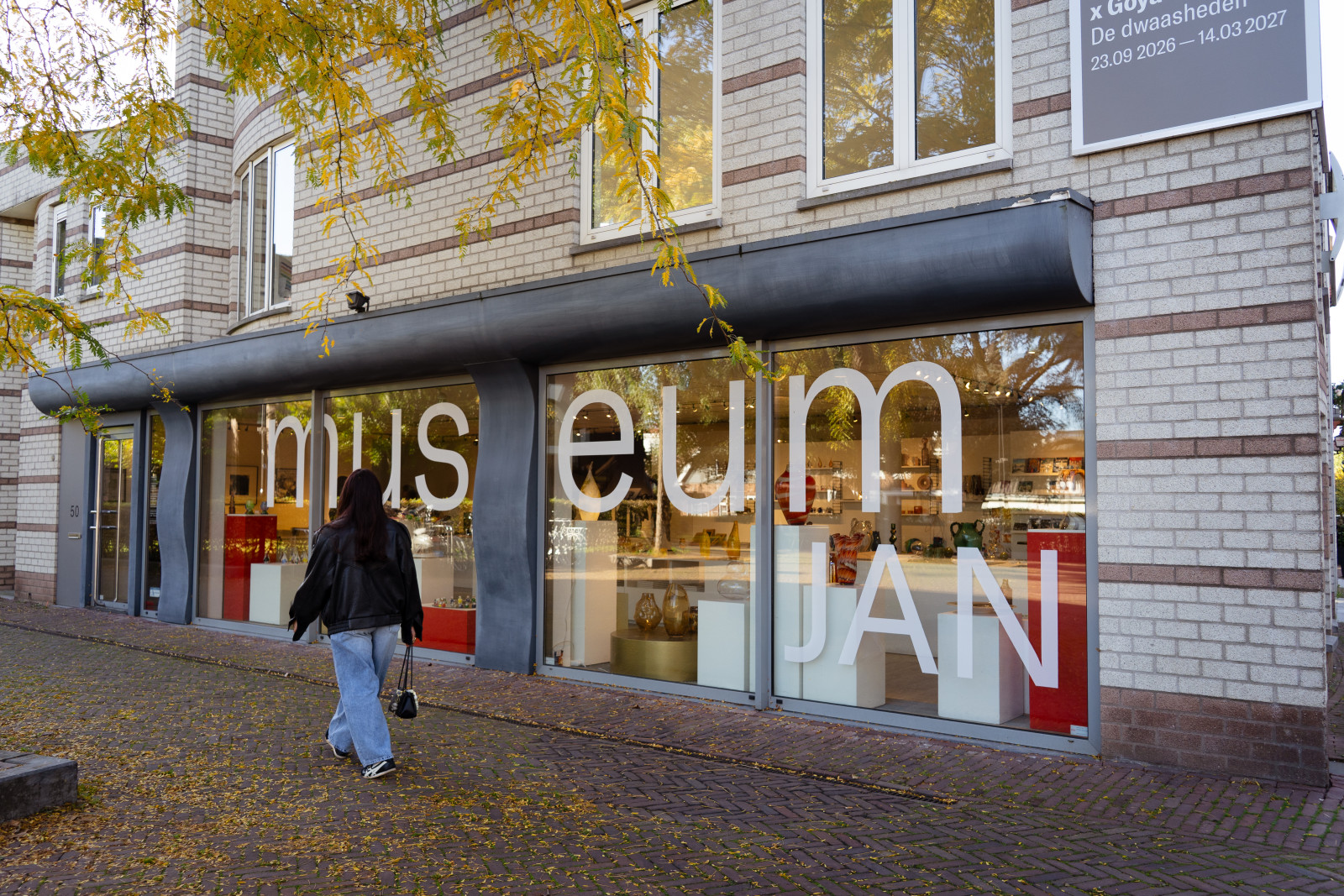
⏺ Museum JAN
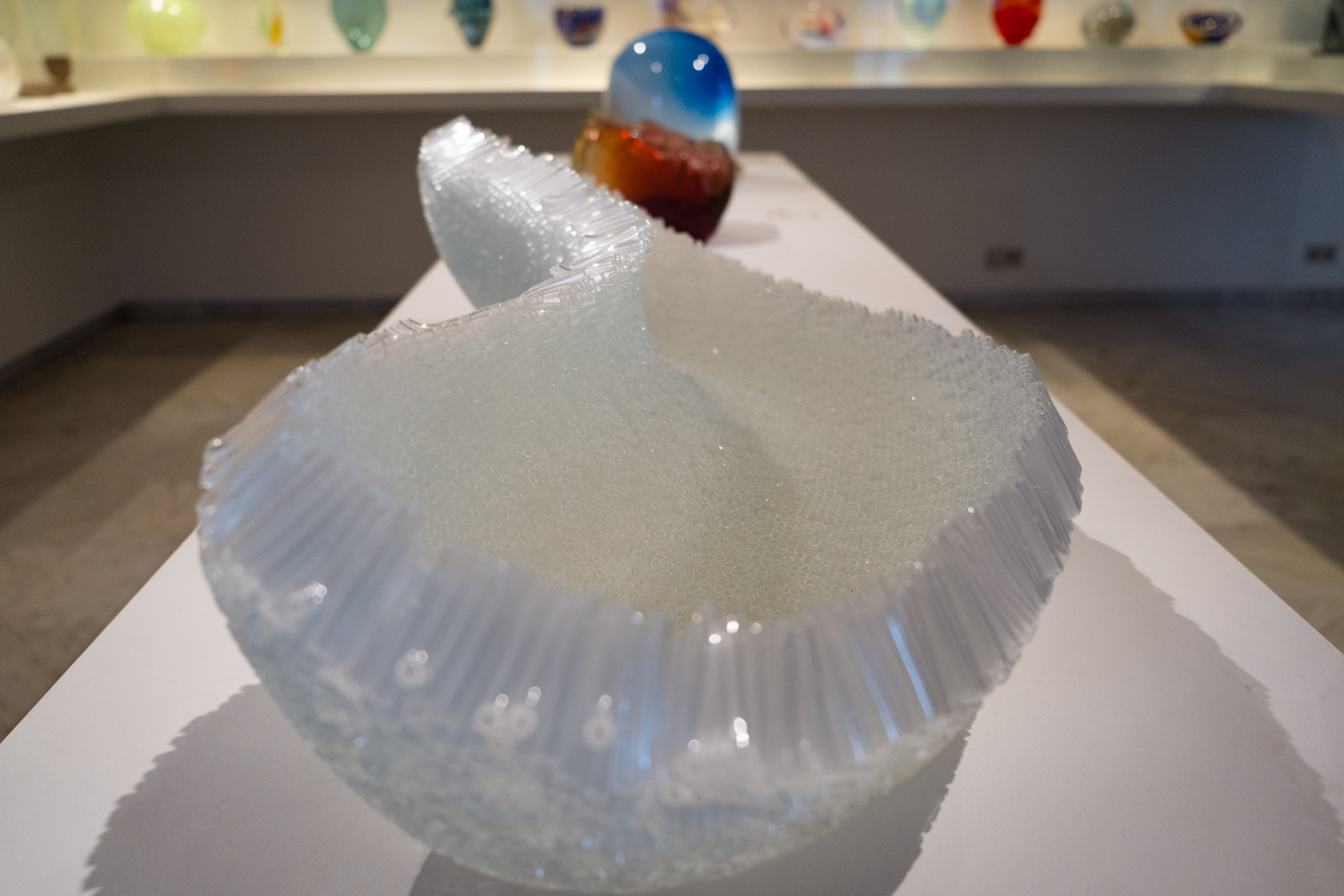
Museum JAN, located in the Oude Dorp, is a museum of visual art and design with a special focus on glass. It was founded in 1991 by industrialist Jan van der Togt, who ran the Tomado household appliance factory and collected art after selling the business in 1971. The core of the collection is modern sculptural glass from the 20th and 21st centuries, with Czech and Slovak artists such as Stanislav Libenský and Jaroslava Brychtová and Václav Cigler at its heart, alongside Dutch studio glass and paintings by the American abstract expressionist Sam Francis.
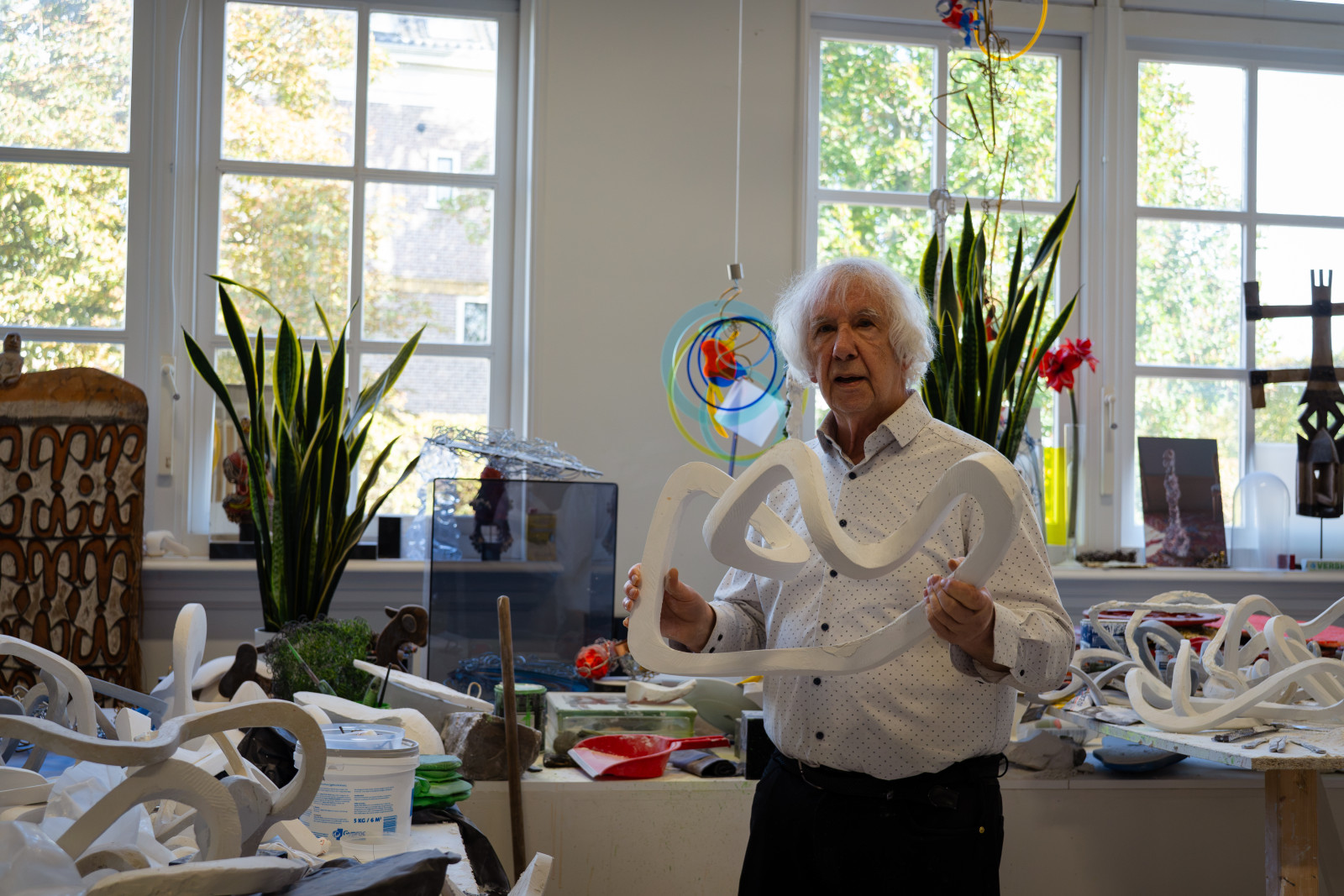
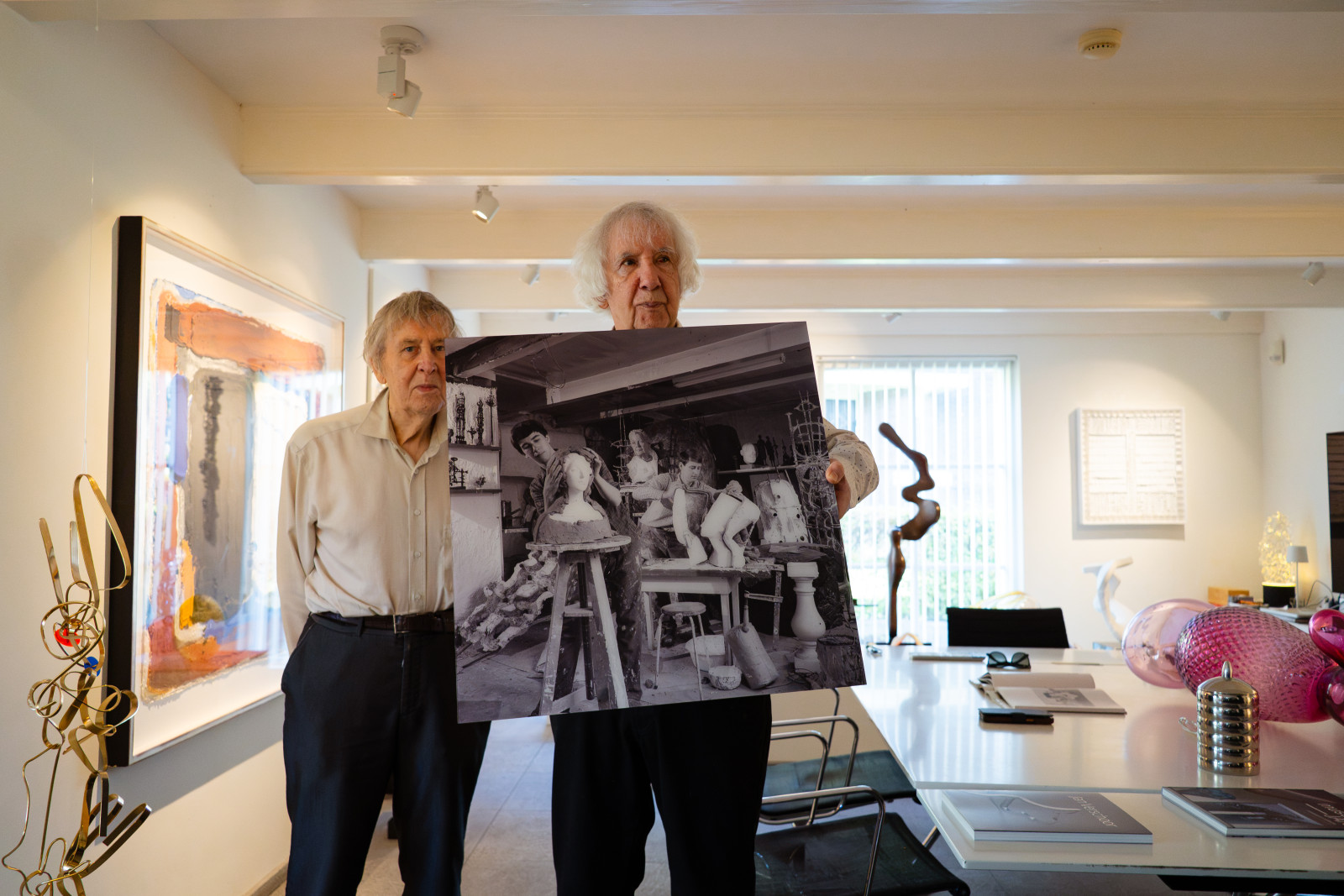
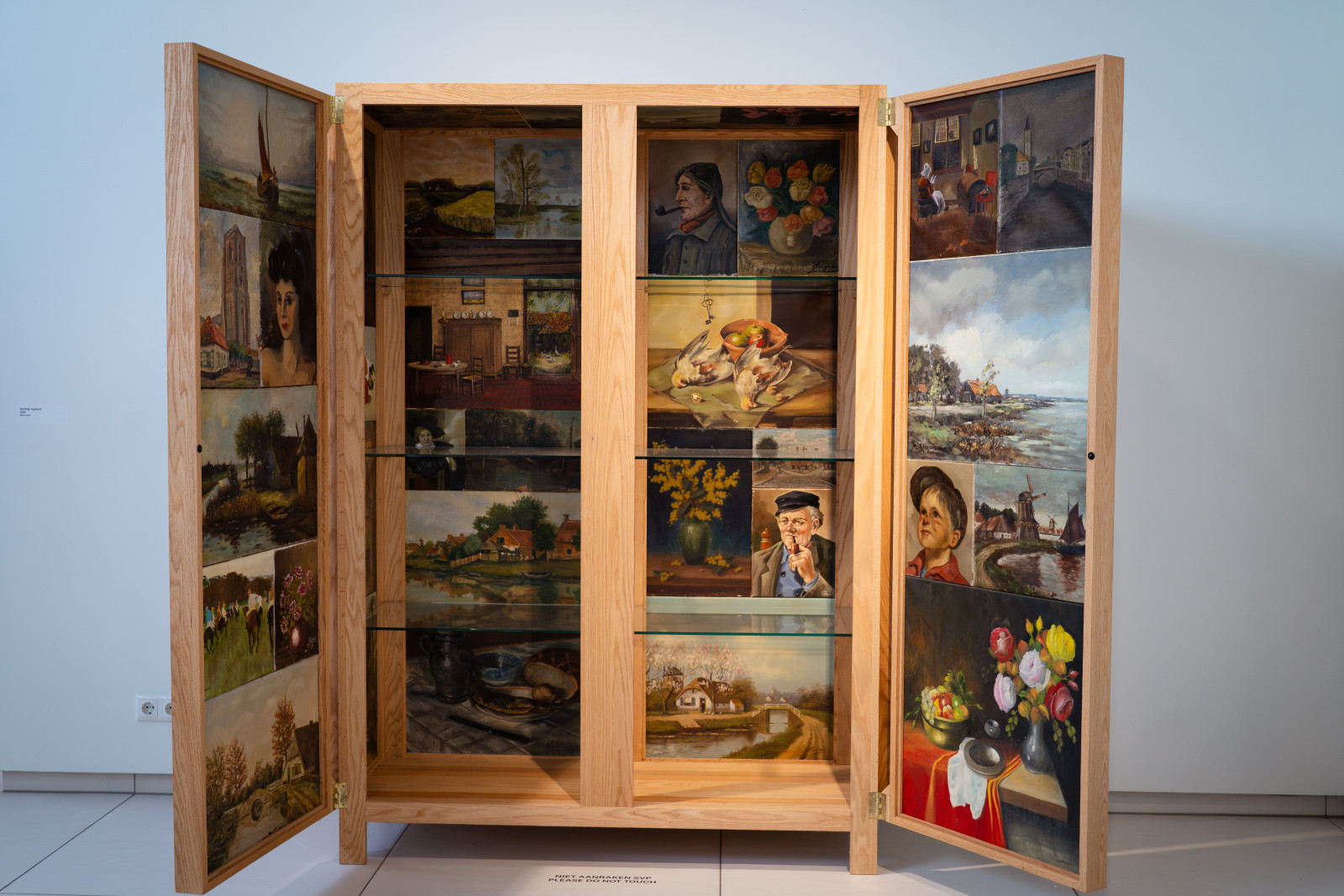
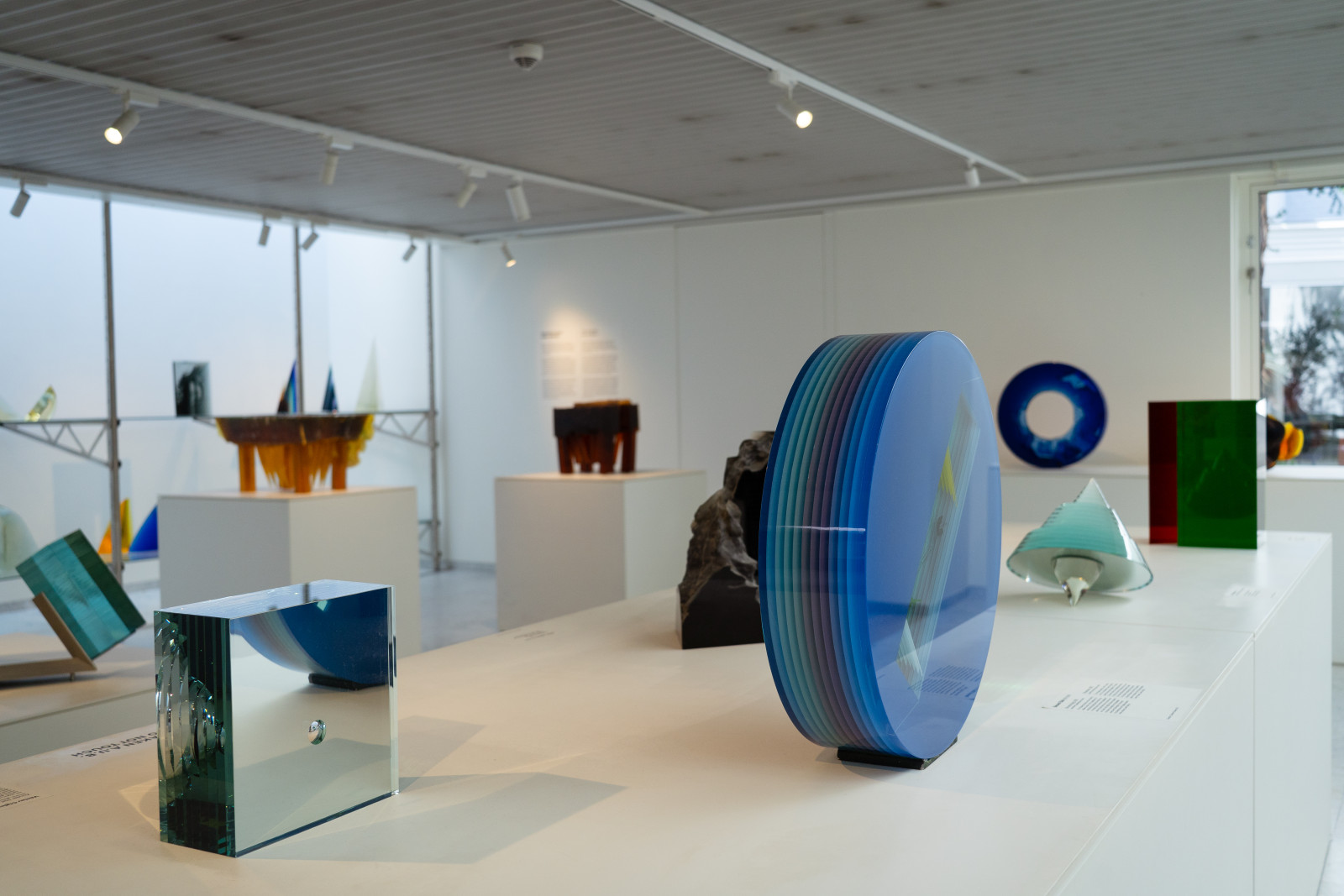
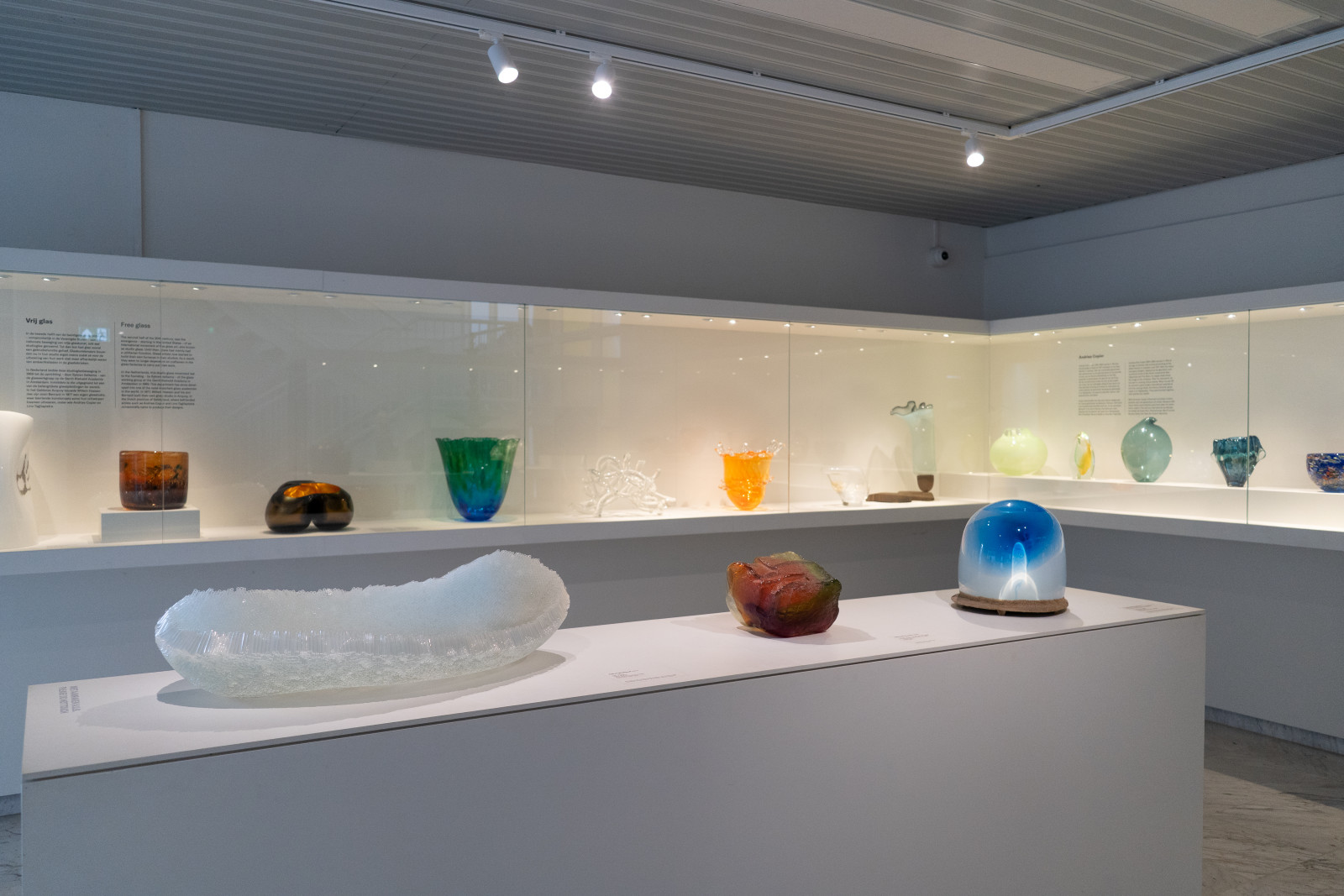
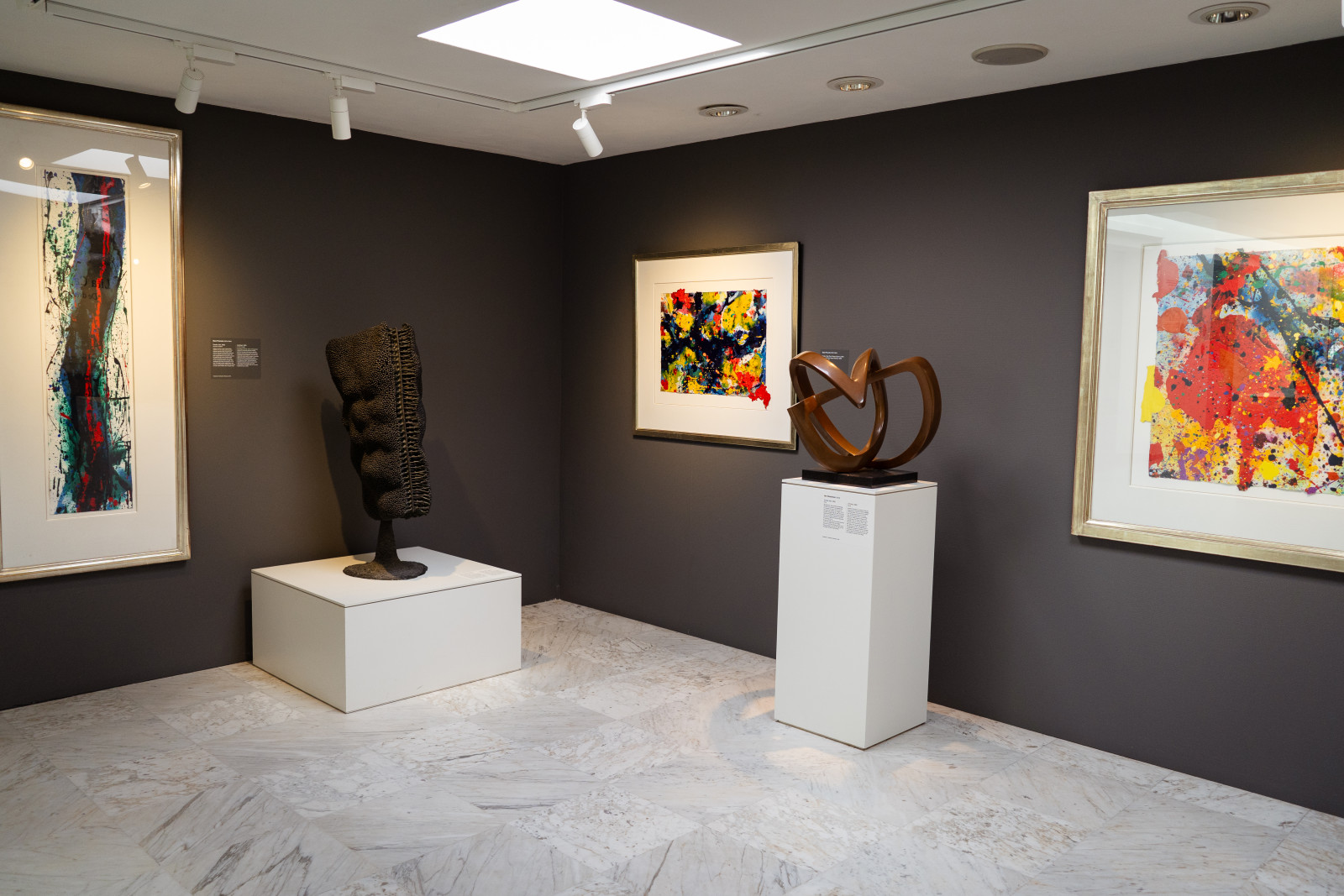
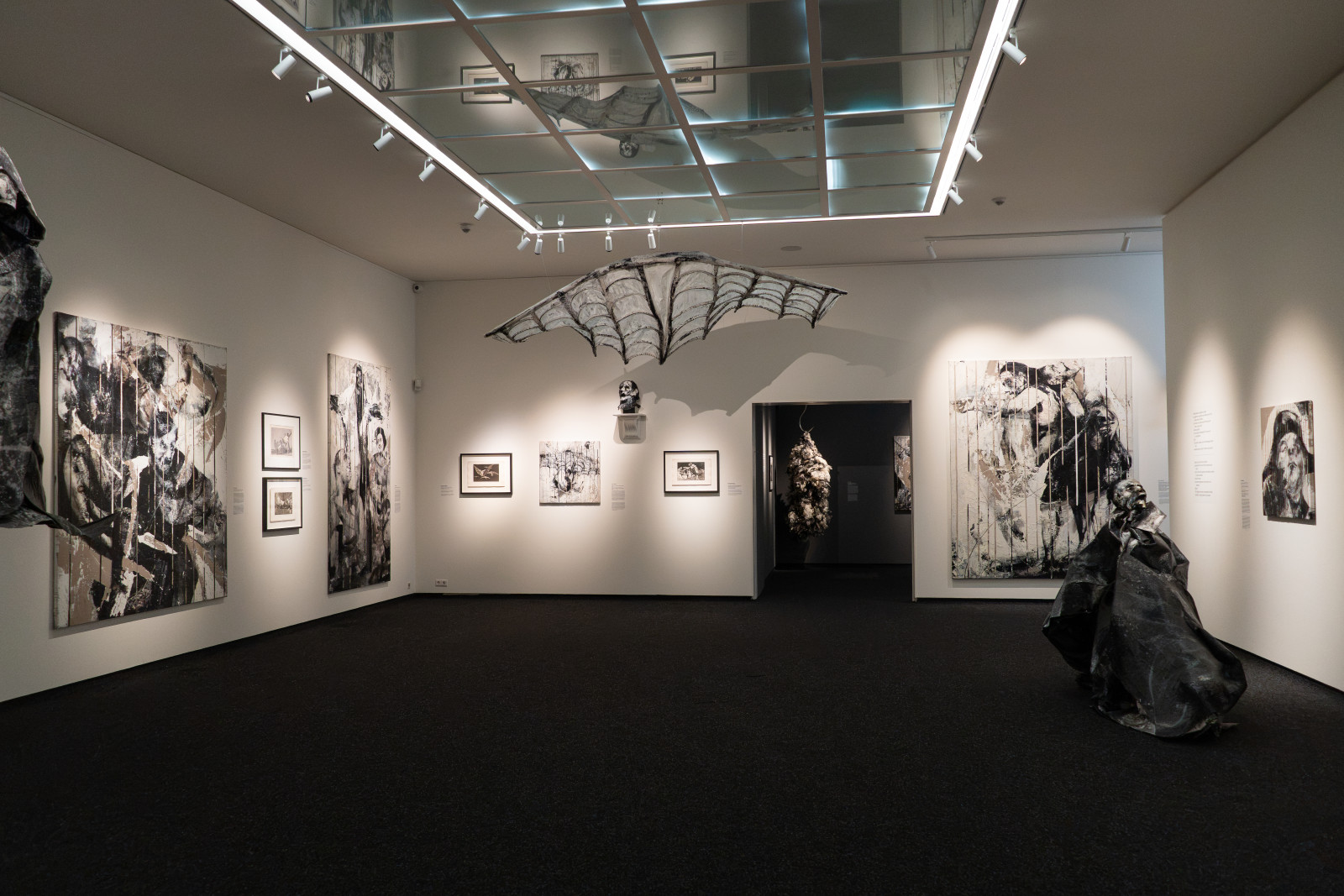
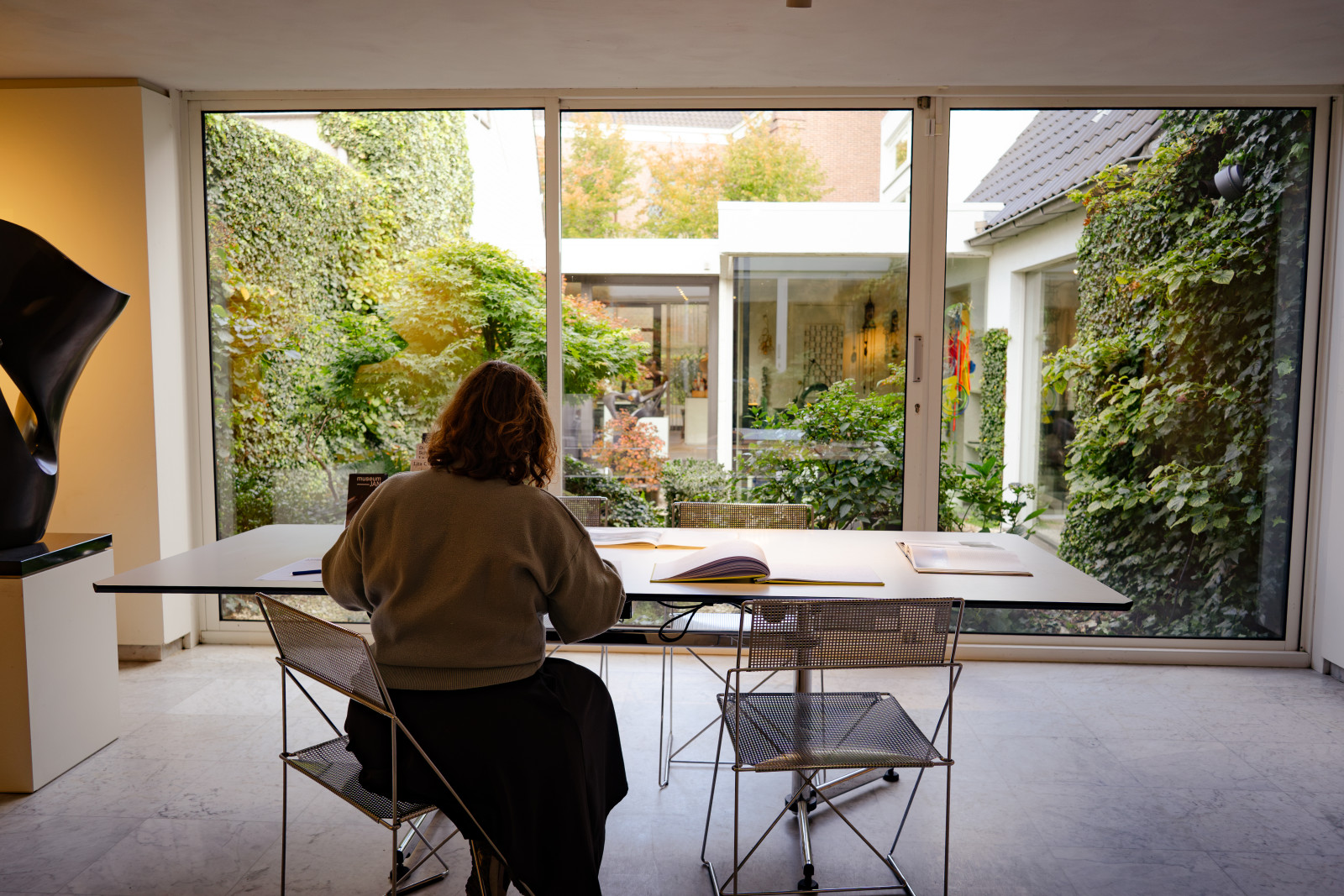
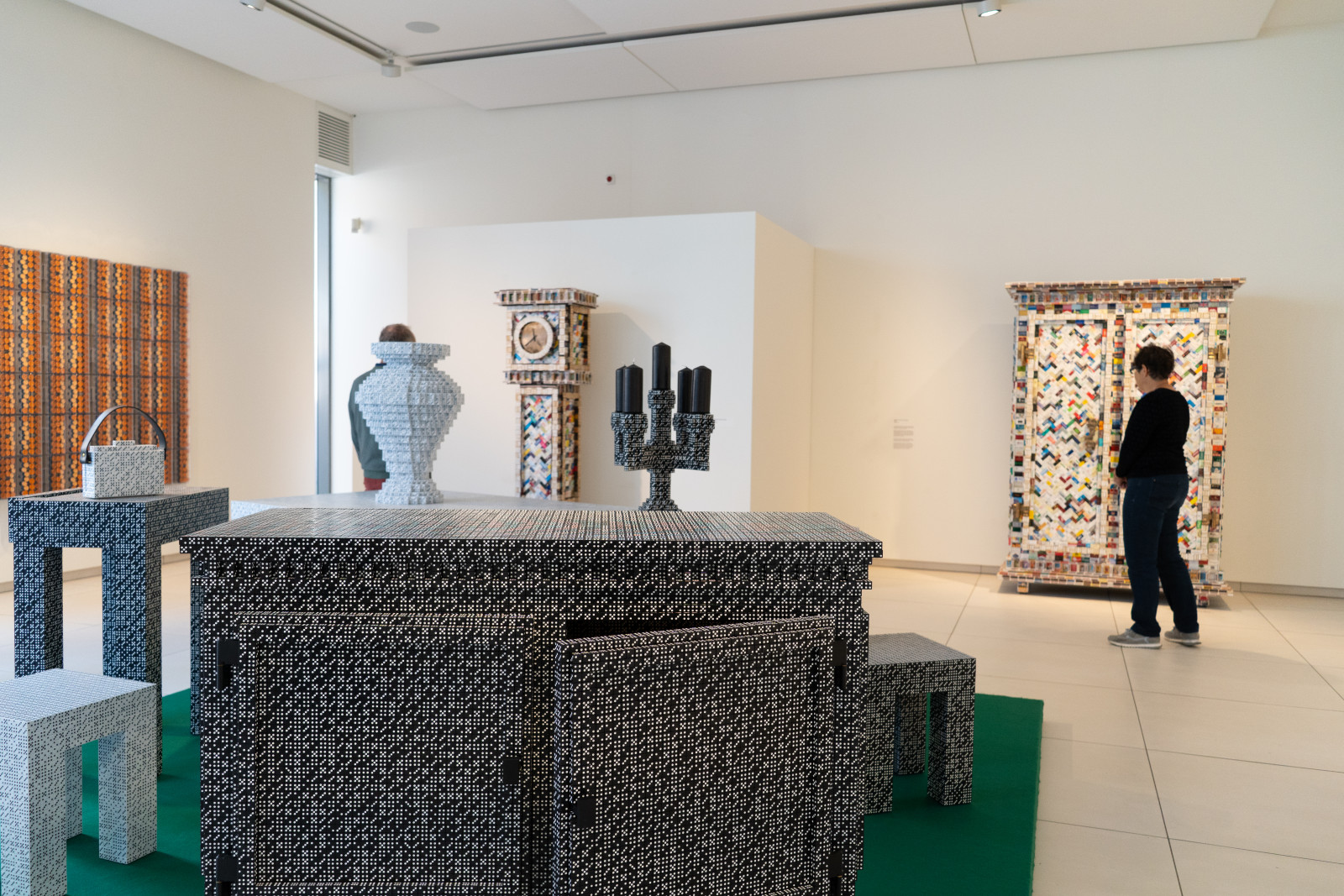
The name JAN refers to two people. The second founder is artist Jan Verschoor, Van der Togt’s adviser and co-founder, who has lived on the Dorpsstraat since 1962. The museum was built against his house, and from the museum you can look into his living room and see his own art collection. He lives there with his husband, and they both still create art in their studio next to the museum. We got the chance to meet them and they showed us around their house and studio. It was an inspiring encounter.
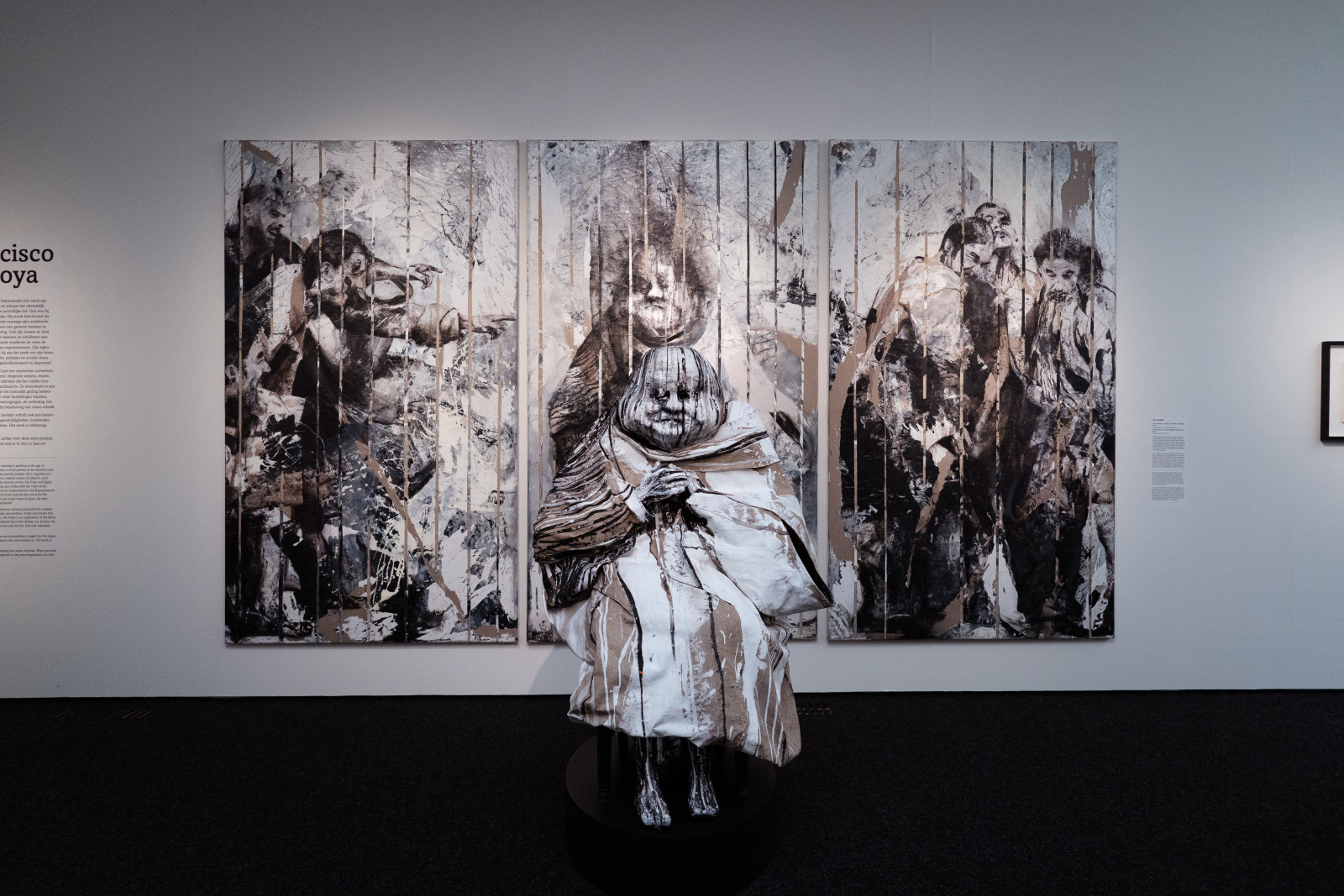
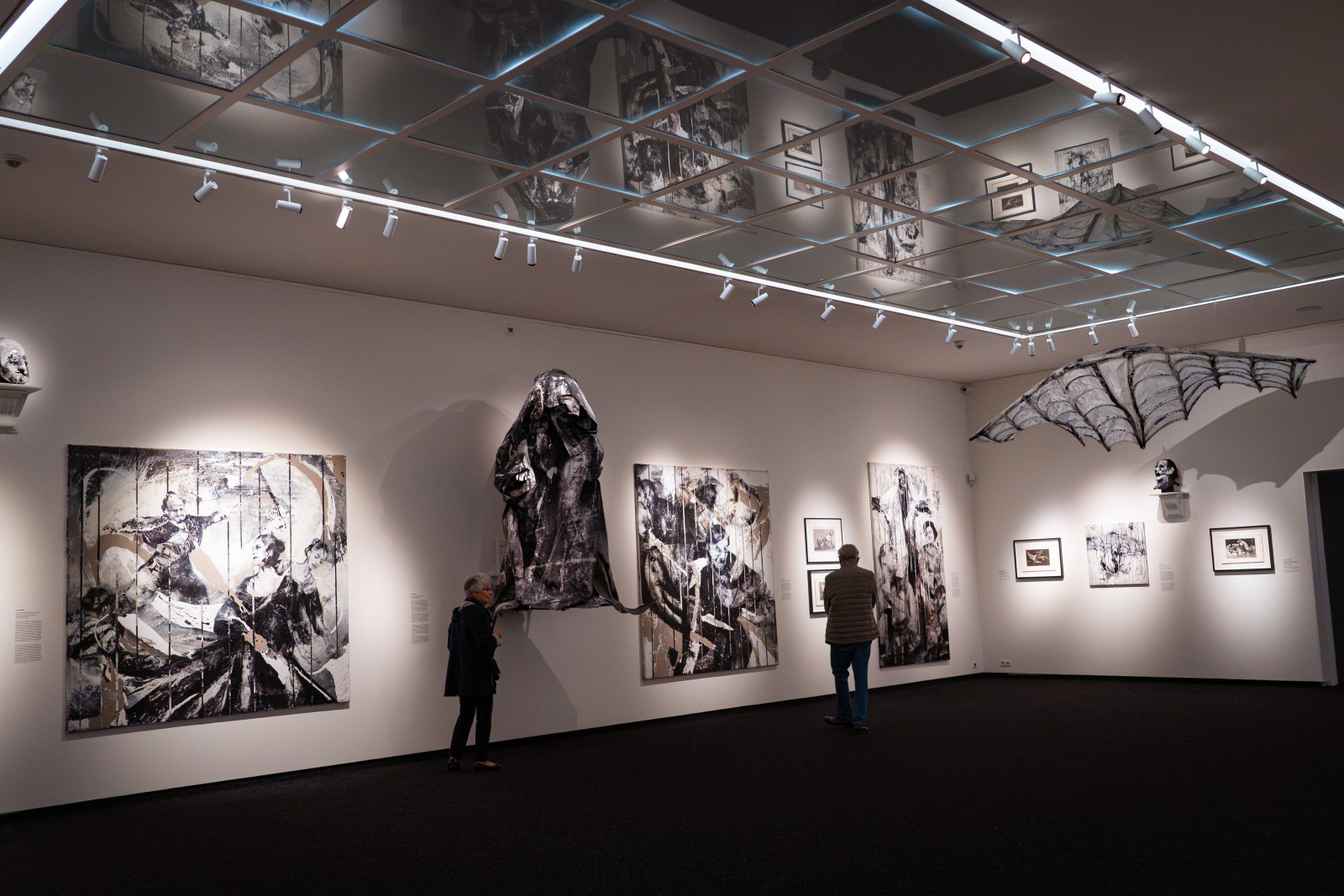
When we visited, they also had two temporary exhibitions on display: Lita Cabellut x Goya – The Follies (until 14 March 2027) and Diederik Schneemann – 1 + 1 = 3 (until 1 November 2026).
- Address: Dorpsstraat 50
- Opening times: Tuesday through Sunday: 11:00 a.m. – 5:00 p.m.
- Ticket price: €14.50 for adults, €7.50 for 13-18 yo, and free for under 12 and various passes, including Museumkaart.
Where to eat
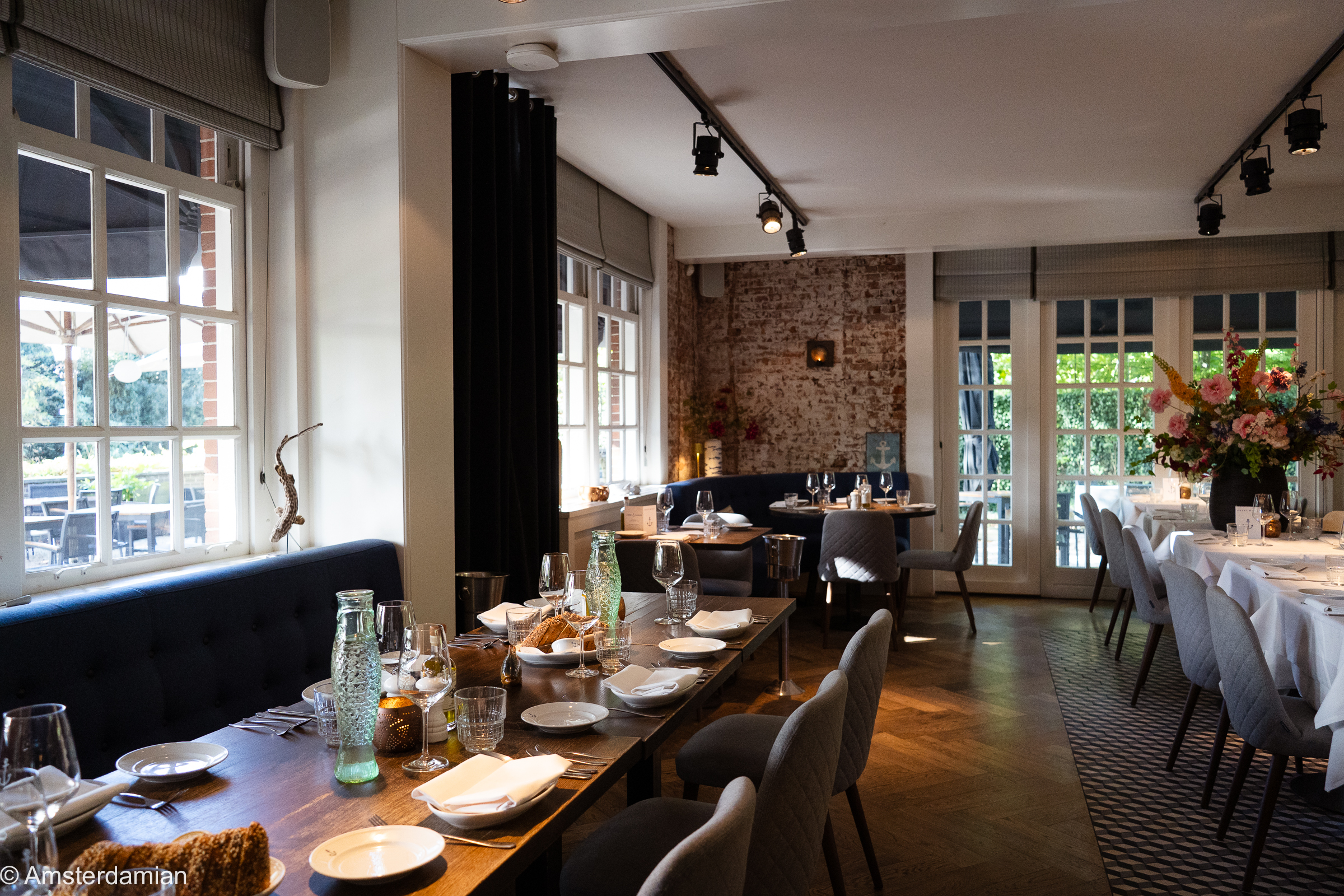
Lunch at The WineKitchen at Sea, a wine bar and restaurant in the Old Village that focuses on fresh fish. The menu changes daily around the catch of the day, with a few fixed dishes and wines chosen to match (including good non alcoholic options). Address: Ouderkerkerlaan 2, in the Old Village.
Where to stay: Hotel Station Amstelveen. This hotel is located in the former train station of Amstelveen, and it’s run by a writer and his wife. Johan Elfner writes children books inspired by the 100 years old station: the Monsterstation series.
Getting there: tram 25 (the Amsteltram) runs from Amsterdam Zuid station into Amstelveen. From central Amsterdam, allow about 40 minutes by public transport.
Almere, Hilversum and Amstelveen tell a different chapter of the Dutch story, each in its own way: a city built from scratch on reclaimed land, a town shaped by one architect’s vision, and a village that grew into a city without losing its heart. They’re close enough to Amsterdam for an easy day out, but they’re different enough to feel like new discoveries. You can pick one for a slow day, or link them over a long weekend, and you’ll come back with a broader picture of what the Amsterdam region has to offer.
This trip was hosted by amsterdam&partners together with Visit Almere, Visit Gooi & Vecht and Visit Amstelveen. Thank you to the organisers for putting together such a varied programme, and to the guides, museum staff and restaurant teams who welcomed us and shared their stories along the way. All opinions are my own.
Stay tuned for more and follow Amsterdamian on Instagram and Facebook for more stories about life in the Netherlands, written by a real local, updated constantly.
Check out my photo book: Amsterdam Through the Seasons!
Love what you’re reading? Support my work with a small donation.
And share this post if you liked it!