
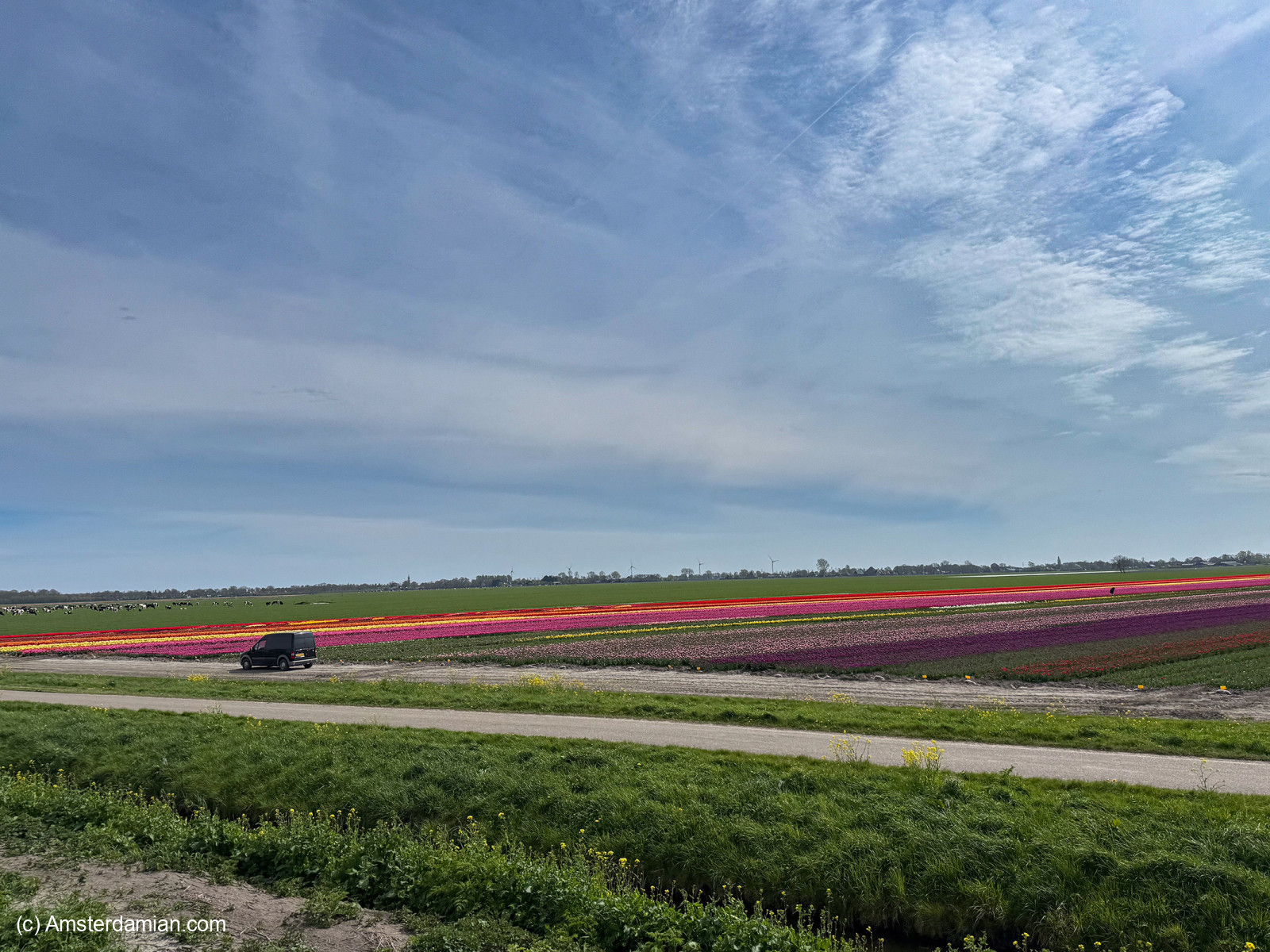
There are some things you keep meaning to do, and then a spring arrives when you finally do them. For me, this year, it was taking the historic steam train from Hoorn to Medemblik on the tulip route. I’ve been to both towns before, arriving on the regular NS train, but riding the old steam tram on the line that connects them, in April, when the bulb fields north of Amsterdam turn into long stripes of red, yellow, and pink, is a different kind of day out altogether.
Hoorn and Medemblik are located in the northwest of the country, in the region called West-Friesland (not to be confused with the province of Friesland, which is further north, across the IJsselmeer). Both are old cities which, in their glory days they were serious players in the Dutch Golden Age, with the VOC and the West India Company running operations out of Hoorn. Each is worth a day of wandering on its own, even without a steam train involved.
The history of the Hoorn–Medemblik steam train
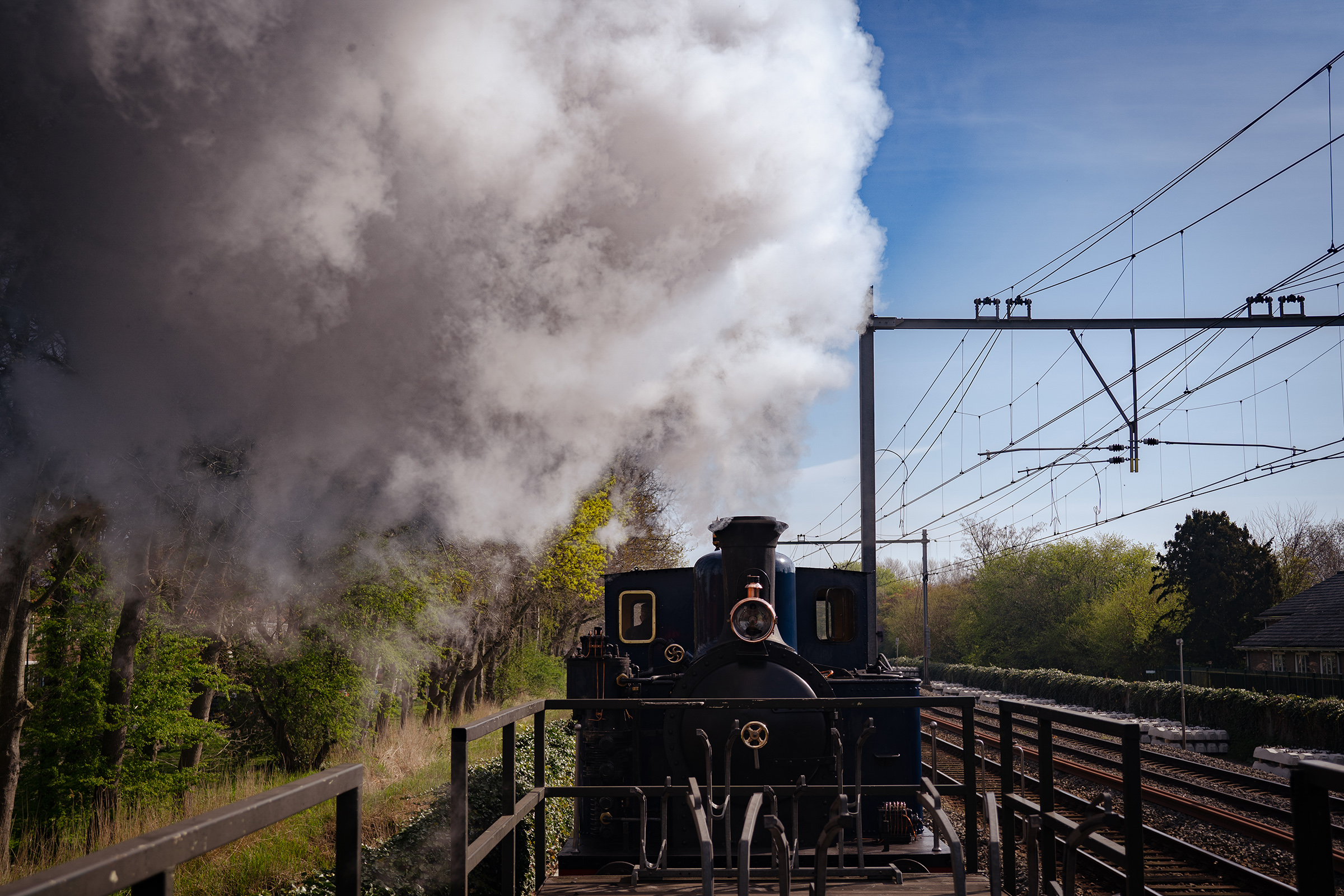
The Hoorn–Medemblik railway is roughly 20 kilometres long and was opened on 3 November 1887, originally operated by a local company called Locaalspoorwegmaatschappij Hollands Noorderkwartier. It’s what the Dutch call a stoomtram (a steam tram) rather than a full railway, a distinction that has to do with how the line was legally classified. In practice, you’re on a real steam train, looking out the window at cows and windmills at a pace that feels properly early-twentieth-century.
Passenger service on the original line ended permanently in 1941 and a group of enthusiasts laid the foundation of the Museum Stoomtram Hoorn–Medemblik in 1968. The museum is now the registered national museum for the history of steam trams in the Netherlands, covering the period from 1878 to 1966. It keeps alive Dutch railway heritage that would otherwise have disappeared, since after steam trams were phased out, most of the carriages and locomotives were scrapped or repurposed.
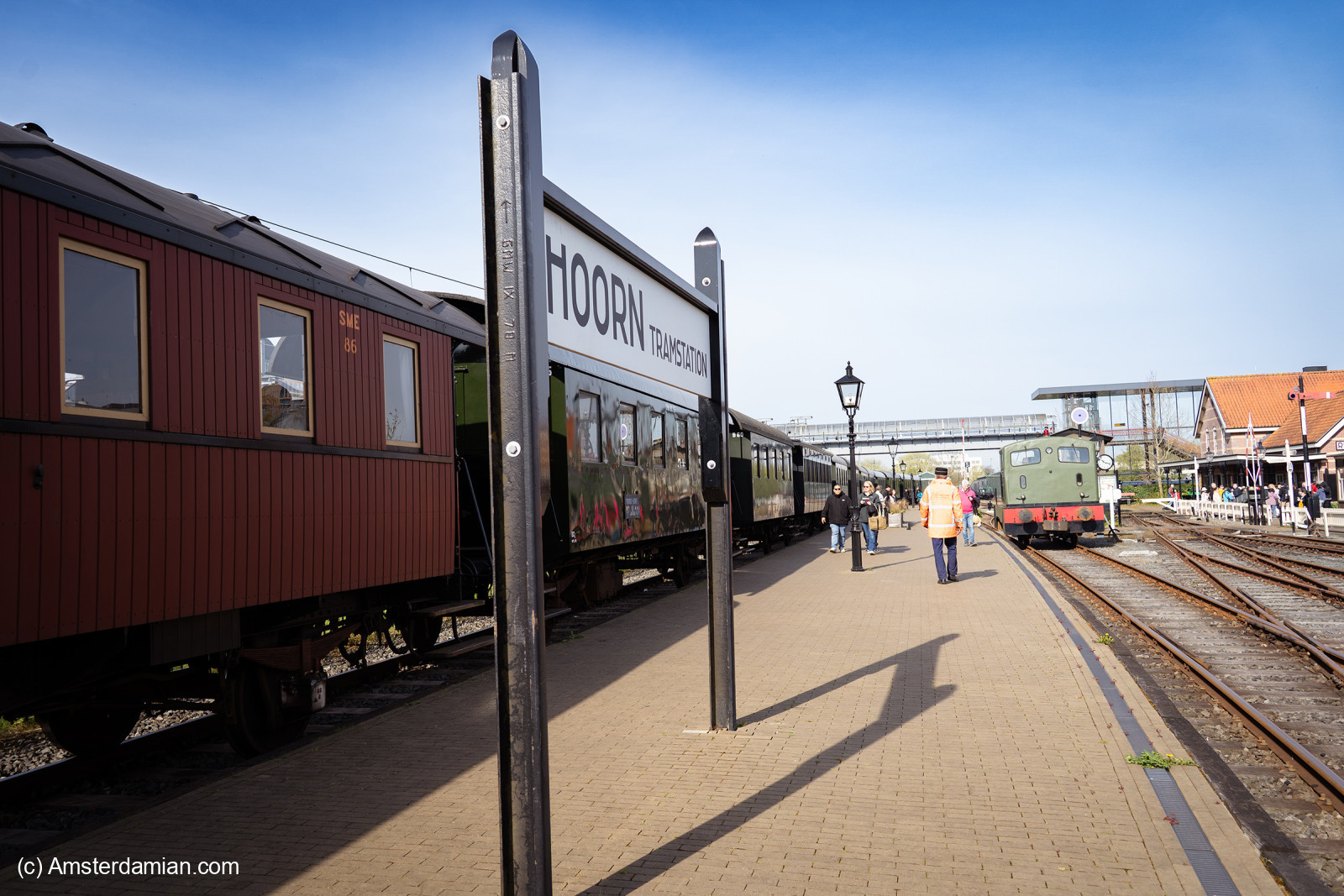
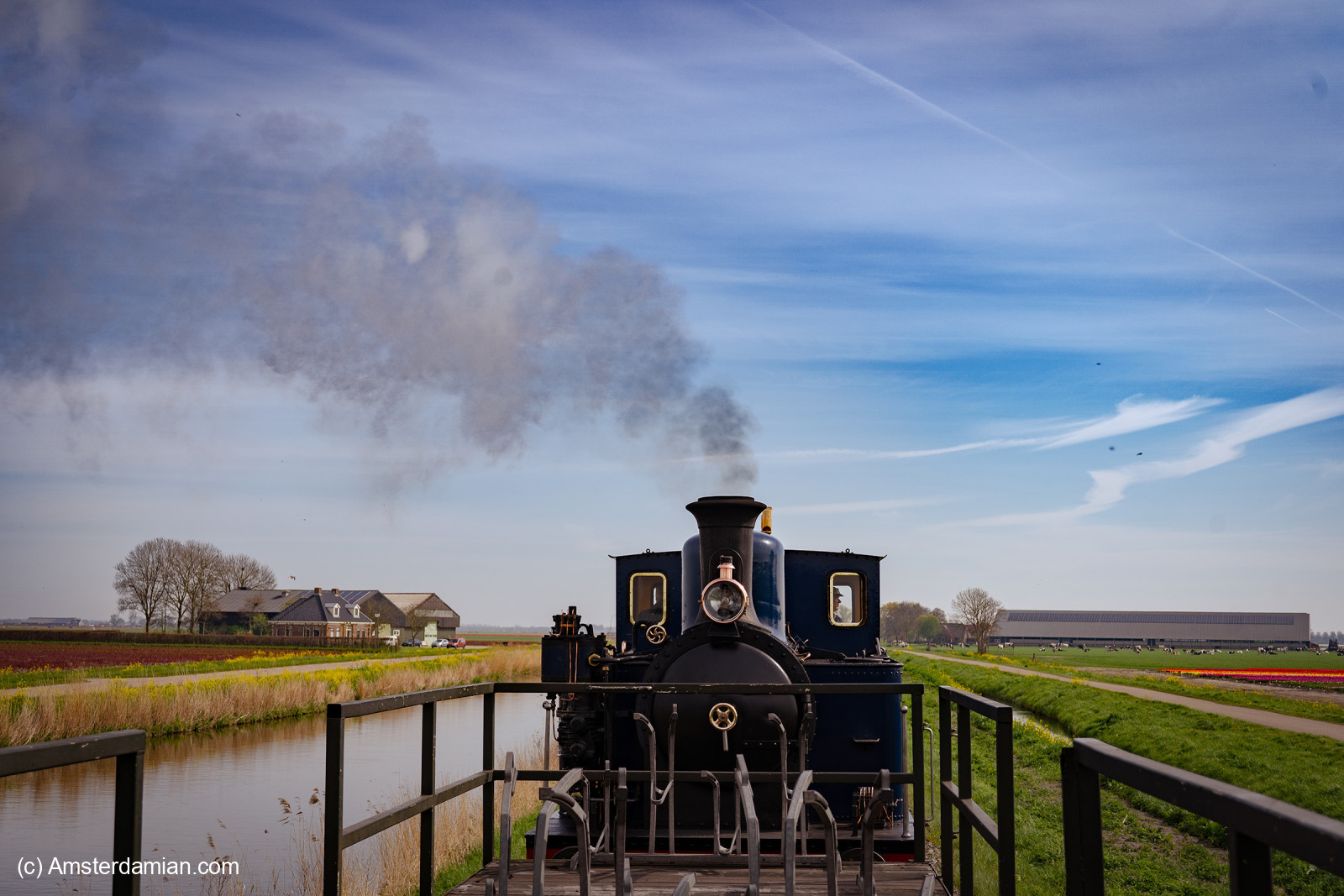
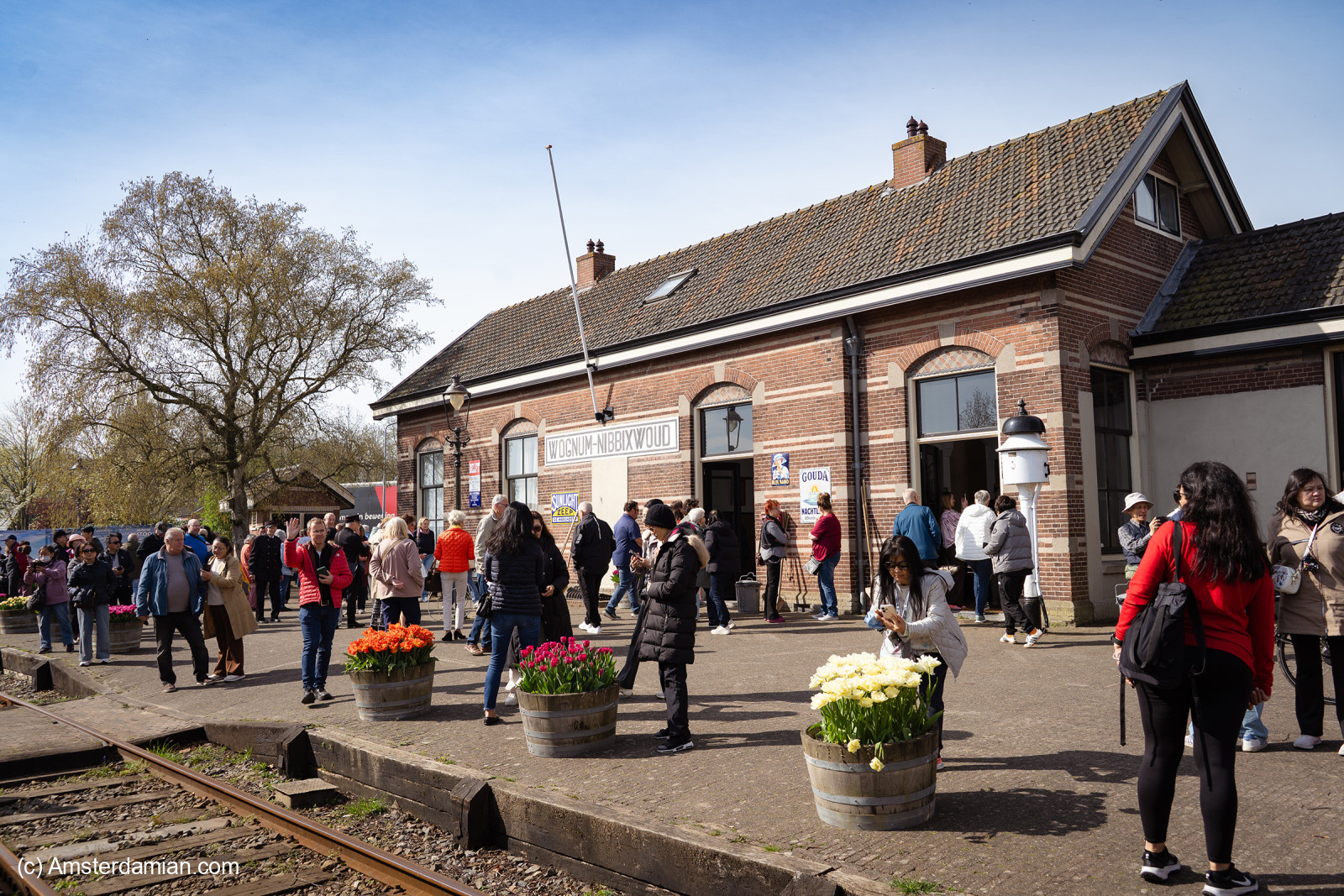
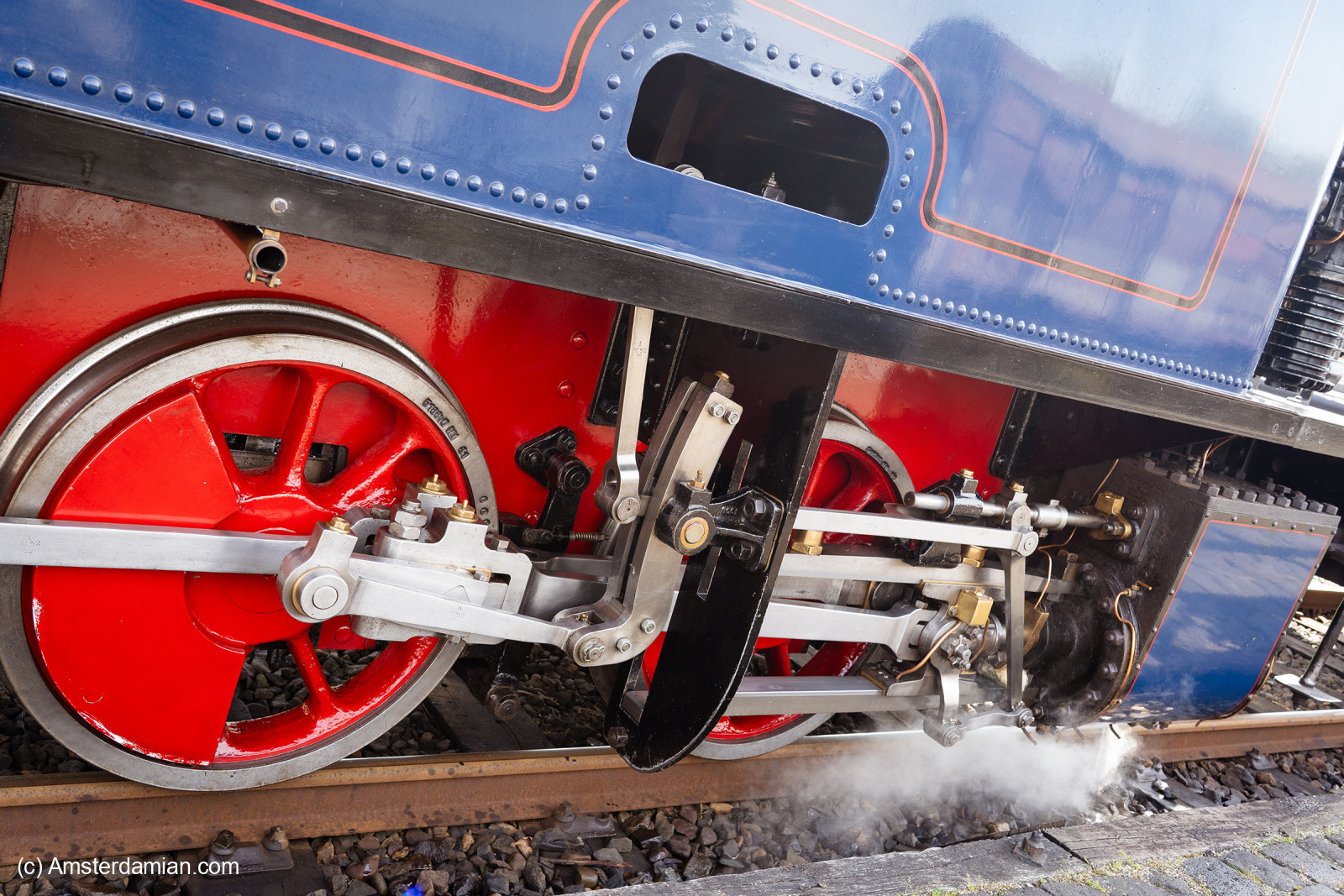
The centrepiece of the collection is a locomotive called Bello, the only preserved light steam engine in the country. The rest of the fleet has been gathered from all over the Netherlands, and the whole presentation is set to how the line would have looked in 1926. The original station buildings at Hoorn, Wognum-Nibbixwoud, Twisk, Opperdoes, and Medemblik are still standing and still in use, with small exhibitions and people dressed as 100 years ago, which is part of why the ride feels so convincing.
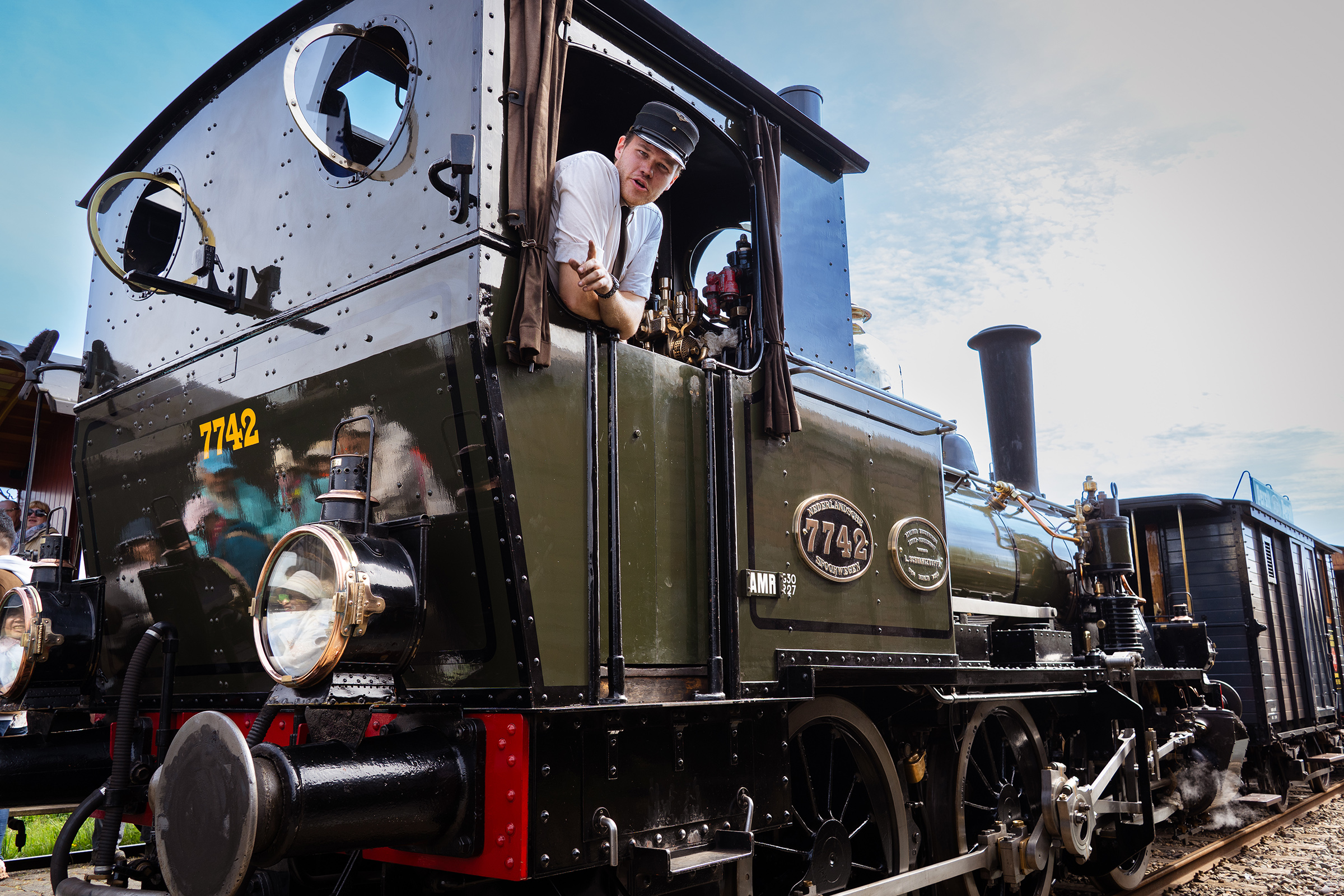
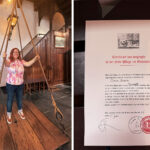
Cool fact: the station in Hoorn is twinned with the Bluebell Railway in England, and on a disused platform at Huddersfield railway station in northern England there’s an old carriage with a Dutch plaque in its window commemorating one hundred years of Stoomtram Hoorn–Medemblik.
What the steam train ride is like
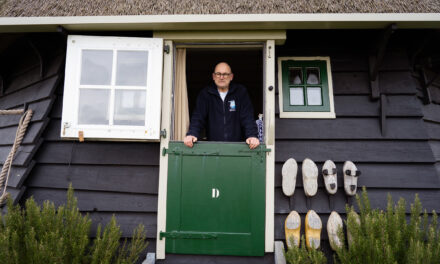
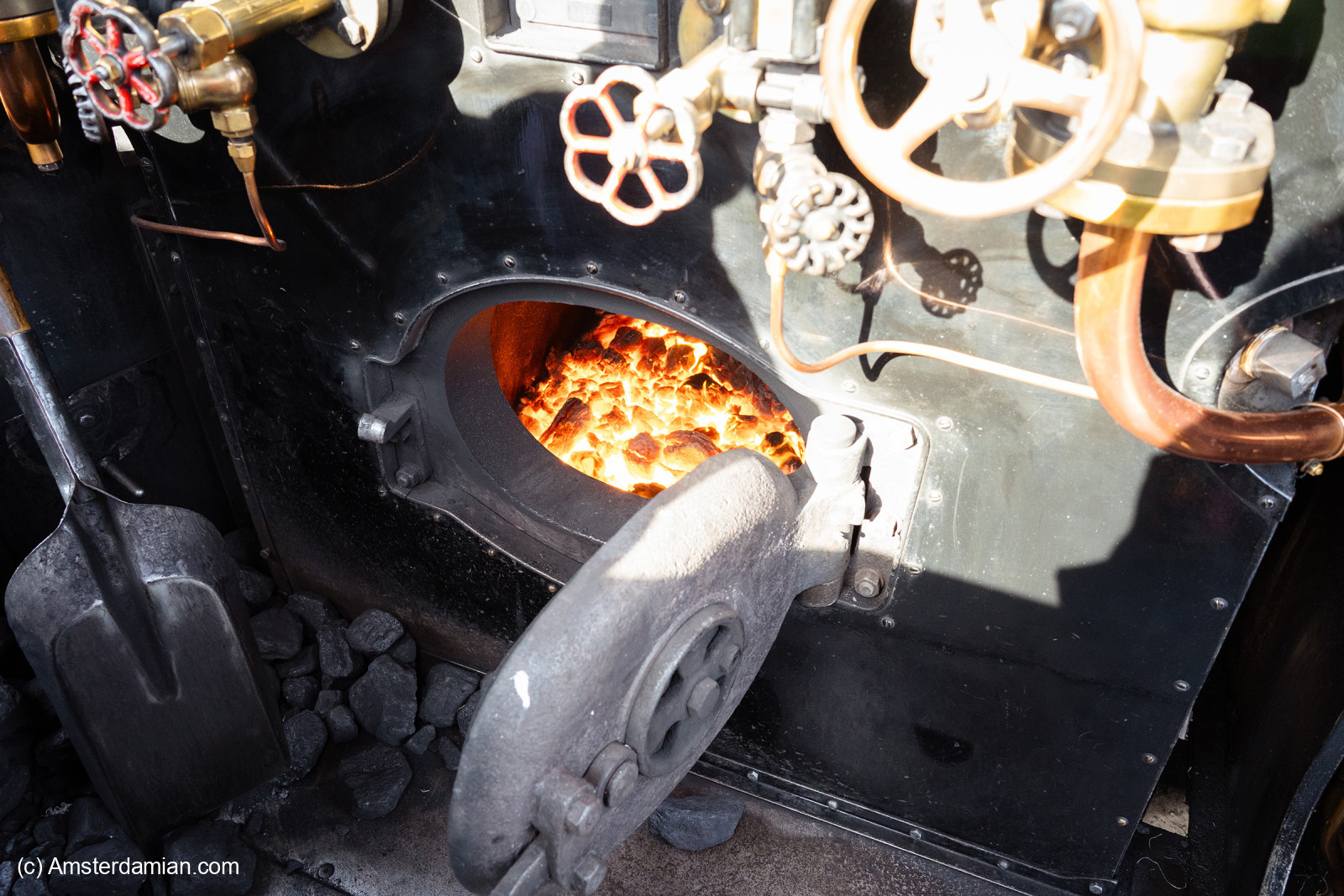
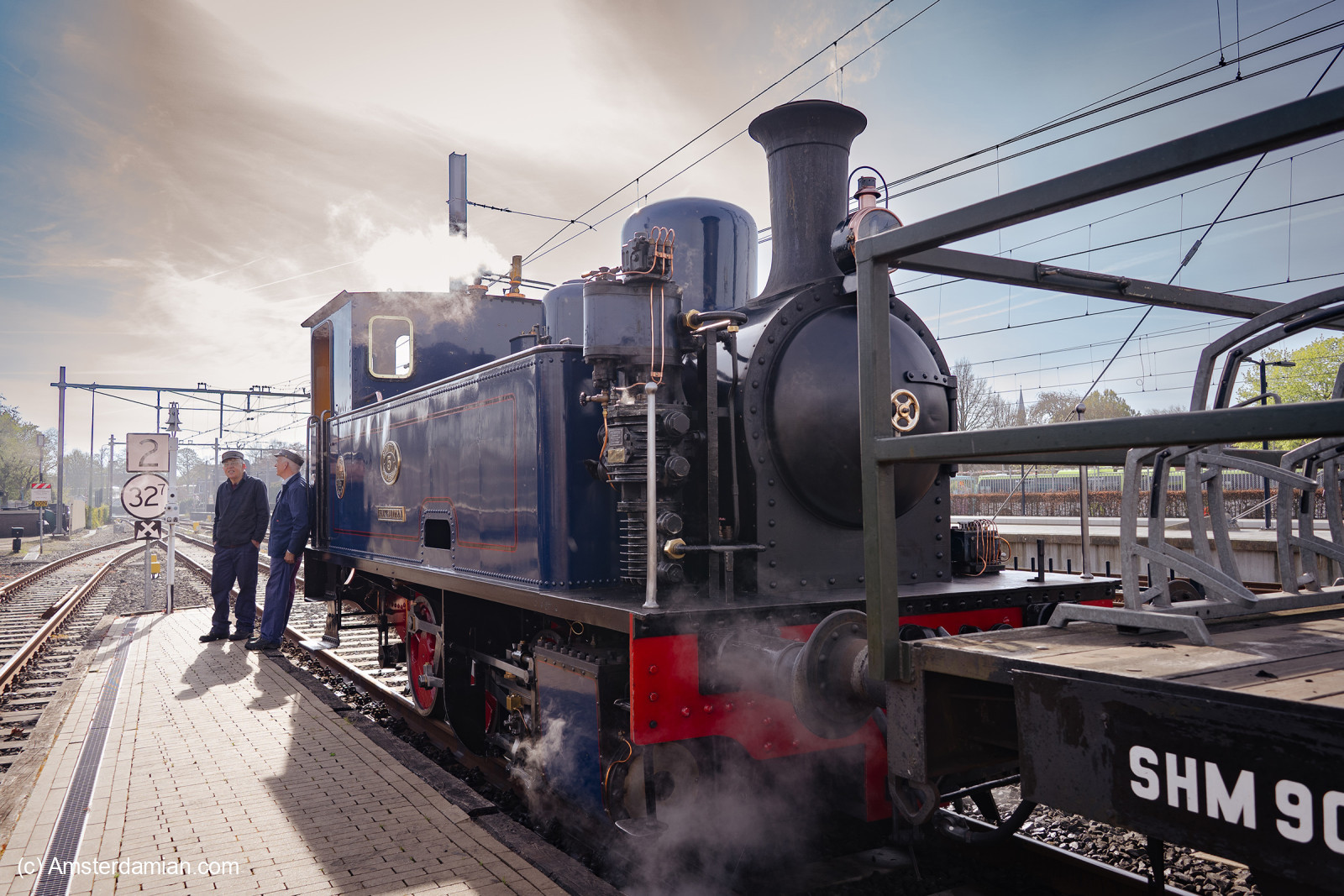
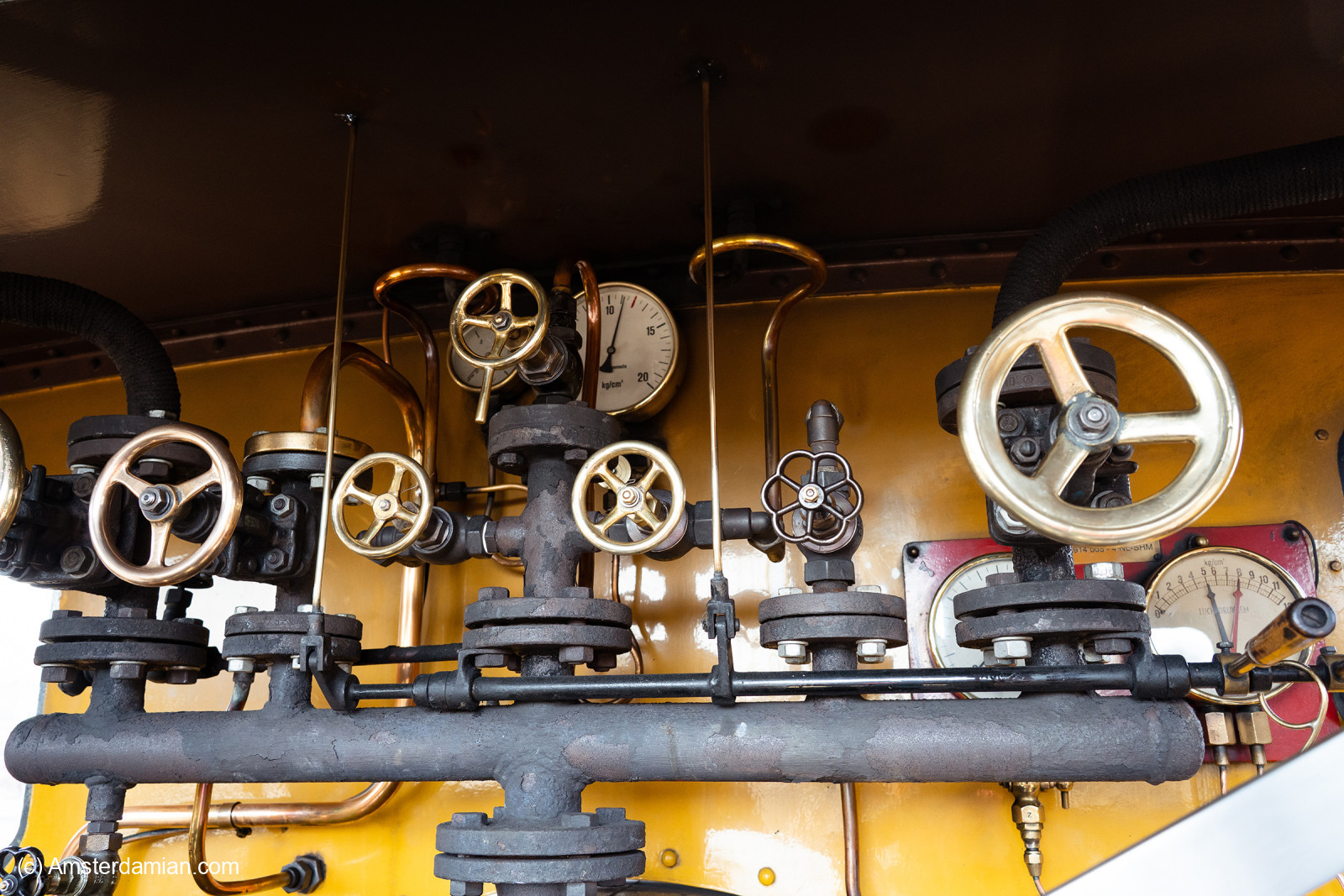
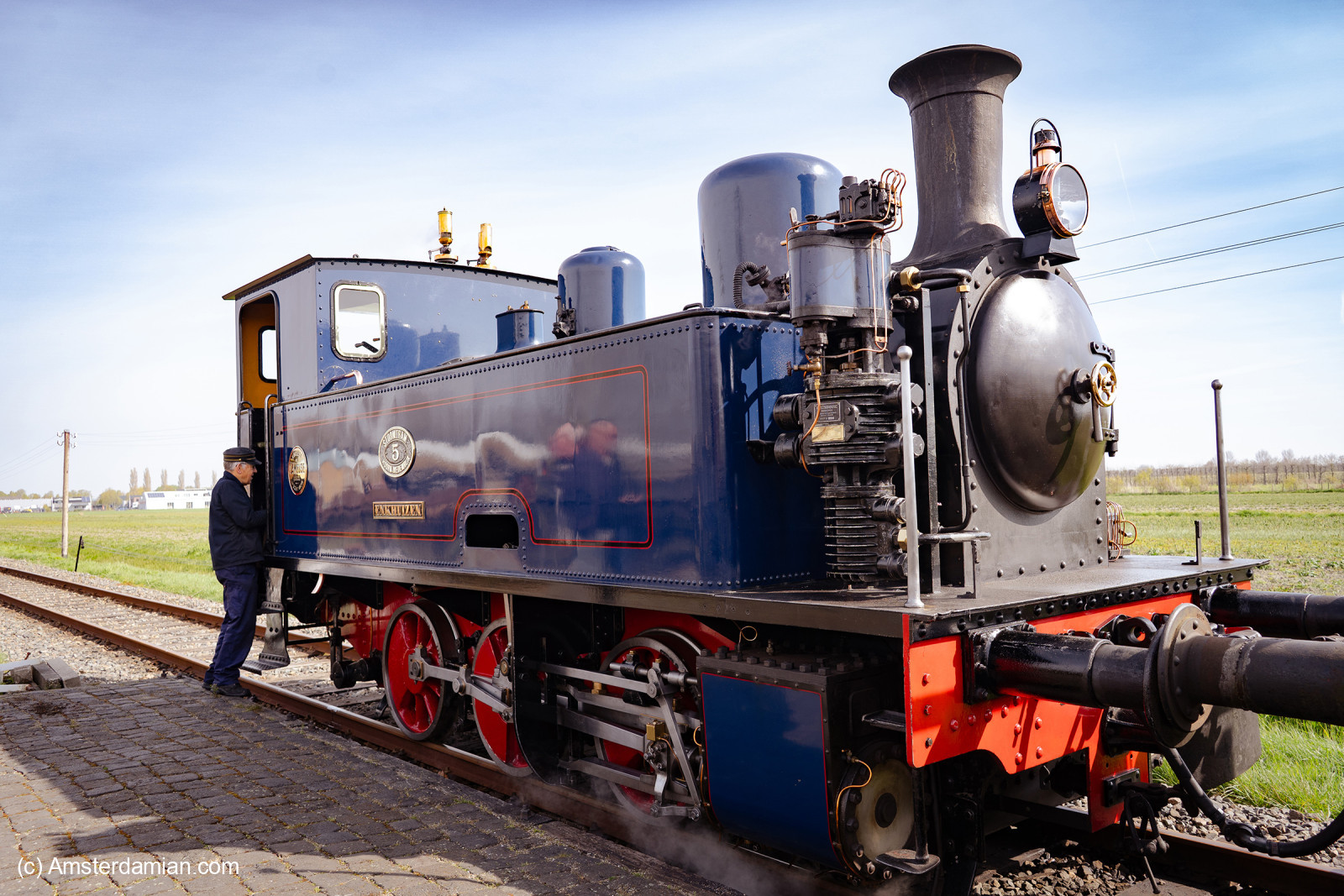
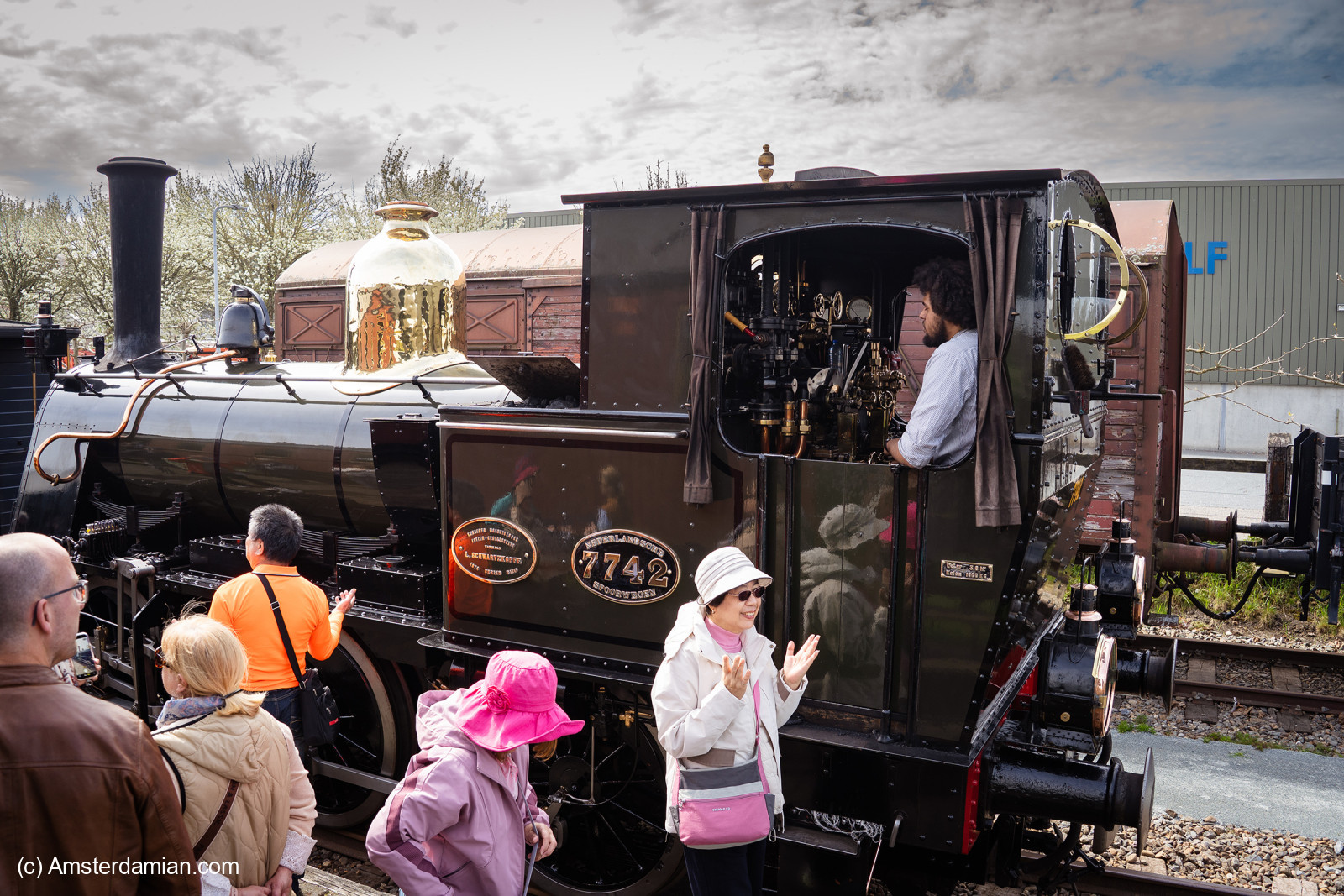
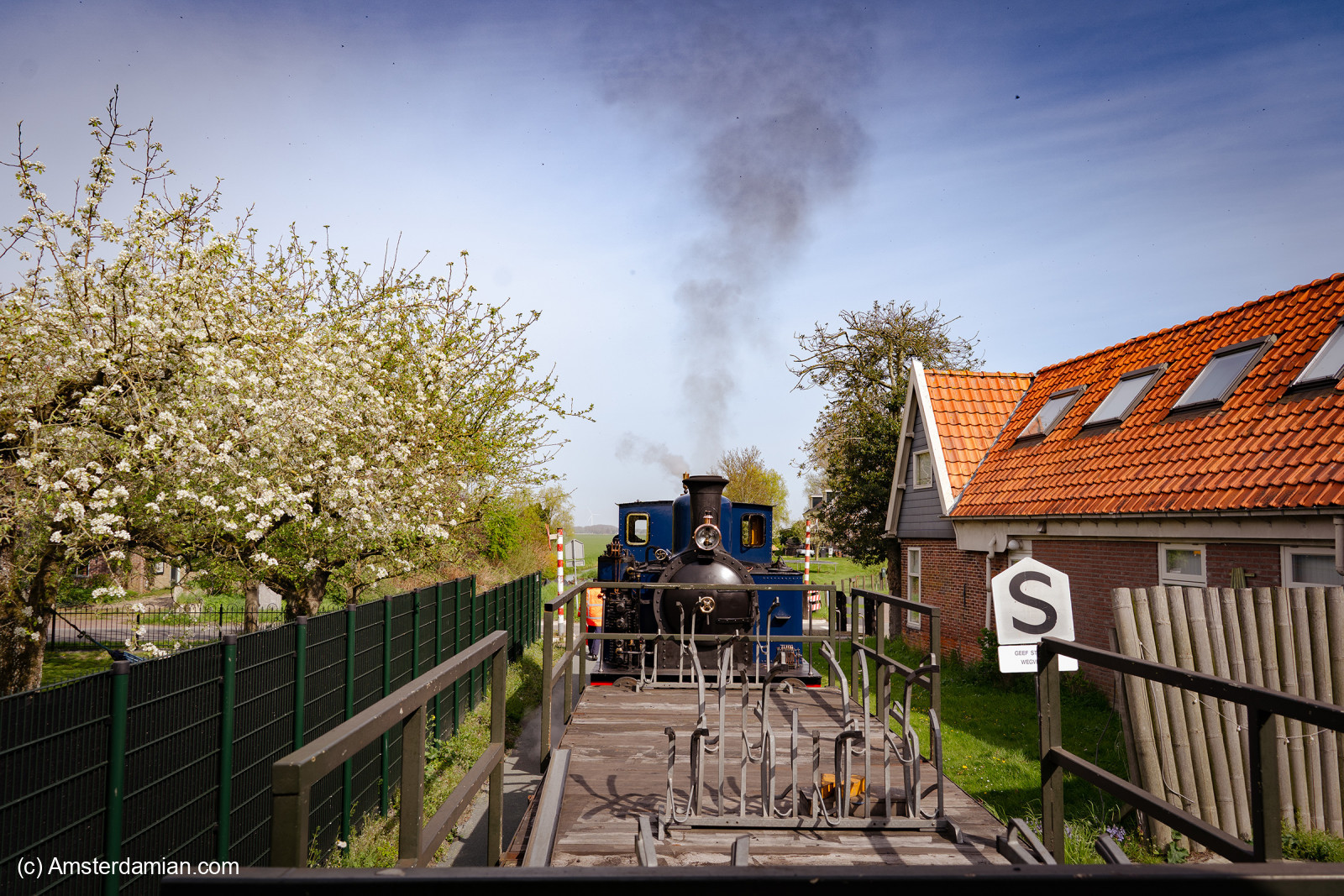
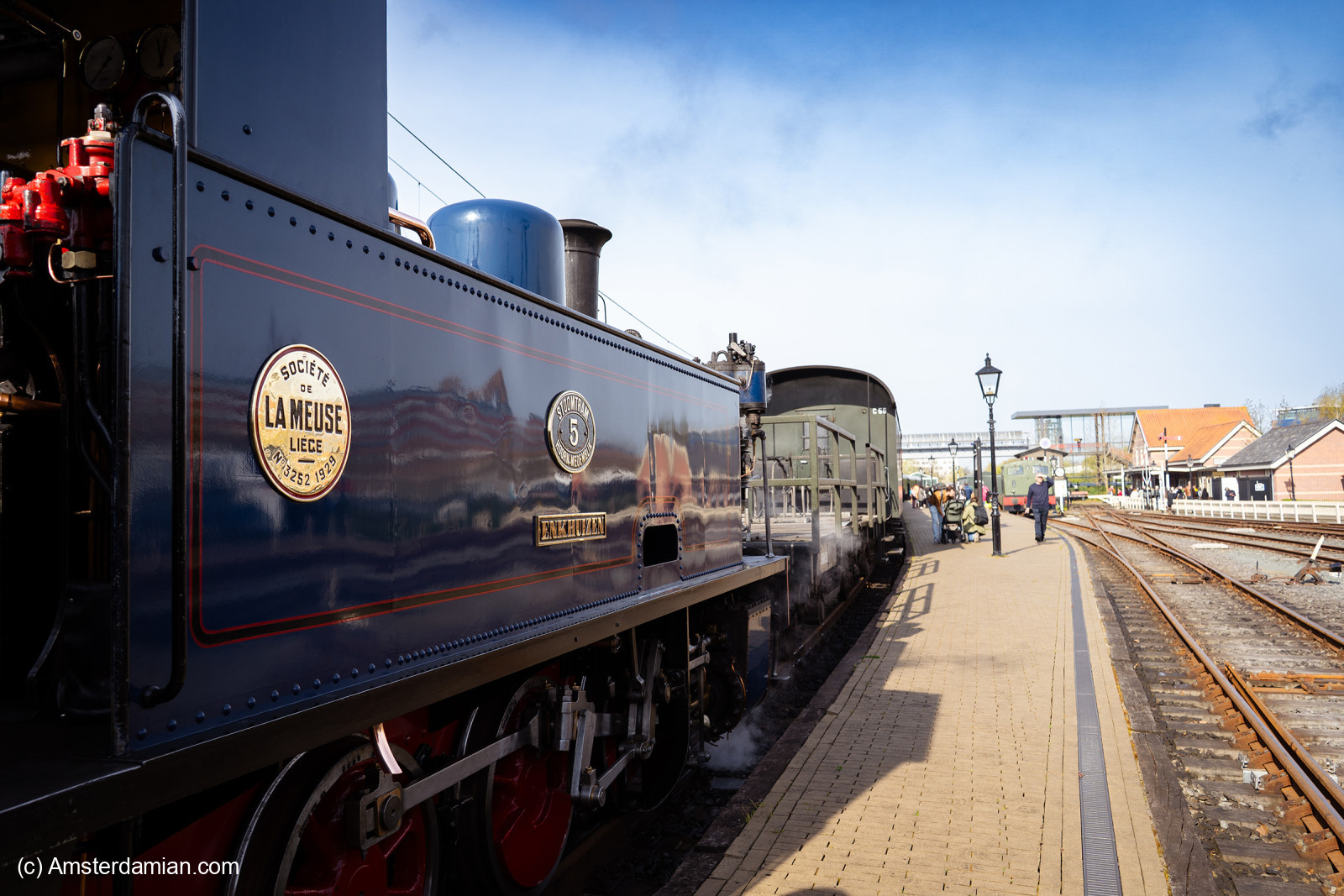
We left early and caught the morning train out of Hoorn. Before we left, I took photos of the locomotive, had a chat with the friendly conductors and was allowed to step into the driver’s cab to watch the coal burning in the firebox.
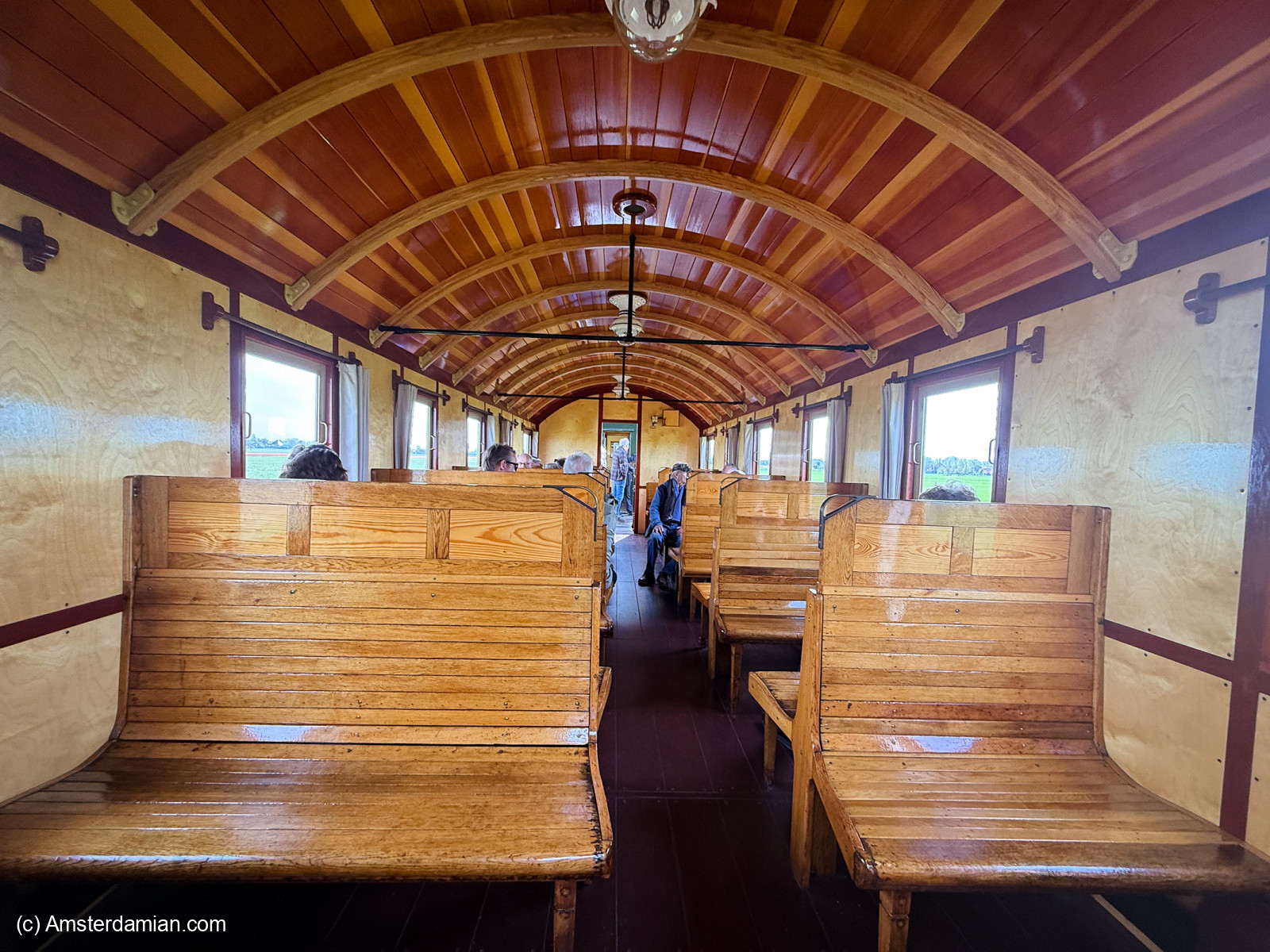
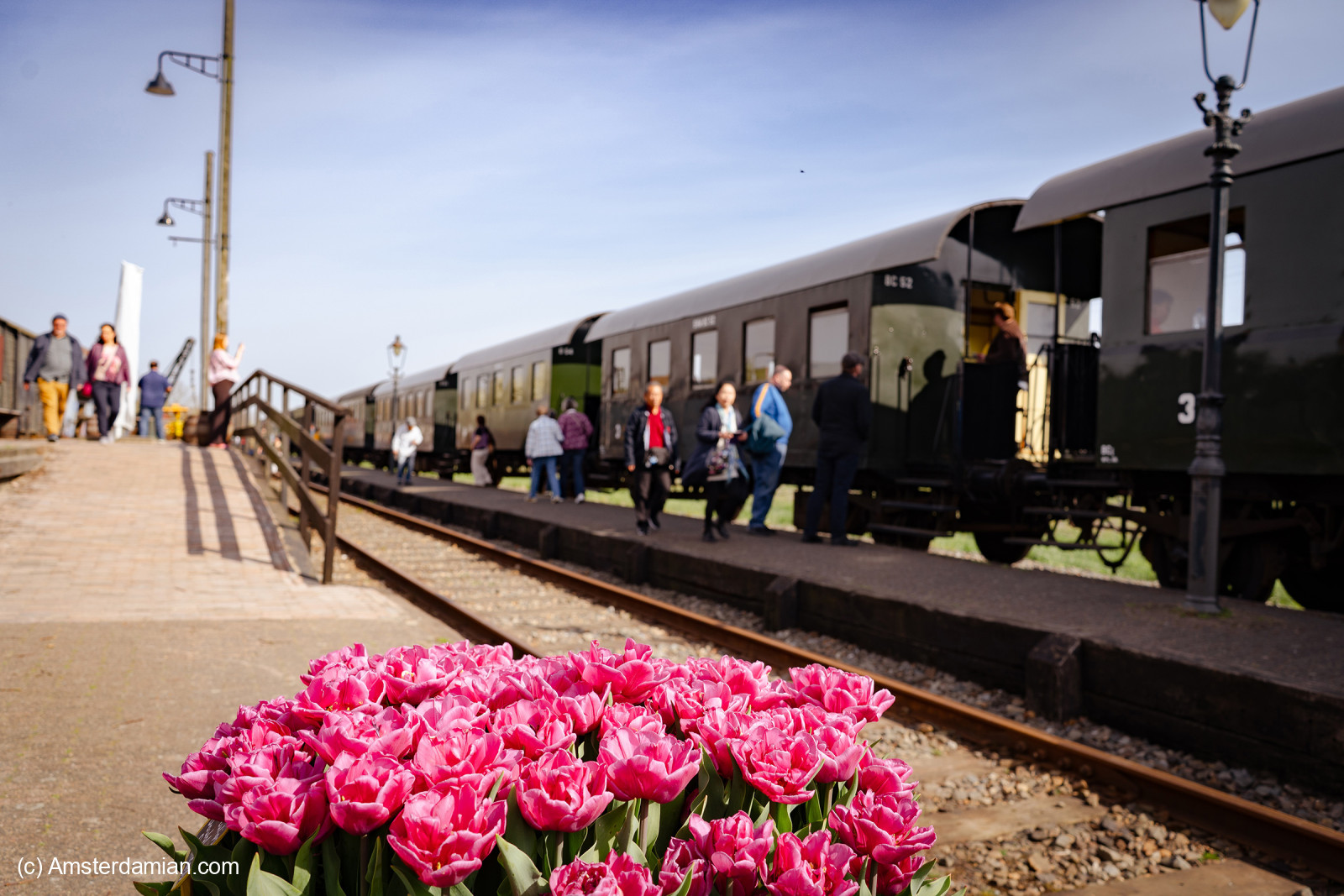
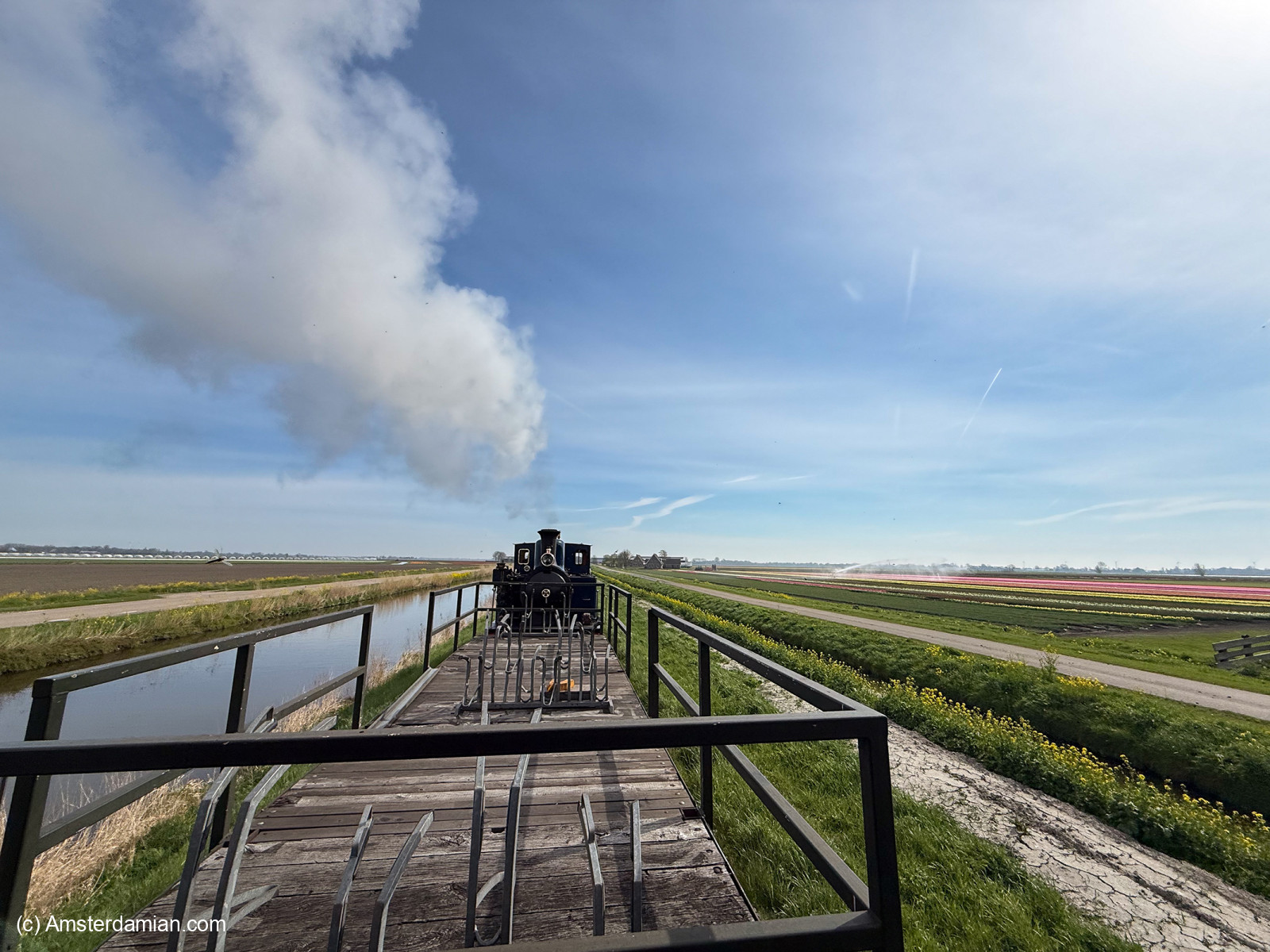
The train itself is made up of a mix of carriages, and you can get out on the platforms between them during the ride to feel the wind and the steam on your face and take photos and videos. If you stand in front of the first carriage, behind the locomotive, you also get the occasional small piece of coal in the hair. Worth it. You can walk from carriage to carriage during the journey, which I did, partly to take pictures and partly just to see how different each one looks.
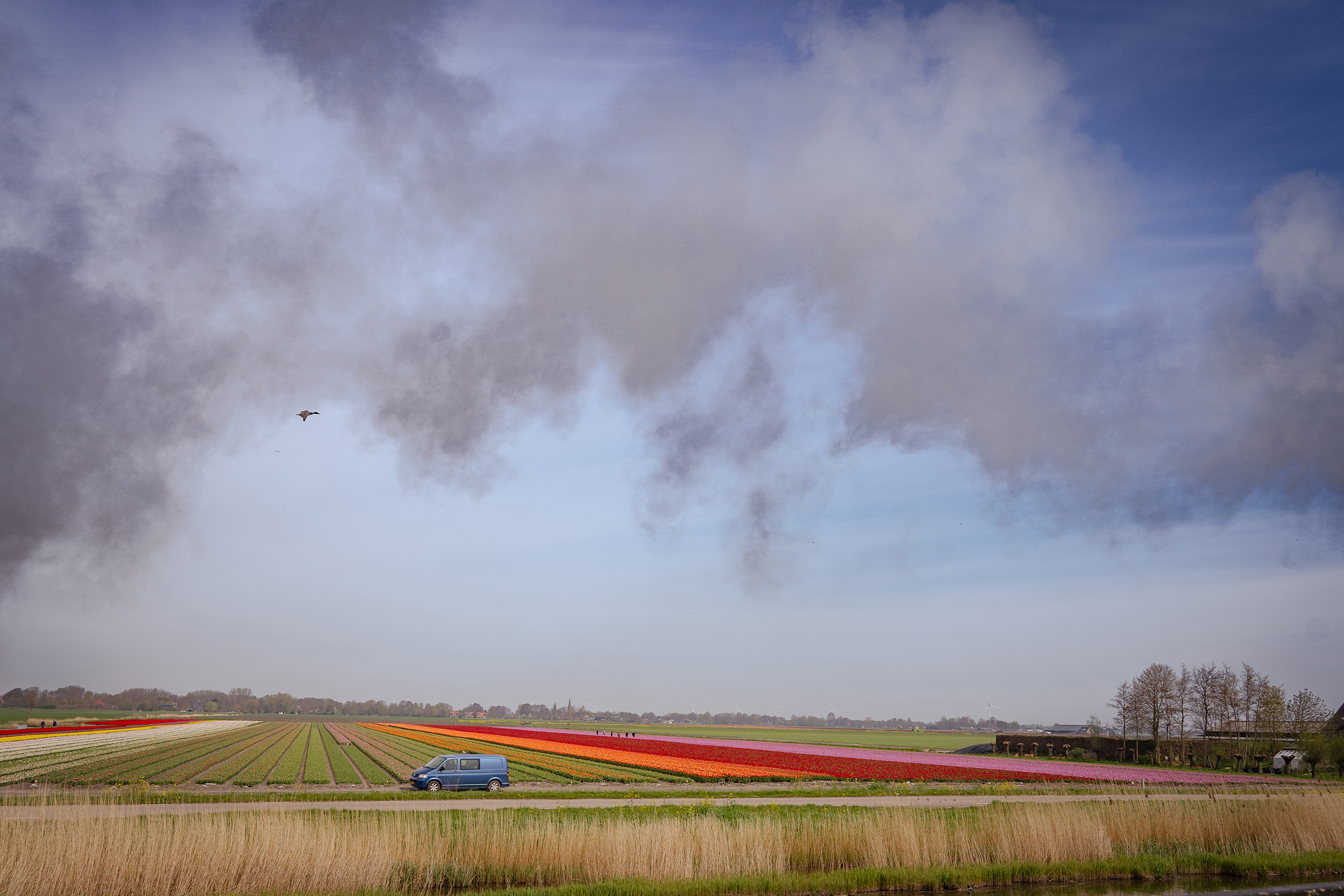
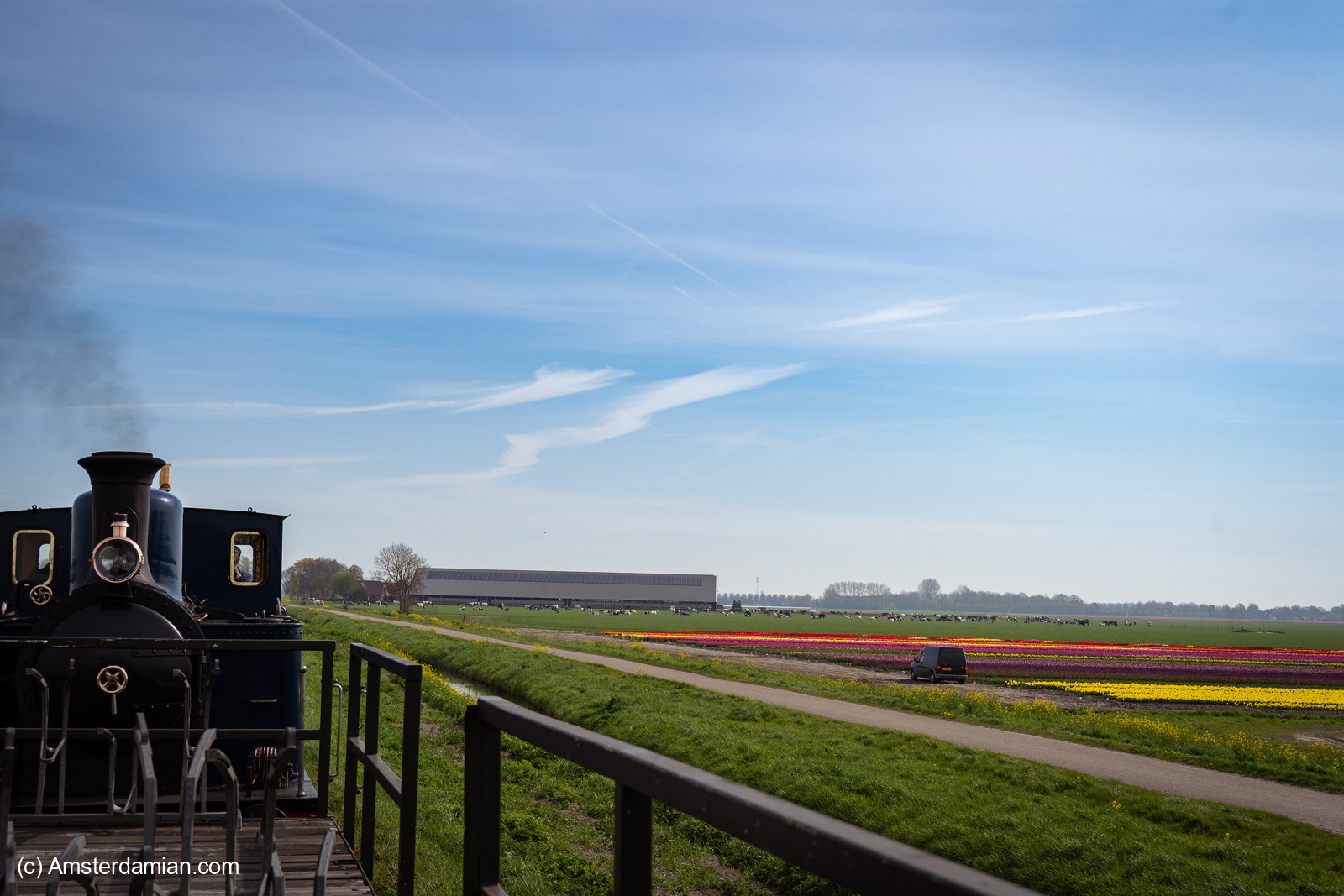
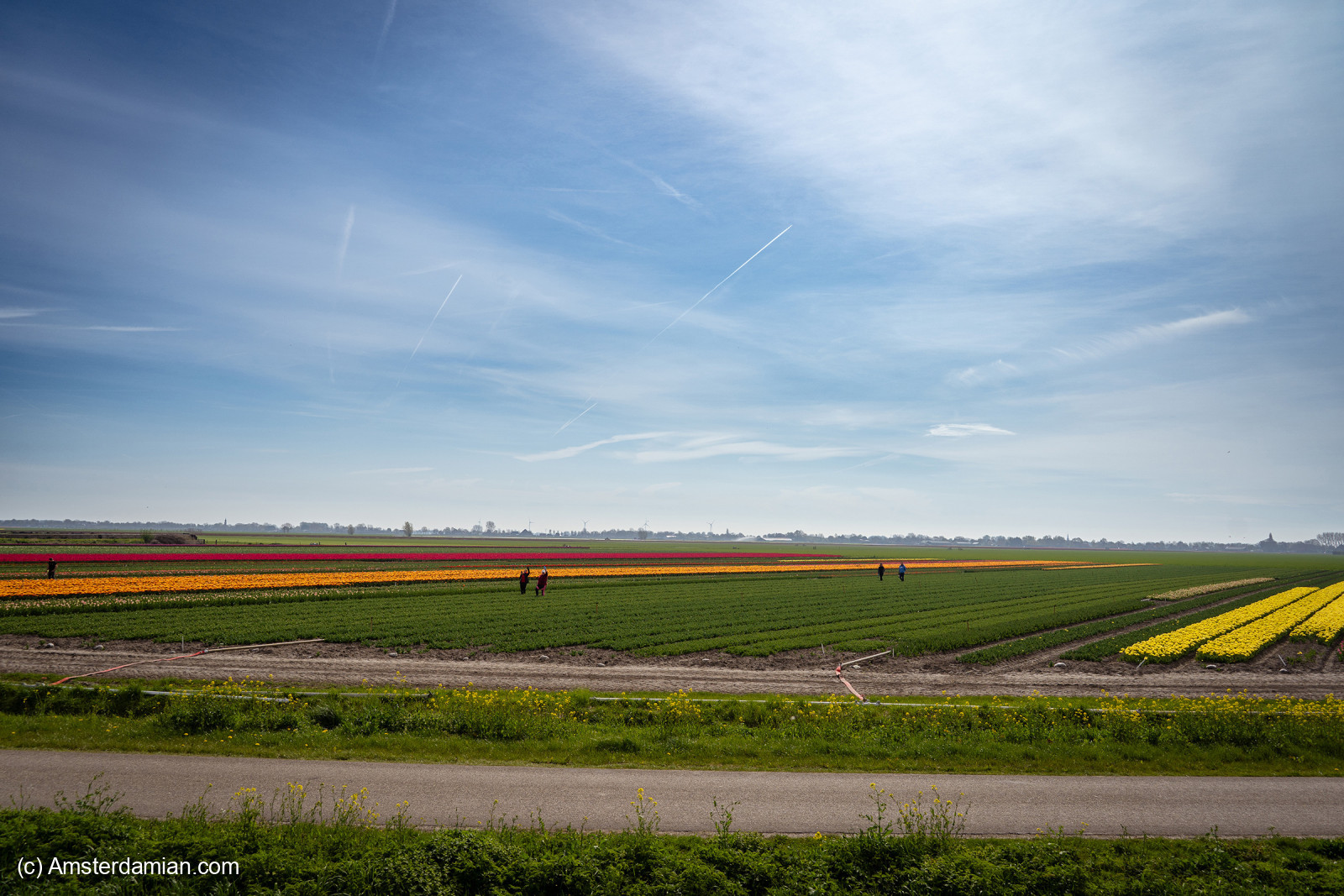
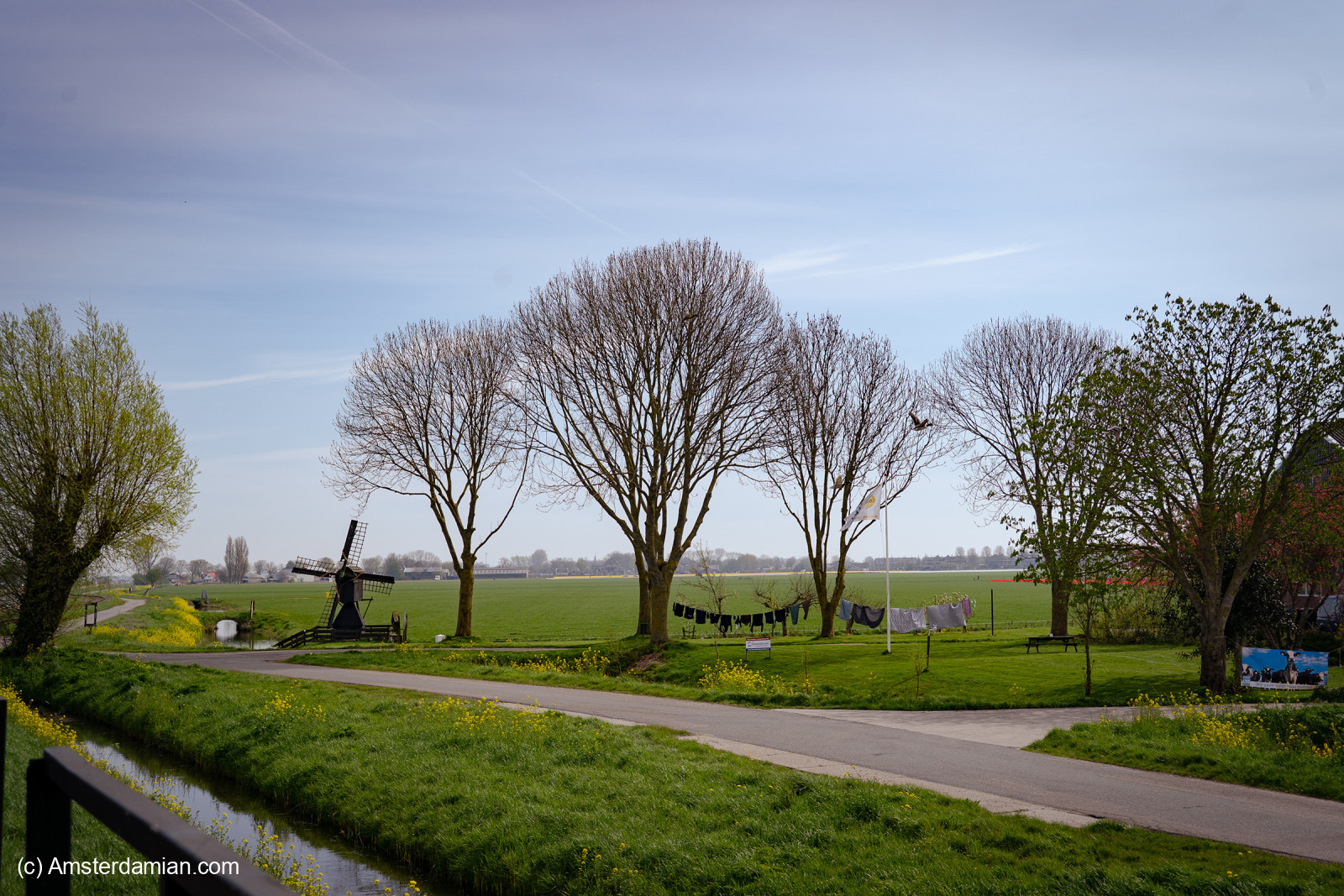
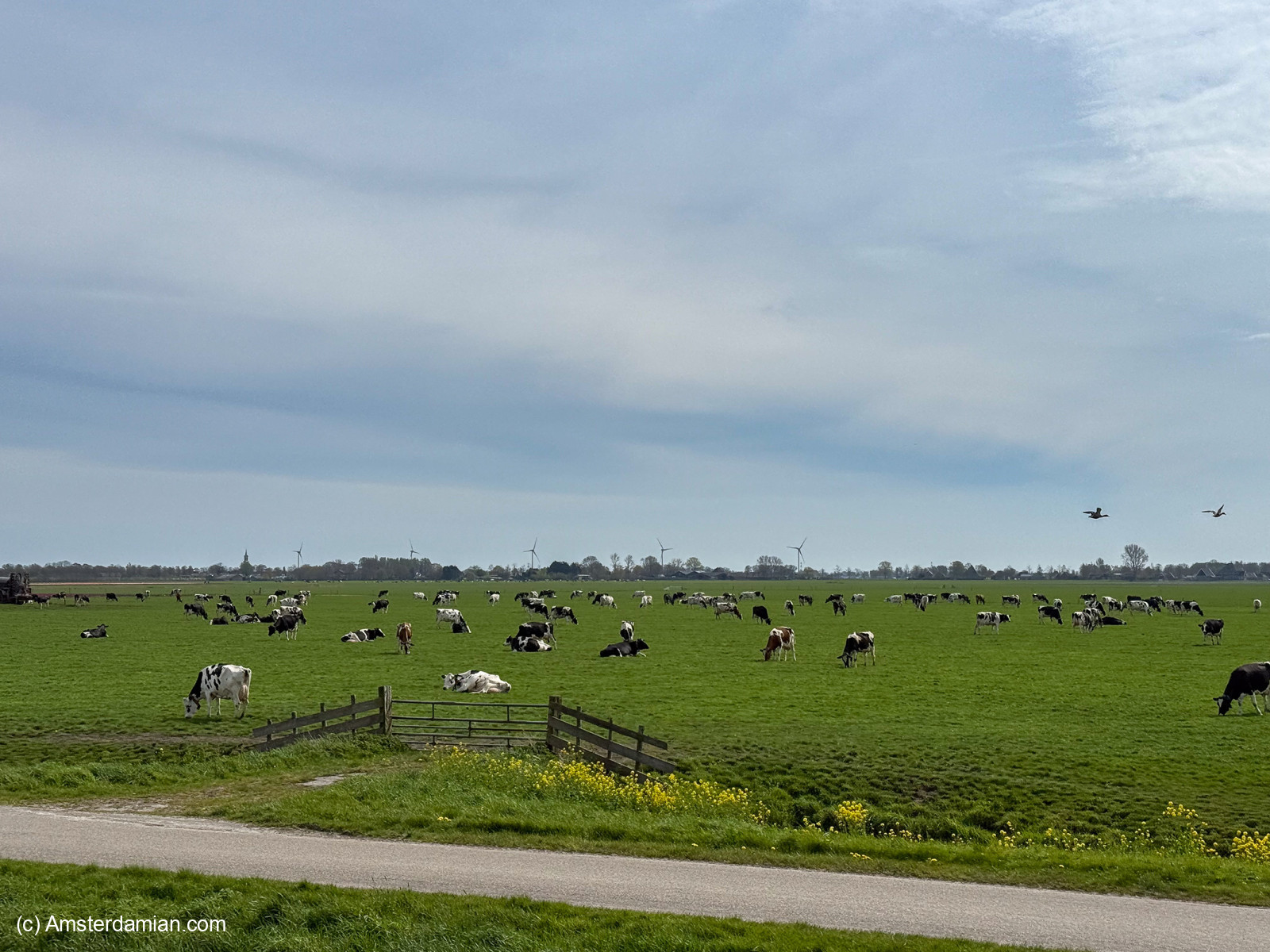
The pace is slow, and that slowness what gives it its charm. There’s time to photograph, time to buy poffertjes from a gentleman who walks through the train selling them for five euros, and time to just look out of the window and let your thoughts drift. The line passes through working farmland: cows, sheep, orchards, the occasional windmill, laundry drying in the sun. Some stretches run close to tulip fields, where you can see the long colourful strips from your seat; other stretches are just calm Dutch countryside.
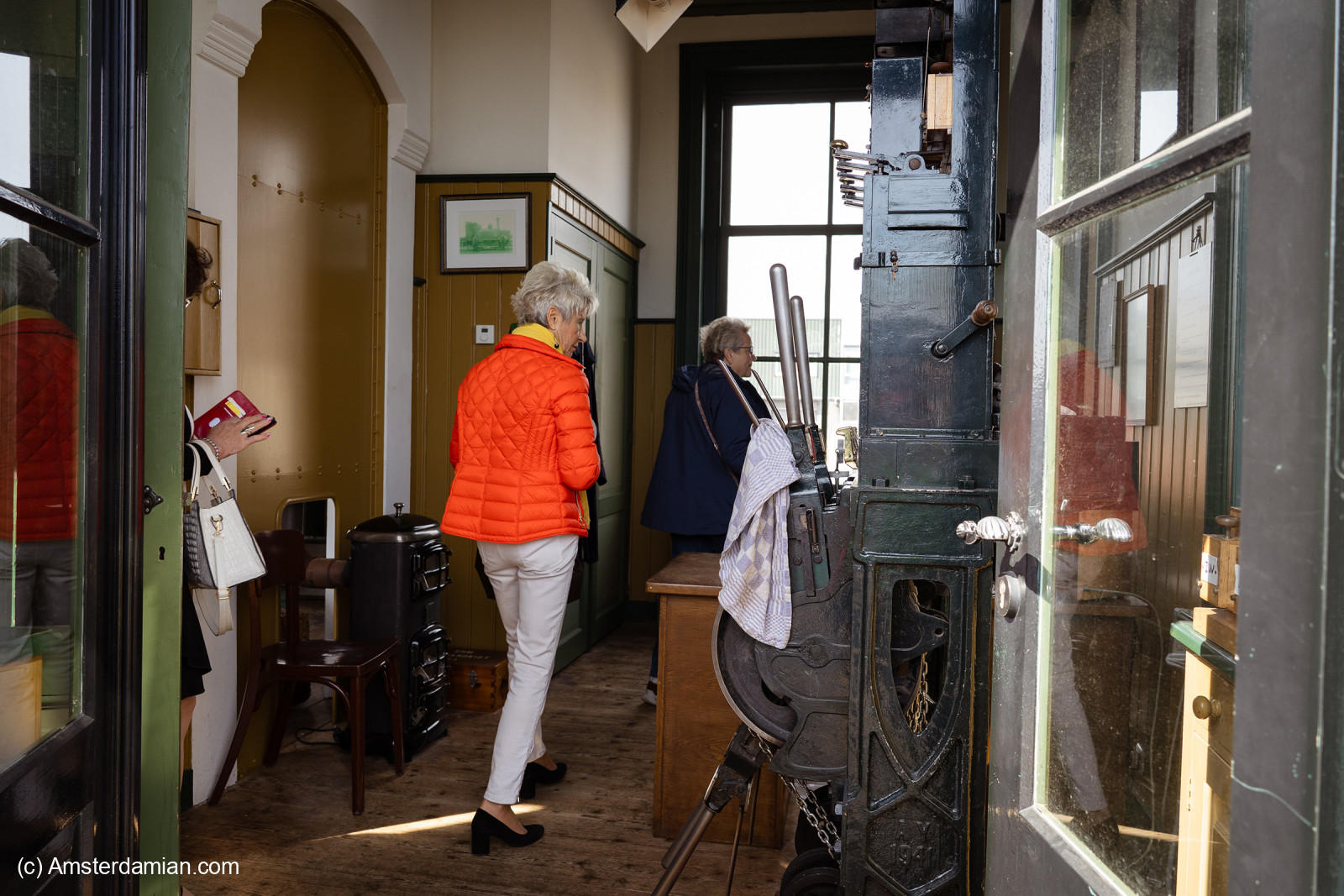
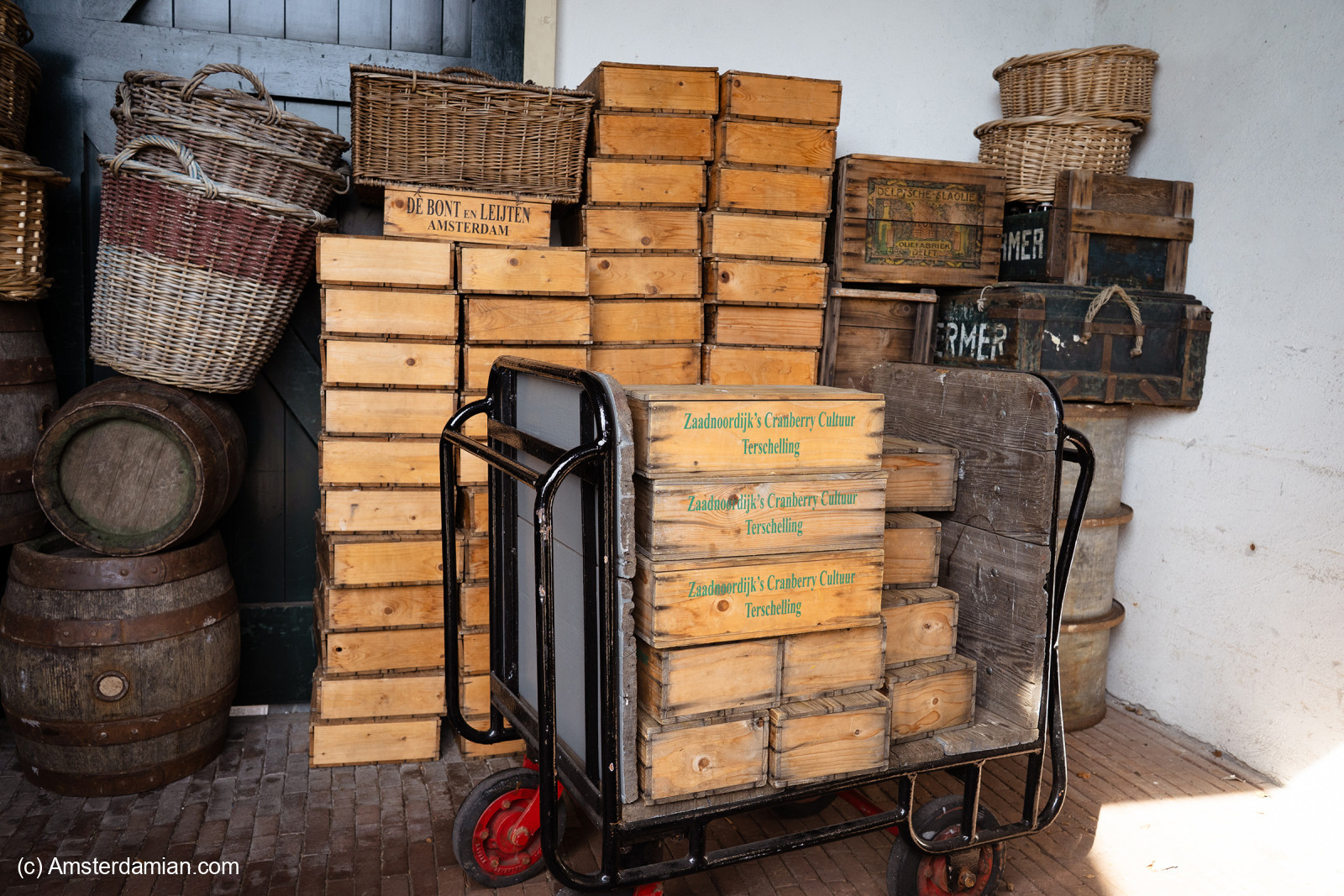
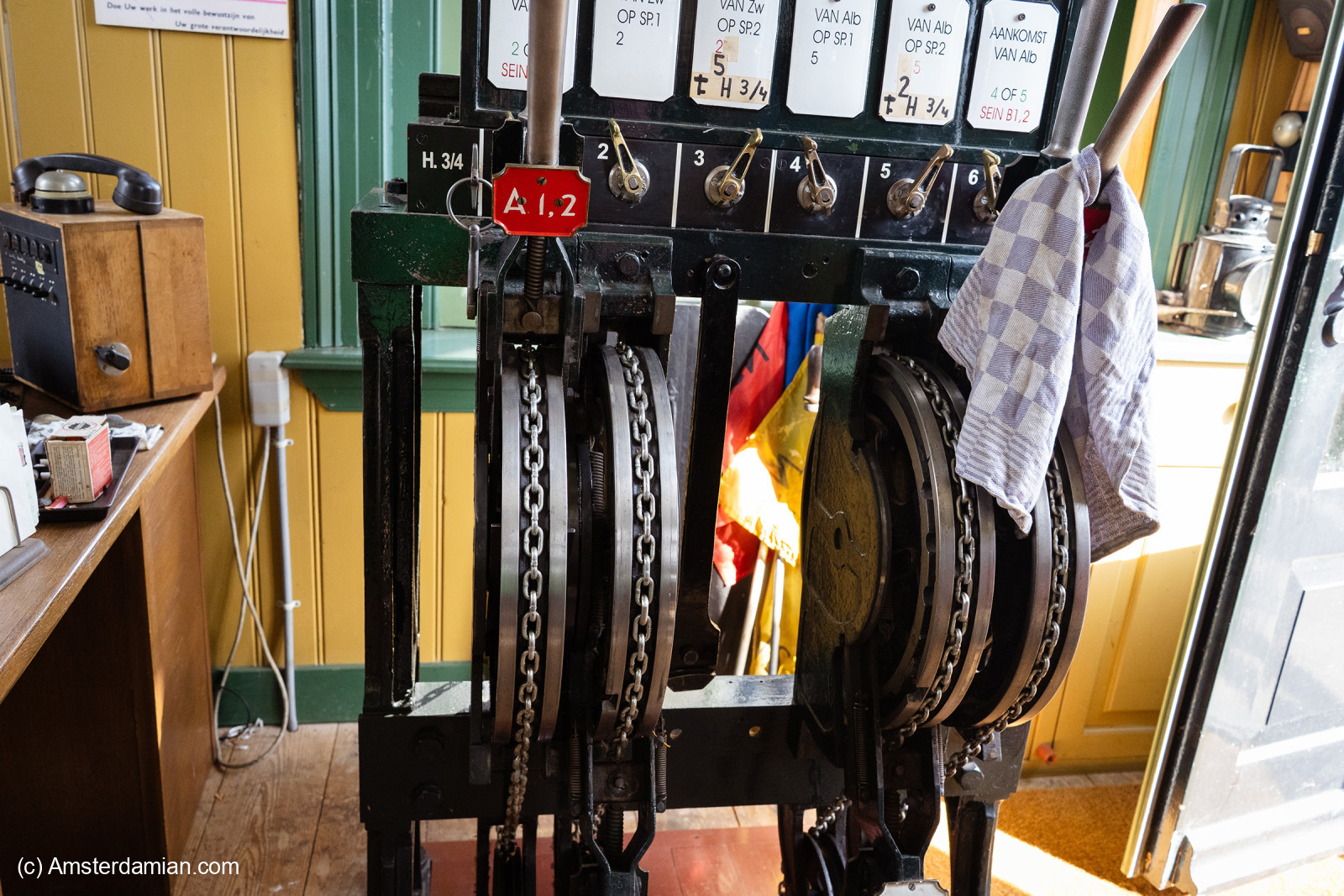
The train makes a stop at one of the old intermediate stations, which is kept as a kind of half-museum: signals, luggage carts, a stationmaster’s office preserved as it would have looked a century ago. I expected the stop to be close to a tulip field, with tulips stretching to the horizon, but instead of that, there were only some tulips at the station planted in pots. The real tulip fields are glimpsed only from the moving train.
Once you arrive in Medemblik, you have enough time for lunch near the station and a bit of exploring before the return train. One stop I’d recommend is the Bakery Museum (Bakkerijmuseum), where you can buy the small local pastries that the region is known for. The beautiful Radboud Castle right on the waterfront would have to wait for another time, when you come here for a day trip.
And then, when the whistle sounds again, you board and ride back to Hoorn, or, if you’ve chosen the combined ticket, you take the boat to Enkhuizen.
The combined steam train and IJsselmeer ferry trip
The museum runs a combined trip that pairs the steam tram with a vintage ferry across the IJsselmeer between Medemblik and Enkhuizen. You can start at either end: take the tram from Hoorn, then the boat from Medemblik to Enkhuizen, or the reverse. The boat lands opposite Enkhuizen railway station, where a regular NS train will bring you back to Hoorn (or onward to Amsterdam).
I haven’t done the boat version yet, and I hope to do it someday. I’ve always wanted to sail across the IJsselmeer and arrive into Enkhuizen’s old harbour by water. Maybe after I’d make a visit at the Zuiderzee Museum, an open-air museum that tells the story of life around this inland sea before the Afsluitdijk closed it off from the North Sea and turned it from a salty sea into a freshwater lake. I’ve been there a few times and I’d happily go again.
Practical notes
A few things worth knowing if you go:
The train operates on a seasonal timetable, from March to October. Beside the usual schedule, the museum organises special events and special rides, like the Tulip Route in April or the Sinterklaas events in December. The standard morning tram leaves Hoorn at 10:40 and arrives in Medemblik at 12:00. The ride back to Hoorn (or the ferry onward to Enhuizen) is at 13:20. If you choose to do the route starting at Enkhuizen, the ferry leaves at 10:40 and you arrive in Hoorn at 12:00, then leave to Hoorn by steam tram at 13:20. Book your tickets online, in advance, as it can be very busy and they get fully booked quickly in season. A full-day adult ticket is €29.50 and €21 for children aged 4-12. Holders of the Museumkaart travel free on both the tram and the boat, only paying €2 booking fee.
Hoorn itself is easy to reach; there are direct NS trains from Amsterdam Centraal that take about forty minutes, so the whole thing is very doable as a day trip from the city.
This experience is quite special, the sort of day you want to repeat, on a different season, different carriage, different direction. You could do it in April for the tulips, in June for the summer light, in October for the low autumn sun across the fields. It’s great as a special surprise, to take a friend visiting from abroad, or just go by yourself with a book and a camera.
It lets you be carried away. You sit, and the landscape comes toward you, and small things reveal themselves along the way. You notice a heron in a ditch, a farmer waving from a tractor, a child on the platform pointing at the locomotive as if it were a dragon. It’s the kind of outing that takes you, for a few hours, into a different time, which, sometimes, is exactly what you need.
→ If you’d like to read more about tulip season in the Netherlands, see also: Cycling Through the Tulip Fields.
Stay tuned for more and follow Amsterdamian on Instagram and Facebook for more stories about life in the Netherlands, written by a real local, updated constantly.
Check out my photo book: Amsterdam Through the Seasons!
Love what you’re reading? Support my work with a small donation.
And share this post if you liked it!