Latest update: May 2026.
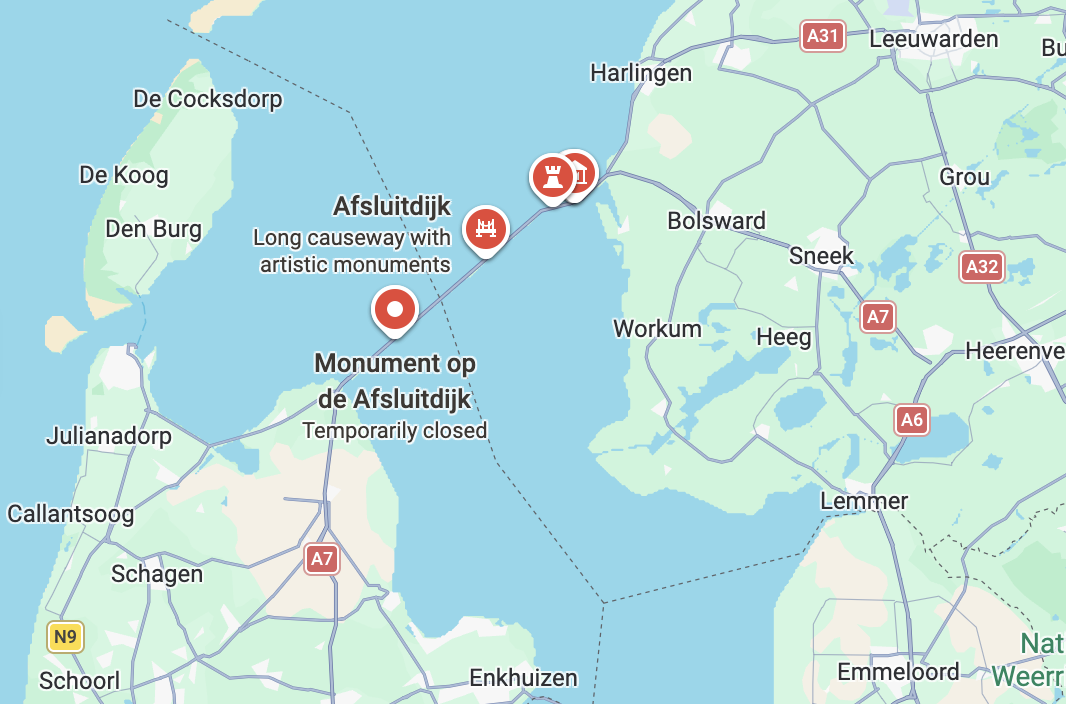
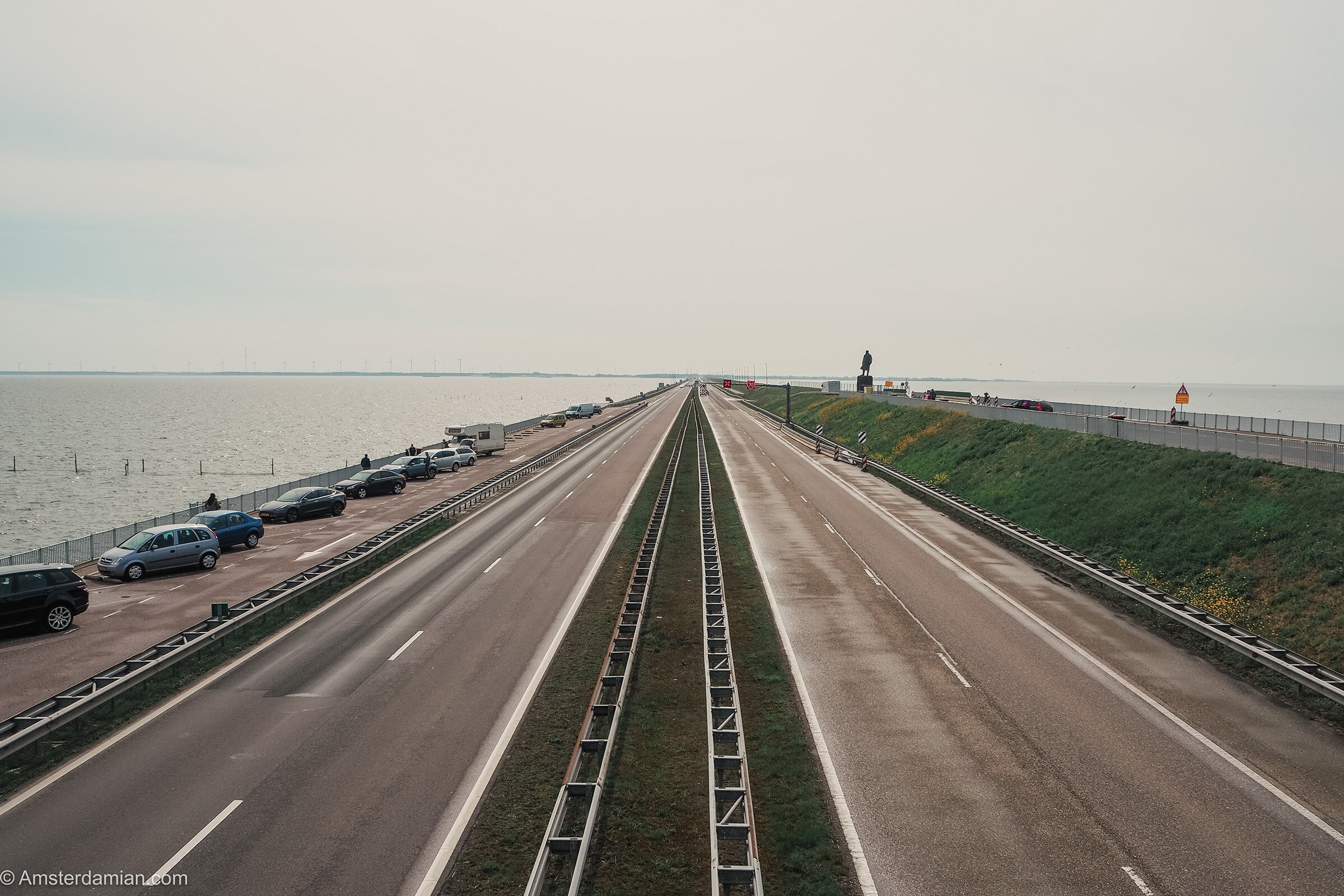
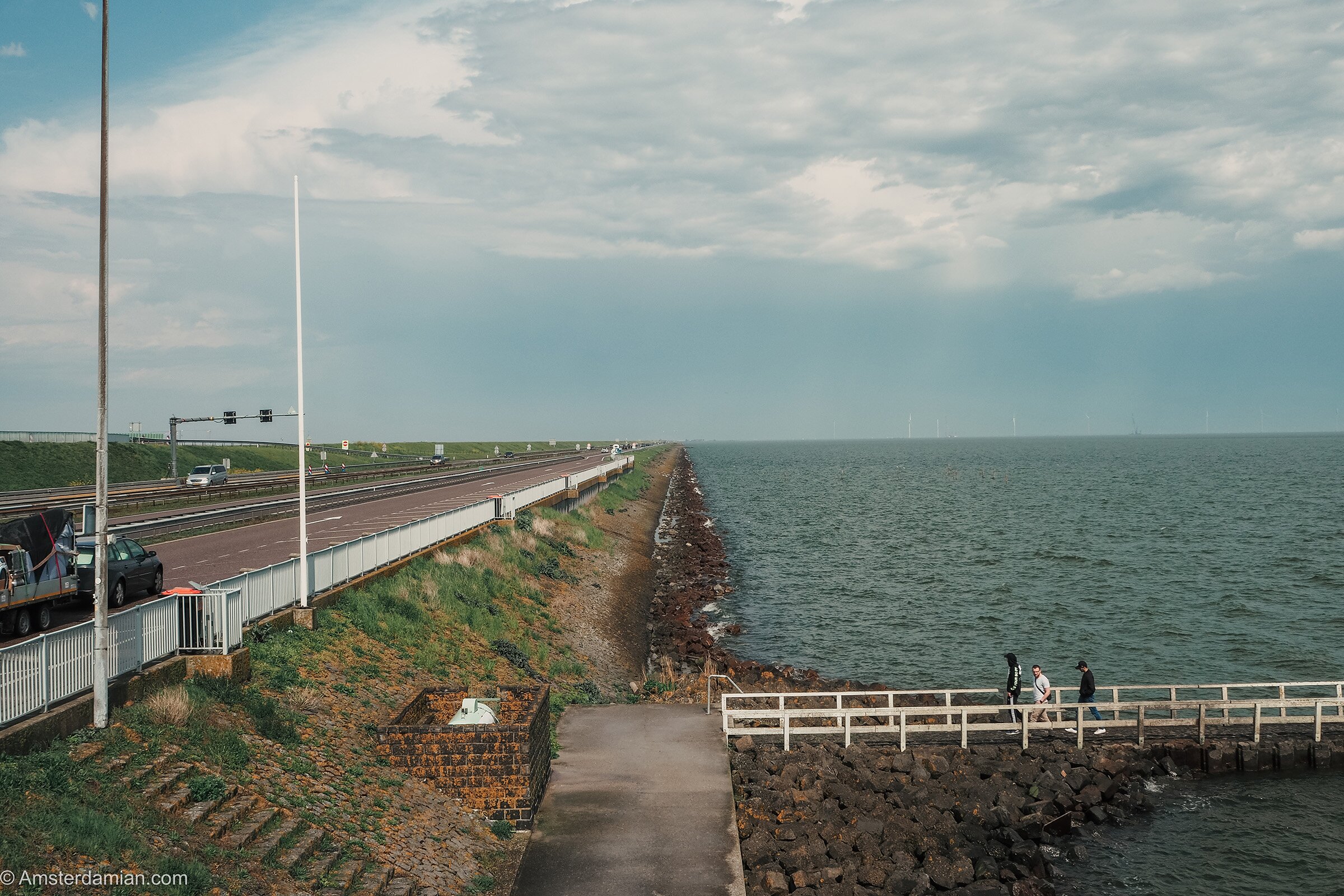
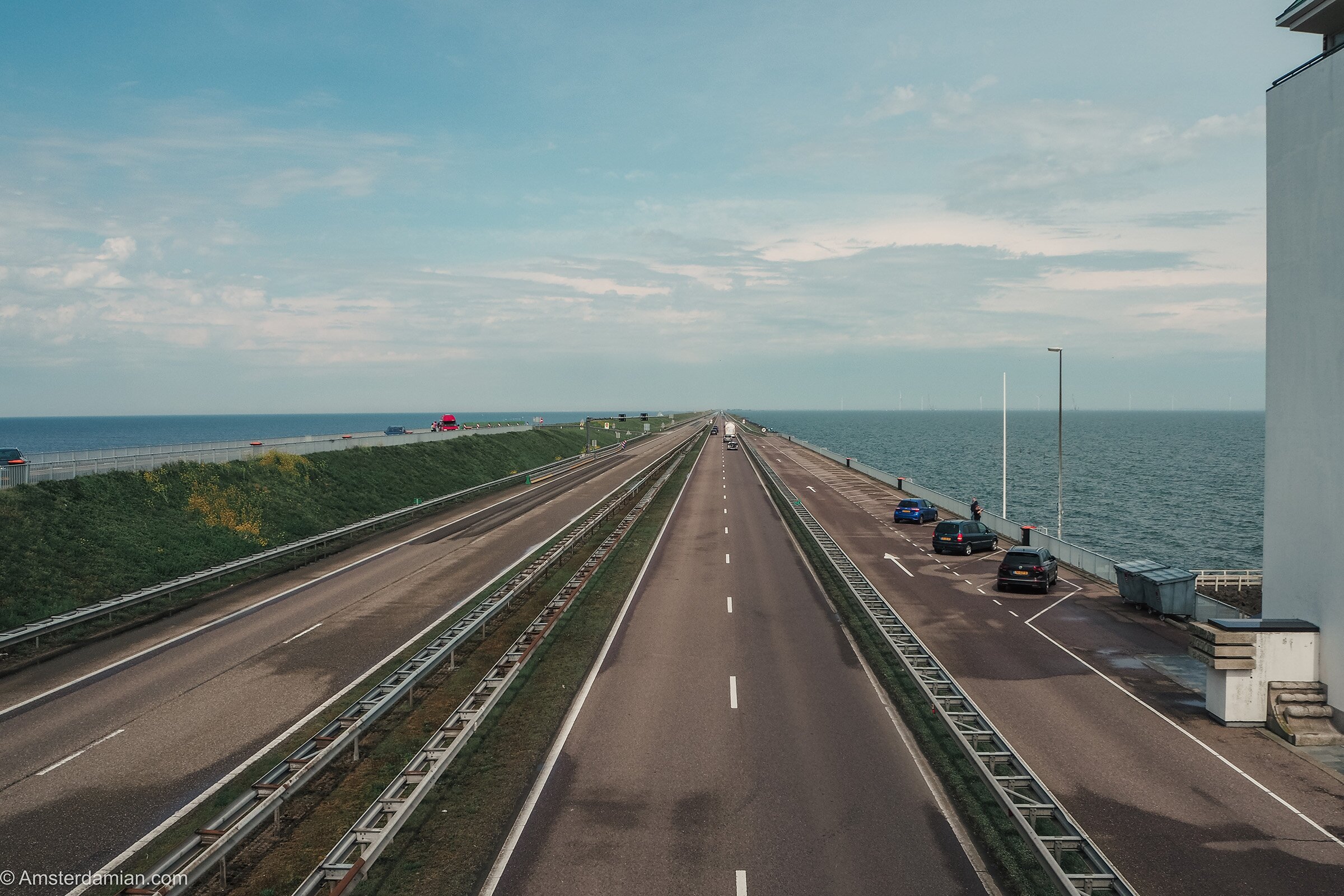
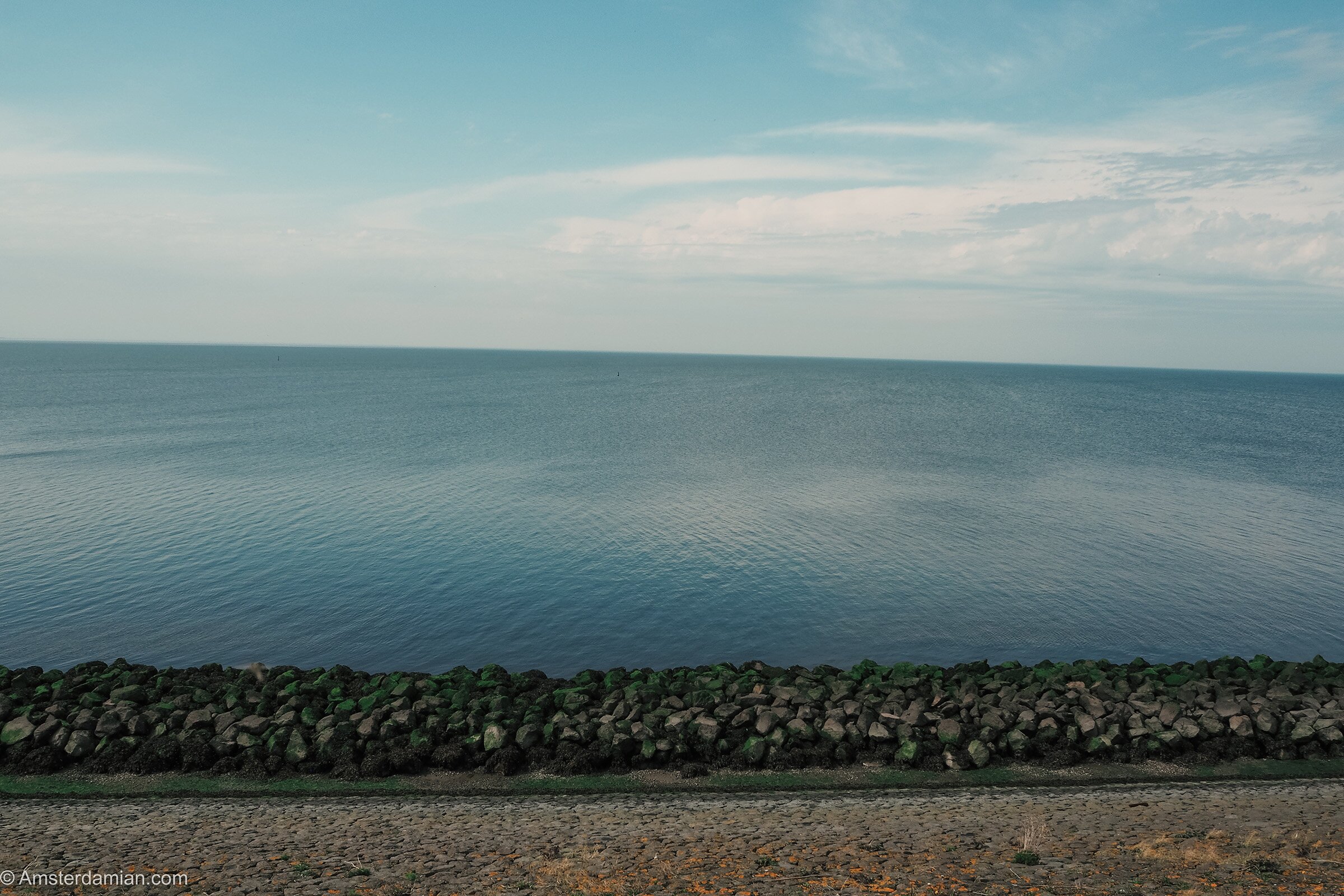
There is a road in the north of the Netherlands that runs straight across the sea. For thirty kilometres in either direction there is no land, only the slate-grey water of the Wadden on one side, the IJsselmeer on the other, and a thin ribbon of asphalt between them. This is the Afsluitdijk.
The Afsluitdijk (Dutch for Enclosure dike) is one of the wonders that Dutch people built to safeguard their country from the forces of nature. This iconic structure is not just a dike; it’s a symbol of Dutch resilience and ingenuity in the face of water management challenges.
Afsluitdijk history
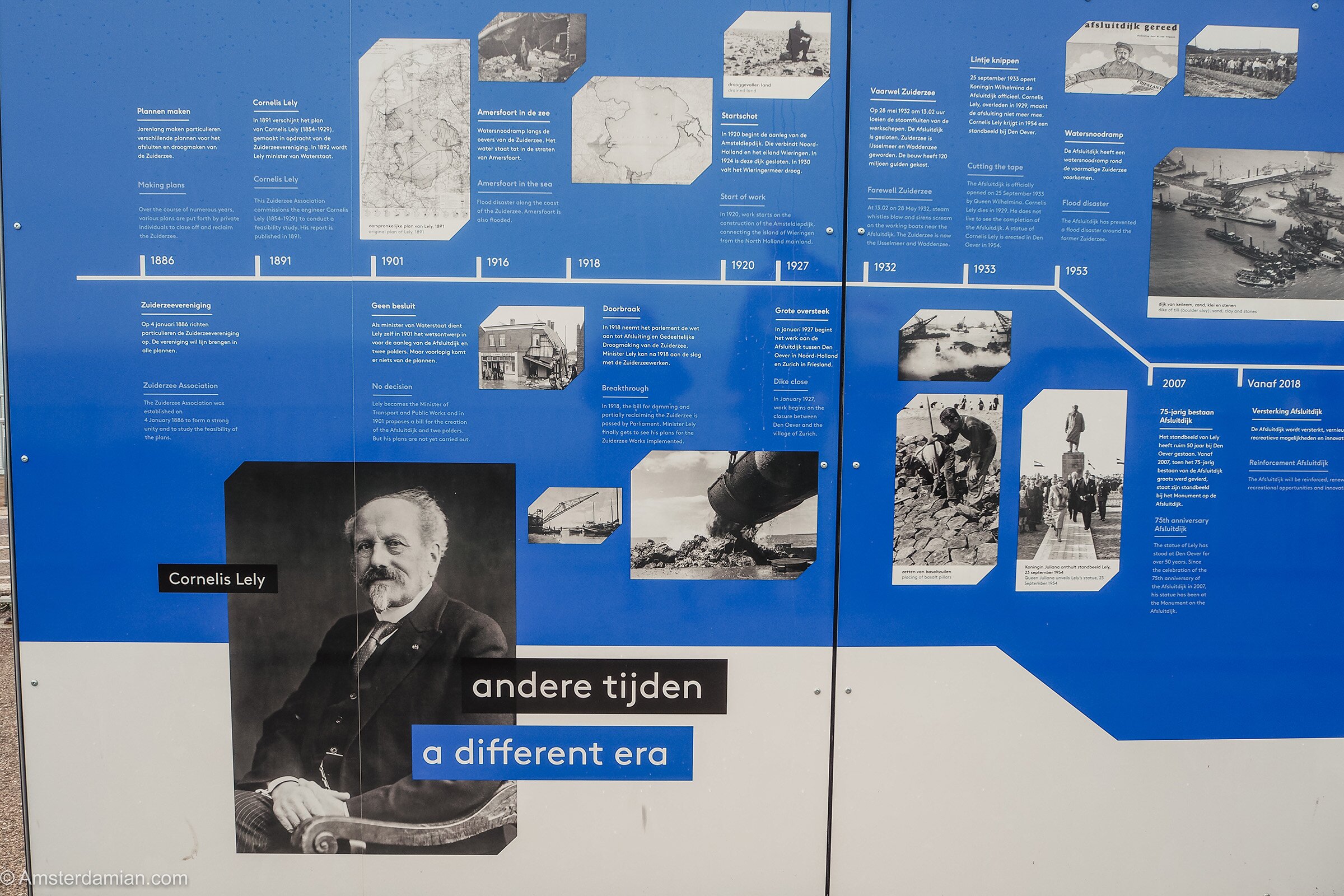
This 32 kilometres long dike was built between 1927 and 1932 as the central piece of the Zuiderzee Works, the most ambitious water-engineering project in Dutch history, sealing off the Zuiderzee, transforming it into what is now known as the IJsselmeer.
On 28 May 1932, two years ahead of schedule, the last tidal trench, the Vlieter, was closed with a single bucket of till. By cutting the connection to the North Sea, the Afsluitdijk plays a critical role in protecting the Netherlands from potential flooding, a constant threat in this country where a quarter of the land sits below sea level. The construction of the Afsluitdijk was an ambitious and monumental project, reflecting the forward-thinking vision of Cornelis Lely, the engineer who first proposed the idea. Today, a statue of Lely watches over the dike, commemorating his contribution to Dutch infrastructure.
The Dual Purpose of the Afsluitdijk
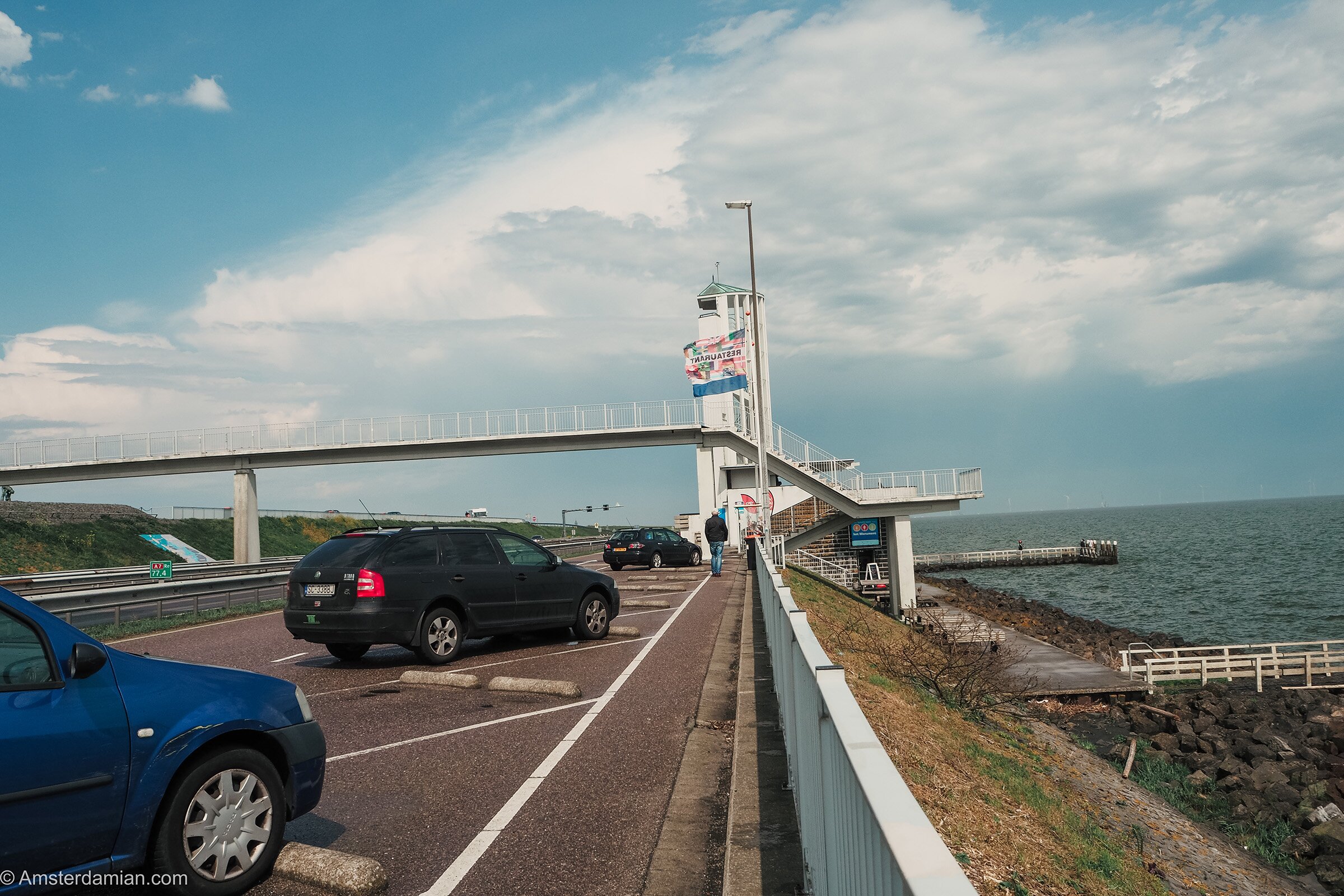
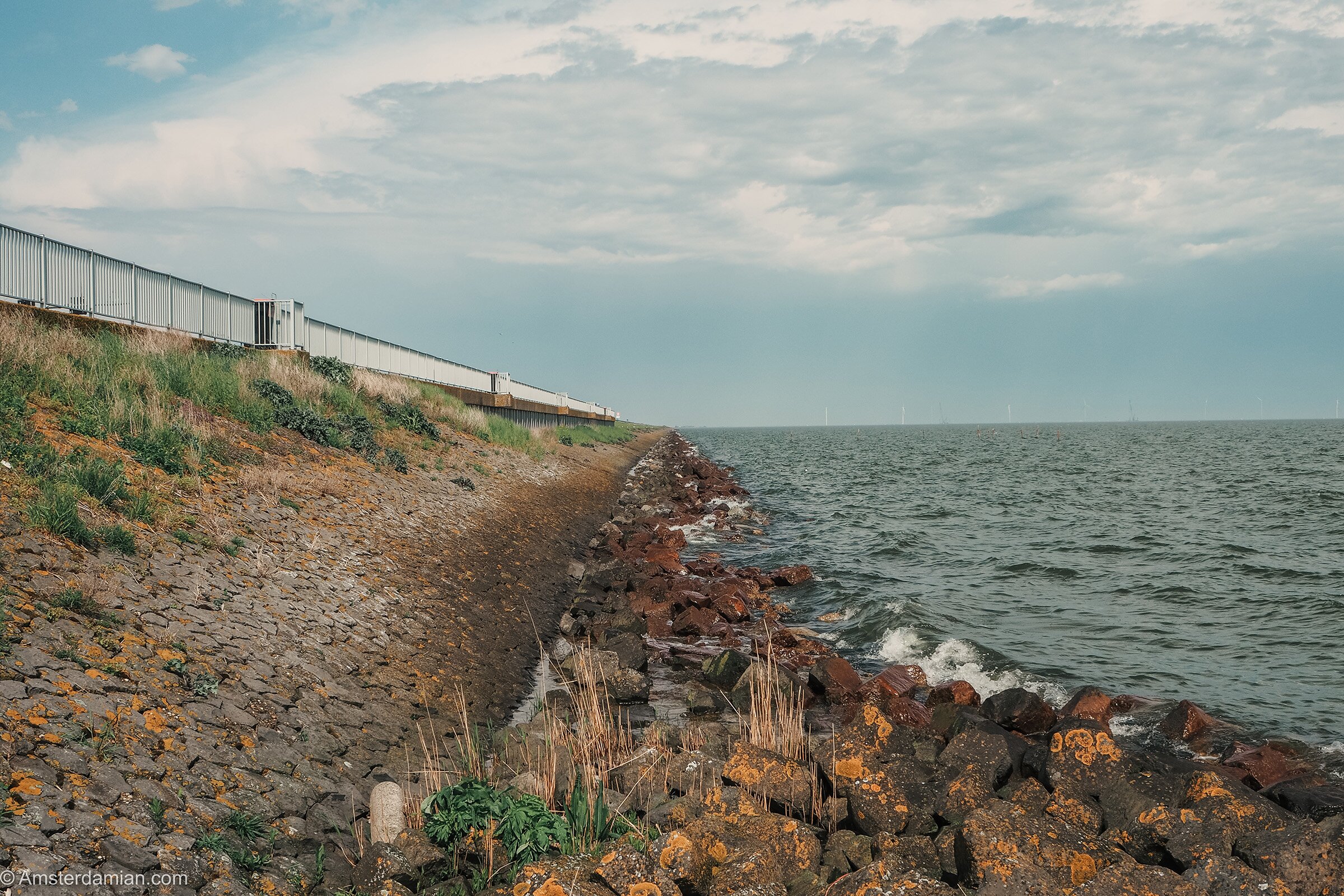
The Afsluitdijk also functions as a motorway, connecting North Holland with the province of Friesland. It’s a lovely drive, and you can stop along the way to enjoy the view or visit the Afsluitdijk Wadden Centre, to learn more about this engineering marvel and its environmental significance. After ninety years of holding back the sea, the Afsluitdijk has been given a major reinforcement. Around 75,000 huge concrete blocks, each weighing about 6.5 tonnes, have been laid along the flanks of the dike, designed to break the waves in a storm while preserving the spectacular simplicity that gives the dike its character. The bulk of this strengthening was completed in 2023. New pumping stations and discharge sluices at Den Oever, capable of pumping water out of the IJsselmeer into the Wadden Sea when storms or rising sea levels demand it, are due to be finished by the end of 2026. When the work is fully done, the Afsluitdijk will be ready for another century of doing what it was built to do — keeping the water out.
The renovation also includes the Fish Migration River (Vismigratierivier), a winding channel through the dike at Kornwerderzand that allows salmon, eels and other migratory species to move once again between the salty Wadden Sea and the freshwater IJsselmeer. When the Afsluitdijk closed in 1932, it cut off centuries of fish migration overnight; this new passage is the first proper attempt to make amends. The opening through the dike was completed in 2023, and the first fish are expected to swim through it from the beginning of 2027. I hope the fish news is broadcasting this on the fish TV, because it’s big news for salmon and eels!

How to visit the Afsluitdijk
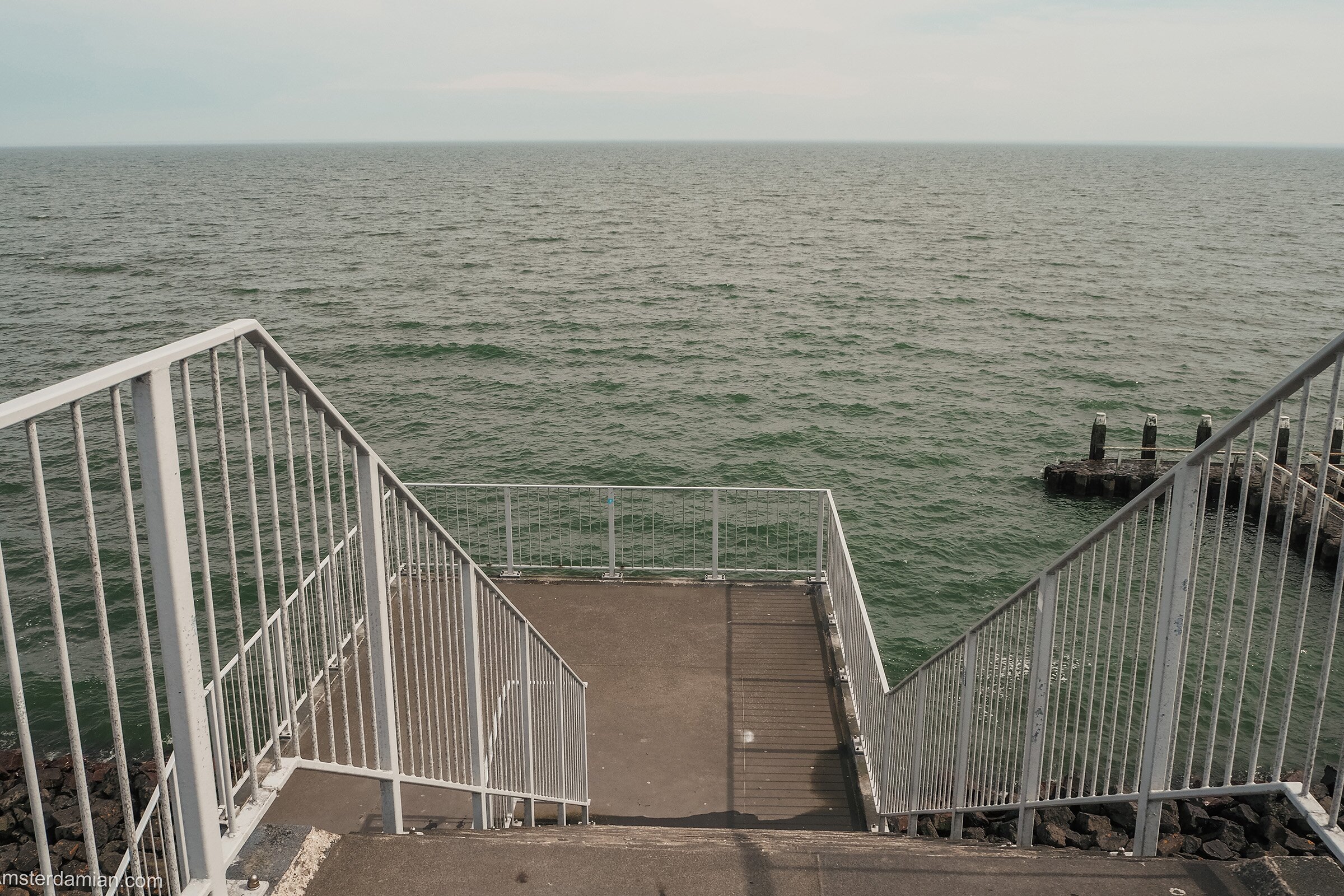
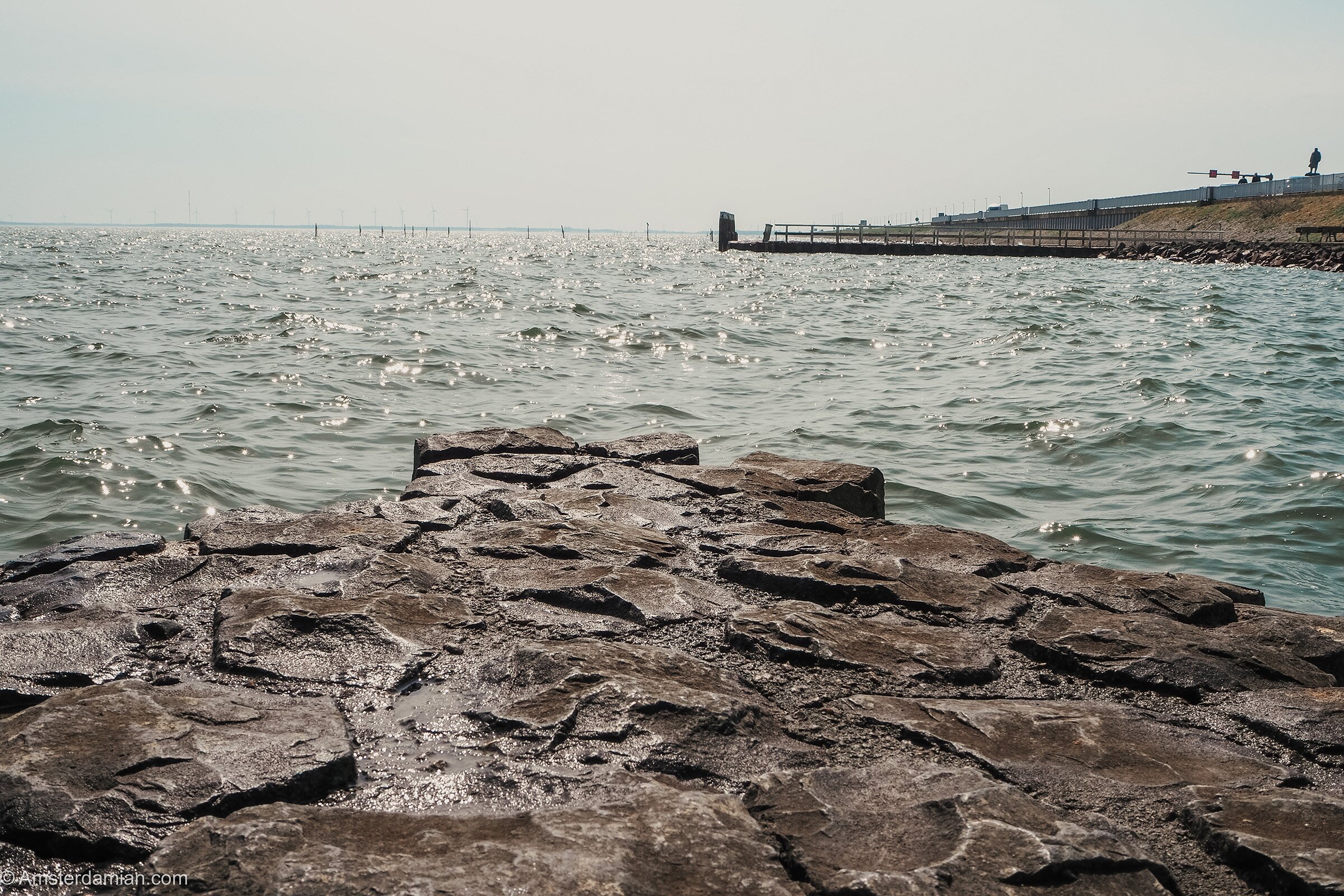
I first visited the Afsluitdijk in spring 2021, when I went to Friesland for a beautiful trip. Standing on this massive structure, it’s impossible not to appreciate the enormous effort and ingenuity that went into its construction. I also loved the contrast between the Wadden Sea on one side and the IJsselmeer on the other, offering a unique sight, with each body of water exhibiting distinct colours and characteristics.
The easiest way to visit the Afsluitdijk is by car. But if that is not a possibility, then bus 350 between Middenmeer to Leeuwarden will do.
Ot take the Bicycle Bus: there’s a free bicycle bus that transports hikers and bikers on the Afsluitdijk. The cycle and footpath along the Wadden Sea side of the Afsluitdijk is largely open but is not yet possible to cross the lock complexes on foot or by bicycle in 2026. So, hikers, cyclists, and visitors using mobility scooters can use a free bicycle bus to travel between the different sections of the route or cross the Afsluitdijk. You can cross the dam or stop at one of the intermediary stops to reach the foot and bicycle paths:
Coming from Friesland, it stops at:
- Afsluitdijk Wadden Centre, Kornwerderzand
- Vismigratierivier (Fish Migration River)
- Breezanddijk Noord
- Monument Noord
- Den Oever
Coming from Noord-Holland, it stops at:
- Den Oever
- Afsluitdijk Wadden Centre, Kornwerderzand
Learn more about it, including time tables on the Afsluitdijk’s website.
What to do on the Afsluitdijk
● Visit the Afsluitdijk Wadden Center.
This is an interactive centre where you can discover the story of the Netherlands and its battle against water. It’s open from Wednesday till Sunday from 10:00 AM to 5:30 PM. The 350 bus stops at Kornwerderzand, where the Wadden Center is located.
● Waterworks
If you go by car and want to visit more waterworks in the area, you can check out this route that takes you through Southwest Friesland and past 13 water icons.
● Boat trips
During summer, visitors can also explore the area by boat on excursions departing from Harlingen or Den Oever. One of the most interesting options is the “From Salt to Fresh Below Sails” trip, organised by the Wadden Association, which follows the route taken by migratory fish between the Wadden Sea and the IJsselmeer. The excursion sails towards the Afsluitdijk Wadden Center at Kornwerderzand, while introducing visitors to the underwater ecosystem of the area and the innovative Fish Migration River project, designed to help fish move between salt and fresh water.
● Visit the Kazemattenmuseum
At Den Oever and Kornwerderzand there are a series of casemates: reinforced concrete bunkers built and hidden beneath layers of soil. These defensive structures were designed to prevent enemy forces from advancing quickly into the heart of the Netherlands via the Afsluitdijk. Today, the Kazemattenmuseum at Kornwerderzand brings this history to life, focusing on daily life inside the fortifications and the German attack of May 1940. The renovated museum reopened in 2019 and is open to visitors year-round, with current opening hours available on its official website.
● Viewpoints
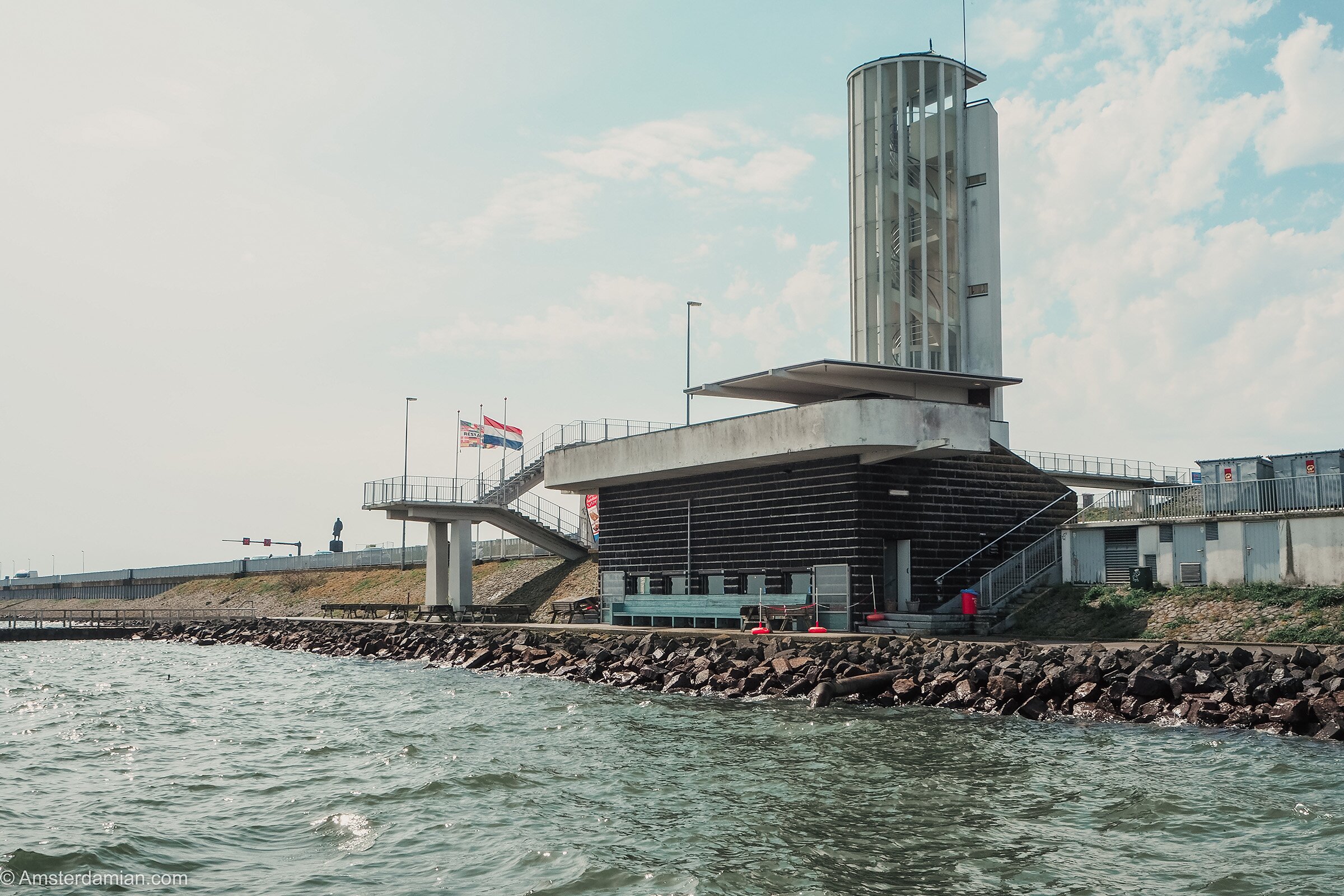
Stop at one of the viewpoints on the Afsluitdijk: Den Oever, at Breezanddijk and at Kornwerderzand.
● Kitesurfing or mud walking
There is an area at Kornwerderzand where you can do kitesurfing and you can go on a very Dutch mud walking trip from Den Oever or Harlingen.
I believe this beautiful engineering work is a must see for everyone interested interested in Dutch history, engineering, or nature. So, if you have the chance, don’t miss the opportunity to visit the Asfluitdijk!
↪ You might be also interested in: Dutch Provinces: a Complete Guide to Exploring the Netherlands’ Treasures


The Afsluitdijk might be the grandest version of the Dutch love for a dagje weg. On the way back towards Amsterdam, a day trip to Monnickendam offers the small-scale contrast to all this engineering. Or round off the day in a city: a day trip to Haarlem is a comfortable detour on the way home.
Stay tuned for more and follow Amsterdamian on Instagram and Facebook for more stories about life in the Netherlands, written by a real local, updated constantly.
Check out my photo book: Amsterdam Through the Seasons!
Love what you’re reading? Support my work with a small donation.
And share this post if you liked it!