Amsterdam has always been a city that questions, challenges, and reimagines. It’s a city full of stories, and I’ve been discovering lately just how many of them belong to women whose names I’d never heard before. The city’s history, like most cities’ histories, has been told predominantly through men, but, in recent years, there’s been a wonderful effort to change that. Museums are launching dedicated exhibitions, walking tours are uncovering forgotten figures, and community organisations are making sure the conversation doesn’t stop at the past.
This guide is for anyone who’s curious about that side of the city. You can think of it as a wander through the city’s feminist corners, from archives and exhibitions to community spaces and bookshops where the conversation keeps going.
Places in Amsterdam for Feminists
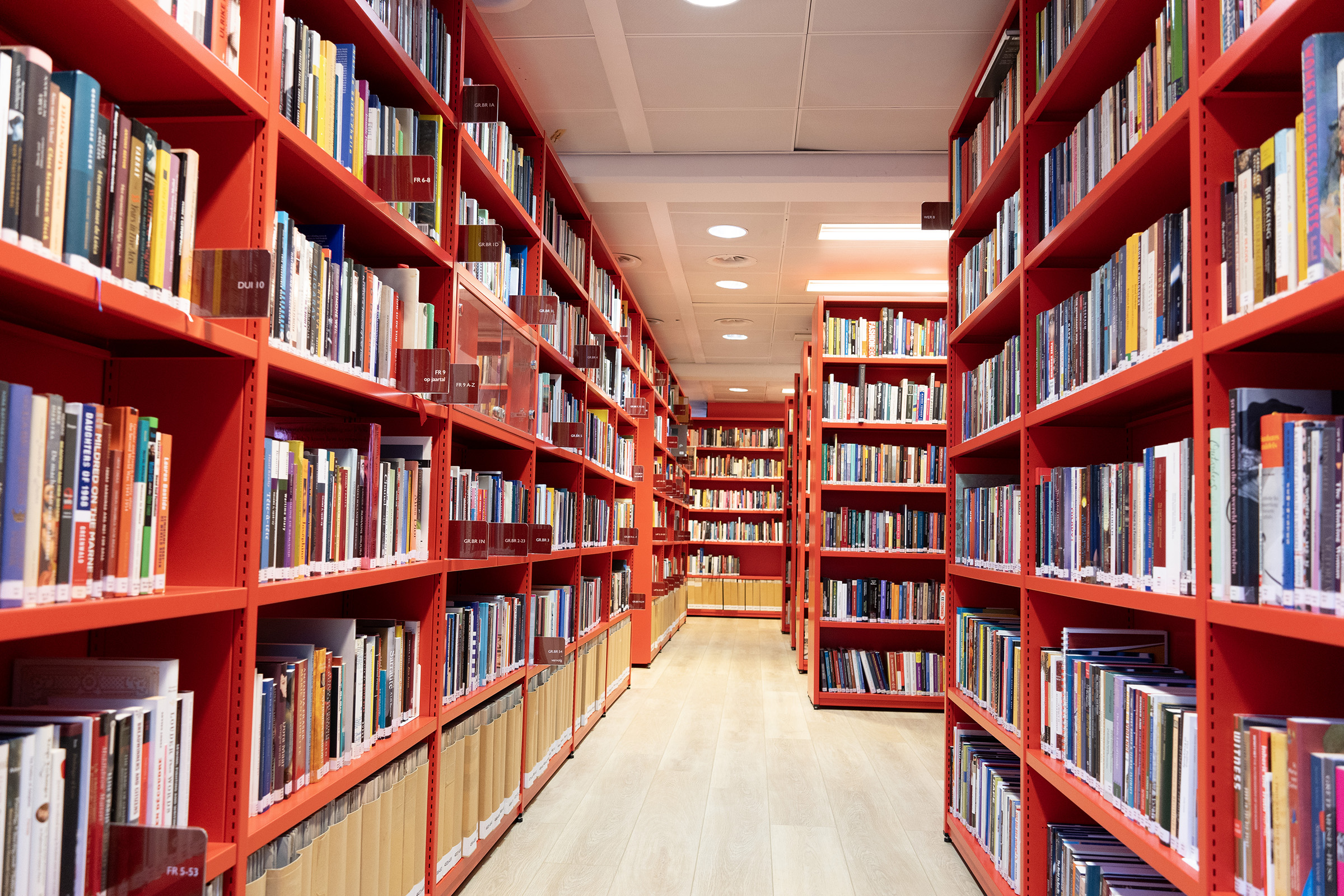
Atria – Institute on Gender Equality and Women’s History. Atria is one of the oldest collections on women and gender in the world. Housed in Amsterdam, this research institute and public library holds over 100,000 books, 30,000 photographs and posters, and thousands of periodicals covering the history and present of women’s movements. You can visit the library by appointment to browse the archives, borrow books, and see historic documents on site. It’s a quiet, contemplative space where you can really feel the weight and depth of women’s history in the Netherlands. It’s an amazing place and it should be on your list if you are interested in the subject. From June 2026 Atria is moving to Utrecht.
The Feminist Club Amsterdam. An intersectional feminist community that organises regular discussion events, a book club, and various activities. Every last Sunday of the month, the Feminist Club hosts a themed discussion between 16:00 and 18:00. Their book club reads titles spanning gender, race, and social justice. It’s a welcoming space for anyone looking to engage with feminist ideas in a communal, thoughtful setting.
Neighborhood Feminists. This Amsterdam-based organisation founded in 2019 tackles period poverty through direct action, research, and advocacy. Their most visible project is the Menstruation Stations: 65 self-serve cabinets installed across the city, stocked with free period products for anyone who needs them, no questions asked. They also run a Dignity Kits project and organise events like their International Women’s Day Benefit. It’s feminism at its most practical and impactful.
Dolle Mina. On 23 January 1970, a group of women burned a corset at the foot of the Wilhelmina Drucker monument on Churchilllaan, and with that, the second feminist wave in the Netherlands was born. Dolle Mina (named after Wilhelmina Drucker, one of the country’s most influential feminists) became famous for its creative, bold protest actions demanding equal pay, free childcare, public toilets for women, and legal abortion. After decades of relative quiet, the movement was revived on the same date in January 2025, and has grown rapidly since, with over 90,000 social media followers and 37 local groups across the Netherlands. In 2025 they received the Joke Smit Oeuvre Prize for their continued relevance in defending women’s rights. They’re active on Instagram and TikTok and organise various events and actions. Instagram account: dolleminaamsterdam.
Tours about Amsterdam women
Badass Tours – Women’s History Tour. If you want to start with the big picture, this walking tour is a wonderful introduction. It takes you through Amsterdam’s city centre, where you will discover remarkable women from Amsterdam’s past. Only two of them called themselves feminists, but all of their stories touch on the challenges women faced and how they fought to overcome them. You’ll hear about Aletta Jacobs, Bet van Beeren, and many others whose names you might not know yet. The guides are passionate and knowledgeable, and it’s the kind of experience that makes you see familiar streets with completely new eyes.
“My favorite thing about Amsterdam is how women’s history is just built into its fabric. The expansion out of the canal belt was planned by a woman named Ko Mulder. There’s a monument to a female Resistance fighter hiding in plain sight near the station. My favorite is Atria, which has all the stories of female Amsterdammers.” – Elyzabeth Gorman, founder of Badass Tours (which was initially called Badass Women of Amsterdam).
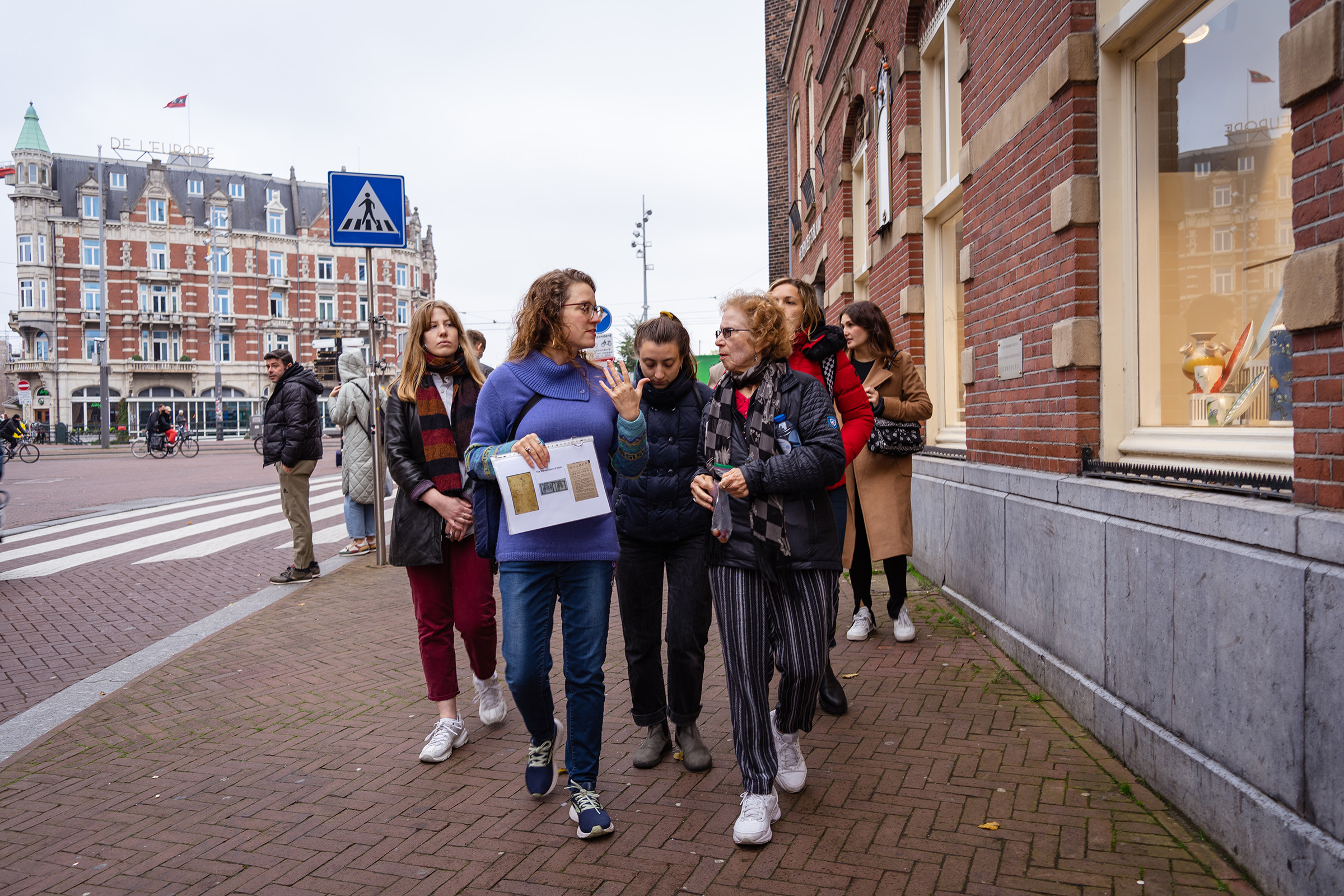
Sarah’s Tours – Female Empowerment Tour. A three-hour walking tour that takes you through Amsterdam’s history from the perspective of the women who shaped it. Starting at Dam Square, you’ll walk through the Jordaan, once home to working-class women whose stories are rarely told, past the Aletta Jacobs monument, and through the Red Light District, where the tour offers a deeper, more respectful perspective through the voices of women who live and work there. Along the way, you’ll hear about fearless feminists, pioneering doctors, and silent resistance fighters from World War II.
Other
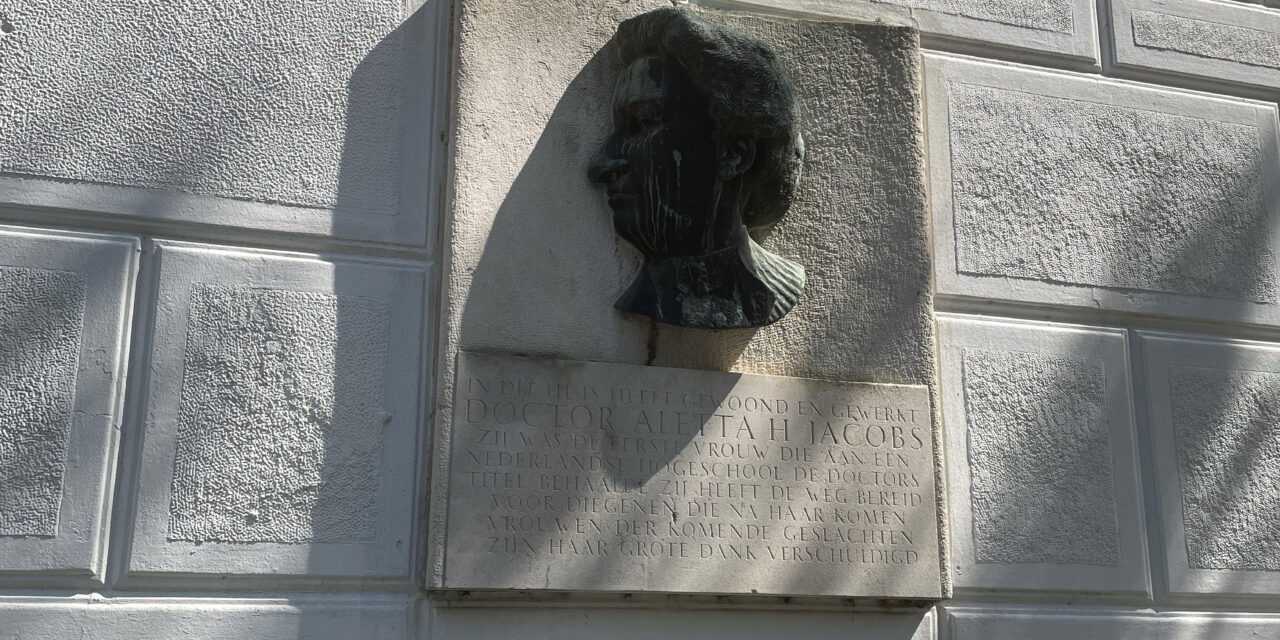
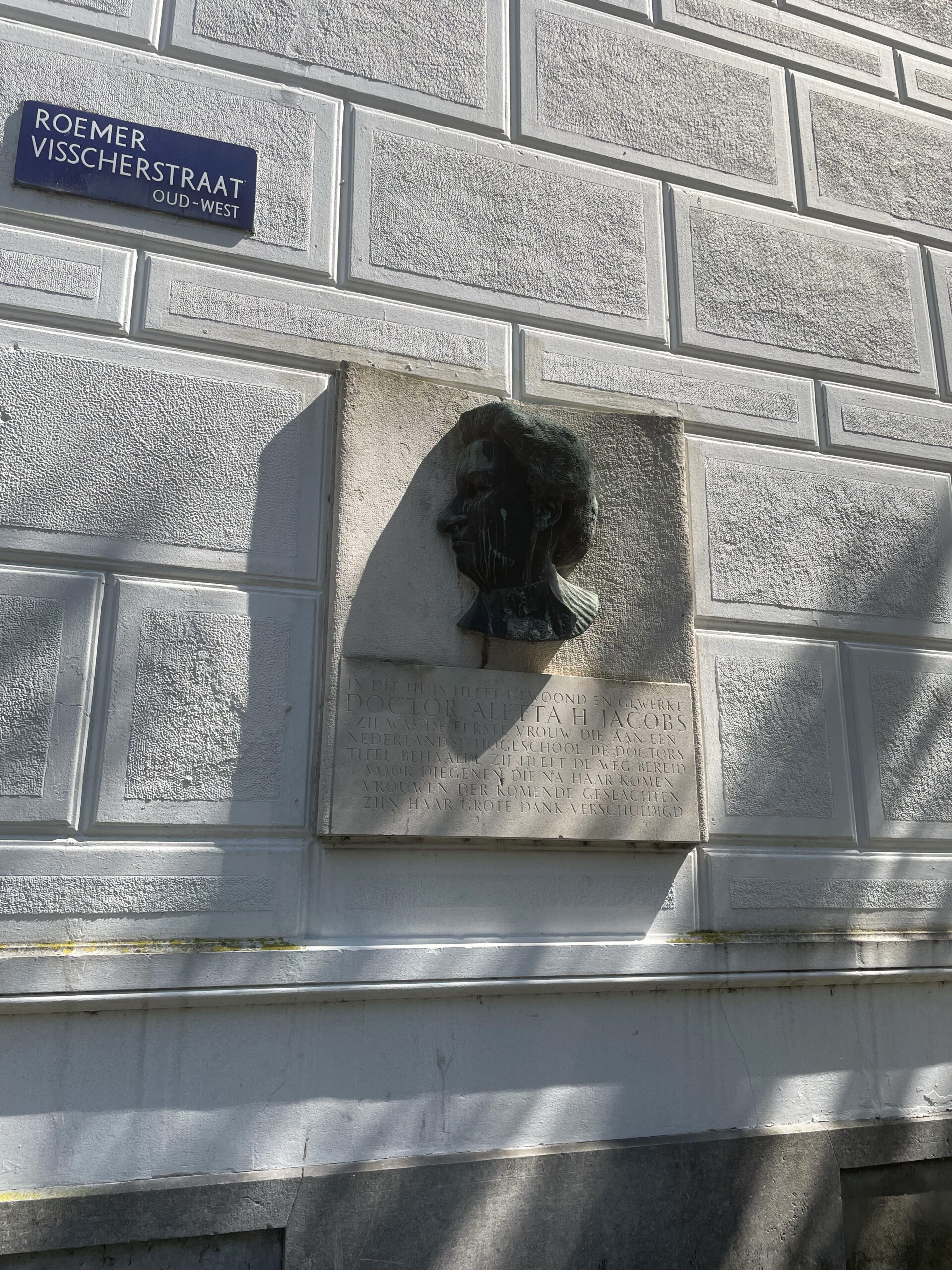
Aletta Jacobs Memorial Plaque. Aletta Jacobs was the first woman to complete a university education in the Netherlands, the first female doctor in the country, and a tireless campaigner for women’s suffrage and reproductive rights. She opened the world’s first birth control clinic. A plaque at her former Amsterdam home (Tesselschadestraat 15, 1054 ET Amsterdam), erected in 1923 while she was still alive, honours her pioneering work. She lived to see Dutch women receive the right to vote in 1919. Walking past it is a small but meaningful moment.
The Feminist March Amsterdam. Every year around International Women’s Day, Amsterdam hosts a large feminist march in Dam Square, with speeches, music, and a march to the Museumplein. Topics in focus included violence against women and equal pay. It’s an energising event that brings together organisations, political parties, and individuals. If you’re in Amsterdam in early March, it’s an experience worth joining.
Vrouwen van Amsterdam (Women of Amsterdam) book by Aoife Fleming. A book that brings to life 100 groundbreaking women whose names grace Amsterdam’s streets (out of more than 7,000 streets, only 244 have a woman’s name). Through a hundred portraits and beautiful walking routes, you’ll discover figures like Aletta Jacobs, resistance heroine Lau Mazirel, and children’s author Annie M.G. Schmidt. A lovely way to explore the city with fresh eyes. The book is in Dutch, but you can always look up the names on your phone and find information about them.
Museums
Amsterdam Museum – Women of Amsterdam: an Ode. Created as part of Amsterdam’s 750th anniversary, this exhibition honours the often-overlooked contributions of women to the city’s history. The exhibition ended in 2025 but you can still read amazing stories on the museum’s website, and the collection of odes written for inspiring women (famous or not).
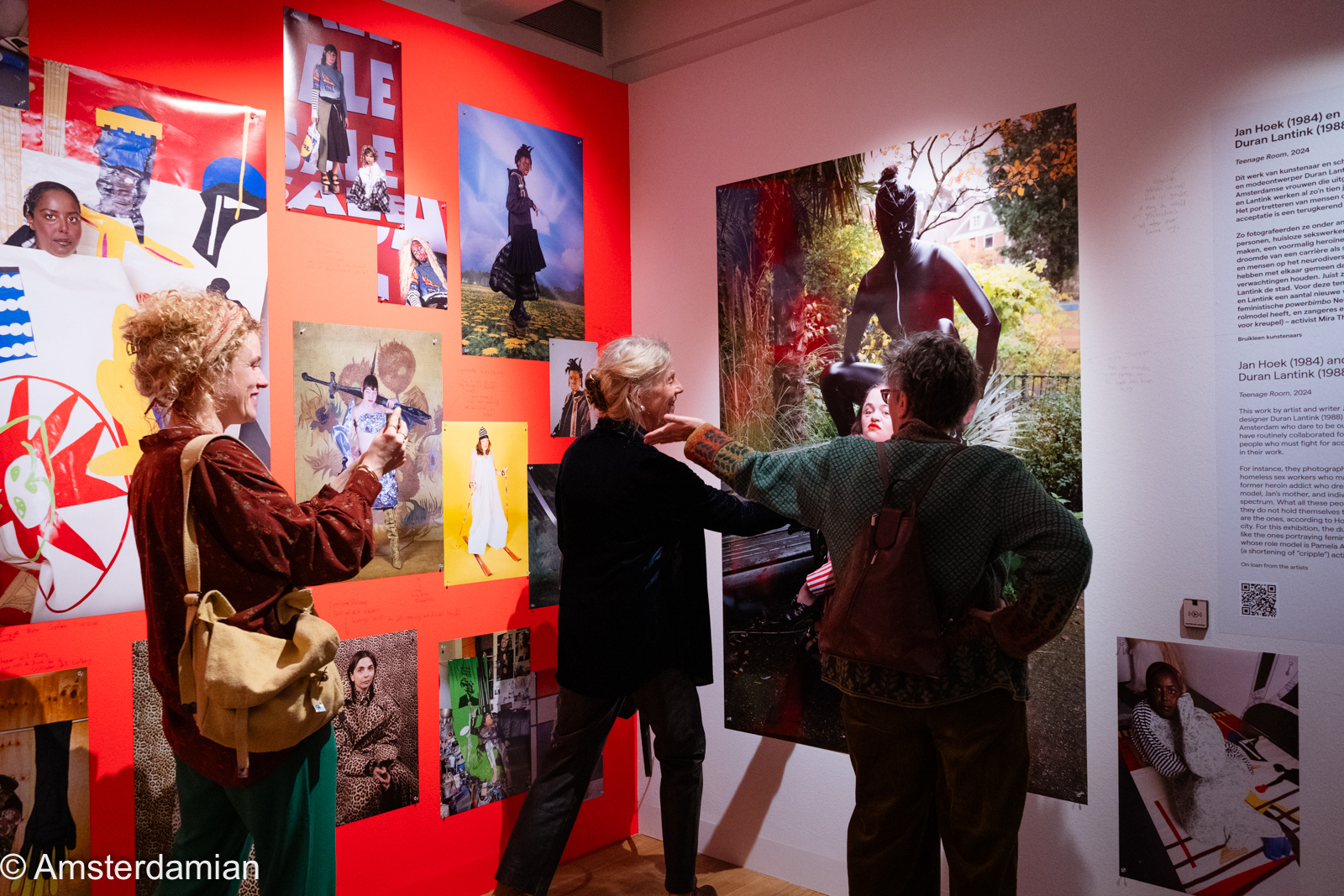
Rijksmuseum – Women of the Rijksmuseum. The Rijksmuseum launched its Women of the Rijksmuseum research project on International Women’s Day 2021. For the first time in the museum’s history, works by women artists were displayed in the Gallery of Honour. On 8 March 2022, the Rijksmuseum founded the Women of the Rijksmuseum Fund which supports research, education, publications and purchases to continuously increase the visibility of women in Dutch art and history. The project strives for equal representation of women in the museum’s presentation and collection, recognising the vital role women have played in art and history.
Shops
Het Fort van Sjakoo. A not-for-profit bookshop at Jodenbreestraat 24, run by a collective of ten volunteers since 1977. It specialises in anarchist, feminist, and LGBTQ+ literature: books, zines, and more, in both Dutch and English. The building itself has a fascinating history: it was squatted as part of a wider protest against a planned highway through the Nieuwmarkt neighbourhood, and has been legalised since 1988. Open Monday to Saturday 11:00–18:00.
Feminist Library (De Feministische Bibliotheek). A free lending library at Het Groene Veld in Amsterdam-Noord, open every Sunday 13:00–17:00. Run by a small group of volunteers, with a collection covering feminist fiction, theory, queer activism, zines, and children’s books. Not a shop per se, but a lovely place to browse and borrow.
Xantippe Unlimited. Founded in 1976 as the first feminist bookshop in Amsterdam (originally called Vrouwenboekhandel Xantippe). Still operating with a focus on literature aimed at women, though their range has broadened over the years.
Do you know any other organisations or shops? Please leave a comment below!
Stay tuned for more and follow Amsterdamian on Instagram and Facebook for more stories about life in the Netherlands, written by a real local, updated constantly.
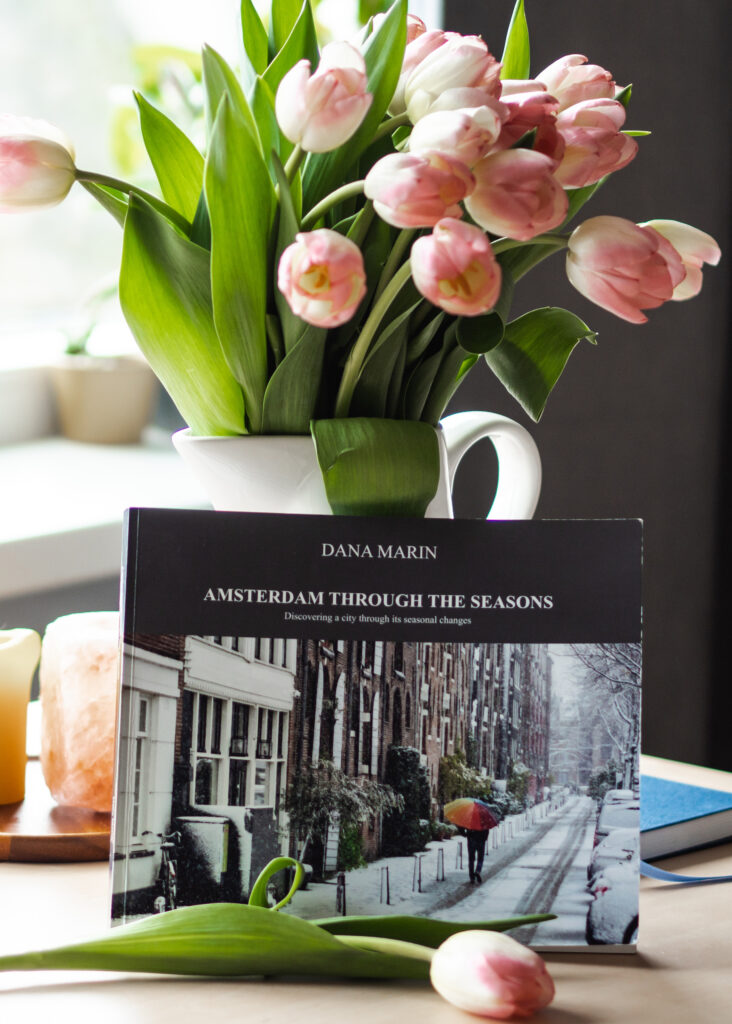
Check out my photo book: Amsterdam Through the Seasons!
Love what you’re reading? Support my work with a small donation.
And share this post if you liked it!