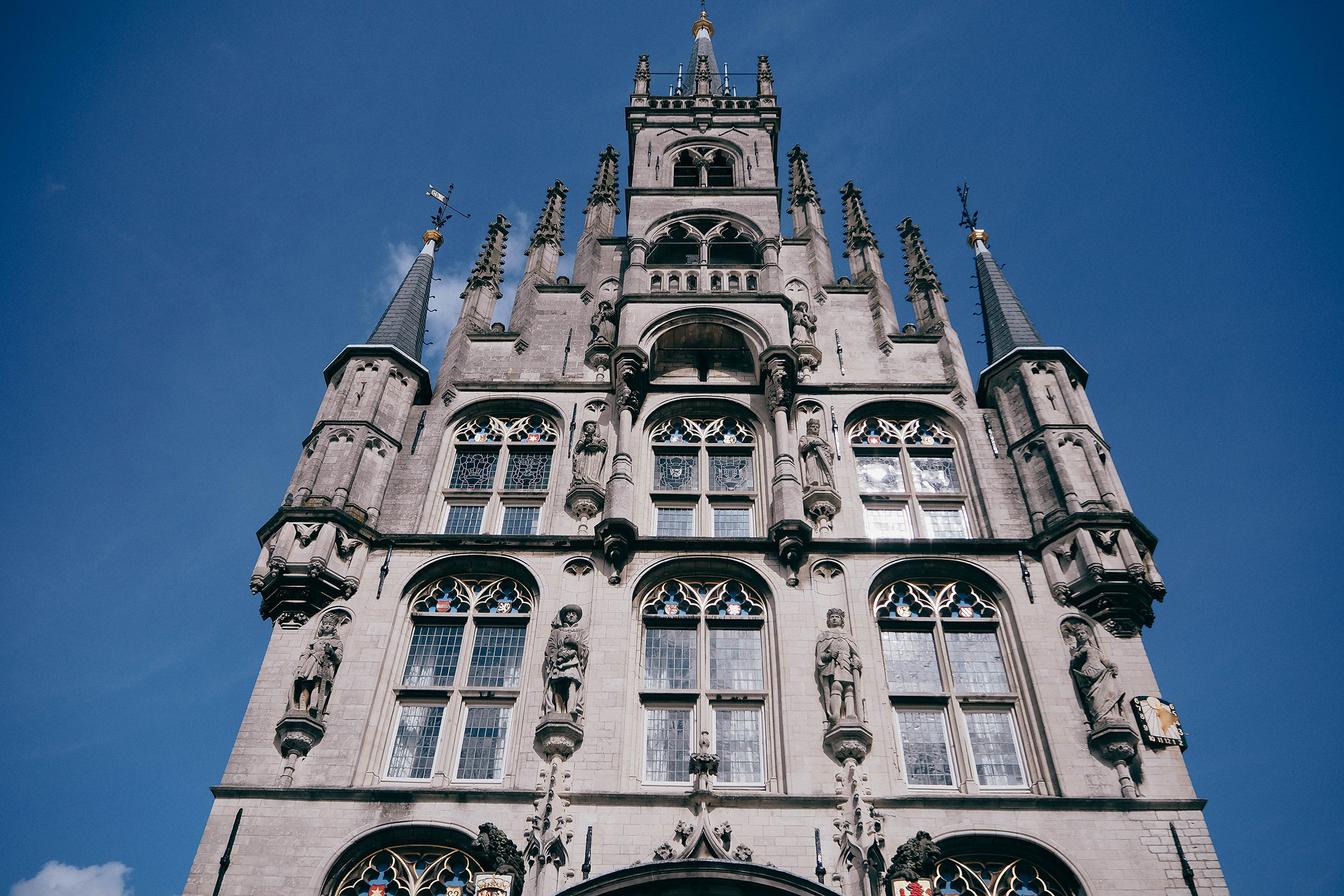
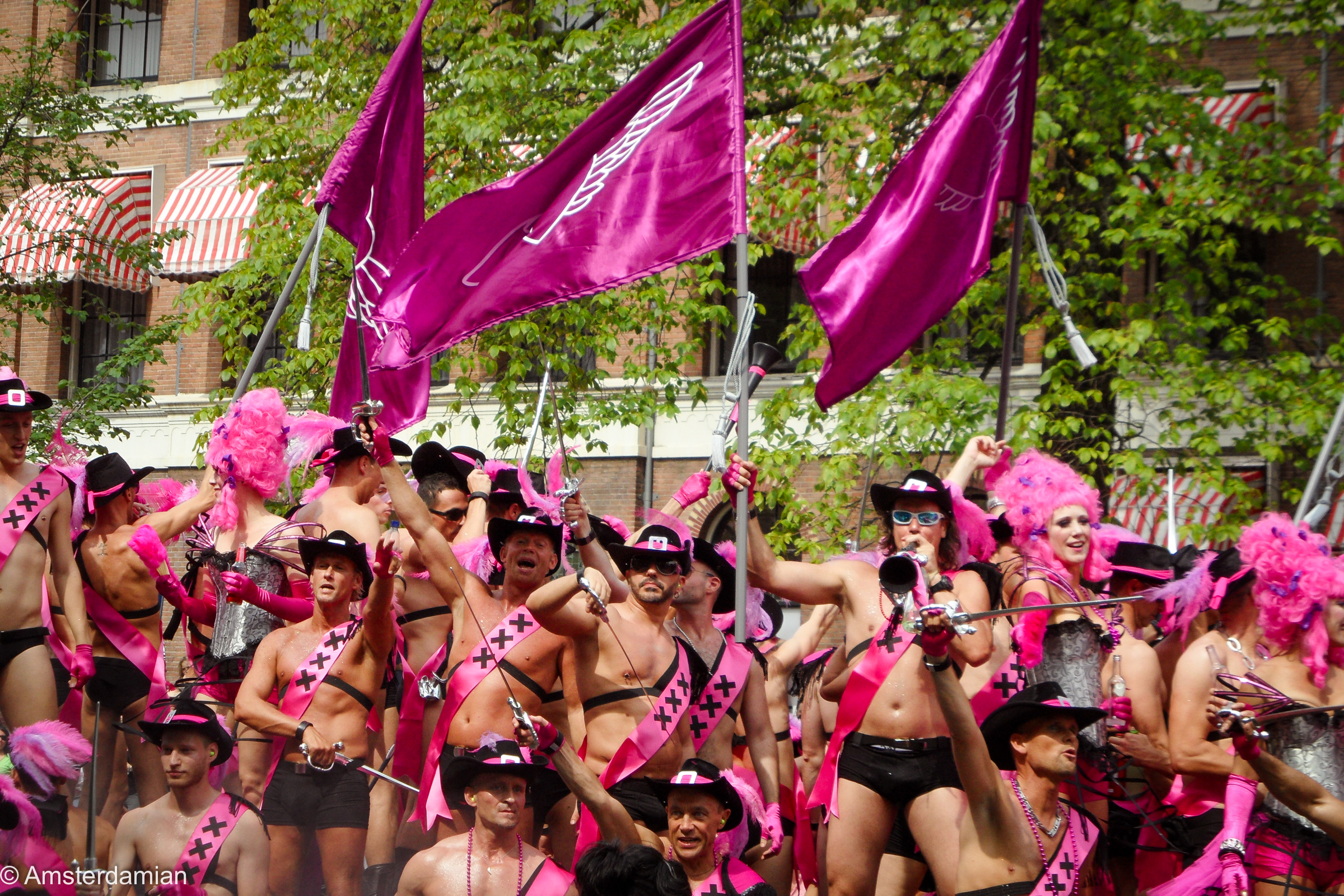
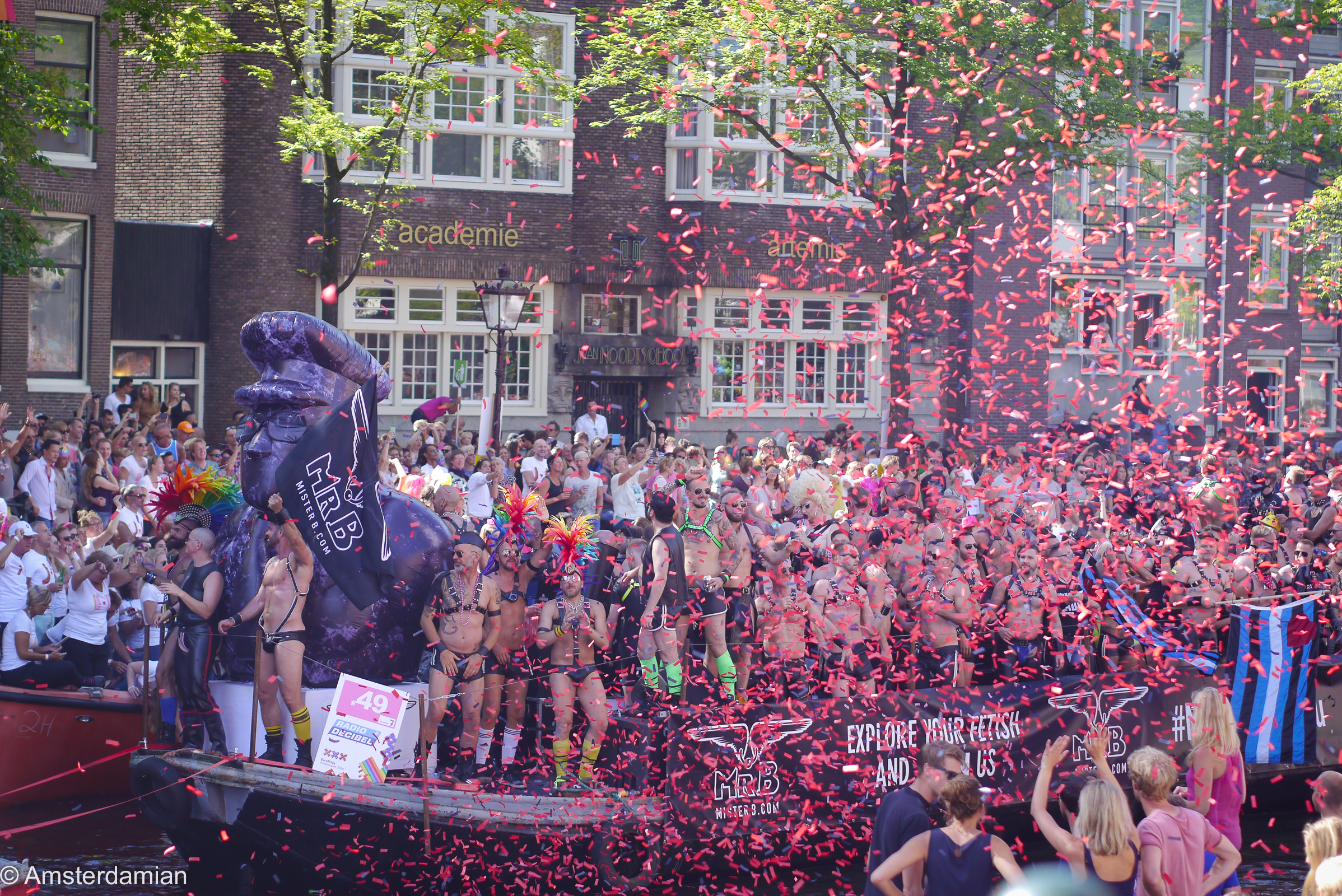
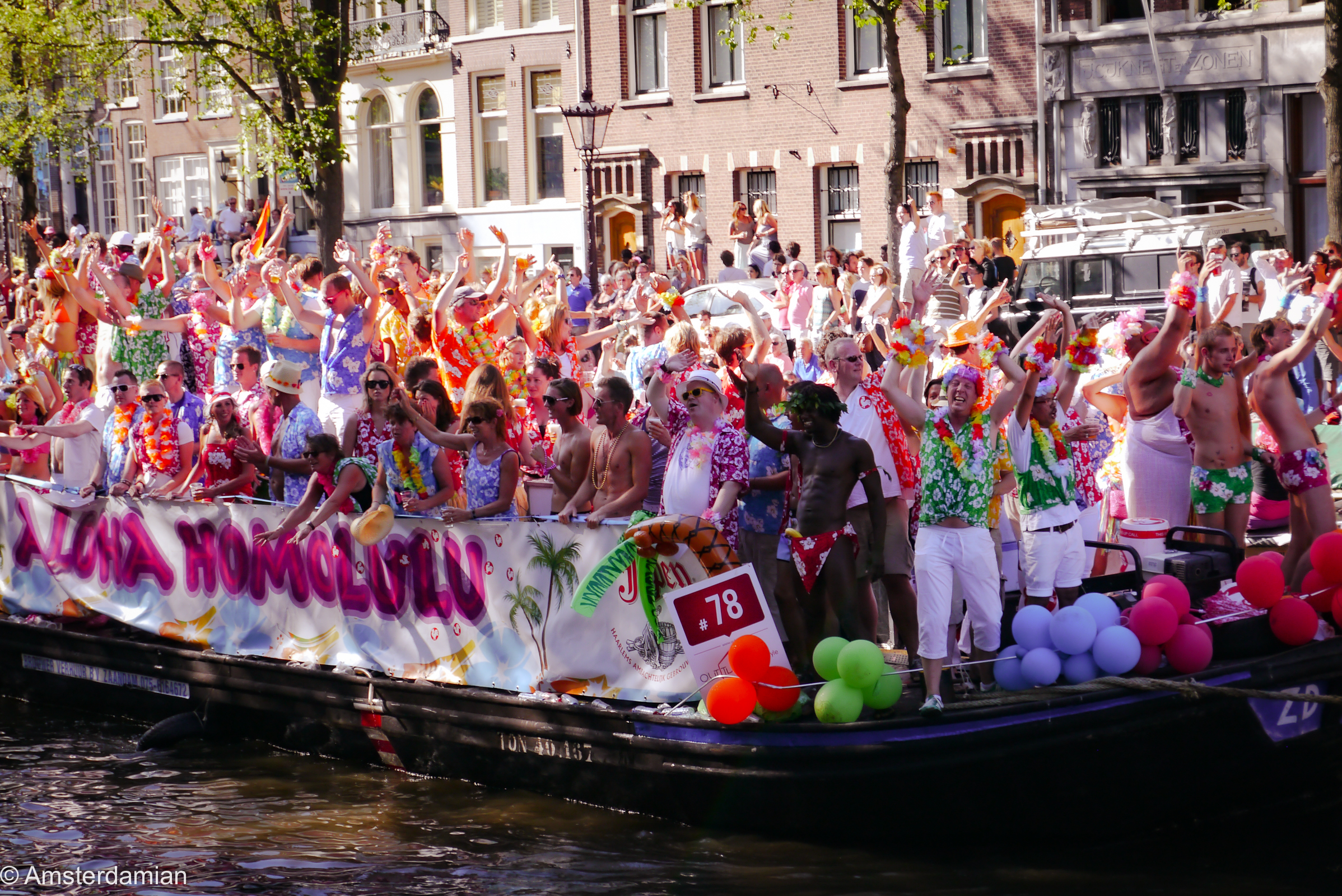
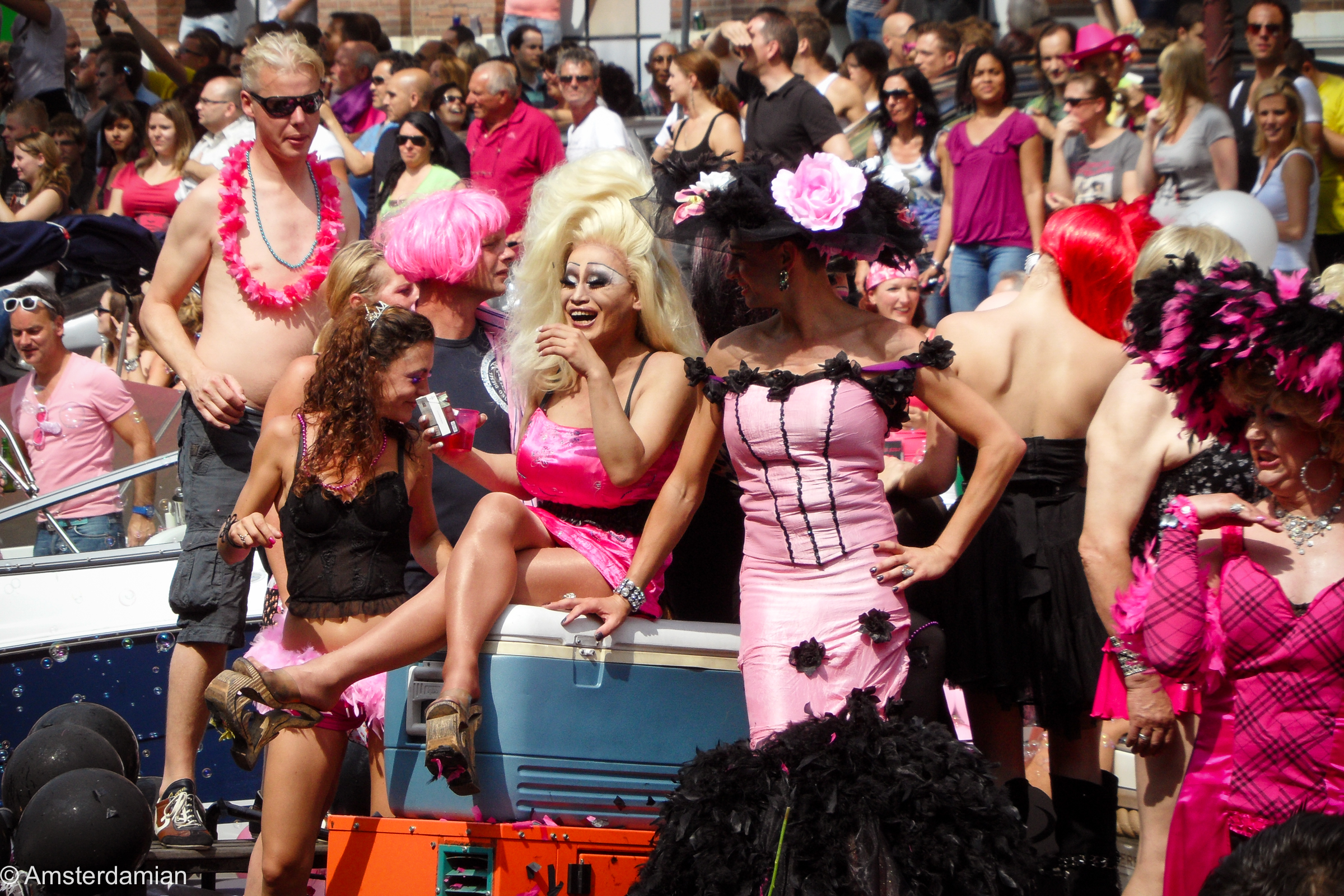
Amsterdam loves a party on the water, but nothing compares to this one. On the first Saturday of August, the Prinsengracht and a few other canals in Amsterdam become a parade route. Around eighty boats covered in glitter, flags and dancing people sail through the heart of the city, cheered on by crowds standing several rows deep on every bridge and canal edge. This is the Canal Parade, the heart of Amsterdam Pride, and it’s still one of my favourite days of the year.
But Pride here is much more than one Saturday. It’s over a week of street parties, films, debates, exhibitions and quiet moments as well. And it means something in this city, where the LGBTQ+ community has roots that go back much further than the party itself. Let me walk you through what Pride is, where it came from, and how to enjoy it without spending the day looking at other people’s backs on a crowded bridge.
The first time I’ve seen the Canal Parade was in 2011, and I remember how much it impressed me. There’s nothing like it in Amsterdam: the energy in the city that day is unmatched by any other event I know, and the whole thing is so colourful and cheerful that it’s impossible not to be carried away by the joyful atmosphere.
Pride 2026: this year, Amsterdam hosts WorldPride
This year is not a normal Pride year. From 25 July to 8 August 2026, Amsterdam hosts WorldPride, the global edition that travels between cities. It comes here at a special moment: 2026 marks thirty years of Pride Amsterdam and twenty-five years since the world’s first legal same-sex marriages, performed at Amsterdam’s city hall in 2001.
The highlights of the two-week programme:
- Pride Walk (25 July): from Dam Square to the Vondelpark, where the free Pride Park opens. This is the activist heart of the two weeks, free for everyone.
- Queer & Pride Weekend (25–26 July, Framer Framed and LAB111): a smaller, community-run gem. Saturday brings a day of queer cinema with panel talks and a closing poetry programme at LAB111; Sunday is an afternoon of talks, workshops, performances and a shared lunch around queer and trans social justice at Framer Framed, free with registration.
- Canal Parade (Saturday 1 August, 12:00–18:00): the famous boat parade, with two firsts this year. The route is extended through the centre, East and West, and a floating WorldPride stadium with around 10,000 seats stands on the Prinsengracht, with the boats sailing right through it. The banks and bridges remain free, as always, and the longer route means more quiet viewing spots than ever.
- Street parties (31 July and 1 August, from 16:00): Reguliersdwarsstraat, Zeedijk, Dam Square and more spots across the centre turn into open-air clubs, all free.
- Open-air film festival (29–30 July, Mercatorplein, free): Pride cinema under the summer sky.
- MainStage Grand Finale party (2 August, Dam Square, free): the day-after party for everyone still standing.
- UNITY concert (4 August, Museumplein, ticketed) and the free WorldPride Village on Museumplein (5–8 August).
- Human Rights Conference (5–7 August, Beurs van Berlage, ticketed): a reminder that Pride is not only about the party.
- Closing concert (8 August, Museumplein).
Expect the city to be fuller than in a normal Pride year. Book accommodation and restaurants well ahead, and check pride.amsterdam for the full programme.
What is Amsterdam Pride, actually?
Here’s something that surprises many people: Amsterdam Pride did not start as a protest march. While most Prides around the world trace their history back to the Stonewall riots of 1969, the Amsterdam edition was born in 1996 as something else entirely: a celebration. That’s not because the Dutch never marched for their rights; Pink Saturday (Roze Zaterdag) marches have been held here since the late 1970s, in a different city every year. But Amsterdam’s own Pride started as a party. A group of gay hospitality entrepreneurs wanted to show the city’s freedom and diversity ahead of the Gay Games, which Amsterdam would host in 1998, and they came up with an idea that could only work here: a parade on the canals.
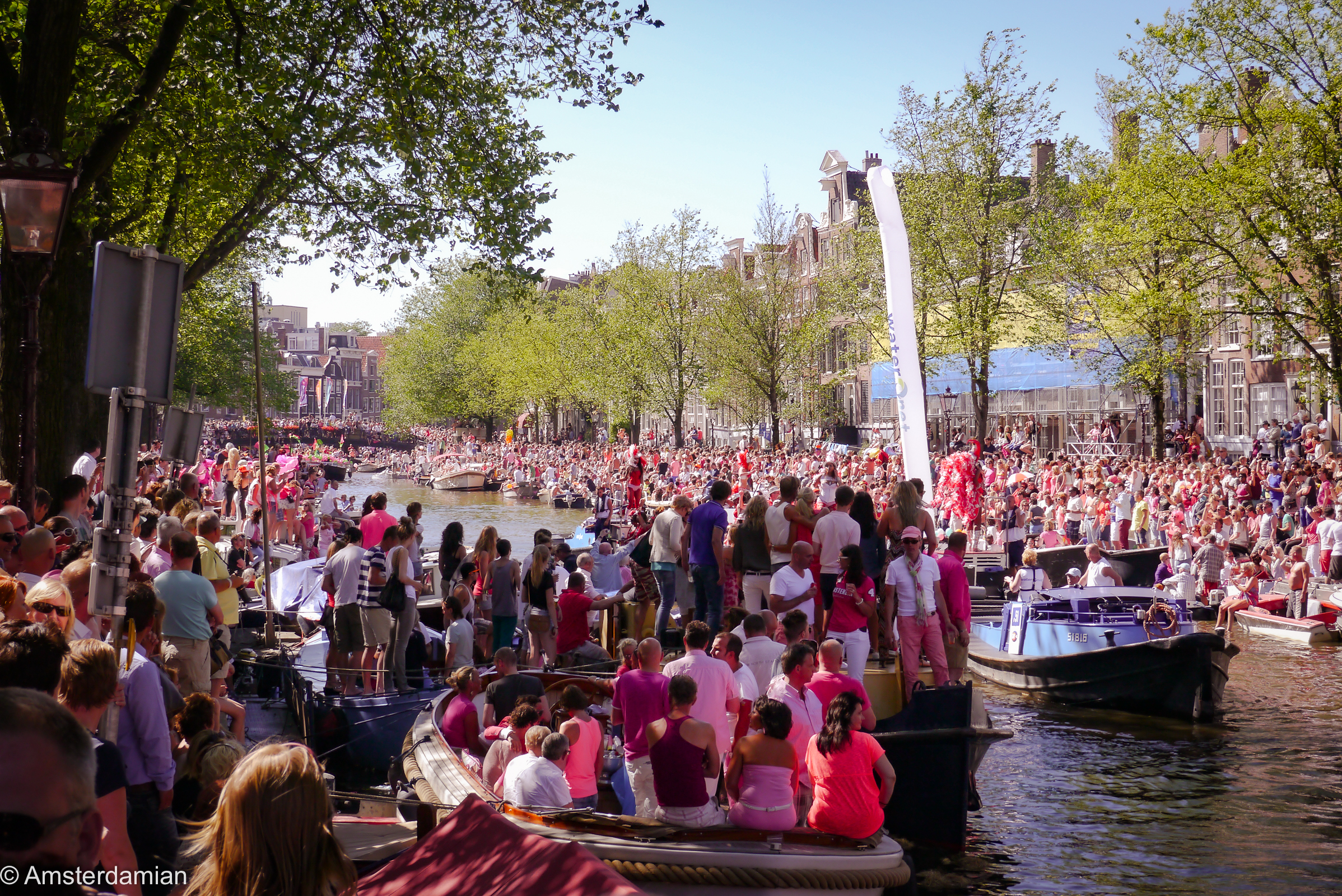
On 3 August 1996, more than 45 boats sailed the first Canal Parade, watched by about 20,000 people. It was meant to be temporary, a build-up to the Gay Games, and then stop. It never stopped. Today the parade counts around eighty boats, and the audience has grown to hundreds of thousands, lining the canals several rows deep. It has become one of the biggest public events in the Netherlands, a country that loves its big public events.
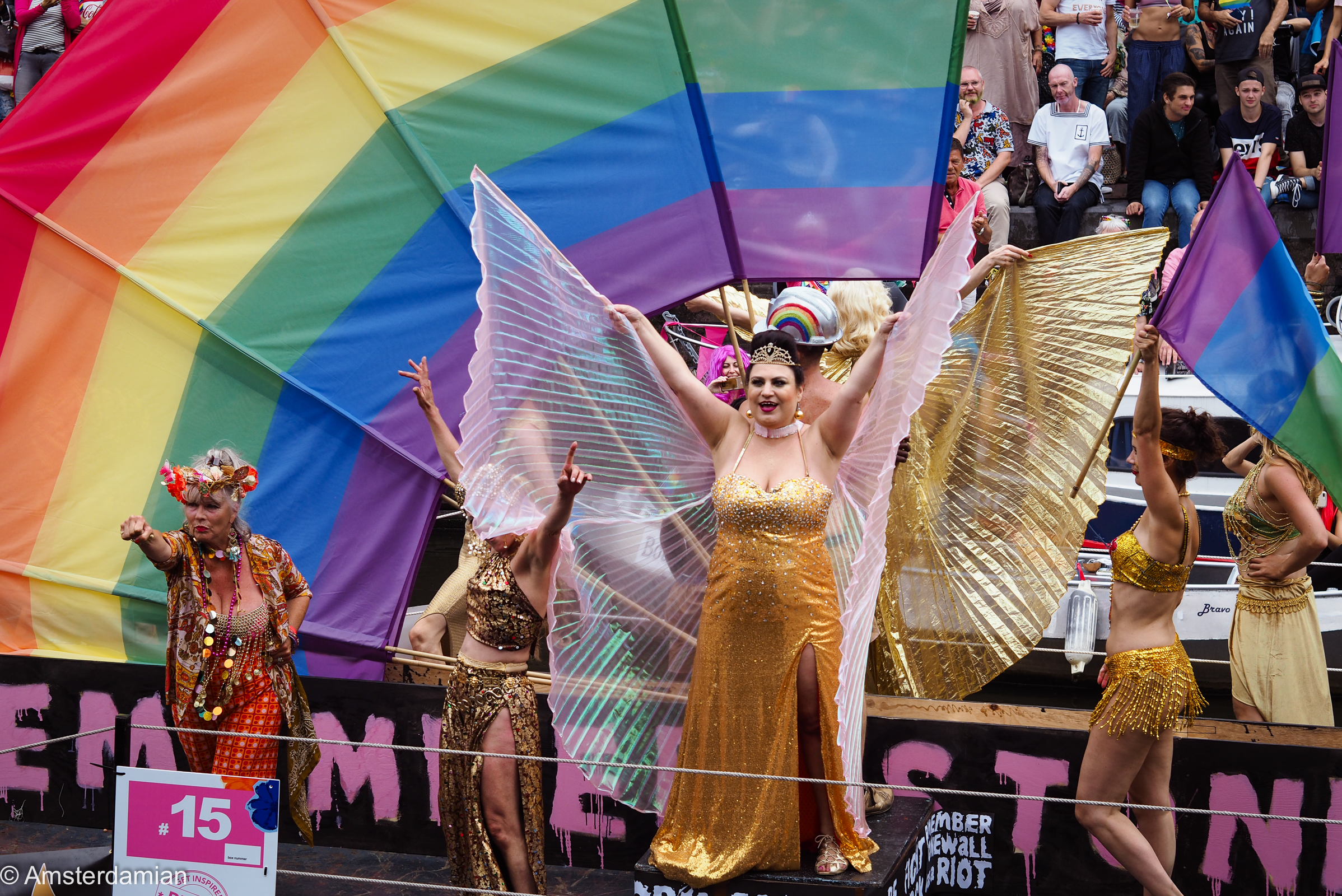
That origin still shapes the day. Amsterdam Pride is joyful and festive, but it’s not just a party. The boats belong to charities, hospitals, the police, the army, refugee organisations, sports clubs and political parties, not only to nightclubs and breweries. Between the music and the confetti, the message is the same one the city has been repeating since 1946: everyone should be able to be who they are and love who they love.
A brief modern history of LGBTQ+ Amsterdam
In 1946, while most of the world still treated homosexuality as a crime or an illness, a group of men in Amsterdam founded what would become the COC, today the oldest still-existing LGBTI organisation in the world. They called it the Shakespeare Club at first, a deliberately vague name for a club that needed discretion even in the Netherlands.
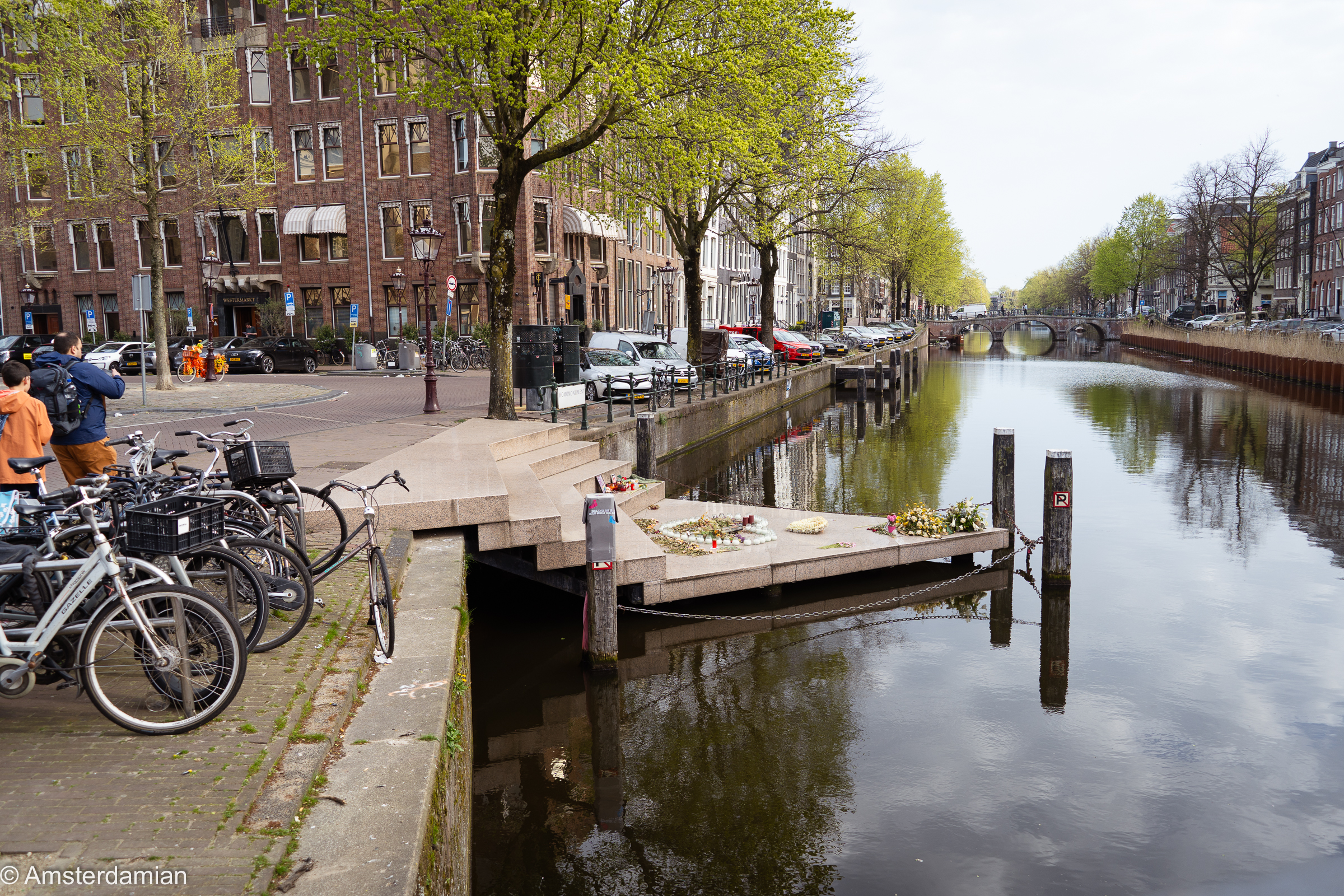
In 1987, Amsterdam unveiled the Homomonument by the Westerkerk: three pink granite triangles at the Keizersgracht, the first monument in the world dedicated to the gay men and lesbians persecuted and killed by the Nazi regime, and to everyone persecuted for their sexuality before and since. One triangle points towards the Anne Frank House, one towards the COC. During Pride it becomes a stage and a dance floor; the rest of the year, it’s a quiet place where you’ll nearly always find a few flowers lying on the stone steps by the water.
And on 1 April 2001, just after midnight, mayor Job Cohen married four couples at Amsterdam’s city hall, and the Netherlands became the first country in the world where same-sex couples could legally marry. A quarter of a century later, that night is part of the reason WorldPride chose this city.
Subscribe to our newsletter!
The Canal Parade: how to actually experience it
Now the practical part, because it’s gonna be tricky to find a good spot to see the boats.
Claim your spot early. The parade sails on the route: Oosterdok → Nieuwe Herengracht → Amstel → Prinsengracht → Westerdok on the first Saturday of August, and the popular spots fill up hours in advance. If you want to stand at the front on the canal bank or a bridge, think mid-morning, not lunchtime. Bring water, snacks and sun cream (or a poncho; this is still the Netherlands).
The classic viewpoints: the Reguliersgracht corner, where you can see three bridges lined up behind each other; the Magere Brug (Skinny Bridge) on the Amstel, where the boats pass almost underneath you; and the stretch of Prinsengracht near the Westerkerk, with the canal houses as a backdrop. They are all beautiful, and they all get packed.
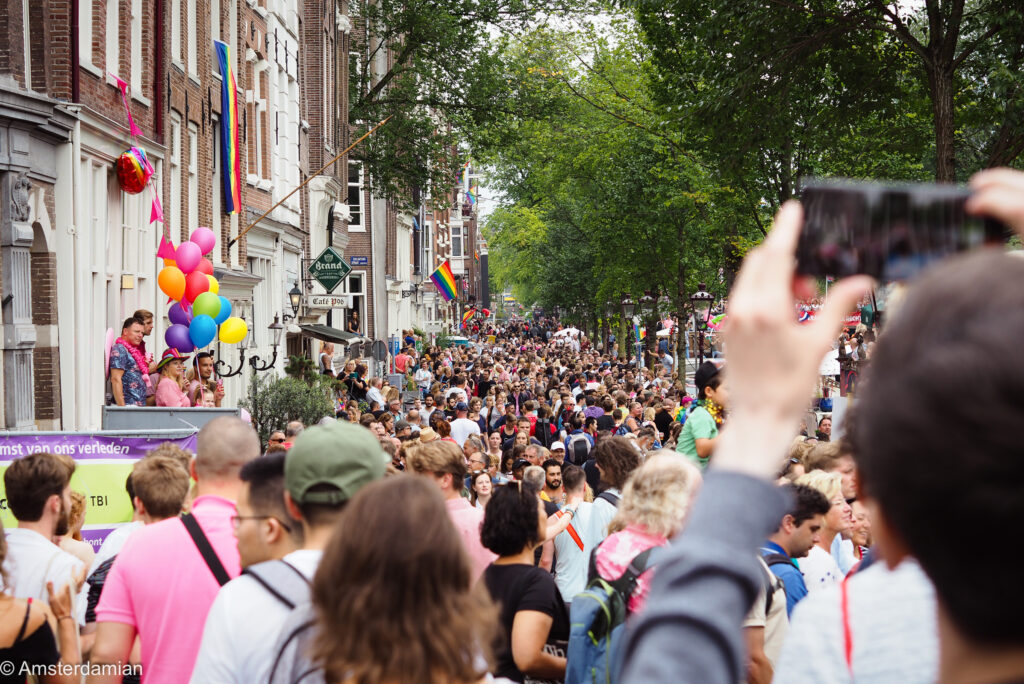
My advice: don’t fight for the famous spots. The parade is long and you can find many spots that offer you a great view along the route. If you want to have a good spot assured, the only solution is to go in advance and stay there until it starts. Bring food and drinks. Also, keep in mind that every boat has a routine dance that repeat itself and gets interrupted when the boats pass under a bridge and everyone has to duck for cover. Also all inflatable elements on the boats are taken down before the bridges and put back after.
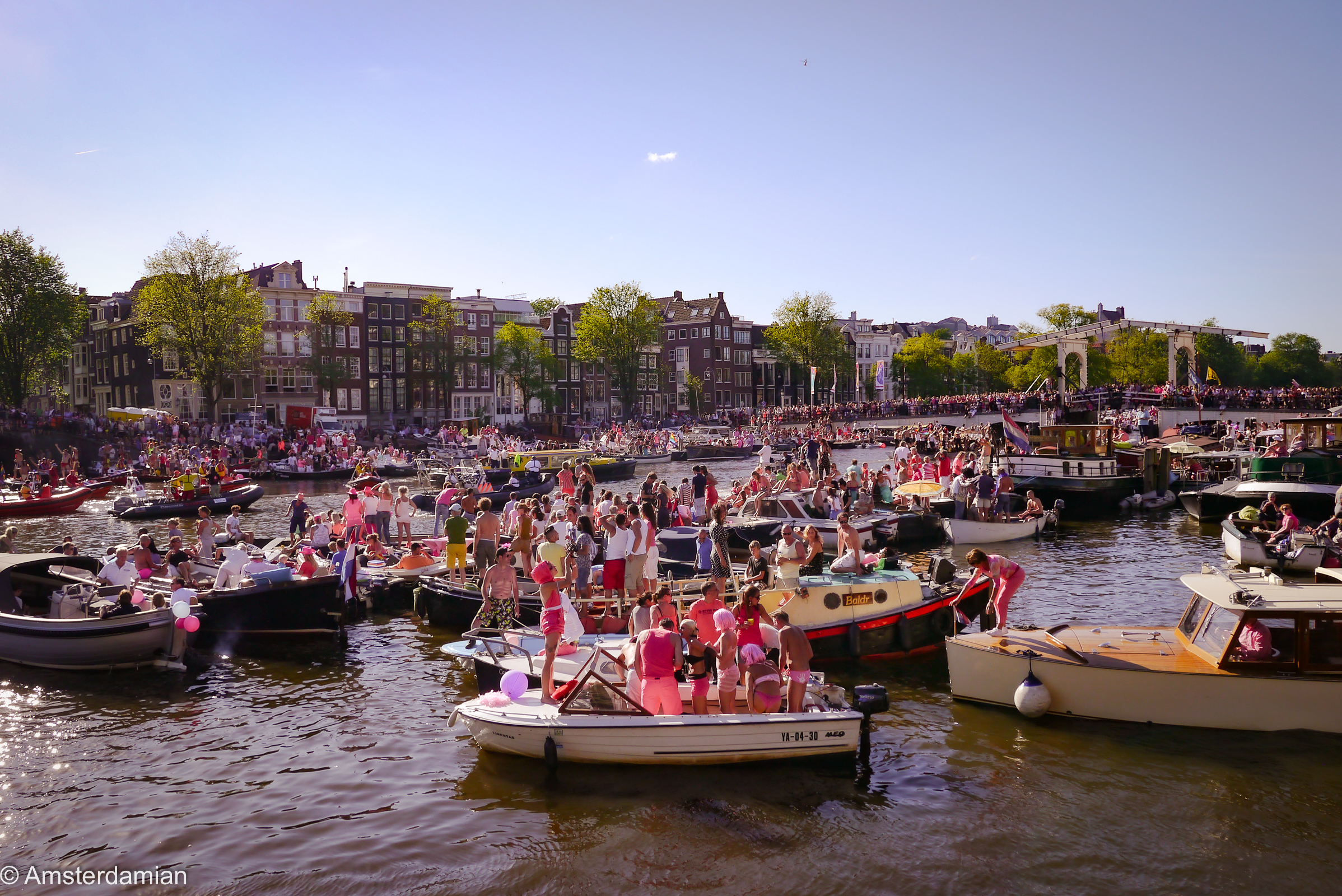
Some people find a good spot and stay there for the entire parade, others prefer to move around. Since the parade moves slowly, you can walk along the boats and enjoy the atmosphere on the streets, find something to eat or drink, and get back to the parade in a different spot (if you can still squeeze through the crowds). You’ll see people climbing on street light poles, houseboats and basically anything that offers a better view.
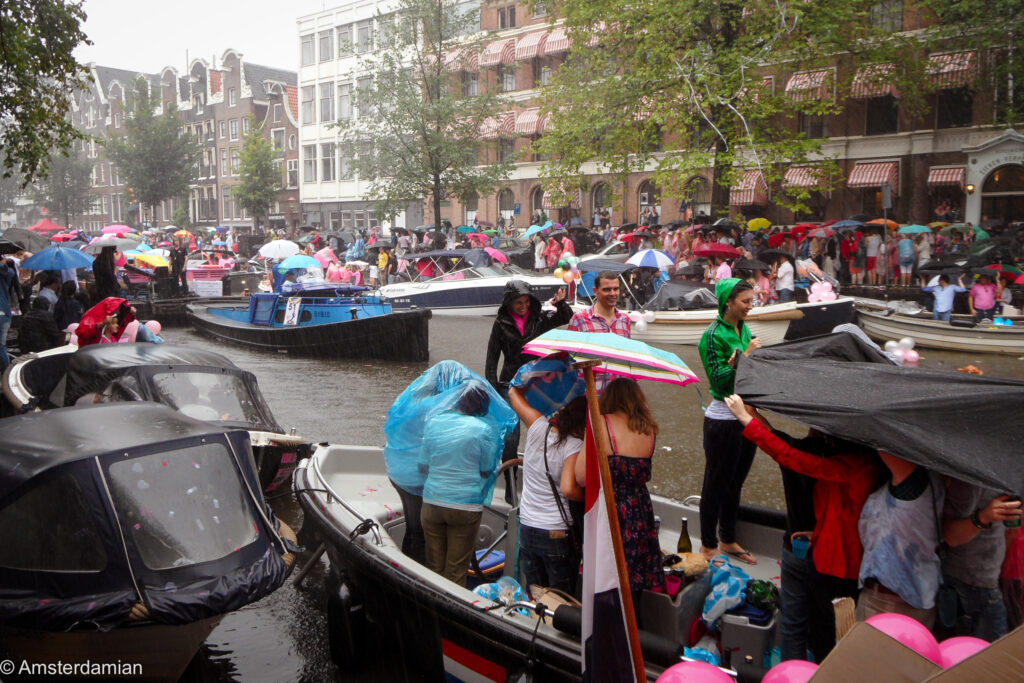
If you’re curious how it all looks through my camera, here are my photos from the 2018 Canal Parade and the EuroPride 2016 crowd.
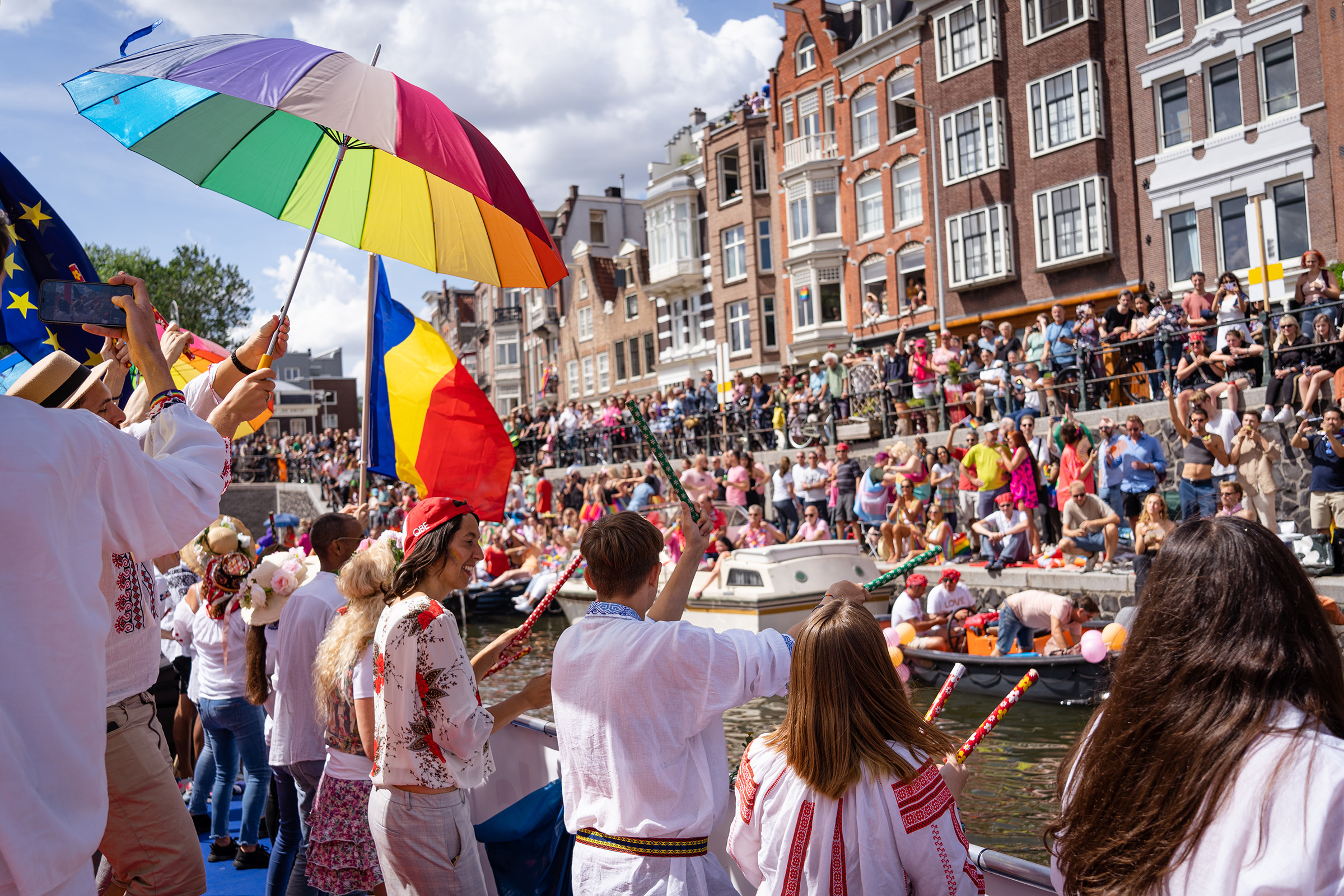
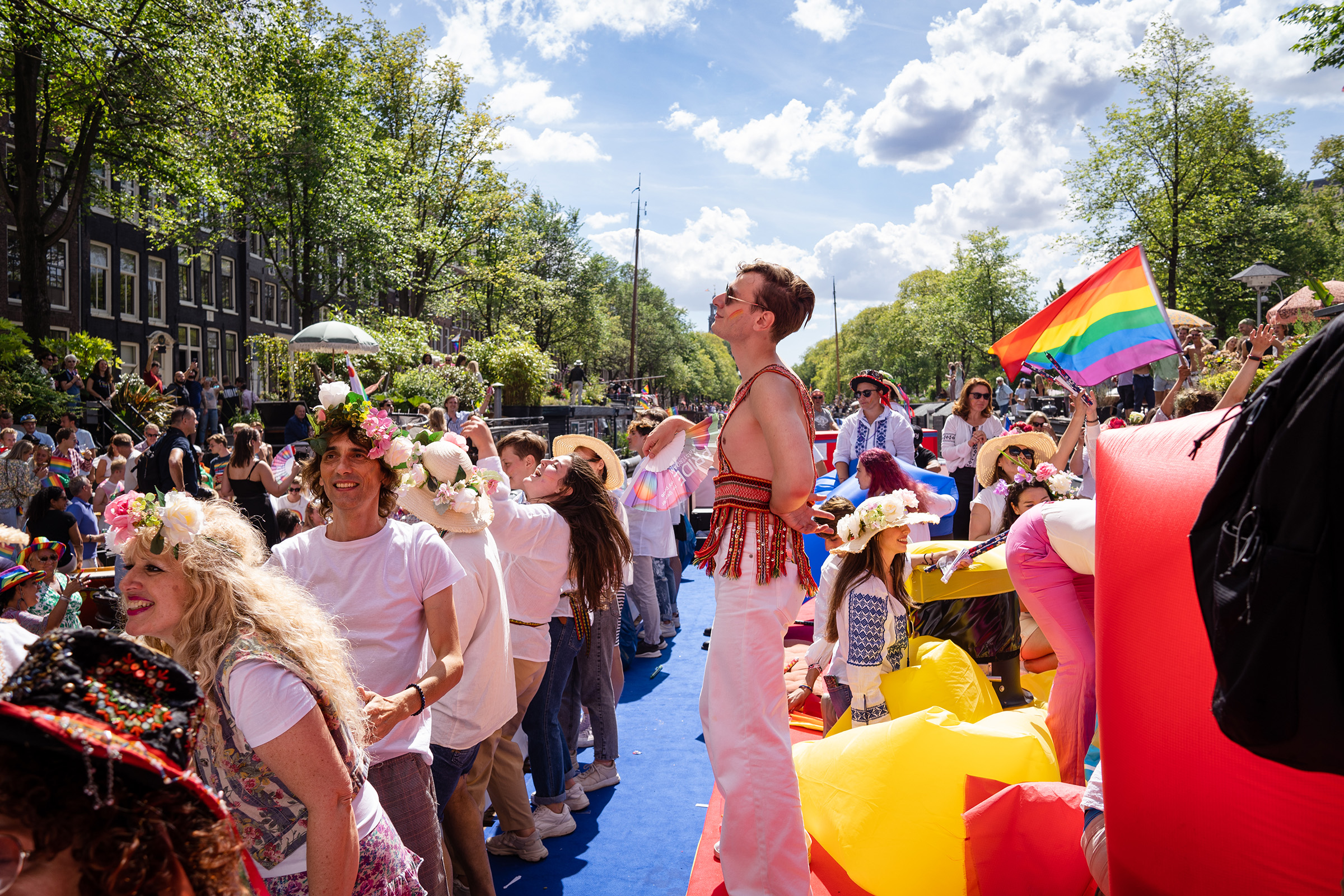
If you are a local, or you know some locals, you might be lucky to be in one of the boats parked along the route on the canals. Or, even better, on one of the parade boats themselves. I had this opportunity in 2022, when I was invited as a photographer on the Romanian boat. It was amazing! Seeing the city from the water and experiencing the parade from the other side is a completely different experience. The wall of sound, the crowds lining both banks, the cheering at every bridge, and being the ones putting on the show instead of watching it—it was all incredible. The only downside is that you only get to see a few of the other parade boats and that time flies very quickly. We were all surprised when we realised there was just one more bridge to pass under before reaching the end point. It was a few hours of dancing in the sun and, in my case, mostly taking photos, so it was quite physically demanding, but it was totally worth it.
I’ve told that story before, in my post about my first time on a boat at the Canal Parade.
Beyond the parade: the rest of Pride week
The parade is one day, but Pride lasts more than a week. Some of it is loud, some of it surprisingly quiet, and that mix is what makes it special.
Pride Walk: the activist opening, a march through the city centre that connects today’s celebration to the protest tradition. It’s open to everyone who wants to walk.
The street parties. The Reguliersdwarsstraat, Amsterdam’s gay street since long before it was safe to call it that, runs parties from afternoon till late. The Zeedijk hosts a street-long celebration with drag performances; stop at Café ’t Mandje at number 63. It opened in 1927 and is Amsterdam’s oldest café of its kind, run for decades by the legendary Bet van Beeren. Having a drink there during Pride week feels special: you’re sitting in a piece of history.
The Drag Queen Olympics at the Homomonument: handbag throwing and high-heel sprints. It’s silly and wonderful, and everybody loves it.
The cultural programme: films, exhibitions, debates and performances across the city all week. This is the part most visitors miss and locals love; check the official programme and pick one thing that isn’t a party. It will probably be the thing you remember. One year I spent an afternoon at Queer Sex Workers’ Day, part of the 2023 programme, and it stayed with me longer than some of the parties.
Practical tips for Pride week
- Expect detours and crowds. Bridges over the route close on parade day, trams divert, and the centre is simply full. Walk or cycle, and plan more time than you think you need.
- Book everything early. Hotels and restaurants along the canals fill up weeks ahead; in a WorldPride year, months. If you’re building days around the parade, my guide to Amsterdam in summer covers the rest of the city in this season.
- Bring cash for the toilets, and use them when you see them. If you’ve been to a Dutch festival before, you know why.
- Everyone is welcome, and that includes you. You don’t need to be part of the community to celebrate; you need only goodwill and perhaps some glitter. Families with children are a normal sight along the route, especially on the quieter stretches.
- Remember what it’s for. Take the photos, dance on the bridge, and notice how the cheering gets louder when a boat passes carrying people from countries where this parade would be unthinkable. That’s what it’s all about.
Amsterdam Pride FAQ
When is the Canal Parade?
Always on the first Saturday of August. In 2026 that’s Saturday 1 August, sailing from roughly midday to early evening, this year on an extended WorldPride route through the centre, East and West.
Is Amsterdam Pride free?
Almost entirely. The Canal Parade, Pride Walk, street parties and most of the programme are free; only a few events (like the UNITY concert and the Human Rights Conference in 2026) are ticketed.
Where is the best place to watch the Canal Parade?
The famous spots are the Reguliersgracht corner, the Magere Brug and the Prinsengracht by the Westerkerk, all packed by mid-morning. A few hundred metres away from any of them, the same boats pass a much thinner crowd.
Is the Canal Parade suitable for children?
Yes. It’s a public celebration along public canals, and families are a normal part of the crowd, especially on the quieter stretches of the route.
Pride week is Amsterdam at its best: the freedom, the water, the music, the feeling that everyone belongs. Whether you watch one boat or the whole parade, dance until sunrise or just lay a flower at the Homomonument on a quiet day, I hope you’ll come and see it for yourself.
Stay tuned for more and follow Amsterdamian on Instagram and Facebook for more stories about life in the Netherlands, written by a real local, updated constantly.
Check out my photo book: Amsterdam Through the Seasons!
Love what you’re reading? Support my work with a small donation.
And share this post if you liked it!