In 1345, in a house on Kalverstraat, something happened that would turn Amsterdam into a place of pilgrimage for centuries. It’s the kind of story that feels almost out of place in today’s city, which is modern and not very religious, and yet it once shaped how people saw Amsterdam.
A man was dying. A priest came to give him the Eucharist, the consecrated host (consecrated bread). The man being ill, he vomited. The host was thrown into the fire, as was customary at the time, to avoid desecration. The next day, when the fire had gone out, the host was found intact in the ashes. A woman brought it to the church, but according to the story, it didn’t stay there. It returned to the house, twice. After these unsuccessful attempts, the local priest came to bring the host again to the church, and he did so in a solemn procession. This time, the host remained in the church. It was seen as a miracle; the house became a sacred site, and a chapel was built there, known as the Heilige Stede.

Word spread, and people began travelling to Amsterdam to see the place where the miracle had happened.
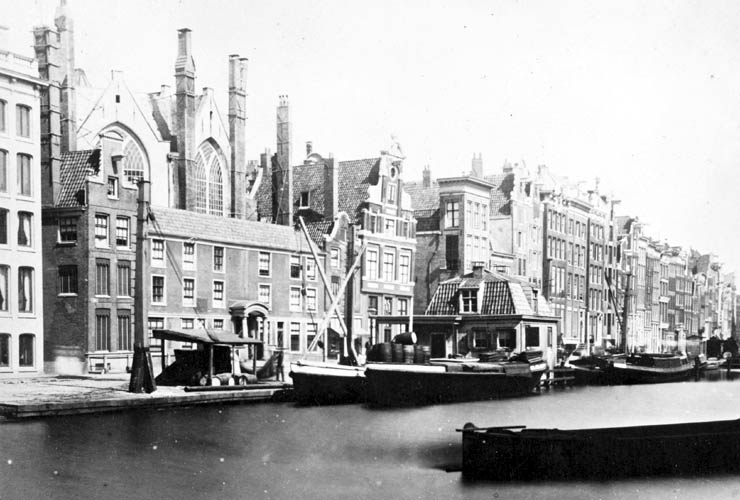
The city that was already a trading hub became also a destination for pilgrims. It’s a side of Amsterdam that feels almost hard to imagine now. A holy procession was held every year to commemorate this miracle, until 1578 when the Alteration of Amsterdam took place and the procession was banned. The chapel was converted into a Protestant church and it functioned as such until 1890. In 1908 the church was demolished, but the city council saved some parts of the exterior, including some columns.
One of the church’s columns was reconstructed in 1988 from the remaining stone fragments by sculptor Hans ’t Mannetje. This column was placed on Rokin, close to the original site of the chapel (next to where Amsterdam Dungeon stands today) and many people, including locals, swear they’ve never seen it!
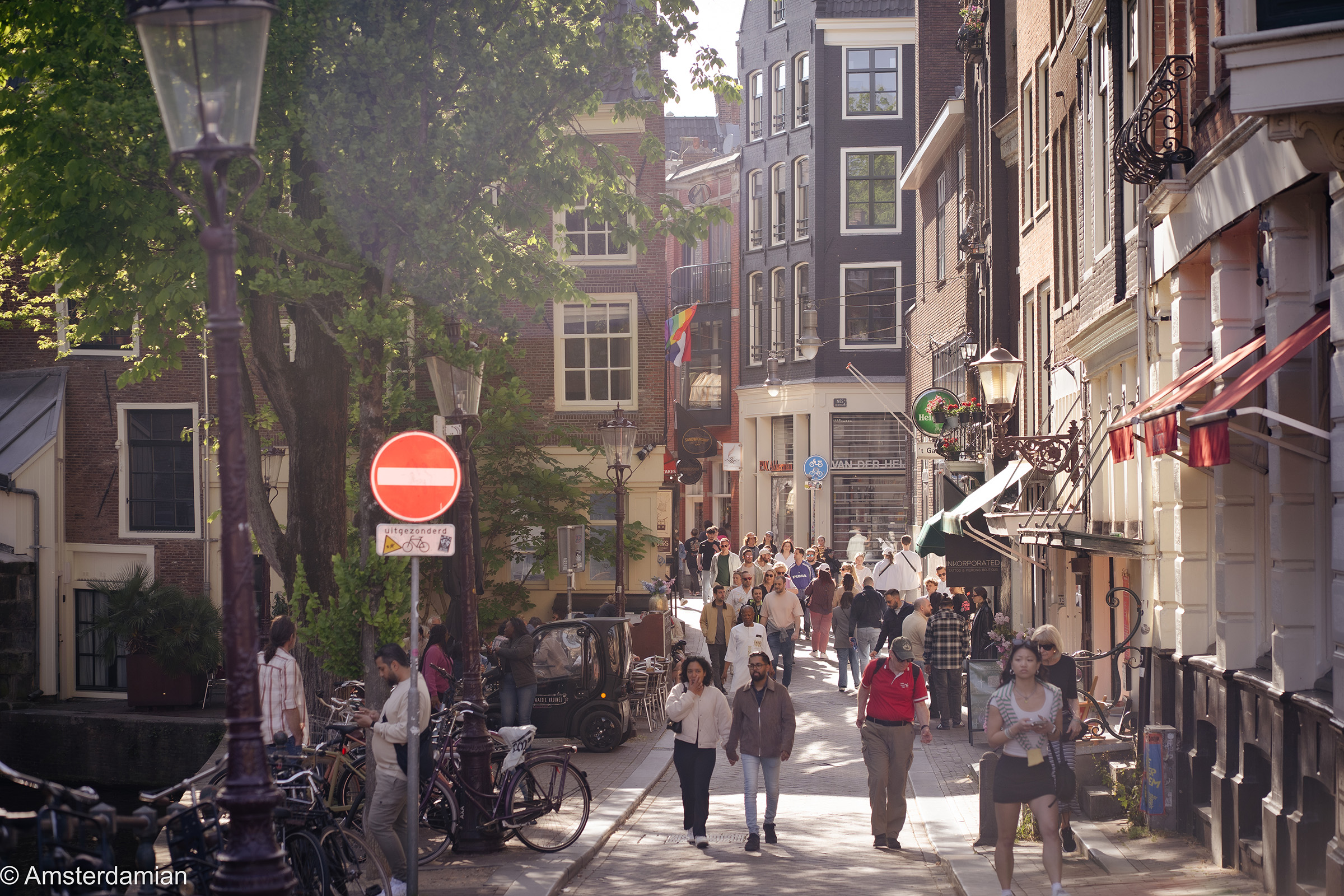
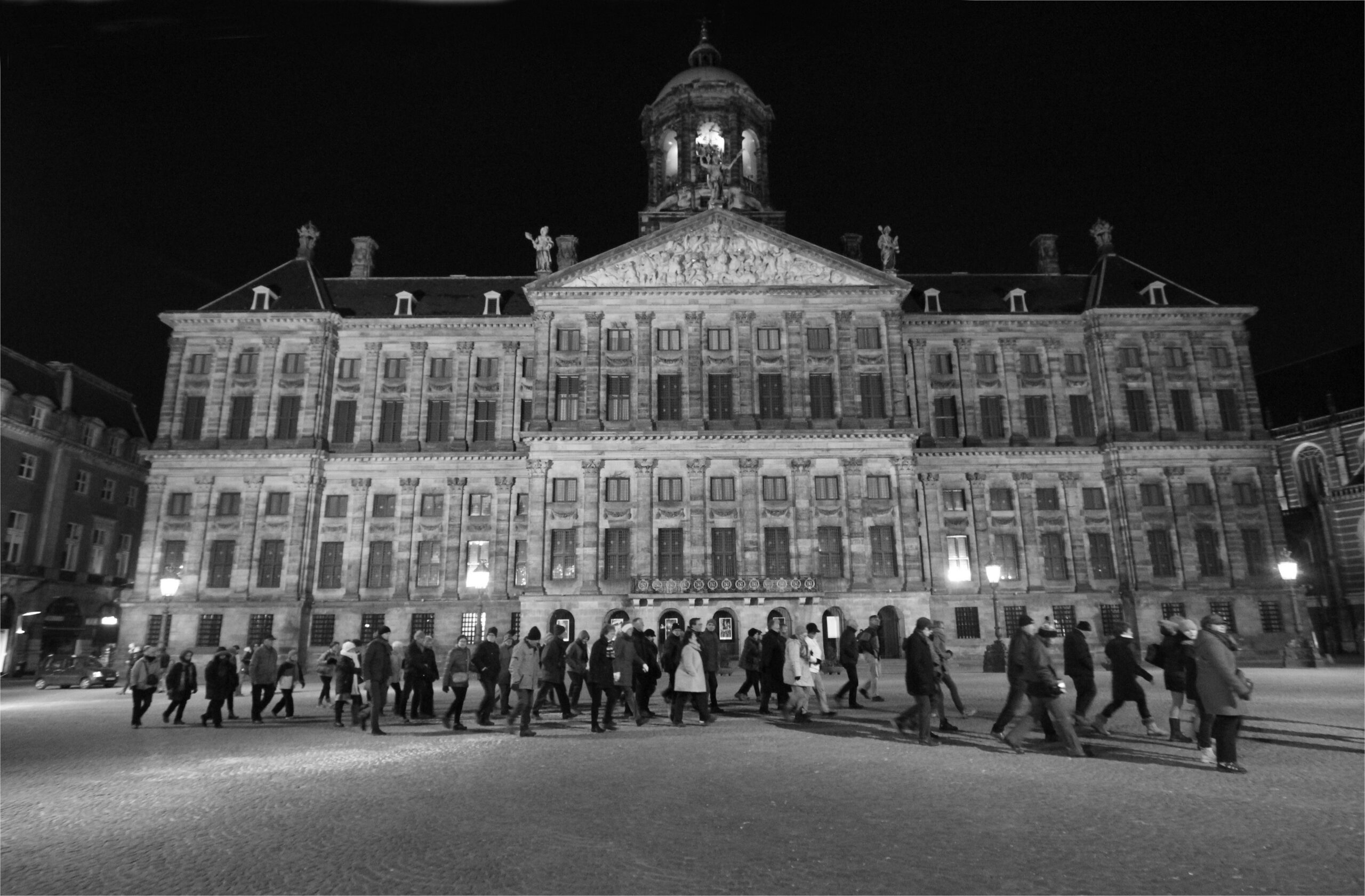
When you walk along Kalverstraat today, surrounded by shops and people rushing from one place to another, there is little to suggest that this was once considered one of the most important religious sites in the region. And yet, amazingly, the story of the miracle of Amsterdam didn’t disappear. Every year, usually in March, a silent procession takes place to celebrate it. Late in the evening, groups of people gather and begin to walk through the city centre. There are no signs, no music, no announcements. Just people walking in silence. Maybe that’s why I never learn about it until recently.
This is the Stille Omgang: the Silent Walk.
It follows, more or less, the route that pilgrims once took through the medieval city, connected to the miracle. When public Catholic processions were no longer allowed, people continued the tradition in this more discreet way: by walking the route without any outward display. The procession became invisible in order to survive. Today, thousands of people still take part each year. There are even walking groups who do the pilgrimage from other cities to Amsterdam. The Silent Procession in Amsterdam takes about one hour and it happens somewhere between midnight and four o’clock on Sunday morning. You can imagine the contrast between this silent walk and the Amsterdam nightlife, with drunk people on bicycles, or loud, cheerful groups walking between parties.
Amsterdam is a city that shows a lot of its history openly: in its canals, its buildings, its museums. But some stories are quieter. They don’t ask to be seen. They continue in the background, carried by people who remember them. The miracle of Amsterdam and the Silent Walk are some of those stories, and I love them because they show how full of contrasts this city is, how much of its life is still hidden. The Silent Walk managed to stay indeed silent for many years (only in 2006 was broadcast live on television for the first time), and it’s still unknown to many. I’m glad I found out about it. However, it takes place too late in the night for me to go and take some photos. Maybe next year.
Stay tuned for more and follow Amsterdamian on Instagram and Facebook for more stories about life in the Netherlands, written by a real local, updated constantly.
Check out my photo book: Amsterdam Through the Seasons!
Love what you’re reading? Support my work with a small donation.
And share this post if you liked it!