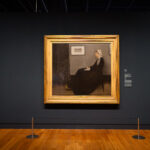


The famous Rembrandt painting hanging in the Rijksmuseum, The Night Watch, is alive. We might see it as an inanimate object depicting people who have long been dead, but look a little closer and there’s a whole microscopic world thriving on its surface. I’m talking about the microbiome living on its surface: the tiny creatures that don’t care they’re inhabiting a world-renowned work of art. They have their own territories and their own business to take care of.
Recently, their lives were disturbed by some unexpected visitors. Scientists from ARTIS-Micropia, the microbe museum at ARTIS, came up with the idea of analysing the microbes living on the painting and revealing The Night Watch to the public in a totally new light. They teamed up with the Rijksmuseum, which is carrying out an extensive restoration project on the painting, known as Operation Night Watch, to uncover a whole new side of this famous work of art. The results are presented in an installation called: The Night Watch Lives, exhibited at Micropia.
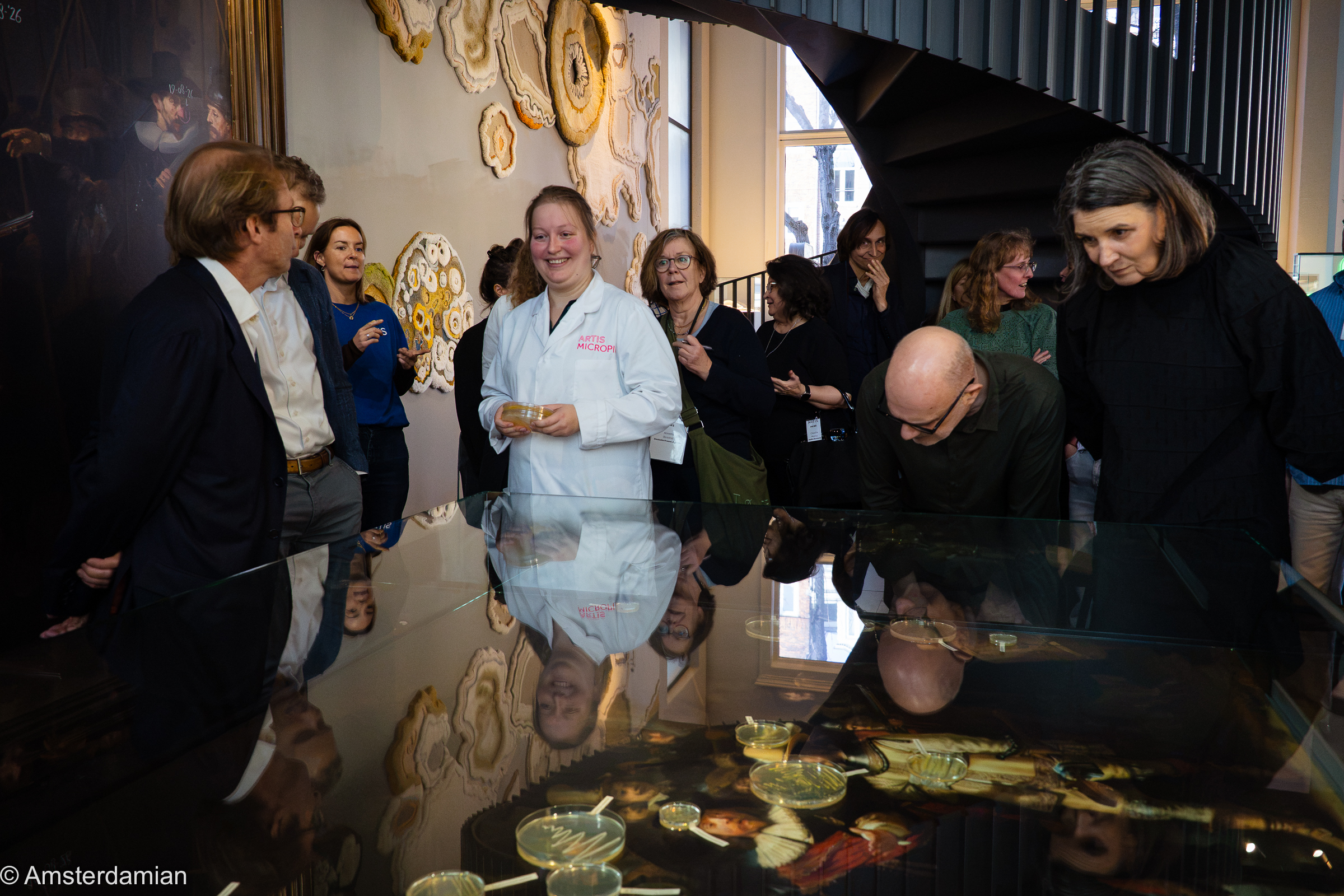
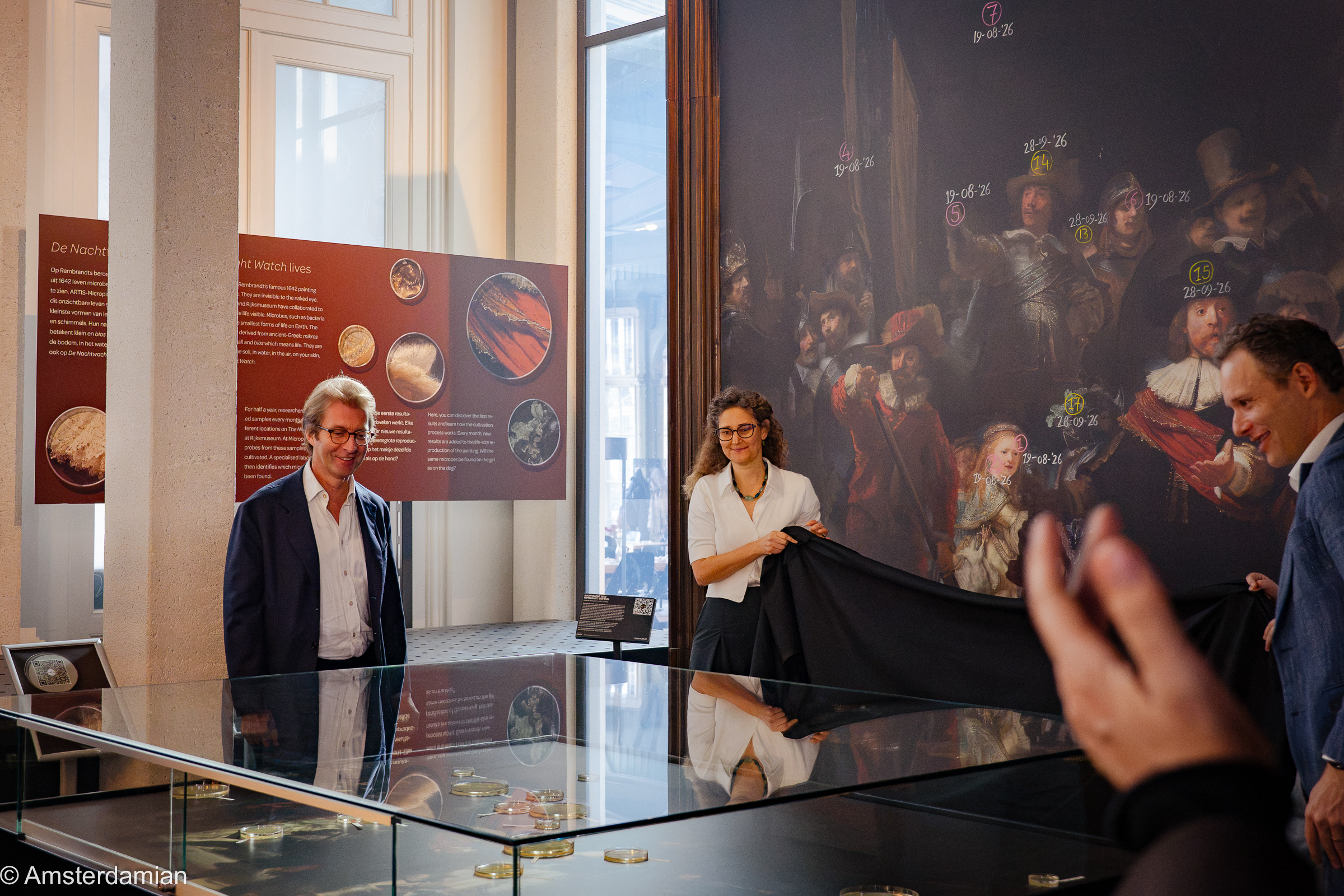
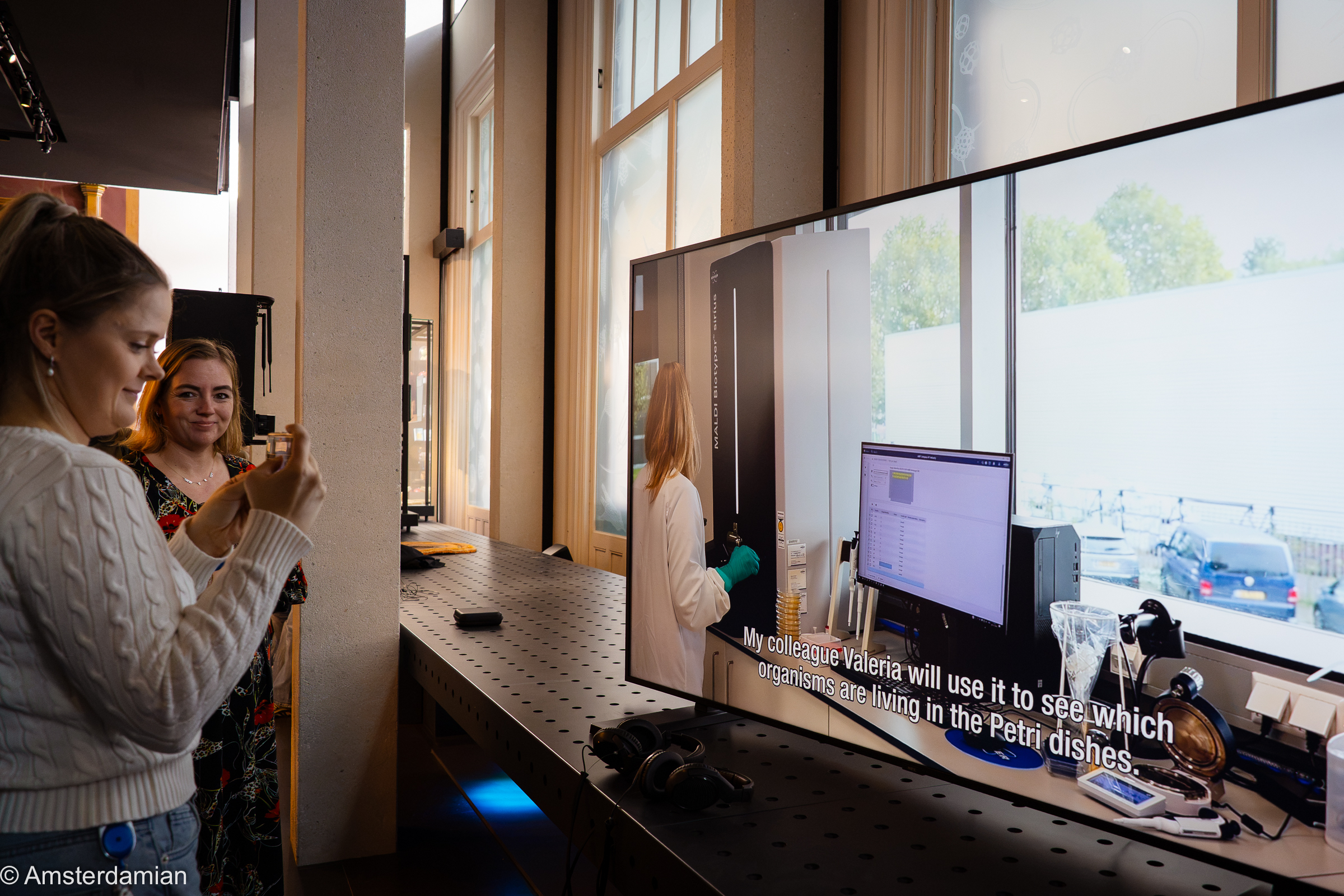
At the press preview on 10 November, the case containing the Petri dishes was ceremoniously unveiled, and there was a demonstration of how scientists collect samples from The Night Watch. Eline van Bloois, a microbiologist at ARTIS-Micropia, showed how that is done using the same little round pads used on the painting. Her sampling subjects? The foreheads of the people sitting on stage. A rather different kind of artwork, but the principle is the same!
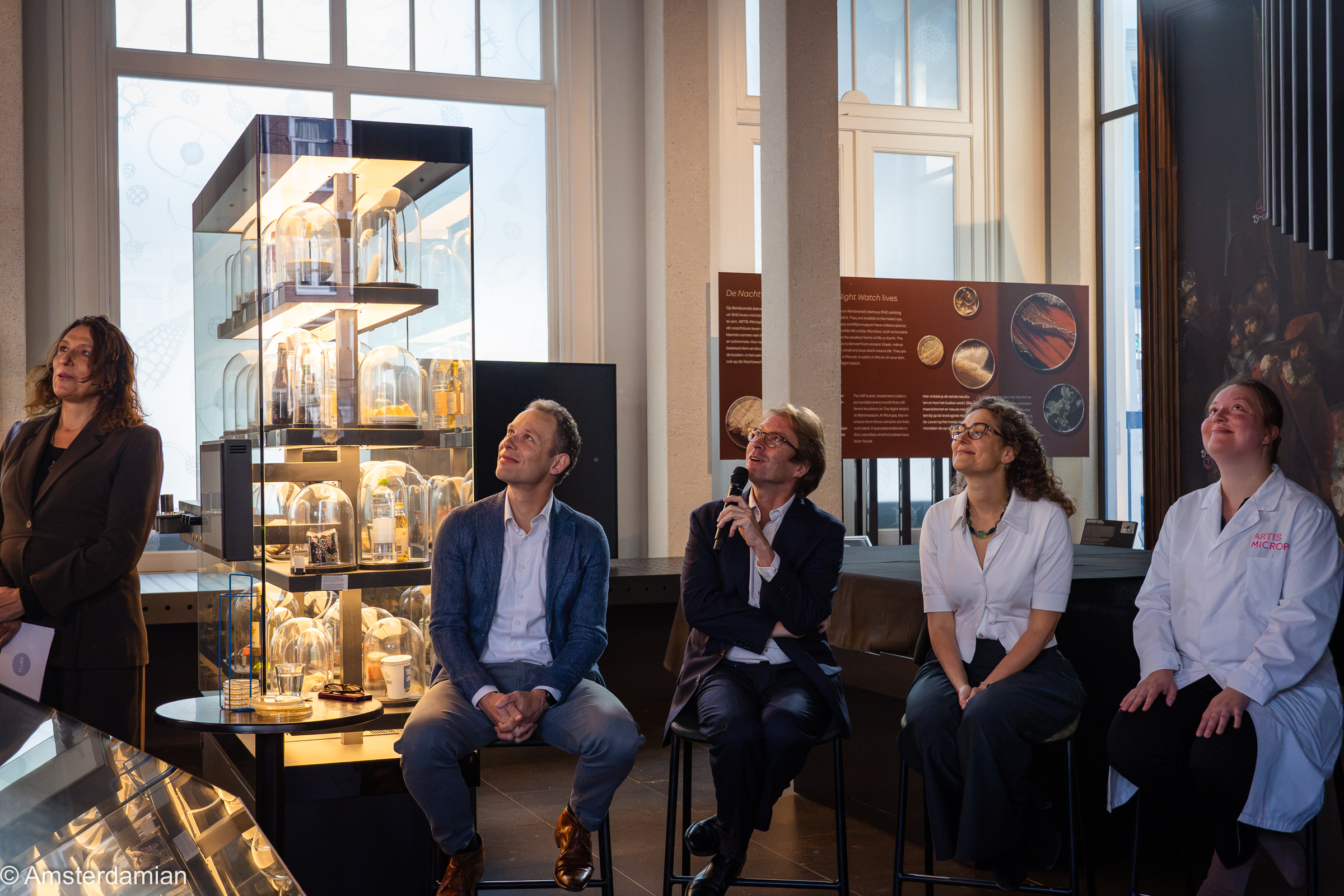
How do you take samples from The Night Watch?
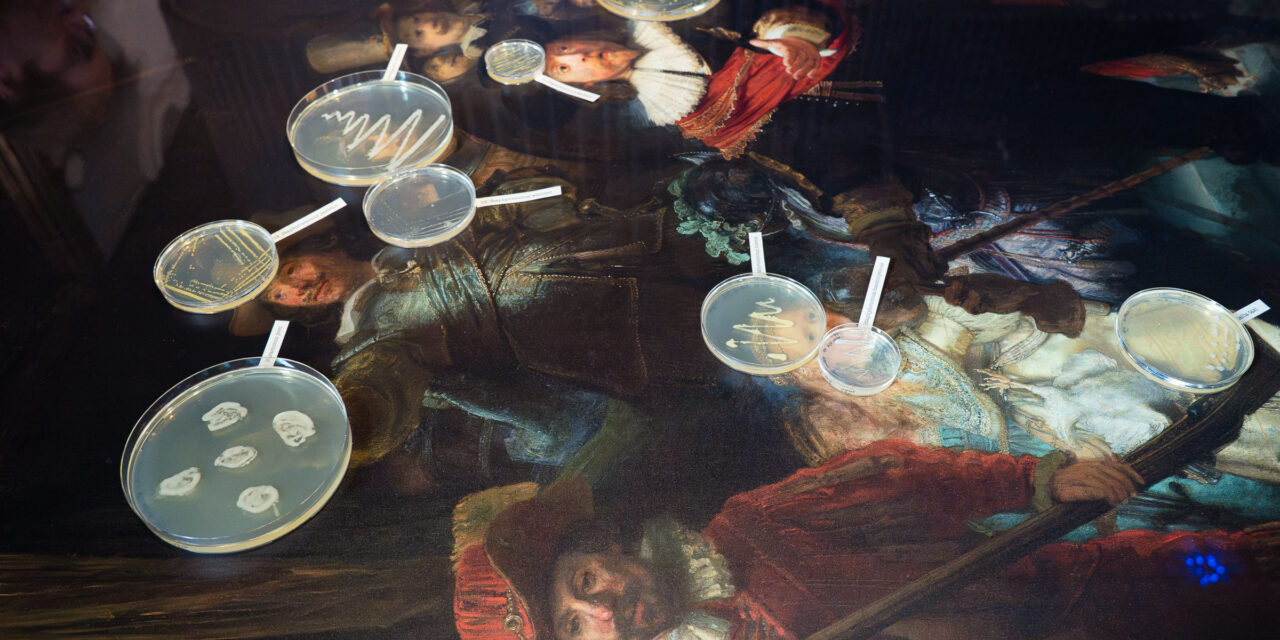
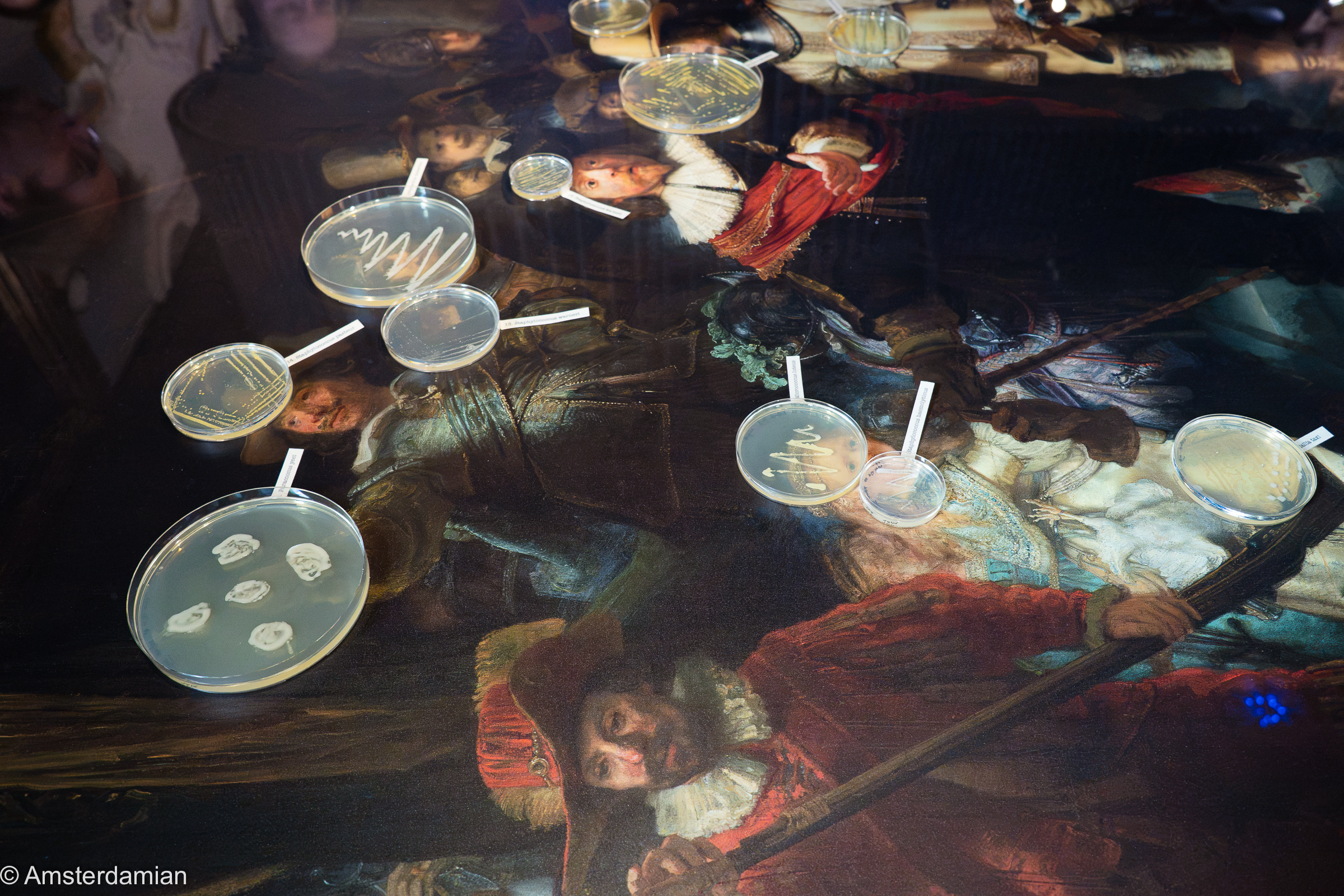
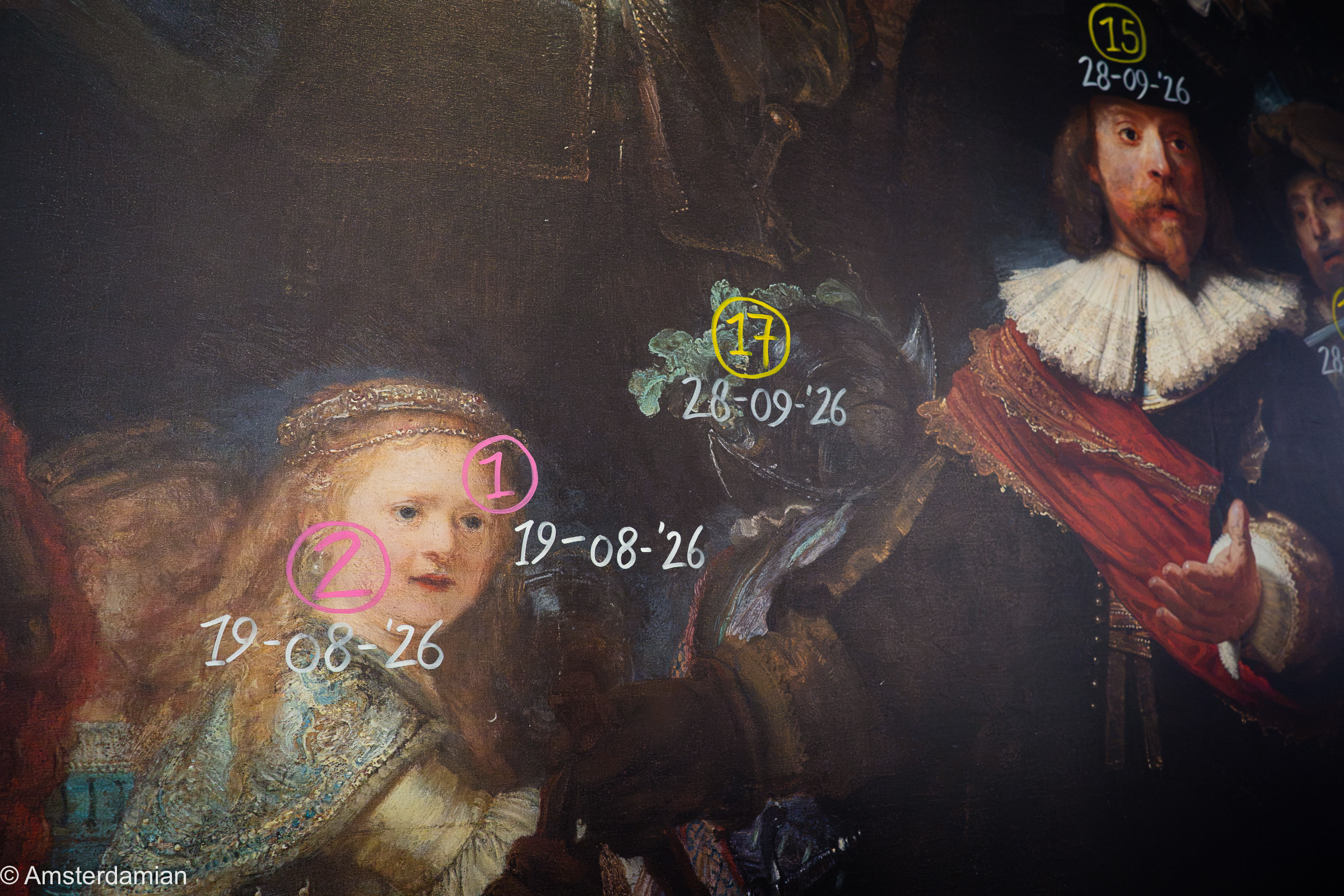
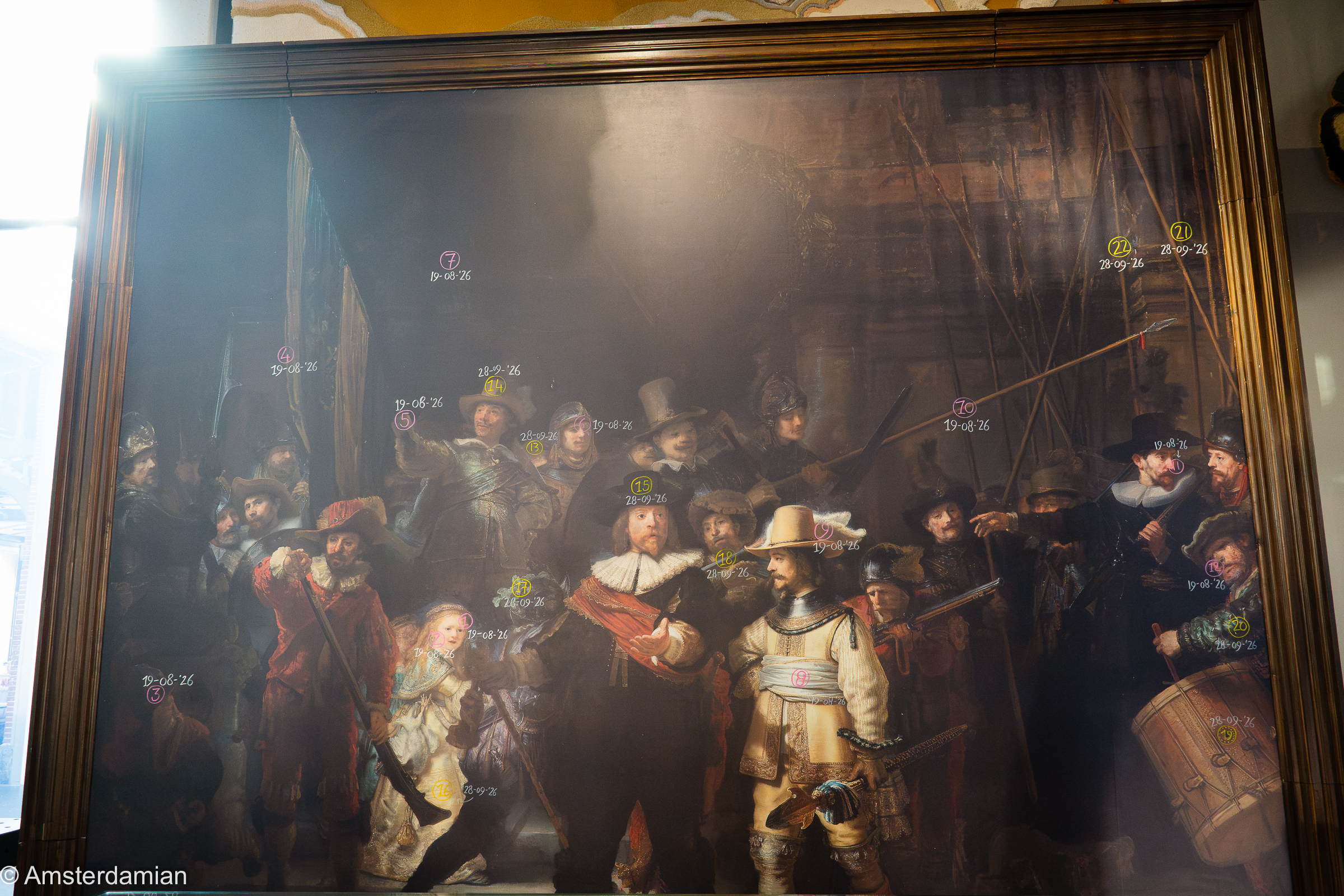
Taking samples from a 400-years-old painting is a delicate process. Laboratory technicians from Micropia and paintings conservators from the Rijksmuseum collected samples from around sixty places on the painting, some from areas that still have the old varnish and some from areas where it has already been removed. The researchers used small, round, sterile cellulose discs, which were gently pressed against the selected spots on the canvas. This allows the tiny inhabitants on the painting’s surface to transfer onto the discs, which are then placed in Petri dishes. They brought them in Micropia’s lab where they were cultured, which means the microbes get what they need to grow into colonies big enough to see. After that, an external laboratory works to identify them. And that’s how something invisible to the naked eye becomes something that is exhibited in a museum case.
The installation at Micropia includes a life-size reproduction of The Night Watch which shows where each bacterium was found, together with some of the Petri dishes themselves. In the coming months, more samples will be taken and the new results will be added as they come in, so the installation will keep changing until it closes at the end of May 2027.
“As a microbiologist, I never imagined I would have the chance to get so close to this masterpiece. Art and science are often seen as being at opposite ends of the spectrum, but this installation shows how closely these worlds are connected. And surely these Petri dishes full of microbes are little works of art in their own right?”, says Eline van Bloois, microbiologist at ARTIS-Micropia.
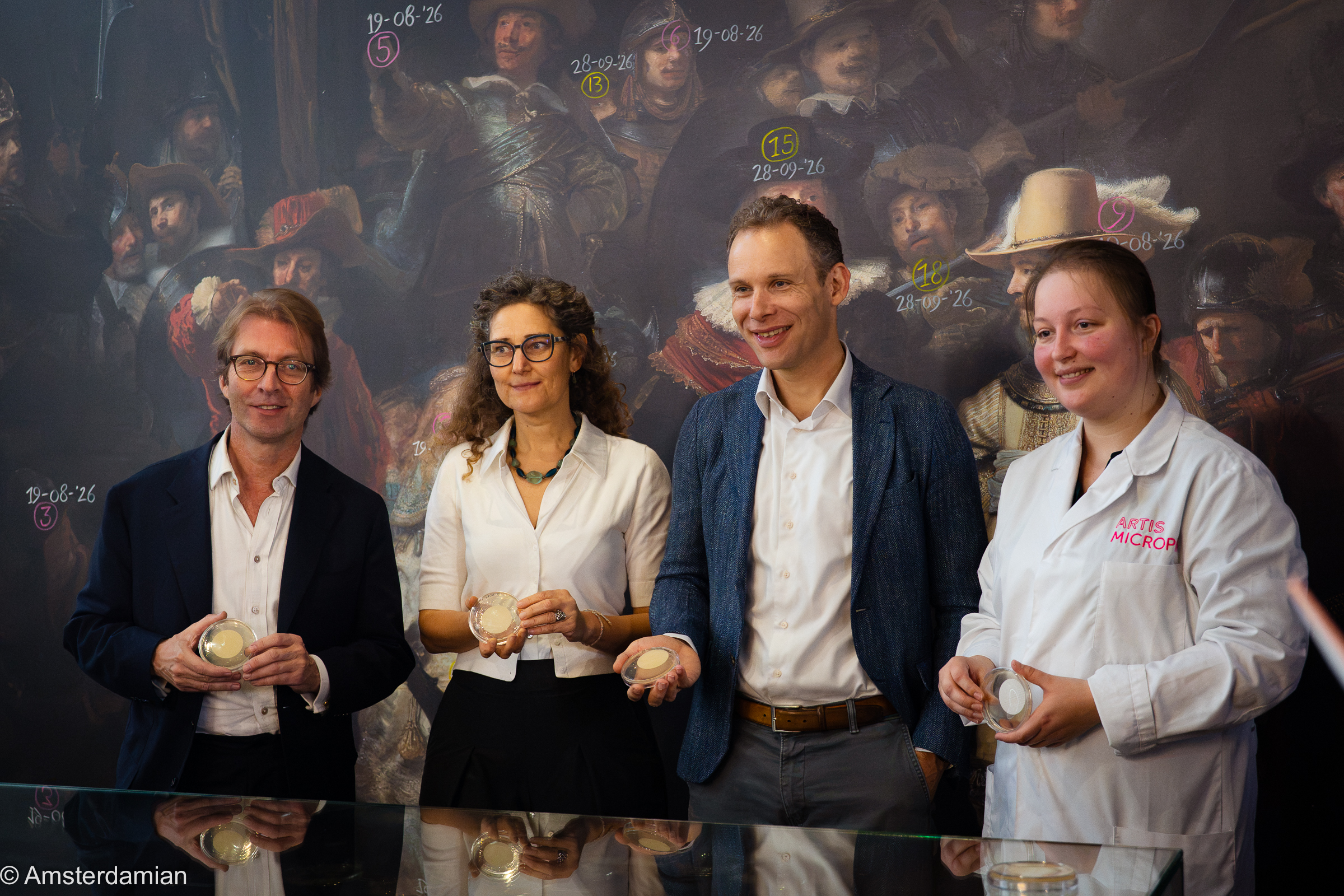
So, what lives on The Night Watch?
So, who are the inhabitants of this microscopic world? The first results came in and, perhaps unsurprisingly, among them are two familiar skin bacteria that many of us carry around: Staphylococcus epidermidis and Micrococcus luteus, which help protect our skin against pathogens and can help keep it hydrated. Other residents seem to have arrived from quite different surroundings: Kocuria palustris and Kocuria rhizophila, species that normally live in soil and around plant roots, and a soil bacterium called Lysinibacillus sphaericus, which can cope with difficult conditions (some strains are known to survive in places with high levels of heavy metals). Impressive, right?
But the most surprising find is Microbacterium saccharophilum, a species first found in 2013 at a sugar refinery in Japan. On The Night Watch it turned up in an area where the varnish had already been removed, and nobody knows how a bacterium from a Japanese sugar refinery ended up on a painting in Amsterdam.
Why are different microbes found in different places on the painting, and how did they get there in the first place? Nobody can say yet, and answering that would take more in-depth research.
Is any of it from Rembrandt?
This is the question everyone will want to ask, so I asked Katrien Keune whether the microbes could tell us something about Rembrandt and how he worked, and she doesn’t expect so, because what they find on the surface, she told me, is mostly representative of the public and of the people working at the museum. “I don’t think we’ll find something from Rembrandt there, because the painting has undergone a lot of treatments throughout its history.”
The scientists also can’t determine how long the bacteria have been living on the painting, although that would be a really interesting thing to know.
Where will all these findings lead? Depending on what the researchers discover, they may identify things that need to be taken into account in future restoration or conservation work. Or perhaps the outcome will simply be a new way of looking at The Night Watch: another layer of this famous painting revealed, one that has been there all along but remained invisible to us until now.
When Rembrandt finished The Night Watch in 1642, microbes had not yet been discovered, as Antoni van Leeuwenhoek only described them in 1676. Still, Rembrandt seems to have thought about what the environment could do to his painting. In 2023, researchers working on Operation Night Watch discovered a lead-containing oil layer under the ground layer, which Rembrandt probably applied to protect the canvas against moisture and mould.
Meanwhile, Operation Night Watch goes on
Operation Night Watch started in 2019 and is the largest research and conservation project ever carried out on the painting. At the moment, a large team of conservators is removing the yellowed varnish that was applied in the 1970s, carefully, with small tissues and under the microscope. It is very precise and labour-intensive work, and they get through only a small area in about a week, so removing the varnish alone will keep them busy for the coming years.
After that comes the filling of the losses in the paint, then the retouching, and finally a new layer of varnish. The fascinating thing is that you can watch all of this happening, as the work takes place in a glass chamber in the Gallery of Honour of the Rijksmuseum.
Visiting The Night Watch Lives
The Night Watch Lives is on at ARTIS-Micropia, Plantage Kerklaan 38-40 in Amsterdam, until the end of May 2027. Micropia is open every day from 10:00 to 17:00, and you can buy tickets on the ARTIS website. If you want to see the real painting as well, you can combine your visit with the Rijksmuseum, where the conservators are working on The Night Watch in front of everyone. Or you can combine Micropia with a visit to the ARTIS Aquarium.
This page includes affiliate links. If you click and purchase, I may receive a small commission at no extra cost to you.
Stay tuned for more and follow Amsterdamian on Instagram and Facebook for more stories about life in the Netherlands, written by a real local, updated constantly.
Check out my photo book: Amsterdam Through the Seasons!
Love what you’re reading? Support my work with a small donation.
And share this post if you liked it!