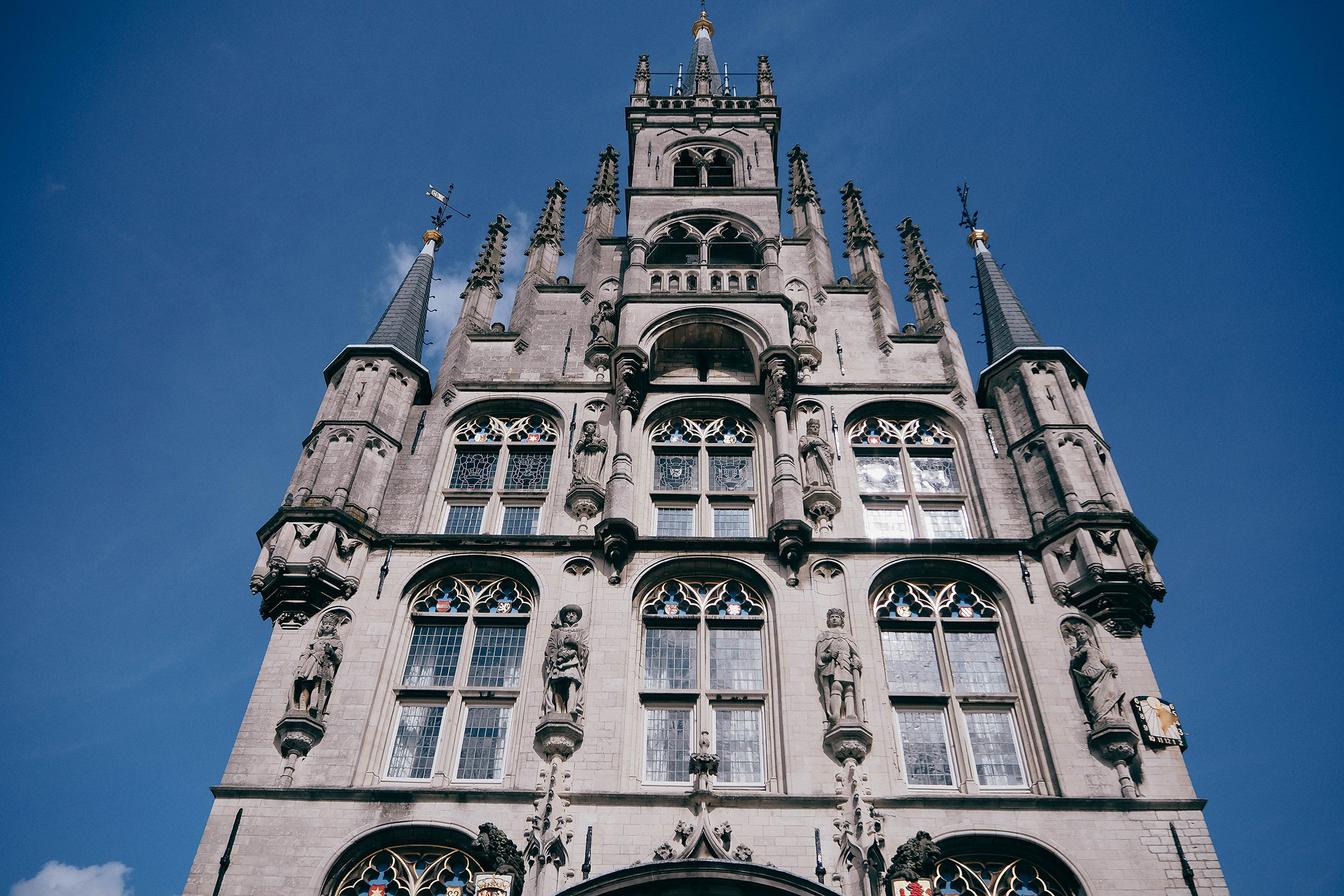
Before this year, all I knew about Tilburg was that it was a southern Dutch city close to the famous theme park Efteling. At some point I read a guide to the city, and a few things stayed with me. I have to visit this place, I said. But in time I forgot why.
This year I went there for the first time on a press visit. It was a packed day, though we only saw a handful of places: the Textile Museum, the LocHal and the Spoorzone, plus a shipping company where we got to ride in a big truck and look out over a sea of containers waiting to leave for China by train. I was intrigued and impressed by what I’d seen, but the city itself stayed a mystery, because I’d only caught snapshots of it through a car window. I was determined to go back and explore it properly, and this July I finally spent two days in Tilburg. What I found was a city with a laid-back atmosphere, where people know how to work and how to relax afterwards, a city with proud residents and a lot of surprises for its visitors.
Tilburg is not one of those pretty gingerbread house cities the Netherlands is known for. It’s one of the “New Dutch” cities: places with an industrial past that keep reinventing themselves while cherishing and honouring the past.
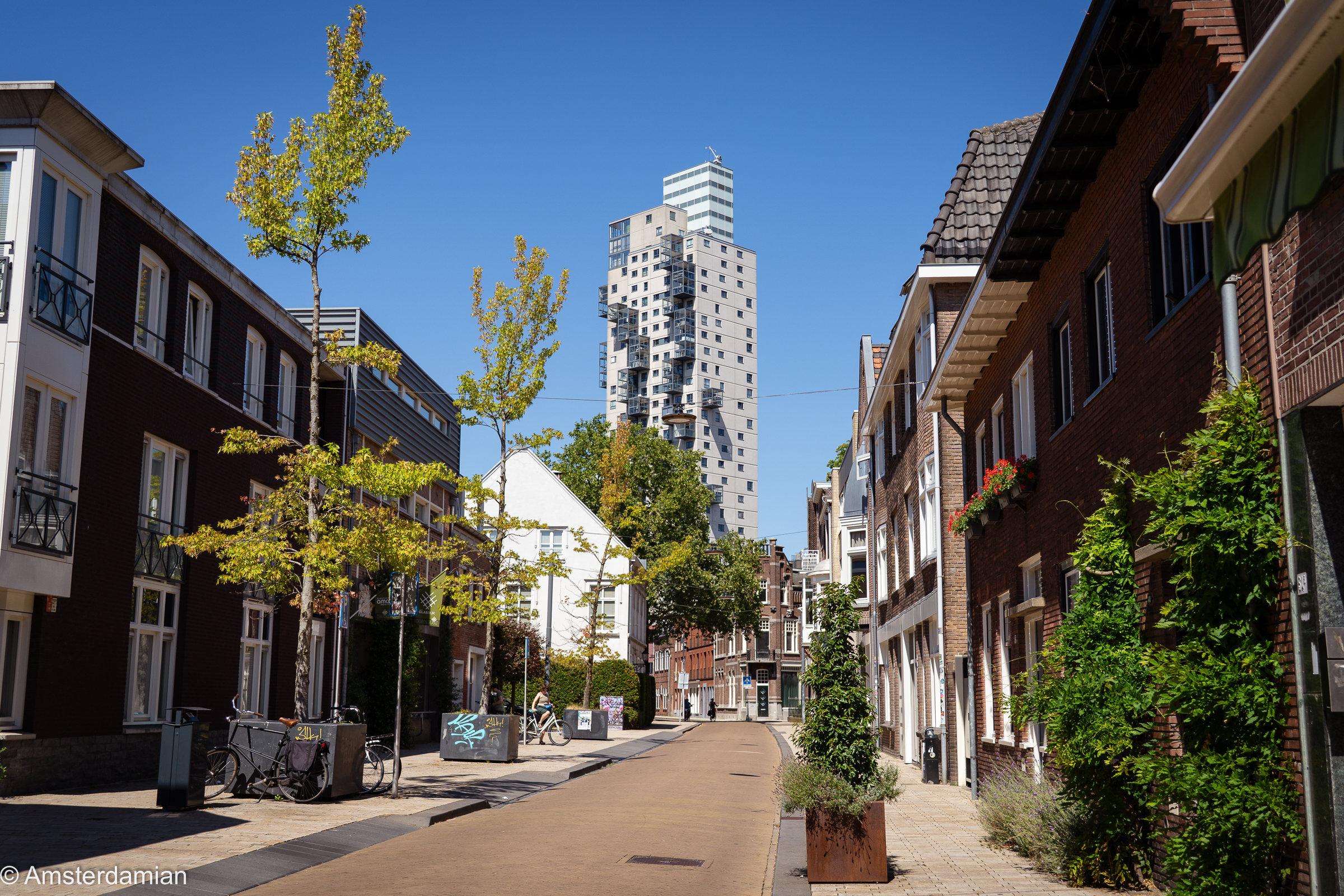
This city’s past is tied tightly to the textile and wool industry. At its peak in the 1880s, Tilburg had around 145 textile factories, large and small. A resident told me that probably every family here has some connection to the wool industry, and hers was no exception. And almost everything in this city is connected with the wool industry too: the beautiful houses in the city centre used to be houses of the wealthy wool merchants, the haven was dug to cater to the wool industry, museums and concert halls are built in former factories.
Before I arrived, I had a list of places to see in the city, starting with a second visit to the Textile Museum, which I loved the first time I went there. But I also wanted to just roam around and get a feel for the place.
I decided to start with the Spoorzone, one of Tilburg’s most innovative projects: it transformed a 75-hectare former railway workshop site behind the train station into a modern district. Before this, the industrial zone was closed off with walls and residents had no access to it. Now the old industrial buildings host cool places like a library that was named World Building of the Year in 2019, a food hall, offices and event spaces, and there is a park maintained by the residents. The forbidden area was given back to the city in a very nice way.
I started with a coffee at the LocHal, probably my favourite place in Tilburg. This is a library in a former railway workshop hall, a very tall, open space, with places for a restaurant, conferences, reading and study, and exhibitions. I absolutely love this place! If there’s one thing you see in Tilburg, let it be this. Metal elements from the workshop were preserved and integrated into the new design: tables sitting on train wheels, train tracks going through the floor, huge metal screws and bars. You can almost imagine the workers yelling and the machines working. But you don’t hear a thing, as this place is a library now, and it’s quiet.
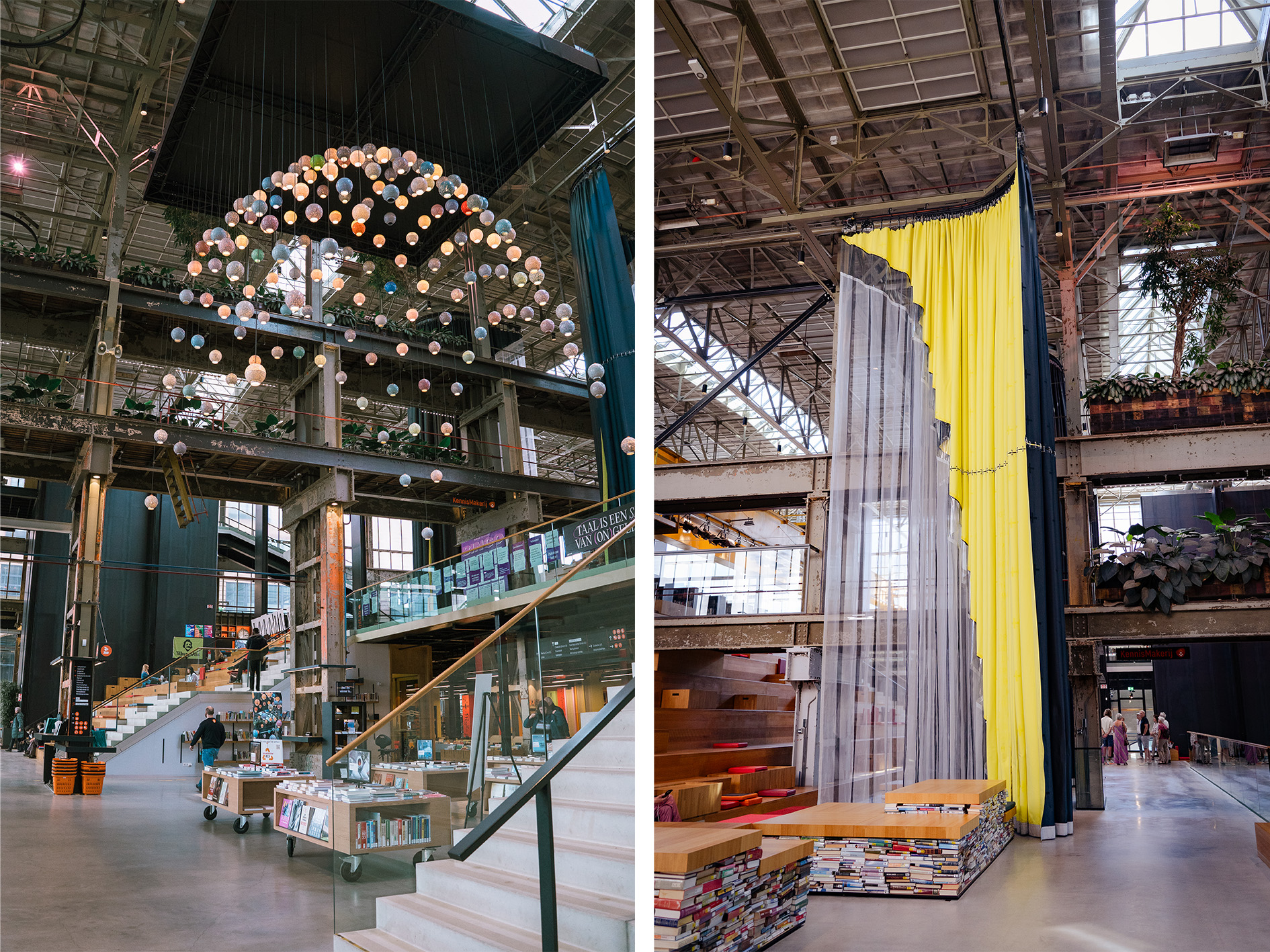
The coffee was good, and some ladies there tempted me to try the Tilburgse verleiding (“Tilburg temptation”), a cinnamon-sugar bread roll filled with Swiss cream, but it was too early for that. I definitely regret it now. I went up to the first floor to see the small exhibition explaining the history of the place (the clocks you see there are old clocks used in the workshop), and a small exhibition about the hotel I would sleep in later: Hotel Central Binnenstebuiten. This hotel at Spoorlaan 422 was built in 1932 on the site where Hotel-Café-Restaurant Albert Janssen previously stood, a breeding ground for artists and free spirits, among them the founders of what would later become the art movement De Stijl. The current hotel has each room themed after one of the artists connected to the movement, and the exhibition showed that. After that I had a walk around, browsing a few books and admiring the huge curtains, which I found out were made at the Textile Museum and are used to close off some spaces and turn them into rooms for conferences and lectures. I could have spent so much time there, but another favourite was waiting for me. Of course, on my way out I passed the Pakje Kunst vending machine next to the exit. Here you can buy a special souvenir from Tilburg, a little box filled with a surprise piece of art made by a Tilburg artist.
Next, I went to the Textile Museum (TextielMuseum) and the TextielLab, which sit inside the old Mommers wool factory. I have to admit that before visiting this place I’d never thought a textile museum would interest me. How naive of me! This place is amazing. You get to learn about the textile history of Tilburg, but you also learn so much about the textile industry, past and present. You see the clothes you wear and all the textiles we use daily in a different light.
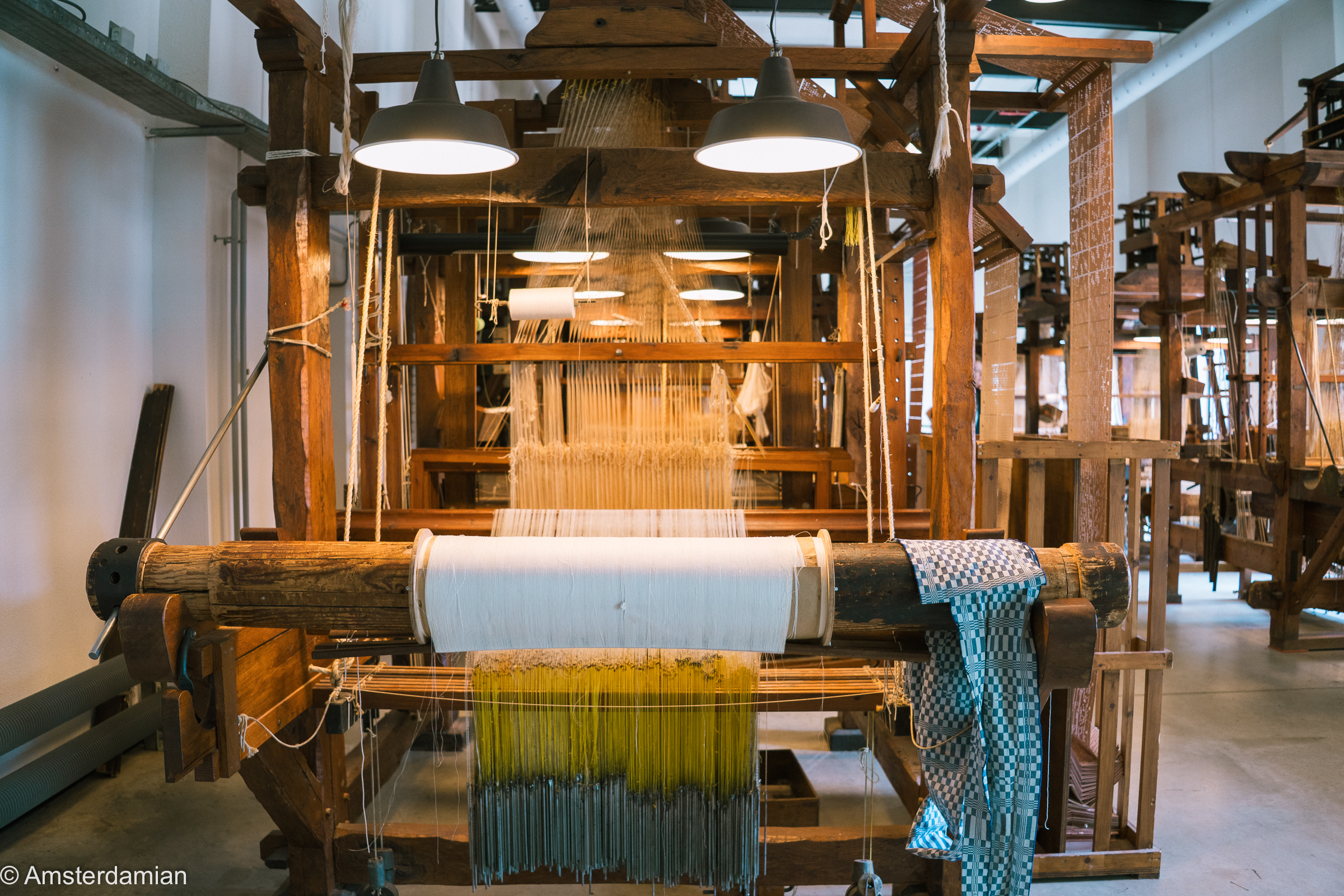
The new weaving machines fascinated me, and the old ones reminded me of my grandma, who, each winter, would set up a big loom in one room of the house and weave blankets and rugs until spring. At the TextielLab, you get to see people at work and learn about their research, like creating new materials. The metal weaving was the most impressive. Before you leave, you pass by the museum shop, which is quite dangerous for your wallet. This museum raised a new interest in me for the textile world, and I think that’s one of the best things a museum can hope for. I loved my second visit just as much as the first one.
Next stop, and another of Tilburg’s big surprises, was the De Pont Museum. This is a museum of contemporary art in a former wool factory. The surprise here came from the conflicting feelings this museum generated in me. The building itself is cool, very modern, with large spaces for the exhibitions. Unlike other museums, this one doesn’t have a designated route. You explore it at your own pace, moving through rooms and going back (which I usually do in any museum, if I’m being honest, because I do not have the patience to follow a route). Apart from the (more or less) permanent collection, there was an exhibition by Steve McQueen, Atlas, acclaimed and drawing a lot of visitors.
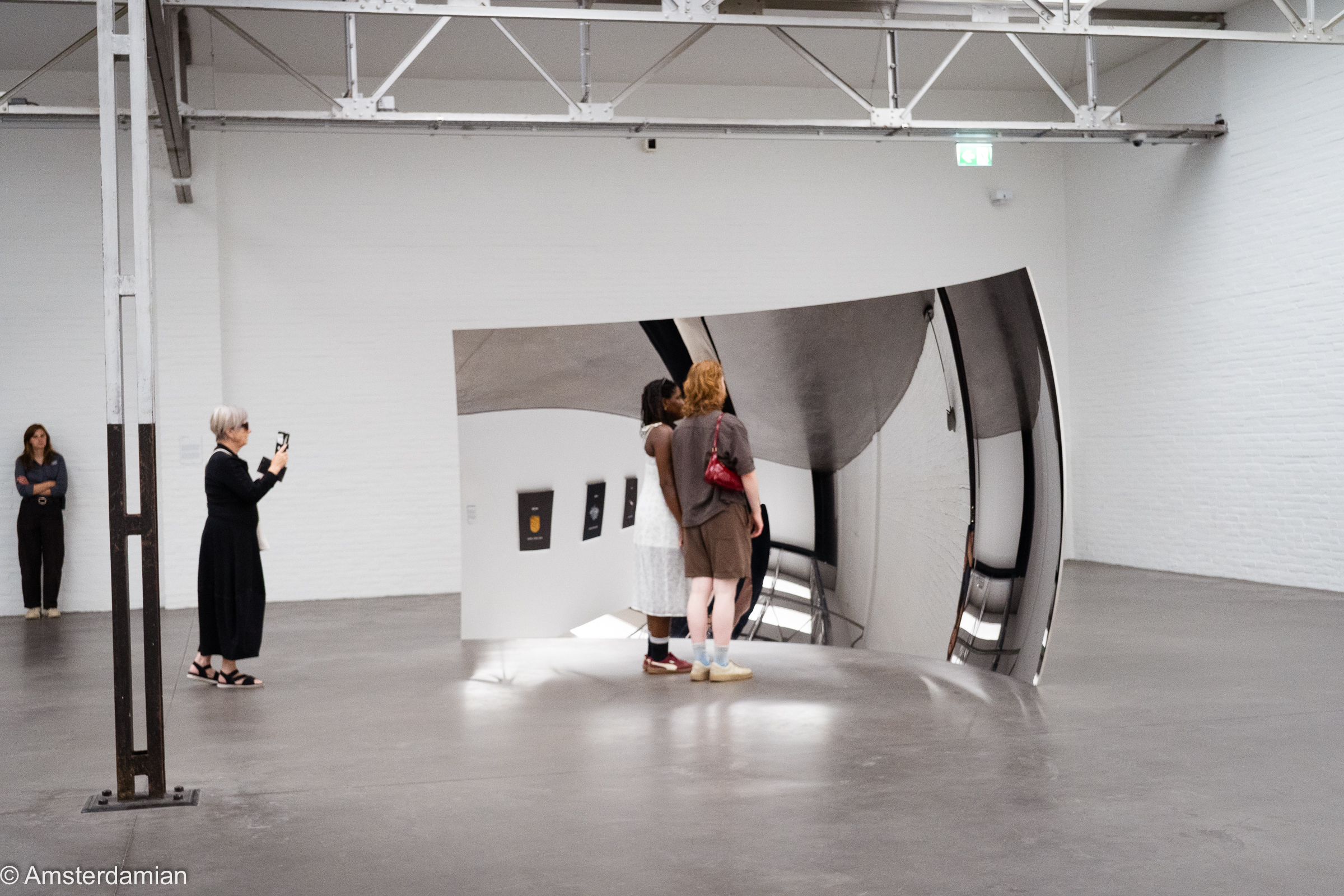
What I hadn’t expected was to find the museum physically uncomfortable. A distorting mirror made me nauseous; one of McQueen’s works was very loud, another used flashing lights that I don’t tolerate well. I know the artists made these works to provoke a reaction, and they definitely succeeded. Maybe too much in my case. The walk around the museum brought up all kinds of feelings: interest and admiration, surprise, discomfort, and more surprise. Here you see a claustrophobic room with walls made of beeswax, two urinals forged together, a weird statue, then you turn the corner and see a series of amazing photographs. I relaxed when I entered their garden, a lovely place where you can have a drink under a silk tree.
Of course, this was my experience of the exhibitions on at the time, and it could be completely different when you visit. That’s part of what makes contemporary art museums interesting: you never quite know what you’re going to get. Not everything we visit is going to land with us, and the experience would probably have been different if I had visited when other exhibitions were on. De Pont might have left me slightly rattled, but I’ve walked out of plenty of museums having felt nothing at all, and I’ve forgotten those within a week. This one I keep coming back to in my head.
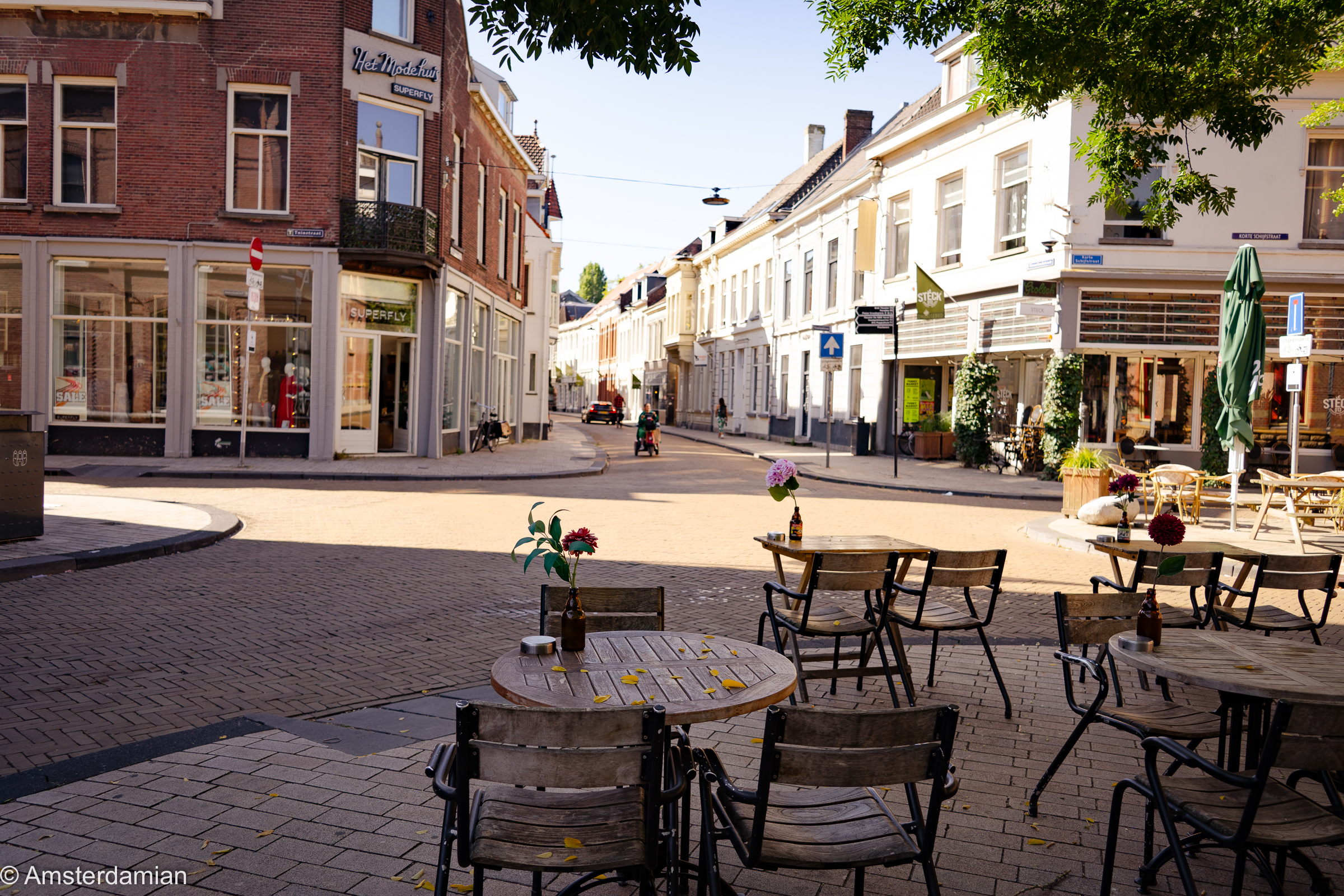
Another surprise I had in Tilburg was the feeling I got when I went to the city centre in the evening. A sense of familiarity, of calmness, of being welcomed with open arms. It was like going back to your small home town after years in a big city, when you feel nostalgic and safe and everything is familiar. It was quite an unexpected feeling, as I have no connection with the place, but I really enjoyed it. The streets were quiet, apart from the few restaurants that were packed with people enjoying a summer evening. The one I chose for dinner had one of those Persian silk trees with the pink fluffy flowers next to it. You can find those around the city and they smell so good. Over dinner I was thinking that Tilburg is a great place to use as a base if you want to explore more of the area (and there’s a lot to explore in Brabant!).
Why all this detail about a library, a museum and an industrial zone
I could have written this in three lines: go to the LocHal, go to the Textile Museum, have dinner in the centre. But then I’d have left out the part that kept surprising me, which is how this city goes about things.
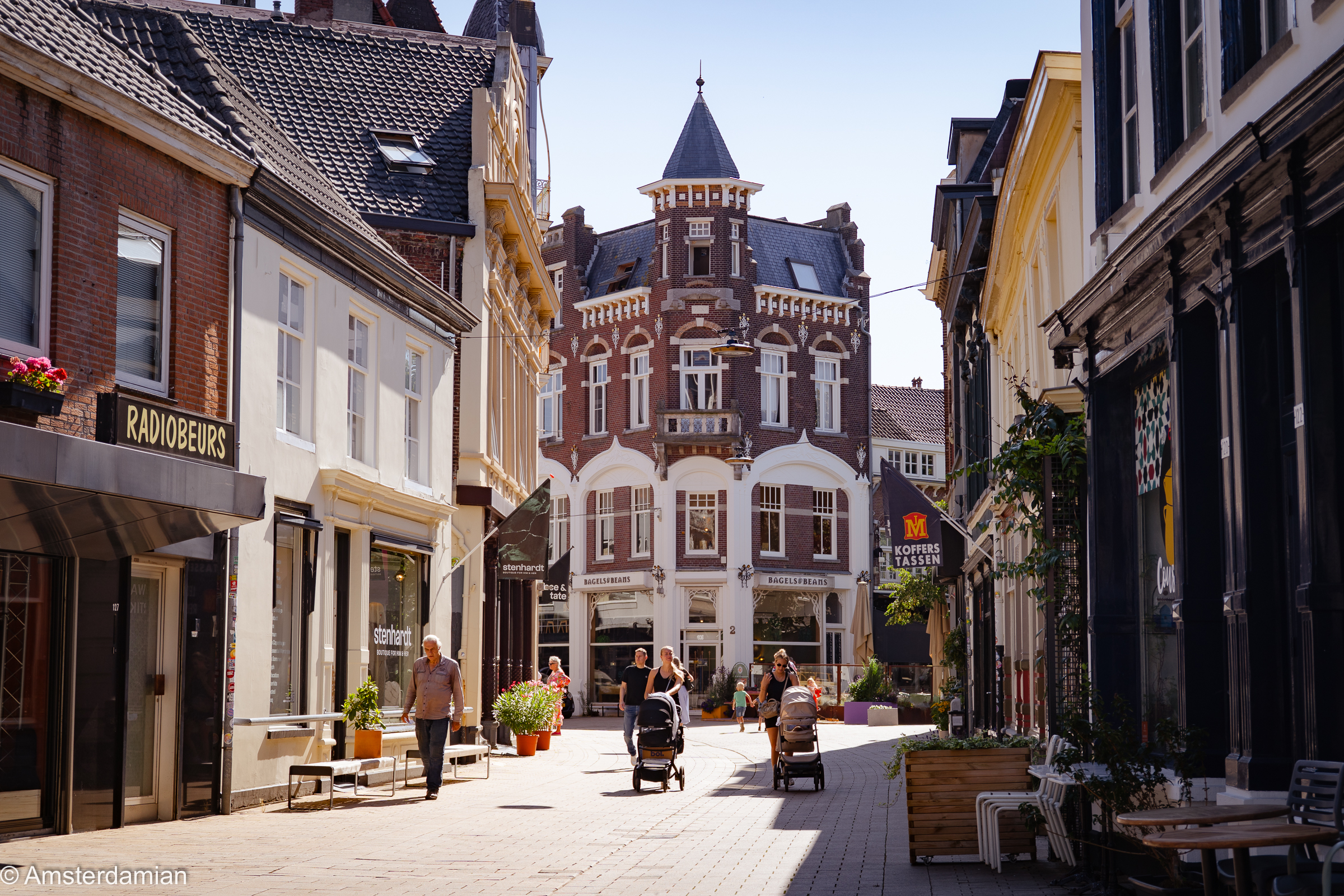
Tilburg had over a hundred textile factories, which one by one went quiet. Instead of knocking everything down and starting over, the city kept a lot of the buildings and found them a new purpose. The same thinking turns up in the small stuff. A vending machine that sells you a little box with a piece of art inside, made by someone who lives here. The boot scraper niches next to the front doors, turned into tiny exhibitions; somebody looked at those and thought, we could do something with this. The city has its own typeface, and some of the residents choose to get a tattoo that represents it. There is a forest park filled with statues, at the edge of the city. In the summer, it hosts the largest funfair in Benelux and the Redhead Days festival, among others. It’s connected with artists from De Stijl and Van Gogh (who went to school here). I mean, how many things this city can still pull up from its sleeve?
That’s what I mean when I say Tilburg is surprising. It’s not a spectacular city, but I don’t think Tilburg is very interested in being spectacular. It’s the kind of city that keeps solving and creating things without making a fuss about it, and then it’s just laying them all in front of you, one by one. You only notice how much of it there is once you’ve spent some time walking around.
I keep thinking about what that Tilburg resident told me, that probably every family in the city has a connection with the wool industry. The looms stopped decades ago, but the skill remained. This is still a place that takes what it already has and works it into something else: a spinning mill into a gallery, a repair hall into a reading room, metal thread into a fabric nobody has made before. The material changed, but the way of going about it stayed the same.
Want to plan a visit to Tilburg? Check out my guide: Things to Do in Tilburg: A Complete Guide to the Dutch Wool City.
Stay tuned for more and follow Amsterdamian on Instagram and Facebook for more stories about life in the Netherlands, written by a real local, updated constantly.
Check out my photo book: Amsterdam Through the Seasons!
Love what you’re reading? Support my work with a small donation.
And share this post if you liked it!