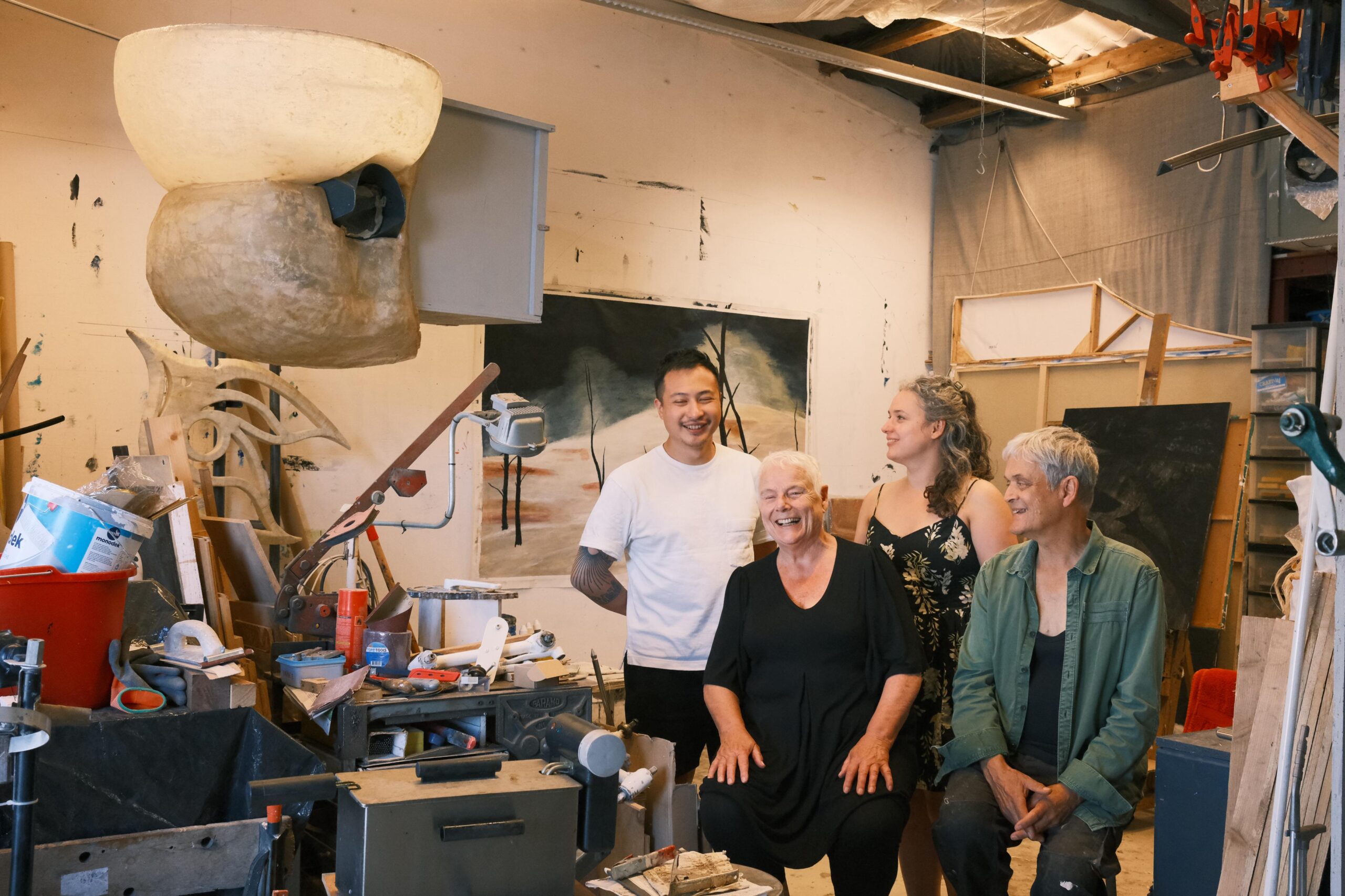
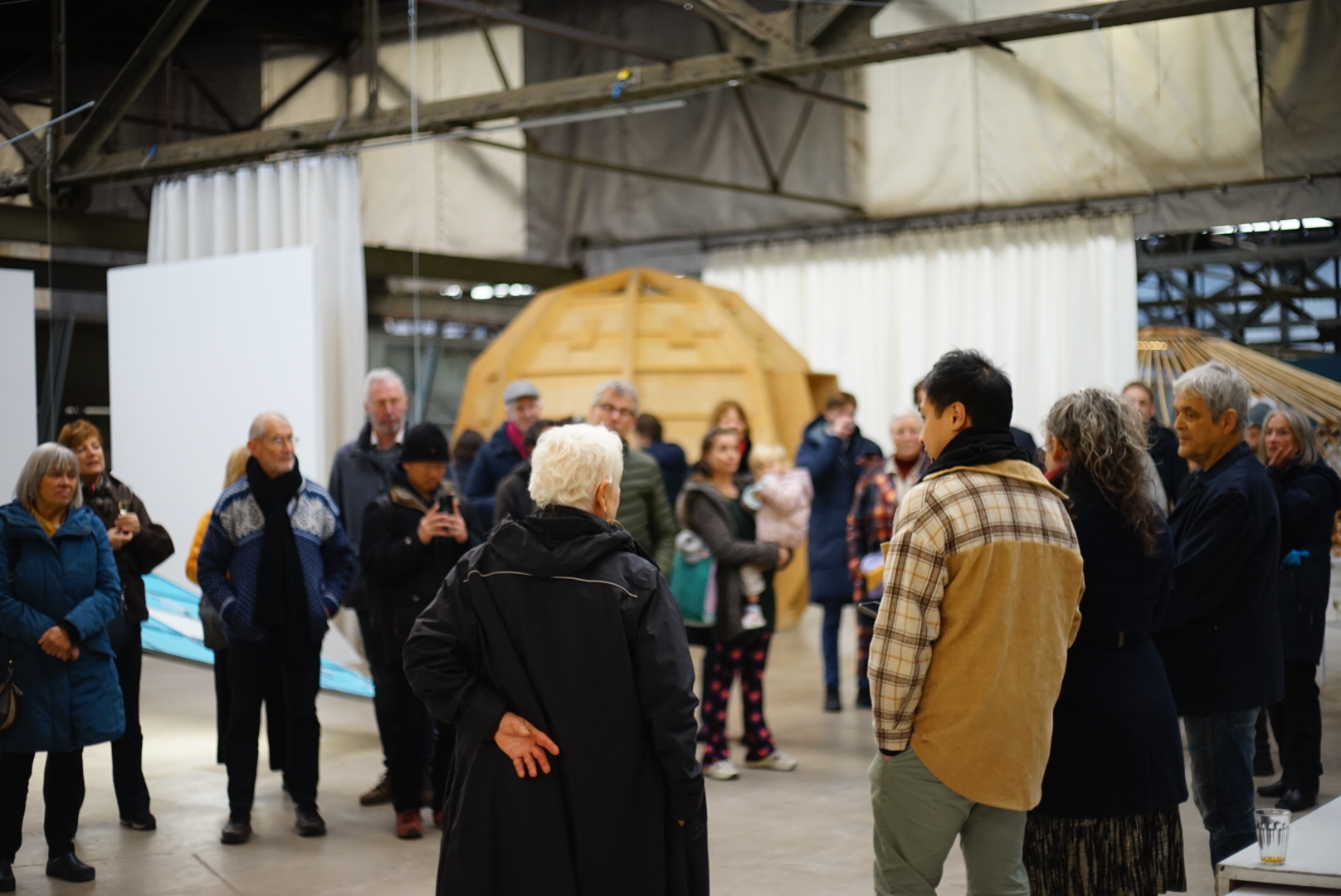
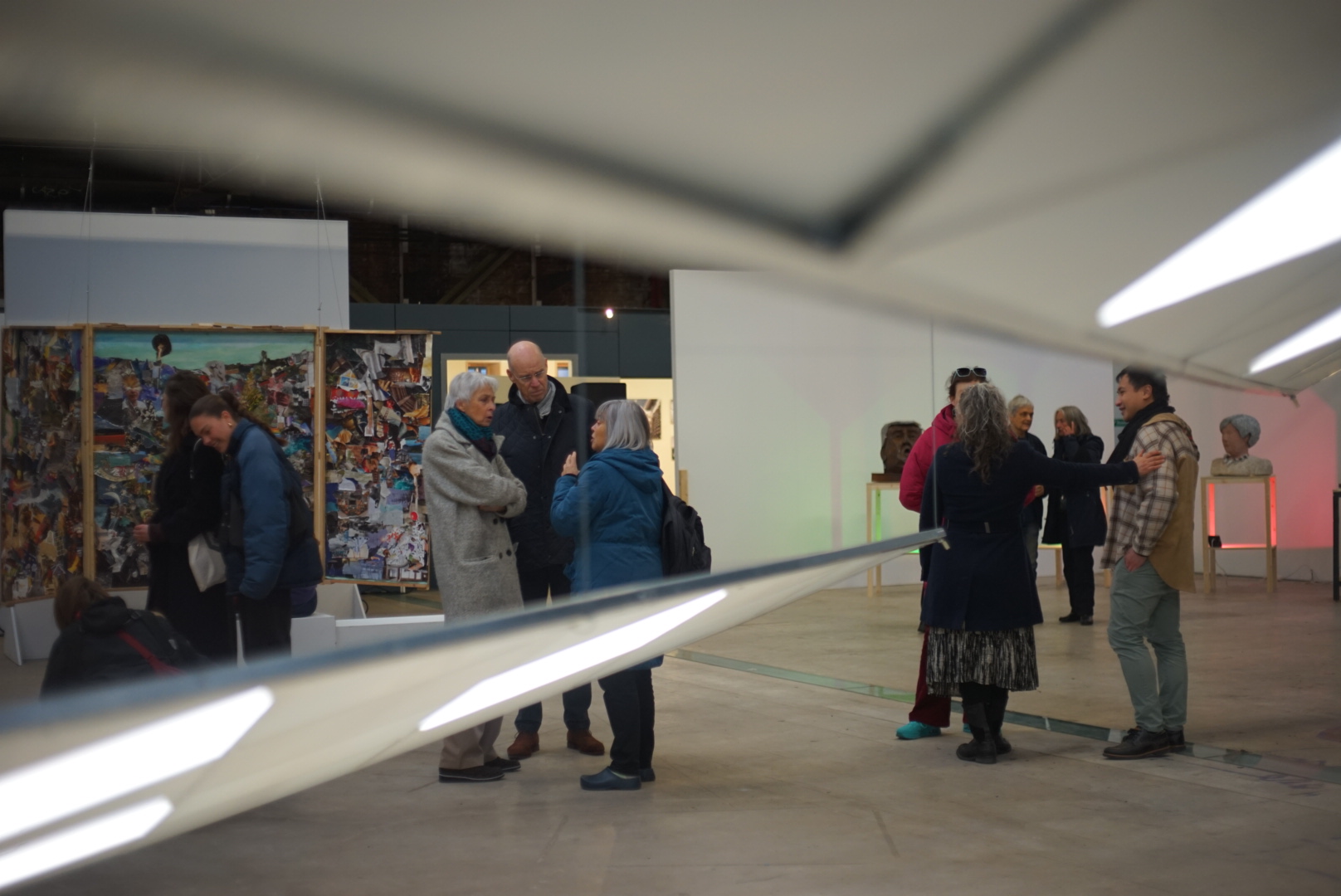
On November 22, 2025, the intergenerational art exhibition Wij Zijn De Tijden (We Are The Times) opened at NDSM-fuse in Amsterdam. The exhibition brings together four artists from the same family in a creative conversation about the world we live in today. It’s a collaboration built around one big question: Where do we find hope in a fractured world?
The artists, Alida Verheij, Winfried Scholz, Anne Verheij, and Jeffrey Choy, represent two generations exploring the tension between external power structures and inner strength, between empty words and genuine connection, and between the span of a human life and the timelessness of nature.
Because one of the aims is to connect different generations, the project also includes an open invitation for secondary schools to visit the exhibition for conversations with the artists and the organisation Grootouders voor het Klimaat (Grandparents for the Climate), encouraging meaningful dialogue about our shared future.
Who are the artists?
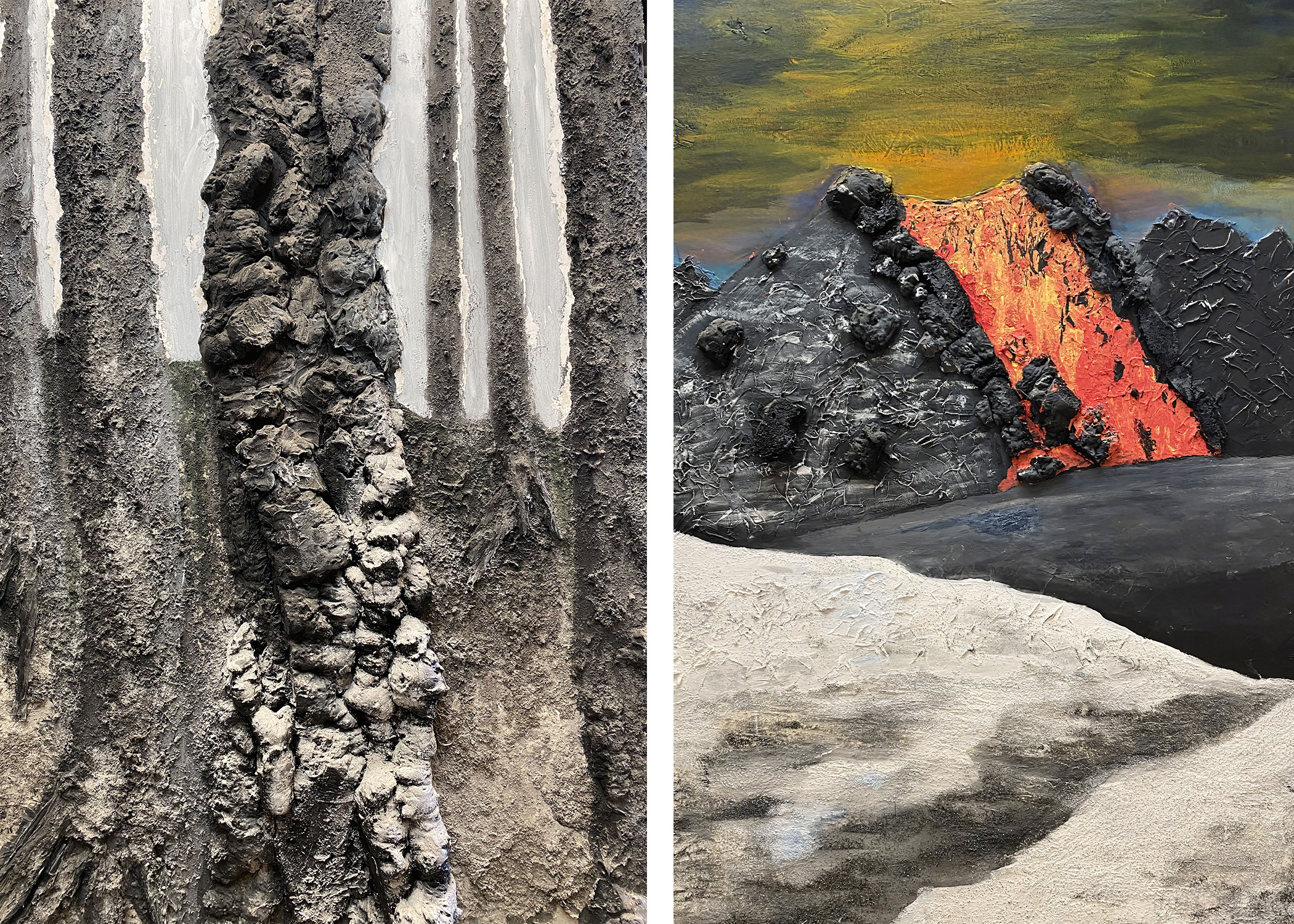
Alida Verheij is a visual artist who transforms her multidisciplinary background in dance, theatre lighting, and cultural production into powerful, immersive paintings and spatial installations.
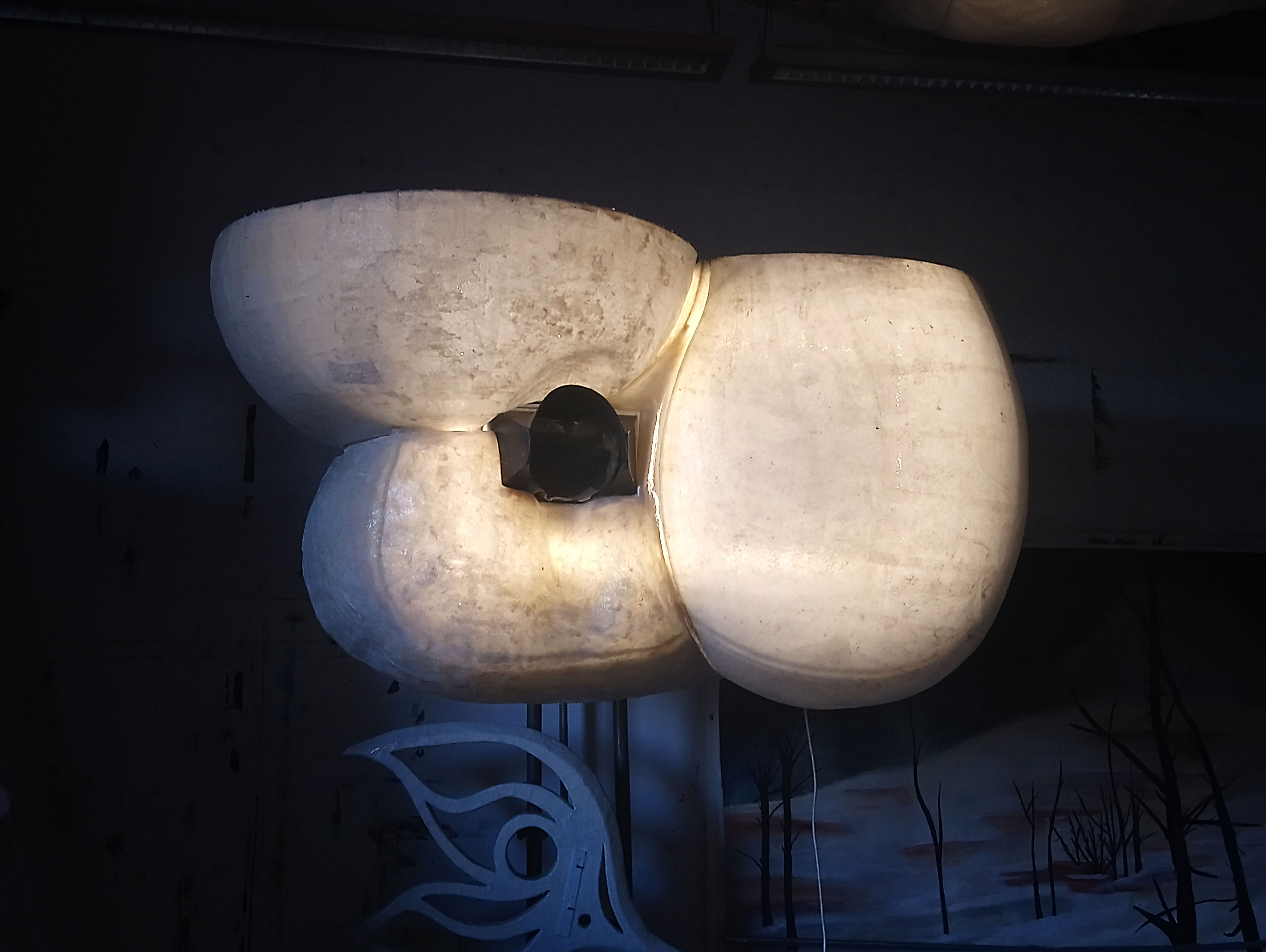
Winfried Scholz is an Amsterdam-based sculptor who transforms his architectural background and decades of material expertise into kinetic and static works that explore movement as a conduit for human emotion.
Anne Verheij is a London-based Dutch visual artist, scenographer, and filmmaker who creates trauma-informed, multidisciplinary works that reconnect audiences with somatic and collective experience through film, movement, and spatial installations.
Jeffrey Choy is a writer and artist whose multidisciplinary practice uses print, video, installation, and interactive media to critically explore how knowledge, power, and ideology are produced, censored, and reclaimed.
Wij Zijn De Tijden is funded by over 70 individual donors via crowdfunding platform voordekunst and supported by organisations including Het Cultuurfonds, het Amsterdams Fonds voor de Kunst (AFK), Leve het Geven and NVVE Fonds.
I found out about this exhibition through the fundraising campaign and found it interesting: a big, ambitious project realised by people who are family, trying to find answers through art and through sparking conversations among the visitors. I invited them to answer a few questions and I’ve got to talk with the younger generation, Anne and Jeffrey. Actually, they talked among themselves and allowed me to share parts of their discussion. I hope you find it as thought-provoking and inspiring as I did.
Q1: This exhibition brings together not only two generations but also two different worlds of experience. How do you each see your work responding to, or diverging from, the legacy of the older generation?
Anne: Oh wow. Can you say that one more time? I just need to let that sink in for a moment. I think where we connect is in following our intuition. It’s less like a specific urgency such as: “I fell, scraped my knee and therefore I need to put a Band-Aid on.” It is more of an ongoing conversation and trains of thoughts with others and ourself. Of late, it can appear randomly in dreams, or when hiking, or when having a conversation about a completely different topic— shapes start forming without having a canvas or a springboard. I think with my parents, it’s the same. You don’t per se go in with a plan, especially in the beginning of a process. You look at your paints or materials and you’re like, “Oh, wait a minute, I want to put these together.” It’s not something specific yet, but more of an inkling and making intuitive connections.
Where it can diverge is that my parents now have more time to sink into their practice at their studio. They have space to sit with different materials and try things out. They form a plan once they have an idea in their head of what it would look like, and then go on to “How can I execute it?” They look around their studio at what materials they have, and then set to work with a plan and many technical conversations about the execution.
In comparison to our current situation… where is the space? I need to make a living first in order to be able to create some space for myself. My parents fought really hard for it, but they finally have some space now to sit and create. For me, it’s much more on the go.
I almost always make things site-specific, seeing what is there upon arriving. It’s more impromptu; therefore, it lives for a much longer time in my head. Sometimes I can’t quite voice it or put it onto paper other than a shape because the material isn’t there. But interestingly, once I know things like the budget, materials or the space available, it comes together really fast. My work tends to be much more abstract than my parents’. There is a lot of consideration on “how do I execute it,” but then it can be executed within a day, which is quite a different approach.
Jeffrey: I think, for me, one thing I connect with the older generation is how we see things. The issues of our time, and a fundamentally fairly simple mindset in wanting to do good or do right by the people around us. What you said earlier basically covered a lot of the elements—something about intuition and planning. I think that’s one of the biggest things I’ve realised with the four of our works. Between you and me, we tend to work on the thing until we find out what it is first. Whereas your parents often have a grand vision first.
I think this became most apparent when I was trying to write the artwork descriptions for the four of us. Because for us two, the concepts evolved over time as we were developing and making the artwork. But for your parents, the works’ concepts were basically set before it existed. So I think that’s one of the biggest things that I notice.
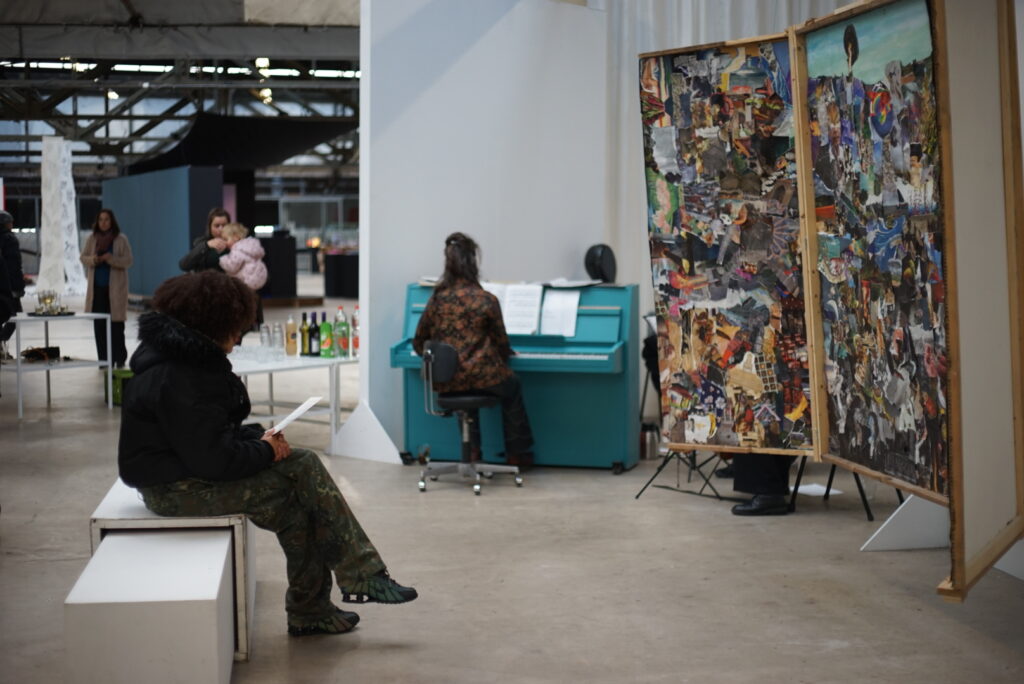
Q2: Both Vrije Val and De tuin der vergankelijkheid (works from the exhibition) reflect a deep unease with current systems of power and media. Where do you find hope or renewal within that awareness?
Anne: I think for me, especially over the last year, it is about much more conscious conversations. I first started having conversations only with people that I trusted or that were close to me, even though some of the people that were really close to me I was actually most scared to talk to because it feels like there’s a lot on the line. But the thing is that my friends have really given me space and trust to talk about things that are really hard.
And then I started extending it to even people that I don’t know, at work, customers or colleagues. Most people actually respond positively and with a wanting to talk, because most people are like, “What do we do?” Instead of being in the “wallowing”—which I really have felt a lot in the Netherlands and have started to come out of since moving to the UK— is to not just repeat saying “Oh boy it’s so hard,” or “Oh this is so fucked up,” and practice to start seeing and acting upon possibilities within a really hard situation. I’m seeing more and more around me that people don’t just have the need for that, but are actually quite willing to talk about and putting in an effort towards growth.
That is something that gives me hope. Over the last years I’ve been starting to have more honest conversations with myself, due to the super brave people surrounding me. They’re doing the same for themselves and giving me and others space to try as well. Sitting with different kinds of situations and trying to acknowledge all of them without a direct judgement. Finding space within that started to give me hope. And the really important thing is that I’m starting to notice I’m not alone. We are not alone, all of us.
Jeffrey: Yeah, like you said, having a good support system is such a crucial part of the licence to be able to talk about these things. If you have people around you that notice these things but are unwilling to talk, then automatically obviously you don’t also want to talk about these things.
We are lucky enough that we work with a community of people that are very generous, very giving. And I think it’s also the nature of being artists and writers and creators; we have this curiosity about subject matters that maybe are a little bit uncomfortable to deal with, a bit touchy, a bit controversial. But I think that’s where good art lives, or good creation begins, because this is where we kind of push the boundary a little bit. And I think that’s how it manifests in our work as well.
Anne: Yeah, not everything started with the project, because the project comes from continuous conversations and lived experience. Things are not as stagnant as we are told it to be. My parents, in their late 70s, are still learning and changing, having conversations with themselves and others. They are never like, “Okay, a situation is the way it is and therefore can’t change.” I think that’s quite beautiful to know and it is another thing that gives me hope…
Q3: The show’s title, “Wij Zijn De Tijden,” implies that we are responsible for the times we live in. How does that resonate with you personally as younger artists navigating a fractured world?
Anne: I think that’s the one unescapable thing we’re living in right now. It’s almost like, how can you not think about this? Then again, there is a very persistent Eurocentric Colonial mindset..
Jeffrey: Yeah, like how much can you bury your head in the sand to say, “Oh the world is actually okay, it’s fine. Things will pass”? Do you really think so? Do you think the rise of fascism is just going to disappear when these boys grow up? Or would that… what’s the word? Extrapolate? Or intensify? Which one do you think is more likely?
How much of the world are you going to look at and not be like: “We are being polarised, we’re being fractured”? I think it’s the willingness of looking at things or not. There is only so much that you can avoid looking at before you have to say, “Oh, I think we need to talk about this.”
I think initially even the title itself is coming from this quote (“Do not complain about the emperor or about the times, for both are fleeting. Instead, say: we are the times. Be a beacon of courage and hope yourself.” – Augustine, 3rd-4th century.) that I personally disagree with, because it comes from this line about not blaming the emperor. It’s like, well, no, actually do blame the fucking Emperor. What do you mean don’t blame him? But it phrases the quote in a way that is like: be the present time in the world. And I think that’s something that I can respect.
Anne: I think for me, it’s still really new and I’m on the first steps of this journey, but one thing that became very apparent to myself is that I grew up with: “if I don’t talk about it, it’s not existing.” If it doesn’t affect me directly then I can talk about lots of other things, so I can keep things at bay, but everything is intertwined. This is the type of confrontation I was talking about earlier, one of persistence, courage without brownie points. To do it just because you want to, because you are aware that you’re not just solely affected. We are more aware and connected than ever in the world, which makes us a really big community.
You know those platitudes like “a ripple in a pond will create a wave in the ocean”. You have so many of those sayings and yet when it comes to it, people really don’t take it to heart.
This is one of the things that’s been frustrating me and also why I had to move away from home in order to come to terms with it. To talk about it, to take responsibility, to take action.
I’ve been very lucky because of my profession, and because of my parents’ encouragement to ask questions. Always being curious, not taking things for as they are presented, but questioning them to get different insights. With this I started to create space to question myself, not just “why do you do this?” but in a sense of: “Hey, I’m having this thought, is this my thought? Or is this something that I learnt? And from whom did I learn it?” Weirdly enough, We Are The Times is very much about that for me, personally.
Q4: How did the idea for this exhibition come about? And will the intergenerational dialogue continue beyond your artistic collaboration?
Jeffrey: For sure I feel the collaboration / the intergenerational dialogue, doesn’t start from the artistic dialogue, it starts from our actual live living. Connections. And the way we live, the way we interact with each other. And it’s not pretty because there are clashes, there are moments of not feeling seen. But because of that there’s room for us to venture out and to experiment and to have conversation from that. And not say “Oh, because Mum is just like that. Dad is just like that and Anne is just like that.”
“Well Jeffrey’s just like that” is so much of pushing. Wait, why are you like this? Is this something that comes from somewhere? Is this because of this and that? And I think that dialogue starts much earlier than the artistic side of things. And for you, I’m sure the artistic connection and life connection kind of is the same.
Anne: It almost starts together. “Will the intergenerational dialogue continue beyond your artistic collaboration?” This is life, man. Yeah. What do you mean outside of my collaboration? Because life is a collaboration; art comes out of life. It’s reflecting life.
The really beautiful thing in this project so far has been that it extended itself to the so-called Gen Z generation. They worked with us, showed curiosity and got very excited about the project, which translated into helping us to succeed. So it’s like an effort of multiple people because we’re talking about life.
Q5: If you imagine someone from the next generation standing before your works years from now, what feeling or thought would you hope they carry away?
Jeffrey: When I was reading this, my mind first went to Gen Z, but then I realised it says years from now. So I have been thinking about our friends’ kids, who are now single digits age. I always say, half-jokingly, that they are going to be growing up with a bunch of cool artist uncles and aunties. And if they want to go whatever way… I think except if they want to be incels or fascists, I think we’ll be extremely supportive for the most part. That generation and beyond will be free to kind of realise their life in ways that are impossible for our generations or even Gen Z. And I look forward to that.
Thinking about how they would respond to this work… I think my work is going to be a little slice of time. I intended it to be a reflection of Bosch’s Garden, which is also a reflection of his time. The more I read about history and philosophy and arts—like recently I finished reading the Republic by Plato—it’s a very narrow view of Greek society at the time. I think people underestimate that. “Oh, I’m reading Classics,” you actually aren’t learning the philosophy; you learn about how they came up with those ideas given what they knew about the world.
It’s the same with Bosch thinking about theology and morality and Heaven and Hell in a certain way because of the text that was existing and popular at the time, namely Dante’s Divine Comedy. I’m happy it’s not about making something timeless. Timelessness comes from how you respond within the time. I really love this idea of timelessness coming from just doing contemporary stuff.
I think for me it’s not to try to create a sort of nostalgia for the current time, but to say: What is the best story to tell NOW?
Anne: Years from now… gosh. They would see this in my gaze: “We did it” or “We’re here.” That would be really nice.
Jeffrey: Or that they survived the apocalypse.
Anne: No, but that people are actually allowed to just be without having any role to play. That we stopped playing the roles that we are assigned to fulfil, especially within our own minds. Even if it’s in 40 years, that would be really amazing if we have been able as people to free ourselves from those kinds of thoughts that cage us within a system like capitalism, like patriarchy, where we put value towards very specific things of “worth.”
Jeffrey: So just to reframe what you said: You want the future to look at your work and say, “Oh, this is kind of a world that we don’t recognise… because this is not a problem that we are going through right now”?
Anne: Yeah. Or like what I have now at times when looking at other peoples artworks from the past where I’m reminiscing or where I’m like, “Damn girl, thank you for this! Because of what you did, I now have more space to do something.” Now that feels really grandeur and up my self, but it’s more in a societal way. It would be amazing if the theme of it is no longer applicable.
That it’s more something that we talk about in full conscience, like, “Oh, remember that time? And we have now moved on.” For the future to say, “Oh, imagine that that was a problem at the time.”
I think, in a way, the most important thing would be that they can still see themselves in the work. That would be amazing. It doesn’t always have to be a recognition of “I know the struggle” but that it can also mean: “I’ve recognise where you’ve been and I’ve been through it and I’m taking courage from it. I’m taking joy from it.”
Q6: What do you hope visitors will take away from this exhibition? What feeling or thought would you like them to leave with?
Jeffrey: I for one don’t want to dictate how you see things as an artist. If you see my artwork and you think about, I don’t know, fried rice… let it be that. That is your experience. I don’t have expectations of how people receive things.
Anne: For me it’s really different. I didn’t interpret it like this. For me, one of the main things about my artworks is actually directing. It’s directing gaze. It’s directing movement. But in a gentle way. We’re very used to participatory art where you’re forced into something and then you need to confront it. For me, there’s a softer way in. It’s very much like I’m guiding you through our space so you can have a personal experience.
And the most important thing for me is that you have had a moment with yourself. That you were able to check in with yourself—rationally, but for me personally, also physically. How are you? How’s your body? How is your mind? How is your situation?
It can be very broad. And the thing is, like you just said, it’s not that I want you to think or look a certain way. There is literally no right way.
But it is very much that I hope I have brought you on a journey into our way of thinking, our conversation that we had here, and the visual experience of that. Because for all four of us, this is our visual language through which we communicate. I personally always call it the gut feeling, something that I can’t name. Like goosebumps—try to explain how and why you get something like that. It’s nearly impossible. It is definitely a reaction.
So I don’t expect you to have that, but I hope that you will have an experience for yourself where you had a moment to sit with yourself in whichever way. Because I have noticed in my own process that when I’ve been able to sit with myself and check in, I’ve been actually able to check in with others. And people I care about, or topics I care about, and also create space for them equally as for me. So that it becomes not an “or” situation, but an “and” situation.
Jeffrey: That’s a pretty good place to end, shall we?
Exhibition Details:
- Title: Wij Zijn De Tijden
- Artists: Alida Verheij, Winfried Scholz, Anne Verheij, Jeffrey Choy
- Dates: November 22, 2025 – January 18, 2026
- Venue: NDSM-fuse, NDSM-plein 29, 1033 WC, Amsterdam-Noord
- Opening Hours: Thursday – Sunday, 12:00 – 18:00
Stay tuned for more and follow Amsterdamian on Instagram and Facebook for more stories about life in the Netherlands. Please share this post if you liked it!
Check out my photo book: Amsterdam Through the Seasons!
Love what you’re reading? Support my work with a small donation.