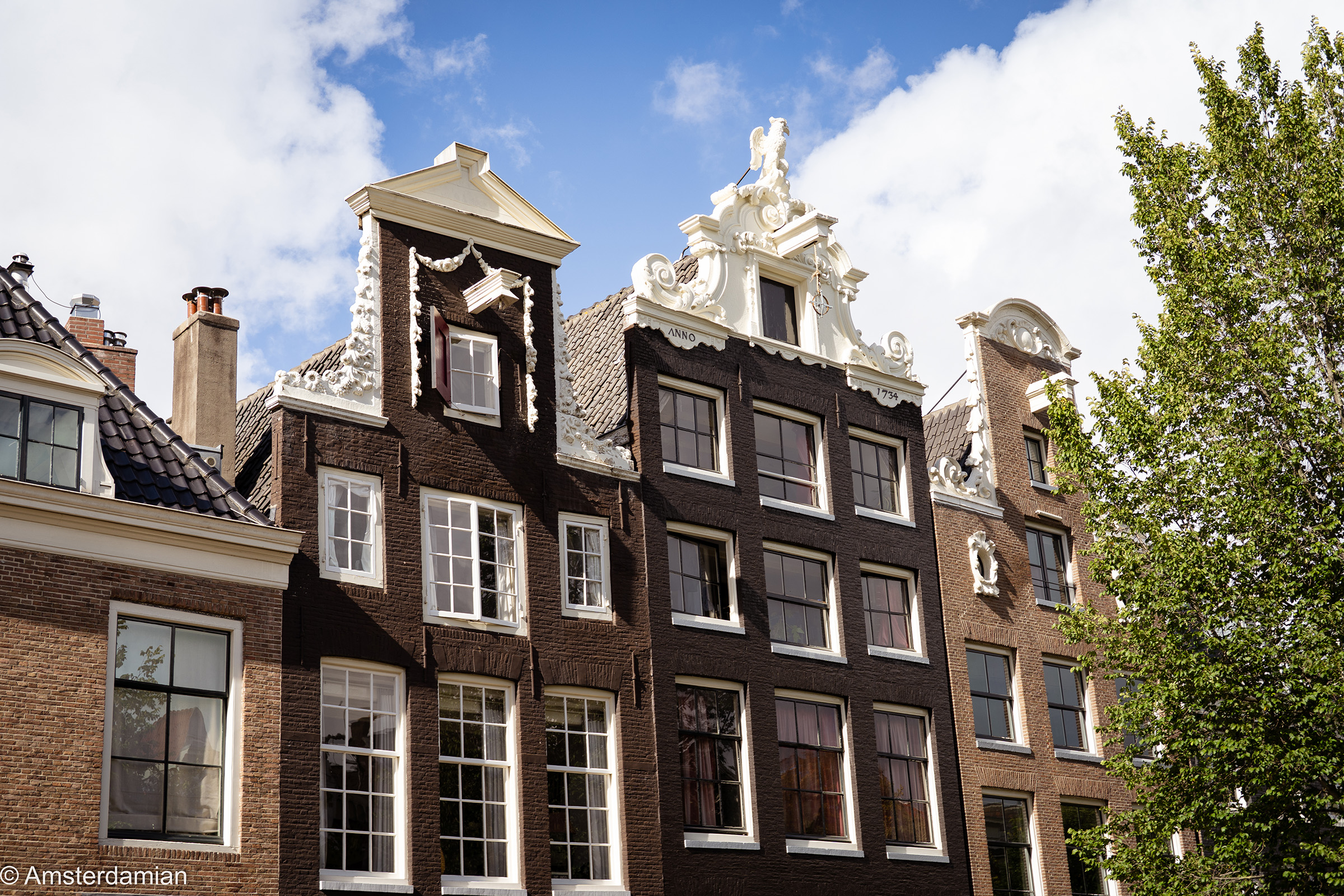
If you walk along Amsterdam’s canals and look up, you’ll notice a small but curious detail on many houses. Right at the top of the facade, just under the gable, a hook juts out from the roofline. Every time I walk in the city centre with a guest coming from another country, I get this question about the hooks on the facades: why do all the Dutch houses have a hook on their front?
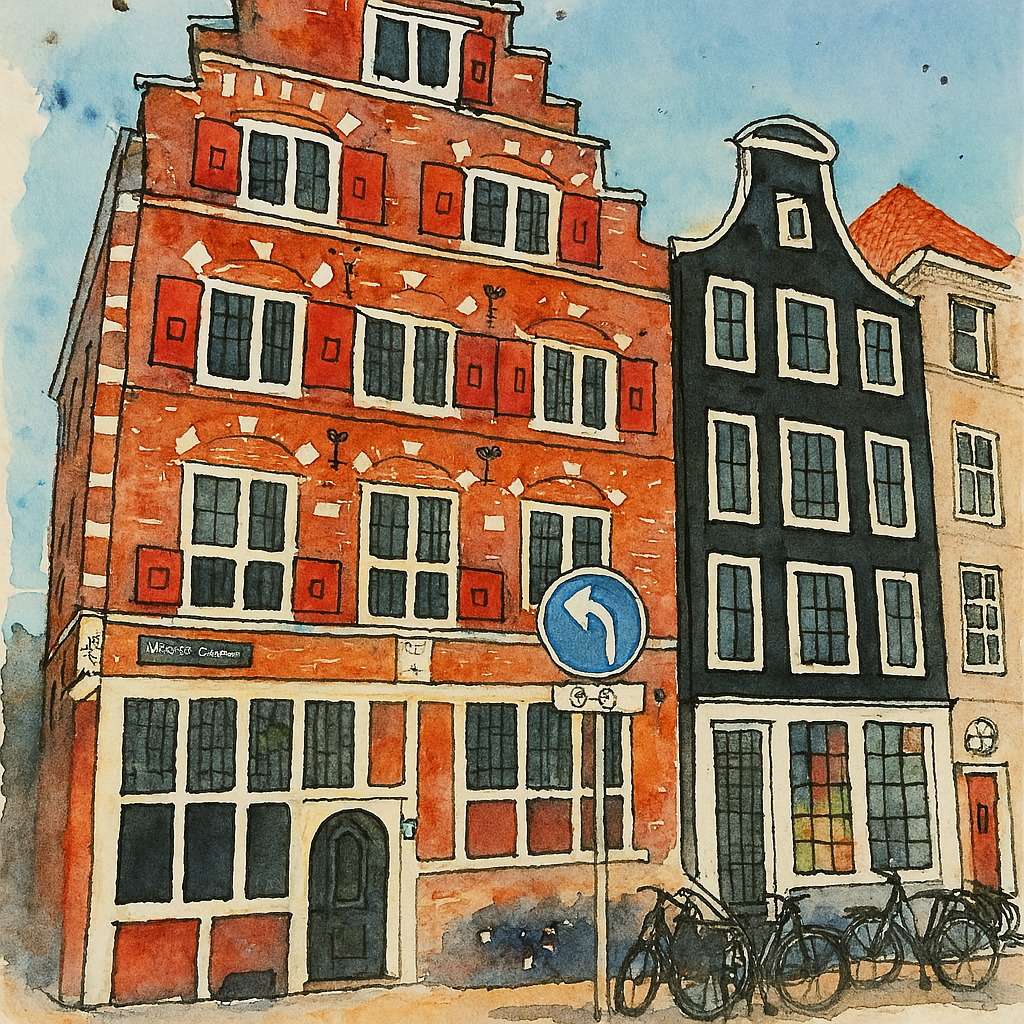
These are hoisting hooks (hijsbalken), and for centuries, they were essential to daily life. They can be found in other cities as well, but they seem more frequent in Amsterdam. The houses in Amsterdam were built tall, narrow, and close together, partly due to expensive land prices and partly due to building regulations in the 17th century. Inside, the staircases were (and still are) often steep and extremely narrow. Definitely not designed with moving furniture in mind! A sofa or a cupboard would never make the turn between floors.
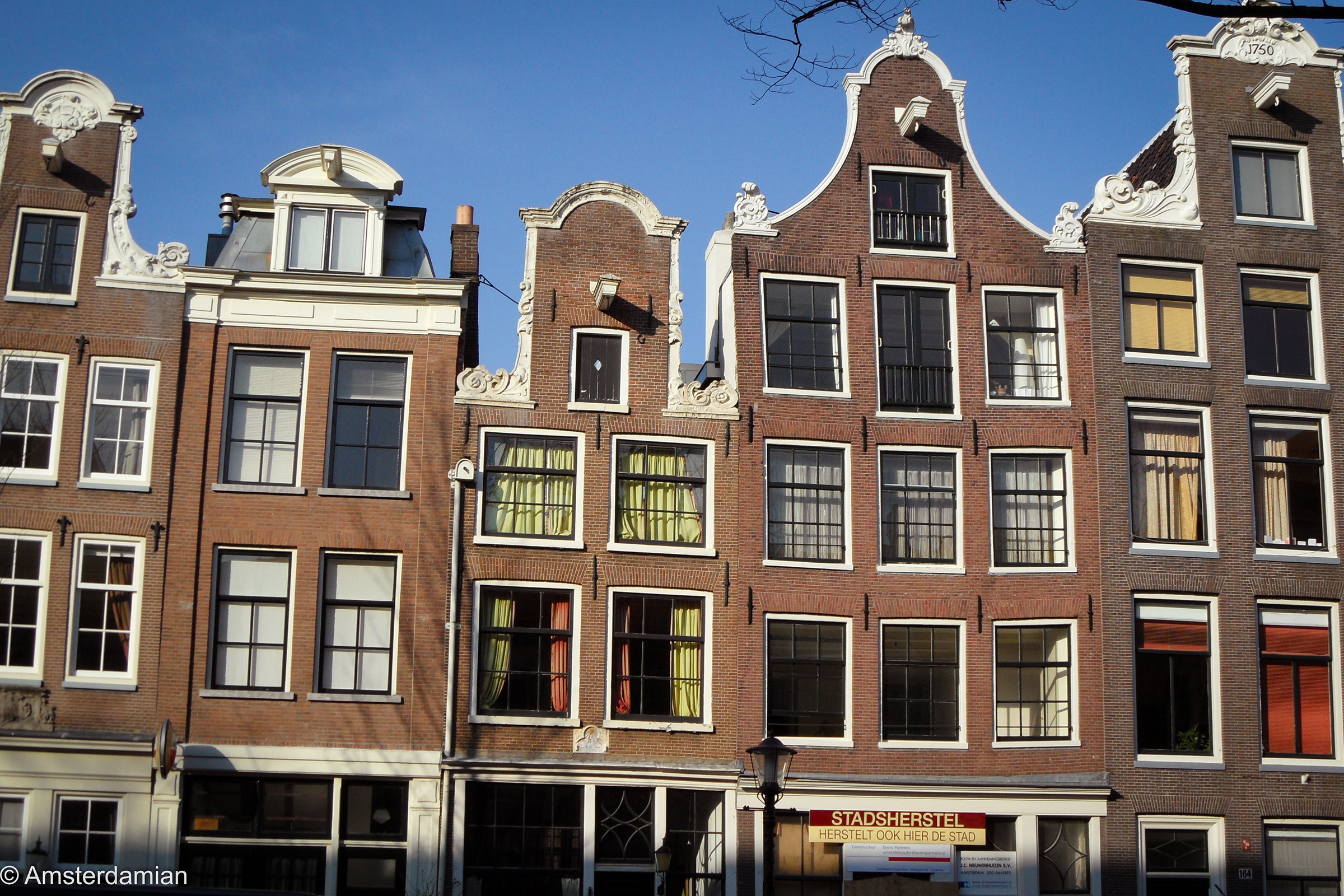
So, Amsterdammers came up with a practical, rather ingenious solution: anything too big for the stairs was brought in through the windows. Yes, those big, beautiful windows, are not designed like that only to bring in more light, they have another purpose as well.
Using the hook, a pulley, and a sturdy rope, items were pulled from street level directly into the house. Boats could unload goods straight from the canal, and residents could bring up furniture, sacks of grain, barrels, tools, etc. Many canal houses served as both homes and small warehouses, especially for merchants and tradespeople, so the hook was a necessity, to bring good upstairs, at the higher lever where the storage would be.
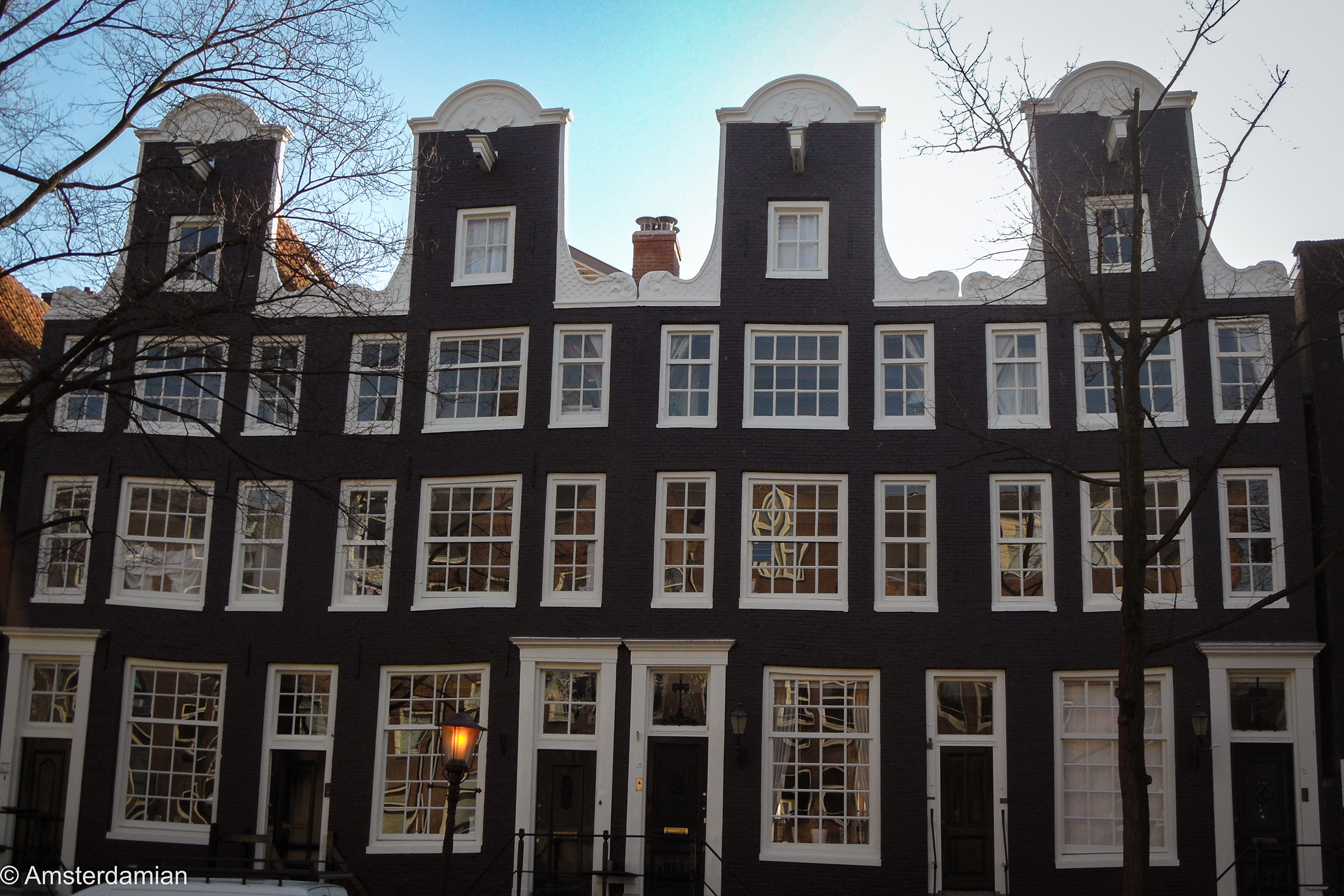
The architecture even adapted to make the system work better. Some houses were intentionally built with a slight forward lean (just a few centimeters) so that the hoisted goods wouldn’t scrape the façade on their way up. Combined with the hook, this created a kind of vertical loading dock. It’s one of those details that makes you realise how much this city was shaped by creativity and practical thinking.
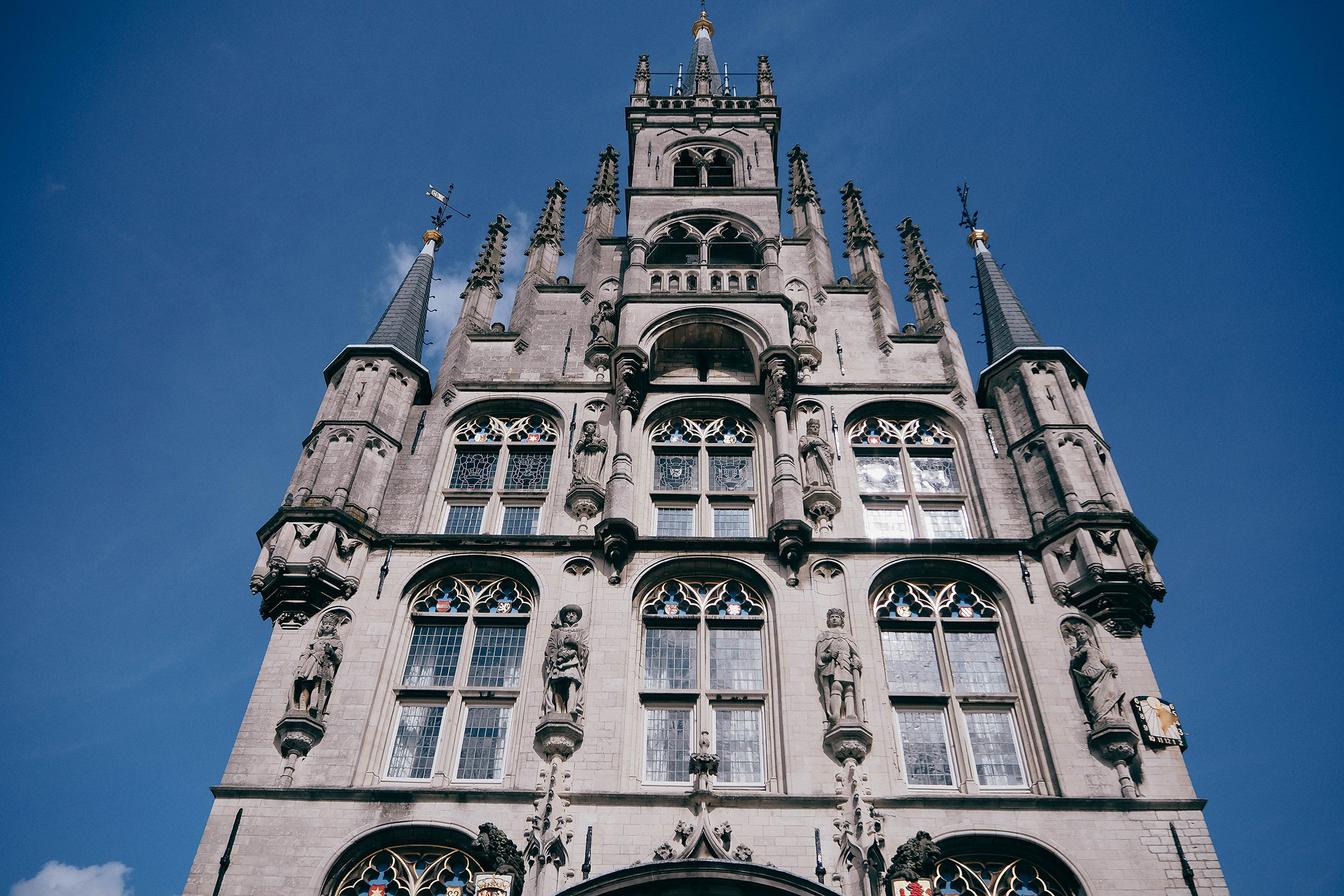
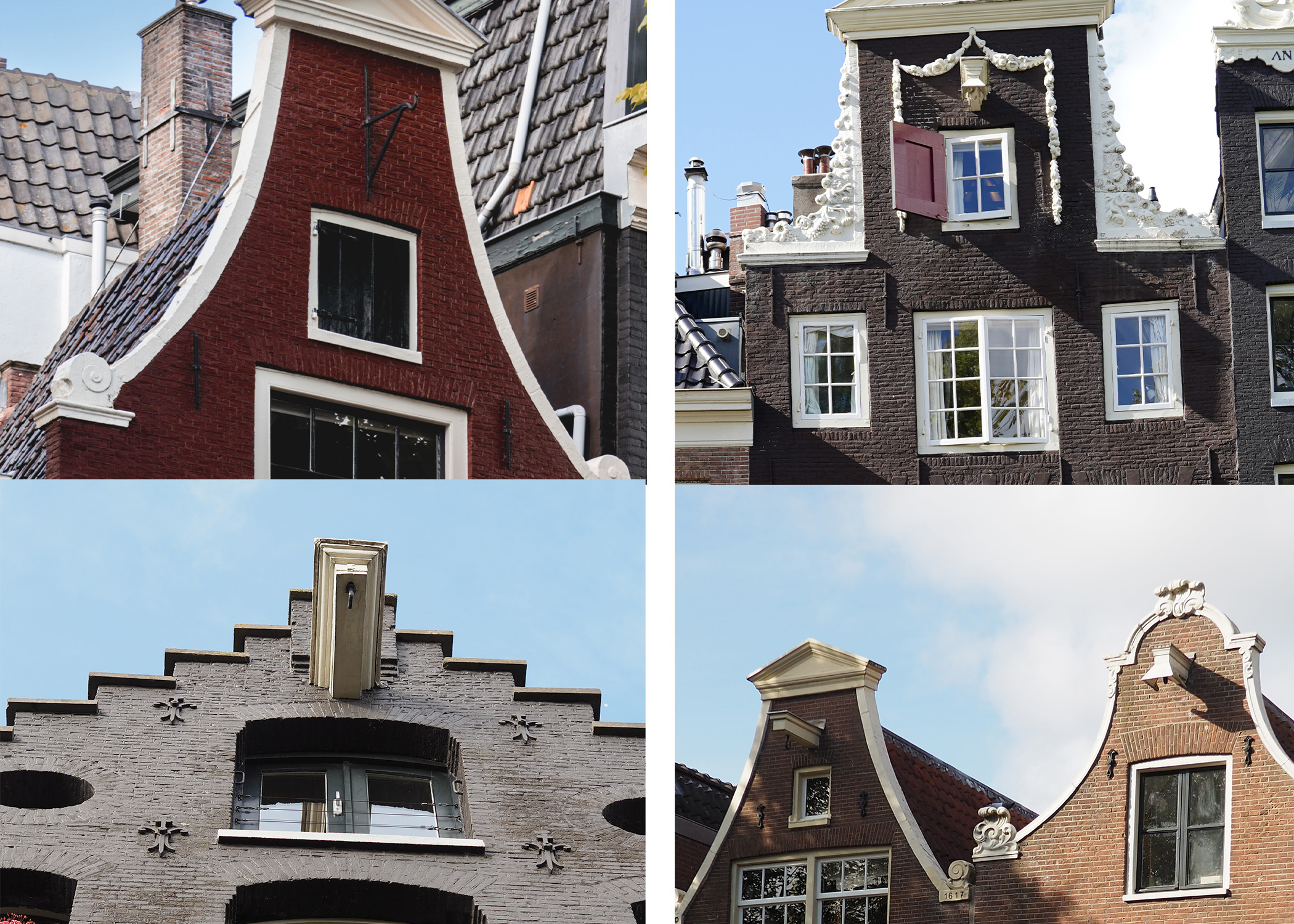
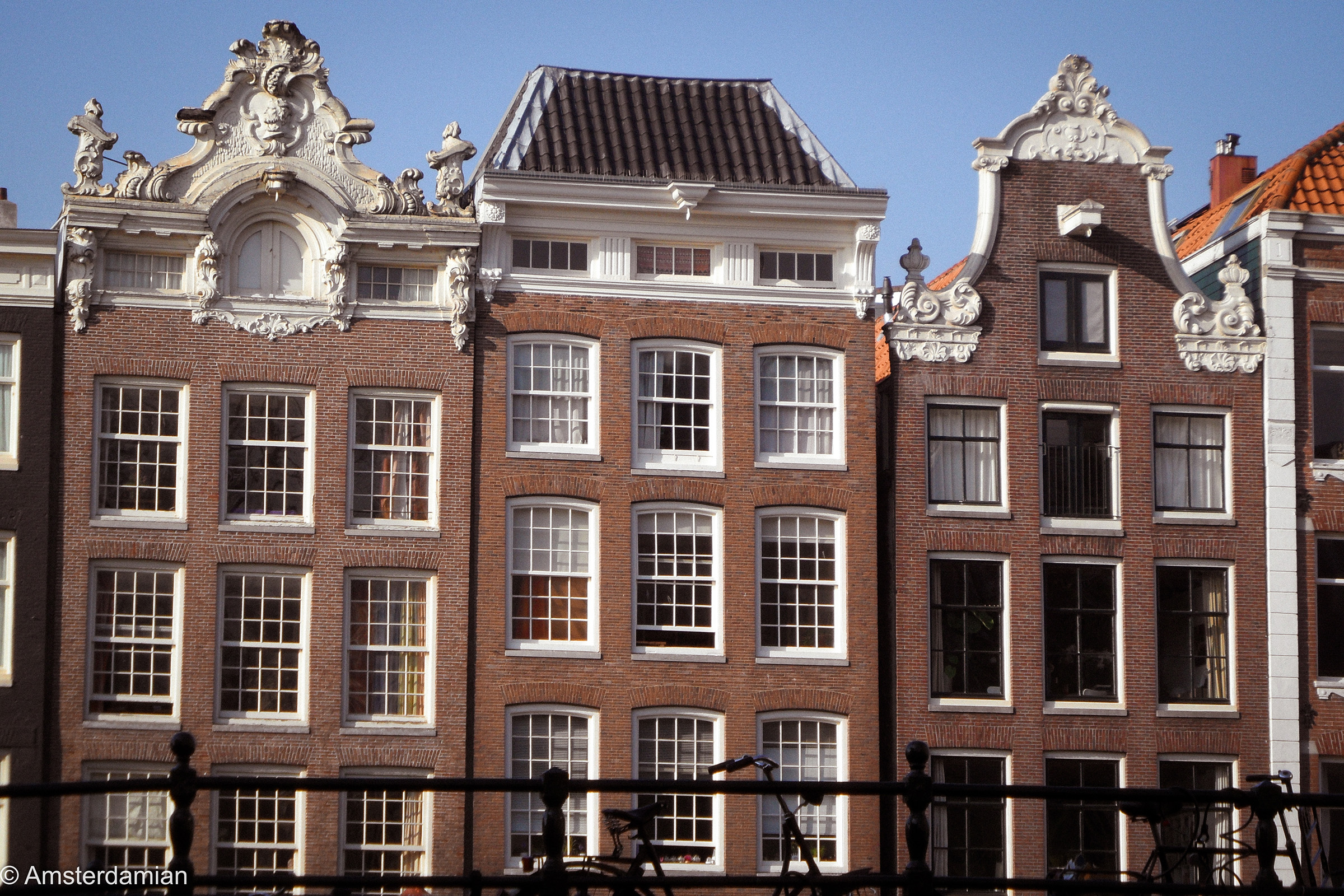
These hooks have various shapes and sizes. Some are very straightforward: a simple wooden beam with a metal hook, clearly designed with function in mind. Others are more decorative and feel like a natural extension of the façade itself. There are hooks shaped like elegant consoles, or supported by sculpted details such as human heads, animals, or curved ornamental forms. In some cases, the hook is almost hidden within the architecture, blending into the gable or roofline, while in others it stands out proudly as a visual feature.
Today, the hooks remain, even though they’re rarely used. Most of the canal houses are considered monuments and the use of the hook might endanger the facades. You wouldn’t want to pull down the front of your house while pulling a fridge upstairs! Modern moving companies use platform lifts to bring large pieces of furniture or electronics inside the house, through the windows.
The hooks now represent a time when people relied on waterways more than roads, when attics were used for storage of valuables, and when every part of a house served more than one purpose. Amsterdam has changed in countless ways, but it’s lovely how these small details keep the connection between past and present alive. Next time you wander through the Jordaan, along the Herengracht, or even down one of the quieter side streets, take a moment to look up. The hooks are still there, in so many shapes, waiting for someone to imagine the stories they once lifted into these houses, piece by piece, rope by rope.
Stay tuned for more and follow Amsterdamian on Instagram and Facebook for more stories about life in the Netherlands. Please share this post if you liked it!
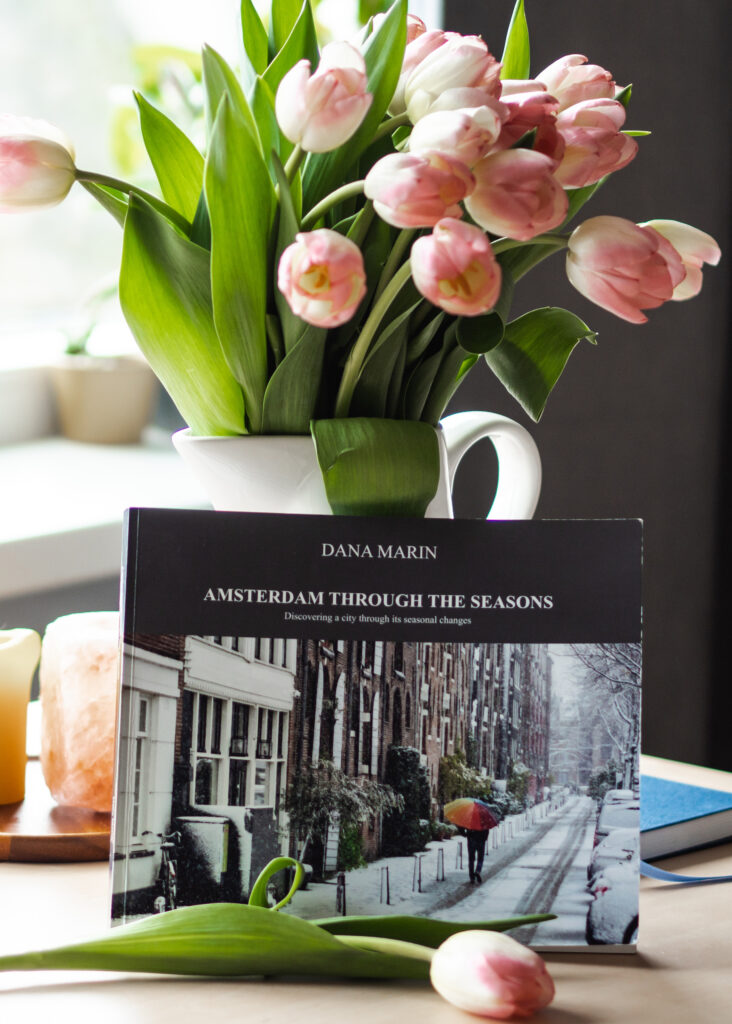
Check out my photo book: Amsterdam Through the Seasons!
Love what you’re reading? Support my work with a small donation.