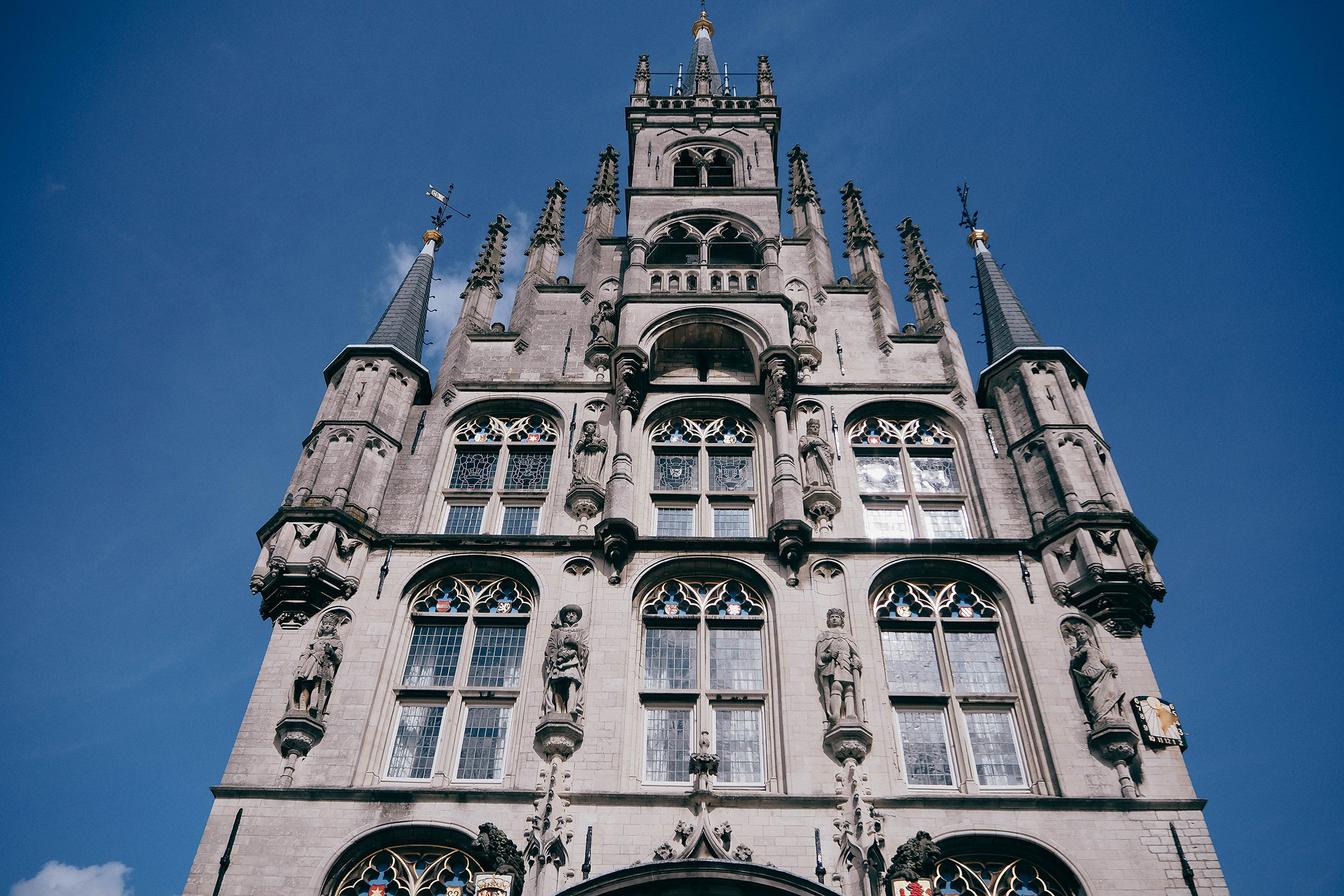
Apart from being one of the Dutch cities with the most museums after Amsterdam, and the birthplace of the painter Rembrandt van Rijn, Leiden is also known for a few other things. One of these is the Wall Poems project, which brings poetry outdoors, written on buildings across the city.
When you walk in the Leiden city centre, between canals, courtyards, and narrow streets, poems appear on walls in a variety of languages. Some are neatly framed by windows and shutters, others are written to form shapes on the wall. You don’t come to Leiden for the wall poems in the same way you might visit a museum though; you simply stumble upon them, and that feels like the point.
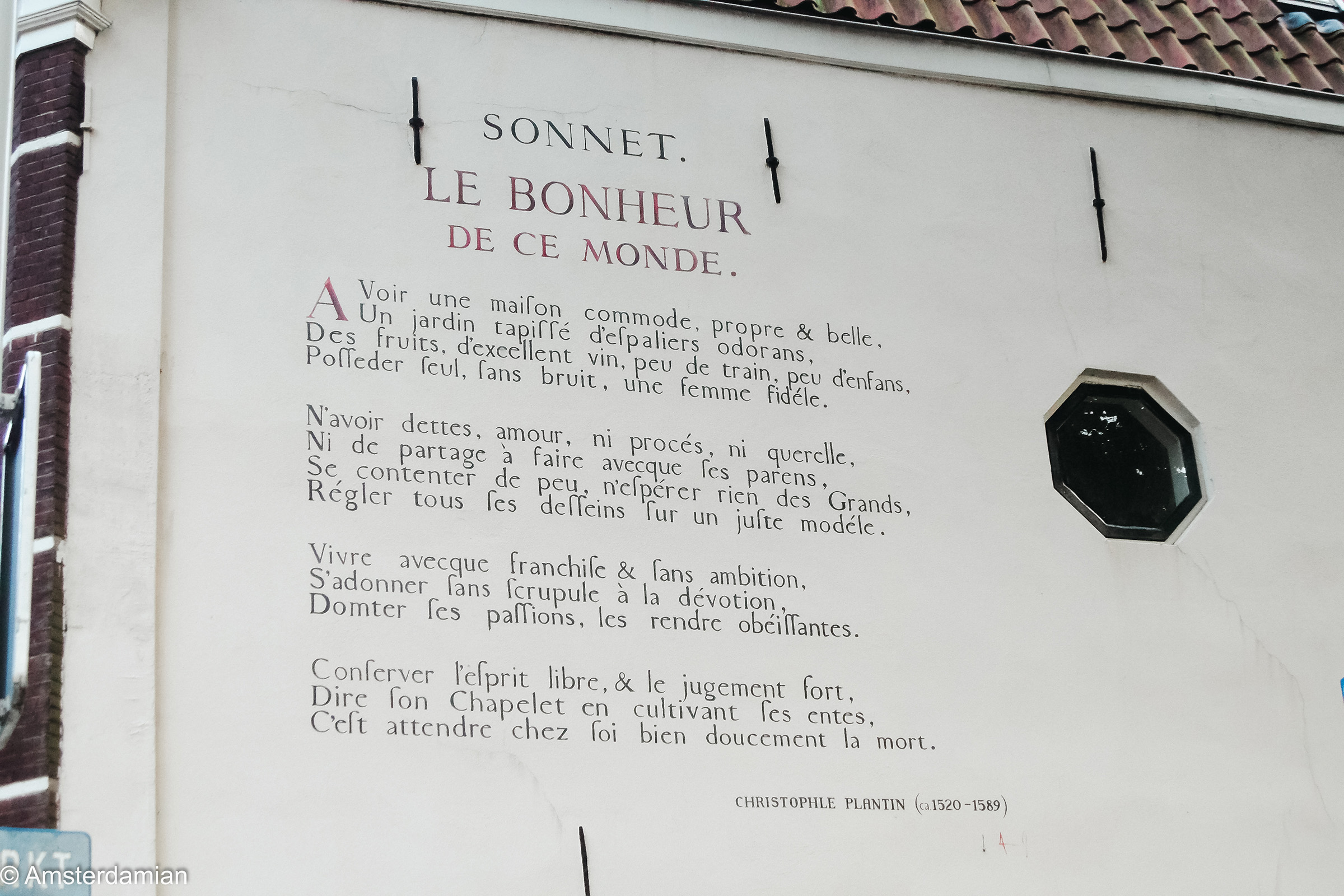
The Wall Poems is an art project started by the TEGEN BEELD Foundation, and it brings over 100 poems in various languages on the city’s walls. It’s street art taken to a whole new level. The project started in 1992 with a poem in Russian by Marina Tsvetaeva and (temporarily) finished in 2005 with the Spanish poem De Profundis by Federico García Lorca. Today the collection keeps growing. The poems aren’t gathered in one area or marked by signs. They are scattered across the city, woven into daily life.
What I like most about the wall poems is that they don’t ask for attention. You might notice one while waiting for a friend, cycling past on your way somewhere else, or getting slightly lost. Suddenly there’s a line of poetry in Spanish, Dutch, Japanese, or Arabic, and for a moment your pace changes. You slow down to read it. Maybe it’s in your native language and it makes you suddenly emotional.
↪ Want a full guide to Leiden? Find it here: Day trip to Leiden
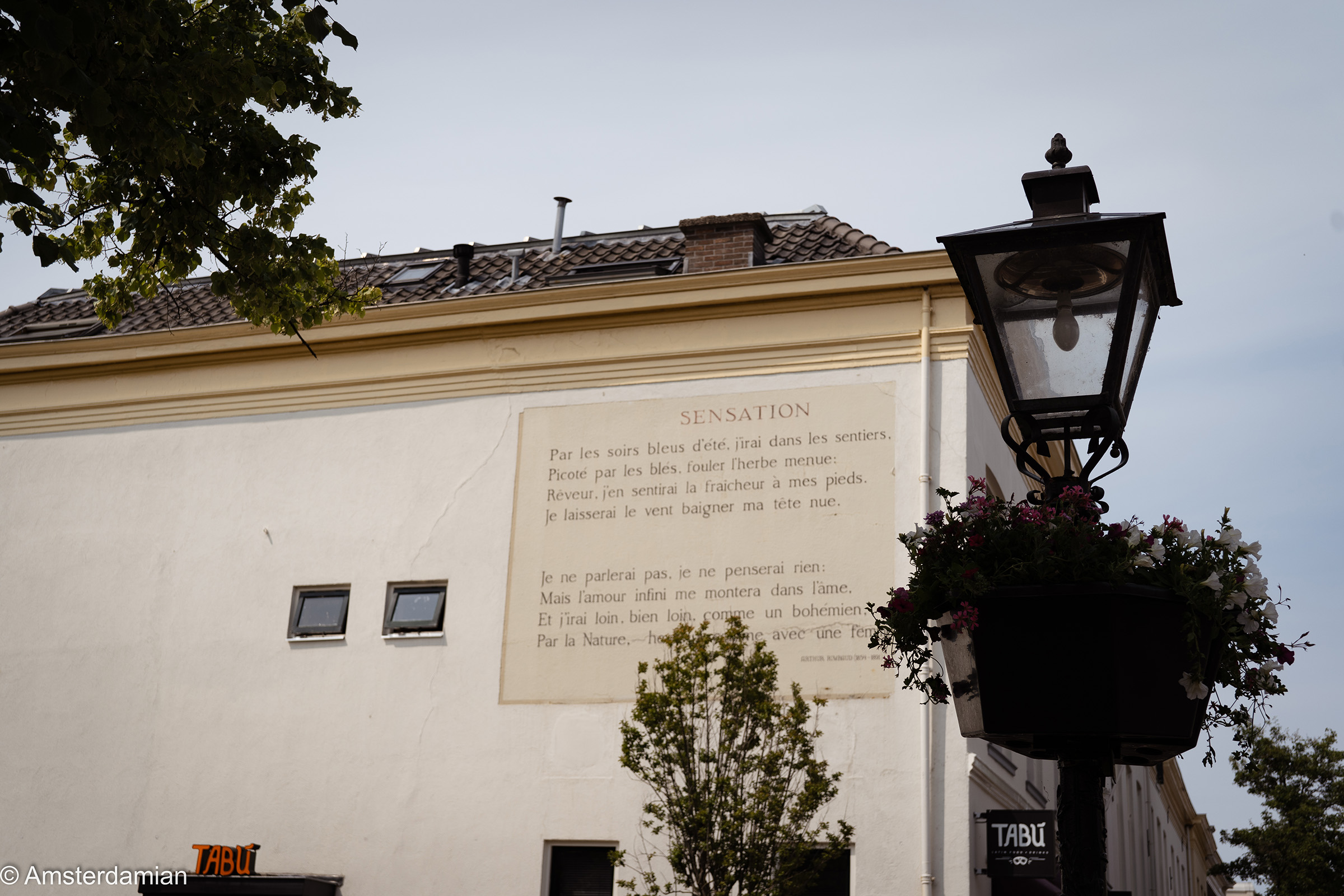
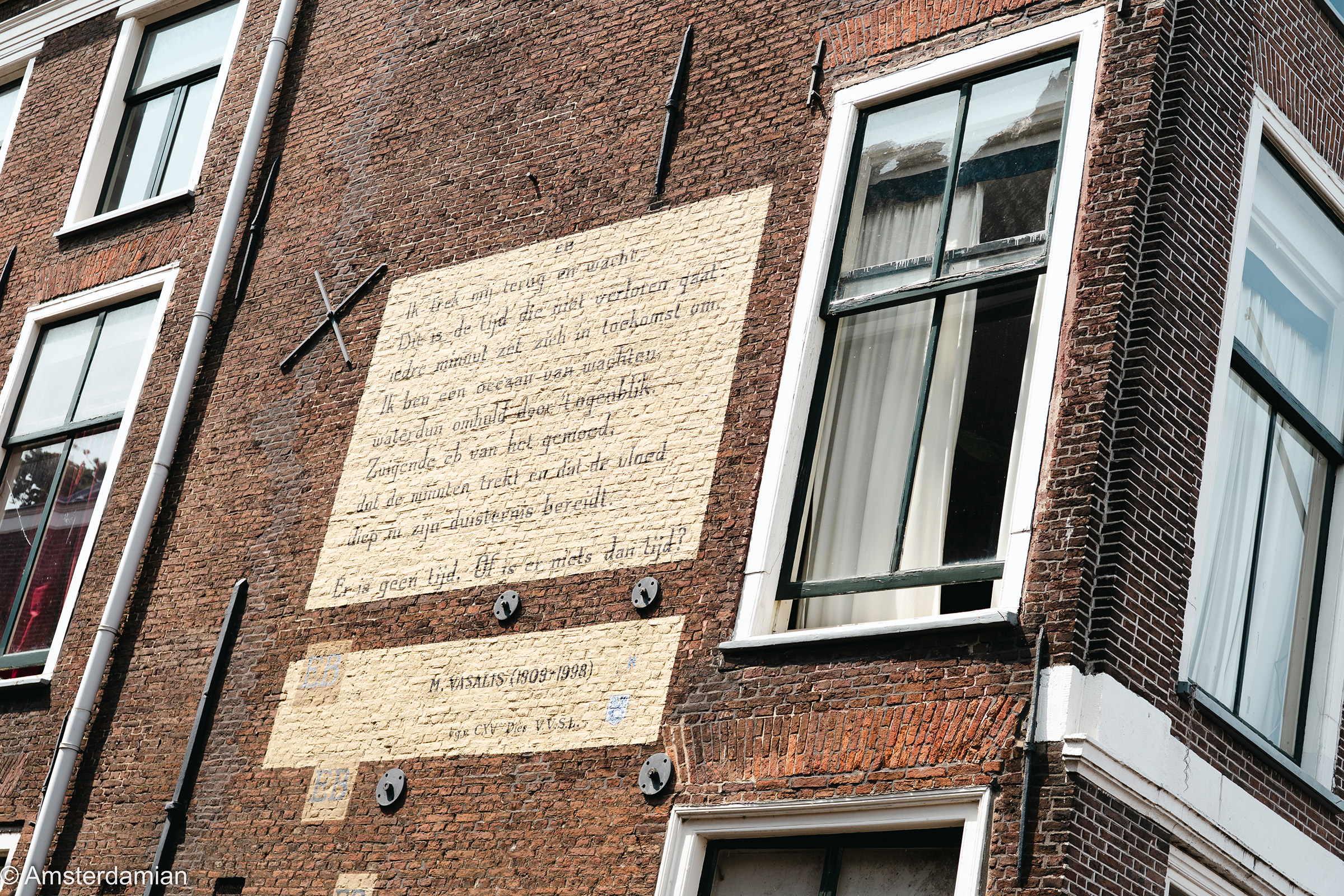
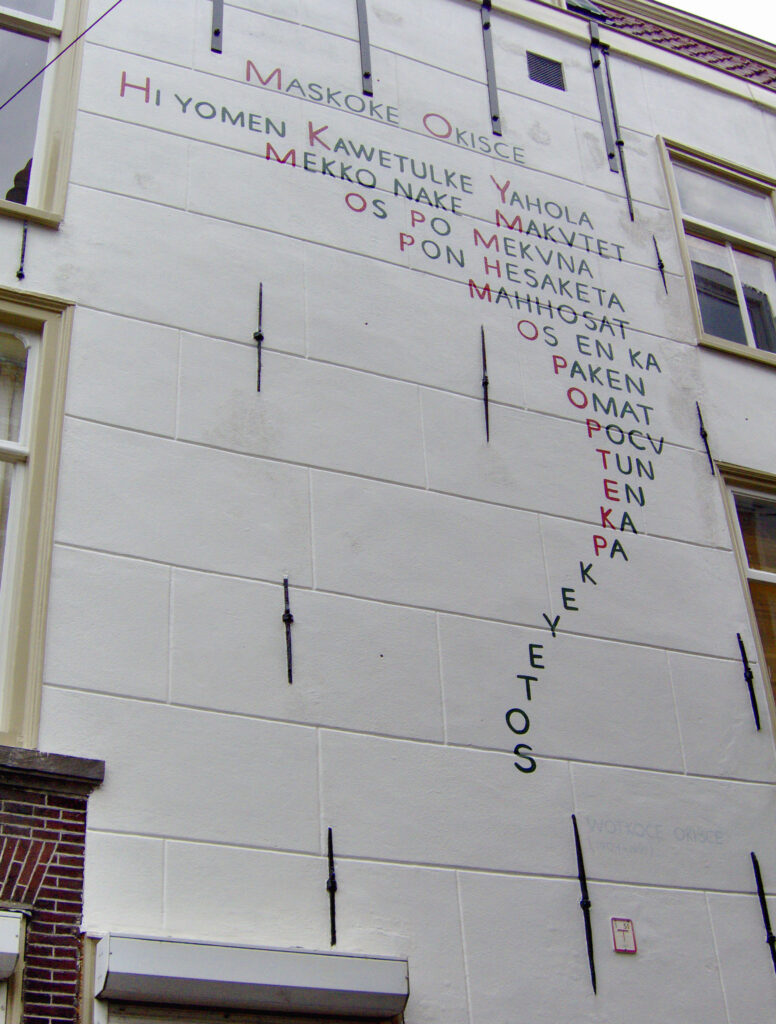
The selection of poems is wide, from Shakespeare to Pablo Neruda, from Emily Dickinson to Matsuo Bashō, Anna Akhmatova, Langston Hughes, and poets whose names you might not recognise at all. Some poems are instantly familiar and others feel like fragments pulled from a larger conversation. Being written in their original language, the poems sometimes don’t have a translation, and that feels intentional. You’re not always meant to understand every word. Sometimes the rhythm, the script, or the way the poem occupies the wall is enough. One of the more obscure poems in the collection is written in the Buginese language on a canal wall near the Royal Netherlands Institute of Southeast Asian and Caribbean Studies. There is a translation for this one, though.
You can find the poems in their original language, with translations in Dutch and English plus explanations (in Dutch, for some of them), and the address on the TEGEN BEELD website. There’s also an explanation in English for a few of these poems on this document written for the Leiden City World Walk by Leiden University. The entire list of wall poems can be also found on Wikipedia, and there are a few explanatory videos by Leiden University on its YouTube channel.
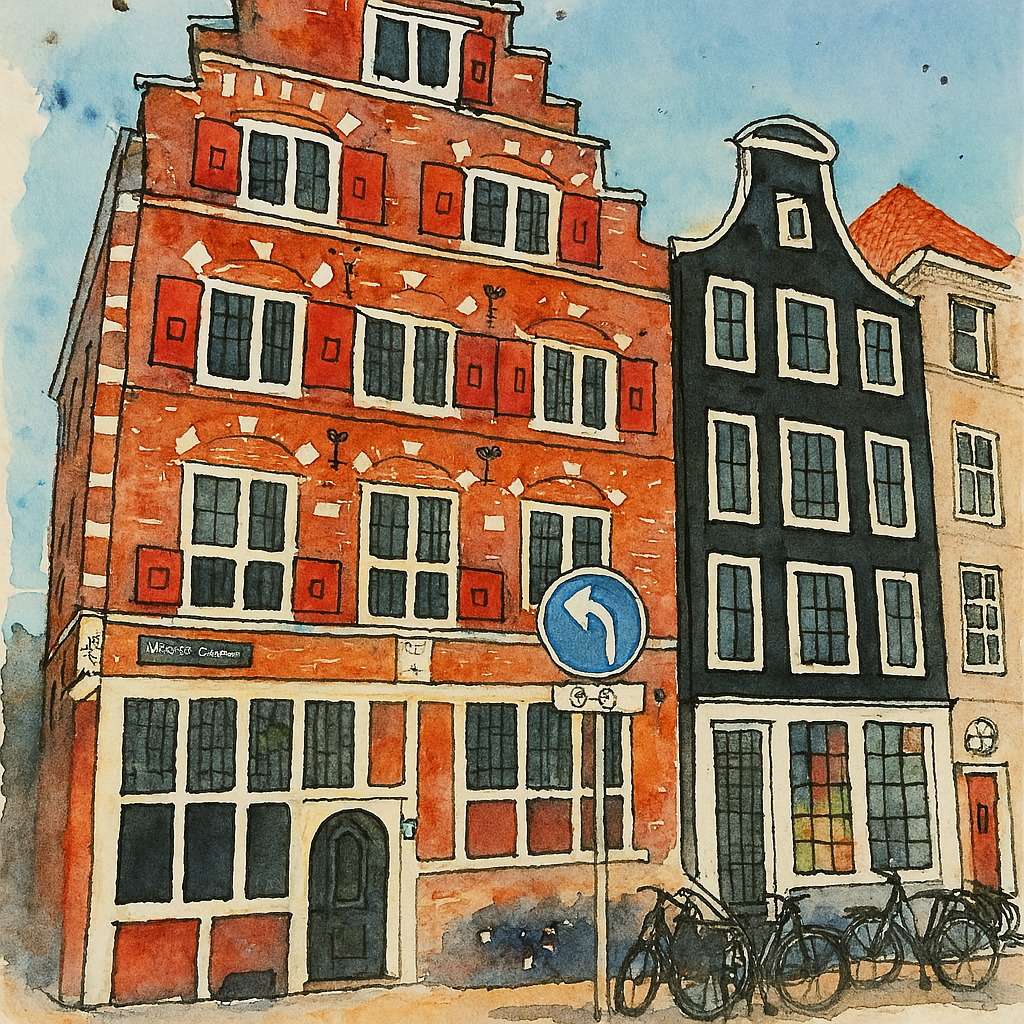
Leiden has always been a city shaped by learning. It’s the oldest university town in the Netherlands, and you feel that history not only in lecture halls and libraries, but out on the street. The wall poems reflect that academic openness, but without the stiffness that sometimes comes with it. This isn’t knowledge behind glass. It’s poetry exposed to rain, sunlight, and the everyday lives of the people who live here. I imagine that over time the poems became part of the neighbourhoods. Probably you can hear locals giving directions using them. “Turn left after the poem” could be a perfectly reasonable instruction in Leiden.
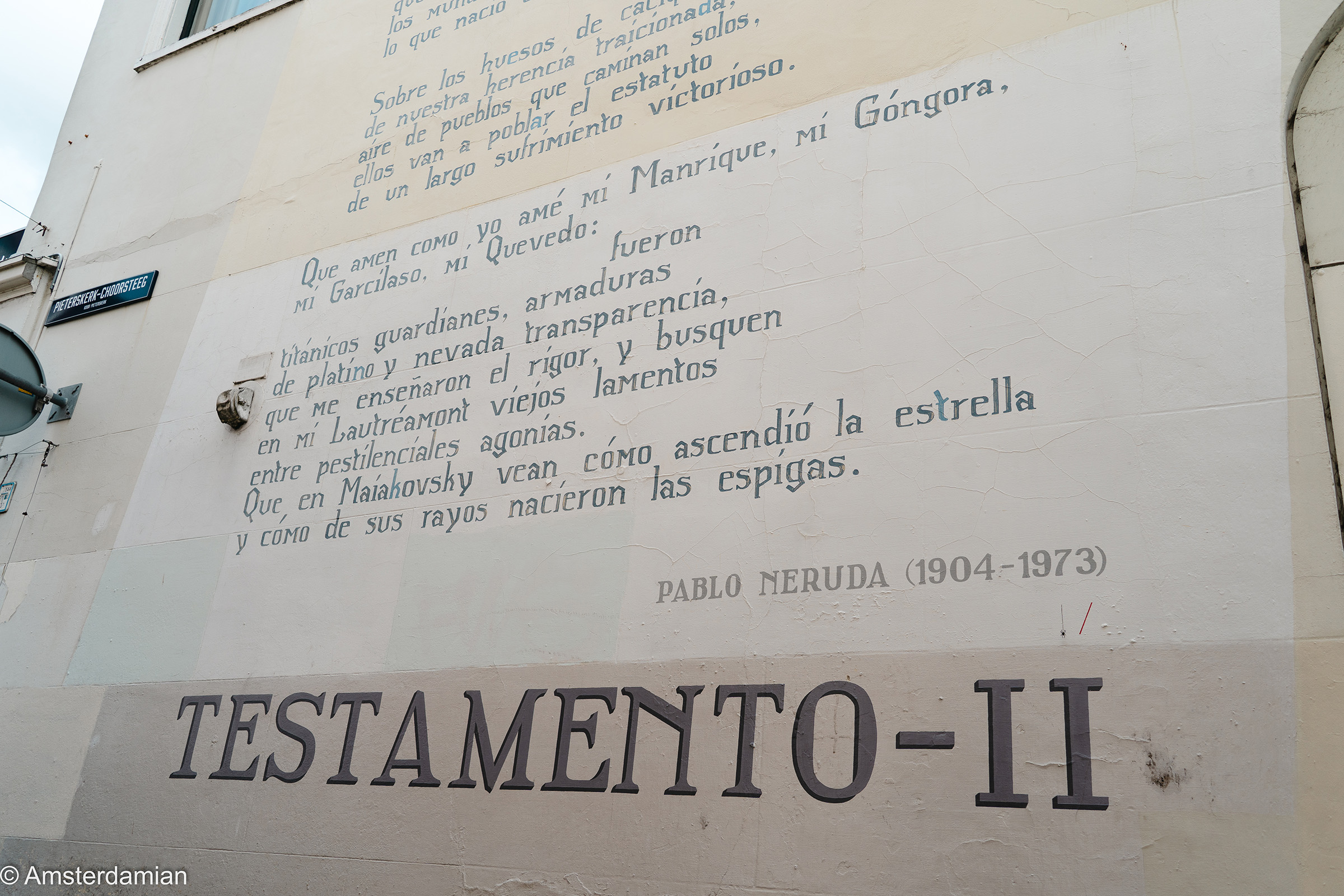
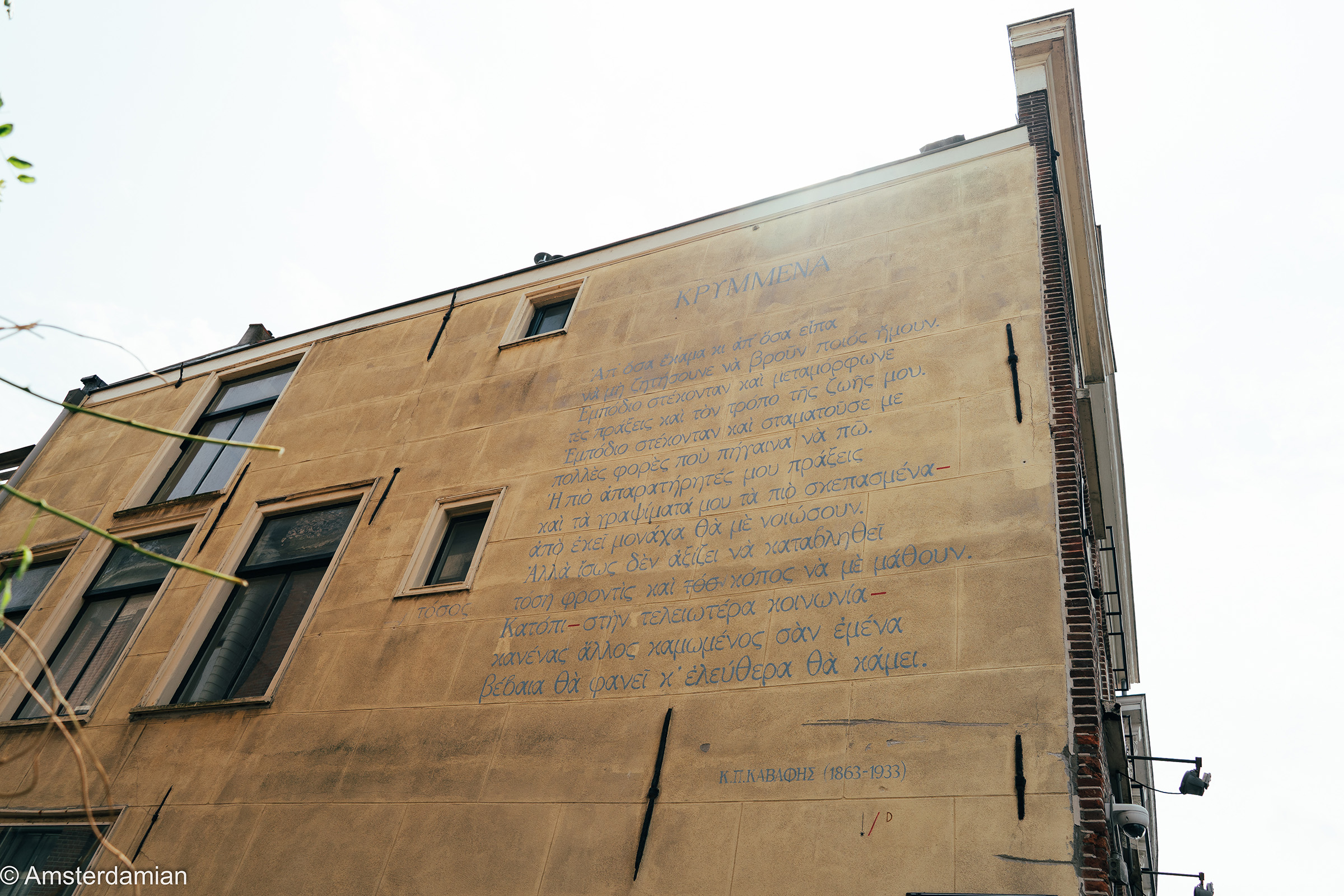
If you’re visiting Leiden, it’s tempting to treat the wall poems as an attraction to “do properly.” There are maps, after all, and routes you can follow. But I think they work best if you simply stumble upon them; let them interrupt your walk, make you stop from time to time and immerse yourself in the unexpected poem.
Stay tuned for more and follow Amsterdamian on Instagram and Facebook for more stories about life in the Netherlands, written by a real local, updated constantly.
Check out my photo book: Amsterdam Through the Seasons!
Love what you’re reading? Support my work with a small donation.
And share this post if you liked it!